
Topic Religious Conflicts Aim Why do Territorial Conflicts
- Slides: 50
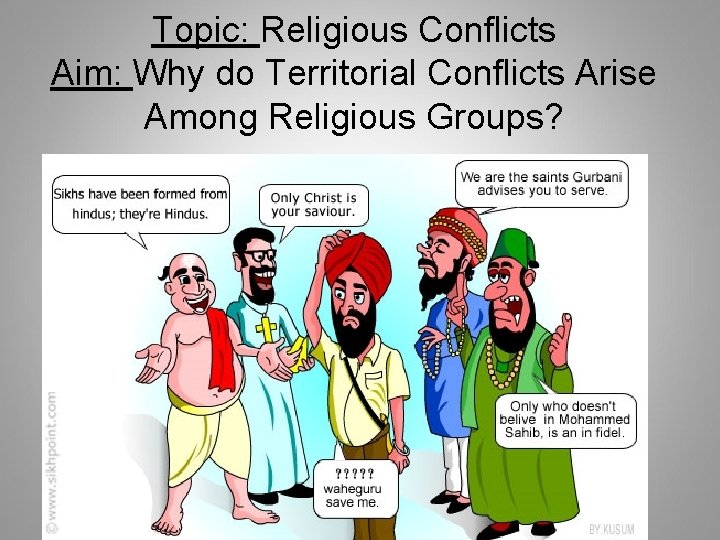
Topic: Religious Conflicts Aim: Why do Territorial Conflicts Arise Among Religious Groups?
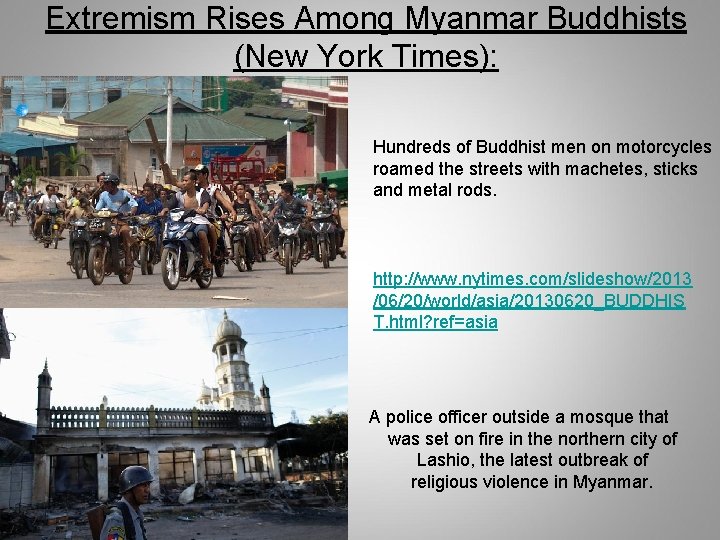
Extremism Rises Among Myanmar Buddhists (New York Times): Hundreds of Buddhist men on motorcycles roamed the streets with machetes, sticks and metal rods. http: //www. nytimes. com/slideshow/2013 /06/20/world/asia/20130620_BUDDHIS T. html? ref=asia A police officer outside a mosque that was set on fire in the northern city of Lashio, the latest outbreak of religious violence in Myanmar.
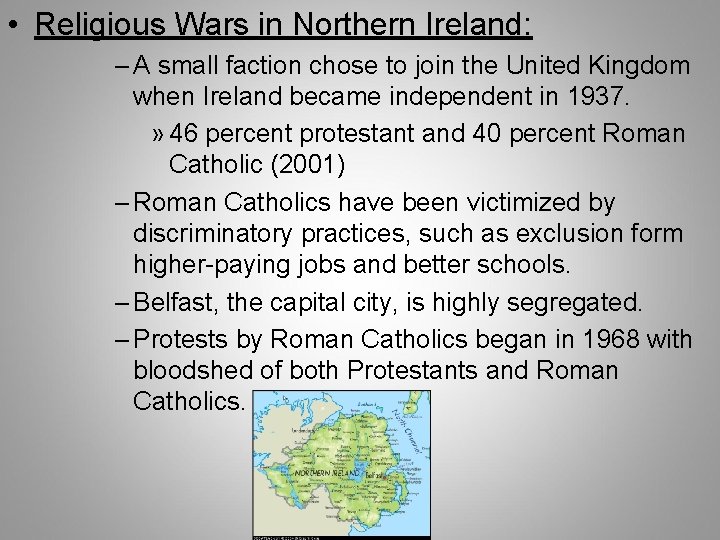
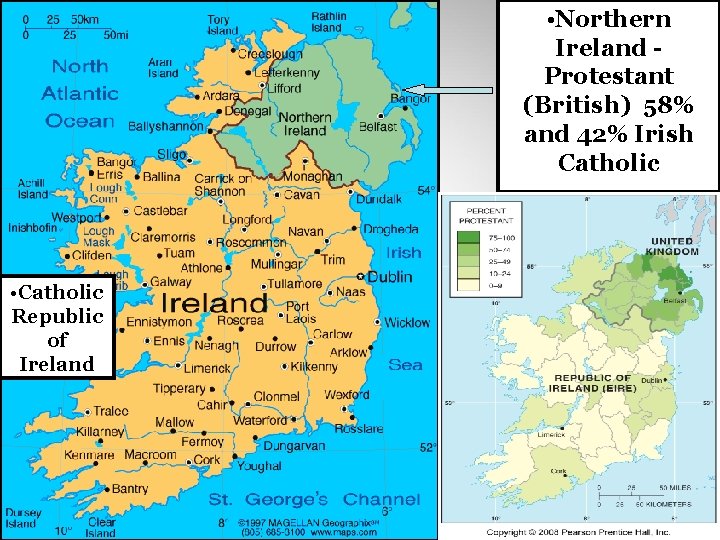
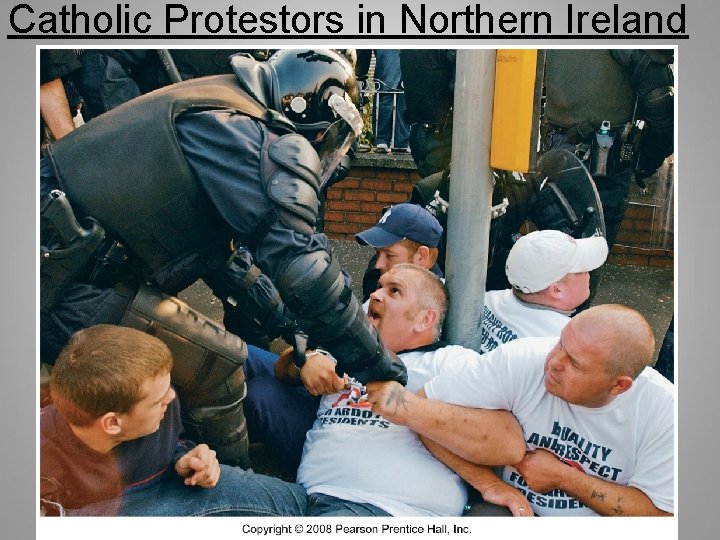
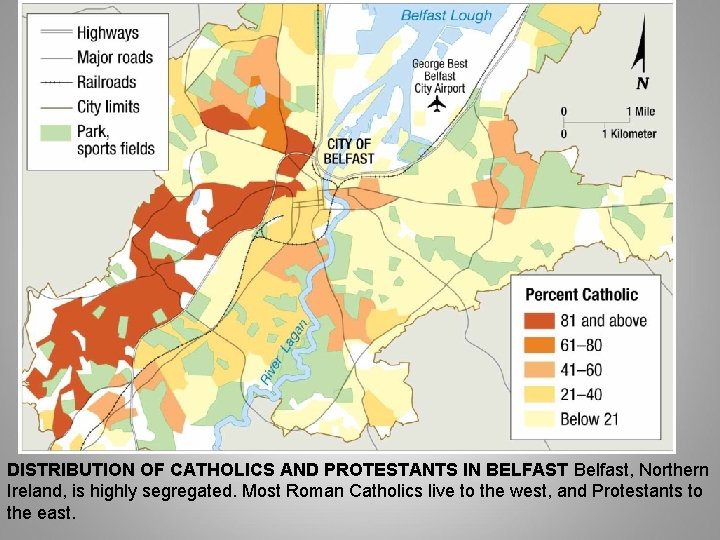
• Religious Wars in Northern Ireland: – A small faction chose to join the United Kingdom when Ireland became independent in 1937. » 46 percent protestant and 40 percent Roman Catholic (2001) – Roman Catholics have been victimized by discriminatory practices, such as exclusion form higher-paying jobs and better schools. – Belfast, the capital city, is highly segregated. – Protests by Roman Catholics began in 1968 with bloodshed of both Protestants and Roman Catholics.
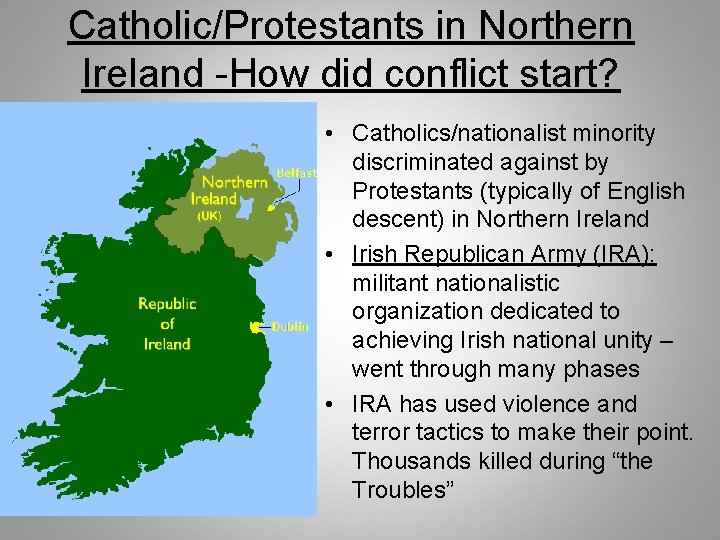
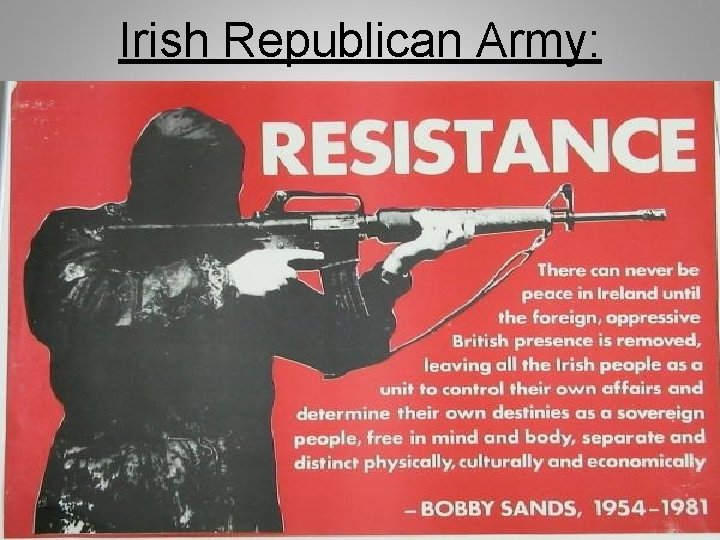
Catholic/Protestants in Northern Ireland -How did conflict start? • Catholics/nationalist minority discriminated against by Protestants (typically of English descent) in Northern Ireland • Irish Republican Army (IRA): militant nationalistic organization dedicated to achieving Irish national unity – went through many phases • IRA has used violence and terror tactics to make their point. Thousands killed during “the Troubles”
• Northern Ireland Protestant (British) 58% and 42% Irish Catholic • Catholic Republic of Ireland
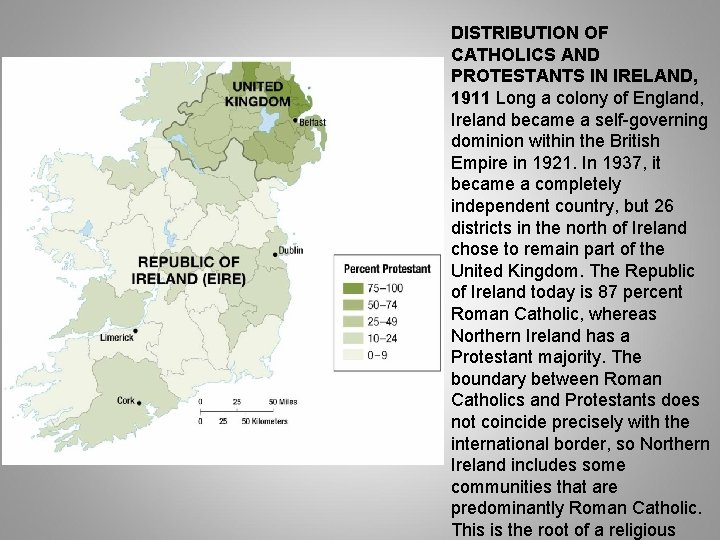
DISTRIBUTION OF CATHOLICS AND PROTESTANTS IN IRELAND, 1911 Long a colony of England, Ireland became a self-governing dominion within the British Empire in 1921. In 1937, it became a completely independent country, but 26 districts in the north of Ireland chose to remain part of the United Kingdom. The Republic of Ireland today is 87 percent Roman Catholic, whereas Northern Ireland has a Protestant majority. The boundary between Roman Catholics and Protestants does not coincide precisely with the international border, so Northern Ireland includes some communities that are predominantly Roman Catholic. This is the root of a religious
Irish Republican Army:
Catholic Protestors in Northern Ireland
No Reservations: Ireland • http: //www. youtube. com/watch? v=Bg 2 Nsbf 6 a 8 The Wolfe Tones: Bloody Sunday: http: //www. youtube. com/watch? v=xe. K 2 PWqy. GLQ
DISTRIBUTION OF CATHOLICS AND PROTESTANTS IN BELFAST Belfast, Northern Ireland, is highly segregated. Most Roman Catholics live to the west, and Protestants to the east.
The Middle East: IRAN
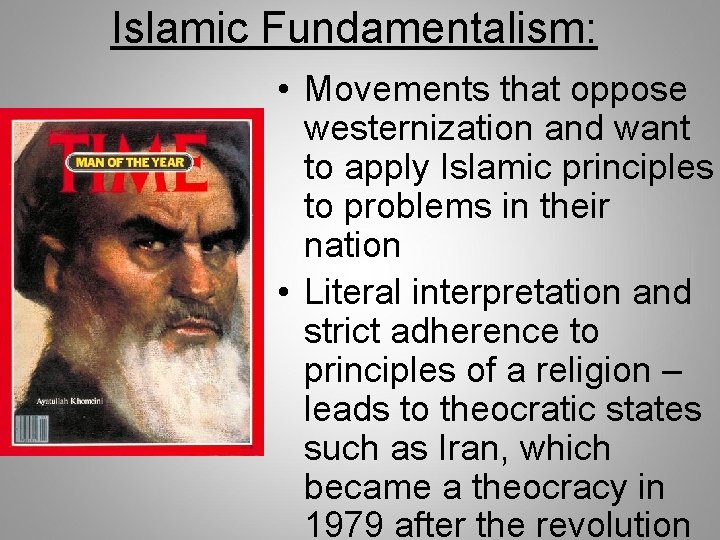
Islamic Fundamentalism: • Movements that oppose westernization and want to apply Islamic principles to problems in their nation • Literal interpretation and strict adherence to principles of a religion – leads to theocratic states such as Iran, which became a theocracy in 1979 after the revolution
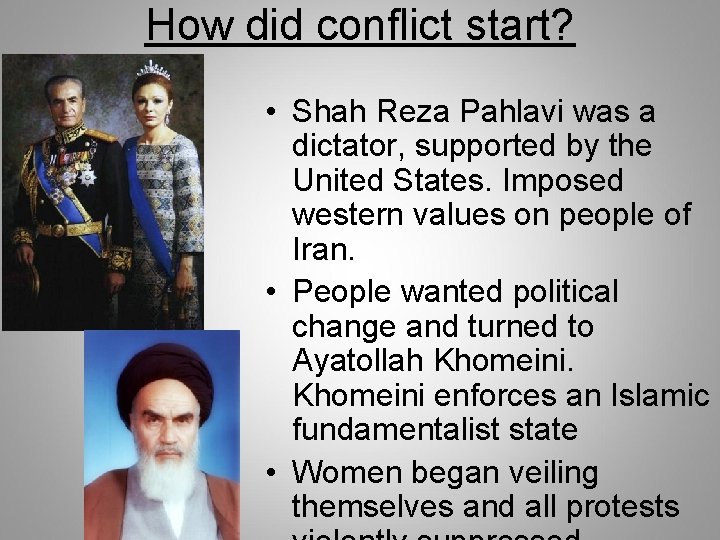
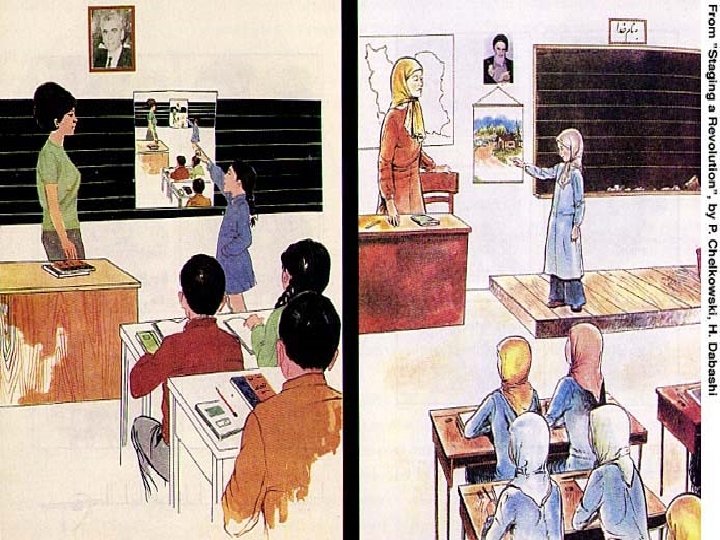
How did conflict start? • Shah Reza Pahlavi was a dictator, supported by the United States. Imposed western values on people of Iran. • People wanted political change and turned to Ayatollah Khomeini enforces an Islamic fundamentalist state • Women began veiling themselves and all protests
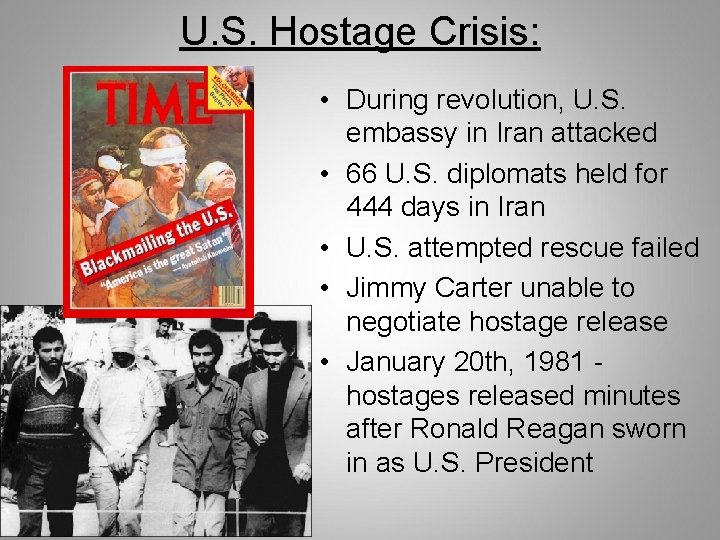
U. S. Hostage Crisis: • During revolution, U. S. embassy in Iran attacked • 66 U. S. diplomats held for 444 days in Iran • U. S. attempted rescue failed • Jimmy Carter unable to negotiate hostage release • January 20 th, 1981 hostages released minutes after Ronald Reagan sworn in as U. S. President
The Partition of India
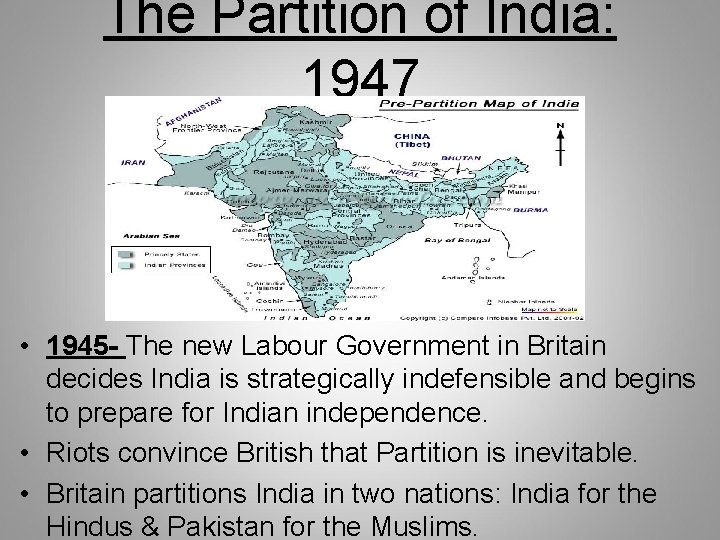
The Partition of India: 1947 • 1945 - The new Labour Government in Britain decides India is strategically indefensible and begins to prepare for Indian independence. • Riots convince British that Partition is inevitable. • Britain partitions India in two nations: India for the Hindus & Pakistan for the Muslims.
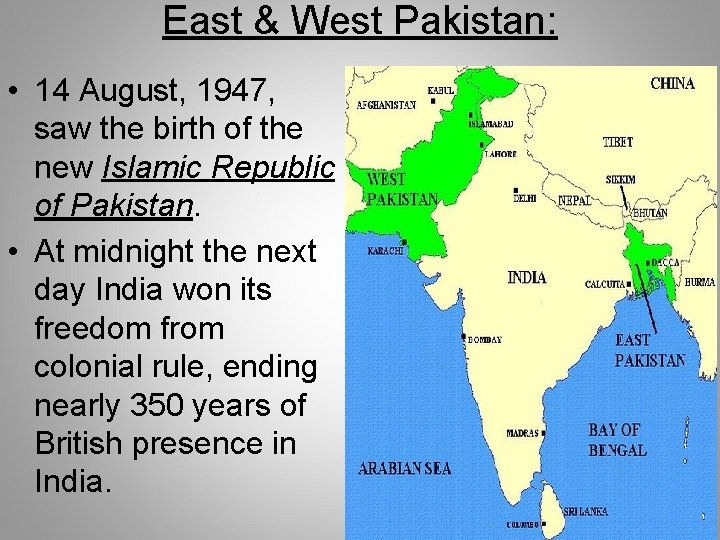
East & West Pakistan: • 14 August, 1947, saw the birth of the new Islamic Republic of Pakistan. • At midnight the next day India won its freedom from colonial rule, ending nearly 350 years of British presence in India.
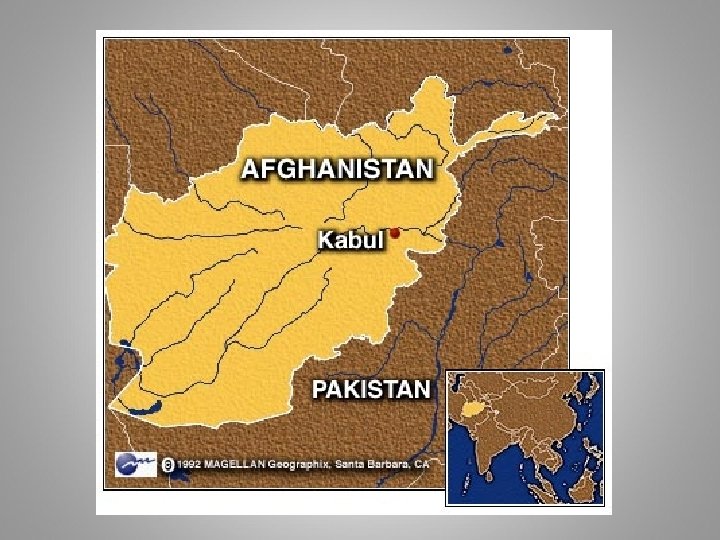
The Middle East: AFGHANISTAN
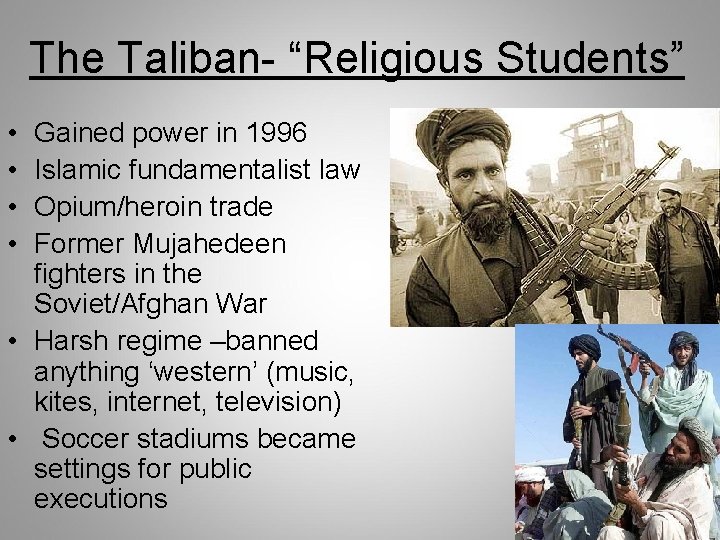
The Taliban- “Religious Students” • • Gained power in 1996 Islamic fundamentalist law Opium/heroin trade Former Mujahedeen fighters in the Soviet/Afghan War • Harsh regime –banned anything ‘western’ (music, kites, internet, television) • Soccer stadiums became settings for public executions
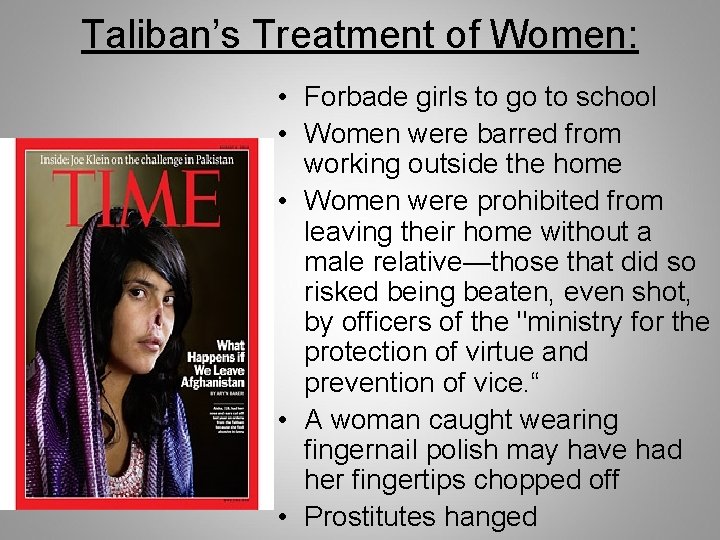
Taliban’s Treatment of Women: • Forbade girls to go to school • Women were barred from working outside the home • Women were prohibited from leaving their home without a male relative—those that did so risked being beaten, even shot, by officers of the "ministry for the protection of virtue and prevention of vice. “ • A woman caught wearing fingernail polish may have had her fingertips chopped off • Prostitutes hanged
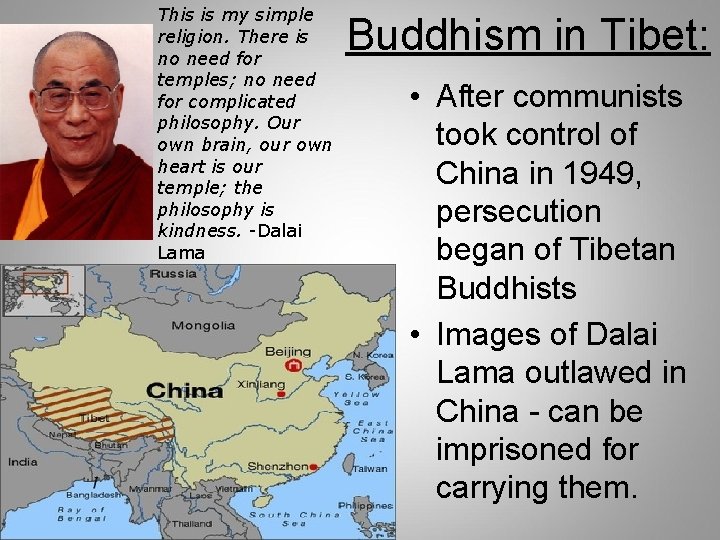
This is my simple religion. There is no need for temples; no need for complicated philosophy. Our own brain, our own heart is our temple; the philosophy is kindness. -Dalai Lama Buddhism in Tibet: • After communists took control of China in 1949, persecution began of Tibetan Buddhists • Images of Dalai Lama outlawed in China - can be imprisoned for carrying them.
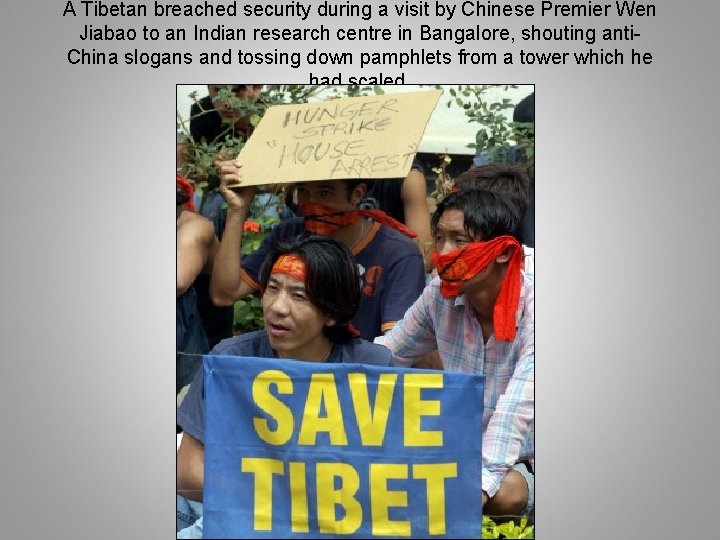
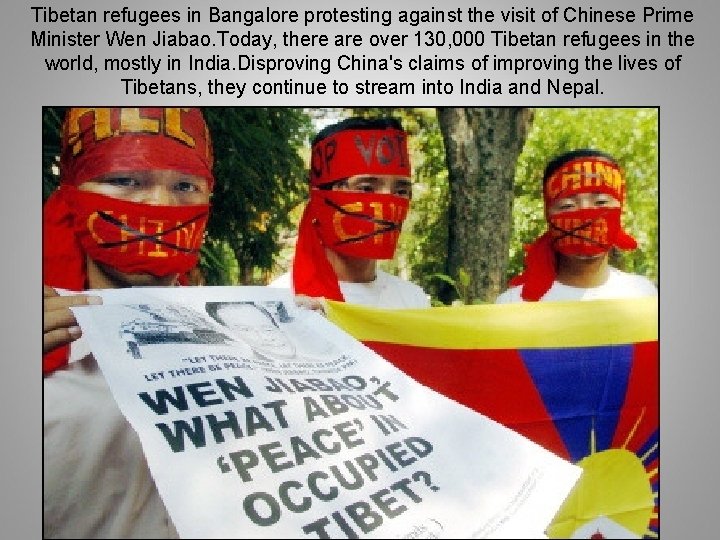
A Tibetan breached security during a visit by Chinese Premier Wen Jiabao to an Indian research centre in Bangalore, shouting anti. China slogans and tossing down pamphlets from a tower which he had scaled.
Tibetan refugees in Bangalore protesting against the visit of Chinese Prime Minister Wen Jiabao. Today, there are over 130, 000 Tibetan refugees in the world, mostly in India. Disproving China's claims of improving the lives of Tibetans, they continue to stream into India and Nepal.
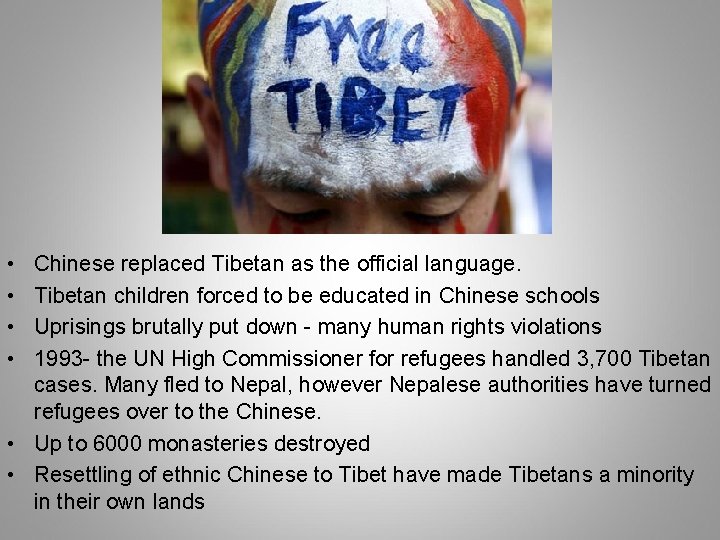
• • Chinese replaced Tibetan as the official language. Tibetan children forced to be educated in Chinese schools Uprisings brutally put down - many human rights violations 1993 - the UN High Commissioner for refugees handled 3, 700 Tibetan cases. Many fled to Nepal, however Nepalese authorities have turned refugees over to the Chinese. • Up to 6000 monasteries destroyed • Resettling of ethnic Chinese to Tibet have made Tibetans a minority in their own lands
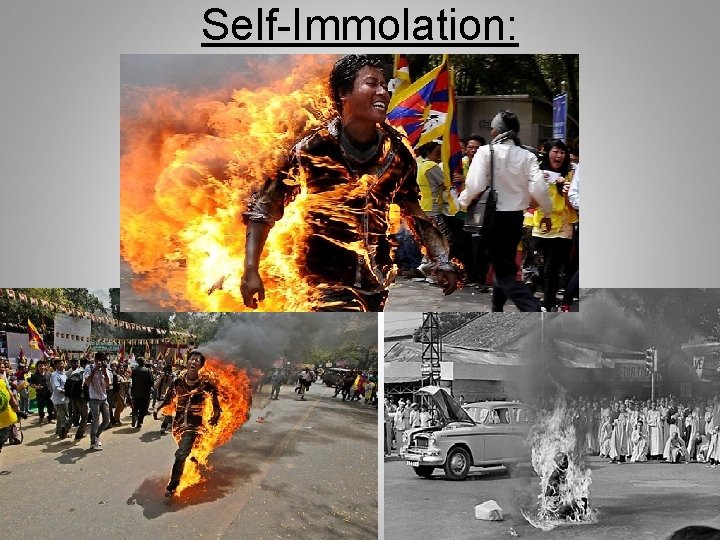
Self-Immolation:
The Middle East: JERUSALEM
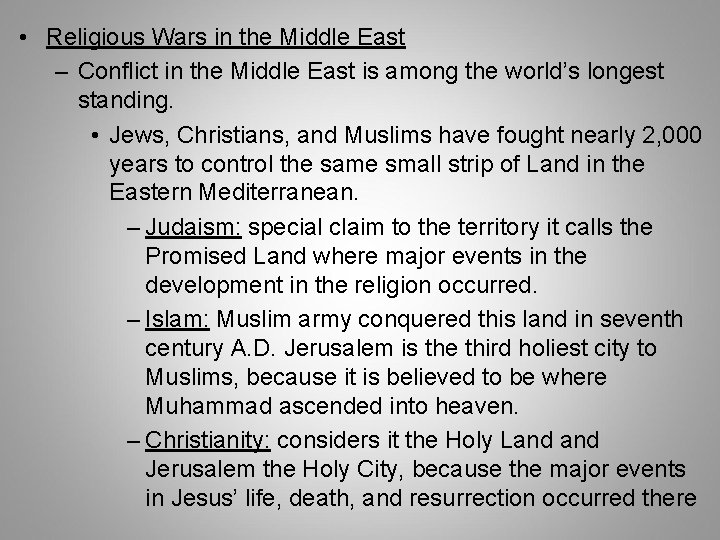
• Religious Wars in the Middle East – Conflict in the Middle East is among the world’s longest standing. • Jews, Christians, and Muslims have fought nearly 2, 000 years to control the same small strip of Land in the Eastern Mediterranean. – Judaism: special claim to the territory it calls the Promised Land where major events in the development in the religion occurred. – Islam: Muslim army conquered this land in seventh century A. D. Jerusalem is the third holiest city to Muslims, because it is believed to be where Muhammad ascended into heaven. – Christianity: considers it the Holy Land Jerusalem the Holy City, because the major events in Jesus’ life, death, and resurrection occurred there
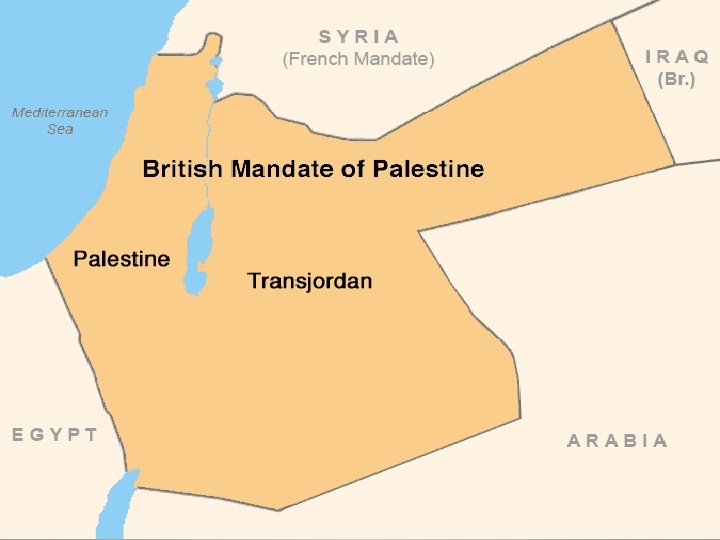
PALESTINE AND THE EMERGENCE OF ISRAEL • 1095 -1291 -Crusades–Christians tried and failed to reclaim the Holy Land of Jerusalem from Ottoman Turks (Constantinople becomes Istanbul) • 1453 -1916 - Ottoman Empire controlled Turkey and lands along eastern Mediterranean including Palestine • 1896 -1916 - Zionist Movement founded by Theodore Herzl which encouraged Jews to return to their homeland in Palestine - mass migrations • 1918 - Ottomans on losing side of WWI - territories become a series of European mandates
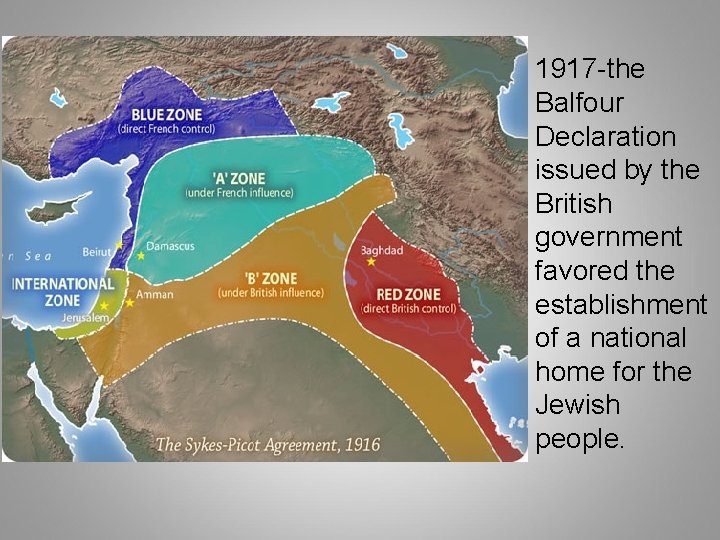
1917 -the Balfour Declaration issued by the British government favored the establishment of a national home for the Jewish people.
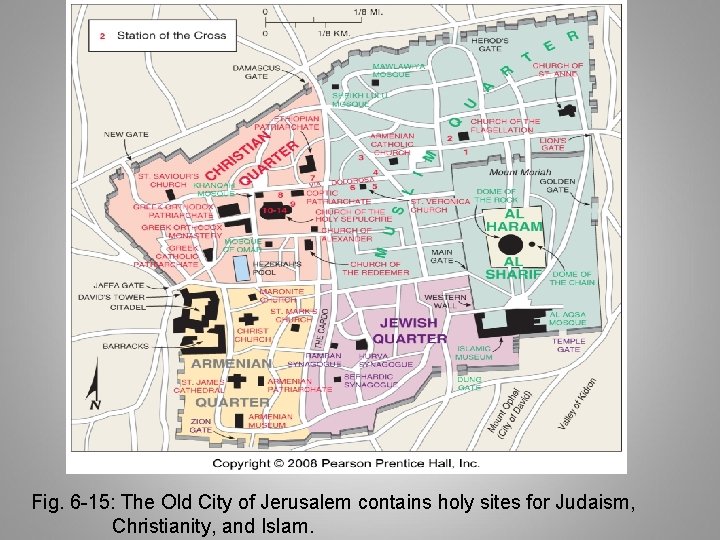
Fig. 6 -15: The Old City of Jerusalem contains holy sites for Judaism, Christianity, and Islam.
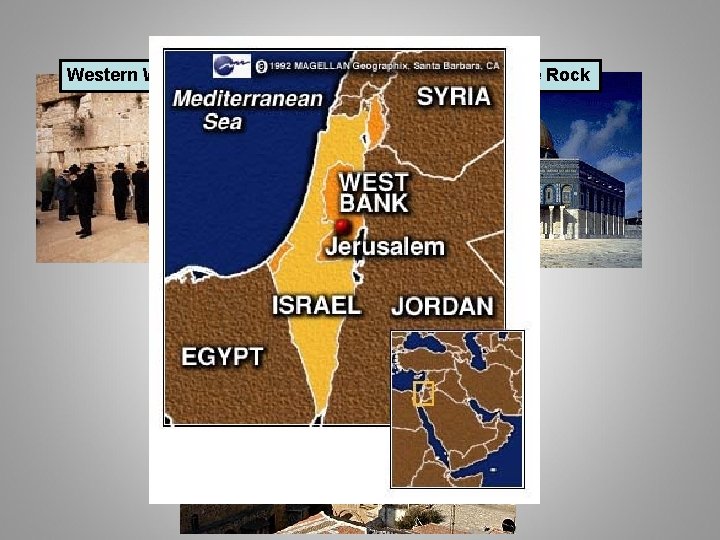
Western Wall or Wailing Wall Dome of the Rock Church of the Holy Sepulchre
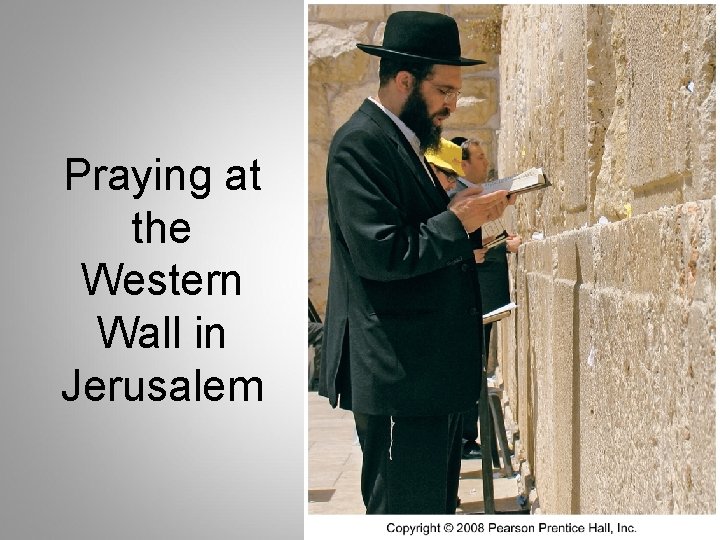
Praying at the Western Wall in Jerusalem
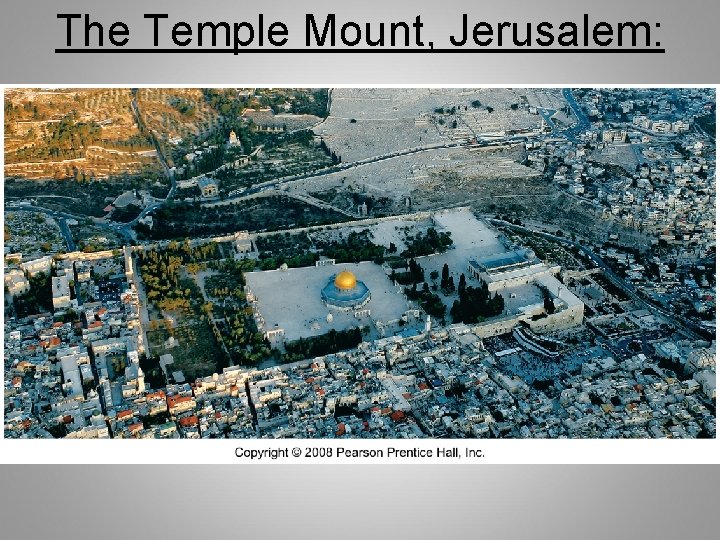
The Temple Mount, Jerusalem:
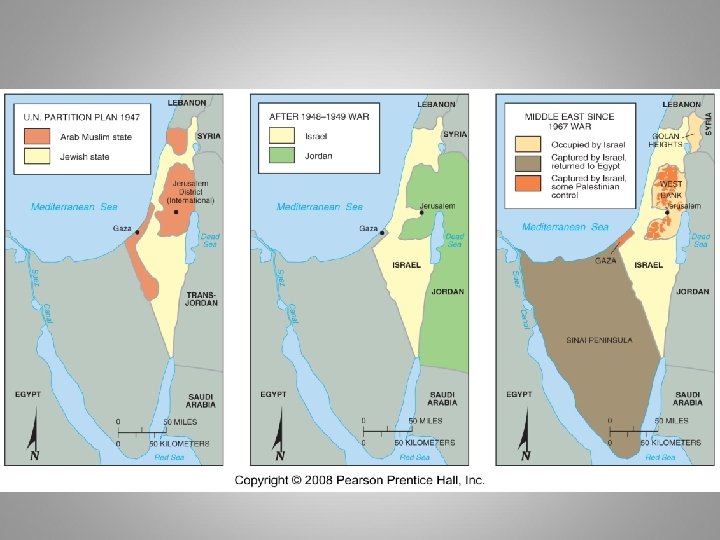
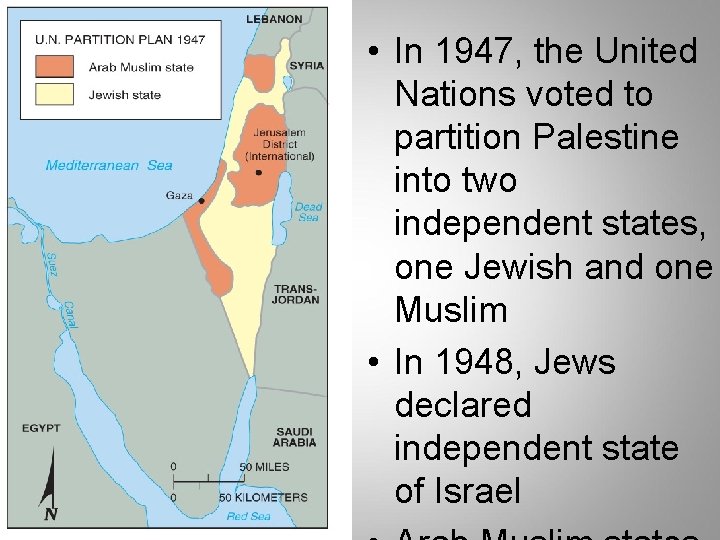
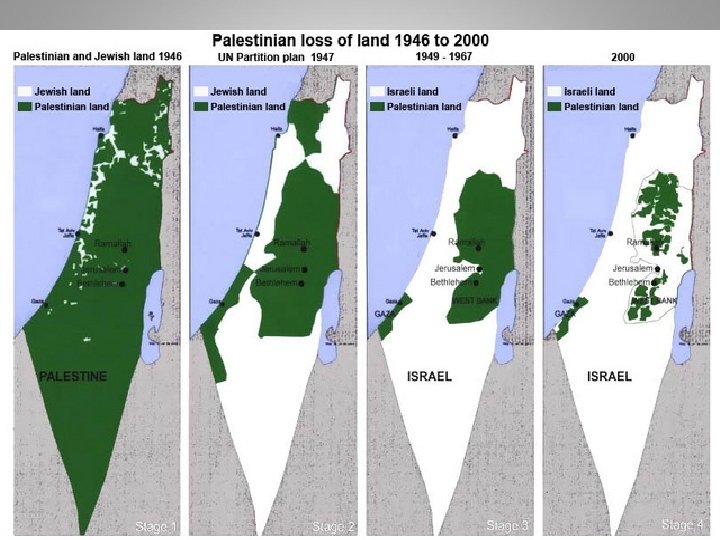
• In 1947, the United Nations voted to partition Palestine into two independent states, one Jewish and one Muslim • In 1948, Jews declared independent state of Israel
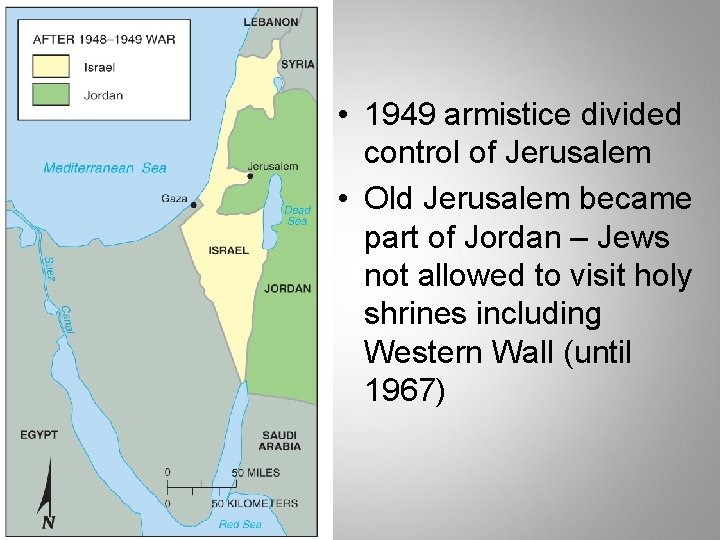
• 1949 armistice divided control of Jerusalem • Old Jerusalem became part of Jordan – Jews not allowed to visit holy shrines including Western Wall (until 1967)
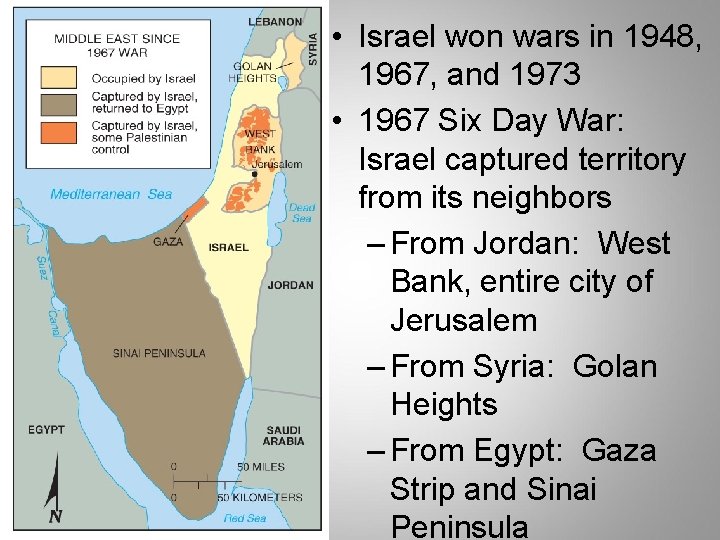
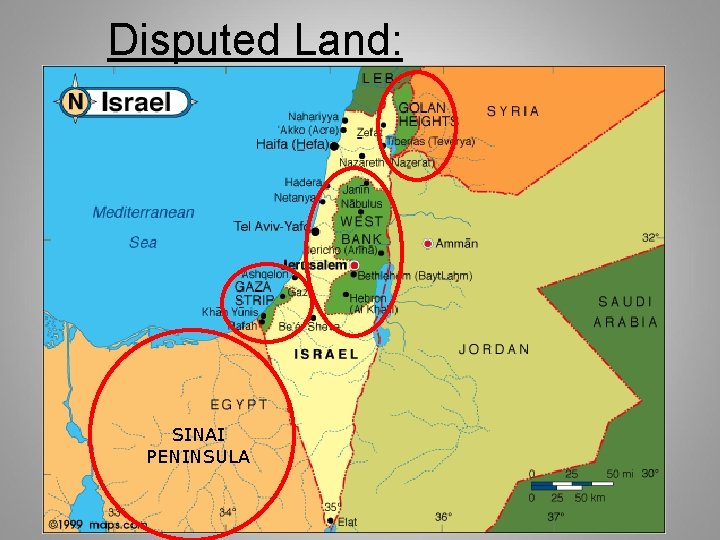
• Israel won wars in 1948, 1967, and 1973 • 1967 Six Day War: Israel captured territory from its neighbors – From Jordan: West Bank, entire city of Jerusalem – From Syria: Golan Heights – From Egypt: Gaza Strip and Sinai Peninsula
Disputed Land: SINAI PENINSULA
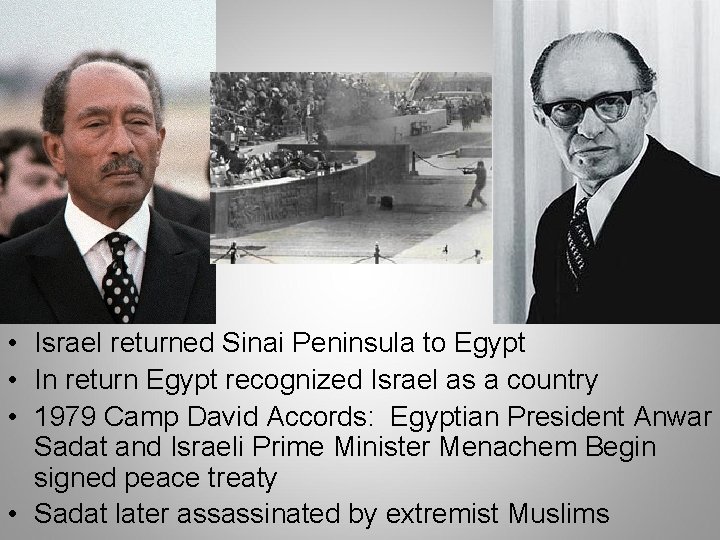
• Israel returned Sinai Peninsula to Egypt • In return Egypt recognized Israel as a country • 1979 Camp David Accords: Egyptian President Anwar Sadat and Israeli Prime Minister Menachem Begin signed peace treaty • Sadat later assassinated by extremist Muslims
People who consider themselves Palestinian • People living in West Bank, Gaza, and East Jerusalem territories captured by Israel in 1967 • Citizens of Israel who are Muslims • People who fled from Israel to other countries after 1948 -49 war • People who fled from West Bank or Gaza to other countries after 1967 war • Citizens of other countries, especially Jordan, Lebanon, Syria, Kuwait, and Saudi Arabia, who identify themselves as Palestinian
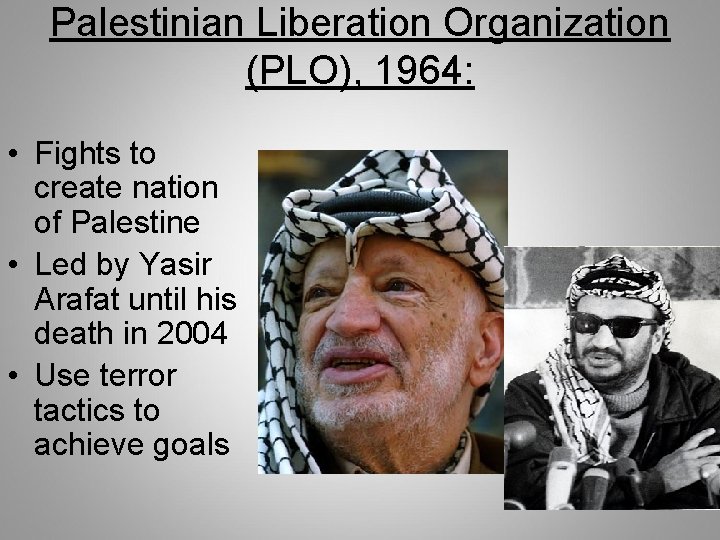
Palestinian Liberation Organization (PLO), 1964: • Fights to create nation of Palestine • Led by Yasir Arafat until his death in 2004 • Use terror tactics to achieve goals
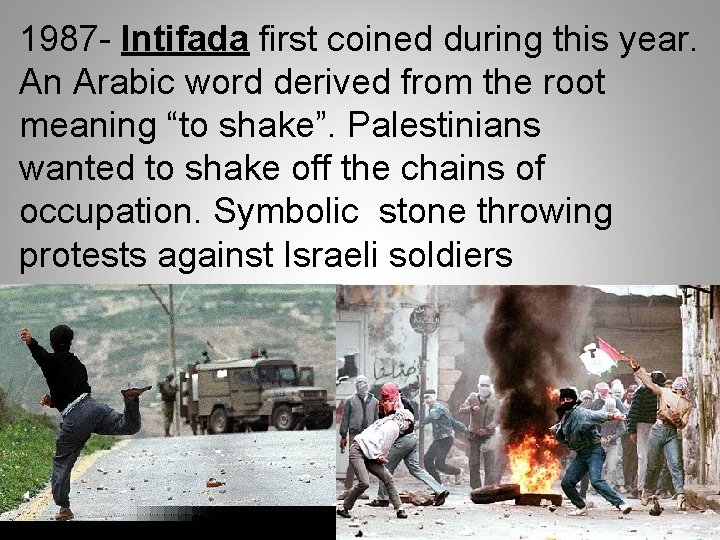
1987 - Intifada first coined during this year. An Arabic word derived from the root meaning “to shake”. Palestinians wanted to shake off the chains of occupation. Symbolic stone throwing protests against Israeli soldiers
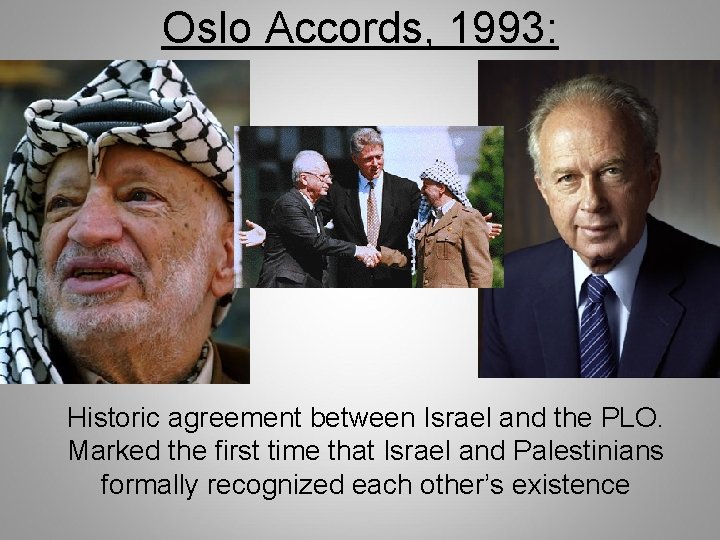
Oslo Accords, 1993: Historic agreement between Israel and the PLO. Marked the first time that Israel and Palestinians formally recognized each other’s existence
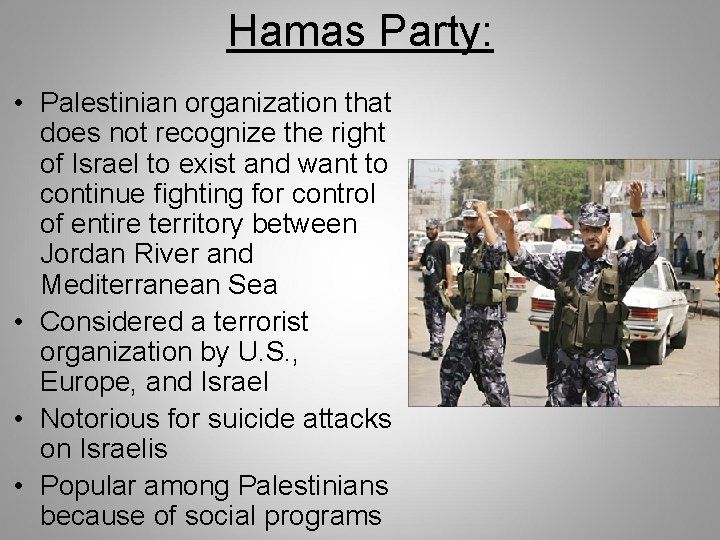
Hamas Party: • Palestinian organization that does not recognize the right of Israel to exist and want to continue fighting for control of entire territory between Jordan River and Mediterranean Sea • Considered a terrorist organization by U. S. , Europe, and Israel • Notorious for suicide attacks on Israelis • Popular among Palestinians because of social programs
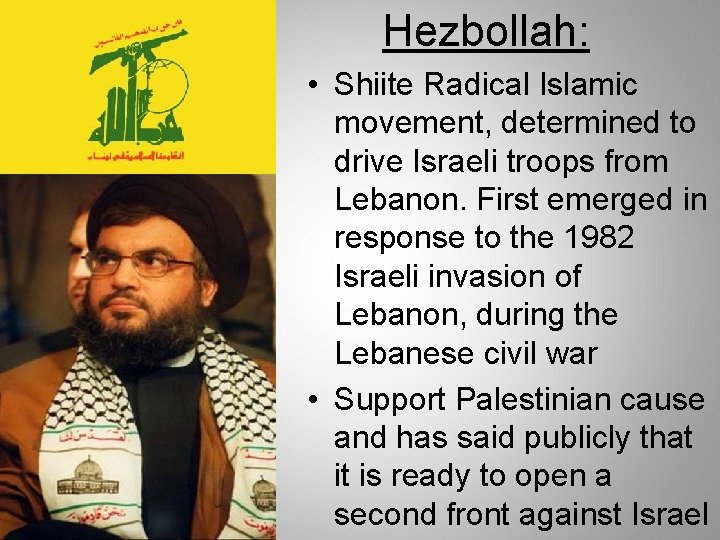
Hezbollah: • Shiite Radical Islamic movement, determined to drive Israeli troops from Lebanon. First emerged in response to the 1982 Israeli invasion of Lebanon, during the Lebanese civil war • Support Palestinian cause and has said publicly that it is ready to open a second front against Israel
60 Minutes: Palestine • http: //www. youtube. com/watch? v=6 K 23 r. XLev 7 o