
Topic Population Policies Case Studies India China Aim



- Slides: 32
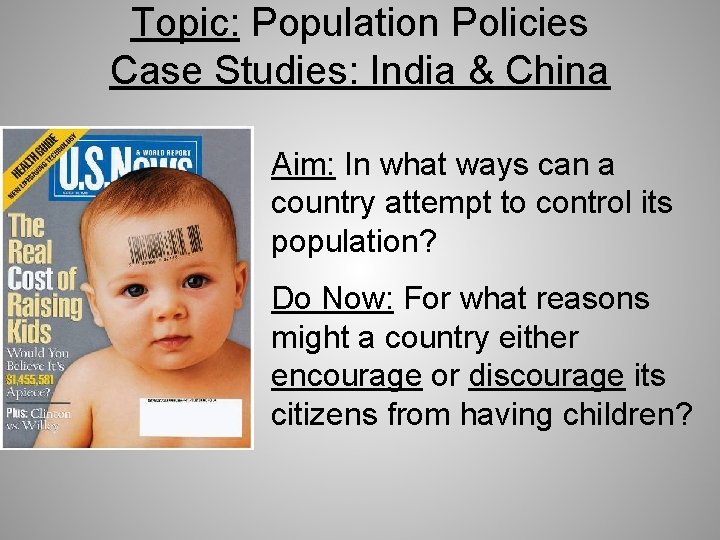
Topic: Population Policies Case Studies: India & China Aim: In what ways can a country attempt to control its population? Do Now: For what reasons might a country either encourage or discourage its citizens from having children?
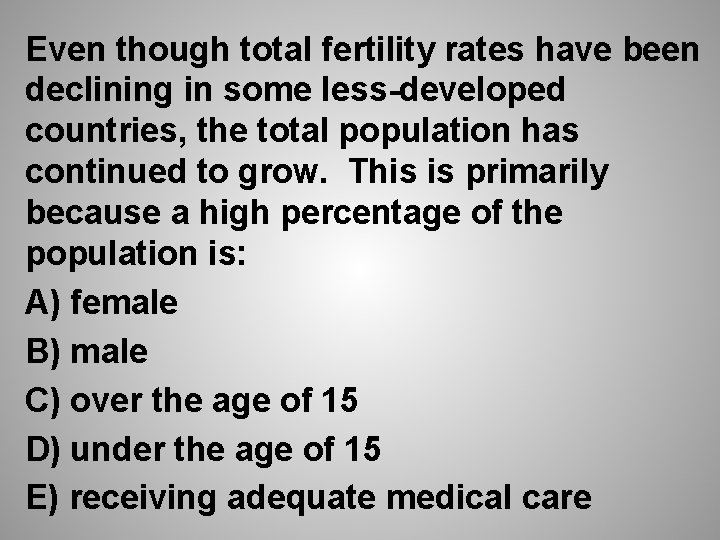
Even though total fertility rates have been declining in some less-developed countries, the total population has continued to grow. This is primarily because a high percentage of the population is: A) female B) male C) over the age of 15 D) under the age of 15 E) receiving adequate medical care
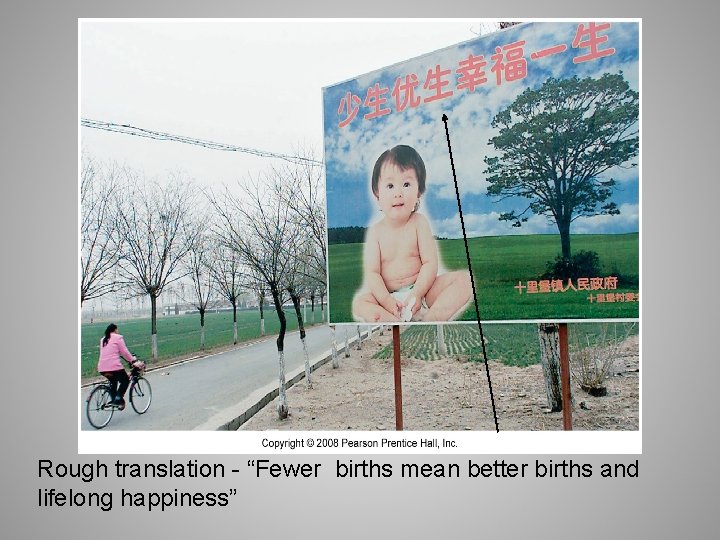
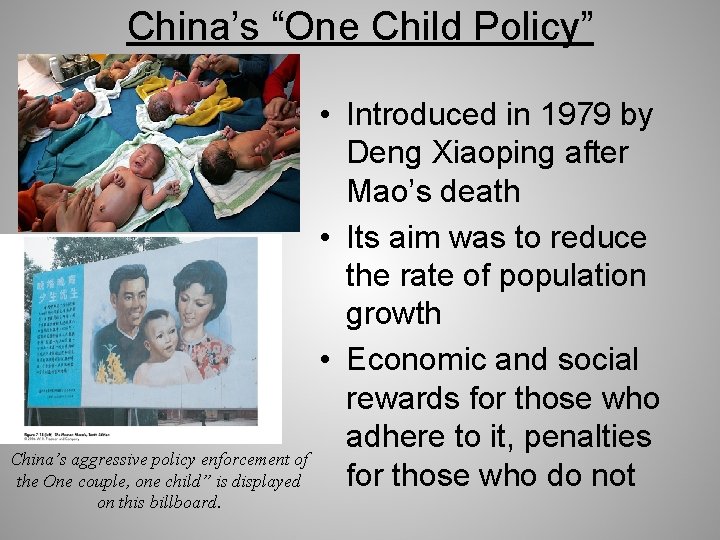
Rough translation - “Fewer births mean better births and lifelong happiness”
• “…to try to ensure that the results are the ones we really intend. It’s the unintended results that can often be the worst, and sometimes bedevil us. ” ---Stephen Spielberg, speaking of Israel’s covert response to the Munich Massacre
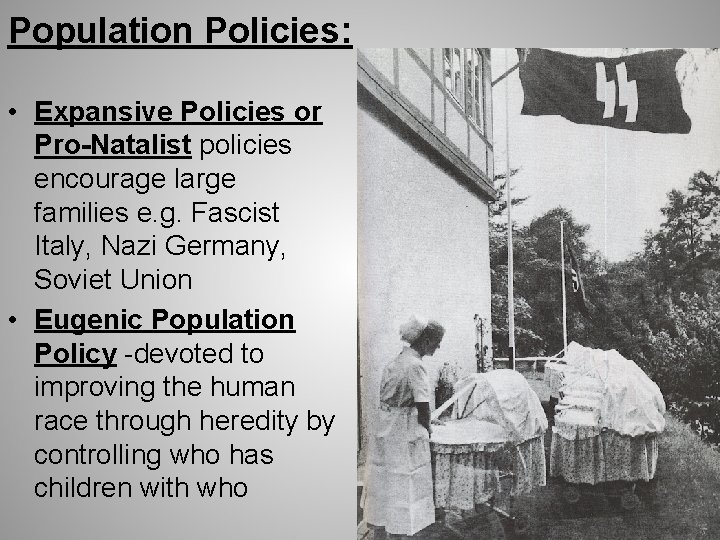
Population Policies: • Expansive Policies or Pro-Natalist policies encourage large families e. g. Fascist Italy, Nazi Germany, Soviet Union • Eugenic Population Policy -devoted to improving the human race through heredity by controlling who has children with who
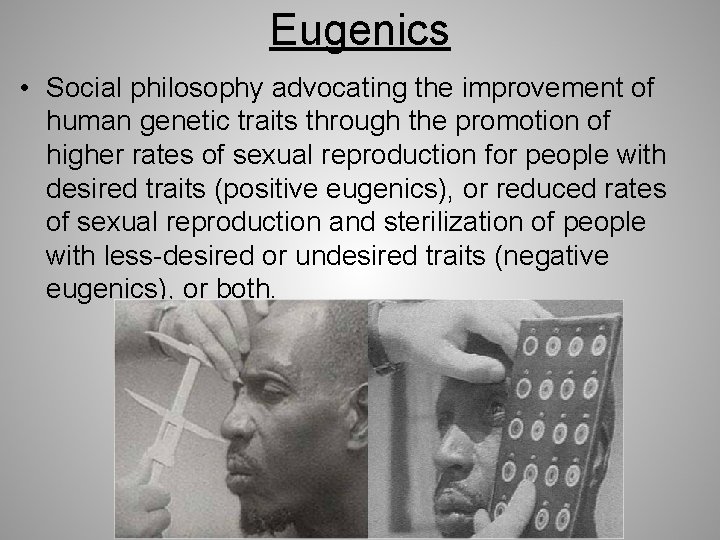
Eugenics • Social philosophy advocating the improvement of human genetic traits through the promotion of higher rates of sexual reproduction for people with desired traits (positive eugenics), or reduced rates of sexual reproduction and sterilization of people with less-desired or undesired traits (negative eugenics), or both.
Eugenics supporters hold signs criticizing various "genetically inferior" groups. Wall Street, New York, c. 1915.
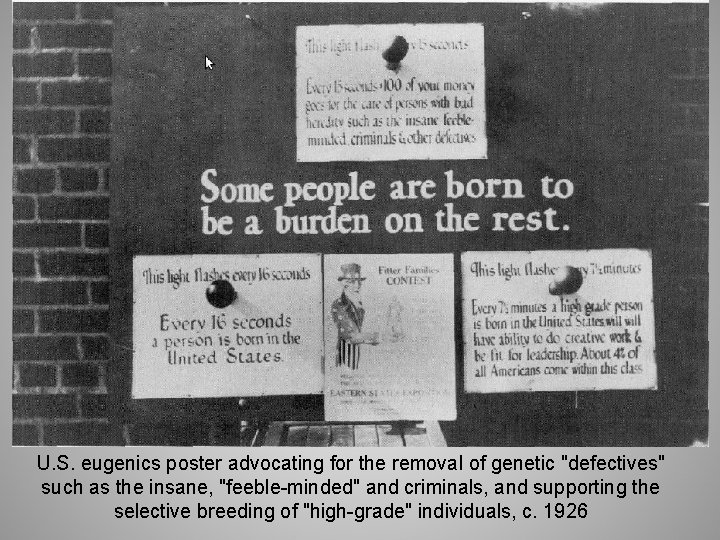
U. S. eugenics poster advocating for the removal of genetic "defectives" such as the insane, "feeble-minded" and criminals, and supporting the selective breeding of "high-grade" individuals, c. 1926
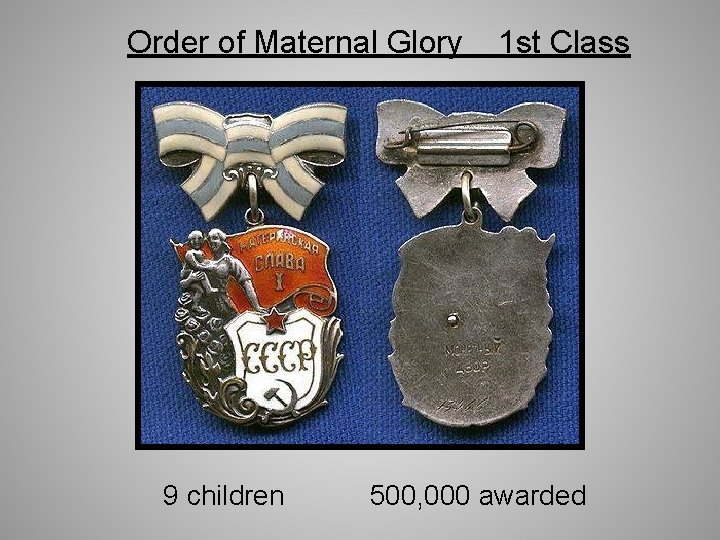
Order of Maternal Glory 9 children 1 st Class 500, 000 awarded
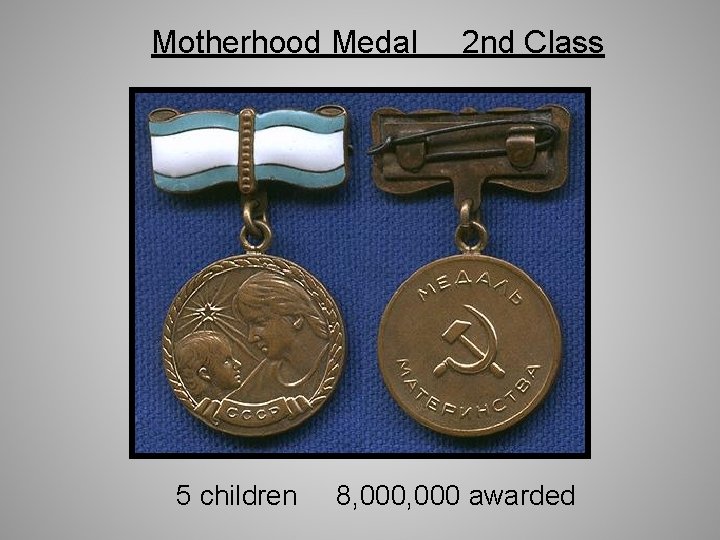
Motherhood Medal 5 children 2 nd Class 8, 000 awarded
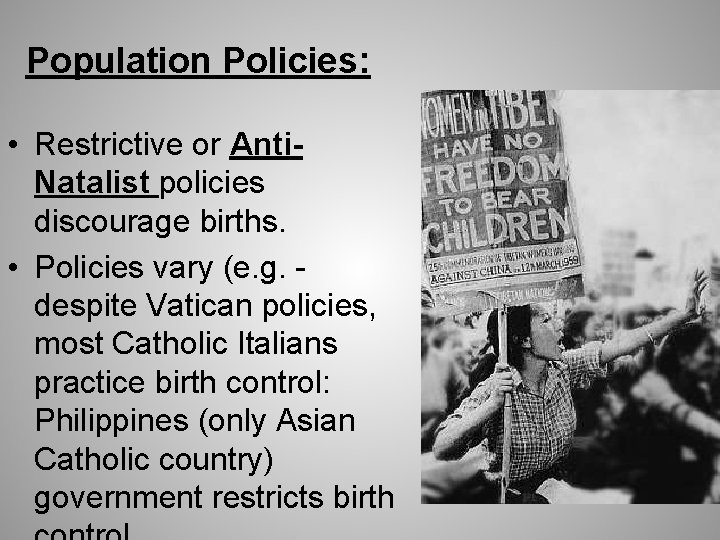
Population Policies: • Restrictive or Anti. Natalist policies discourage births. • Policies vary (e. g. despite Vatican policies, most Catholic Italians practice birth control: Philippines (only Asian Catholic country) government restricts birth
• Thinking historically, for what reasons do you think China currently has the largest population of any country on Earth?
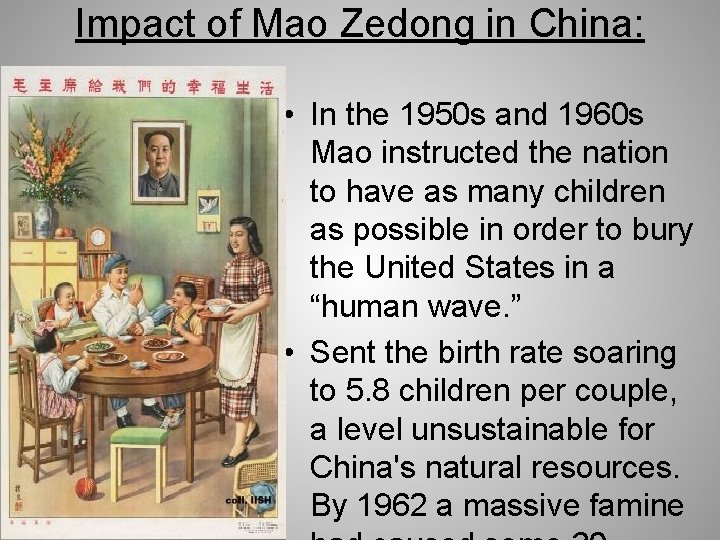
Impact of Mao Zedong in China: • In the 1950 s and 1960 s Mao instructed the nation to have as many children as possible in order to bury the United States in a “human wave. ” • Sent the birth rate soaring to 5. 8 children per couple, a level unsustainable for China's natural resources. By 1962 a massive famine
China’s “One Child Policy” China’s aggressive policy enforcement of the One couple, one child” is displayed on this billboard. • Introduced in 1979 by Deng Xiaoping after Mao’s death • Its aim was to reduce the rate of population growth • Economic and social rewards for those who adhere to it, penalties for those who do not
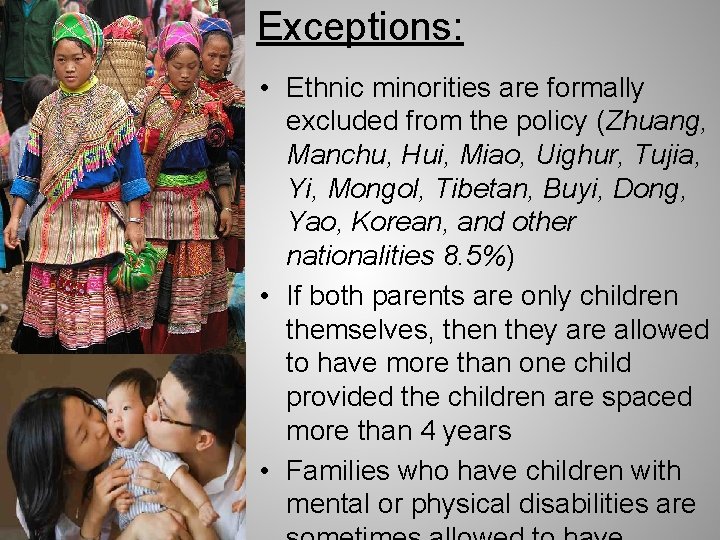
Exceptions: • Ethnic minorities are formally excluded from the policy (Zhuang, Manchu, Hui, Miao, Uighur, Tujia, Yi, Mongol, Tibetan, Buyi, Dong, Yao, Korean, and other nationalities 8. 5%) • If both parents are only children themselves, then they are allowed to have more than one child provided the children are spaced more than 4 years • Families who have children with mental or physical disabilities are
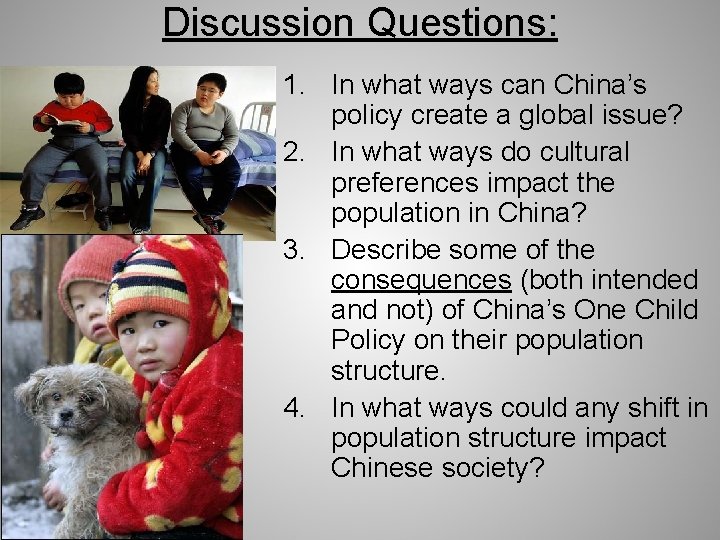
Discussion Questions: 1. In what ways can China’s policy create a global issue? 2. In what ways do cultural preferences impact the population in China? 3. Describe some of the consequences (both intended and not) of China’s One Child Policy on their population structure. 4. In what ways could any shift in population structure impact Chinese society?
• http: //www. china-europeusa. com/level_4_data/hum/011_7 a. htm
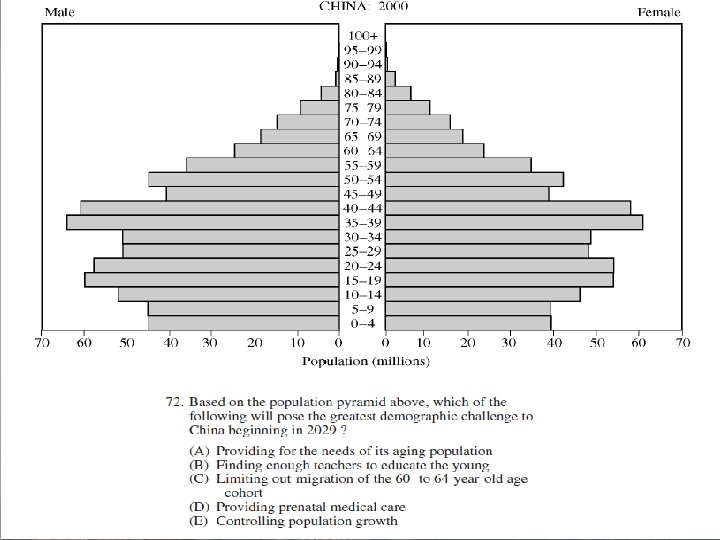
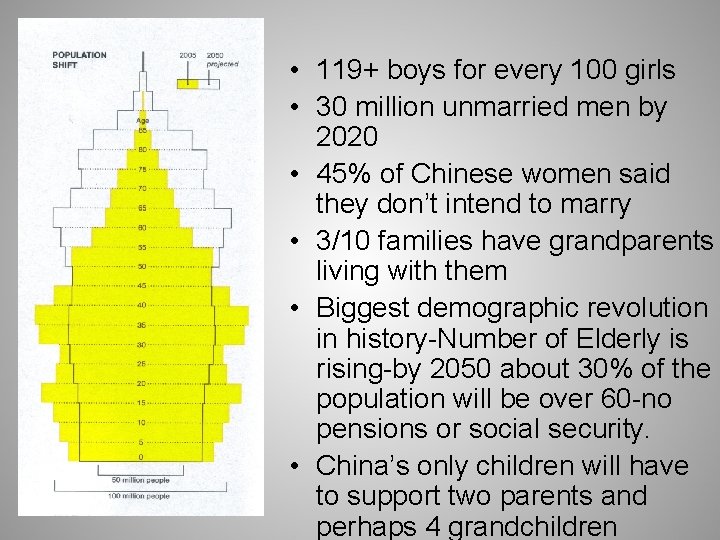
• 119+ boys for every 100 girls • 30 million unmarried men by 2020 • 45% of Chinese women said they don’t intend to marry • 3/10 families have grandparents living with them • Biggest demographic revolution in history-Number of Elderly is rising-by 2050 about 30% of the population will be over 60 -no pensions or social security. • China’s only children will have to support two parents and perhaps 4 grandchildren
• 60 minutes: • http: //www. youtube. com/watch? v=wxwd_affr 4 • As we watch the following 3 minute clip, try to identify some of the unintended consequences of China’s population policies
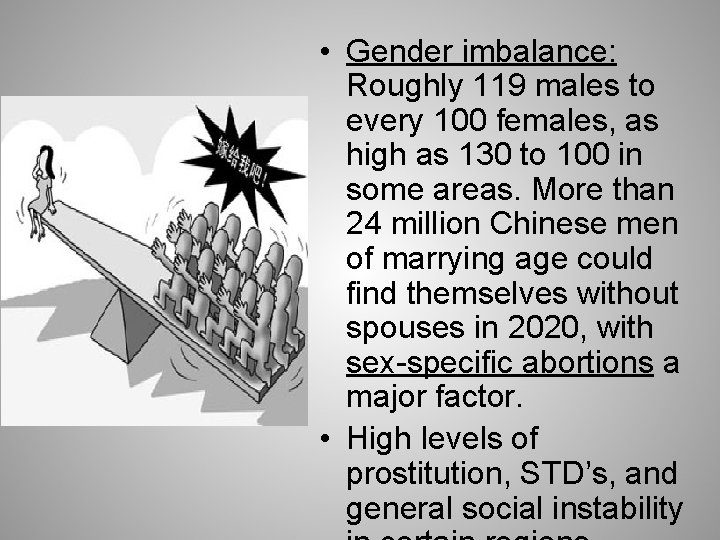
• Gender imbalance: Roughly 119 males to every 100 females, as high as 130 to 100 in some areas. More than 24 million Chinese men of marrying age could find themselves without spouses in 2020, with sex-specific abortions a major factor. • High levels of prostitution, STD’s, and general social instability
Effects on Women 1. ) Militia force if women do not show up on time for abortion/sterilization 2. ) High suicide rates 3. ) Abuse/murder if women is suspected to carry a girl 4. )Cultural belief: women thought to determine sex of the baby “Sun Zhonghua, a 34 year old mother of two, died, apparently after she was beaten for refusing to be sterilized. Officials say Sun jumped from the 4 th floor of a birth control administration building after being dragged from her home to be forcibly sterilized. ”
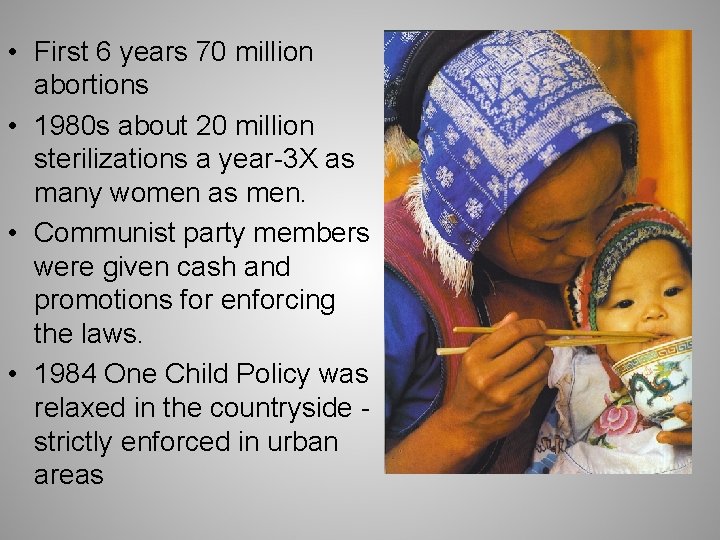
• First 6 years 70 million abortions • 1980 s about 20 million sterilizations a year-3 X as many women as men. • Communist party members were given cash and promotions for enforcing the laws. • 1984 One Child Policy was relaxed in the countryside strictly enforced in urban areas
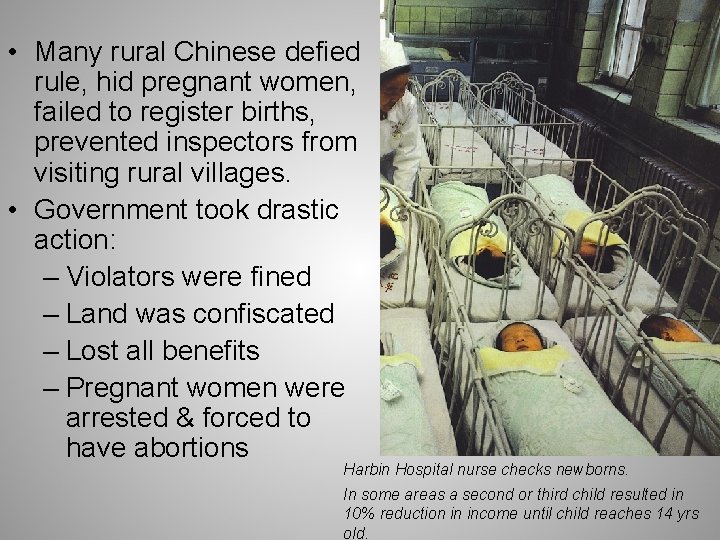
• Many rural Chinese defied rule, hid pregnant women, failed to register births, prevented inspectors from visiting rural villages. • Government took drastic action: – Violators were fined – Land was confiscated – Lost all benefits – Pregnant women were arrested & forced to have abortions Harbin Hospital nurse checks newborns. In some areas a second or third child resulted in 10% reduction in income until child reaches 14 yrs old.
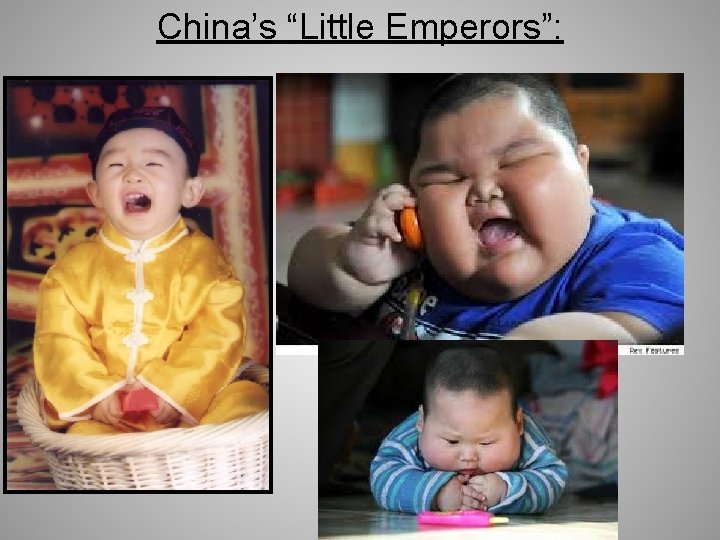
China’s “Little Emperors”:
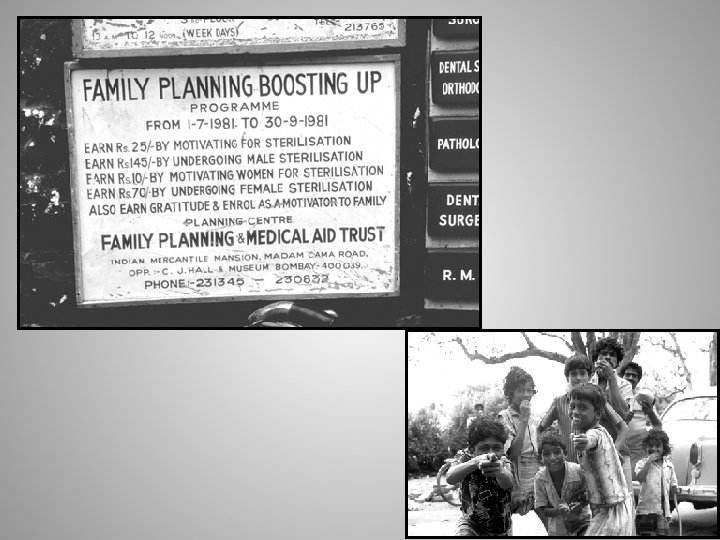
Anti-Natalist Policies: India
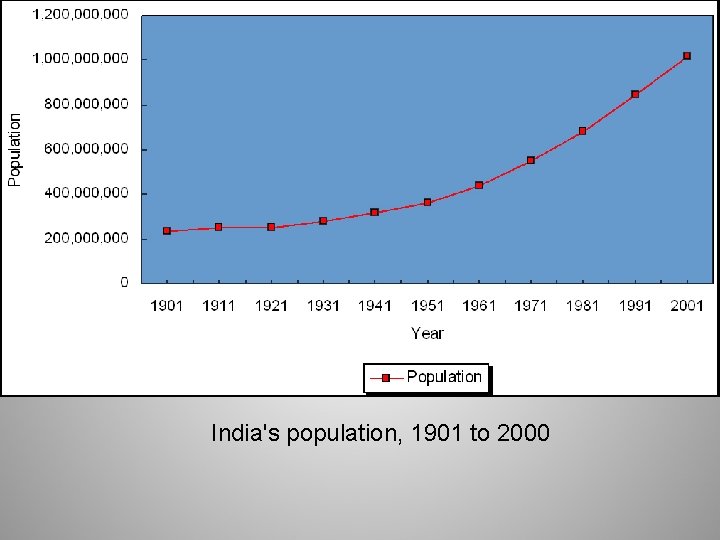
India's population, 1901 to 2000
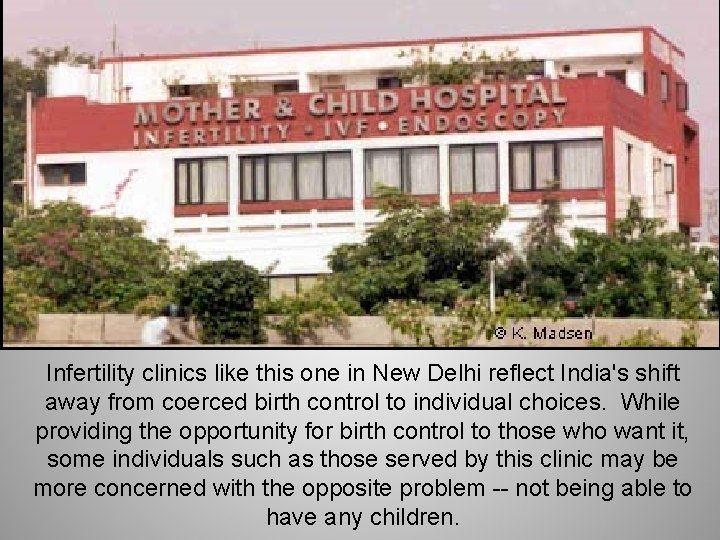
Infertility clinics like this one in New Delhi reflect India's shift away from coerced birth control to individual choices. While providing the opportunity for birth control to those who want it, some individuals such as those served by this clinic may be more concerned with the opposite problem -- not being able to have any children.
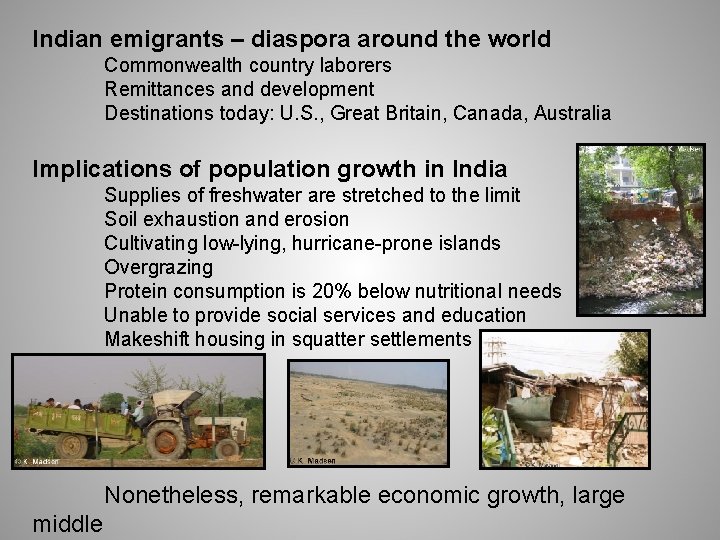
Indian emigrants – diaspora around the world Commonwealth country laborers Remittances and development Destinations today: U. S. , Great Britain, Canada, Australia Implications of population growth in India Supplies of freshwater are stretched to the limit Soil exhaustion and erosion Cultivating low-lying, hurricane-prone islands Overgrazing Protein consumption is 20% below nutritional needs Unable to provide social services and education Makeshift housing in squatter settlements Nonetheless, remarkable economic growth, large middle
Discussion 1. Does a government (any government) have the right to dictate citizens reproductive behavior? 2. In what ways is China’s One Child Policy necessary? Did China have other options for the control of their population? 3. Bearing in mind your answers to the above question, make an argument as to whether the policy should or should not exist.