
TOPIC NMR FOR CLASS 6 TH SEMESTER PRESENTED

- Slides: 50
TOPIC : NMR FOR CLASS 6 TH SEMESTER PRESENTED BY DR. K. K. BORAH ASSOCIATE PROFESSOR, DEPT OF CHEMISTRY, MANGALDAI COLLEGE
NUCLEAR MAGNETIC RESONANCE
NMR : Powerful device for locating positions of nuclei In 1945, Discovered by Purcell, Torrey and Pound at Harvard Bloch, Hansen, Packard at Stanford Nobel Prize Et. OH : first compound studied
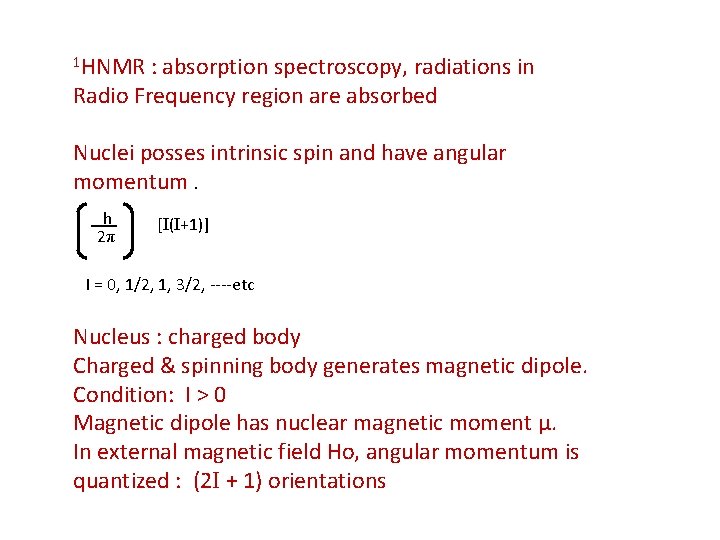
1 HNMR : absorption spectroscopy, radiations in Radio Frequency region are absorbed Nuclei posses intrinsic spin and have angular momentum. h 2π [I(I+1)] I = 0, 1/2, 1, 3/2, ----etc Nucleus : charged body Charged & spinning body generates magnetic dipole. Condition: I > 0 Magnetic dipole has nuclear magnetic moment μ. In external magnetic field Ho, angular momentum is quantized : (2І + 1) orientations
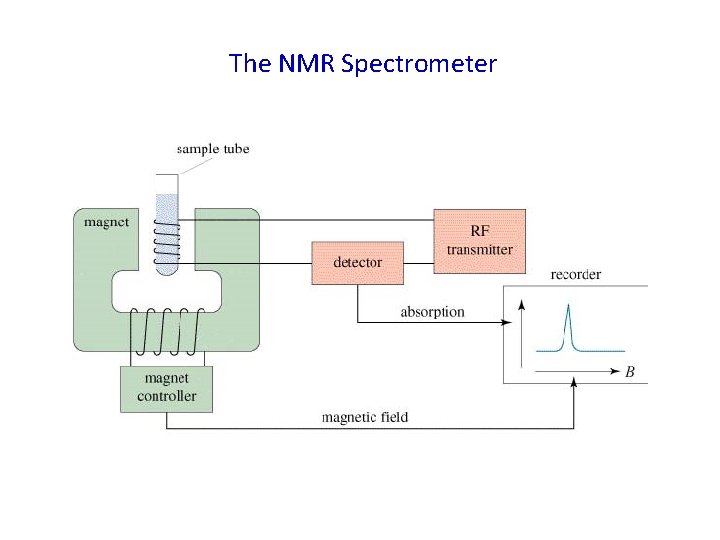
The NMR Spectrometer
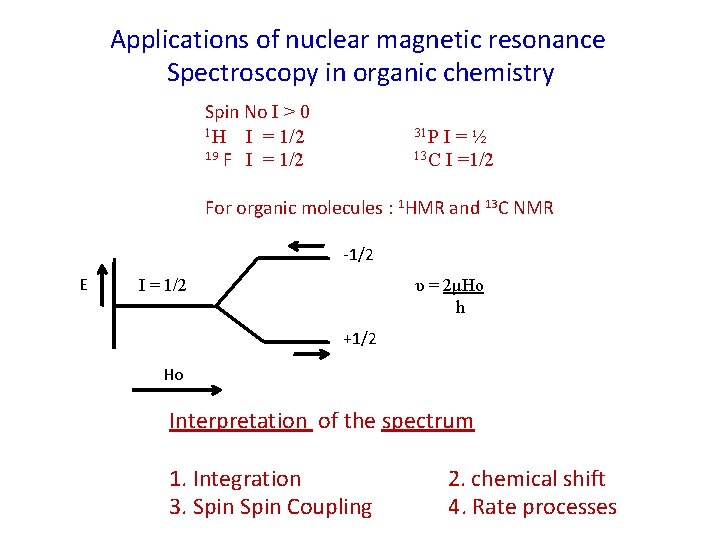
Applications of nuclear magnetic resonance Spectroscopy in organic chemistry Spin No I > 0 1 H I = 1/2 19 F I = 1/2 31 P I=½ 13 C I =1/2 For organic molecules : 1 HMR and 13 C NMR -1/2 E I = 1/2 υ = 2μHo h +1/2 Ho Interpretation of the spectrum 1. Integration 3. Spin Coupling 2. chemical shift 4. Rate processes
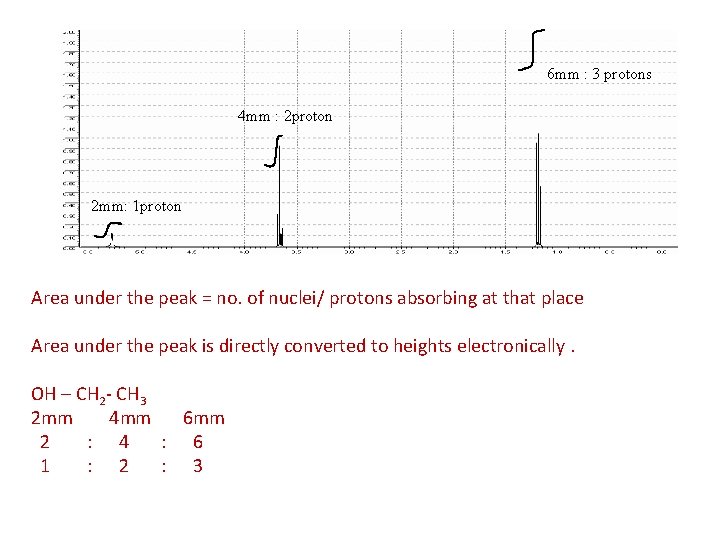
6 mm : 3 protons 4 mm : 2 proton 2 mm: 1 proton Area under the peak = no. of nuclei/ protons absorbing at that place Area under the peak is directly converted to heights electronically. OH – CH 2 - CH 3 2 mm 4 mm 6 mm 2 : 4 : 6 1 : 2 : 3
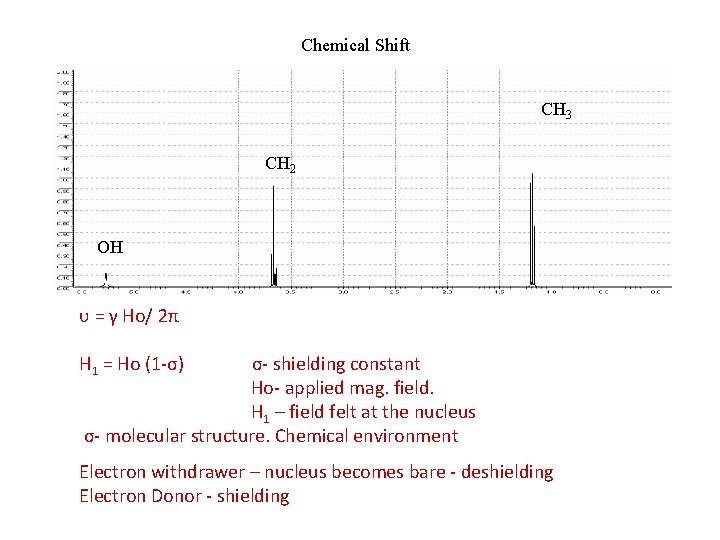
Chemical Shift CH 3 CH 2 OH υ = γ Ho/ 2π H 1 = Ho (1 -σ) σ- shielding constant Ho- applied mag. field. H 1 – field felt at the nucleus σ- molecular structure. Chemical environment Electron withdrawer – nucleus becomes bare - deshielding Electron Donor - shielding
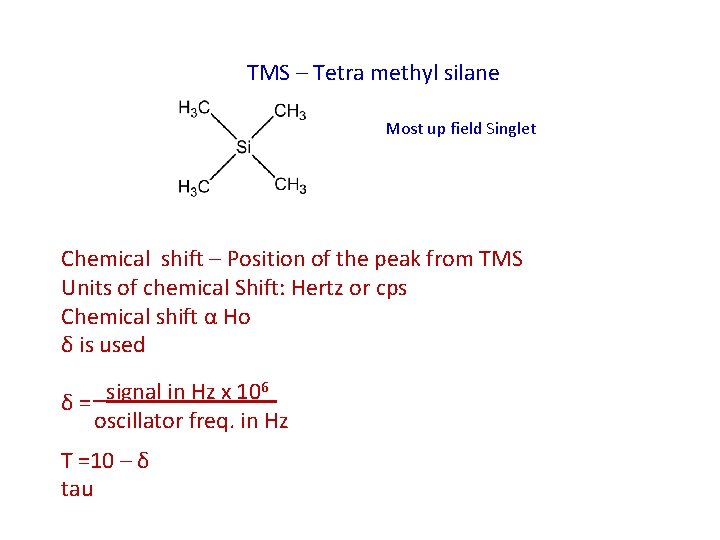
TMS – Tetra methyl silane Most up field Singlet Chemical shift – Position of the peak from TMS Units of chemical Shift: Hertz or cps Chemical shift α Ho δ is used 6 signal in Hz x 10 δ= oscillator freq. in Hz Τ =10 – δ tau
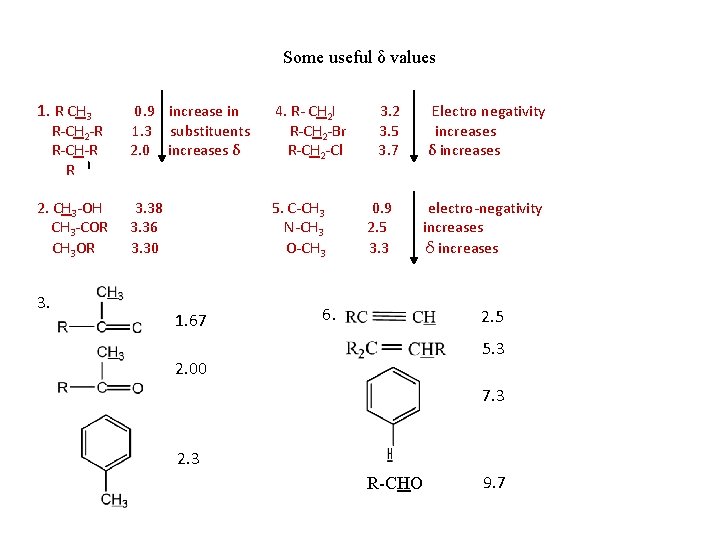
Some useful δ values 1. R CH 3 0. 9 increase in 1. 3 substituents 2. 0 increases δ 4. R- CH 2І R-CH 2 -Br R-CH 2 -Cl 2. CH 3 -OH CH 3 -COR CH 3 OR 3. 38 3. 36 3. 30 5. C-CH 3 N-CH 3 O-CH 3 R-CH 2 -R R-CH-R R 3. 1. 67 3. 2 3. 5 3. 7 0. 9 2. 5 3. 3 Electro negativity increases δ increases electro-negativity increases δ increases 6. 2. 5 5. 3 2. 00 7. 3 2. 3 R-CHO 9. 7
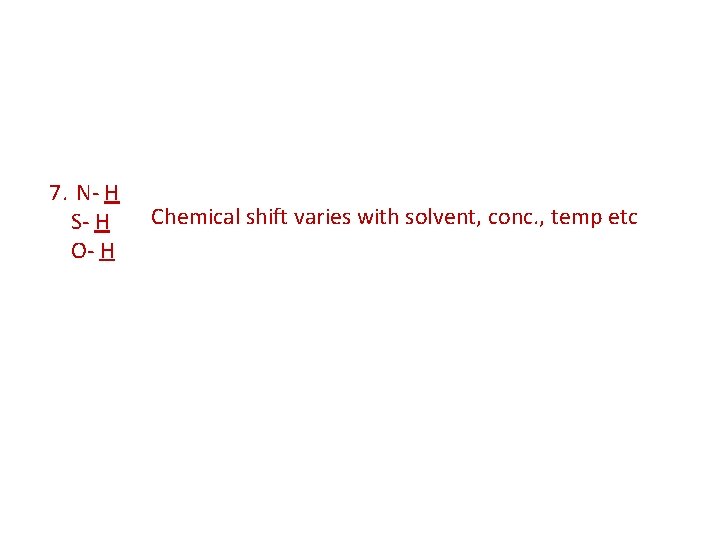
7. N- H S- H O- H Chemical shift varies with solvent, conc. , temp etc
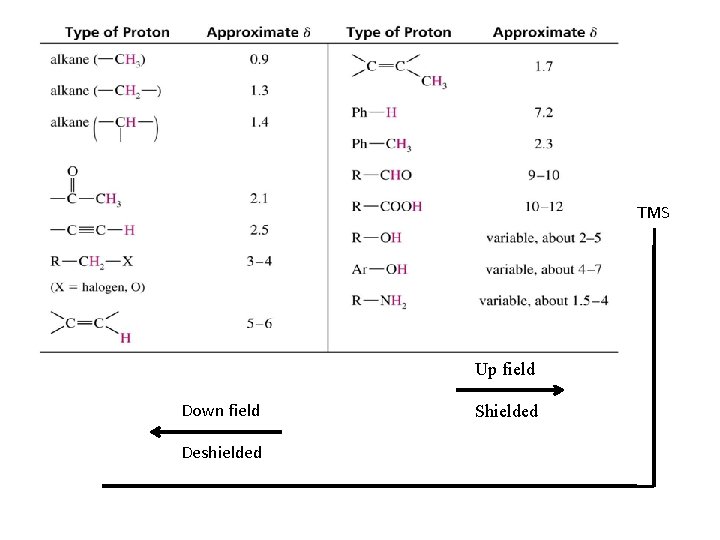
TMS Up field Down field Deshielded Shielded
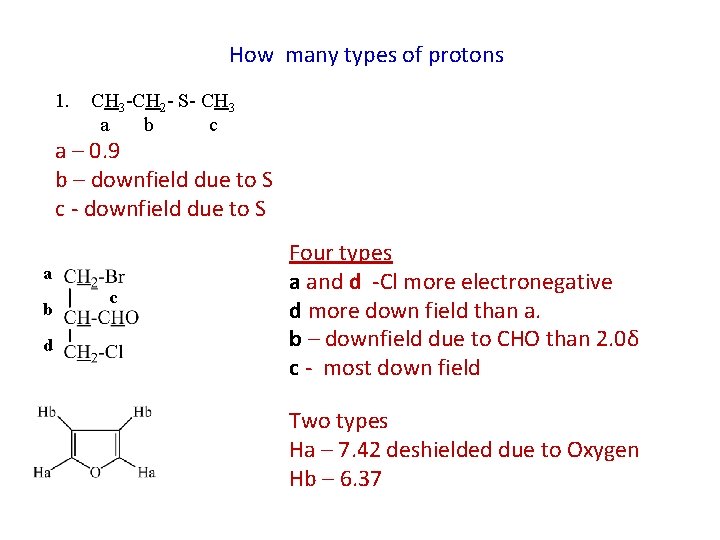
How many types of protons 1. CH 3 -CH 2 - S- CH 3 a b c a – 0. 9 b – downfield due to S c - downfield due to S a b d c Four types a and d -Cl more electronegative d more down field than a. b – downfield due to CHO than 2. 0δ c - most down field Two types Ha – 7. 42 deshielded due to Oxygen Hb – 6. 37
Spin spin coupling a. Geminal coupling b. Vicinal coupling c. Long range coupling
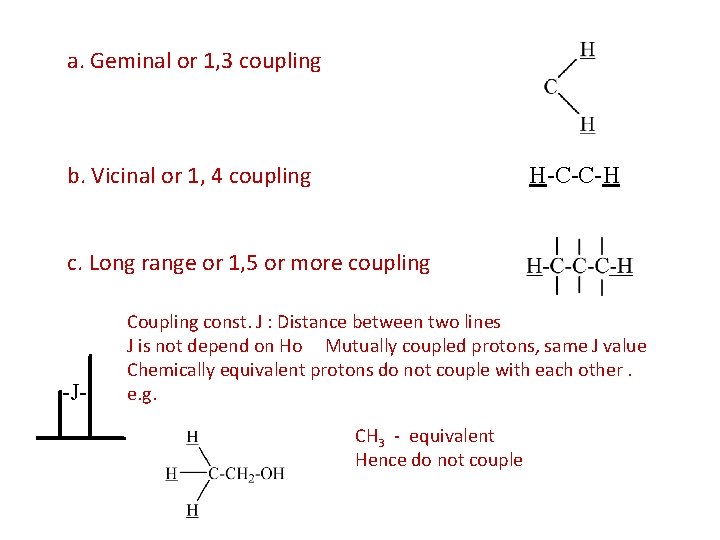
a. Geminal or 1, 3 coupling b. Vicinal or 1, 4 coupling H-C-C-H c. Long range or 1, 5 or more coupling -J- Coupling const. J : Distance between two lines J is not depend on Ho Mutually coupled protons, same J value Chemically equivalent protons do not couple with each other. e. g. CH 3 - equivalent Hence do not couple
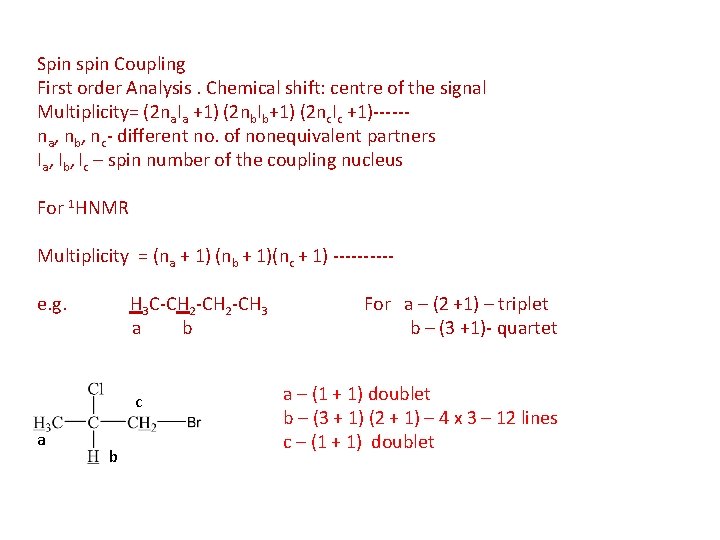
Spin spin Coupling First order Analysis. Chemical shift: centre of the signal Multiplicity= (2 naІa +1) (2 nbІb+1) (2 ncІc +1)-----na, nb, nc- different no. of nonequivalent partners Іa, Іb, Іc – spin number of the coupling nucleus For 1 HNMR Multiplicity = (na + 1) (nb + 1)(nc + 1) -----e. g. H 3 C-CH 2 -CH 3 a b c a b For a – (2 +1) – triplet b – (3 +1)- quartet a – (1 + 1) doublet b – (3 + 1) (2 + 1) – 4 x 3 – 12 lines c – (1 + 1) doublet
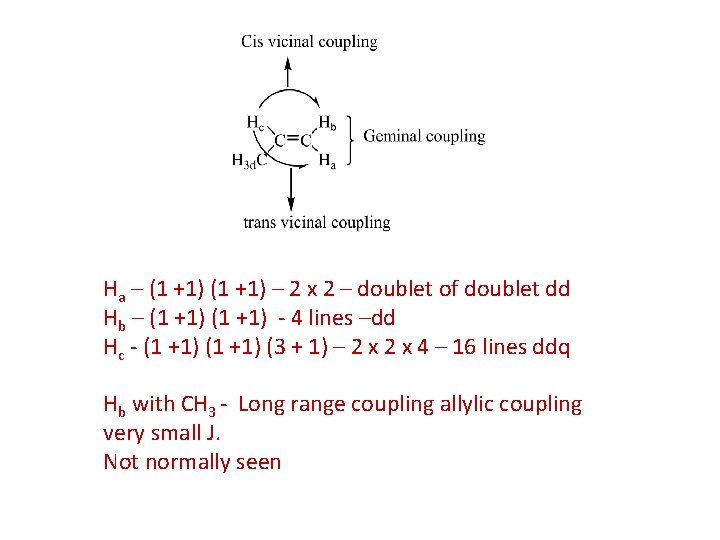
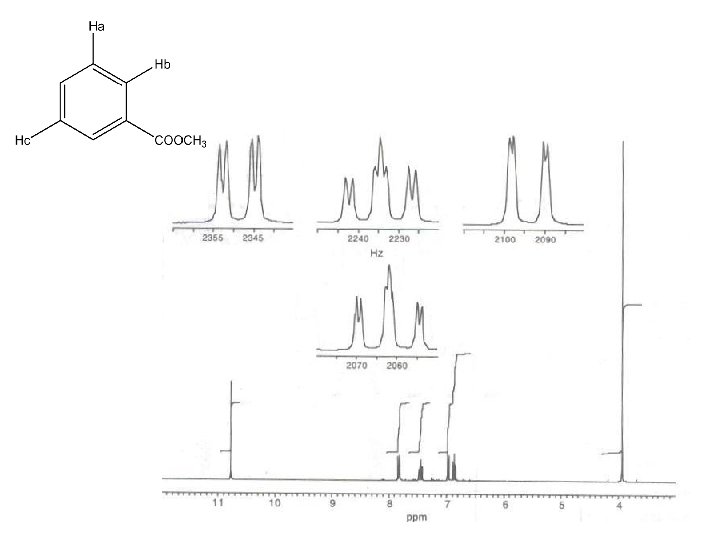
Ha – (1 +1) – 2 x 2 – doublet of doublet dd Hb – (1 +1) - 4 lines –dd Hc - (1 +1) (3 + 1) – 2 x 4 – 16 lines ddq Hb with CH 3 - Long range coupling allylic coupling very small J. Not normally seen
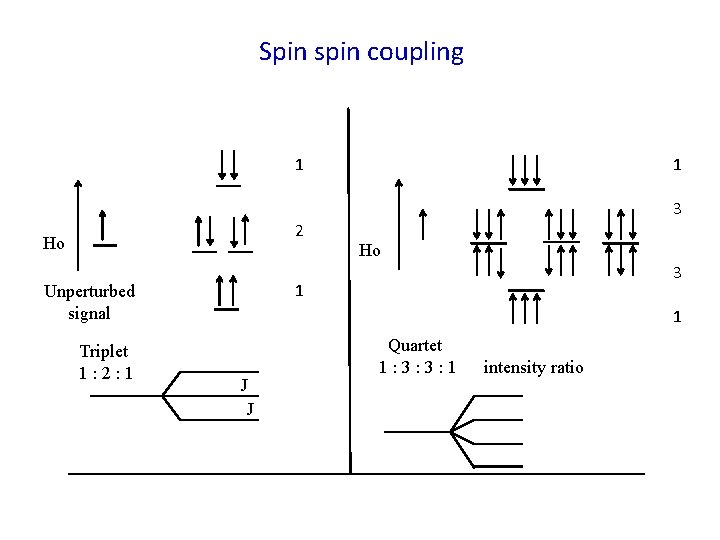
Spin spin coupling 1 1 3 2 Ho 3 1 Unperturbed signal Triplet 1: 2: 1 Ho 1 J J Quartet 1: 3: 3: 1 intensity ratio
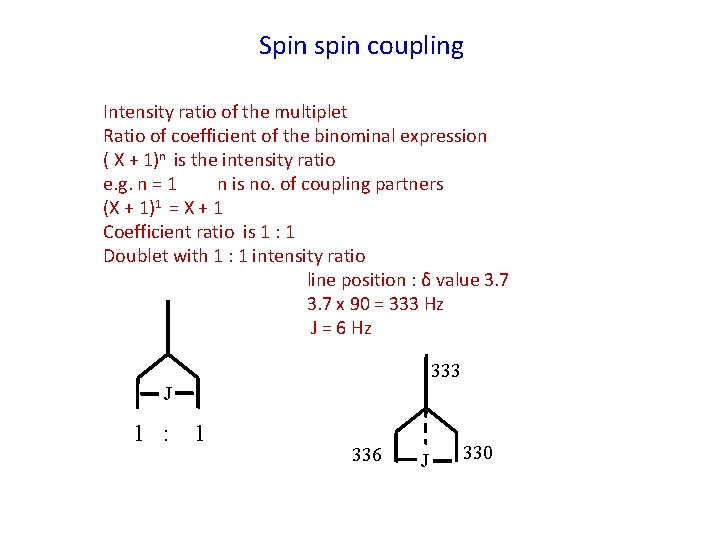
Spin spin coupling Intensity ratio of the multiplet Ratio of coefficient of the binominal expression ( X + 1)n is the intensity ratio e. g. n = 1 n is no. of coupling partners (X + 1)1 = X + 1 Coefficient ratio is 1 : 1 Doublet with 1 : 1 intensity ratio line position : δ value 3. 7 x 90 = 333 Hz J = 6 Hz 333 J 1 : 1 336 J 330
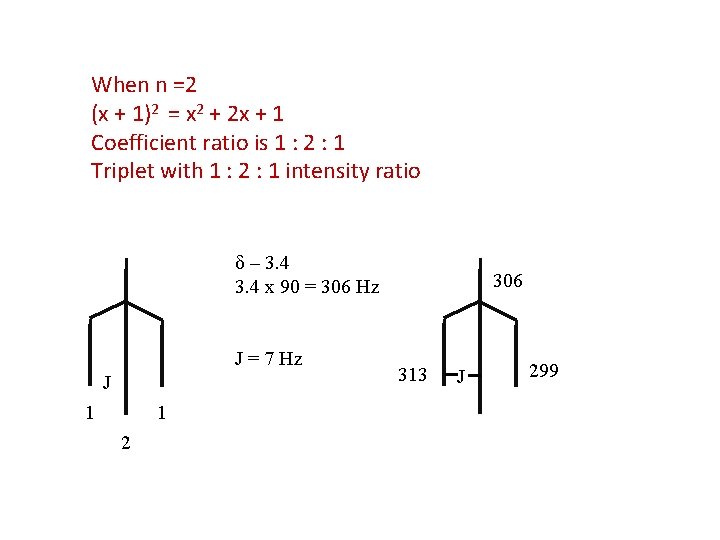
When n =2 (x + 1)2 = x 2 + 2 x + 1 Coefficient ratio is 1 : 2 : 1 Triplet with 1 : 2 : 1 intensity ratio δ – 3. 4 x 90 = 306 Hz J = 7 Hz J 1 1 2 306 313 J 299
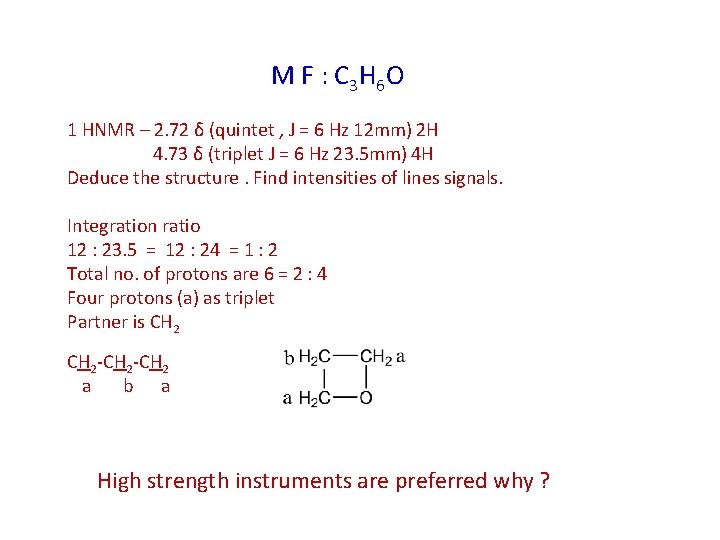
M F : C 3 H 6 O 1 HNMR – 2. 72 δ (quintet , J = 6 Hz 12 mm) 2 H 4. 73 δ (triplet J = 6 Hz 23. 5 mm) 4 H Deduce the structure. Find intensities of lines signals. Integration ratio 12 : 23. 5 = 12 : 24 = 1 : 2 Total no. of protons are 6 = 2 : 4 Four protons (a) as triplet Partner is CH 2 -CH 2 a b a High strength instruments are preferred why ?
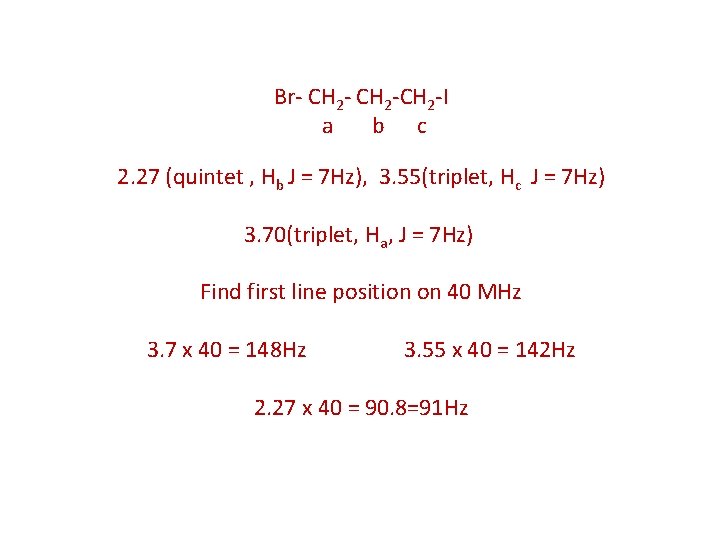
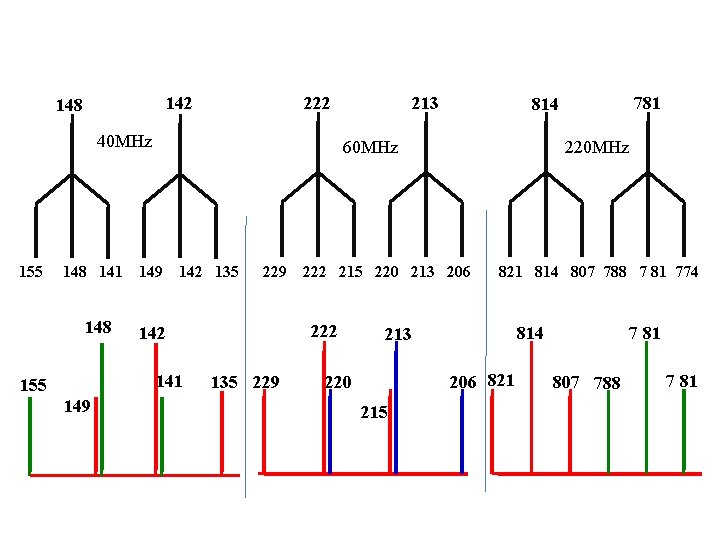
Br- CH 2 -CH 2 -І a b c 2. 27 (quintet , Hb J = 7 Hz), 3. 55(triplet, Hc J = 7 Hz) 3. 70(triplet, Ha, J = 7 Hz) Find first line position on 40 MHz 3. 7 x 40 = 148 Hz 3. 55 x 40 = 142 Hz 2. 27 x 40 = 90. 8=91 Hz
222 148 40 MHz 155 148 141 148 149 142 135 149 229 135 229 220 MHz 222 215 220 213 206 222 142 821 814 807 788 7 81 774 814 213 206 821 220 215 781 814 60 MHz 141 155 213 7 81 807 788 7 81
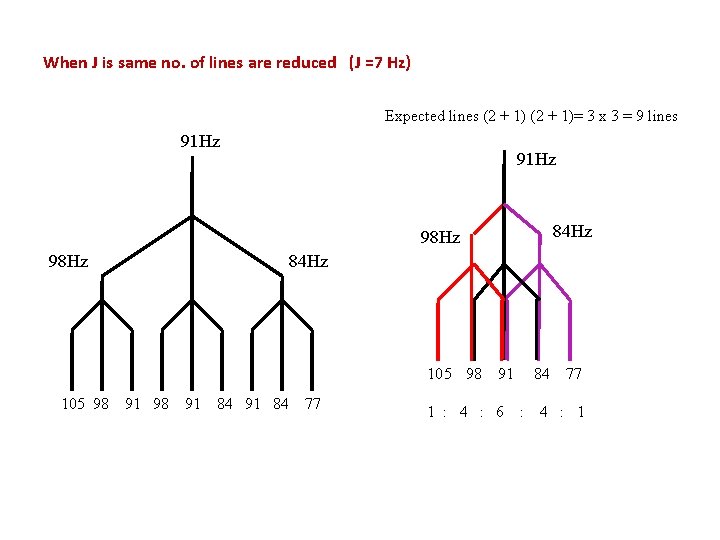
When J is same no. of lines are reduced (J =7 Hz) Expected lines (2 + 1)= 3 x 3 = 9 lines 91 Hz 84 Hz 98 Hz 84 Hz 105 98 91 84 77 1 : 4 : 6 84 : 77 4 : 1
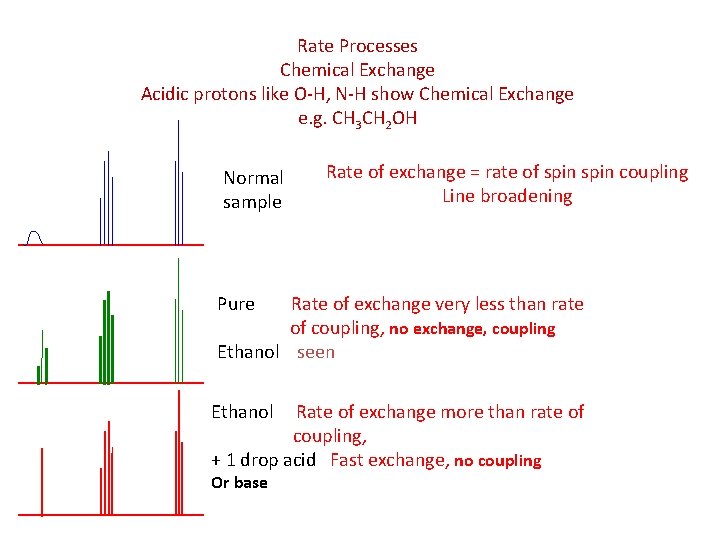
Rate Processes Chemical Exchange Acidic protons like O-H, N-H show Chemical Exchange e. g. CH 3 CH 2 OH Normal sample Rate of exchange = rate of spin coupling Line broadening Pure Rate of exchange very less than rate of coupling, no exchange, coupling Ethanol seen Ethanol Rate of exchange more than rate of coupling, + 1 drop acid Fast exchange, no coupling Or base
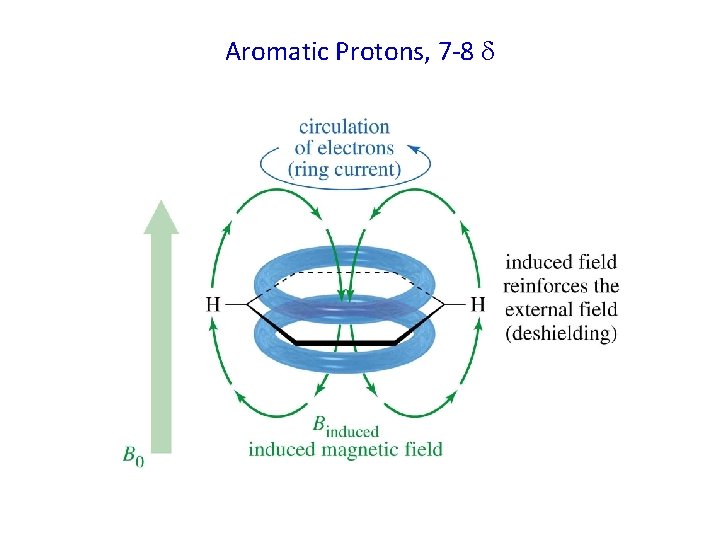
Aromatic Protons, 7 -8
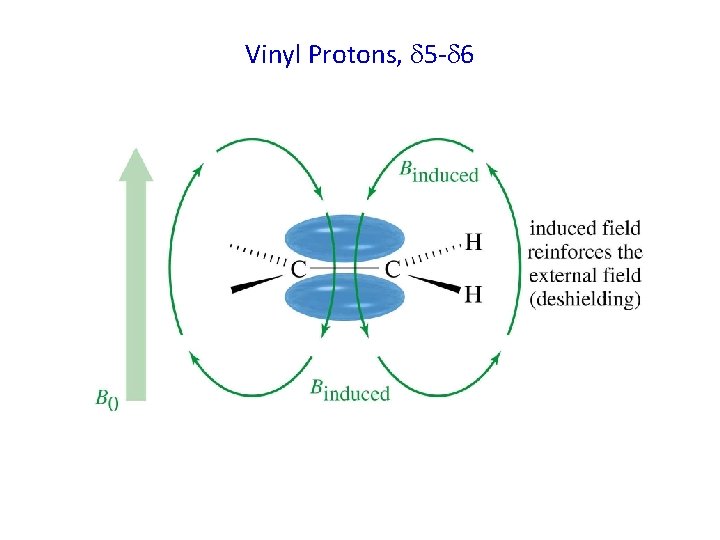
Vinyl Protons, 5 - 6
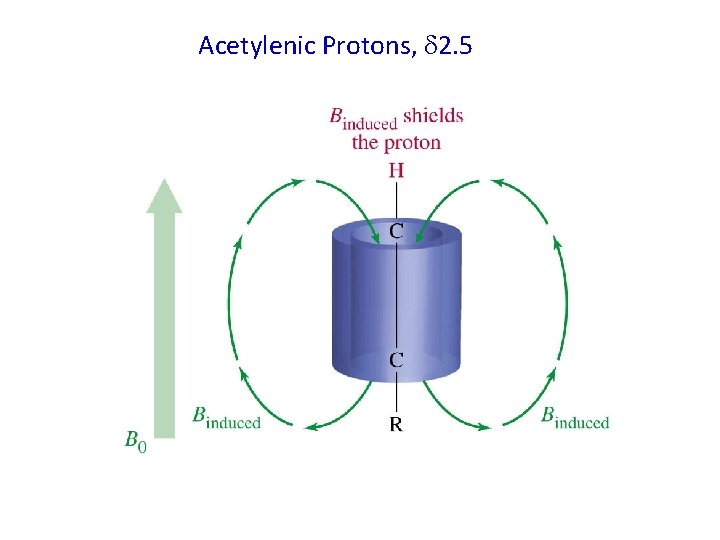
Acetylenic Protons, 2. 5
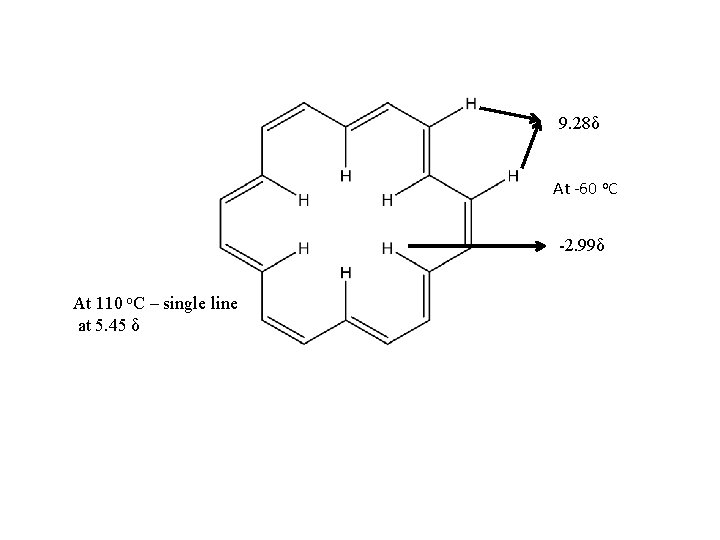
9. 28δ At -60 o. C -2. 99δ At 110 o. C – single line at 5. 45 δ
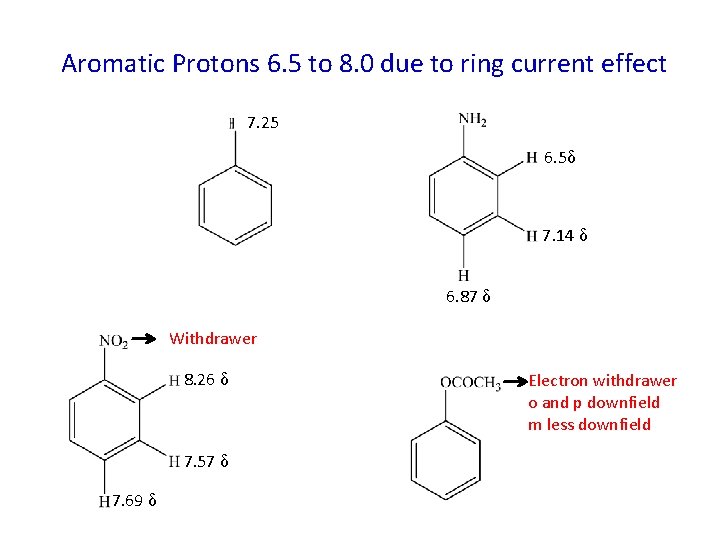
Aromatic Protons 6. 5 to 8. 0 due to ring current effect 7. 25 6. 5δ 7. 14 δ 6. 87 δ Withdrawer 8. 26 δ 7. 57 δ 7. 69 δ Electron withdrawer o and p downfield m less downfield
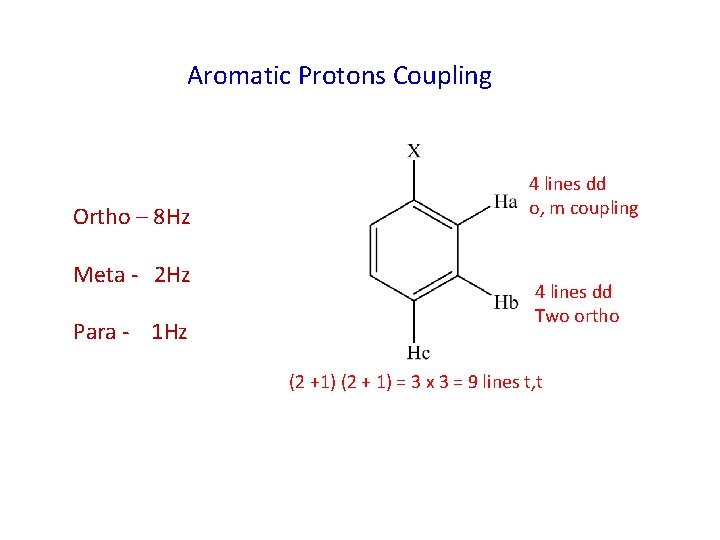
Aromatic Protons Coupling Ortho – 8 Hz Meta - 2 Hz Para - 1 Hz 4 lines dd o, m coupling 4 lines dd Two ortho (2 +1) (2 + 1) = 3 x 3 = 9 lines t, t
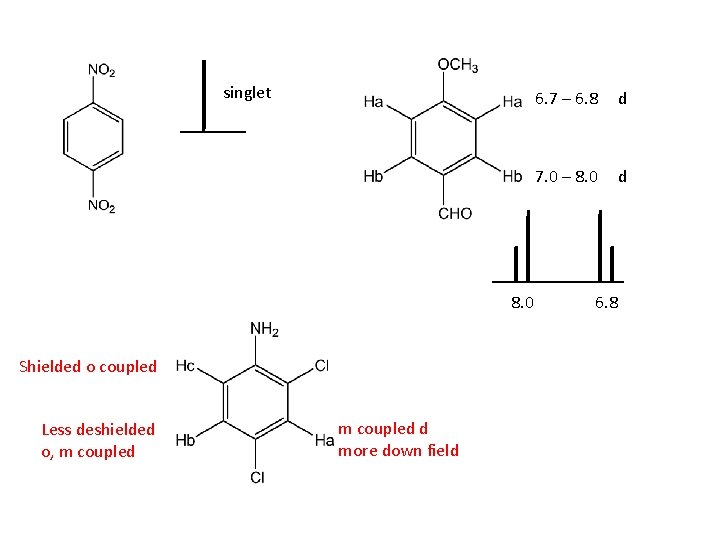
singlet 8. 0 Shielded o coupled Less deshielded o, m coupled d more down field 6. 7 – 6. 8 d 7. 0 – 8. 0 d 6. 8
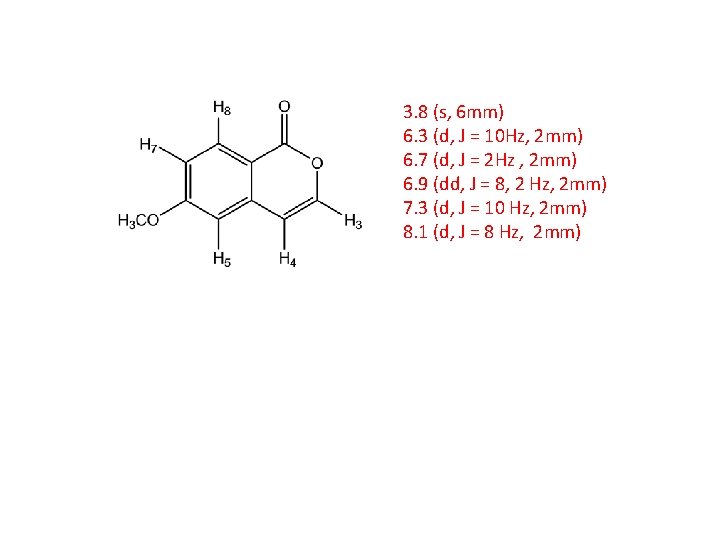
3. 8 (s, 6 mm) 6. 3 (d, J = 10 Hz, 2 mm) 6. 7 (d, J = 2 Hz , 2 mm) 6. 9 (dd, J = 8, 2 Hz, 2 mm) 7. 3 (d, J = 10 Hz, 2 mm) 8. 1 (d, J = 8 Hz, 2 mm)
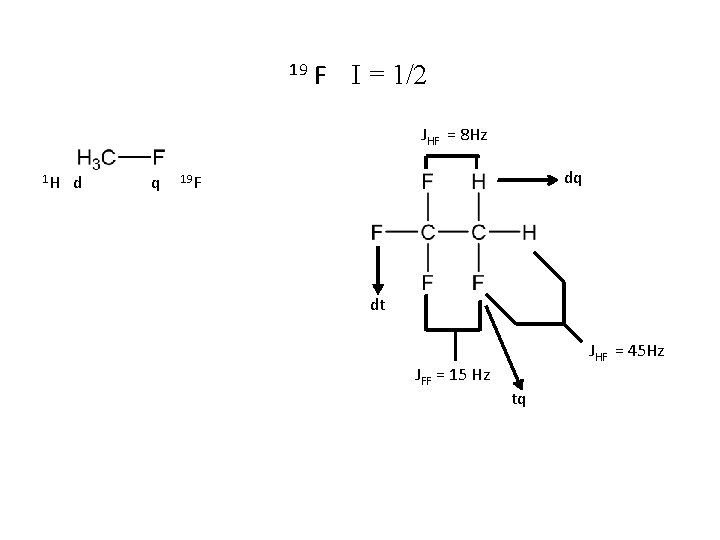
19 F І = 1/2 JHF = 8 Hz 1 H d q dq 19 F dt JFF = 15 Hz JHF = 45 Hz tq
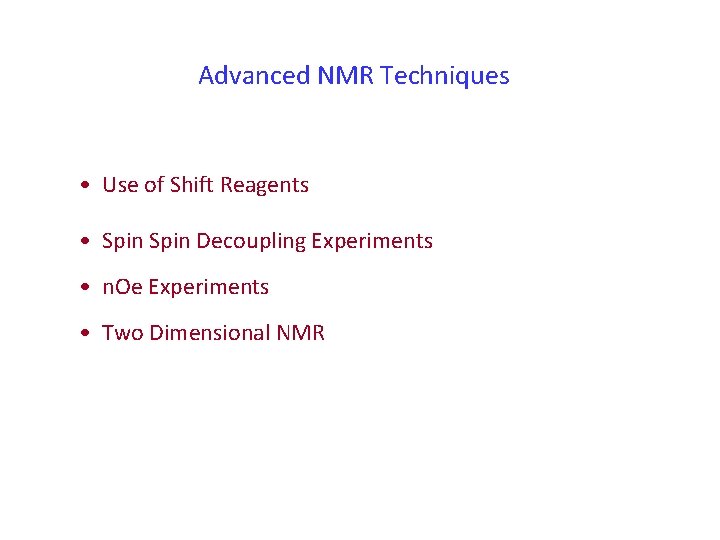
Advanced NMR Techniques • Use of Shift Reagents • Spin Decoupling Experiments • n. Oe Experiments • Two Dimensional NMR
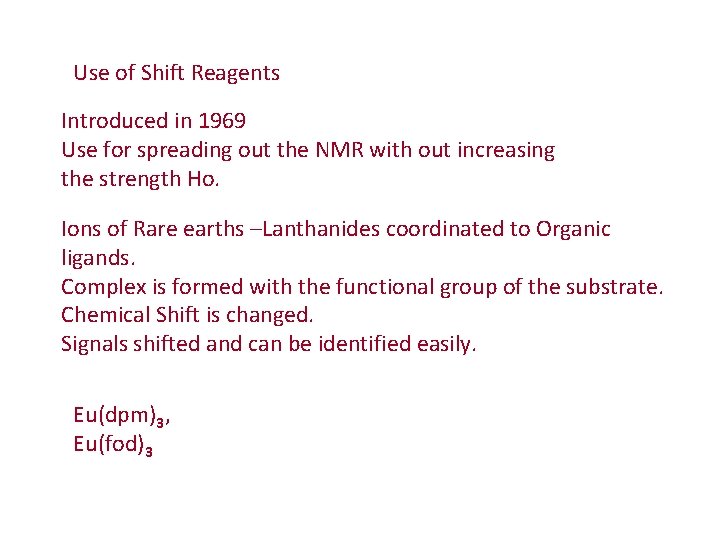
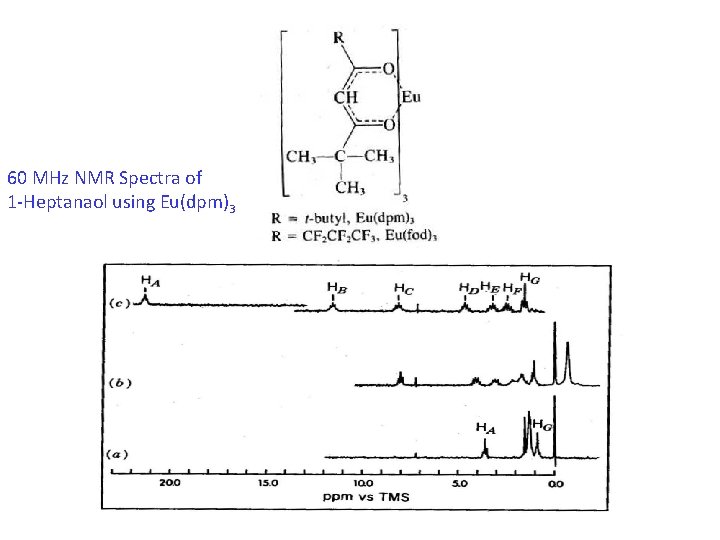
Use of Shift Reagents Introduced in 1969 Use for spreading out the NMR with out increasing the strength Ho. Ions of Rare earths –Lanthanides coordinated to Organic ligands. Complex is formed with the functional group of the substrate. Chemical Shift is changed. Signals shifted and can be identified easily. Eu(dpm)3, Eu(fod)3
60 MHz NMR Spectra of 1 -Heptanaol using Eu(dpm)3
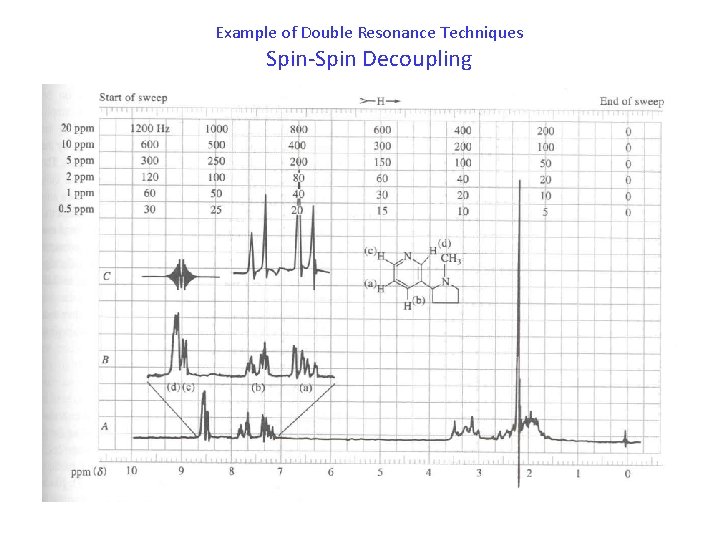
Example of Double Resonance Techniques Spin-Spin Decoupling
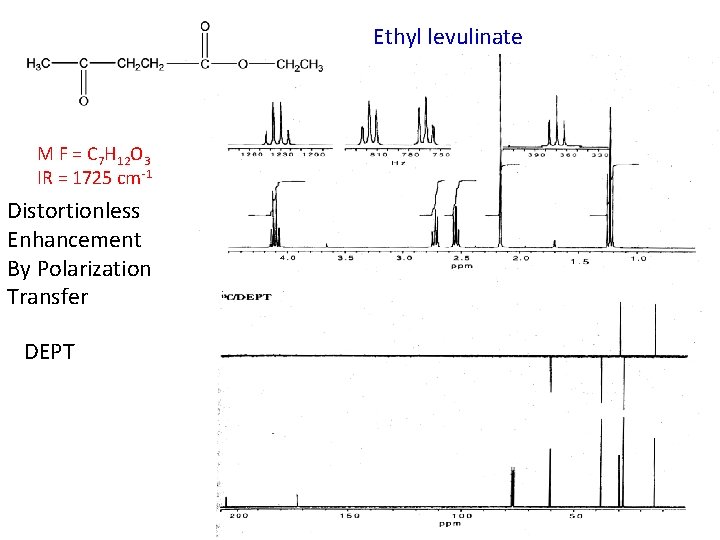
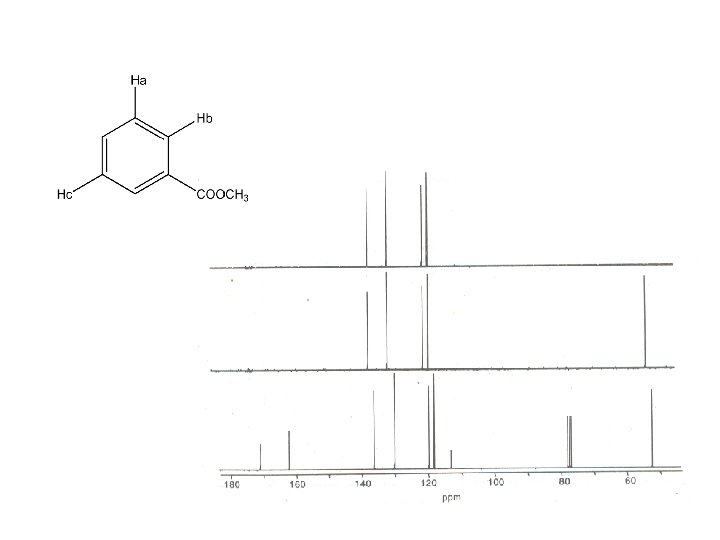
Ethyl levulinate M F = C 7 H 12 O 3 IR = 1725 cm-1 Distortionless Enhancement By Polarization Transfer DEPT
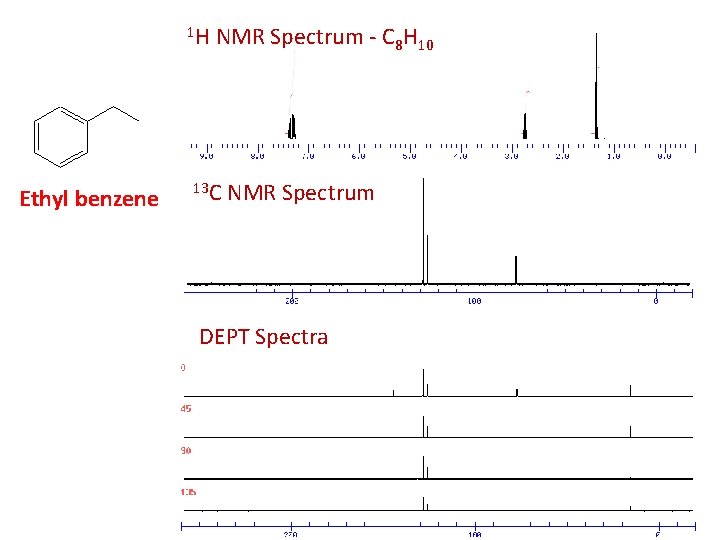
1 H Ethyl benzene NMR Spectrum - C 8 H 10 13 C NMR Spectrum DEPT Spectra
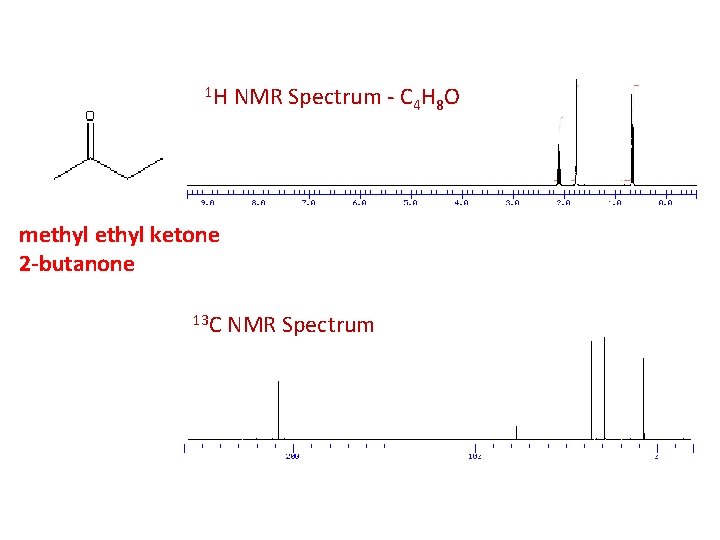
1 H NMR Spectrum - C 4 H 8 O methyl ketone 2 -butanone 13 C NMR Spectrum
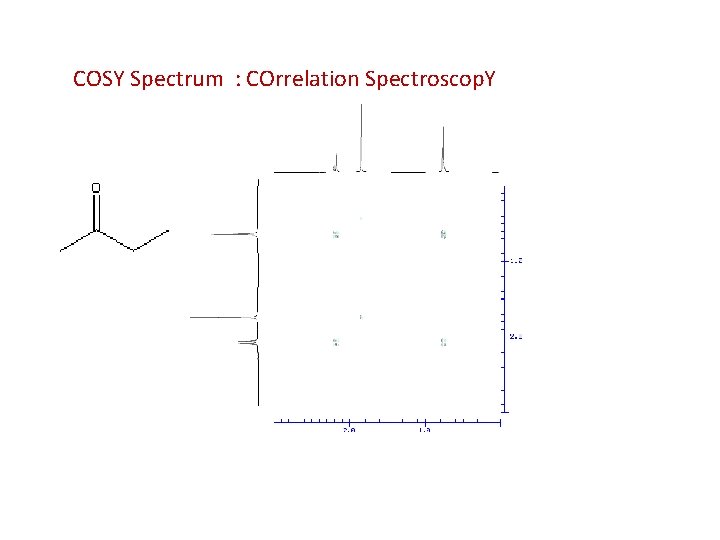
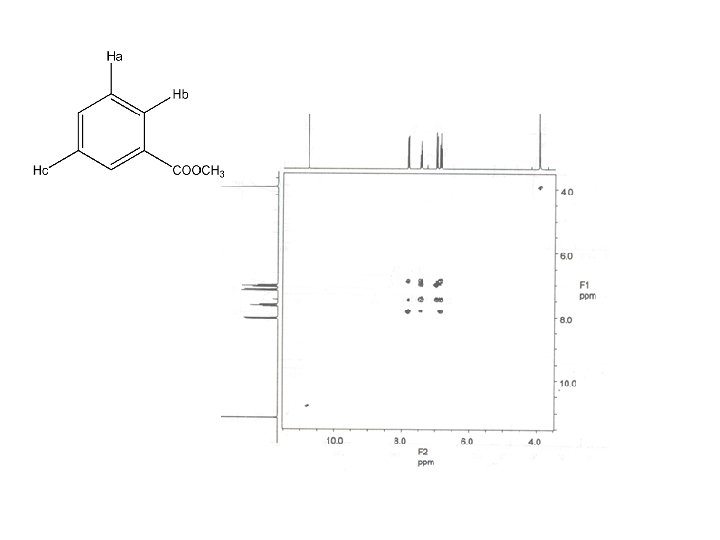
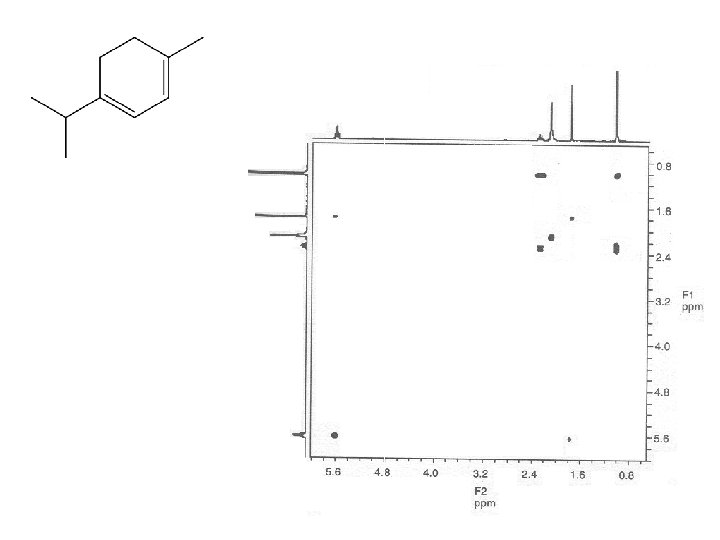
COSY Spectrum : COrrelation Spectroscop. Y
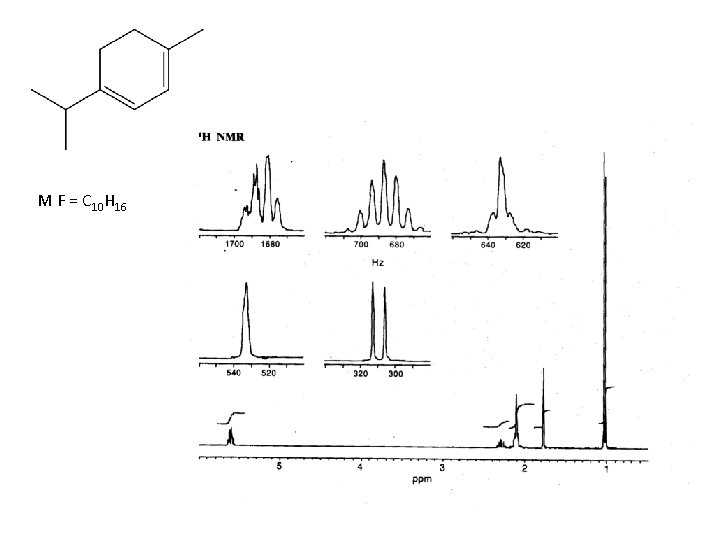
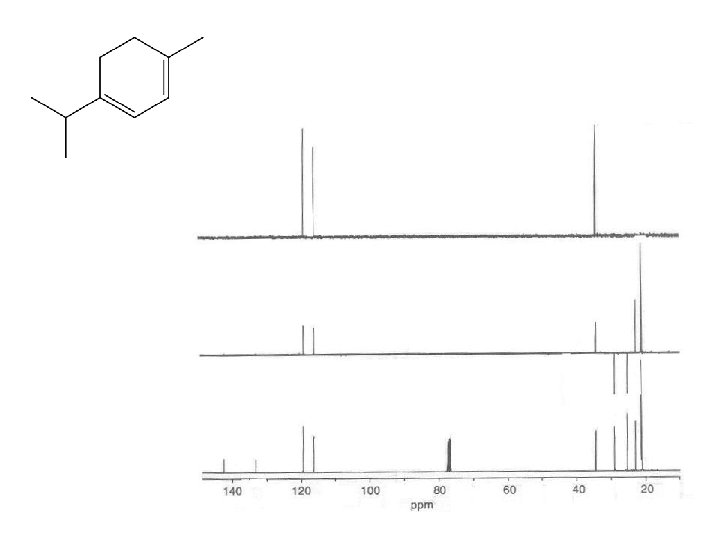
M F = C 10 H 16
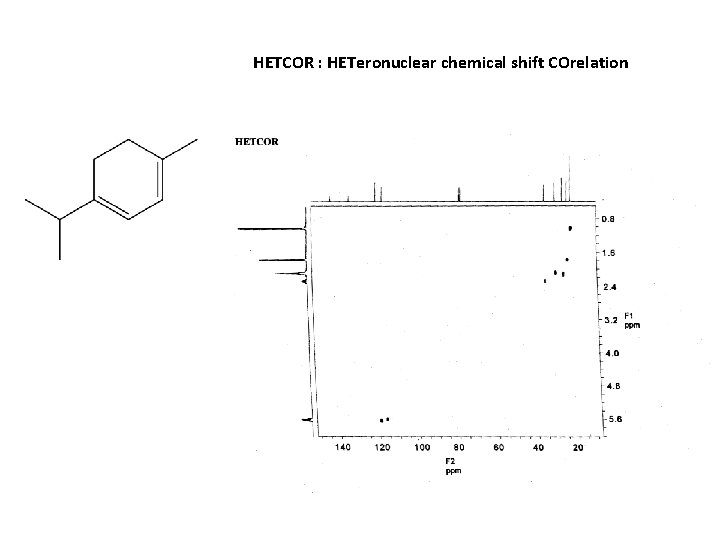
HETCOR : HETeronuclear chemical shift COrelation
Thank You