
Topic Molecular Shape Do Now Draw Lewis Dot
- Slides: 22
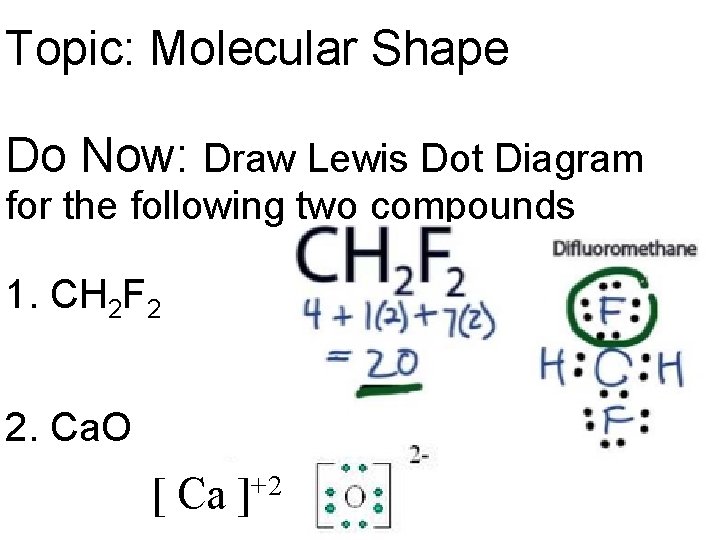
Topic: Molecular Shape Do Now: Draw Lewis Dot Diagram for the following two compounds 1. CH 2 F 2 2. Ca. O [ Ca +2 ]
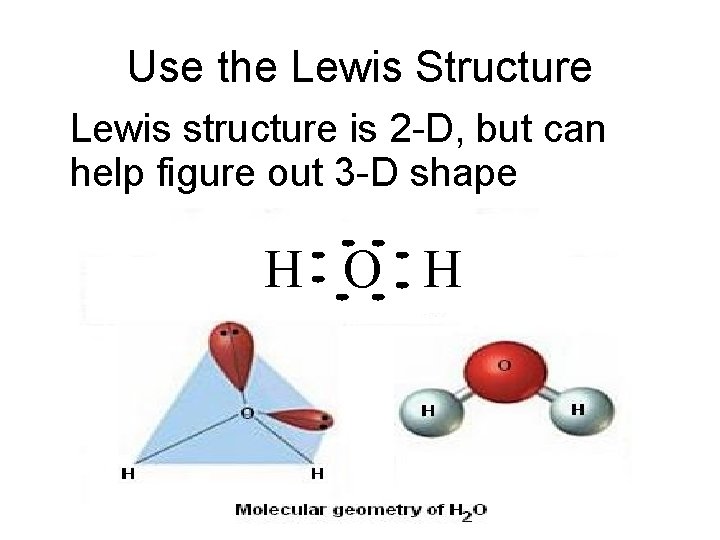
Use the Lewis Structure • Lewis structure is 2 -D, but can help figure out 3 -D shape H O H
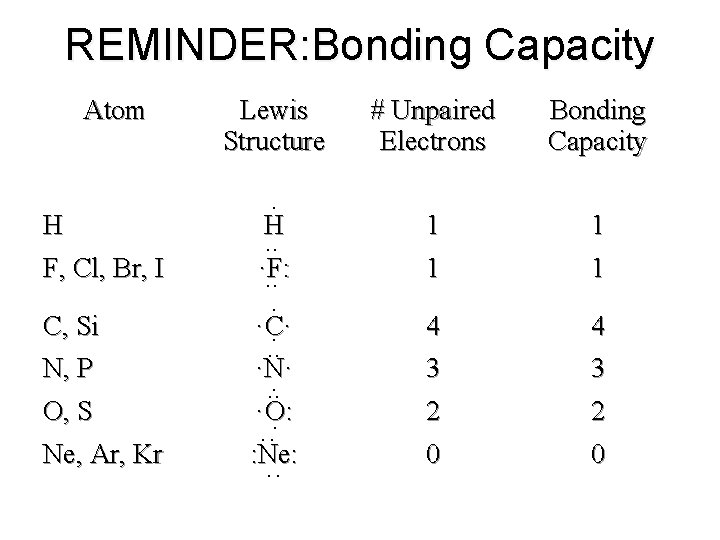
REMINDER: Bonding Capacity Atom H F, Cl, Br, I C, Si N, P O, S Ne, Ar, Kr Lewis Structure. H. . ·F: . . . ·C·. . . ·N·. . . ·O: ··· : Ne: ·· # Unpaired Electrons Bonding Capacity 1 1 4 3 2 2 0 0
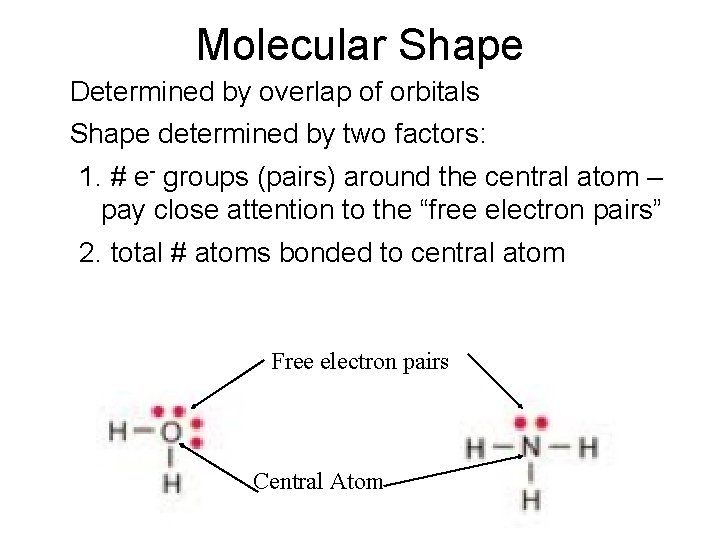
Molecular Shape • Determined by overlap of orbitals • Shape determined by two factors: 1. # e- groups (pairs) around the central atom – pay close attention to the “free electron pairs” 2. total # atoms bonded to central atom Free electron pairs Central Atom
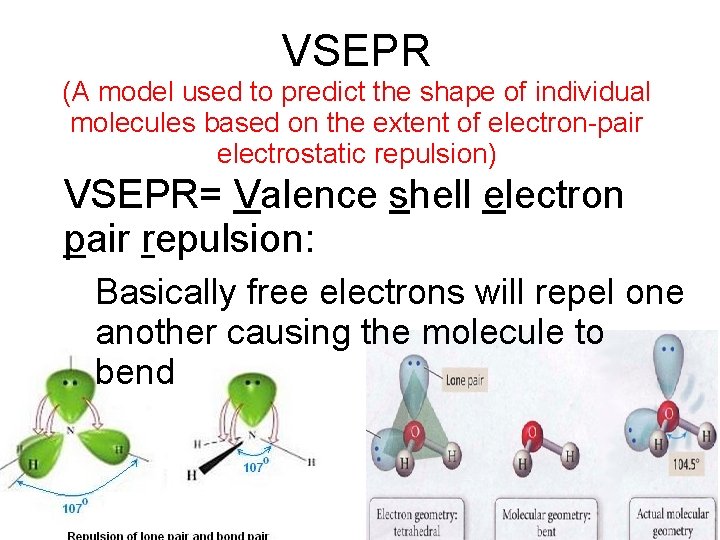
VSEPR (A model used to predict the shape of individual molecules based on the extent of electron-pair electrostatic repulsion) • VSEPR= Valence shell electron pair repulsion: – Basically free electrons will repel one another causing the molecule to bend
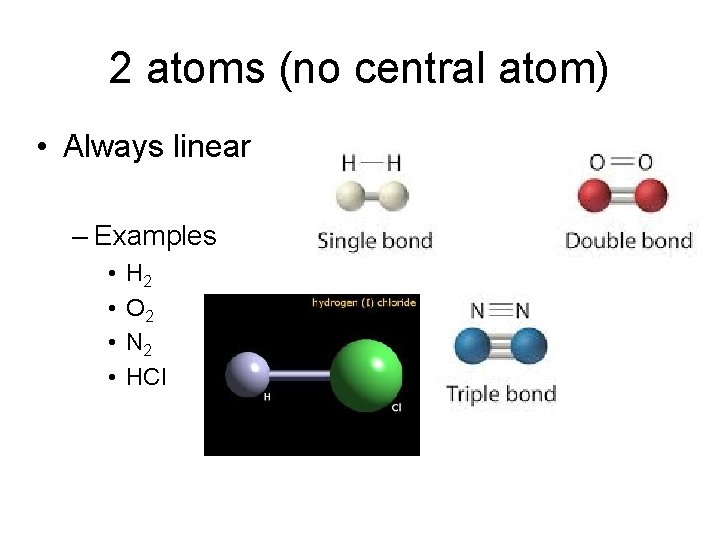
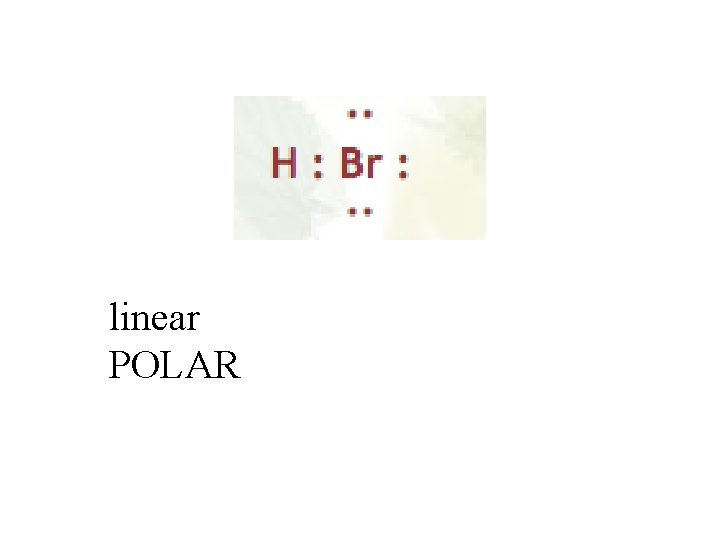
2 atoms (no central atom) • Always linear – Examples • • H 2 O 2 N 2 HCl
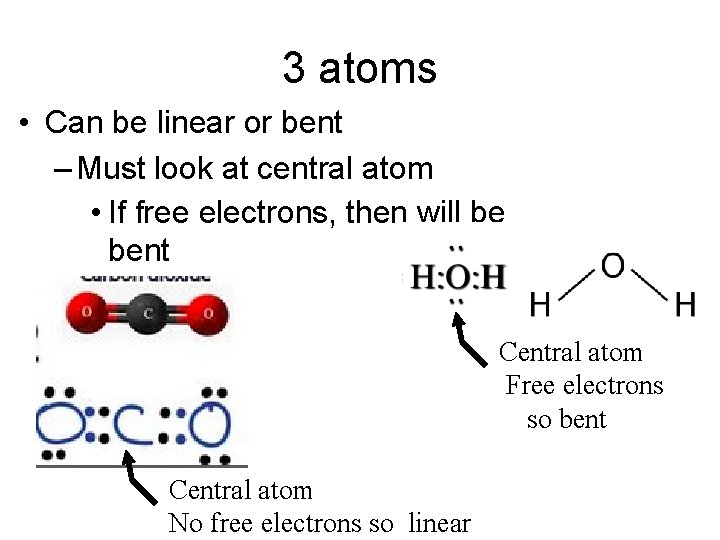
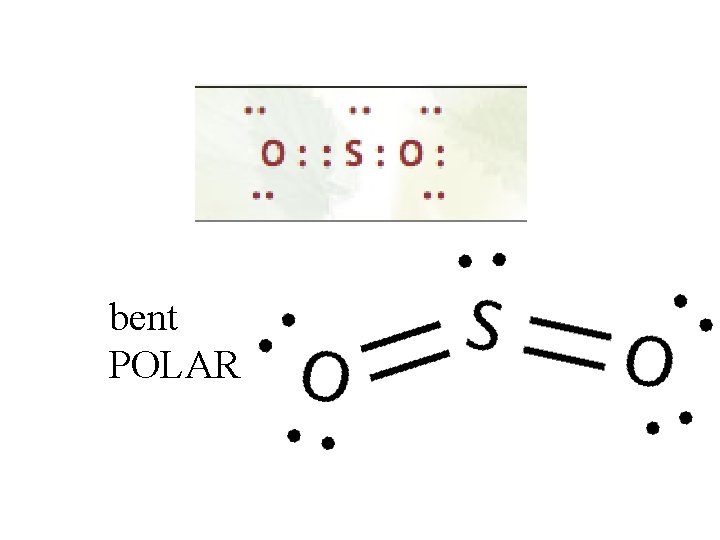
3 atoms • Can be linear or bent – Must look at central atom • If free electrons, then will be bent Central atom Free electrons so bent Central atom No free electrons so linear
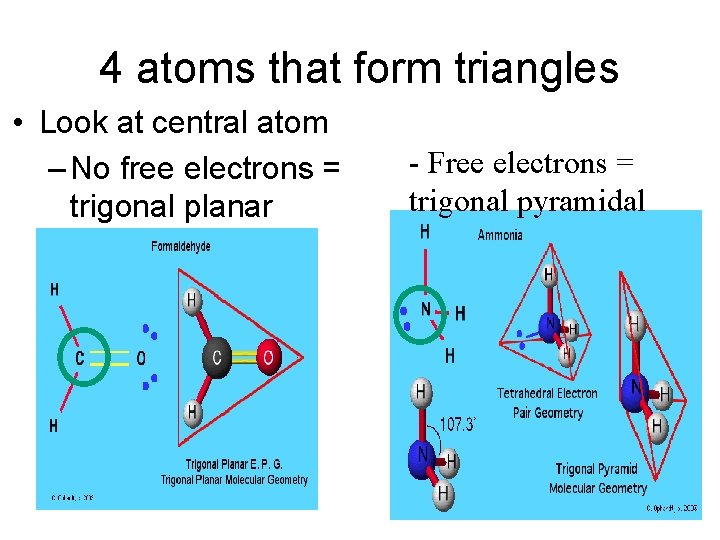
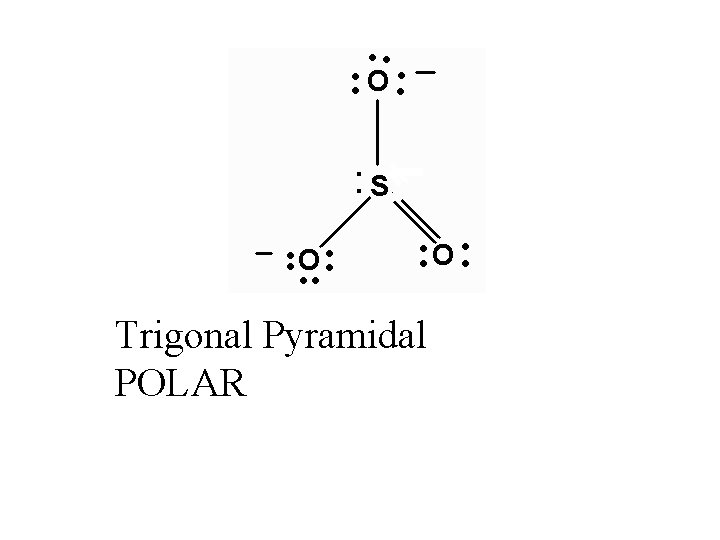
4 atoms that form triangles • Look at central atom – No free electrons = trigonal planar - Free electrons = trigonal pyramidal
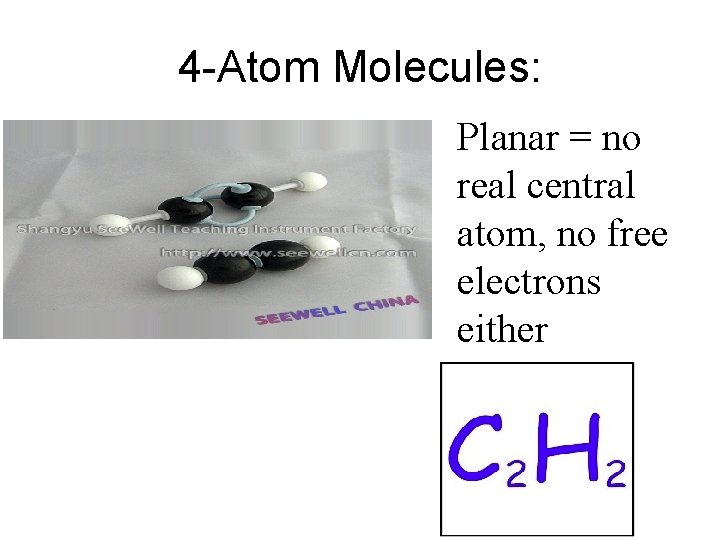
4 -Atom Molecules: Planar = no real central atom, no free electrons either
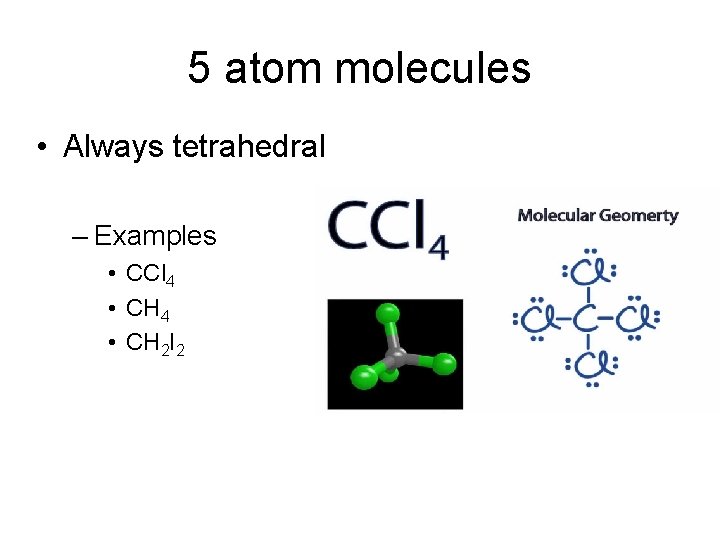
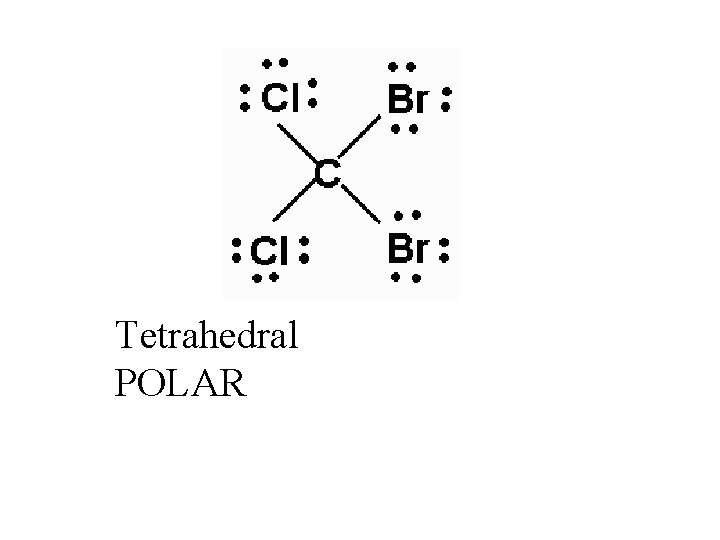
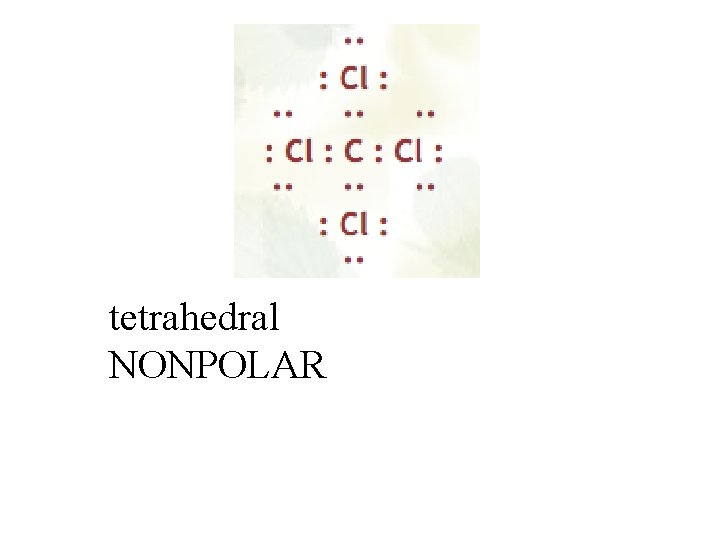
5 atom molecules • Always tetrahedral – Examples • CCl 4 • CH 2 I 2
Summary of Molecular Shapes • Start with Lewis Structure! • Look at total number of atoms • Look at # of atoms bonded to central atom • Look at free pair(s) of electrons around central atom
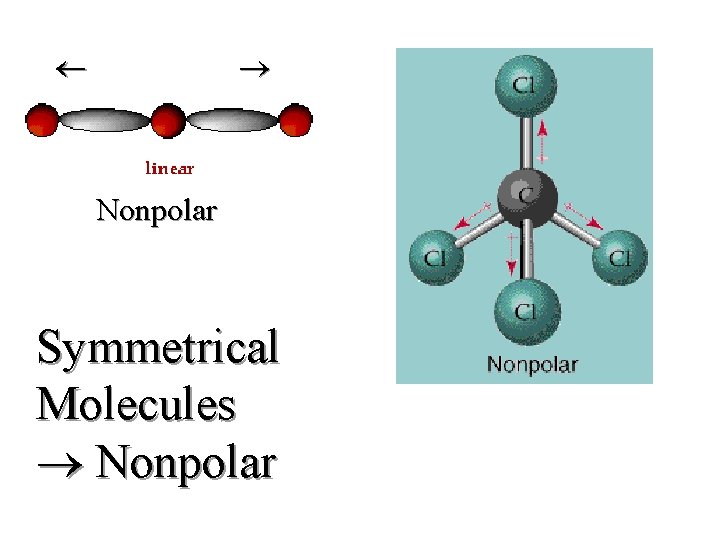
Nonpolar Symmetrical Molecules Nonpolar
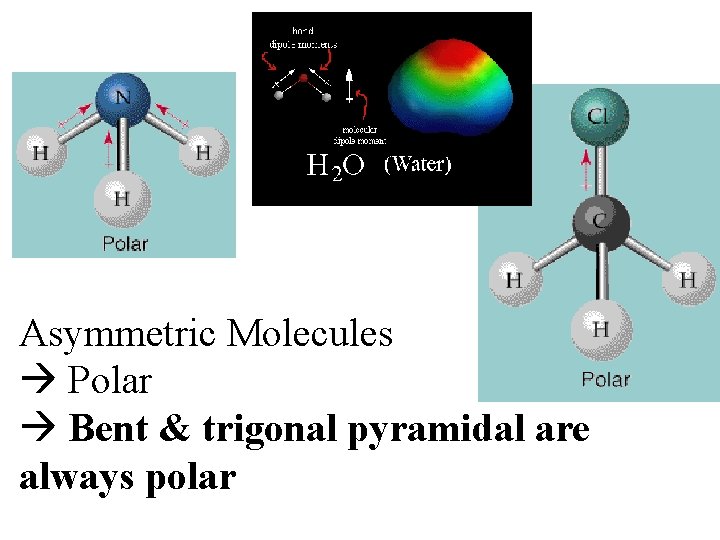
Asymmetric Molecules Polar Bent & trigonal pyramidal are always polar
Let’s try a few… Name the SHAPE and POLARITY
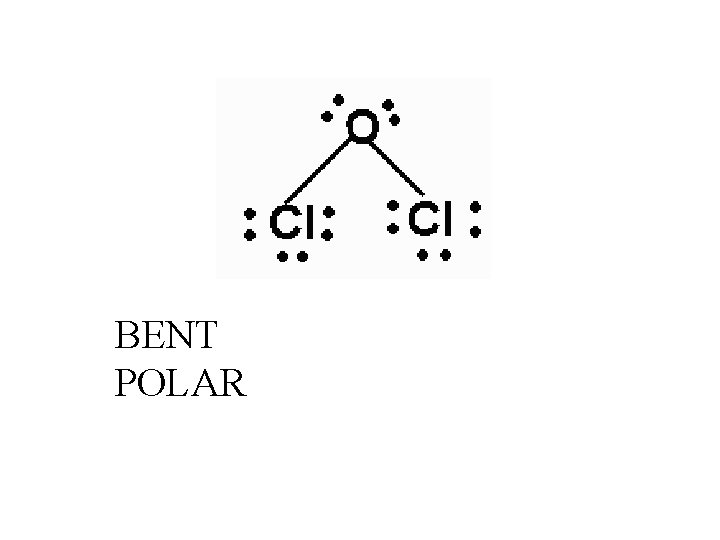
BENT POLAR
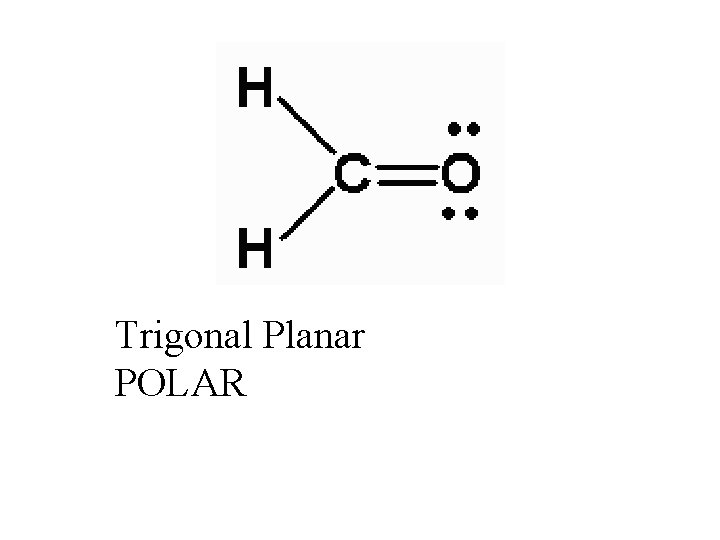
Trigonal Planar POLAR
Tetrahedral POLAR
Trigonal Pyramidal POLAR
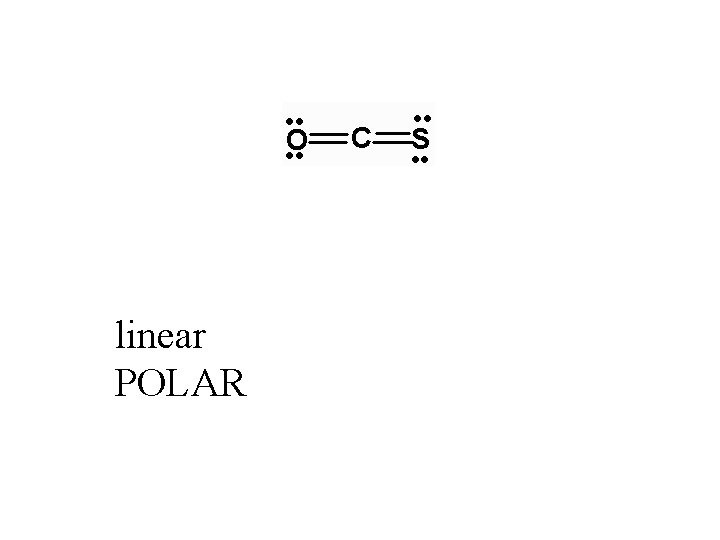
linear POLAR
linear POLAR
bent POLAR
tetrahedral NONPOLAR