
TOPIC INCLUDESTEMPLE ARCHITECTURE INDOARYAN TEMPLE JAIN TEMPLE This
- Slides: 22
TOPIC INCLUDESTEMPLE ARCHITECTURE -INDO-ARYAN TEMPLE -JAIN TEMPLE
� � This style had spread over at least 3 to 4 th part of northern India. The earliest movement started in the state of Orissa, it � � s ancient name is Kalinga. It is offered strong resistance to mauryas but finally sudued to ashoka in 260 B. C After ashokas death kalinga regained its independence and later become more powerful under kharavela.
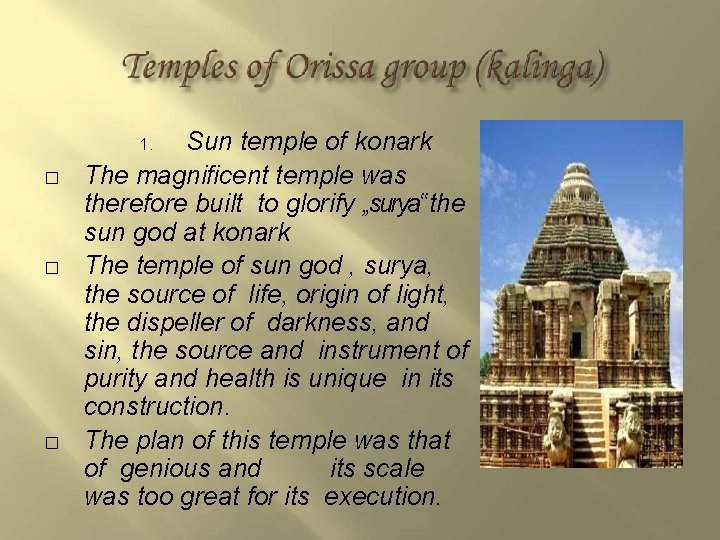
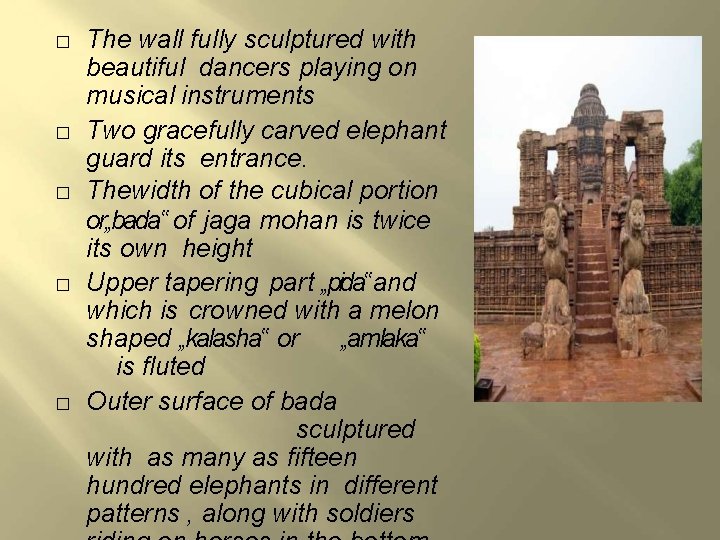
Sun temple of konark The magnificent temple was therefore built to glorify „surya‟ the sun god at konark The temple of sun god , surya, the source of life, origin of light, the dispeller of darkness, and sin, the source and instrument of purity and health is unique in its construction. The plan of this temple was that of genious and its scale was too great for its execution. 1. � � �
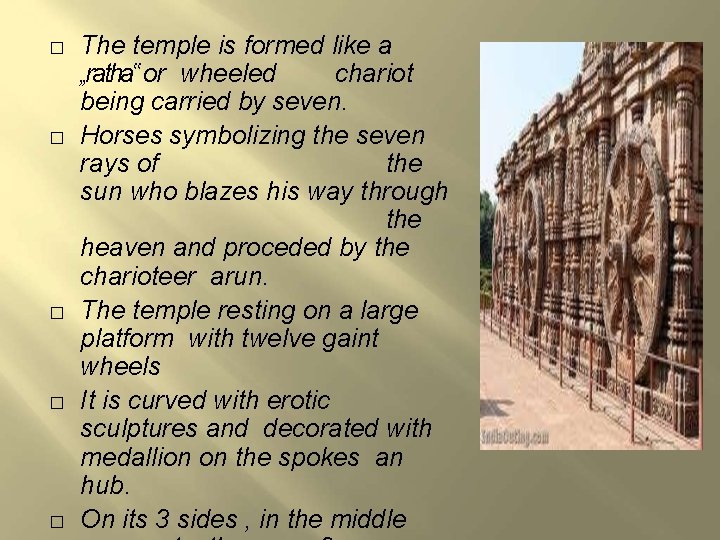
� � � The temple is formed like a „ratha‟ or wheeled chariot being carried by seven. Horses symbolizing the seven rays of the sun who blazes his way through the heaven and proceded by the charioteer arun. The temple resting on a large platform with twelve gaint wheels It is curved with erotic sculptures and decorated with medallion on the spokes an hub. On its 3 sides , in the middle
� � � The wall fully sculptured with beautiful dancers playing on musical instruments Two gracefully carved elephant guard its entrance. Thewidth of the cubical portion or„bada‟ of jaga mohan is twice its own height Upper tapering part „pida‟ and which is crowned with a melon shaped „kalasha‟ or „amlaka‟ is fluted Outer surface of bada sculptured with as many as fifteen hundred elephants in different patterns , along with soldiers
Many mythical animals in second row � In the third row depicts the „maithuna rituals‟. It represent symbolism of prakriti ana purusha � The top „pida‟ the pyramidal tower consist of three tiers � In order to sustain the weight of the huge kalasa over the pida the entire ceiling is strengthened with iron grid �
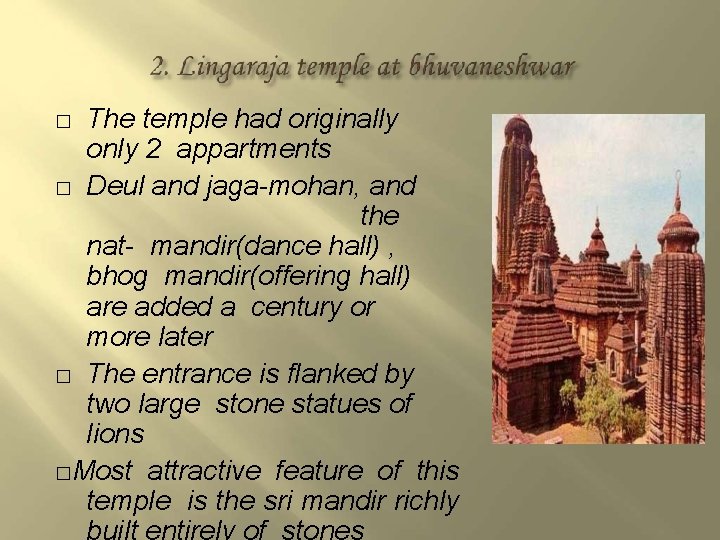
The temple had originally only 2 appartments � Deul and jaga-mohan, and the nat- mandir(dance hall) , bhog mandir(offering hall) are added a century or more later � The entrance is flanked by two large stone statues of lions �Most attractive feature of this temple is the sri mandir richly �
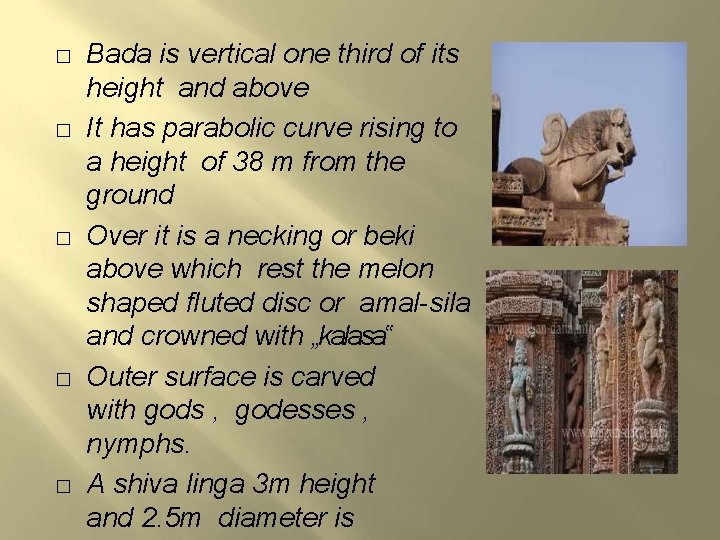
� � � Bada is vertical one third of its height and above It has parabolic curve rising to a height of 38 m from the ground Over it is a necking or beki above which rest the melon shaped fluted disc or amal-sila and crowned with „kalasa‟ Outer surface is carved with gods , godesses , nymphs. A shiva linga 3 m height and 2. 5 m diameter is
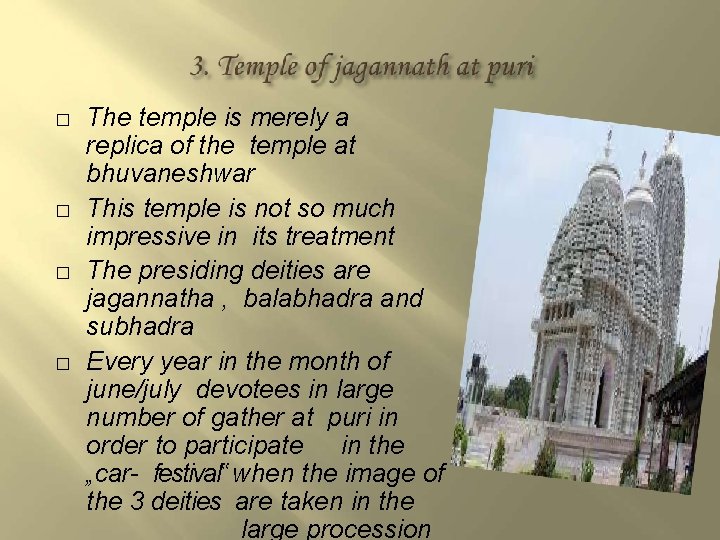
� � The temple is merely a replica of the temple at bhuvaneshwar This temple is not so much impressive in its treatment The presiding deities are jagannatha , balabhadra and subhadra Every year in the month of june/july devotees in large number of gather at puri in order to participate in the „car- festival‟ when the image of the 3 deities are taken in the large procession
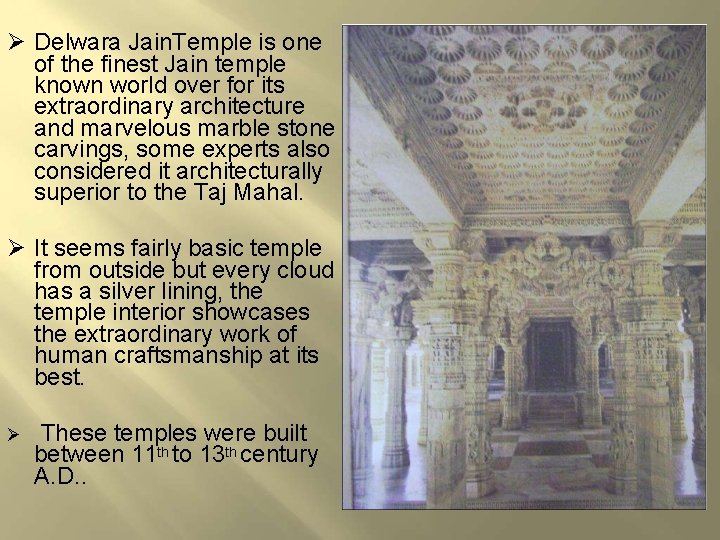
Delwara Jain. Temple is one of the finest Jain temple known world over for its extraordinary architecture and marvelous marble stone carvings, some experts also considered it architecturally superior to the Taj Mahal. It seems fairly basic temple from outside but every cloud has a silver lining, the temple interior showcases the extraordinary work of human craftsmanship at its best. These temples were built between 11 th to 13 th century A. D. .
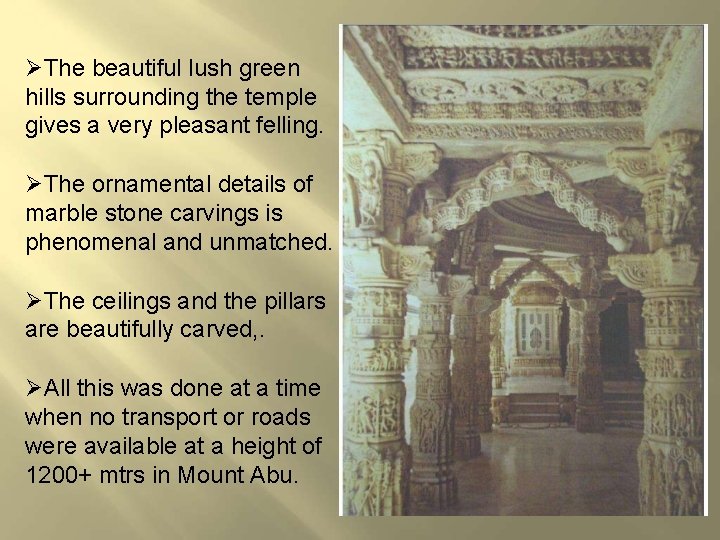
The beautiful lush green hills surrounding the temple gives a very pleasant felling. The ornamental details of marble stone carvings is phenomenal and unmatched. The ceilings and the pillars are beautifully carved, . All this was done at a time when no transport or roads were available at a height of 1200+ mtrs in Mount Abu.
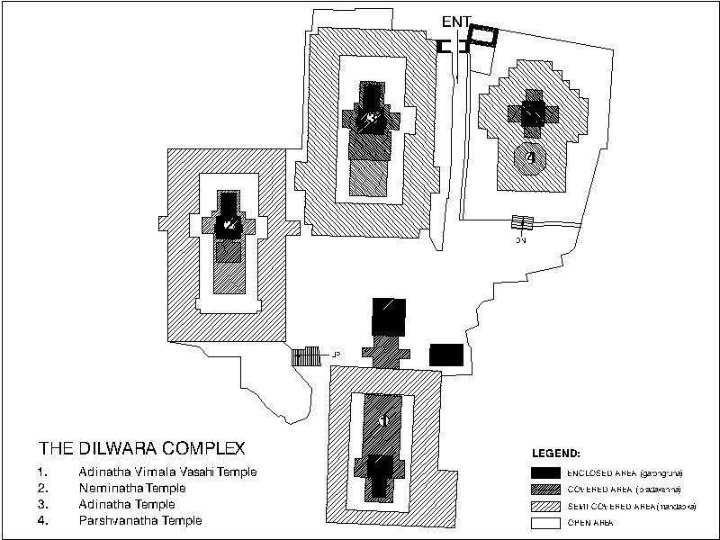
delwara Temple complex consist of five major section or temples devoted to five Jain Tirthankars (saints). 1. 2. 3. 4. 5. Shri Mahaveer Swami Temple Shri Adinath Temple or Vimal Vasahi Temple Shri Nemi Nathji Temple or Luna Vasahi Temple Shri Rishabhdeoji Temple or Pittalhar Temple Shri Parshwanath Temple or Khartar Vasahi Temple
Shri Mahaveer Swami Temple This temple was constructed in 1582 and is devoted to Lord Mahaveer the 24 th Tirthankar of Jain’s. This temple is relatively small the temple’s upper walls have pictures of the porch painted by craftsman of sirohi in year 1764.
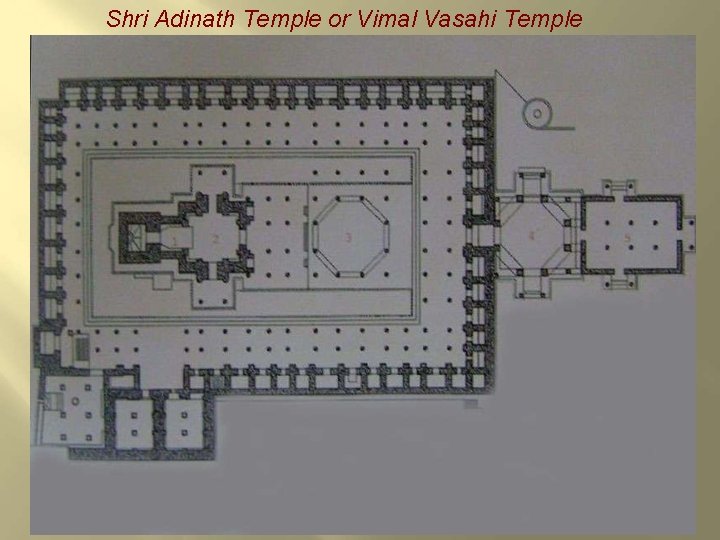
Shri Adinath Temple or Vimal Vasahi Temple
Shri Adinath Temple or Vimal Vasahi Temple This temple is built by Vimal Shah, Minister and Commander-in-chief of Bima Dev I, Solanki rulers. This temple is oldest of all and dedicated to Shri Adinathji the first Jain Tirthankar. This temple has an open courtyard surrounded by corridors all beautifully decorated with marble carved stones.
Cells inside this temple are contain tiny images of Jain Saints artistically carved on marble stone minutely. The internal dome is aesthetically decorated with designs of flowers and petals, the huge hall of the temple pillars decorated with the carving work of female figures playing musical instruments. The temple also have the “Guda Mandapa” a small hall decorated with the images of Shri Adi Nath.
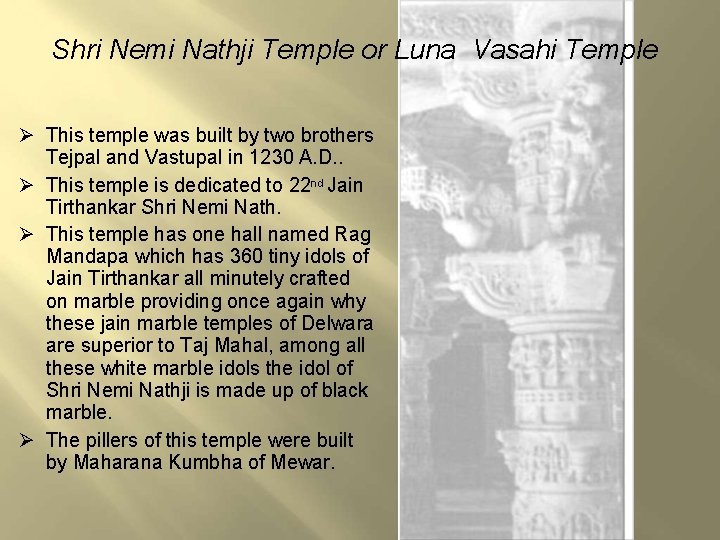
Shri Nemi Nathji Temple or Luna Vasahi Temple This temple was built by two brothers Tejpal and Vastupal in 1230 A. D. . This temple is dedicated to 22 nd Jain Tirthankar Shri Nemi Nath. This temple has one hall named Rag Mandapa which has 360 tiny idols of Jain Tirthankar all minutely crafted on marble providing once again why these jain marble temples of Delwara are superior to Taj Mahal, among all these white marble idols the idol of Shri Nemi Nathji is made up of black marble. The pillers of this temple were built by Maharana Kumbha of Mewar.
Shri Rishabhdeoji Temple or Pittalhar Temple This temple is known as pittalhari/peethalhar temple because in this temple most of the statues are built using ‘Pittal’ (Brass Metal). This temple was built by Bhima Shah, a minister from Gujrat dynesty.
The date of erection is not certain but its construction falls between 115 -1433 A. D. . The shrine consists of main Garbhgruha, Gudh Mandap and Navchowki. The niches were constructed in 1474 A. D. while some cells were created in 1490 A. D. .
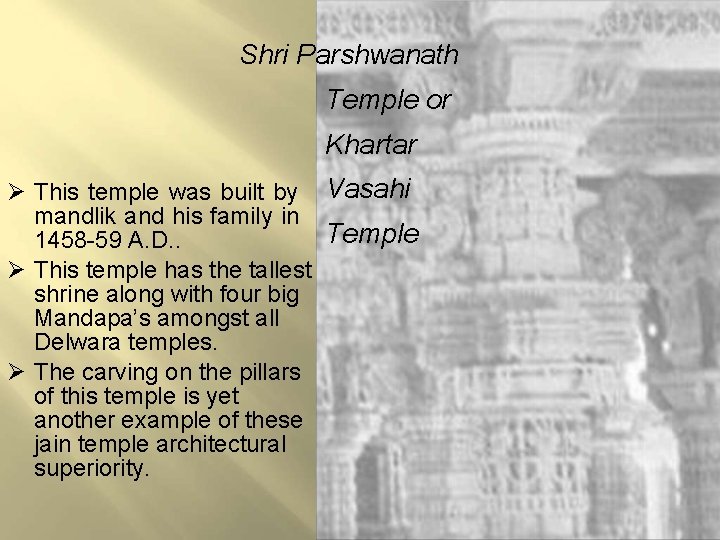
Shri Parshwanath Temple or Khartar This temple was built by Vasahi mandlik and his family in Temple 1458 -59 A. D. . This temple has the tallest shrine along with four big Mandapa’s amongst all Delwara temples. The carving on the pillars of this temple is yet another example of these jain temple architectural superiority.
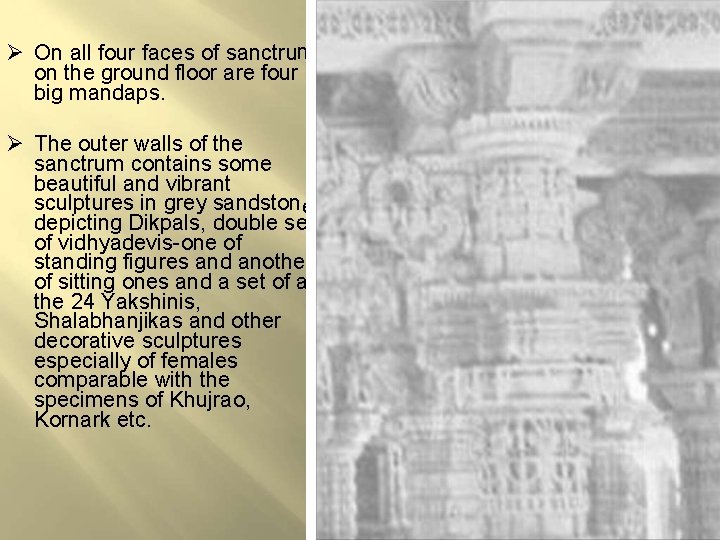
On all four faces of sanctrum on the ground floor are four big mandaps. The outer walls of the sanctrum contains some beautiful and vibrant sculptures in grey sandston e, depicting Dikpals, double se t of vidhyadevis-one of standing figures and anothe r of sitting ones and a set of a ll the 24 Yakshinis, Shalabhanjikas and other decorative sculptures especially of females comparable with the specimens of Khujrao, Kornark etc.