
Topic Computer Communication Networks and Internet Subject Computer
Topic: Computer Communication, Networks and Internet Subject: Computer Communication and Networks Class: BS IT 4 th Semester By: Zeeshan danish
Challenges… n n No one can defeat us unless we first defeat ourselves. Dwight Eisenhower "Strength of mind is exercise, not rest. “ Alexander Pope n “Give me six hours to chop down a tree and I will spend the first four sharpening the axe. ” Abraham Lincoln
Computer Networks and Internet n n n n Computer Networks Communication Model Transmission Modes Communication Types Classification Of Computer Networks n By Scale n By Structure n By Topology Network Media Internetworking
Computer Network n n A computer network is a group of interconnected computers. It allows computers to communicate with each other and to share resources and information.
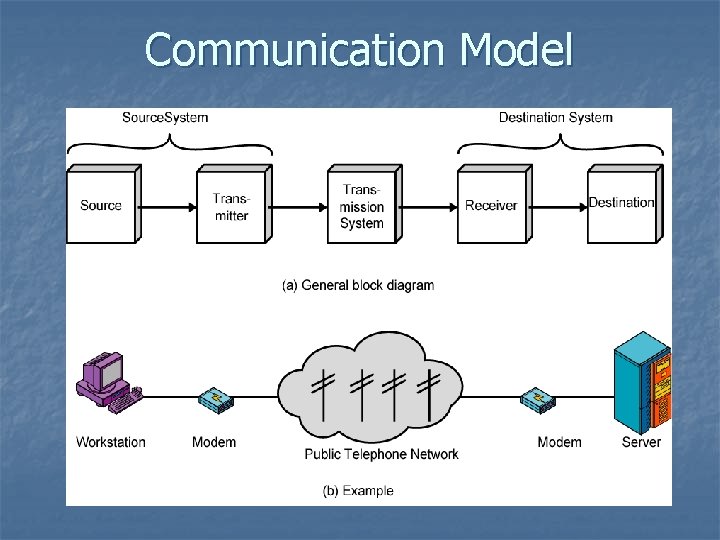
Communication Model
Communication Model n Source n n Transmitter n n Carries data Receiver n n Converts data into transmittable signals Transmission System n n generates data to be transmitted Converts received signal into data Destination n Takes incoming data
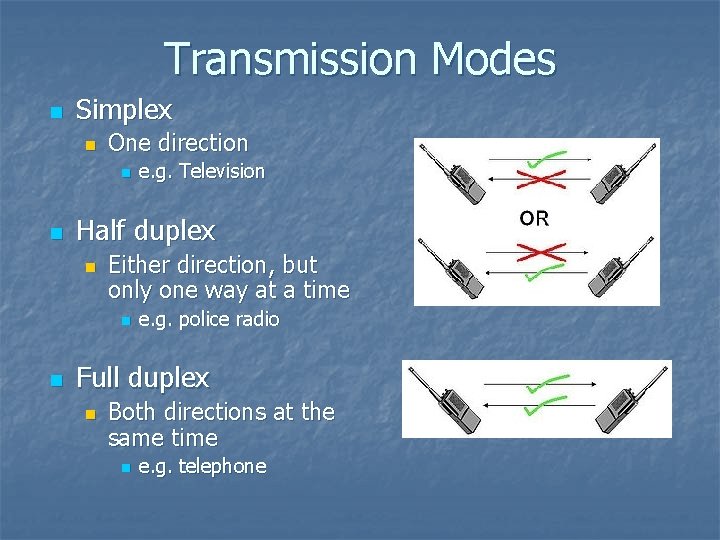
Transmission Modes n Simplex n One direction n n Half duplex n Either direction, but only one way at a time n n e. g. Television e. g. police radio Full duplex n Both directions at the same time n e. g. telephone
Communication Types n Unicasting (one-to-one) n Multicasting (one-to-many) n Broadcasting (one-to-all)
Network Classification n By Size or Scale LAN n WAN n MAN n CAN n PAN n
Local Area Network (LAN) n n Contains printers, servers and computers Systems are close to each other Contained in one office or building Organizations often have several LANS
Wide Area Networks (WAN) n n n Two or more LANs connected Over a large geographic area Typically use public or leased lines Phone lines n Satellite n n The Internet is a WAN
Metropolitan Area Network (MAN) n n MANs are Larger than LANs, But smaller than WANs MANs are usually characterized by very high-speed connections using Fiber Optical Cable or other digital Media Large network that connects different organizations Shares regional resources
Campus Area Networks (CAN) n n n A LAN in one large geographic area Resources related to the same organization Each department shares the LAN
Personal Area Network (PAN) n n n Very small scale network Range is less than 2 meters Cell phones, PDAs, MP 3 players
Network Classification n By Structure / Functional Relationship Client / Server n Peer to Peer (P 2 PN) n
Client/Server network n Nodes and servers share data roles Nodes Request for resources n Share Resources n n Nodes are called clients Servers are used to control access Database software n n Access to data controlled by server Server is the most important computer
Peer to peer networks (P 2 PN) n n All nodes are equal Nodes access resources on other nodes Each node controls its own resources Most modern OS allow P 2 PN
Network Classification n By Topology / Physical Connectivity BUS n STAR n RING n MESH n TREE n
Network Topology Logical layout of wires and equipment n Choice affects n Network performance n Network size n Network collision detection n
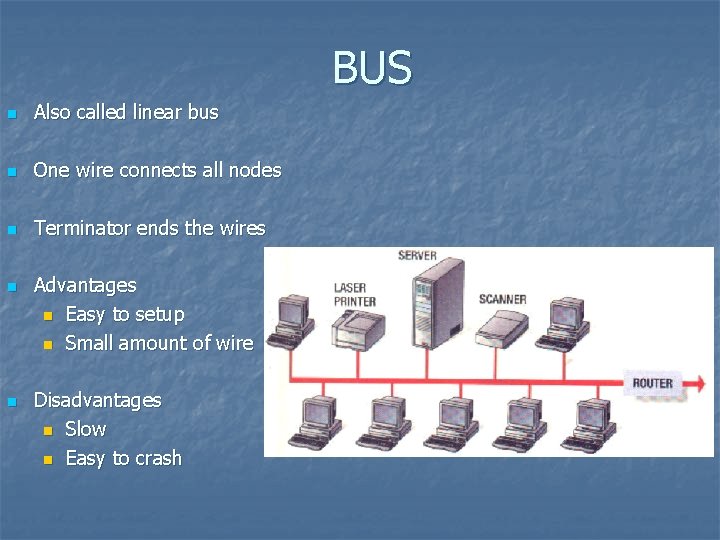
BUS n Also called linear bus n One wire connects all nodes n Terminator ends the wires n n Advantages n Easy to setup n Small amount of wire Disadvantages n Slow n Easy to crash
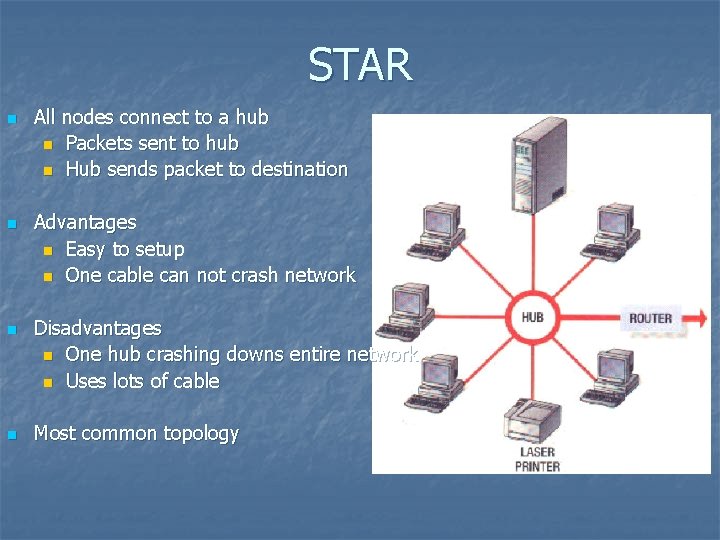
STAR n n All nodes connect to a hub n Packets sent to hub n Hub sends packet to destination Advantages n Easy to setup n One cable can not crash network Disadvantages n One hub crashing downs entire network n Uses lots of cable Most common topology
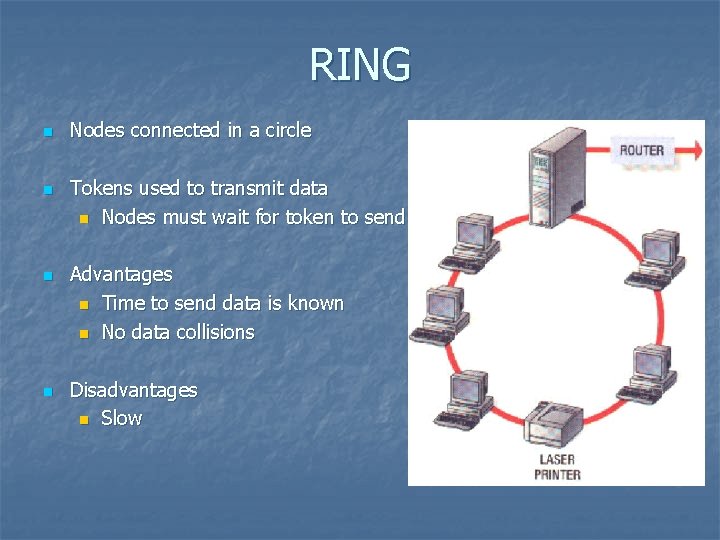
RING n n Nodes connected in a circle Tokens used to transmit data n Nodes must wait for token to send Advantages n Time to send data is known n No data collisions Disadvantages n Slow
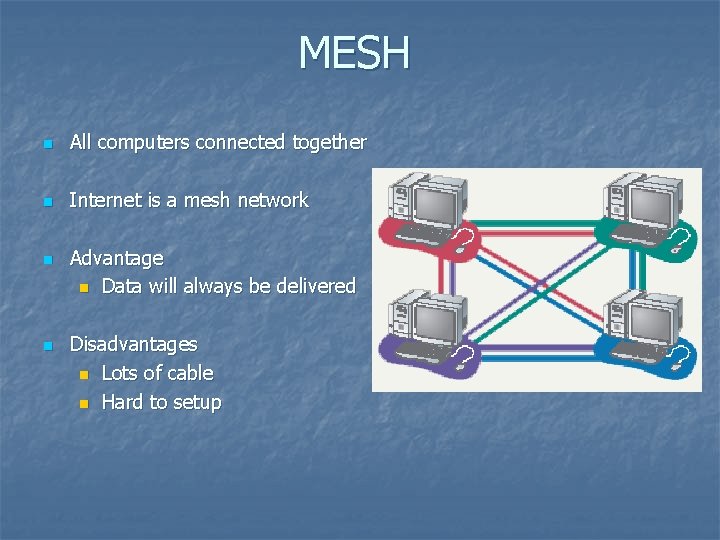
MESH n All computers connected together n Internet is a mesh network n n Advantage n Data will always be delivered Disadvantages n Lots of cable n Hard to setup
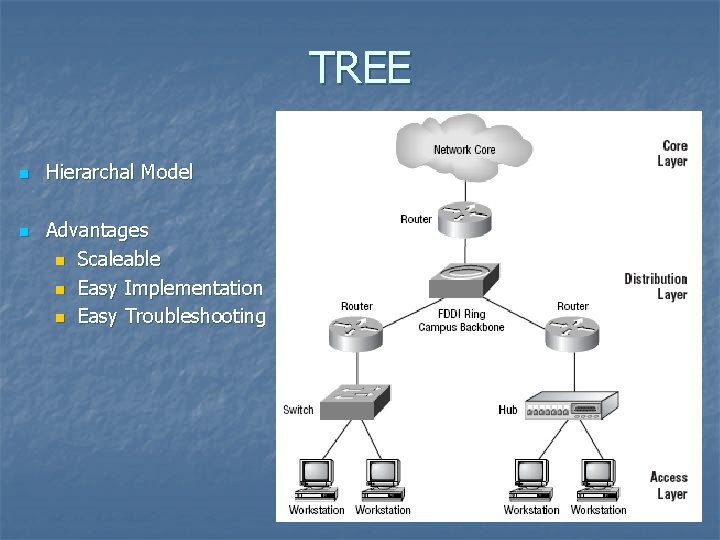
TREE n n Hierarchal Model Advantages n Scaleable n Easy Implementation n Easy Troubleshooting
Network Media n n Links that connect nodes Choice impacts Speed n Security n Size n
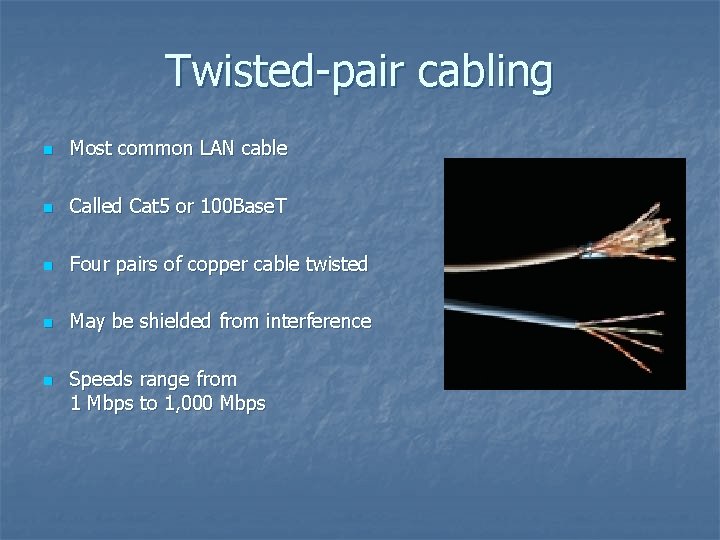
Twisted-pair cabling n Most common LAN cable n Called Cat 5 or 100 Base. T n Four pairs of copper cable twisted n May be shielded from interference n Speeds range from 1 Mbps to 1, 000 Mbps
Coaxial cable n Similar to cable TV wire n One wire runs through cable n Shielded from interference n Speeds up to 10 Mbps n Nearly obsolete (No larger in Use)
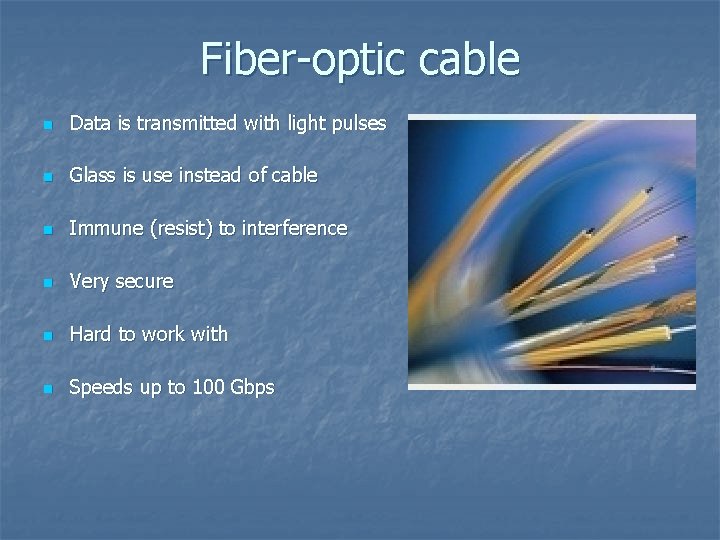
Fiber-optic cable n Data is transmitted with light pulses n Glass is use instead of cable n Immune (resist) to interference n Very secure n Hard to work with n Speeds up to 100 Gbps
Wireless Media n Data transmitted through the air n LANs use radio waves n WANs use microwave signals n Easy to setup n Difficult to secure
Internetwork n An Internetwork is the connection of two or more distinct computer networks or network segments via a common routing technology. n Any interconnection among or between public, private, commercial, industrial, or governmental networks may also be defined as an internetwork.
Internetwork n Intranet n n Extranet n n n An intranet is a set of networks, using the Internet Protocol and IP-based tools such as web browsers and file transfer applications, that is under the control of a single administrative entity. With in a LAN. And can’t be access from out side. Most commonly, an intranet is the internal network of an organization An extranet is a network or internetwork that is limited in scope to a single organization or entity but which also has limited connections to the networks of one or more other usually, but not necessarily, trusted organizations or entities by definition, an extranet cannot consist of a single LAN; it must have at least one connection with an external network. Internet n n n The Internet consists of a worldwide interconnection of governmental, academic, public, and private networks based upon the networking technologies of the Internet Protocol Suite. It is the successor of the Advanced Research Projects Agency Network (ARPANET) developed by DARPA of the U. S. Department of Defense. The Internet is also the communications backbone underlying the World Wide Web (WWW).
- Slides: 31