
Topic Cells Give 2 examples of specialized plant
- Slides: 22
Topic: Cells Give 2 examples of specialized plant cells and 2 animal cells Topic: Working Scientifically How do you ensure that you get reliable results? Topic: Particle Model What is solubility? Topic: Sound & Light What happens to light as it moves into a denser medium? Topic: Interdependence Describe 3 differences between insect and wind pollinated flowers Challenge: What is the source of the energy in most energy resources? Topic: Energy Cost Give 3 examples of renewable and 3 non-renewable energy resources
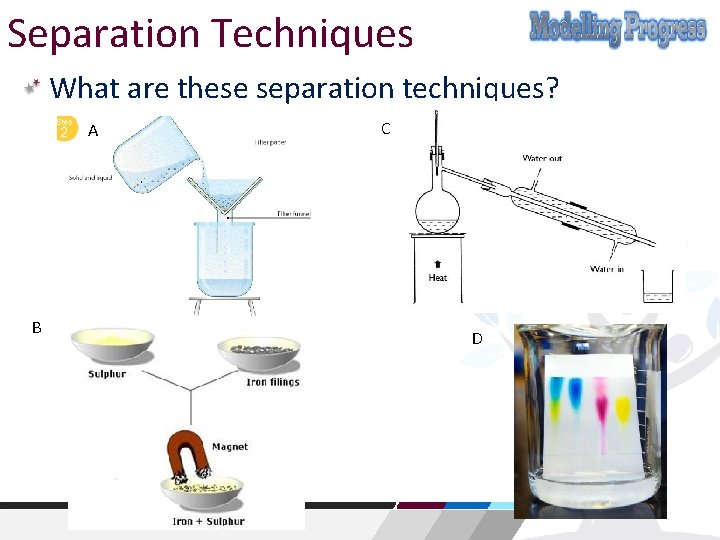
Separation Techniques What are these separation techniques? A B C D
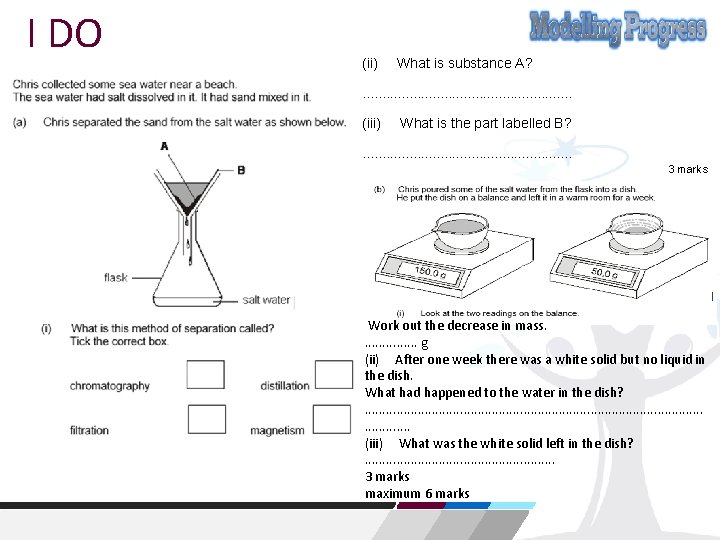
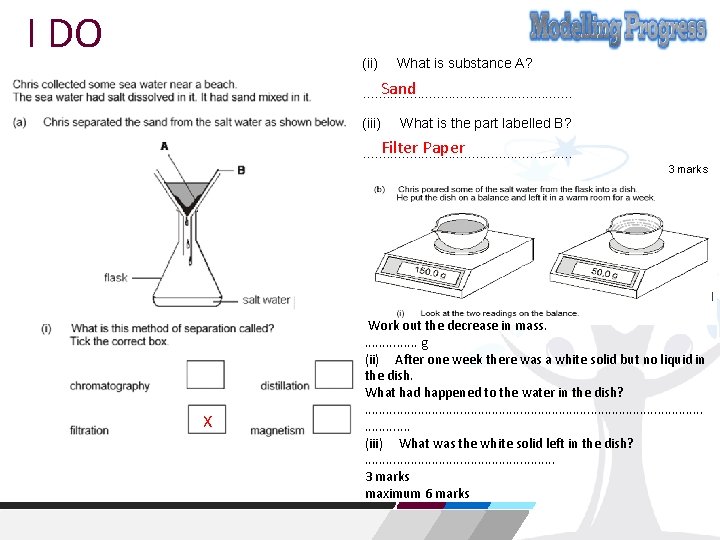
I DO (ii) What is substance A? . . . (iii) What is the part labelled B? . . . 3 marks Work out the decrease in mass. . . . g (ii) After one week there was a white solid but no liquid in the dish. What had happened to the water in the dish? . . . . . . . (iii) What was the white solid left in the dish? . . . 3 marks maximum 6 marks
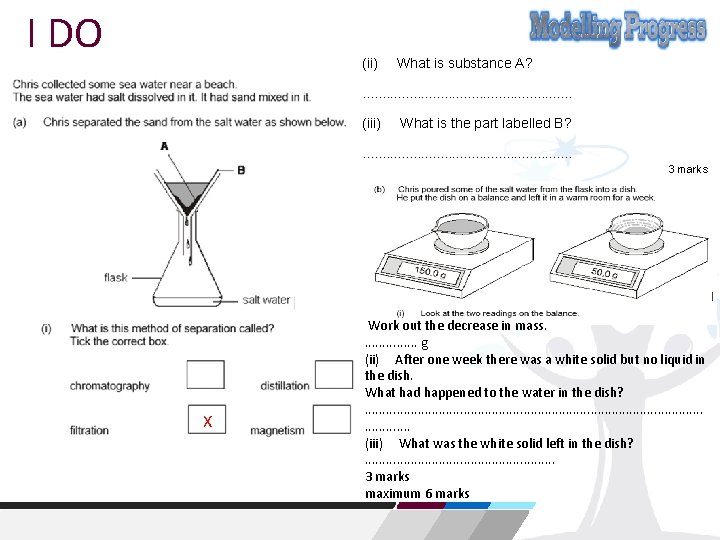
I DO (ii) What is substance A? . . . (iii) What is the part labelled B? . . . 3 marks X Work out the decrease in mass. . . . g (ii) After one week there was a white solid but no liquid in the dish. What had happened to the water in the dish? . . . . . . . (iii) What was the white solid left in the dish? . . . 3 marks maximum 6 marks
I DO (ii) What is substance A? Sand. . . . (iii) What is the part labelled B? Filter Paper. . . . 3 marks X Work out the decrease in mass. . . . g (ii) After one week there was a white solid but no liquid in the dish. What had happened to the water in the dish? . . . . . . . (iii) What was the white solid left in the dish? . . . 3 marks maximum 6 marks
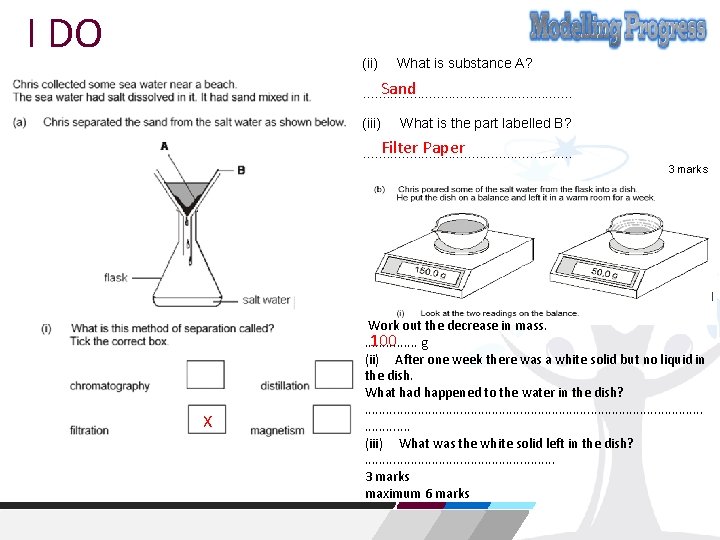
I DO (ii) What is substance A? Sand. . . . (iii) What is the part labelled B? Filter Paper. . . . 3 marks X Work out the decrease in mass. 100 g. . . . (ii) After one week there was a white solid but no liquid in the dish. What had happened to the water in the dish? . . . . . . . (iii) What was the white solid left in the dish? . . . 3 marks maximum 6 marks
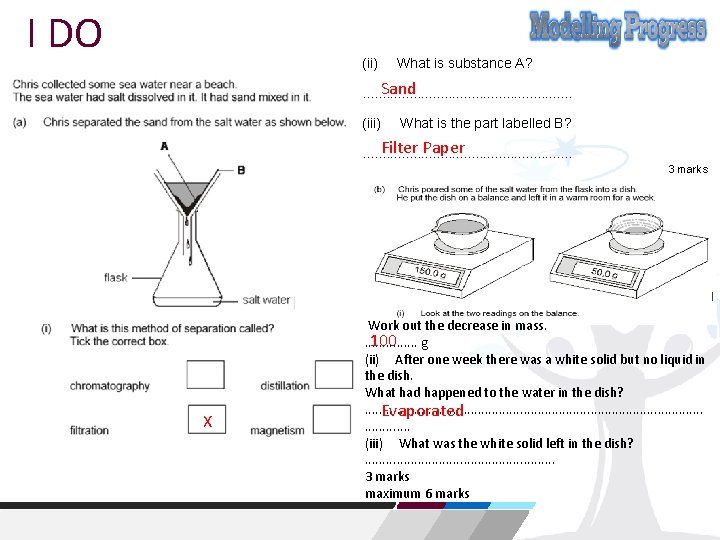
I DO (ii) What is substance A? Sand. . . . (iii) What is the part labelled B? Filter Paper. . . . 3 marks X Work out the decrease in mass. 100 g. . . . (ii) After one week there was a white solid but no liquid in the dish. What had happened to the water in the dish? . . . . . . Evaporated. . . (iii) What was the white solid left in the dish? . . . 3 marks maximum 6 marks
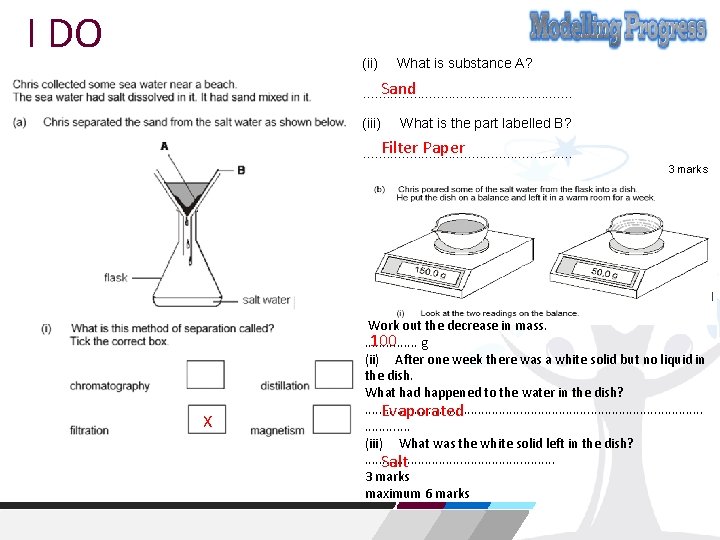
I DO (ii) What is substance A? Sand. . . . (iii) What is the part labelled B? Filter Paper. . . . 3 marks X Work out the decrease in mass. 100 g. . . . (ii) After one week there was a white solid but no liquid in the dish. What had happened to the water in the dish? . . . . . . Evaporated. . . (iii) What was the white solid left in the dish? . . . Salt 3 marks maximum 6 marks
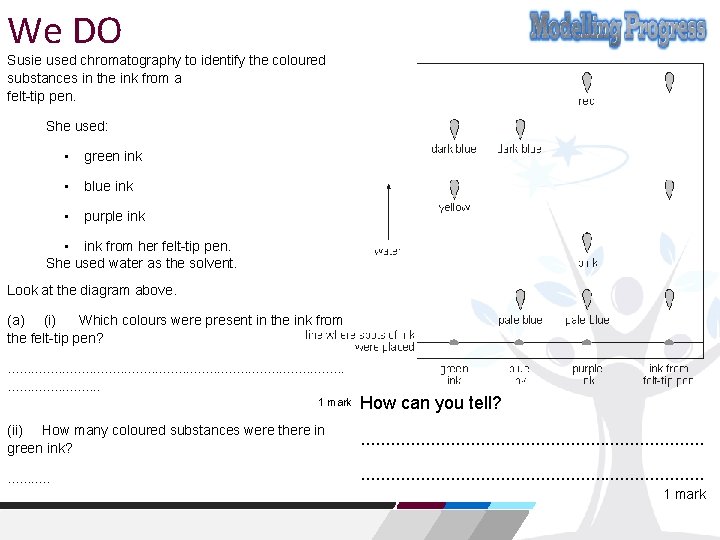
We DO Susie used chromatography to identify the coloured substances in the ink from a felt-tip pen. She used: • green ink • blue ink • purple ink • ink from her felt-tip pen. She used water as the solvent. Look at the diagram above. (a) (i) Which colours were present in the ink from the felt-tip pen? . . . . . . . 1 mark How can you tell? (ii) How many coloured substances were there in green ink? . . . . . . . . . 1 mark
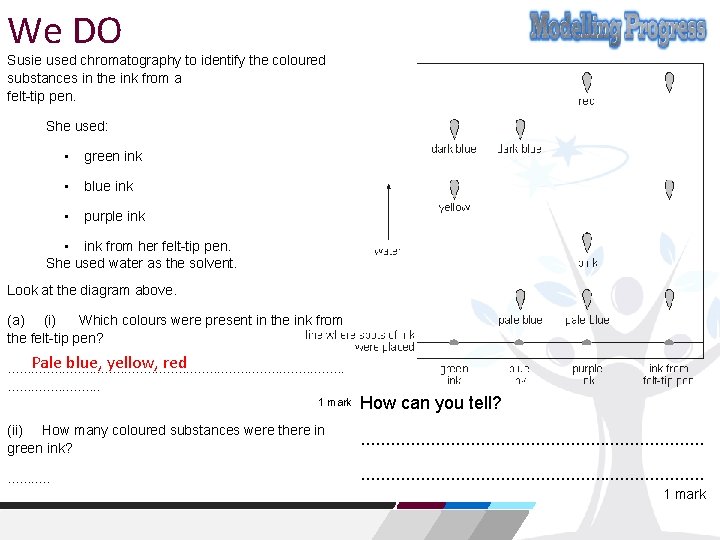
We DO Susie used chromatography to identify the coloured substances in the ink from a felt-tip pen. She used: • green ink • blue ink • purple ink • ink from her felt-tip pen. She used water as the solvent. Look at the diagram above. (a) (i) Which colours were present in the ink from the felt-tip pen? Pale blue, yellow, red. . . . . . . 1 mark How can you tell? (ii) How many coloured substances were there in green ink? . . . . . . . . . 1 mark
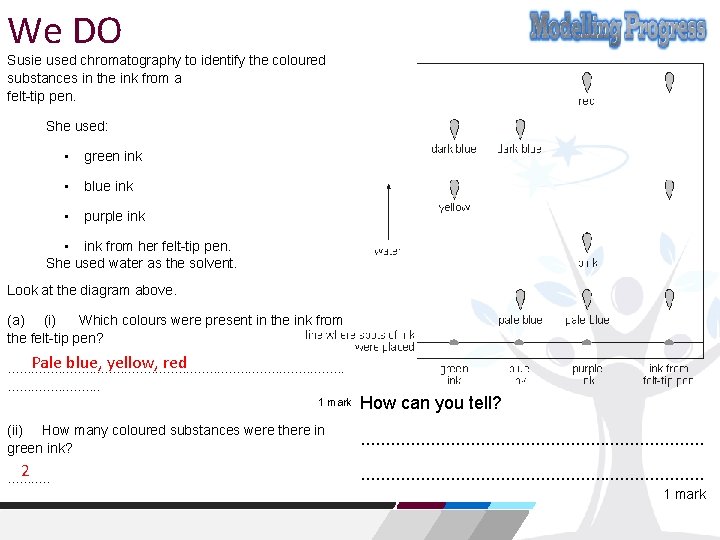
We DO Susie used chromatography to identify the coloured substances in the ink from a felt-tip pen. She used: • green ink • blue ink • purple ink • ink from her felt-tip pen. She used water as the solvent. Look at the diagram above. (a) (i) Which colours were present in the ink from the felt-tip pen? Pale blue, yellow, red. . . . . . . 1 mark How can you tell? (ii) How many coloured substances were there in green ink? . . . . 2. . . . . 1 mark
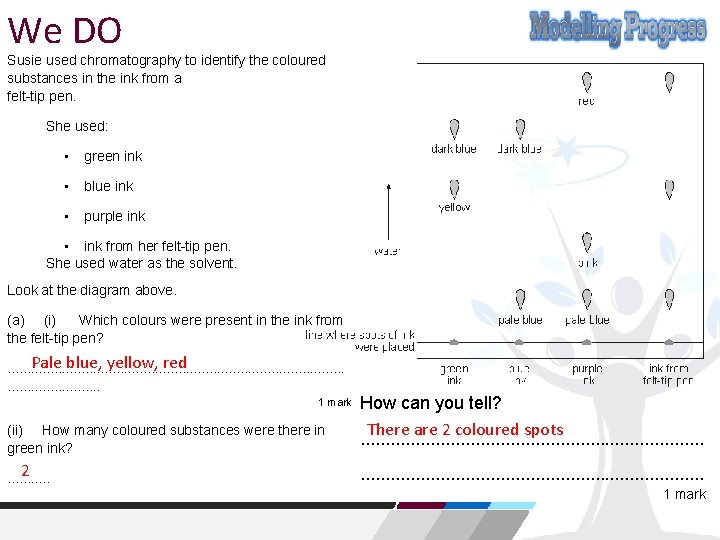
We DO Susie used chromatography to identify the coloured substances in the ink from a felt-tip pen. She used: • green ink • blue ink • purple ink • ink from her felt-tip pen. She used water as the solvent. Look at the diagram above. (a) (i) Which colours were present in the ink from the felt-tip pen? Pale blue, yellow, red. . . . . . . 1 mark (ii) How many coloured substances were there in green ink? 2. . . How can you tell? There are 2 coloured spots. . . . . . . . . 1 mark
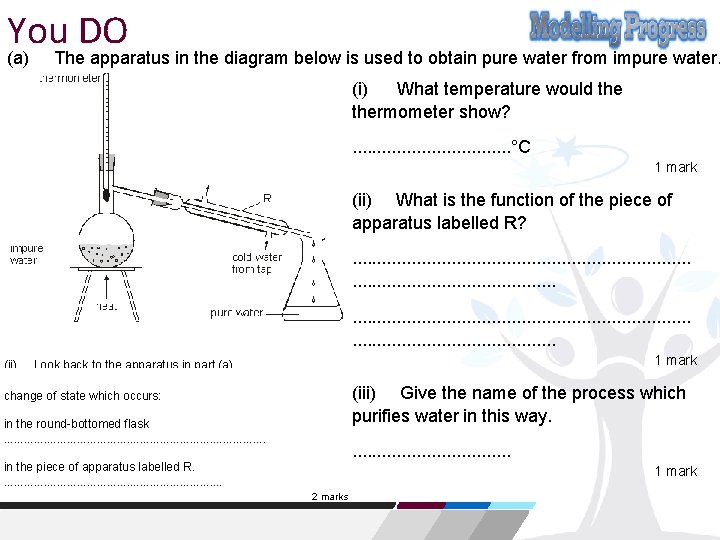
You DO (a) The apparatus in the diagram below is used to obtain pure water from impure water. (i) What temperature would thermometer show? . . . . °C 1 mark (ii) What is the function of the piece of apparatus labelled R? . . . . . . . . . . . . . (ii) Look back to the apparatus in part (a). Give the letter, A, B, C or D, from the diagram above, for the change of state which occurs: in the round-bottomed flask. . . . . 1 mark (iii) Give the name of the process which purifies water in this way. . . . in the piece of apparatus labelled R. . . . . 1 mark 2 marks
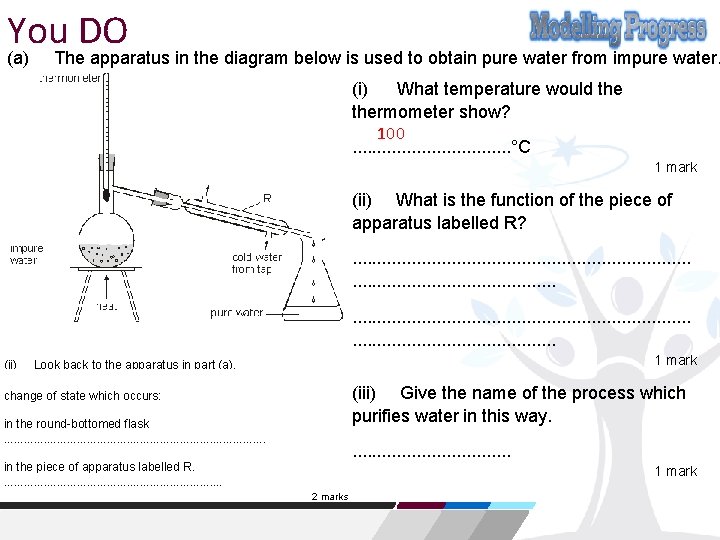
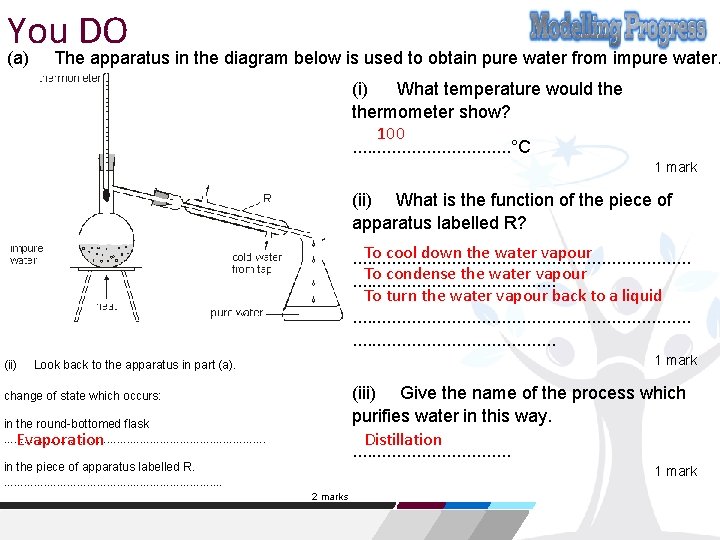
You DO (a) The apparatus in the diagram below is used to obtain pure water from impure water. (i) What temperature would thermometer show? 100. . . . °C 1 mark (ii) What is the function of the piece of apparatus labelled R? . . . . . . . . . . . . . (ii) Look back to the apparatus in part (a). Give the letter, A, B, C or D, from the diagram above, for the change of state which occurs: in the round-bottomed flask. . . . . 1 mark (iii) Give the name of the process which purifies water in this way. . . . in the piece of apparatus labelled R. . . . . 1 mark 2 marks
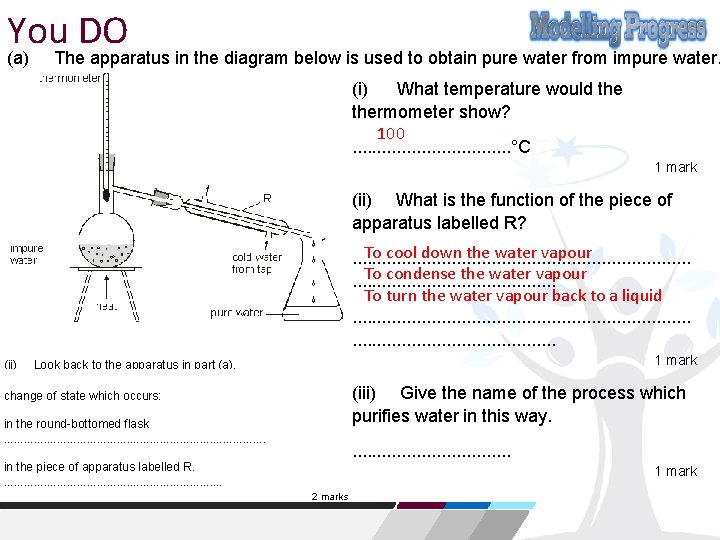
You DO (a) The apparatus in the diagram below is used to obtain pure water from impure water. (i) What temperature would thermometer show? 100. . . . °C 1 mark (ii) What is the function of the piece of apparatus labelled R? To cool down the water vapour. . . . . To condense the water vapour. . . . . To turn the water vapour back to a liquid. . . . . . . (ii) Look back to the apparatus in part (a). Give the letter, A, B, C or D, from the diagram above, for the change of state which occurs: in the round-bottomed flask. . . . . 1 mark (iii) Give the name of the process which purifies water in this way. . . . in the piece of apparatus labelled R. . . . . 1 mark 2 marks
You DO (a) The apparatus in the diagram below is used to obtain pure water from impure water. (i) What temperature would thermometer show? 100. . . . °C 1 mark (ii) What is the function of the piece of apparatus labelled R? To cool down the water vapour. . . . . To condense the water vapour. . . . . To turn the water vapour back to a liquid. . . . . . . (ii) Look back to the apparatus in part (a). Give the letter, A, B, C or D, from the diagram above, for the change of state which occurs: in the round-bottomed flask. . . . . in the piece of apparatus labelled R. . . . . 1 mark (iii) Give the name of the process which purifies water in this way. Distillation. . . . 1 mark 2 marks
You DO (a) The apparatus in the diagram below is used to obtain pure water from impure water. (i) What temperature would thermometer show? 100. . . . °C 1 mark (ii) What is the function of the piece of apparatus labelled R? To cool down the water vapour. . . . . To condense the water vapour. . . . . To turn the water vapour back to a liquid. . . . . . . (ii) Look back to the apparatus in part (a). Give the letter, A, B, C or D, from the diagram above, for the change of state which occurs: in the round-bottomed flask. . . . . Evaporation in the piece of apparatus labelled R. . . . . 1 mark (iii) Give the name of the process which purifies water in this way. Distillation. . . . 1 mark 2 marks
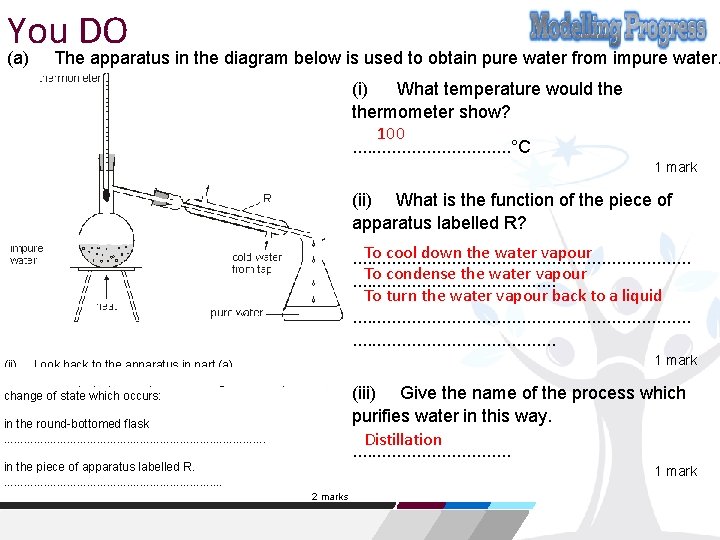
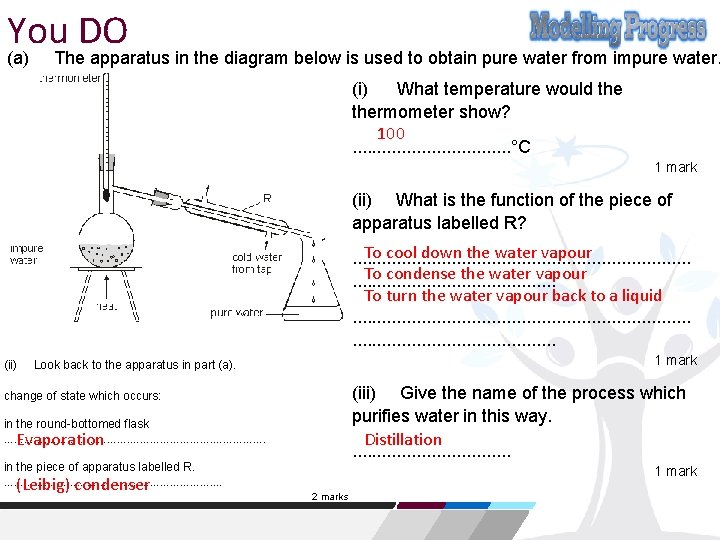
You DO (a) The apparatus in the diagram below is used to obtain pure water from impure water. (i) What temperature would thermometer show? 100. . . . °C 1 mark (ii) What is the function of the piece of apparatus labelled R? To cool down the water vapour. . . . . To condense the water vapour. . . . . To turn the water vapour back to a liquid. . . . . . . (ii) Look back to the apparatus in part (a). Give the letter, A, B, C or D, from the diagram above, for the change of state which occurs: in the round-bottomed flask. . . . . Evaporation in the piece of apparatus labelled R. . . . . (Leibig) condenser 1 mark (iii) Give the name of the process which purifies water in this way. Distillation. . . . 1 mark 2 marks
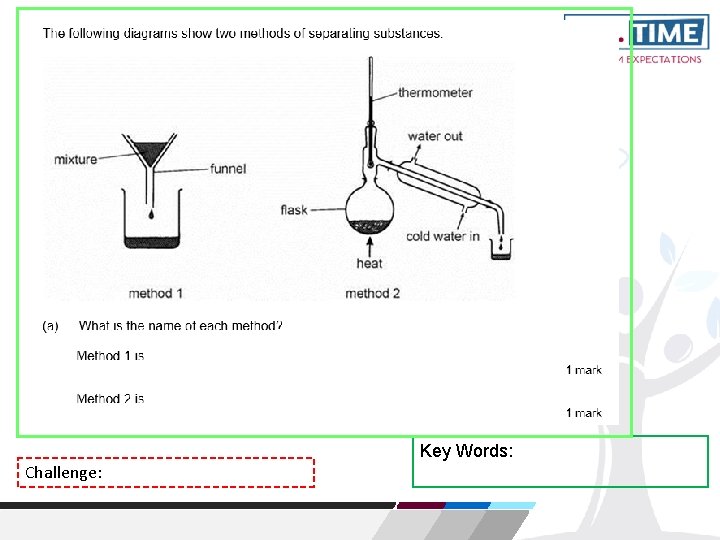
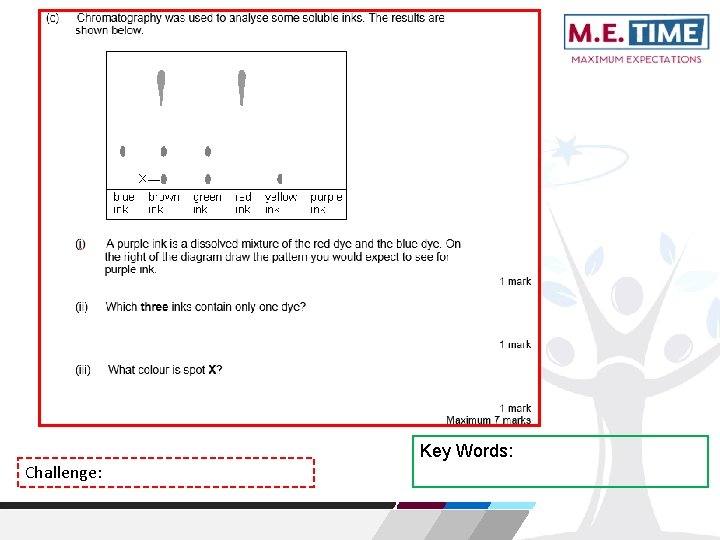
Challenge: Key Words:
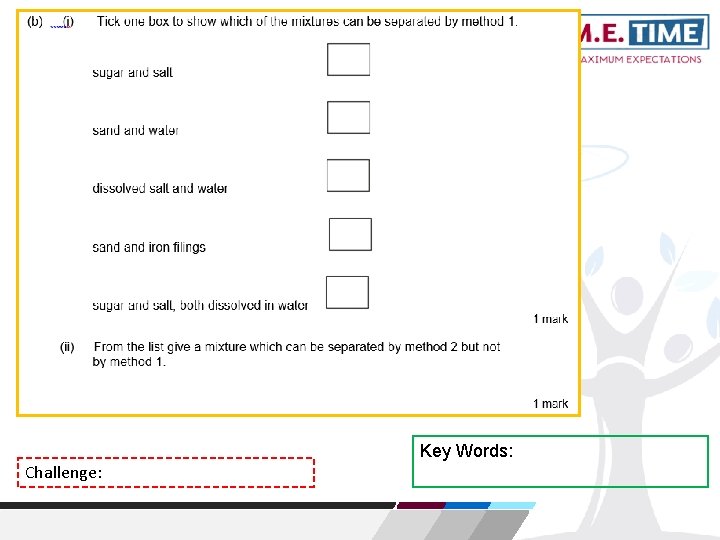
Challenge: Key Words:
Challenge: Key Words:
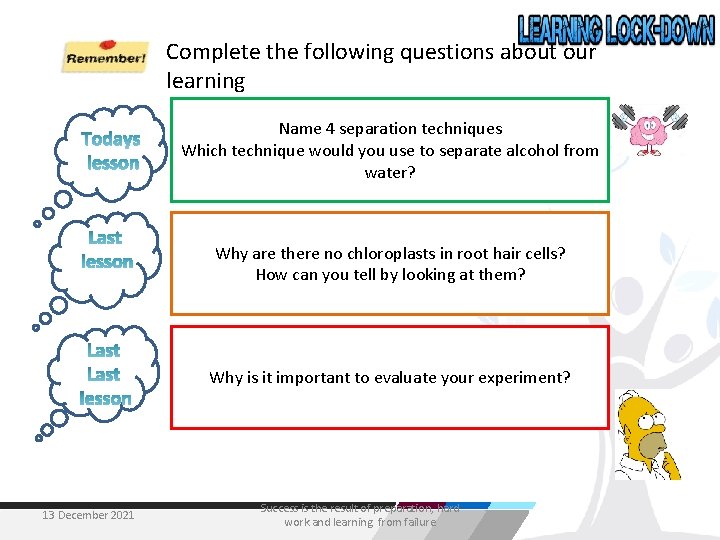
Complete the following questions about our learning Name 4 separation techniques Which technique would you use to separate alcohol from water? Why are there no chloroplasts in root hair cells? How can you tell by looking at them? Why is it important to evaluate your experiment? 13 December 2021 Success is the result of preparation, hard work and learning from failure