
Topic Agricultural Origins Hearths Aim Where all of



- Slides: 19
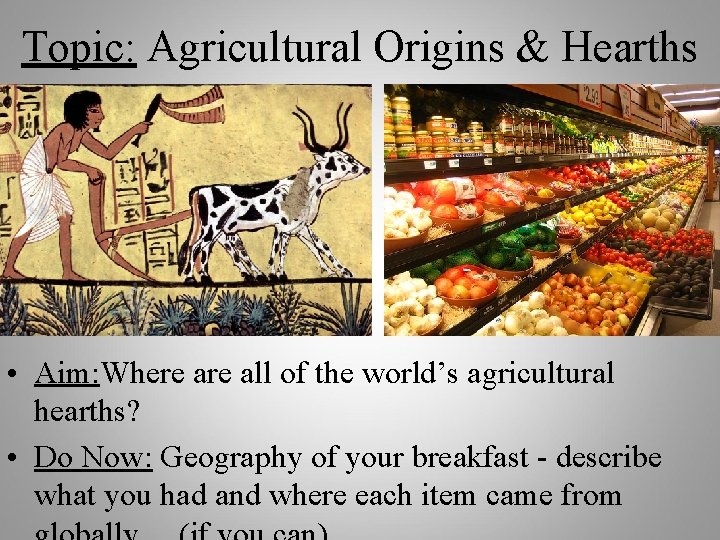
Topic: Agricultural Origins & Hearths • Aim: Where all of the world’s agricultural hearths? • Do Now: Geography of your breakfast - describe what you had and where each item came from
How would you define the term “agriculture”? What does it mean to you?
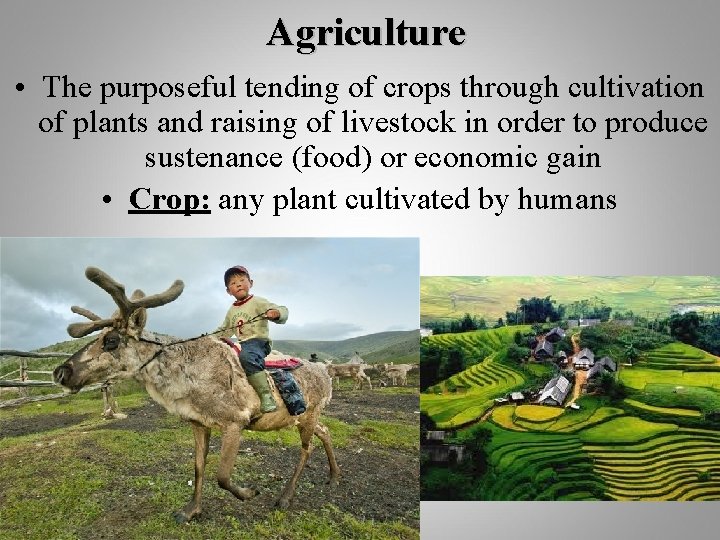
Agriculture • The purposeful tending of crops through cultivation of plants and raising of livestock in order to produce sustenance (food) or economic gain • Crop: any plant cultivated by humans
What were the primary - quinary economic activities that we discussed last chapter? Give an example of how each would relate to a specific agricultural crop
Review - Economic Activities 1. Primary – extractive sector; direct extraction of natural resources from the environment; hunting and gathering, herding, fishing, mining, farming, lumbering, … 2. Secondary – manufacturing sector; processes raw materials & transforms them into finished industrial products; almost infinite range of commodities (toys, chemicals, buildings, etc. ) 3. Tertiary – service sector; engaged in services (transportation, banking, education, …) 4. Quaternary – concerned with collection, processing, and manipulation of information & capital (finance, administration, insurance, legal services) 5. Quinary – require a high level of specialized knowledge or skill (scientific research, high-level management)
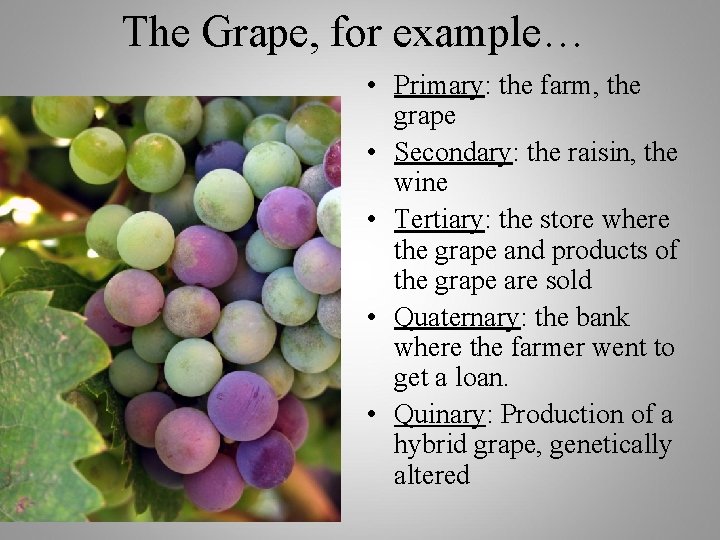
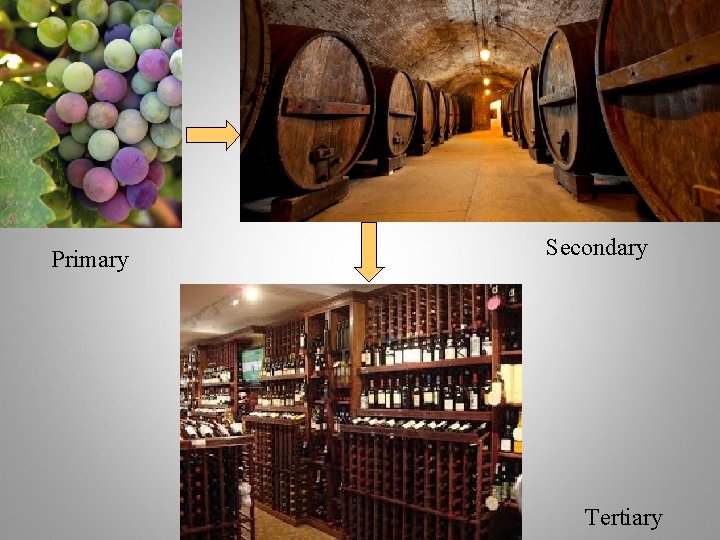
The Grape, for example… • Primary: the farm, the grape • Secondary: the raisin, the wine • Tertiary: the store where the grape and products of the grape are sold • Quaternary: the bank where the farmer went to get a loan. • Quinary: Production of a hybrid grape, genetically altered
Primary Secondary Tertiary
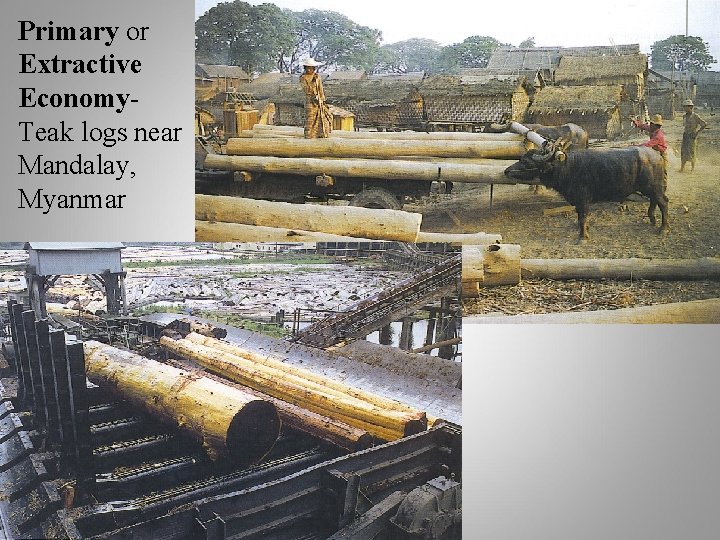
Primary or Extractive Economy. Teak logs near Mandalay, Myanmar
How did early humans obtain food before the advent of sedentary (staying in one place) farming?
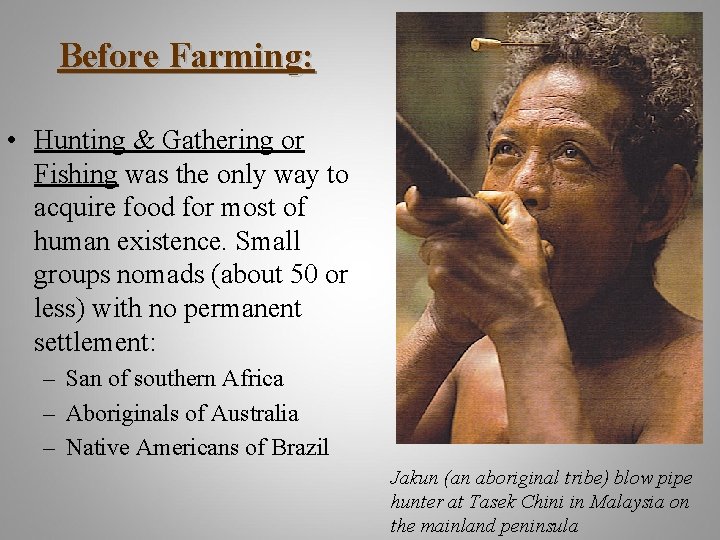
Before Farming: • Hunting & Gathering or Fishing was the only way to acquire food for most of human existence. Small groups nomads (about 50 or less) with no permanent settlement: – San of southern Africa – Aboriginals of Australia – Native Americans of Brazil Jakun (an aboriginal tribe) blow pipe hunter at Tasek Chini in Malaysia on the mainland peninsula
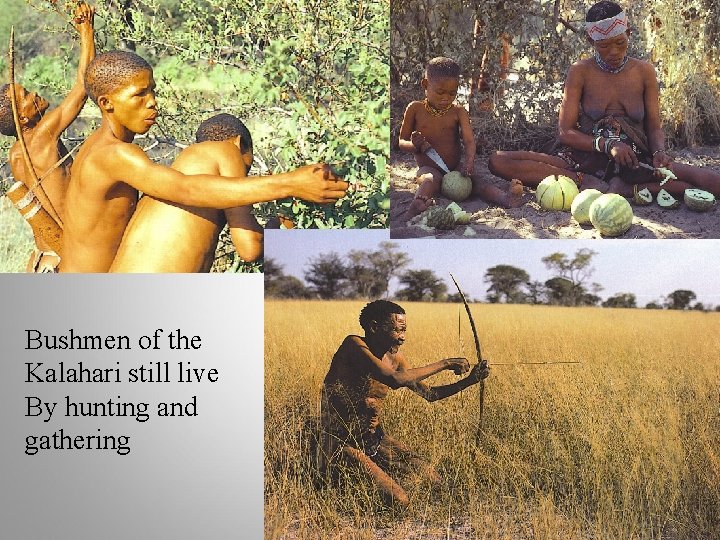
Bushmen of the Kalahari still live By hunting and gathering
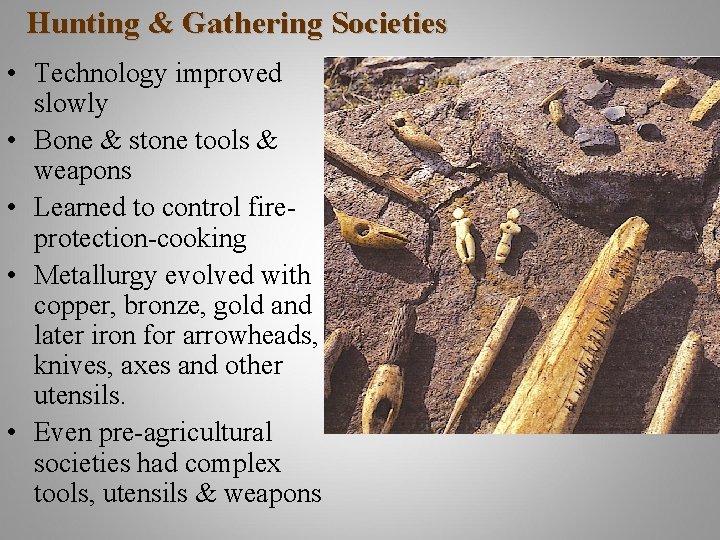
Hunting & Gathering Societies • Technology improved slowly • Bone & stone tools & weapons • Learned to control fireprotection-cooking • Metallurgy evolved with copper, bronze, gold and later iron for arrowheads, knives, axes and other utensils. • Even pre-agricultural societies had complex tools, utensils & weapons
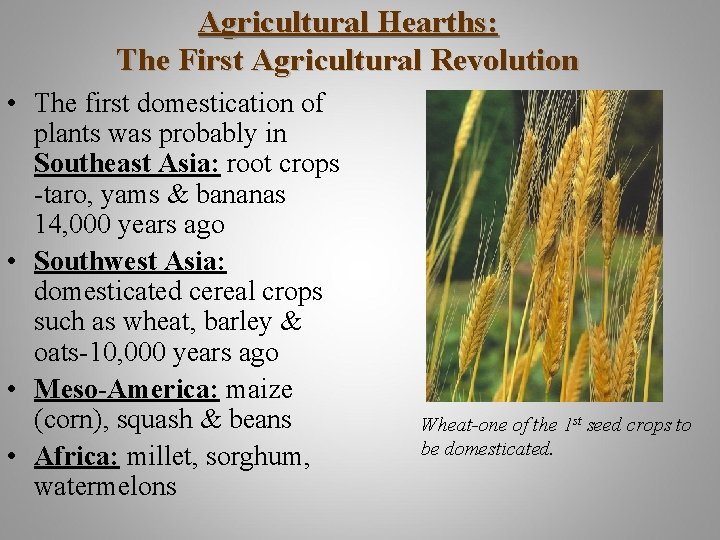
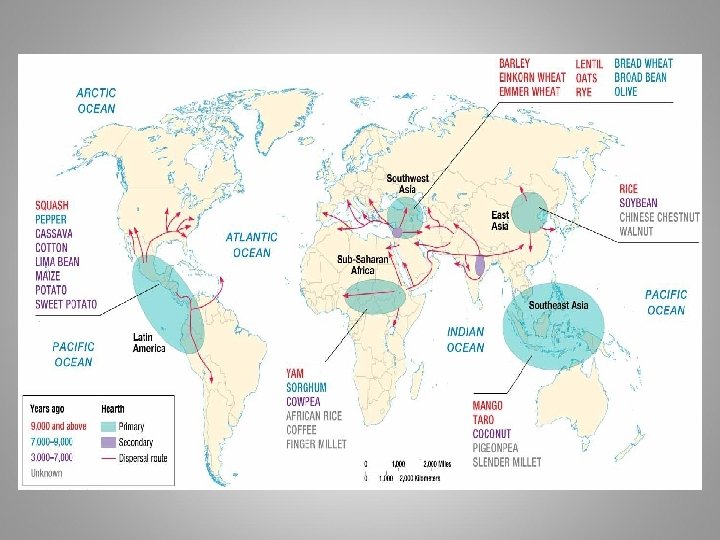
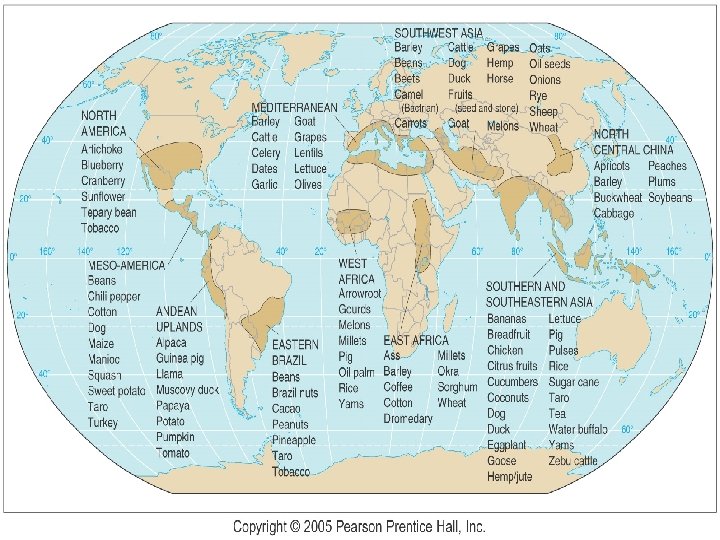
Agricultural Hearths: The First Agricultural Revolution • The first domestication of plants was probably in Southeast Asia: root crops -taro, yams & bananas 14, 000 years ago • Southwest Asia: domesticated cereal crops such as wheat, barley & oats-10, 000 years ago • Meso-America: maize (corn), squash & beans • Africa: millet, sorghum, watermelons Wheat-one of the 1 st seed crops to be domesticated.
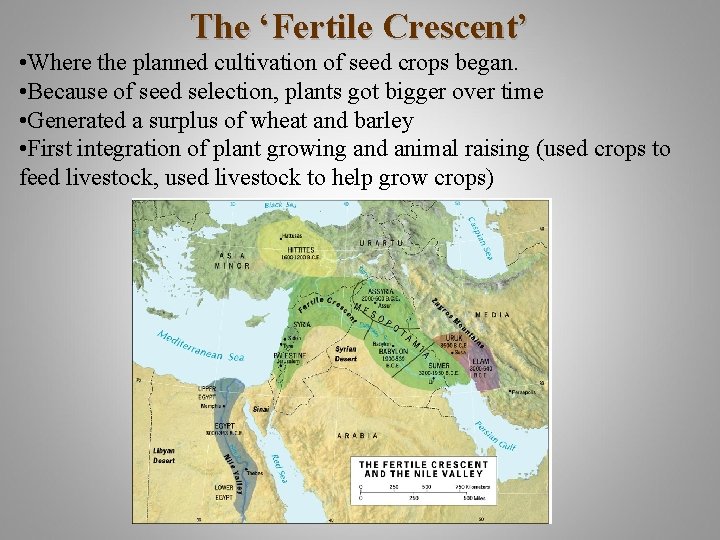
The ‘Fertile Crescent’ • Where the planned cultivation of seed crops began. • Because of seed selection, plants got bigger over time • Generated a surplus of wheat and barley • First integration of plant growing and animal raising (used crops to feed livestock, used livestock to help grow crops)
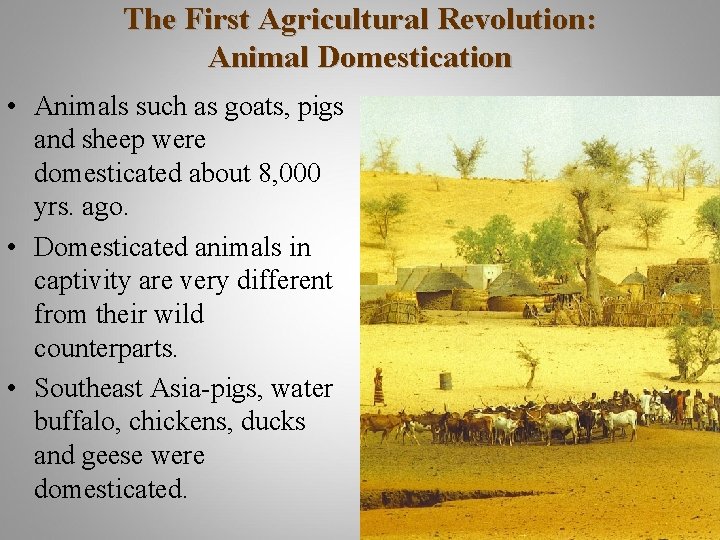
The First Agricultural Revolution: Animal Domestication • Animals such as goats, pigs and sheep were domesticated about 8, 000 yrs. ago. • Domesticated animals in captivity are very different from their wild counterparts. • Southeast Asia-pigs, water buffalo, chickens, ducks and geese were domesticated.
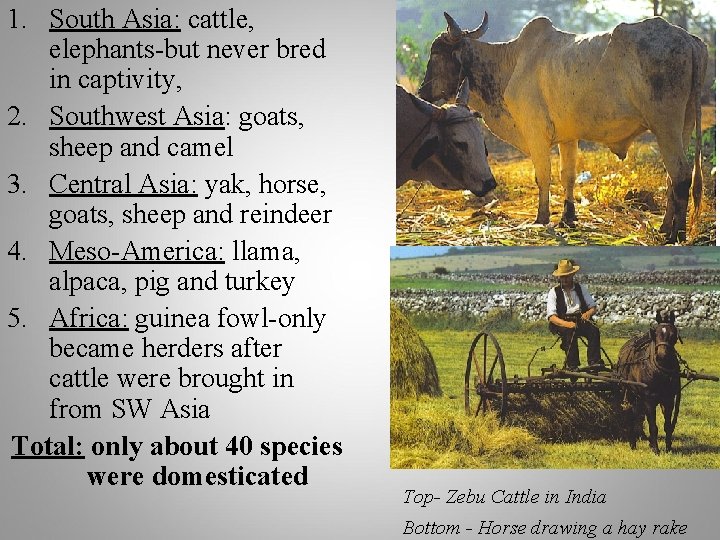
1. South Asia: cattle, elephants-but never bred in captivity, 2. Southwest Asia: goats, sheep and camel 3. Central Asia: yak, horse, goats, sheep and reindeer 4. Meso-America: llama, alpaca, pig and turkey 5. Africa: guinea fowl-only became herders after cattle were brought in from SW Asia Total: only about 40 species were domesticated Top- Zebu Cattle in India Bottom - Horse drawing a hay rake
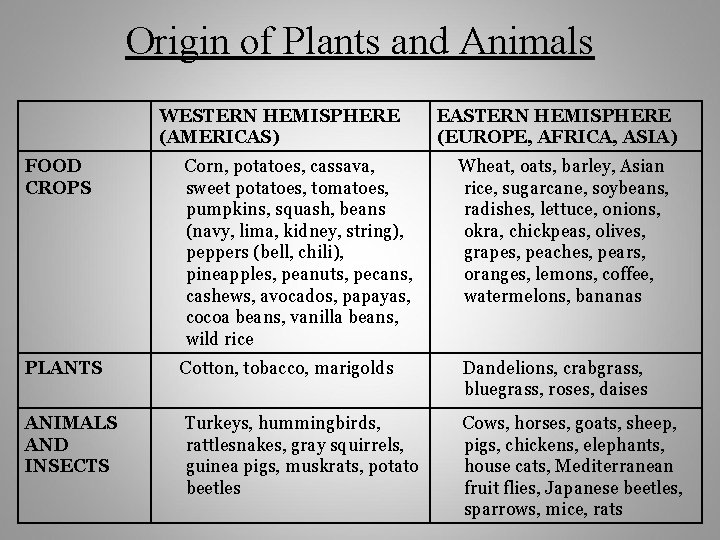
Origin of Plants and Animals WESTERN HEMISPHERE (AMERICAS) EASTERN HEMISPHERE (EUROPE, AFRICA, ASIA) FOOD CROPS Corn, potatoes, cassava, sweet potatoes, tomatoes, pumpkins, squash, beans (navy, lima, kidney, string), peppers (bell, chili), pineapples, peanuts, pecans, cashews, avocados, papayas, cocoa beans, vanilla beans, wild rice Wheat, oats, barley, Asian rice, sugarcane, soybeans, radishes, lettuce, onions, okra, chickpeas, olives, grapes, peaches, pears, oranges, lemons, coffee, watermelons, bananas PLANTS Cotton, tobacco, marigolds Dandelions, crabgrass, bluegrass, roses, daises ANIMALS AND INSECTS Turkeys, hummingbirds, rattlesnakes, gray squirrels, guinea pigs, muskrats, potato beetles Cows, horses, goats, sheep, pigs, chickens, elephants, house cats, Mediterranean fruit flies, Japanese beetles, sparrows, mice, rats