
Topic 9 Control Flow COS 320 Compiling Techniques


- Slides: 46
Topic 9: Control Flow COS 320 Compiling Techniques Princeton University Spring 2016 Lennart Beringer 1
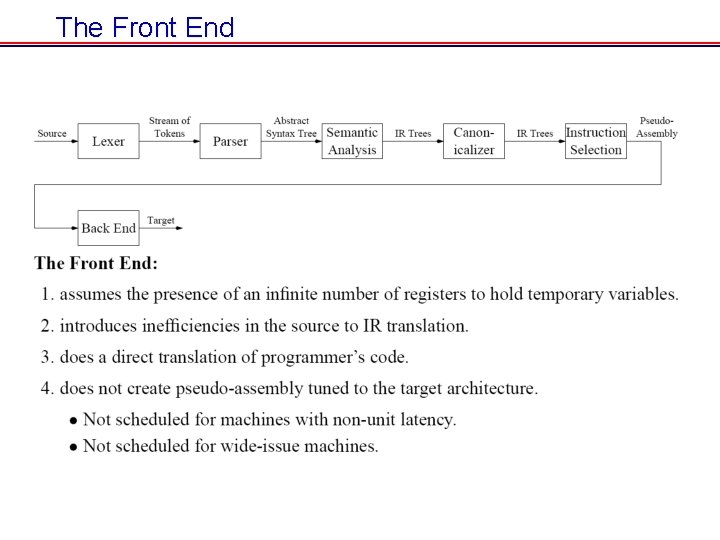
The Front End
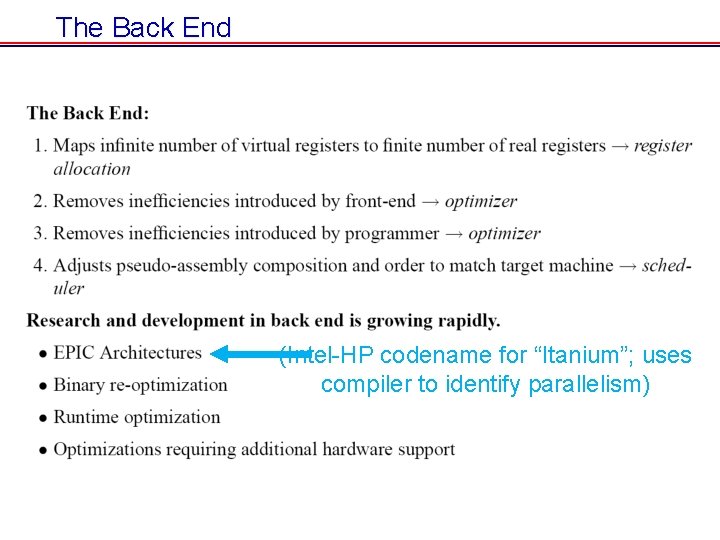
The Back End (Intel-HP codename for “Itanium”; uses compiler to identify parallelism)
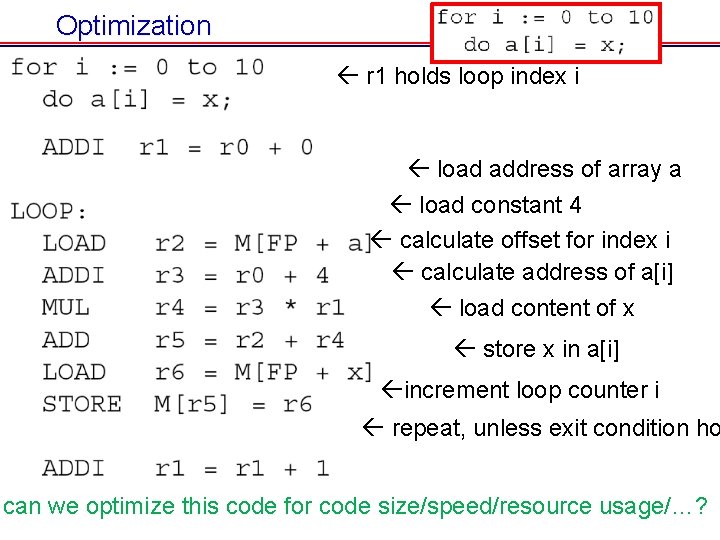
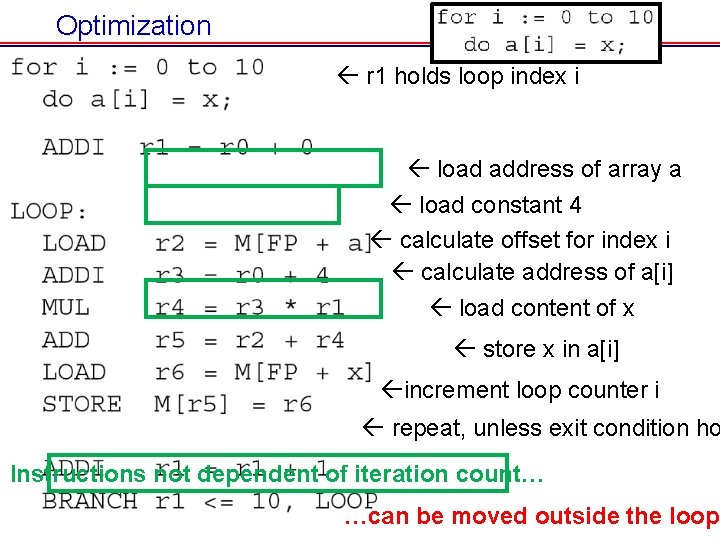
Optimization r 1 holds loop index i load address of array a load constant 4 calculate offset for index i calculate address of a[i] load content of x store x in a[i] increment loop counter i repeat, unless exit condition ho can we optimize this code for code size/speed/resource usage/…?
Optimization r 1 holds loop index i load address of array a load constant 4 calculate offset for index i calculate address of a[i] load content of x store x in a[i] increment loop counter i repeat, unless exit condition ho Instructions not dependent of iteration count… …can be moved outside the loop!
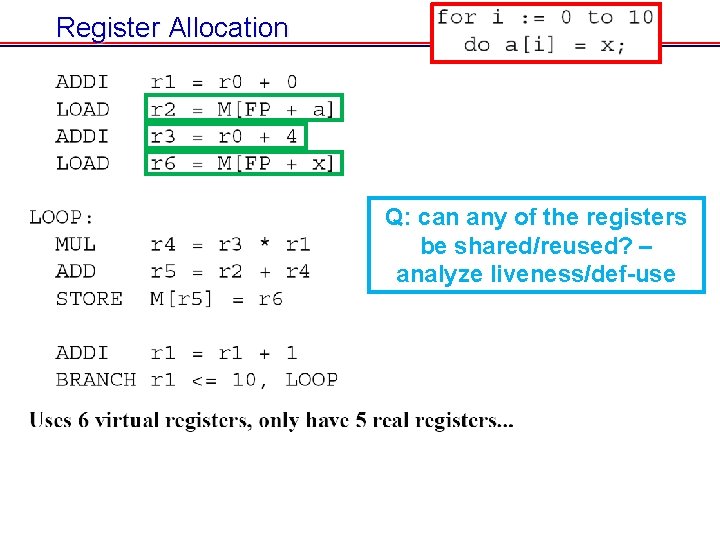
Register Allocation Q: can any of the registers be shared/reused? – analyze liveness/def-use
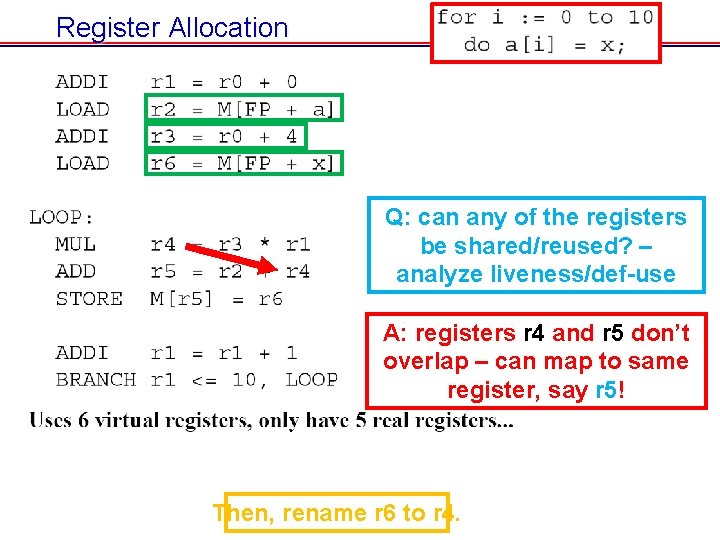
Register Allocation Q: can any of the registers be shared/reused? – analyze liveness/def-use A: registers r 4 and r 5 don’t overlap – can map to same register, say r 5! Then, rename r 6 to r 4.
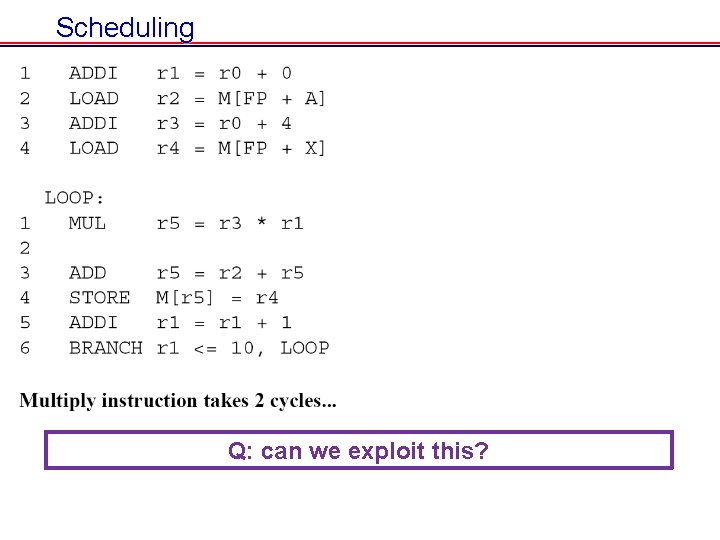
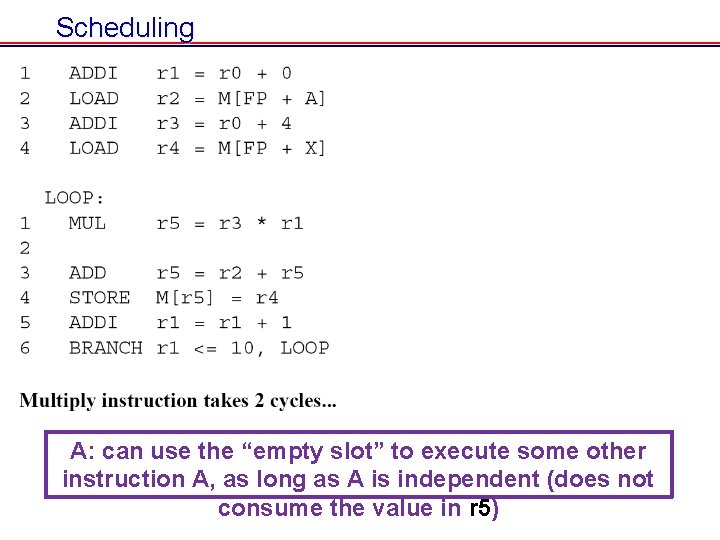
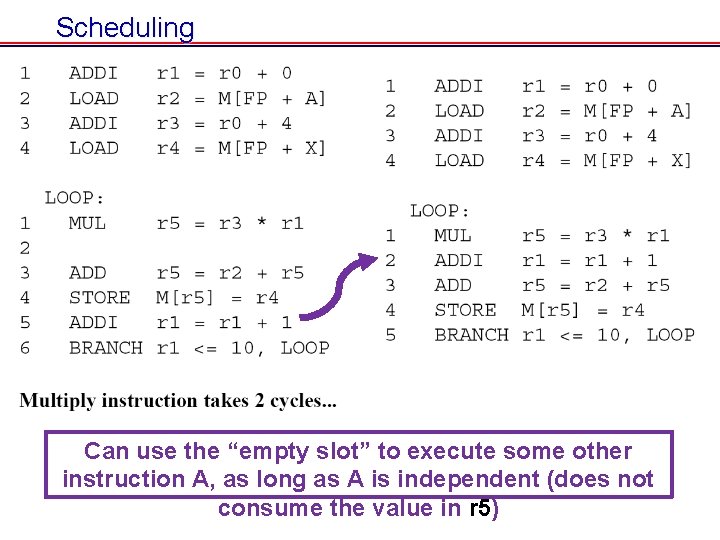
Scheduling Q: can we exploit this?
Scheduling A: can use the “empty slot” to execute some other instruction A, as long as A is independent (does not consume the value in r 5)
Scheduling Can use the “empty slot” to execute some other instruction A, as long as A is independent (does not consume the value in r 5)
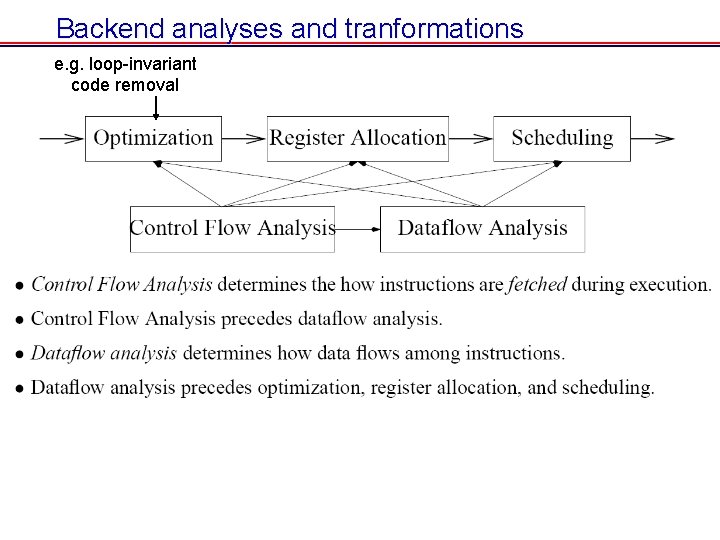
Backend analyses and tranformations e. g. loop-invariant code removal
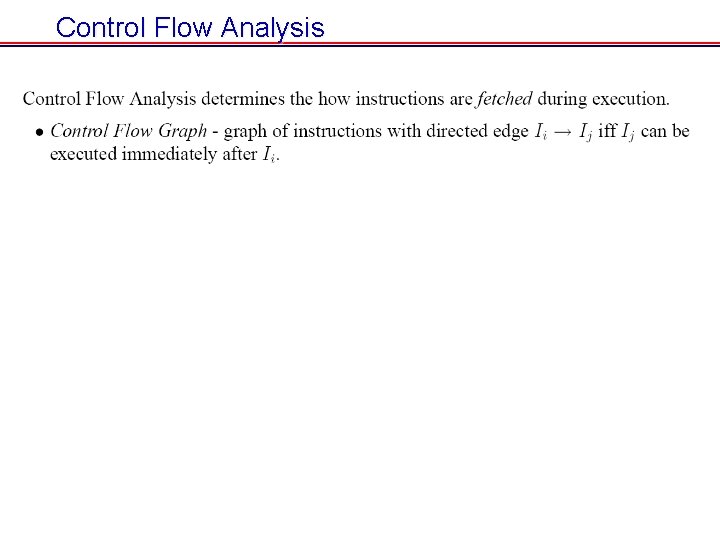
Control Flow Analysis
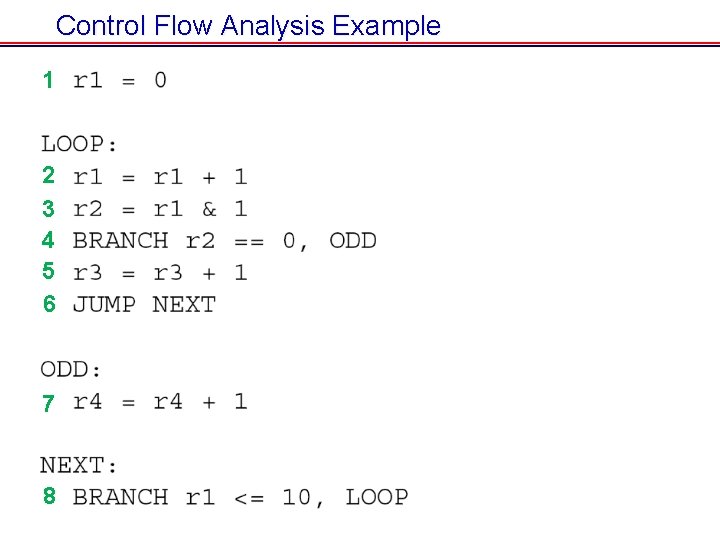
Control Flow Analysis Example 1 2 3 4 5 6 7 8
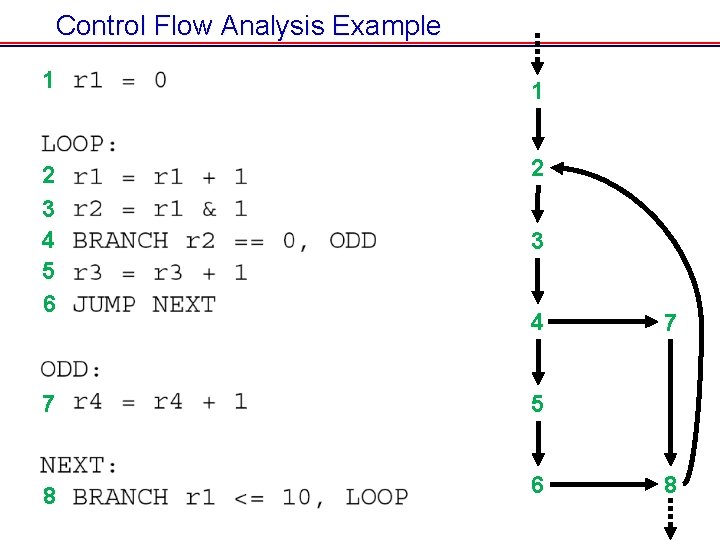
Control Flow Analysis Example 1 1 2 3 4 5 6 2 3 7 5 8 6 4 7 8
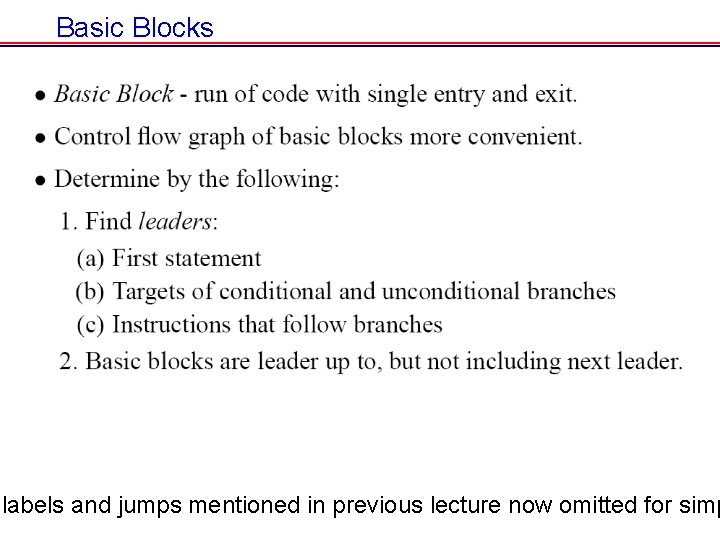
Basic Blocks labels and jumps mentioned in previous lecture now omitted for simp
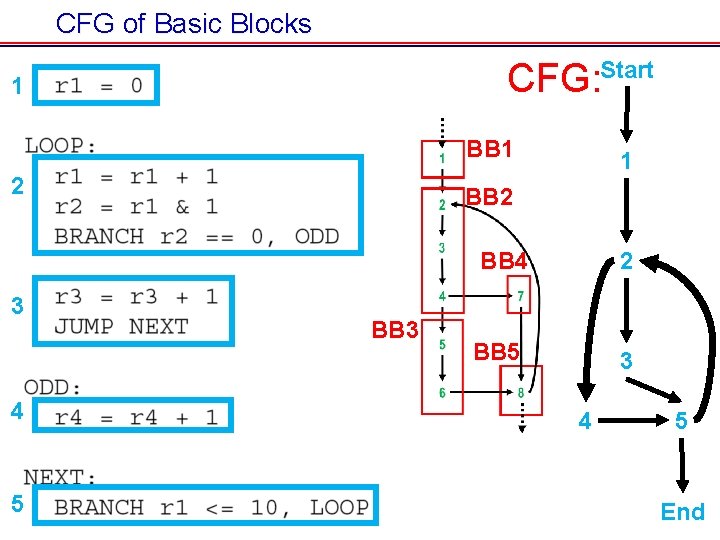
CFG of Basic Blocks CFG: Start 1 BB 1 2 1 BB 2 BB 4 3 4 5 BB 3 2 BB 5 3 4 5 End
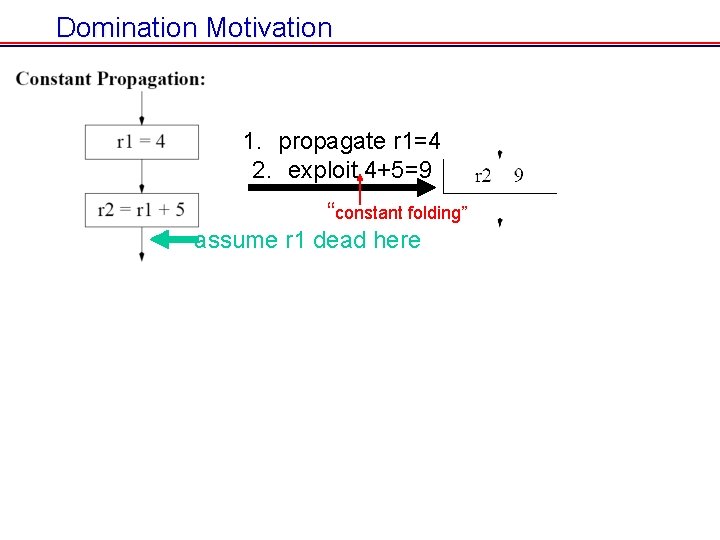
Domination Motivation 1. propagate r 1=4 2. exploit 4+5=9 “constant folding” assume r 1 dead here
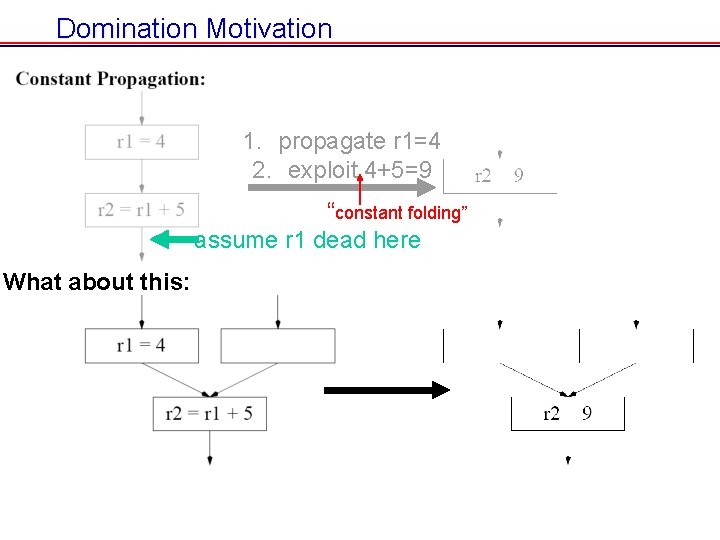
Domination Motivation 1. propagate r 1=4 2. exploit 4+5=9 “constant folding” assume r 1 dead here What about this:
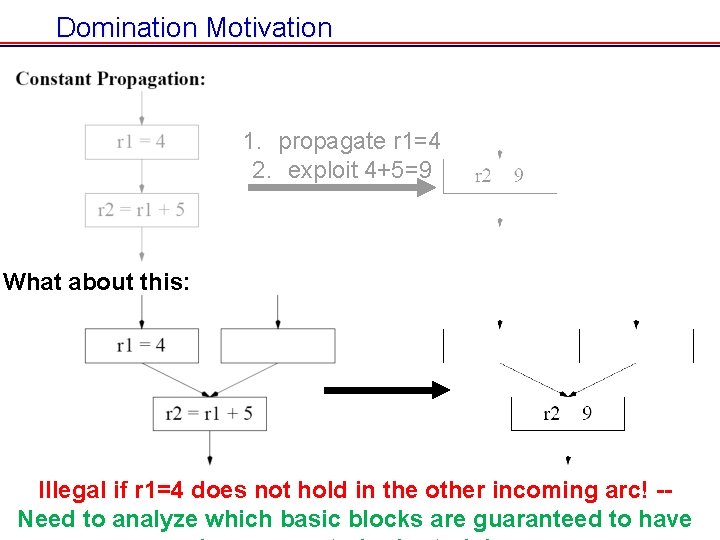
Domination Motivation 1. propagate r 1=4 2. exploit 4+5=9 What about this: Illegal if r 1=4 does not hold in the other incoming arc! -Need to analyze which basic blocks are guaranteed to have
Dominator Analysis
Dominator Analysis
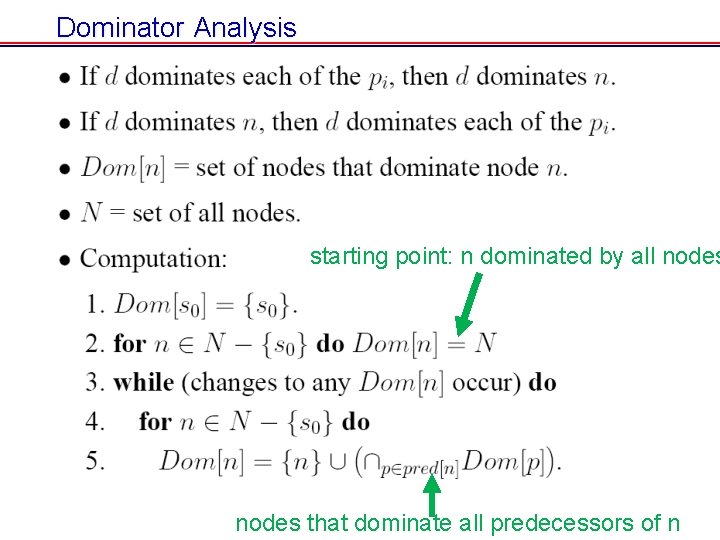
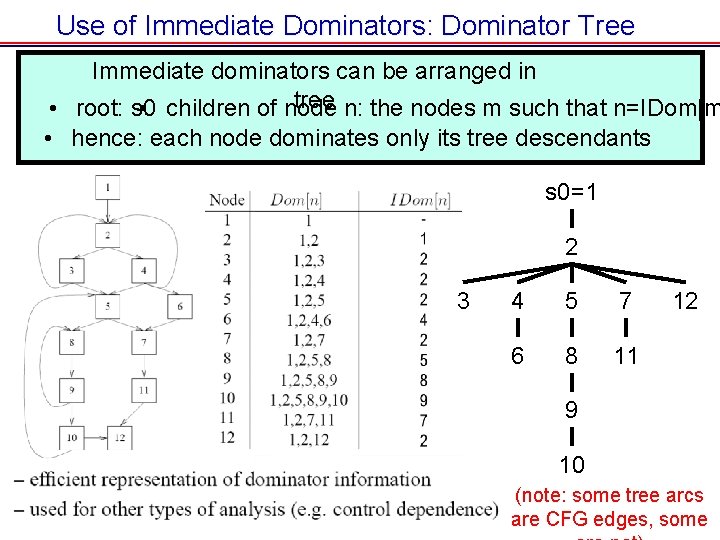
Dominator Analysis starting point: n dominated by all nodes that dominate all predecessors of n
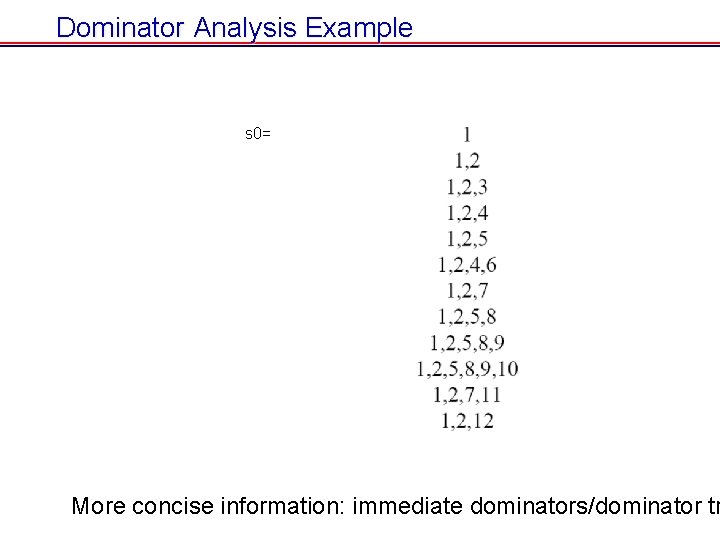
Dominator Analysis Example s 0= Task: fill in column Dom[n]
Dominator Analysis Example s 0= More concise information: immediate dominators/dominator tr
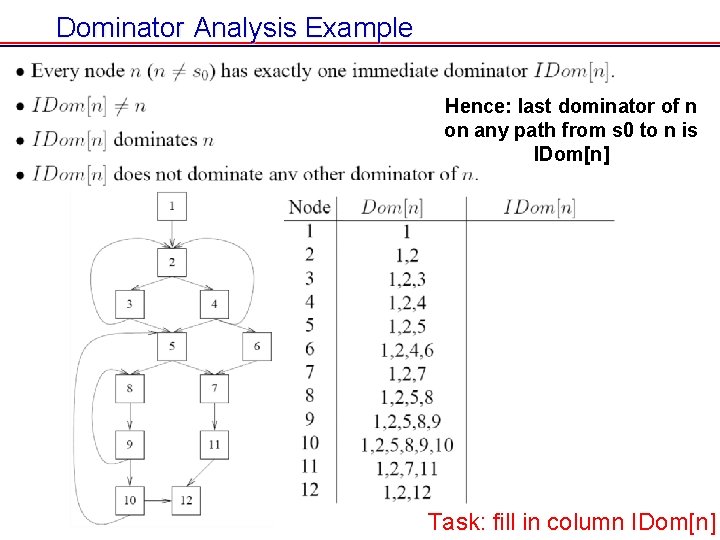
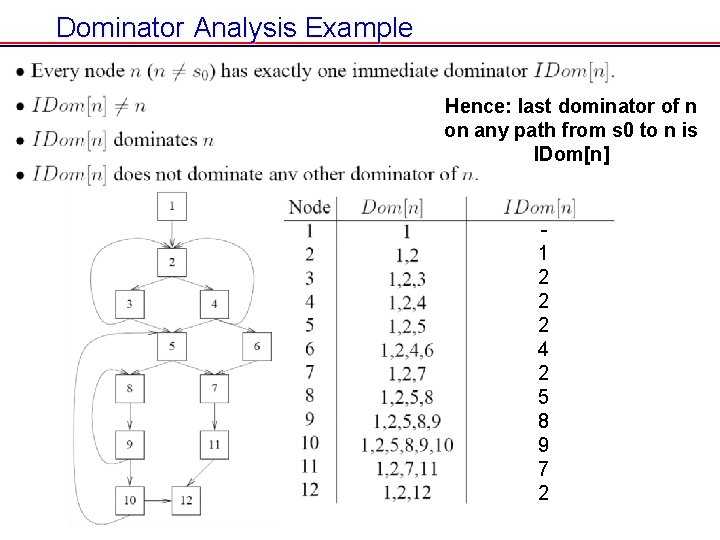
Dominator Analysis Example Hence: last dominator of n on any path from s 0 to n is IDom[n] Task: fill in column IDom[n]
Dominator Analysis Example Hence: last dominator of n on any path from s 0 to n is IDom[n] 1 2 2 2 4 2 5 8 9 7 2
Use of Immediate Dominators: Dominator Tree Immediate dominators can be arranged in tree n: the nodes m such that n=IDom[m • children of node • root: s 0 • hence: each node dominates only its tree descendants s 0=1 2 3 4 5 7 6 8 11 12 9 10 (note: some tree arcs are CFG edges, some
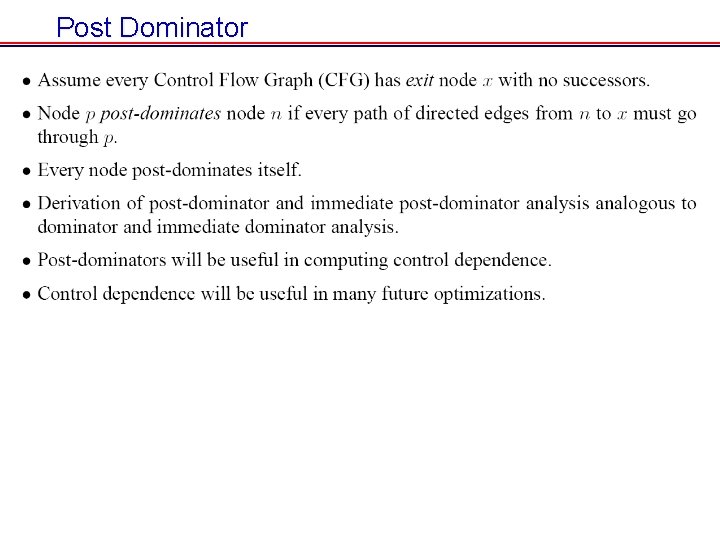
Post Dominator
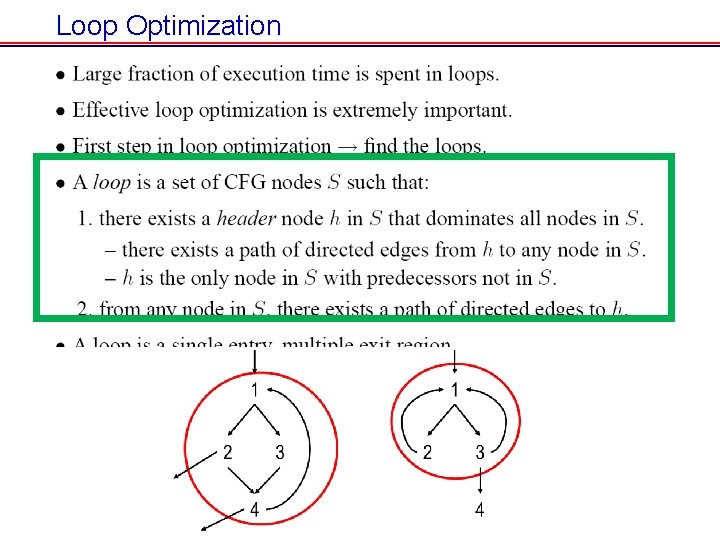
Loop Optimization
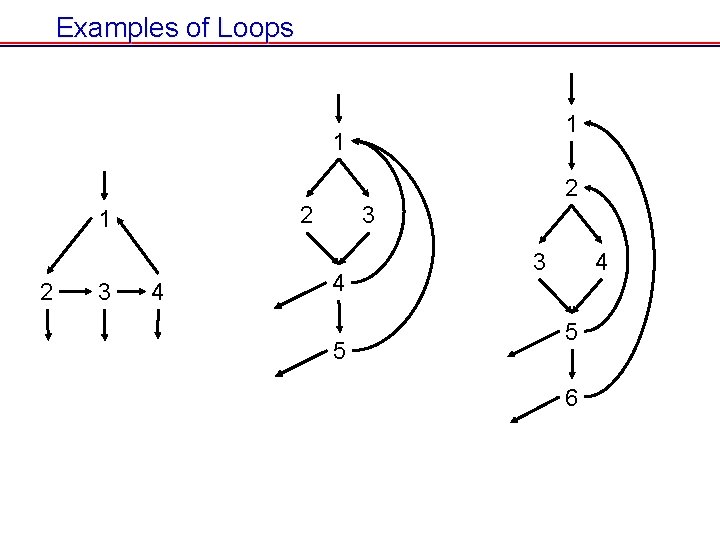
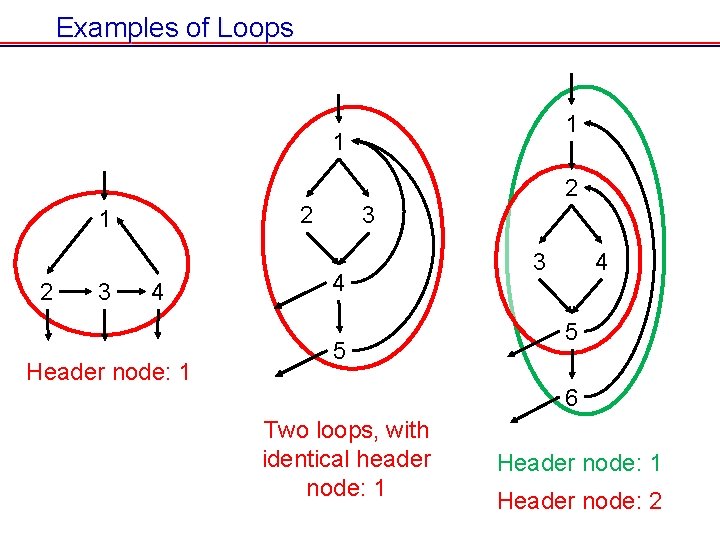
Examples of Loops 1 1 2 2 1 2 3 4 5 6
Examples of Loops 1 1 2 2 1 2 3 4 Header node: 1 3 4 5 6 Two loops, with identical header node: 1 Header node: 2
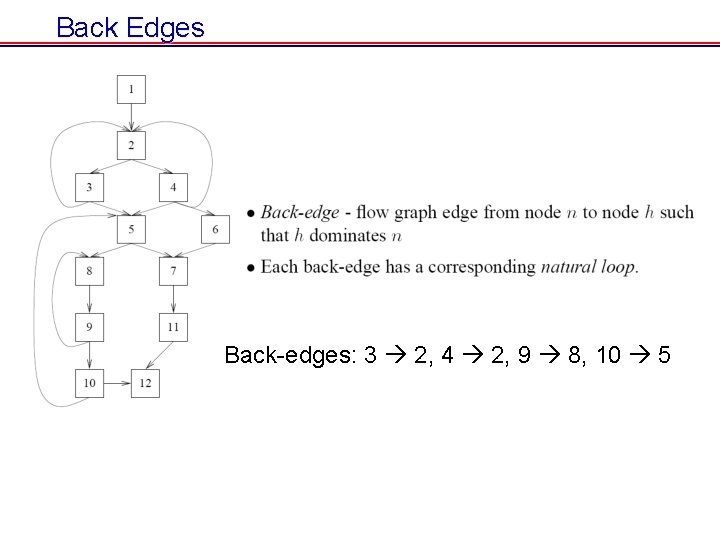
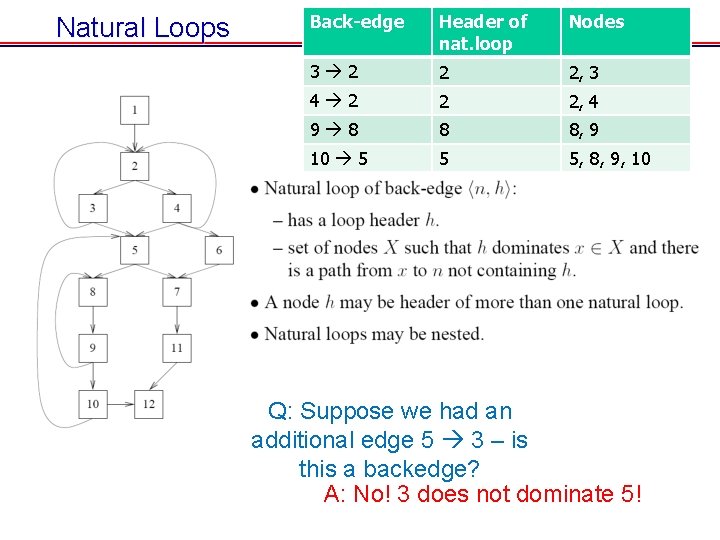
Back Edges Back-edges: 3 2, 4 2, 9 8, 10 5
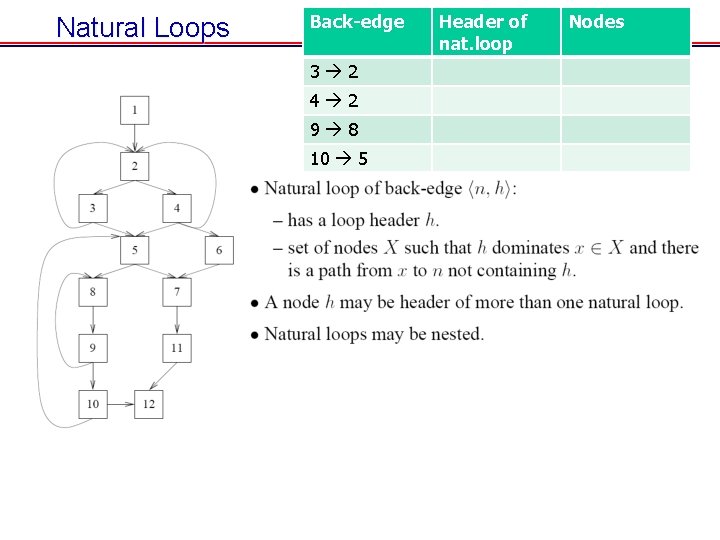
Natural Loops Back-edge 3 2 4 2 9 8 10 5 Header of nat. loop Nodes
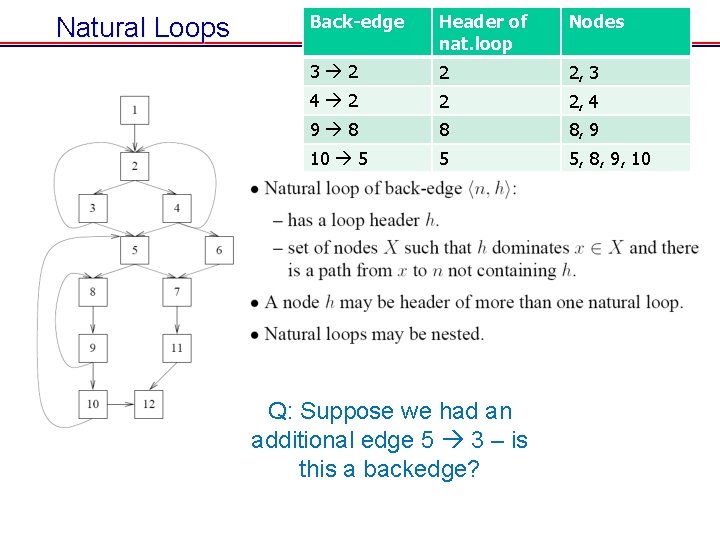
Natural Loops Back-edge Header of nat. loop Nodes 3 2 2 2, 3 4 2 2 2, 4 9 8 8 8, 9 10 5 5 5, 8, 9, 10 Q: Suppose we had an additional edge 5 3 – is this a backedge?
Natural Loops Back-edge Header of nat. loop Nodes 3 2 2 2, 3 4 2 2 2, 4 9 8 8 8, 9 10 5 5 5, 8, 9, 10 Q: Suppose we had an additional edge 5 3 – is this a backedge? A: No! 3 does not dominate 5!
Loop Optimization
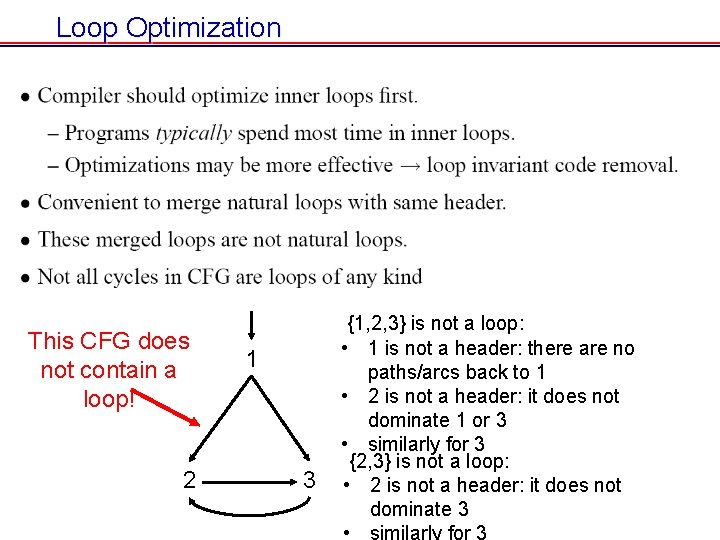
Loop Optimization This CFG does not contain a loop! 2 1 3 {1, 2, 3} is not a loop: • 1 is not a header: there are no paths/arcs back to 1 • 2 is not a header: it does not dominate 1 or 3 • similarly for 3 {2, 3} is not a loop: • 2 is not a header: it does not dominate 3
Loop Optimization “into the edge” leading to the header.
Loop Optimization the loop increment/decrement i, and by a loop-independent valu Q: is there an induction variable here?
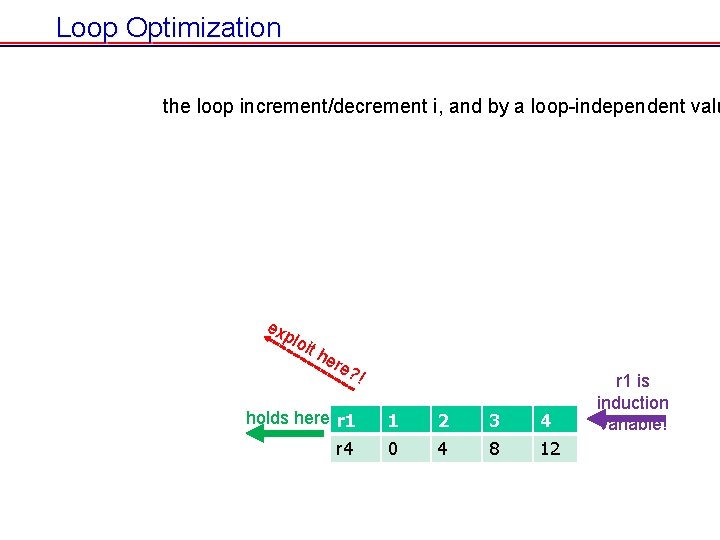
Loop Optimization the loop increment/decrement i, and by a loop-independent valu ex plo it h ere ? ! holds here r 1 1 2 3 4 r 4 0 4 8 12 r 1 is induction variable!
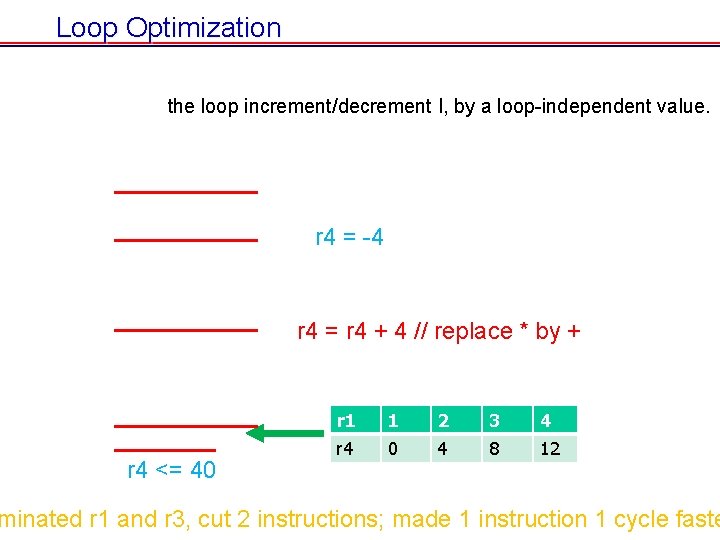
Loop Optimization the loop increment/decrement I, by a loop-independent value. r 4 = -4 r 4 = r 4 + 4 // replace * by + r 4 <= 40 r 1 1 2 3 4 r 4 0 4 8 12 minated r 1 and r 3, cut 2 instructions; made 1 instruction 1 cycle faste
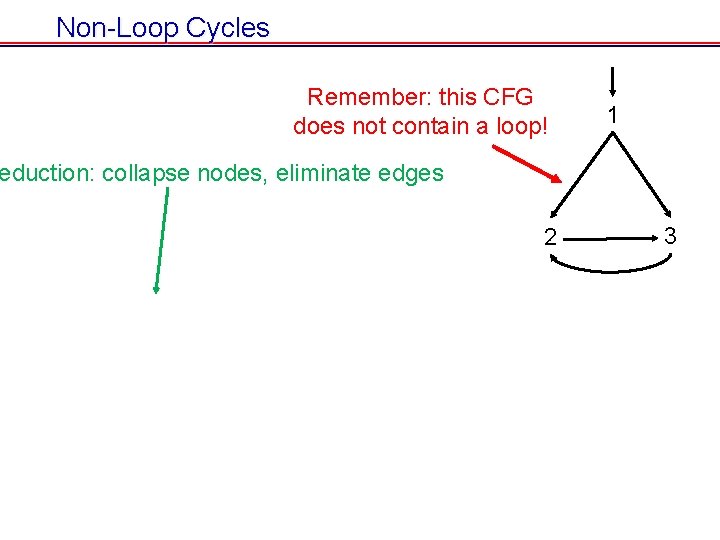
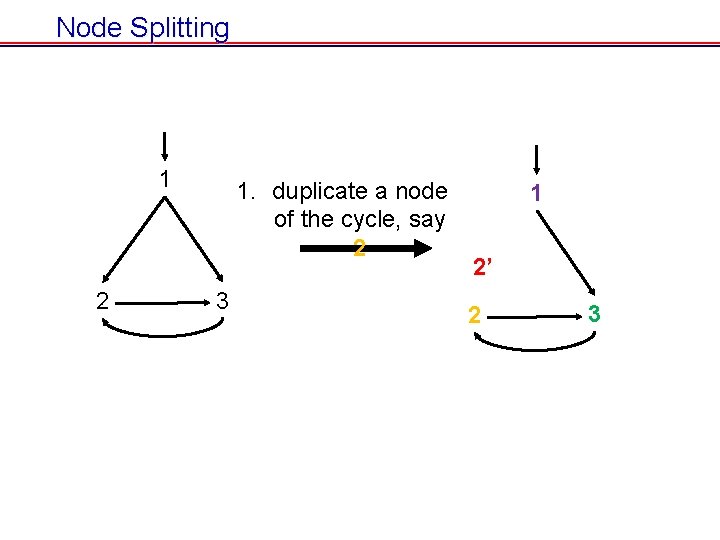
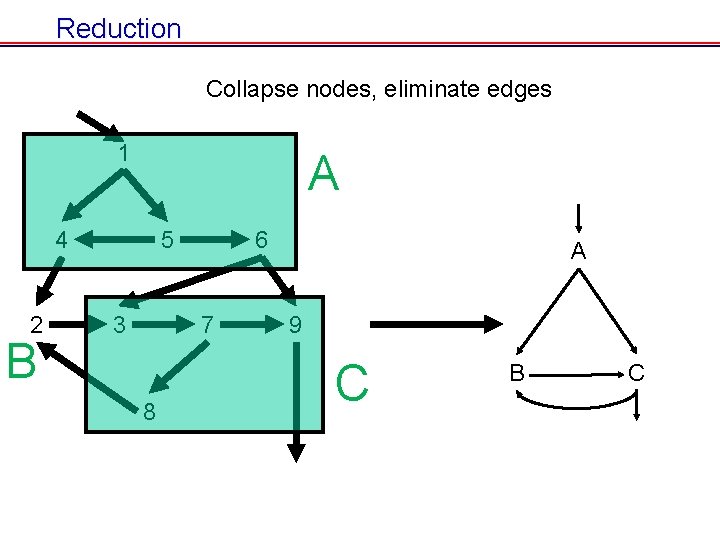
Non-Loop Cycles Remember: this CFG does not contain a loop! 1 eduction: collapse nodes, eliminate edges 2 3
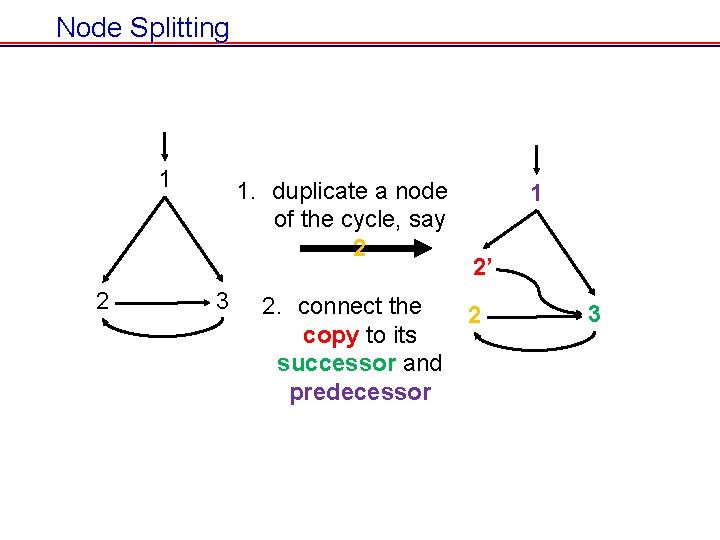
Node Splitting 1 2 1. duplicate a node of the cycle, say 2 3 1 2’ 2 3
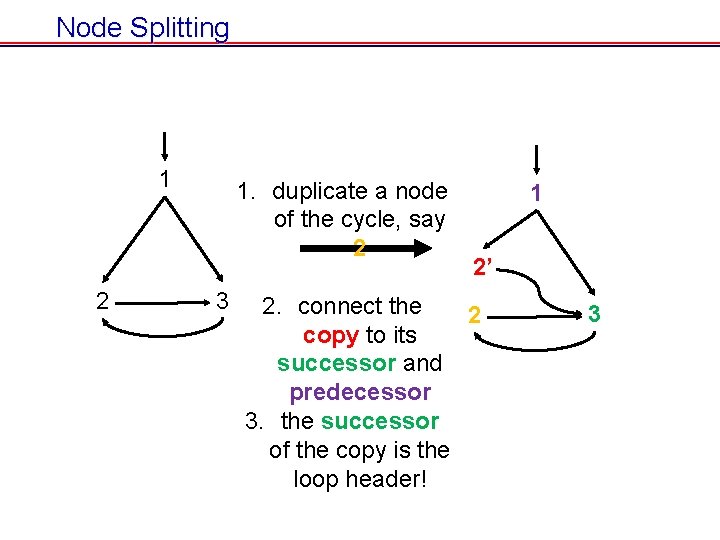
Node Splitting 1 2 1. duplicate a node of the cycle, say 2 3 2. connect the copy to its successor and predecessor 1 2’ 2 3
Node Splitting 1 2 1. duplicate a node of the cycle, say 2 3 1 2’ 2. connect the 2 copy to its successor and predecessor 3. the successor of the copy is the loop header! 3
Reduction Collapse nodes, eliminate edges 1 A 4 2 B 5 6 7 3 8 A 9 C B C