
Topic 8 REACTION RATE Chemical Reaction Rates Chemical
![Hindenburg Disaster Real Footage (1937) [HD] � http: //www. youtube. com/watch? v=Cg. W Hbp.](https://slidetodoc.com/presentation_image_h2/00cba38fe05afc57d56a55cc4d08e430/image-13.jpg "Hindenburg Disaster Real Footage (1937) [HD] � http: //www. youtube. com/watch? v=Cg. W Hbp.")
- Slides: 13
Topic 8 REACTION RATE
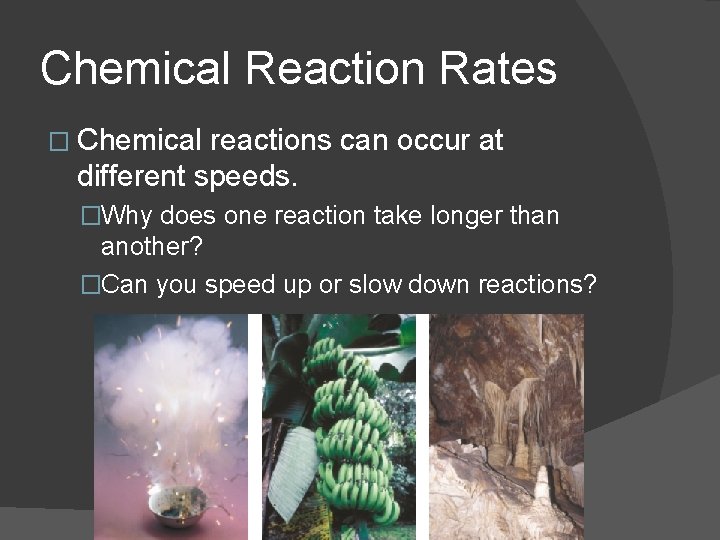
Chemical Reaction Rates � Chemical reactions can occur at different speeds. �Why does one reaction take longer than another? �Can you speed up or slow down reactions?
Four ways to Speed up Reactions � Increase Temperature � Increase Surface Area � Increase Concentration � Add a catalyst � http: //www. youtube. com/watch? v=XX 9 X o 6 zm_k. M � http: //ed. ted. com/lessons/how-to-speedup-chemical-reactions-and-get-a-date
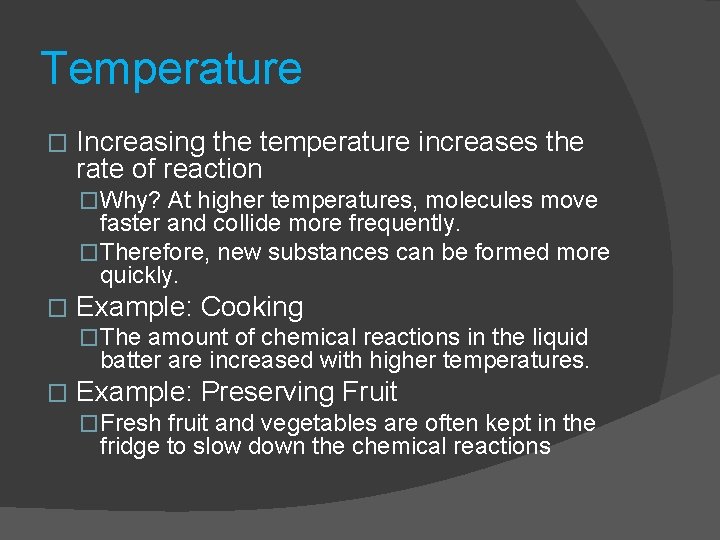
Temperature � Increasing the temperature increases the rate of reaction �Why? At higher temperatures, molecules move faster and collide more frequently. �Therefore, new substances can be formed more quickly. � Example: Cooking �The amount of chemical reactions in the liquid batter are increased with higher temperatures. � Example: Preserving Fruit �Fresh fruit and vegetables are often kept in the fridge to slow down the chemical reactions
Surface Area � Crushing materials increases the amount of surface area that is available to react. �A powder of a substance will react much more quickly than a block of the same substance. �http: //www. youtube. com/watch? v=Ljb. JELj. Lg Zg&feature=related �http: //www. youtube. com/watch? v=zno. Sa. Hw b. HYg
Concentration � Increasing the amount of substance per unit of volume increases the amount of substance that is available to react. �If you are doing a lab with acid, a more concentrated acid will react faster than a dilute concentration.
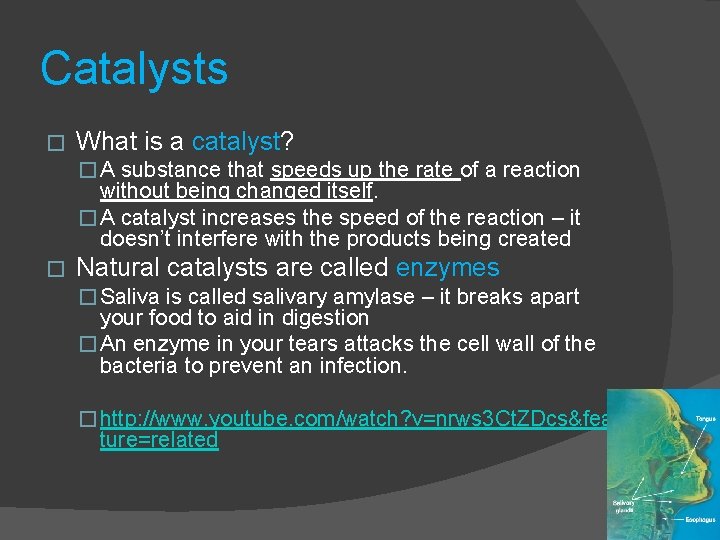
Catalysts � What is a catalyst? � A substance that speeds up the rate of a reaction without being changed itself. � A catalyst increases the speed of the reaction – it doesn’t interfere with the products being created � Natural catalysts are called enzymes � Saliva is called salivary amylase – it breaks apart your food to aid in digestion � An enzyme in your tears attacks the cell wall of the bacteria to prevent an infection. � http: //www. youtube. com/watch? v=nrws 3 Ct. ZDcs&fea ture=related
Inhibitors � Inhibitors are substances that slow down chemical reactions. � Examples: �Plants have inhibitors to stop germination until conditions are right �Foods and medicines have inhibitors in them to prevent decomposition �Hydrogen Peroxide has inhibitors in it to prevent its molecules from decomposing too quickly
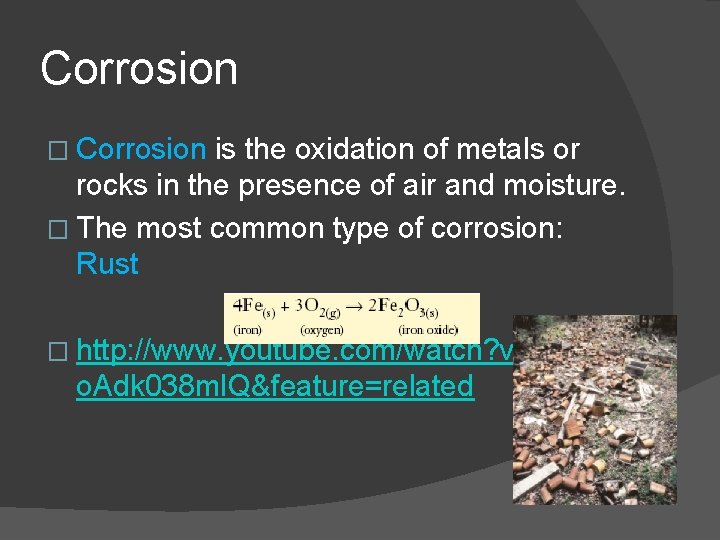
Corrosion � Corrosion is the oxidation of metals or rocks in the presence of air and moisture. � The most common type of corrosion: Rust � http: //www. youtube. com/watch? v=- o. Adk 038 m. IQ&feature=related
Preventing Corrosion Corroded materials lose their strength. Once materials lose the top layer, oxygen from the air can reach the inner layers. � Prevention? � � Apply a thin coat of paint � Coat it with a thin layer of zinc – this process is called galvanization � Examples? � Galvanized nails so that job sites aren’t ruined � Chromium covered car parts to protect the lead � Reminder: What is the electrochemical process to coat a metal with another type of metal? � Electroplating
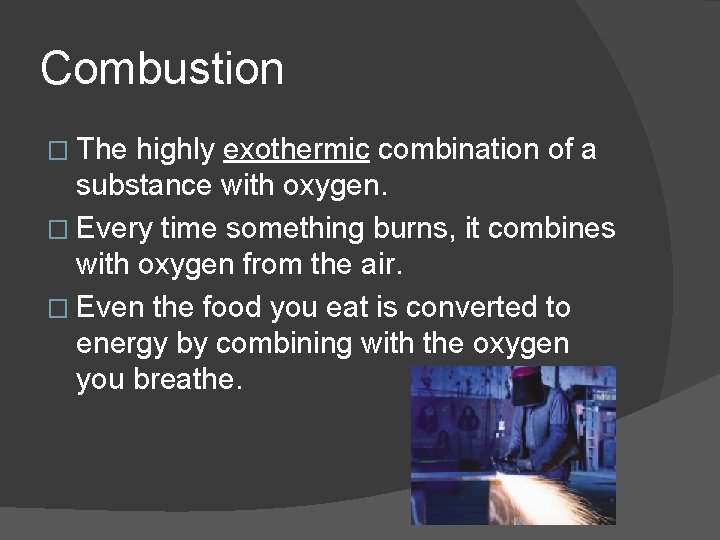
Combustion � The highly exothermic combination of a substance with oxygen. � Every time something burns, it combines with oxygen from the air. � Even the food you eat is converted to energy by combining with the oxygen you breathe.
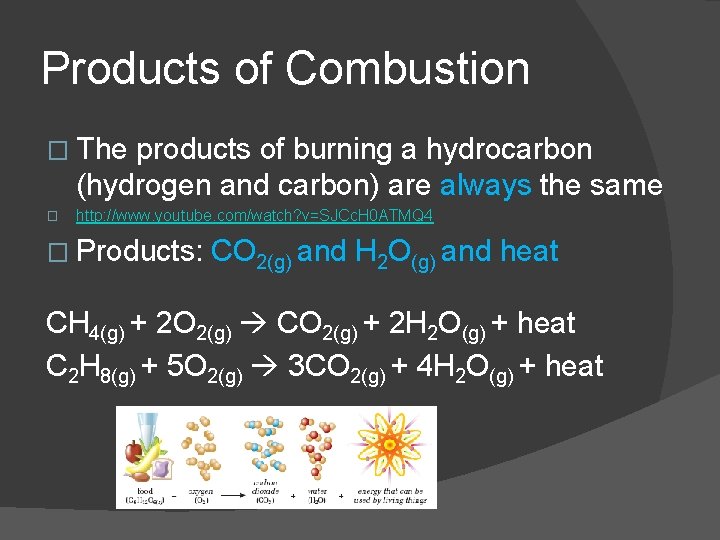
Products of Combustion � The products of burning a hydrocarbon (hydrogen and carbon) are always the same � http: //www. youtube. com/watch? v=SJCc. H 0 ATMQ 4 � Products: CO 2(g) and H 2 O(g) and heat CH 4(g) + 2 O 2(g) CO 2(g) + 2 H 2 O(g) + heat C 2 H 8(g) + 5 O 2(g) 3 CO 2(g) + 4 H 2 O(g) + heat
Hindenburg Disaster Real Footage (1937) [HD] � http: //www. youtube. com/watch? v=Cg. W Hbp. MVQ 1 U&feature=player_embedded � http: //ed. ted. com/lessons/how-to-speed- up-chemical-reactions-and-get-a-date