
TOPIC 7 4 THE PROGRESSIVES 1900 1920 Learning
- Slides: 13
TOPIC 7. 4 THE PROGRESSIVES 1900 -1920
Learning Objective: Compare the goals and effects of the Progressive reform movement.
Thematic Focus: Debates fostered by social and political groups about the role of government in American social, political, and economic life shape government policy, institutions, political parties, and the rights of citizens.
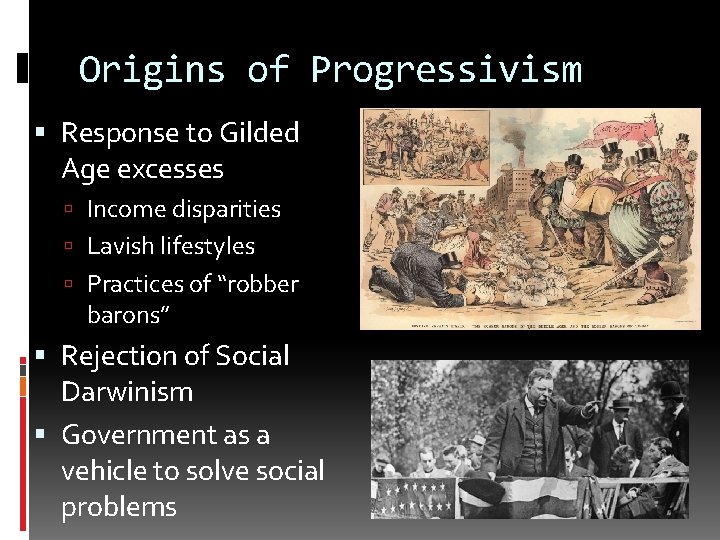
Origins of Progressivism Response to Gilded Age excesses Income disparities Lavish lifestyles Practices of “robber barons” Rejection of Social Darwinism Government as a vehicle to solve social problems
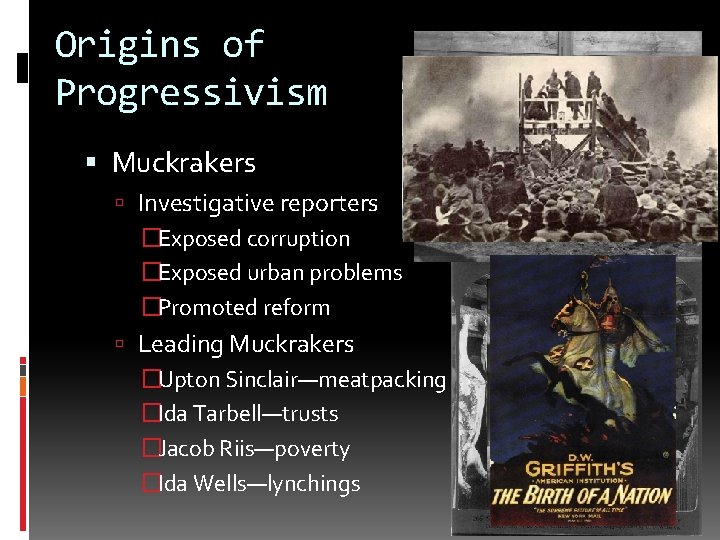
Origins of Progressivism Muckrakers Investigative reporters �Exposed corruption �Exposed urban problems �Promoted reform Leading Muckrakers �Upton Sinclair—meatpacking �Ida Tarbell—trusts �Jacob Riis—poverty �Ida Wells—lynchings
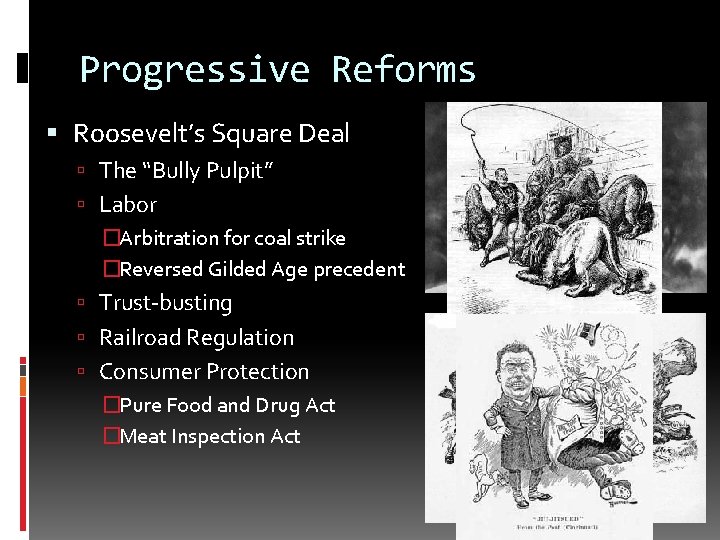
Progressive Reforms Roosevelt’s Square Deal The “Bully Pulpit” Labor �Arbitration for coal strike �Reversed Gilded Age precedent Trust-busting Railroad Regulation Consumer Protection �Pure Food and Drug Act �Meat Inspection Act
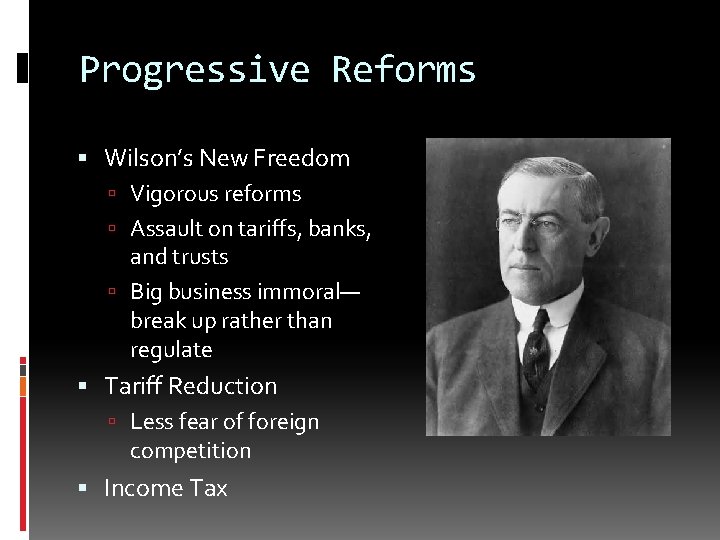
Progressive Reforms Wilson’s New Freedom Vigorous reforms Assault on tariffs, banks, and trusts Big business immoral— break up rather than regulate Tariff Reduction Less fear of foreign competition Income Tax
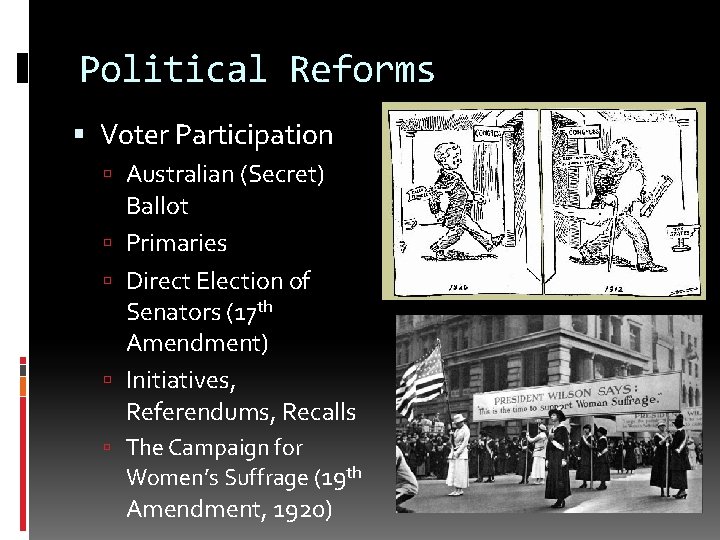
Political Reforms Voter Participation Australian (Secret) Ballot Primaries Direct Election of Senators (17 th Amendment) Initiatives, Referendums, Recalls The Campaign for Women’s Suffrage (19 th Amendment, 1920)
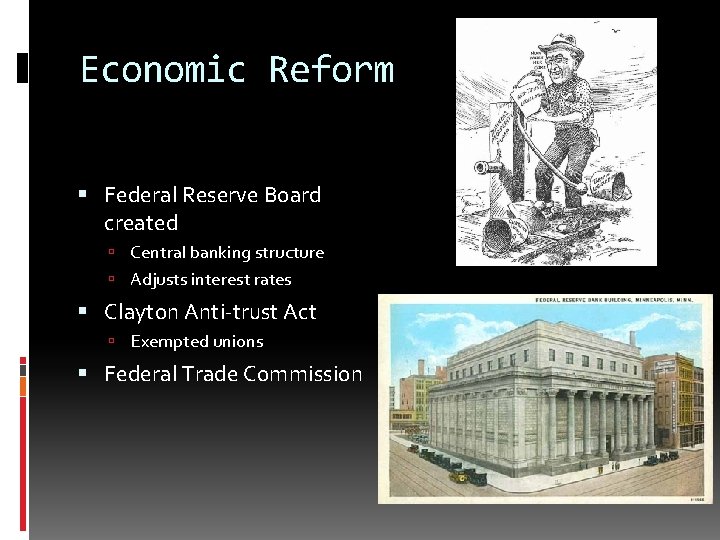
Economic Reform Federal Reserve Board created Central banking structure Adjusts interest rates Clayton Anti-trust Act Exempted unions Federal Trade Commission
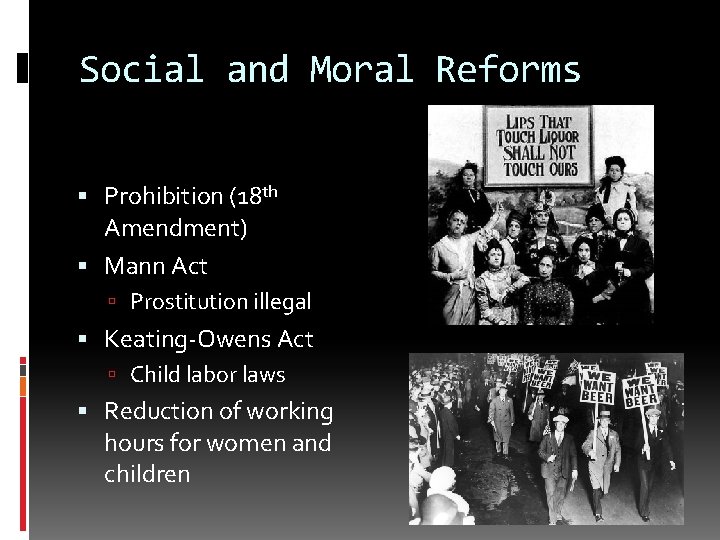
Social and Moral Reforms Prohibition (18 th Amendment) Mann Act Prostitution illegal Keating-Owens Act Child labor laws Reduction of working hours for women and children
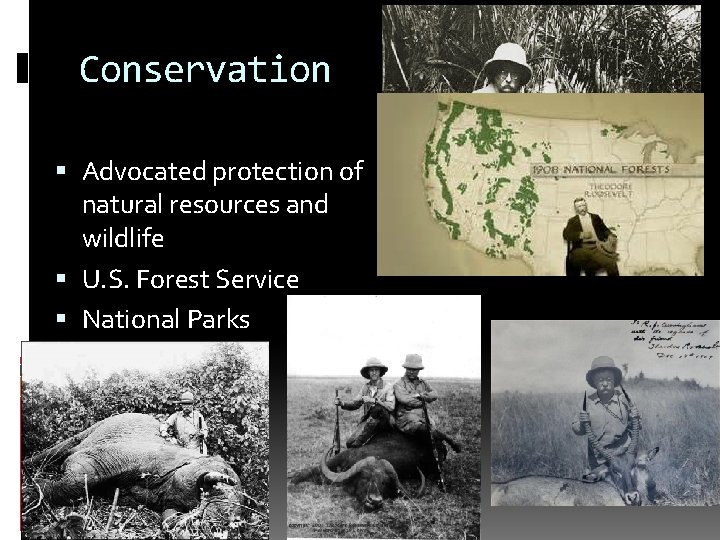
Conservation Advocated protection of natural resources and wildlife U. S. Forest Service National Parks
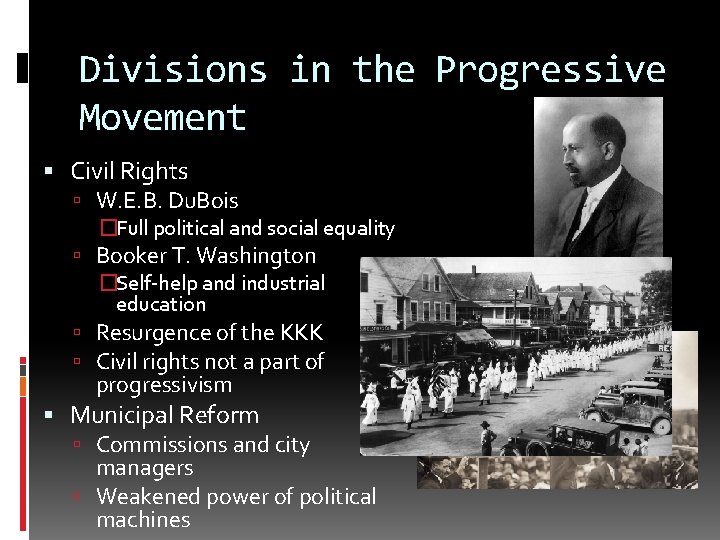
Divisions in the Progressive Movement Civil Rights W. E. B. Du. Bois �Full political and social equality Booker T. Washington �Self-help and industrial education Resurgence of the KKK Civil rights not a part of progressivism Municipal Reform Commissions and city managers Weakened power of political machines
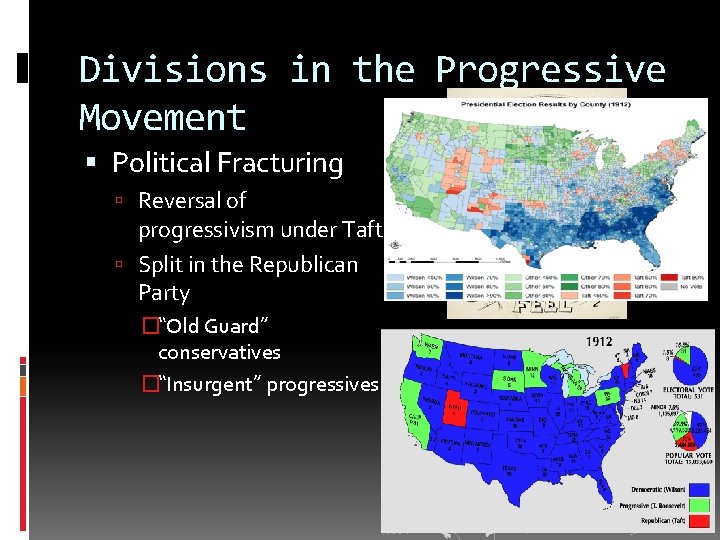
Divisions in the Progressive Movement Political Fracturing Reversal of progressivism under Taft Split in the Republican Party �“Old Guard” conservatives �“Insurgent” progressives