
Topic 7 4 Stress and Coping This Photo
- Slides: 11
Topic 7. 4 - Stress and Coping This Photo by Unknown Author is licensed under CC BY
What is stress? § Stress § the process by which we perceive and respond to certain events, called stressors, that we appraise as threatening or challenging
MEASURING STRESS • Psychologists Thomas Holmes & Richard Rahe designed one of the first instruments to measure stress. • (SRRS) or Social Readjustment Rating Scale measured stress using (LCU) Life Changing Units (LCUs)- marriage, change job, etc… • A person taking the SRRS reported changes in his/her life. Different changes were assigned LCUs. Any major life change would increase the score. A person with a high score on the SRRS is more likely to have a stress-related illness.
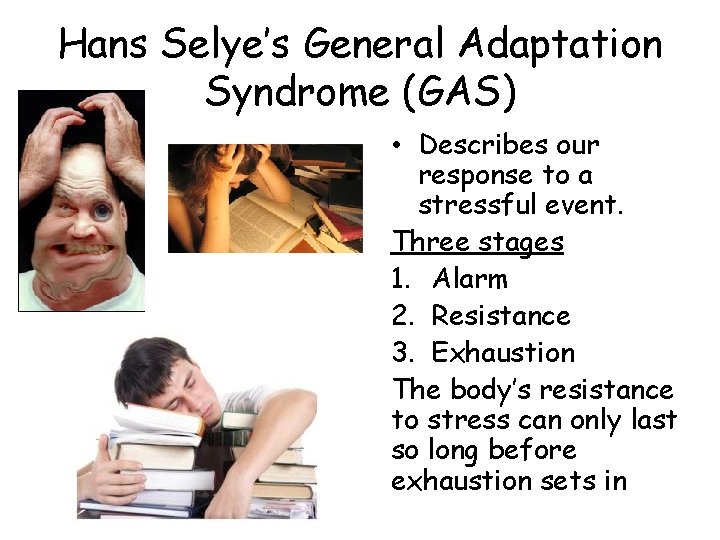
Hans Selye’s General Adaptation Syndrome (GAS) • Describes our response to a stressful event. Three stages 1. Alarm 2. Resistance 3. Exhaustion The body’s resistance to stress can only last so long before exhaustion sets in
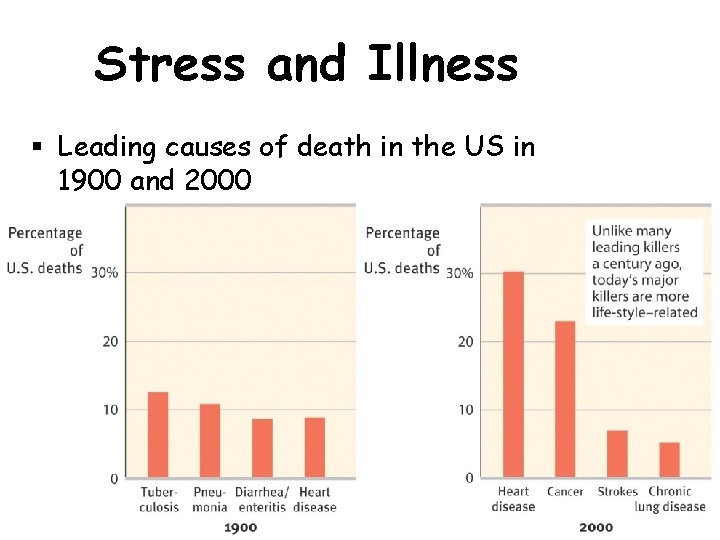
Stress and Illness § Leading causes of death in the US in 1900 and 2000
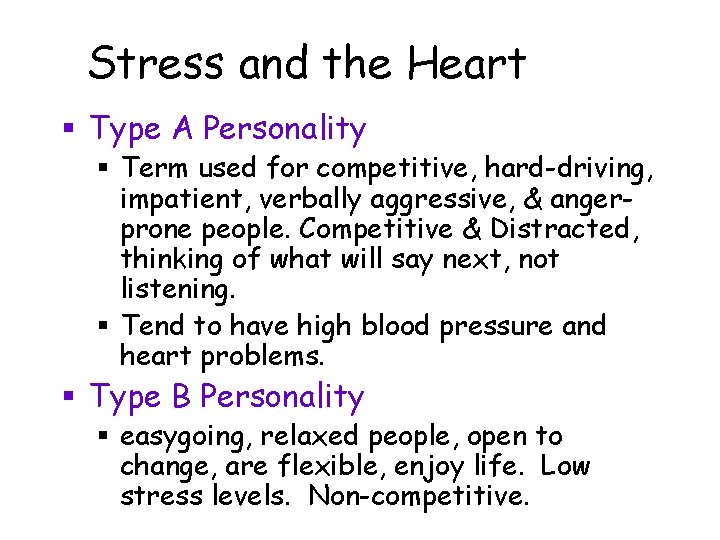
Stress and the Heart § Type A Personality § Term used for competitive, hard-driving, impatient, verbally aggressive, & angerprone people. Competitive & Distracted, thinking of what will say next, not listening. § Tend to have high blood pressure and heart problems. § Type B Personality § easygoing, relaxed people, open to change, are flexible, enjoy life. Low stress levels. Non-competitive.
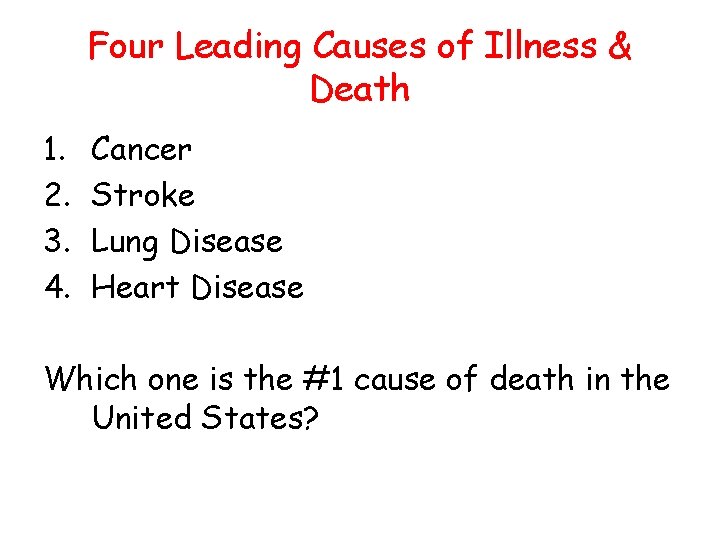
Four Leading Causes of Illness & Death 1. 2. 3. 4. Cancer Stroke Lung Disease Heart Disease Which one is the #1 cause of death in the United States?
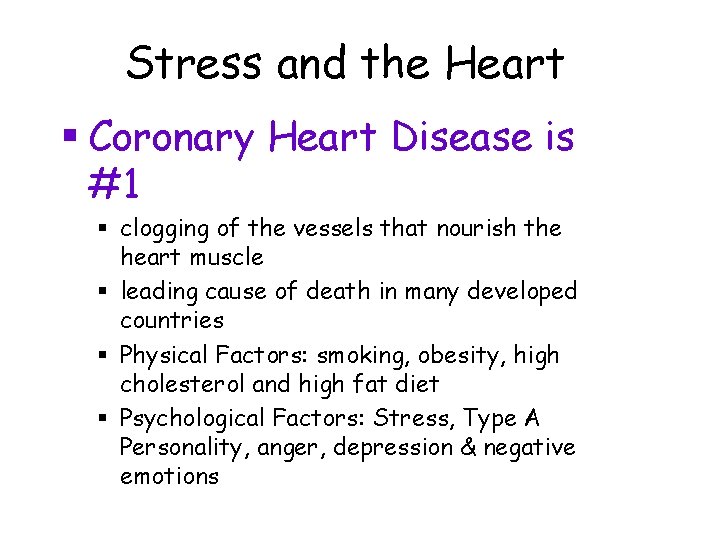
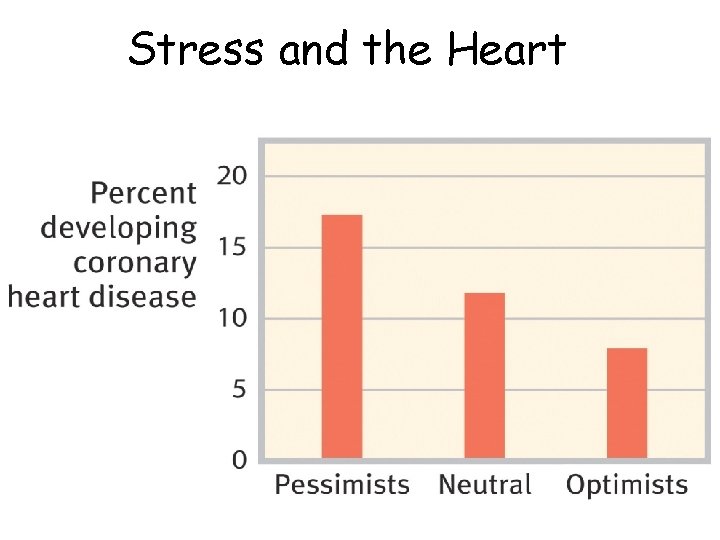
Stress and the Heart § Coronary Heart Disease is #1 § clogging of the vessels that nourish the heart muscle § leading cause of death in many developed countries § Physical Factors: smoking, obesity, high cholesterol and high fat diet § Psychological Factors: Stress, Type A Personality, anger, depression & negative emotions
Stress and the Heart
Lewin’s Motivational Conflict Theory When Motives Conflict • Sometimes what you want to do in a situation is clear to you, but at other times you no doubt find yourself conflicted about what choice to make. Psychologist Kurt Lewin developed a theory proposing four types of motivational conflicts.
4 theories of motivational conflict • Approach-approach: occurs when you must choose between two desirable outcomes. Should you go to the movies with your best friend or to dinner with that really cute guy/girl from history class? Assumes both choices are appealing to you, but you can only choose one. • Avoidance-avoidance: occurs when you must choose between two unattractive outcomes. If your parents tell you to clean your room or rake leaves and you desire neither one you are experiencing an avoidance conflict. • Approach-avoidance: exists when ONE event or goal has both attractive and unattractive features. Let’s say you love spaghetti, but the acidic sauce gives you indigestion. Spaghetti has both attractive (taste) and unattractive (indigestion) features. • Multiple approach-avoidance: here you must choose between two or more things, each of which has both desirable and undesirable features. So, if you are deciding between attending Duke or Harvard, Duke has better weather (attractive), but their lacrosse team is not the most upstanding (unattractive). Harvard has a great legacy (attractive) but crimson is such a horrible color (unattractive).