
TOPIC 7 2 CLIMATE CHANGE CAUSES IMPACTS What
- Slides: 29
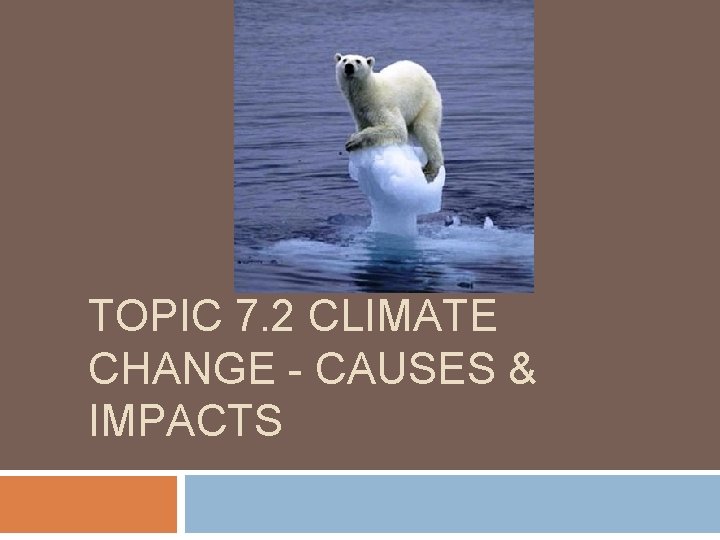
TOPIC 7. 2 CLIMATE CHANGE - CAUSES & IMPACTS
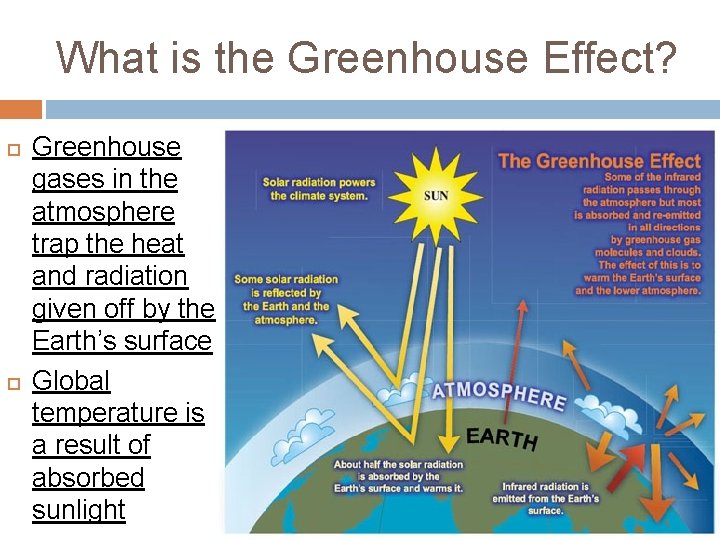
What is the Greenhouse Effect? Greenhouse gases in the atmosphere trap the heat and radiation given off by the Earth’s surface Global temperature is a result of absorbed sunlight
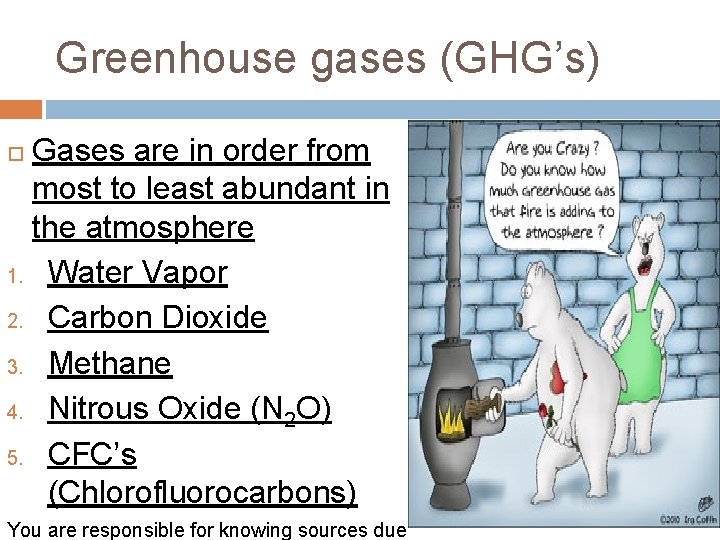
Greenhouse gases (GHG’s) Gases are in order from most to least abundant in the atmosphere 1. Water Vapor 2. Carbon Dioxide 3. Methane 4. Nitrous Oxide (N 2 O) 5. CFC’s (Chlorofluorocarbons) You are responsible for knowing sources due
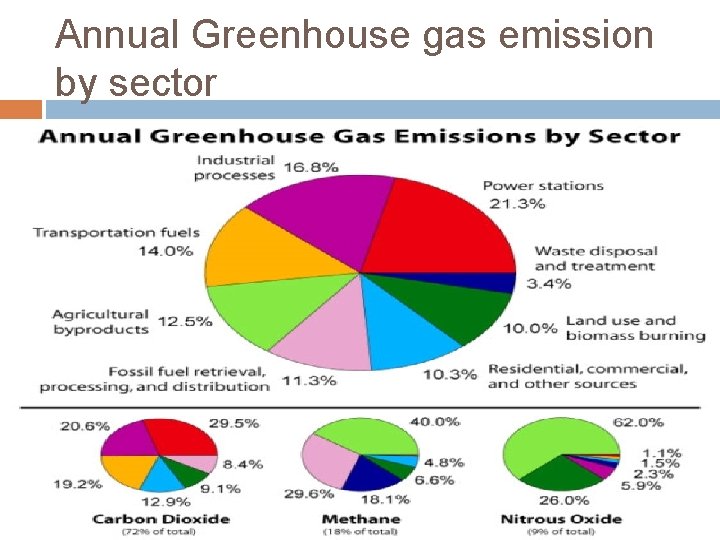
Annual Greenhouse gas emission by sector
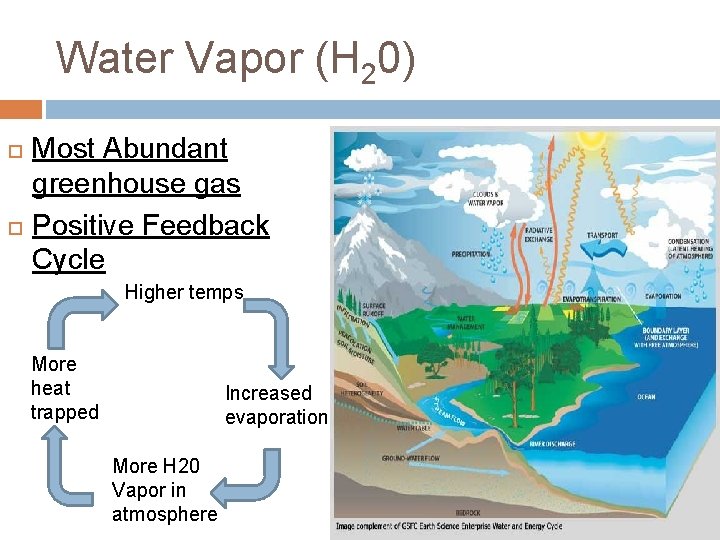
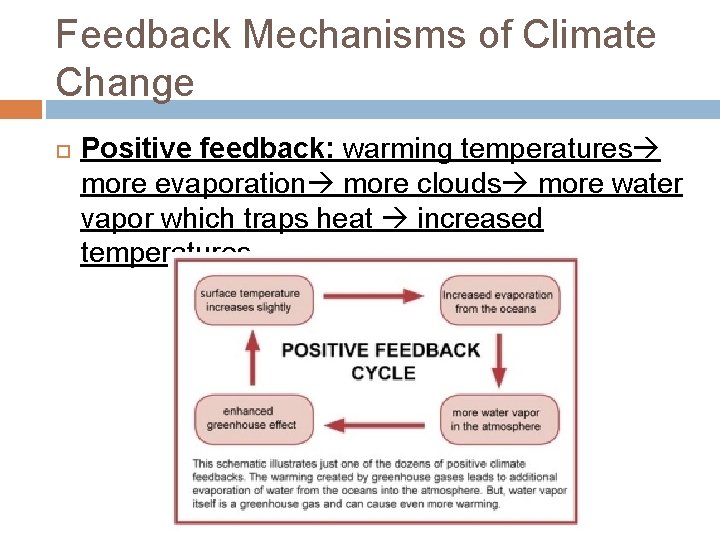
Water Vapor (H 20) Most Abundant greenhouse gas Positive Feedback Cycle Higher temps More heat trapped Increased evaporation More H 20 Vapor in atmosphere
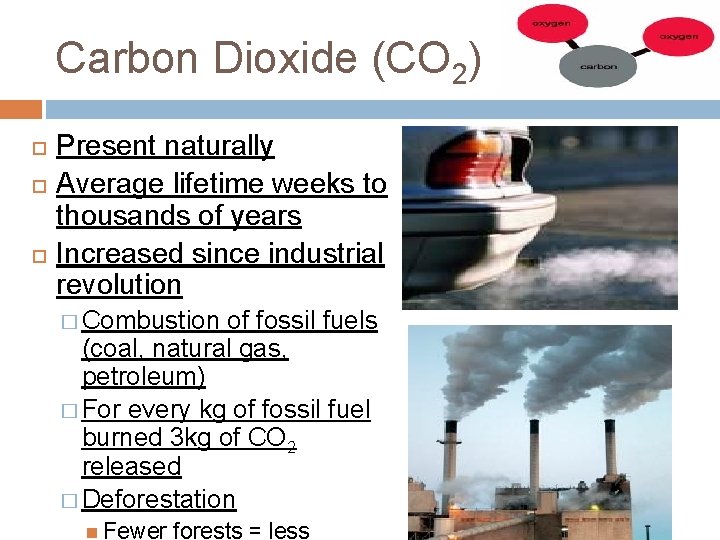
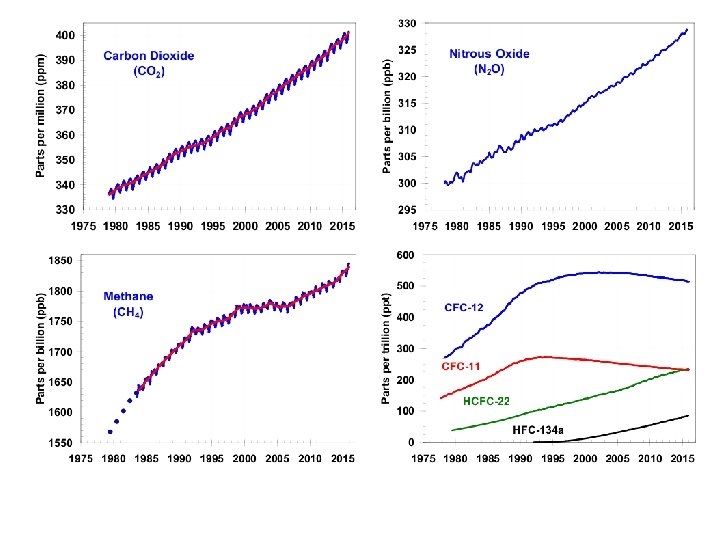
Carbon Dioxide (CO 2) Present naturally Average lifetime weeks to thousands of years Increased since industrial revolution � Combustion of fossil fuels (coal, natural gas, petroleum) � For every kg of fossil fuel burned 3 kg of CO 2 released � Deforestation Fewer forests = less
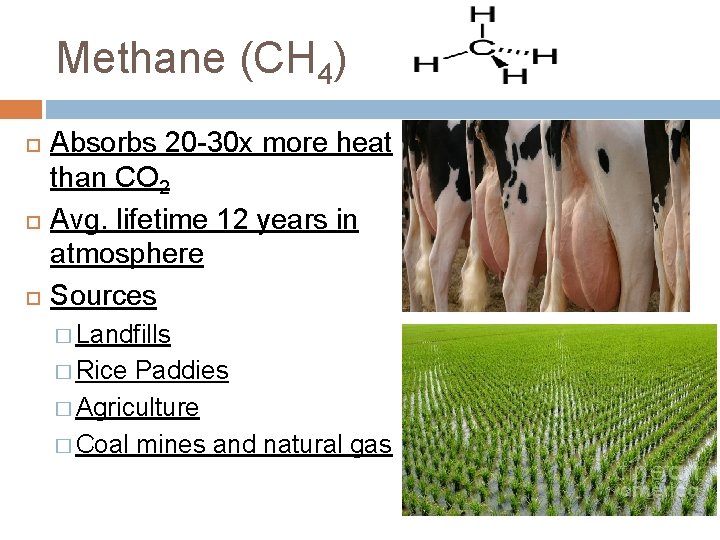
Methane (CH 4) Absorbs 20 -30 x more heat than CO 2 Avg. lifetime 12 years in atmosphere Sources � Landfills � Rice Paddies � Agriculture � Coal mines and natural gas
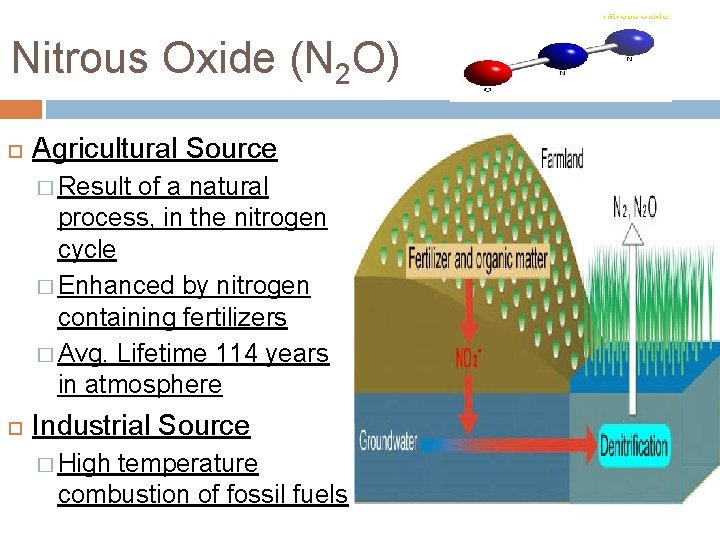
Nitrous Oxide (N 2 O) Agricultural Source � Result of a natural process, in the nitrogen cycle � Enhanced by nitrogen containing fertilizers � Avg. Lifetime 114 years in atmosphere Industrial Source � High temperature combustion of fossil fuels
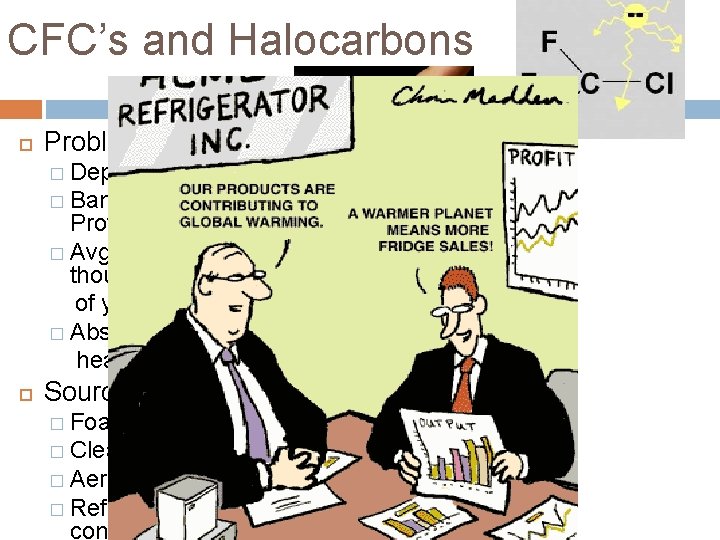
CFC’s and Halocarbons Problems � Depletes the ozone � Banned in 1987 Montreal Protocol � Avg. lifetime weeksthousands of years in atmosphere � Absorb more than 10, 000 x heat of CO 2 Sources � Foam � Cleaners � Aerosol sprays � Refrigeration and air conditioning coolants
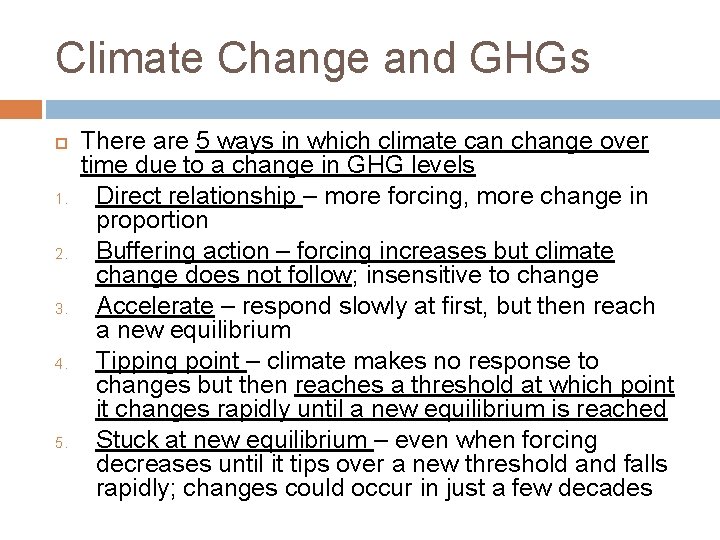
Climate Change and GHGs 1. 2. 3. 4. 5. There are 5 ways in which climate can change over time due to a change in GHG levels Direct relationship – more forcing, more change in proportion Buffering action – forcing increases but climate change does not follow; insensitive to change Accelerate – respond slowly at first, but then reach a new equilibrium Tipping point – climate makes no response to changes but then reaches a threshold at which point it changes rapidly until a new equilibrium is reached Stuck at new equilibrium – even when forcing decreases until it tips over a new threshold and falls rapidly; changes could occur in just a few decades
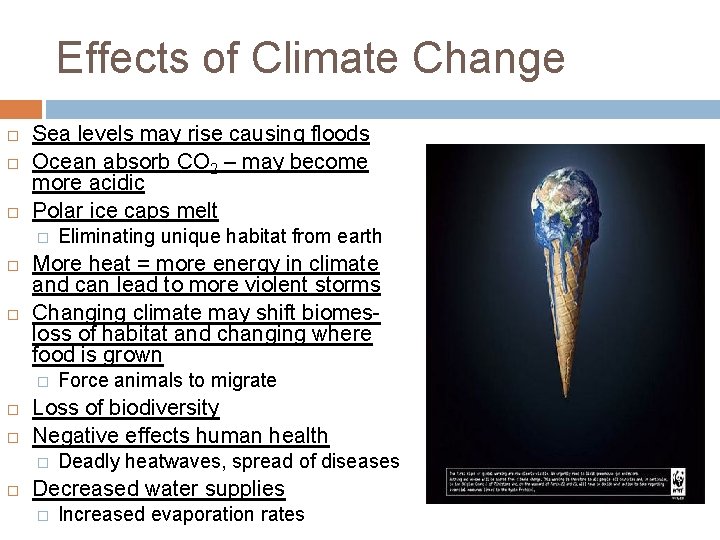
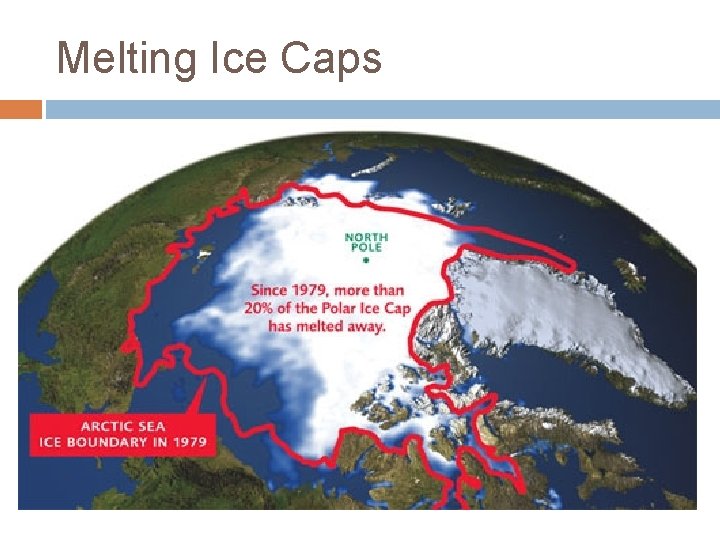
Effects of Climate Change Sea levels may rise causing floods Ocean absorb CO 2 – may become more acidic Polar ice caps melt � More heat = more energy in climate and can lead to more violent storms Changing climate may shift biomesloss of habitat and changing where food is grown � Force animals to migrate Loss of biodiversity Negative effects human health � Eliminating unique habitat from earth Deadly heatwaves, spread of diseases Decreased water supplies � Increased evaporation rates
Melting Ice Caps
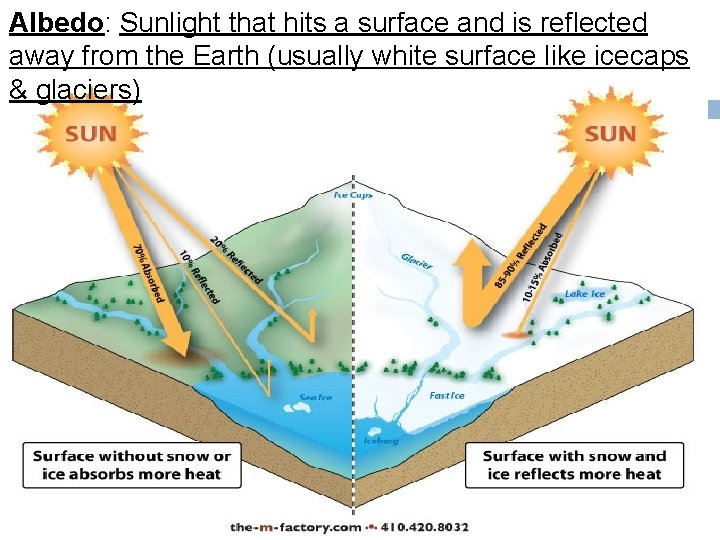
Albedo: Sunlight that hits a surface and is reflected away from the Earth (usually white surface like icecaps & glaciers)
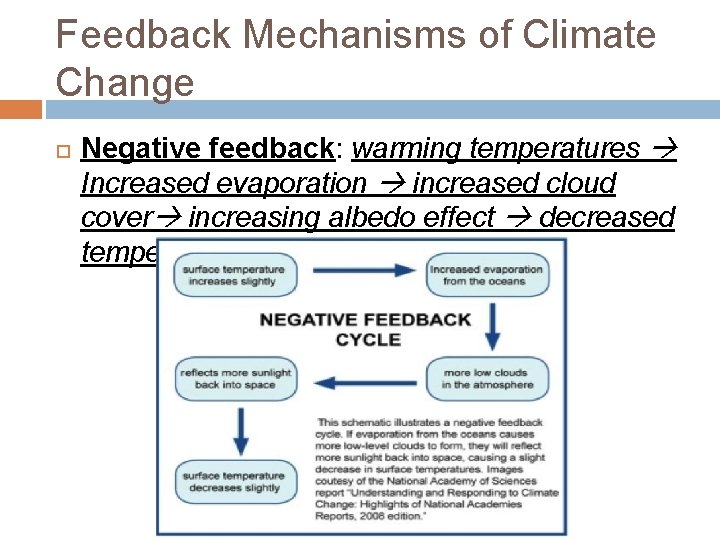
Feedback Mechanisms of Climate Change Negative feedback: warming temperatures Increased evaporation increased cloud cover increasing albedo effect decreased temperatures
Feedback Mechanisms of Climate Change Positive feedback: warming temperatures more evaporation more clouds more water vapor which traps heat increased temperatures
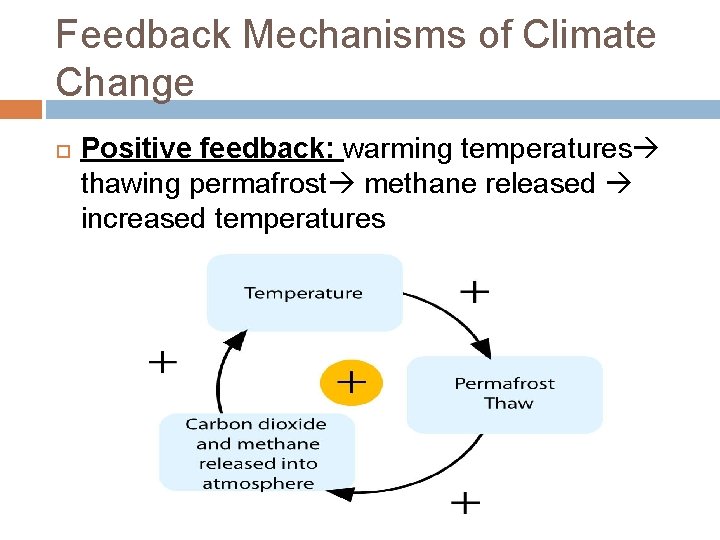
Feedback Mechanisms of Climate Change Positive feedback: warming temperatures thawing permafrost methane released increased temperatures
Feedback Mechanisms of Climate Change Complete To Do page 336 in your notes CANNOT pick “Clouds” since we already did that as a class You are responsible for knowing and understanding 3 of these examples Make sure you are able to fully explain these in detail
Fact or Fiction? There has been significant debate due to conflicting EVSs surrounding the issue of climate change Global climate models are complex and there is a degree of uncertainty regarding the accuracy of their predictions Read page 327 -328 “The Climate Change Debate” How should we react when we have evidence that does not fit with an existing theory?
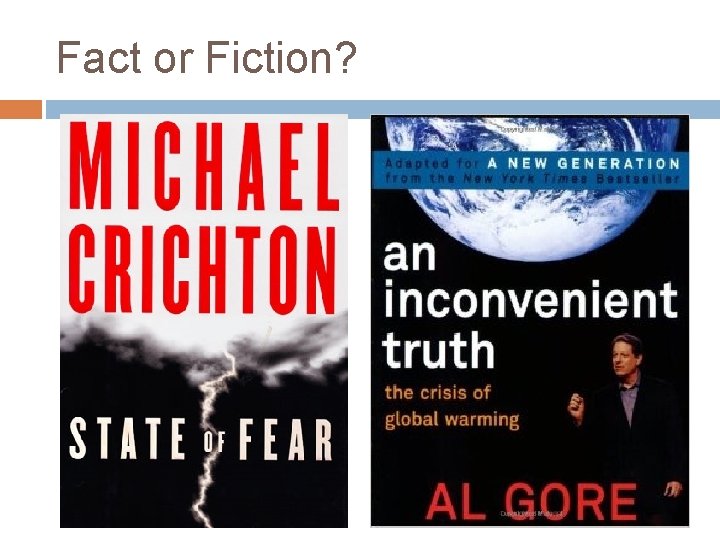
Fact or Fiction?
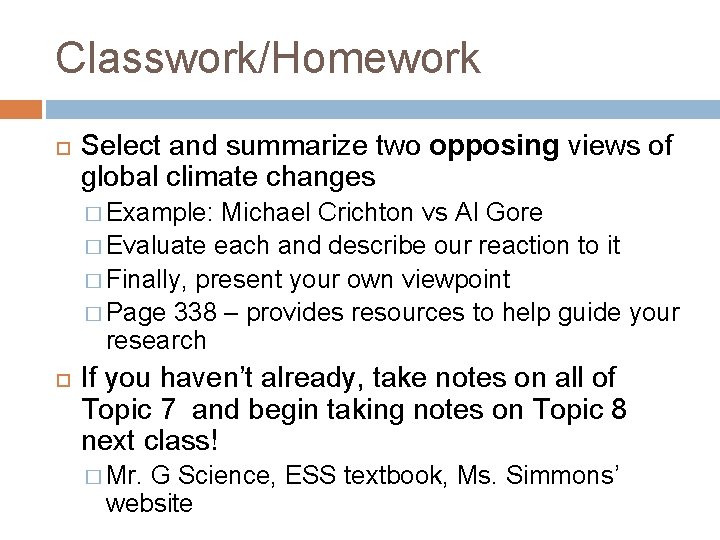
Classwork/Homework Select and summarize two opposing views of global climate changes � Example: Michael Crichton vs Al Gore � Evaluate each and describe our reaction to it � Finally, present your own viewpoint � Page 338 – provides resources to help guide your research If you haven’t already, take notes on all of Topic 7 and begin taking notes on Topic 8 next class! � Mr. G Science, ESS textbook, Ms. Simmons’ website
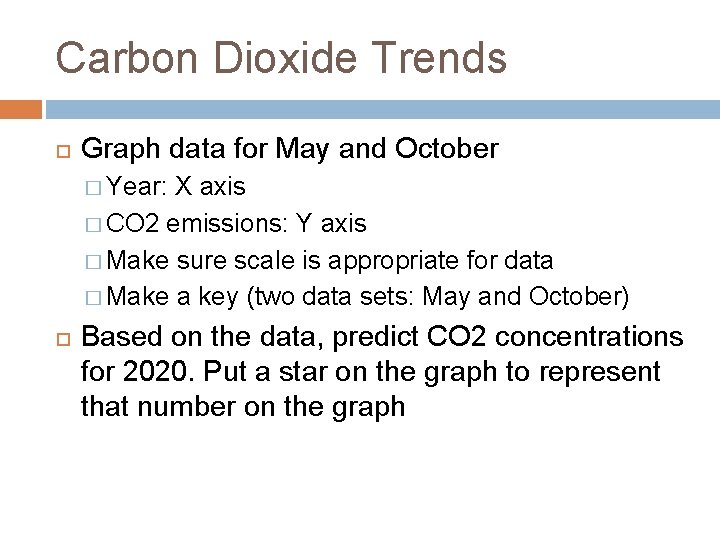
Carbon Dioxide Trends Graph data for May and October � Year: X axis � CO 2 emissions: Y axis � Make sure scale is appropriate for data � Make a key (two data sets: May and October) Based on the data, predict CO 2 concentrations for 2020. Put a star on the graph to represent that number on the graph
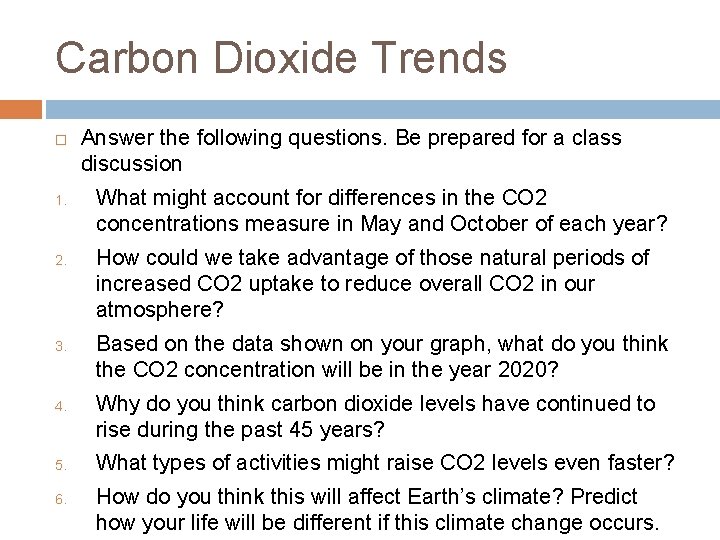
Carbon Dioxide Trends 1. 2. 3. 4. 5. 6. Answer the following questions. Be prepared for a class discussion What might account for differences in the CO 2 concentrations measure in May and October of each year? How could we take advantage of those natural periods of increased CO 2 uptake to reduce overall CO 2 in our atmosphere? Based on the data shown on your graph, what do you think the CO 2 concentration will be in the year 2020? Why do you think carbon dioxide levels have continued to rise during the past 45 years? What types of activities might raise CO 2 levels even faster? How do you think this will affect Earth’s climate? Predict how your life will be different if this climate change occurs.
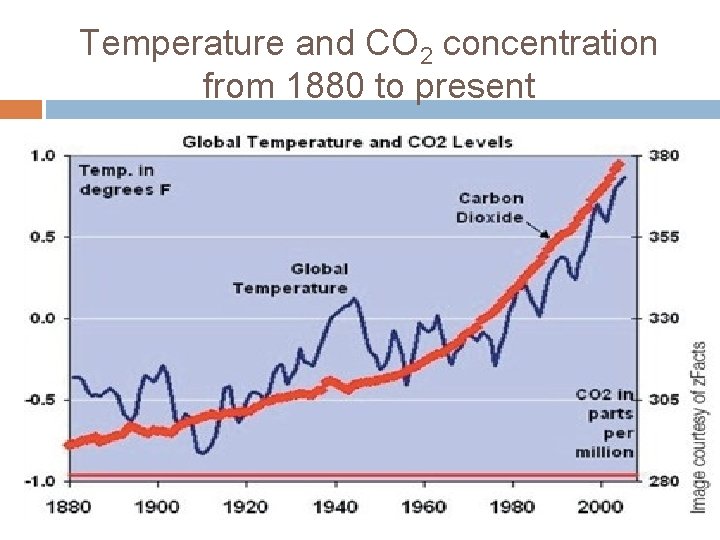
Temperature and CO 2 concentration from 1880 to present
7. 3 CLIMATE CHANGE – MITIGATION & ADAPTATION
Possible Solutions Reduce greenhouse gases by… 1. Don’t burn fossil fuels- Instead use renewable energy (wind, solar, geothermal…) 2. Replanting forests – More trees = less CO 2 in atmosphere 3. Recycling – Reduces waste in landfills 4. Strict legislation and transportation laws Carbon tax/carbon trading Carpool lanes Mass Transit High Mileage standards
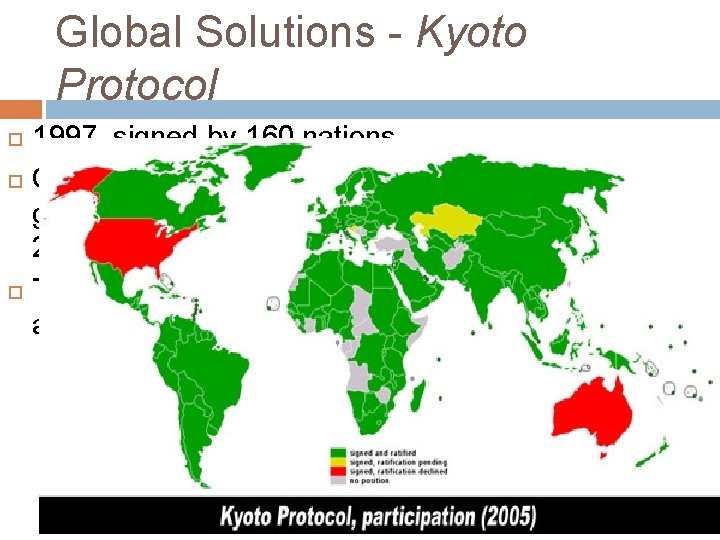
Global Solutions - Kyoto Protocol 1997, signed by 160 nations Called for commitment to reduce greenhouse gas emissions 5. 2% below 1990 levels before 2012 The US and Australia have not ratified the agreement
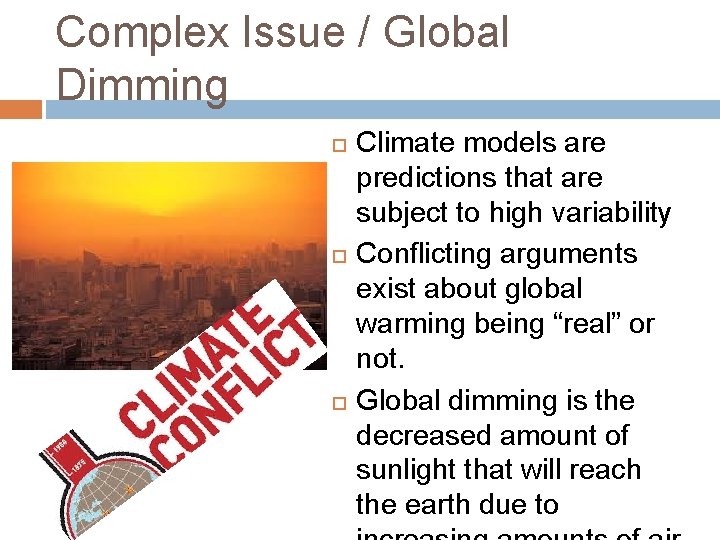
Complex Issue / Global Dimming Climate models are predictions that are subject to high variability Conflicting arguments exist about global warming being “real” or not. Global dimming is the decreased amount of sunlight that will reach the earth due to
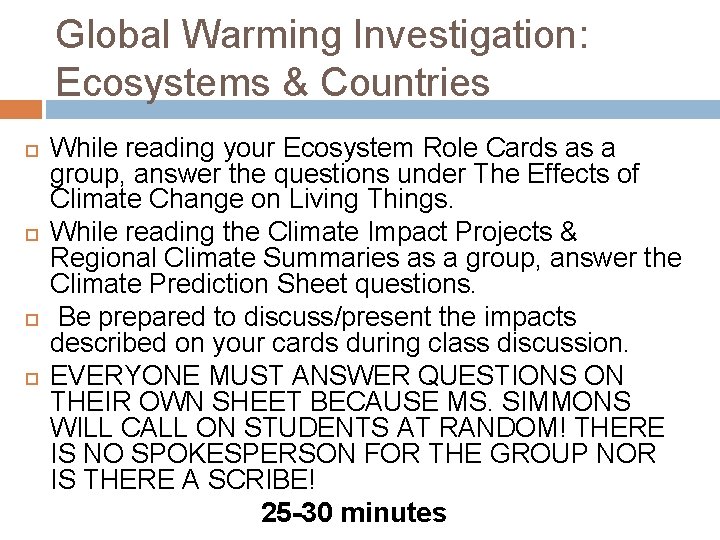
Global Warming Investigation: Ecosystems & Countries While reading your Ecosystem Role Cards as a group, answer the questions under The Effects of Climate Change on Living Things. While reading the Climate Impact Projects & Regional Climate Summaries as a group, answer the Climate Prediction Sheet questions. Be prepared to discuss/present the impacts described on your cards during class discussion. EVERYONE MUST ANSWER QUESTIONS ON THEIR OWN SHEET BECAUSE MS. SIMMONS WILL CALL ON STUDENTS AT RANDOM! THERE IS NO SPOKESPERSON FOR THE GROUP NOR IS THERE A SCRIBE! 25 -30 minutes