
Topic 6 4 Gas Exchange The respiratory system
- Slides: 10
Topic 6. 4 – Gas Exchange
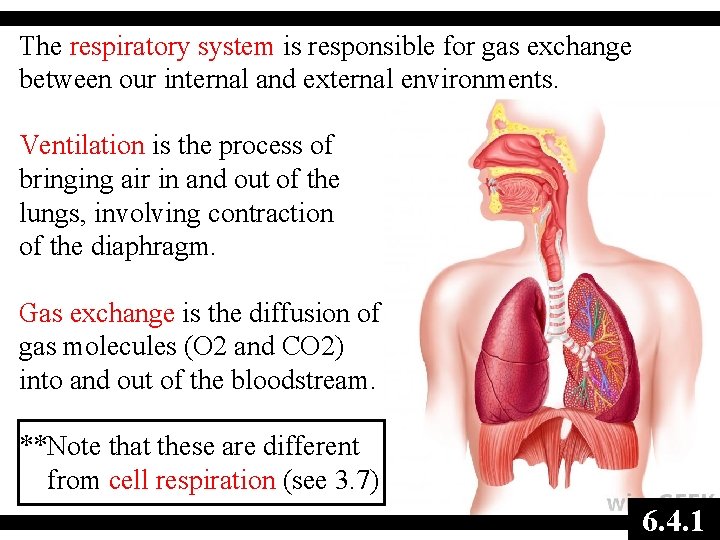
The respiratory system is responsible for gas exchange between our internal and external environments. Ventilation is the process of bringing air in and out of the lungs, involving contraction of the diaphragm. Gas exchange is the diffusion of gas molecules (O 2 and CO 2) into and out of the bloodstream. **Note that these are different from cell respiration (see 3. 7) 6. 4. 1
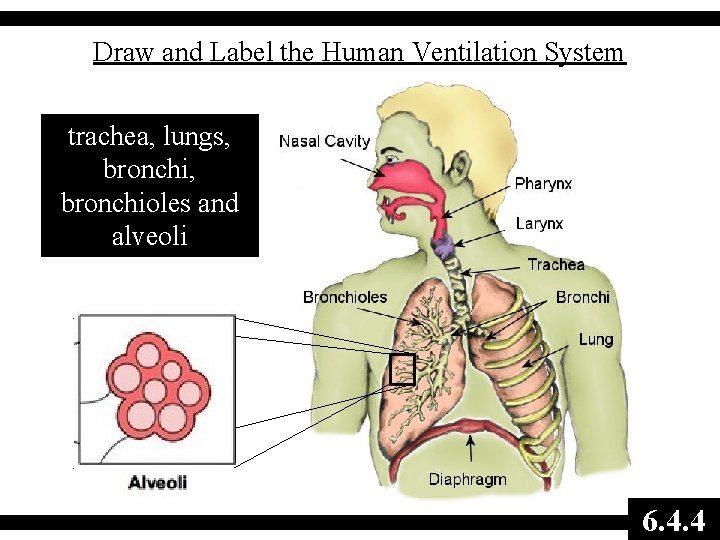
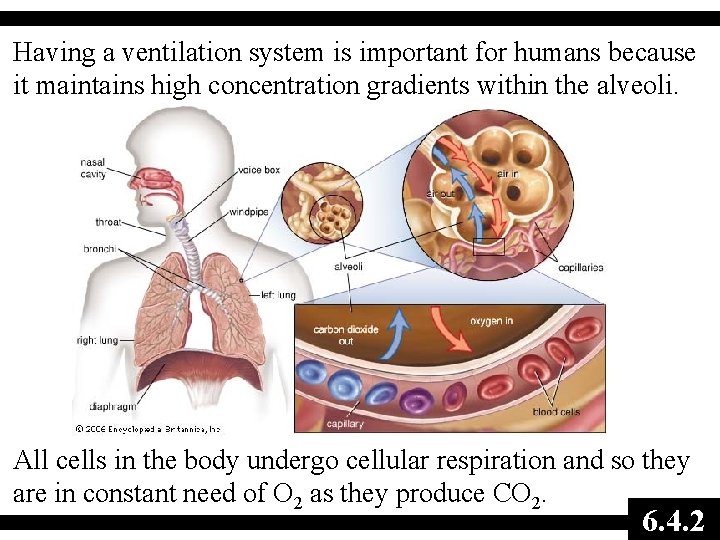
Draw and Label the Human Ventilation System trachea, lungs, bronchioles and alveoli 6. 4. 4
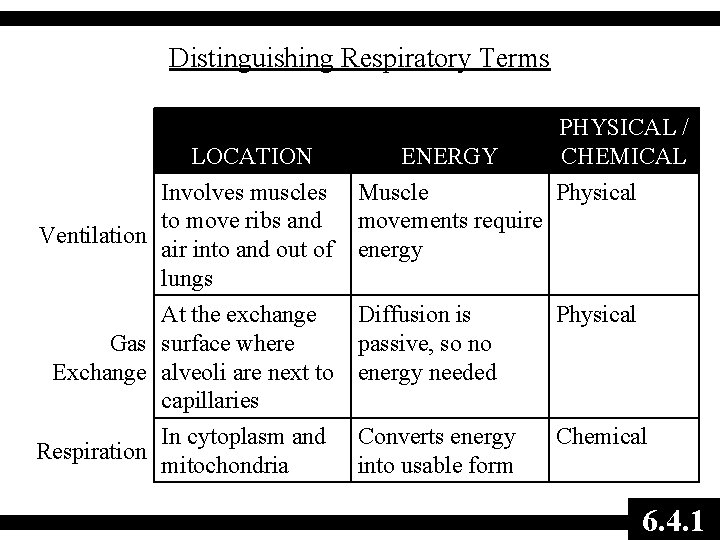
Distinguishing Respiratory Terms PHYSICAL / CHEMICAL Physical LOCATION Involves muscles to move ribs and Ventilation air into and out of lungs ENERGY Muscle movements require energy At the exchange Gas surface where Exchange alveoli are next to capillaries In cytoplasm and Respiration mitochondria Diffusion is passive, so no energy needed Physical Converts energy into usable form Chemical 6. 4. 1
Having a ventilation system is important for humans because it maintains high concentration gradients within the alveoli. All cells in the body undergo cellular respiration and so they are in constant need of O 2 as they produce CO 2. 6. 4. 2
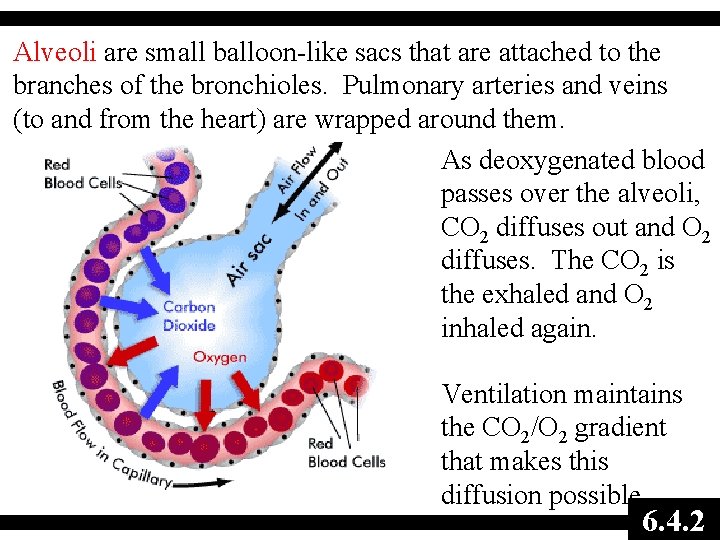
Alveoli are small balloon-like sacs that are attached to the branches of the bronchioles. Pulmonary arteries and veins (to and from the heart) are wrapped around them. As deoxygenated blood passes over the alveoli, CO 2 diffuses out and O 2 diffuses. The CO 2 is the exhaled and O 2 inhaled again. Ventilation maintains the CO 2/O 2 gradient that makes this diffusion possible. 6. 4. 2
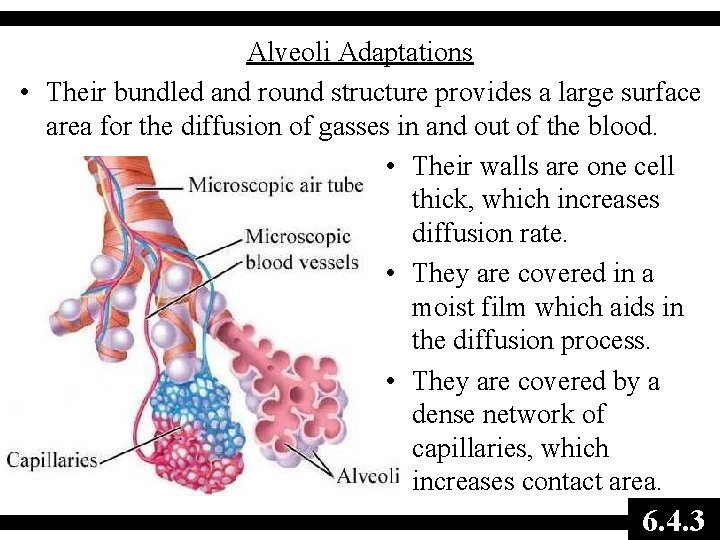
Alveoli Adaptations • Their bundled and round structure provides a large surface area for the diffusion of gasses in and out of the blood. • Their walls are one cell thick, which increases diffusion rate. • They are covered in a moist film which aids in the diffusion process. • They are covered by a dense network of capillaries, which increases contact area. 6. 4. 3
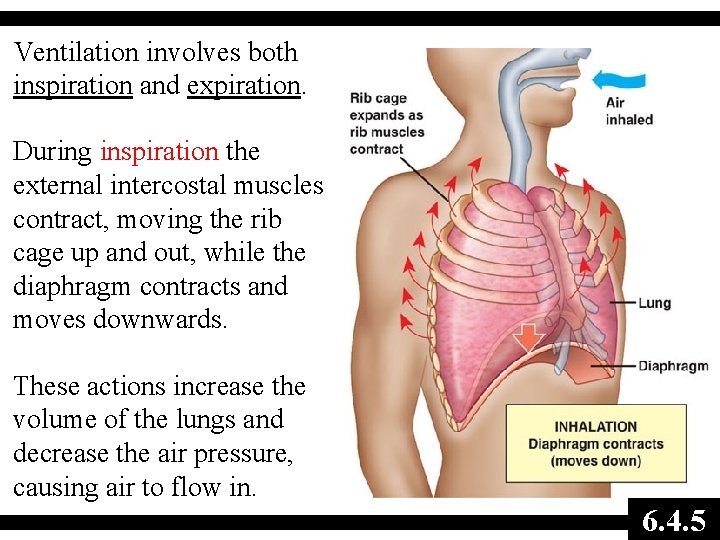
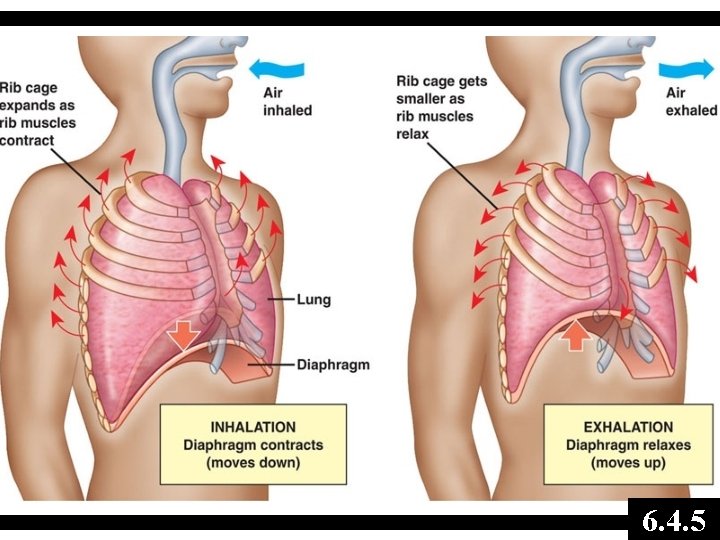
Ventilation involves both inspiration and expiration. During inspiration the external intercostal muscles contract, moving the rib cage up and out, while the diaphragm contracts and moves downwards. These actions increase the volume of the lungs and decrease the air pressure, causing air to flow in. 6. 4. 5
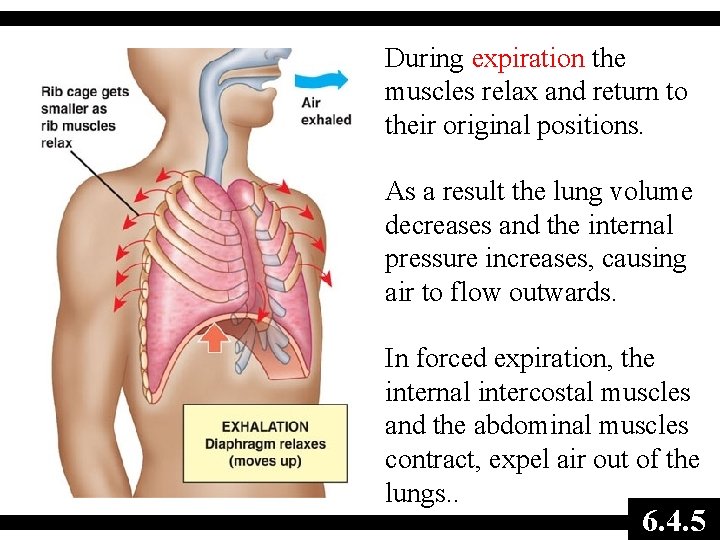
During expiration the muscles relax and return to their original positions. As a result the lung volume decreases and the internal pressure increases, causing air to flow outwards. In forced expiration, the internal intercostal muscles and the abdominal muscles contract, expel air out of the lungs. . 6. 4. 5
6. 4. 5