
Topic 5 Sex Differences in Behavior Animal and
Topic 5: Sex Differences in Behavior: Animal and Human Models Examining the Neural and Neuroendocrine aspects of the Brain. This topic based to a large extent on Chapter 4 materials.
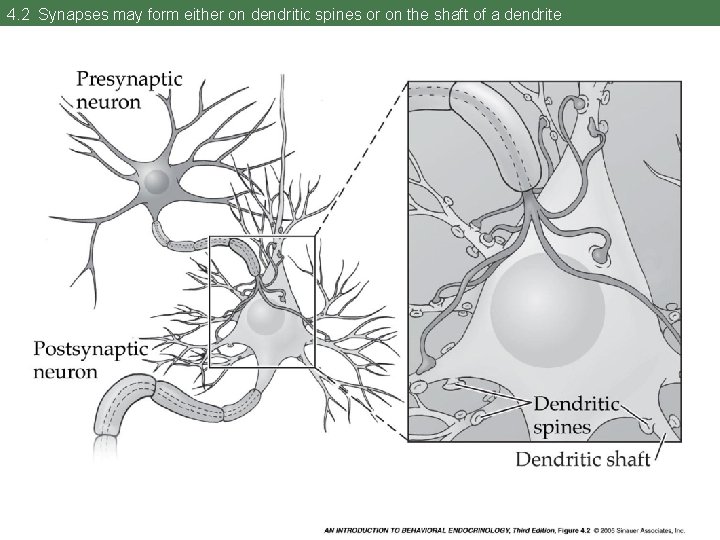
4. 2 Synapses may form either on dendritic spines or on the shaft of a dendrite
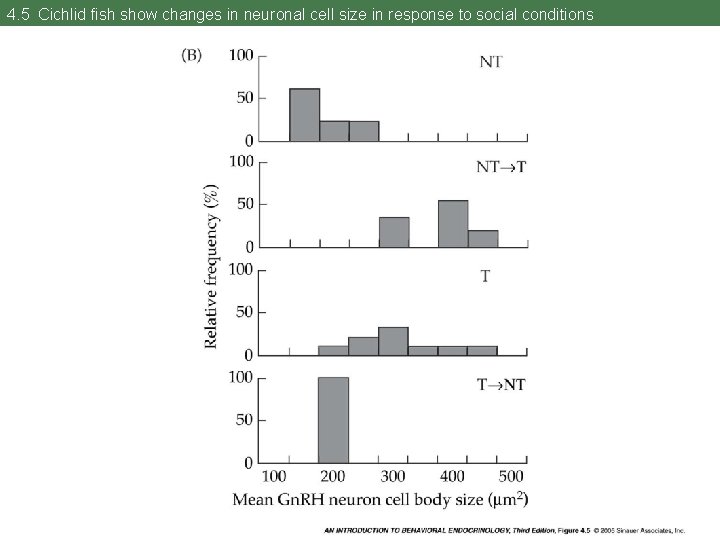
4. 5 Cichlid fish show changes in neuronal cell size in response to social conditions
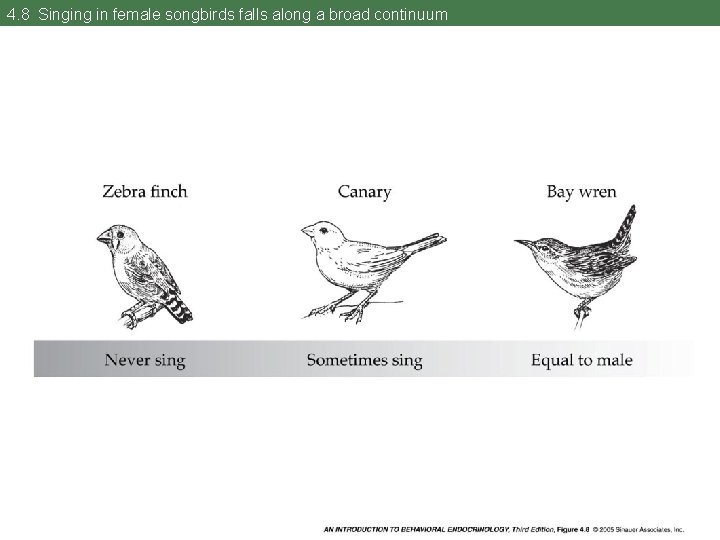
4. 8 Singing in female songbirds falls along a broad continuum
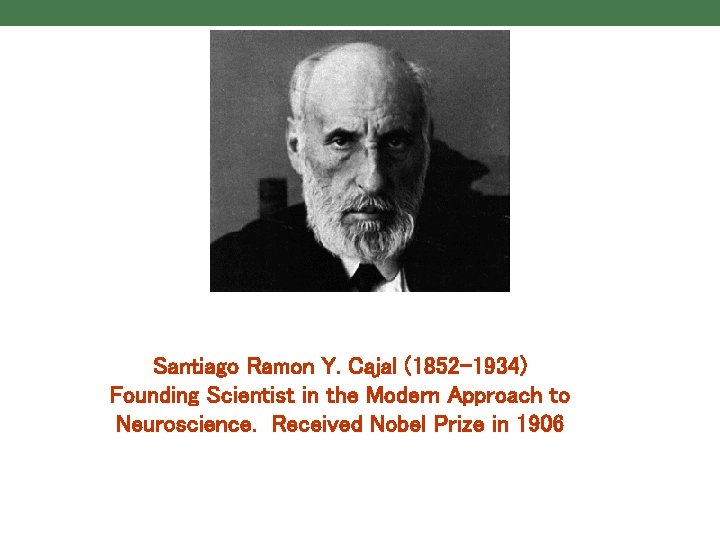
Santiago Ramon Y. Cajal (1852 -1934) Founding Scientist in the Modern Approach to Neuroscience. Received Nobel Prize in 1906

Figure 11. 1: The nervous system’s functions, p. 388. Sensory input Integration Motor output Human Anatomy and Physiology, 7 e by Elaine Marieb & Katja Hoehn Copyright © 2007 Pearson Education, Inc. , publishing as Benjamin Cummings.
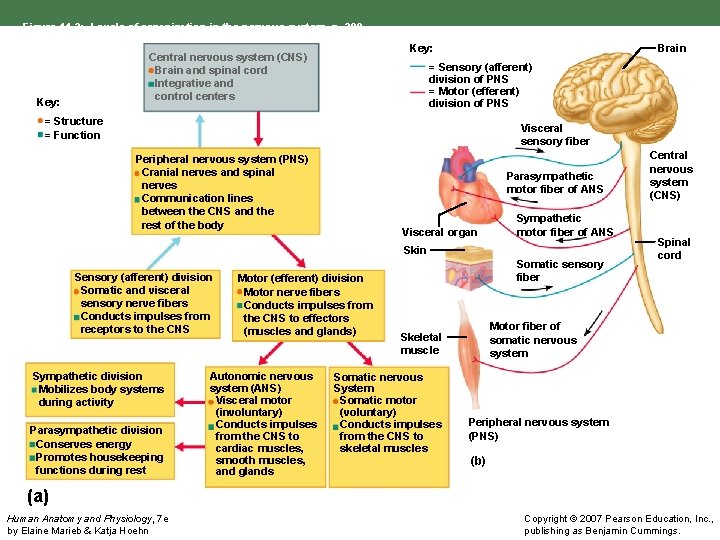
Figure 11. 2: Levels of organization in the nervous system, p. 389. Key: Central nervous system (CNS) Brain and spinal cord Integrative and control centers Key: Brain = Sensory (afferent) division of PNS = Motor (efferent) division of PNS = Structure = Function Visceral sensory fiber Peripheral nervous system (PNS) Cranial nerves and spinal nerves Communication lines between the CNS and the rest of the body Parasympathetic motor fiber of ANS Visceral organ Sympathetic motor fiber of ANS Skin Sensory (afferent) division Somatic and visceral sensory nerve fibers Conducts impulses from receptors to the CNS Sympathetic division Mobilizes body systems during activity Parasympathetic division Conserves energy Promotes housekeeping functions during rest Motor (efferent) division Motor nerve fibers Conducts impulses from the CNS to effectors (muscles and glands) Autonomic nervous system (ANS) Visceral motor (involuntary) Conducts impulses from the CNS to cardiac muscles, smooth muscles, and glands Somatic sensory fiber Spinal cord Motor fiber of somatic nervous system Skeletal muscle Somatic nervous System Somatic motor (voluntary) Conducts impulses from the CNS to skeletal muscles Central nervous system (CNS) Peripheral nervous system (PNS) (b) (a) Human Anatomy and Physiology, 7 e by Elaine Marieb & Katja Hoehn Copyright © 2007 Pearson Education, Inc. , publishing as Benjamin Cummings.
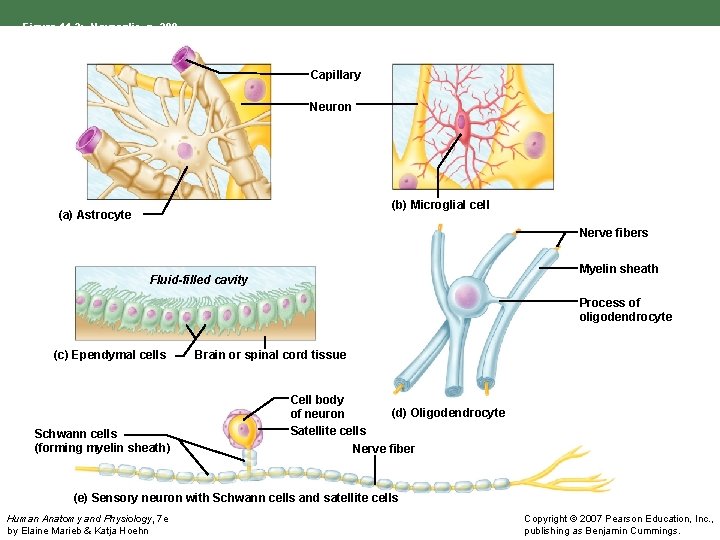
Figure 11. 3: Neuroglia, p. 390. Capillary Neuron (b) Microglial cell (a) Astrocyte Nerve fibers Myelin sheath Fluid-filled cavity Process of oligodendrocyte (c) Ependymal cells Schwann cells (forming myelin sheath) Brain or spinal cord tissue Cell body of neuron Satellite cells (d) Oligodendrocyte Nerve fiber (e) Sensory neuron with Schwann cells and satellite cells Human Anatomy and Physiology, 7 e by Elaine Marieb & Katja Hoehn Copyright © 2007 Pearson Education, Inc. , publishing as Benjamin Cummings.
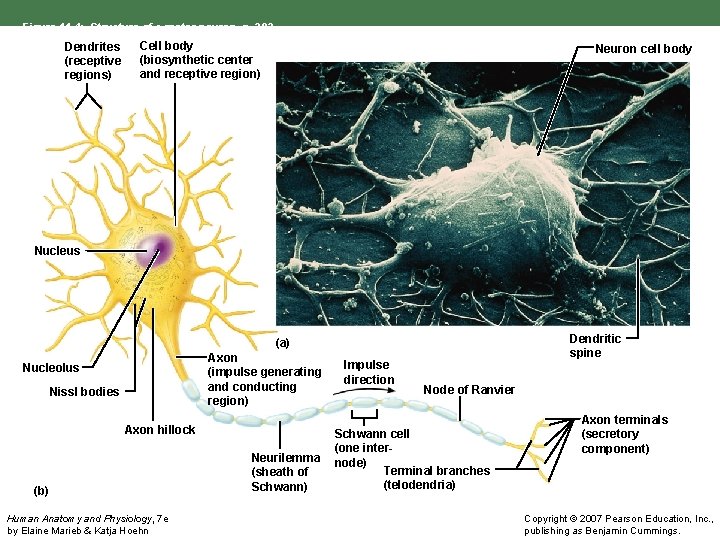
Figure 11. 4: Structure of a motor neuron, p. 392. Dendrites (receptive regions) Cell body (biosynthetic center and receptive region) Neuron cell body Nucleus Dendritic spine (a) Axon (impulse generating and conducting region) Nucleolus Nissl bodies Axon hillock (b) Human Anatomy and Physiology, 7 e by Elaine Marieb & Katja Hoehn Neurilemma (sheath of Schwann) Impulse direction Node of Ranvier Schwann cell (one internode) Terminal branches (telodendria) Axon terminals (secretory component) Copyright © 2007 Pearson Education, Inc. , publishing as Benjamin Cummings.
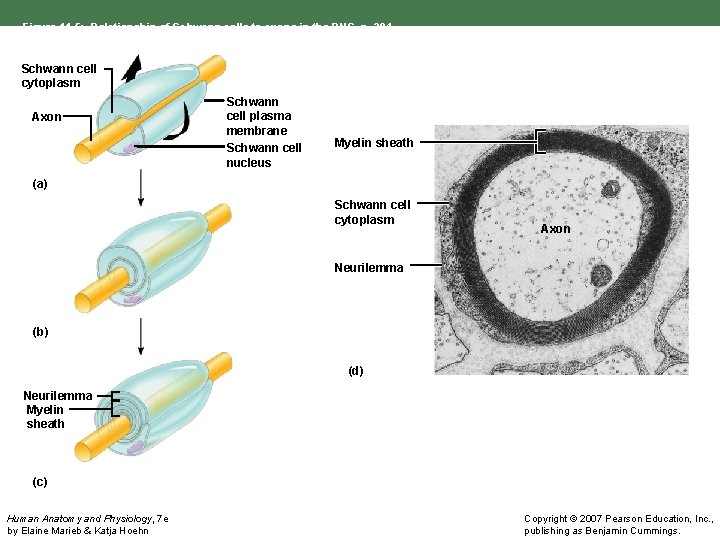
Figure 11. 5: Relationship of Schwann cells to axons in the PNS, p. 394. Schwann cell cytoplasm Axon Schwann cell plasma membrane Schwann cell nucleus Myelin sheath (a) Schwann cell cytoplasm Axon Neurilemma (b) (d) Neurilemma Myelin sheath (c) Human Anatomy and Physiology, 7 e by Elaine Marieb & Katja Hoehn Copyright © 2007 Pearson Education, Inc. , publishing as Benjamin Cummings.
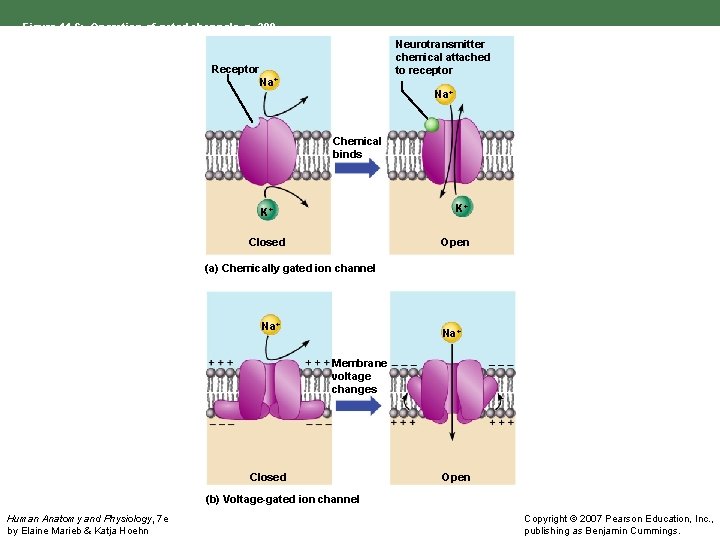
Figure 11. 6: Operation of gated channels, p. 398. Neurotransmitter chemical attached to receptor Receptor Na+ Chemical binds K+ K+ Closed Open (a) Chemically gated ion channel Na+ Membrane voltage changes Closed Open (b) Voltage-gated ion channel Human Anatomy and Physiology, 7 e by Elaine Marieb & Katja Hoehn Copyright © 2007 Pearson Education, Inc. , publishing as Benjamin Cummings.
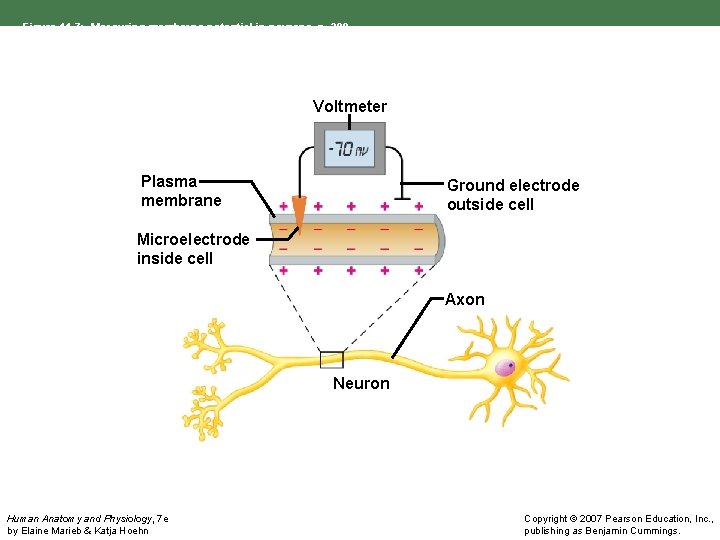
Figure 11. 7: Measuring membrane potential in neurons, p. 399. Voltmeter Plasma membrane Ground electrode outside cell Microelectrode inside cell Axon Neuron Human Anatomy and Physiology, 7 e by Elaine Marieb & Katja Hoehn Copyright © 2007 Pearson Education, Inc. , publishing as Benjamin Cummings.
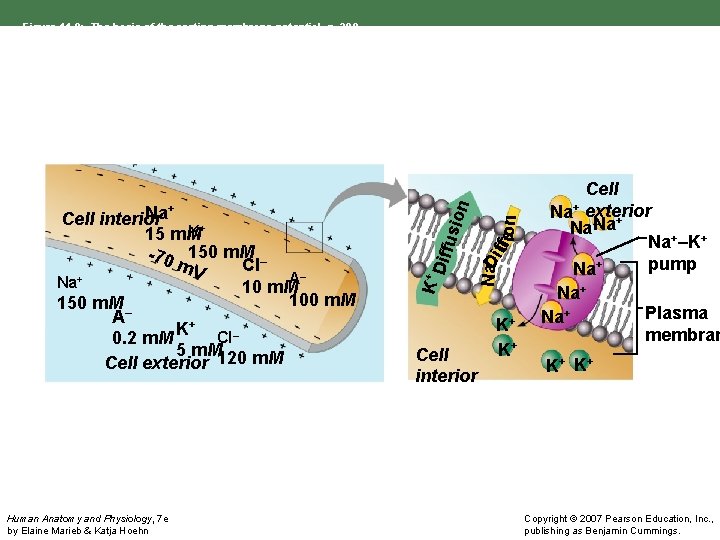
Human Anatomy and Physiology, 7 e by Elaine Marieb & Katja Hoehn Cell interior Na. D+i fuf s ion usio K+ Diff Na+ Cell interior K+ 15 m. M -70 150 m. M – m. V Cl + A– Na 10 m. M 100 m. M 150 m. M – A K+ Cl– 0. 2 m. M 5 m. M Cell exterior 120 m. M n Figure 11. 8: The basis of the resting membrane potential, p. 399. K+ K+ Cell Na+ exterior + Na+Na Na+–K+ pump Na+ Plasma Na+ membran K+ K+ Copyright © 2007 Pearson Education, Inc. , publishing as Benjamin Cummings.
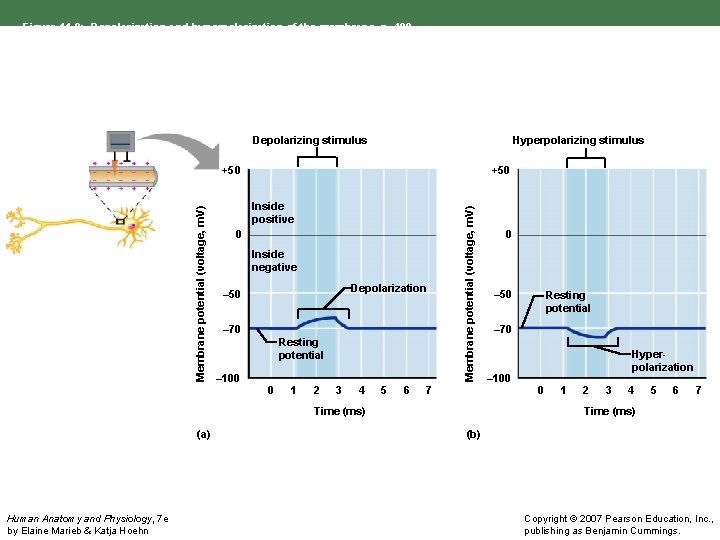
Figure 11. 9: Depolarization and hyperpolarization of the membrane, p. 400. Depolarizing stimulus Hyperpolarizing stimulus +50 Inside positive 0 Inside negative Depolarization – 50 – 70 Resting potential – 100 0 1 2 3 4 5 6 Membrane potential (voltage, m. V) +50 7 Time (ms) (a) Human Anatomy and Physiology, 7 e by Elaine Marieb & Katja Hoehn 0 – 50 Resting potential – 70 – 100 Hyperpolarization 0 1 2 3 4 5 6 7 Time (ms) (b) Copyright © 2007 Pearson Education, Inc. , publishing as Benjamin Cummings.
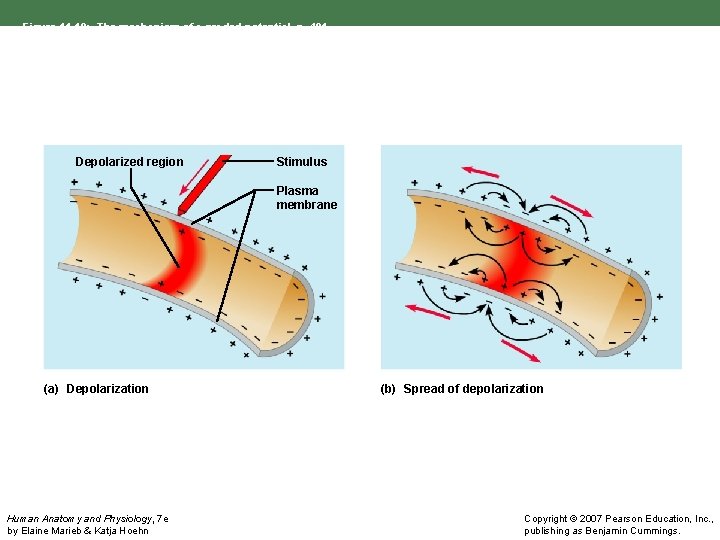
Figure 11. 10: The mechanism of a graded potential, p. 401. Depolarized region Stimulus Plasma membrane (a) Depolarization Human Anatomy and Physiology, 7 e by Elaine Marieb & Katja Hoehn (b) Spread of depolarization Copyright © 2007 Pearson Education, Inc. , publishing as Benjamin Cummings.
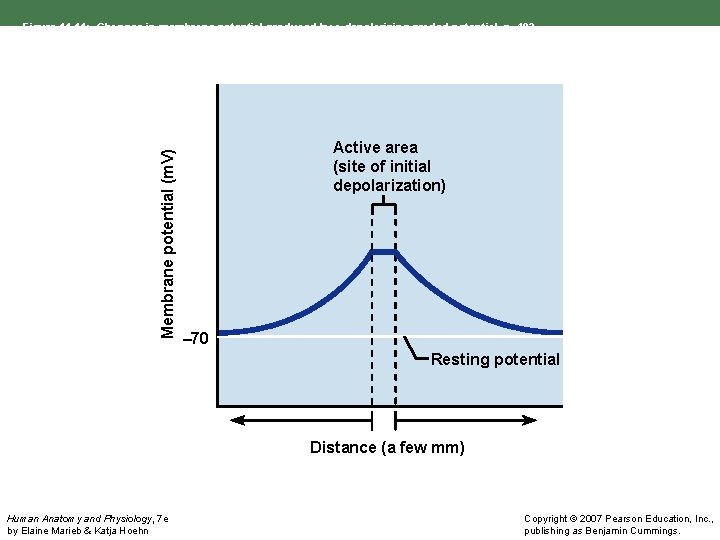
Membrane potential (m. V) Figure 11. 11: Changes in membrane potential produced by a depolarizing graded potential, p. 402. Active area (site of initial depolarization) – 70 Resting potential Distance (a few mm) Human Anatomy and Physiology, 7 e by Elaine Marieb & Katja Hoehn Copyright © 2007 Pearson Education, Inc. , publishing as Benjamin Cummings.
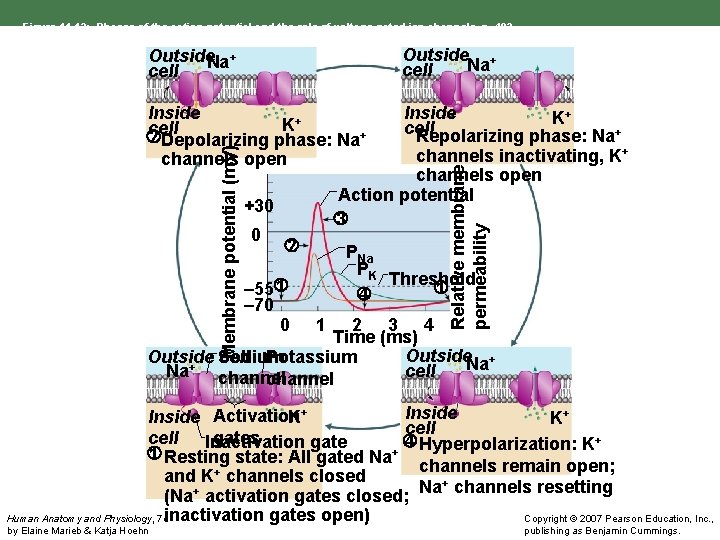
Figure 11. 12: Phases of the action potential and the role of voltage-gated ion channels, p. 403. Outside + Na cell Outside. Na+ cell Inside K+ cell Repolarizing phase: Na+ channels inactivating, K+ channels open Action potential 3 +30 0 2 – 55 1 – 70 0 Relative membrane permeability Membrane potential (m. V) Inside K+ cell 2 Depolarizing phase: Na+ channels open PNa PK Threshold 1 4 1 2 3 4 Time (ms) Outside. Na+ Outside Sodium cell Potassium + cell Na channel Inside K+ Inside Activation K+ cell gates cell 4 Hyperpolarization: K+ Inactivation gate 1 Resting state: All gated Na+ channels remain open; and K+ channels closed + (Na+ activation gates closed; Na channels resetting Human Anatomy and Physiology, 7 einactivation gates open) Copyright © 2007 Pearson Education, Inc. , by Elaine Marieb & Katja Hoehn publishing as Benjamin Cummings.
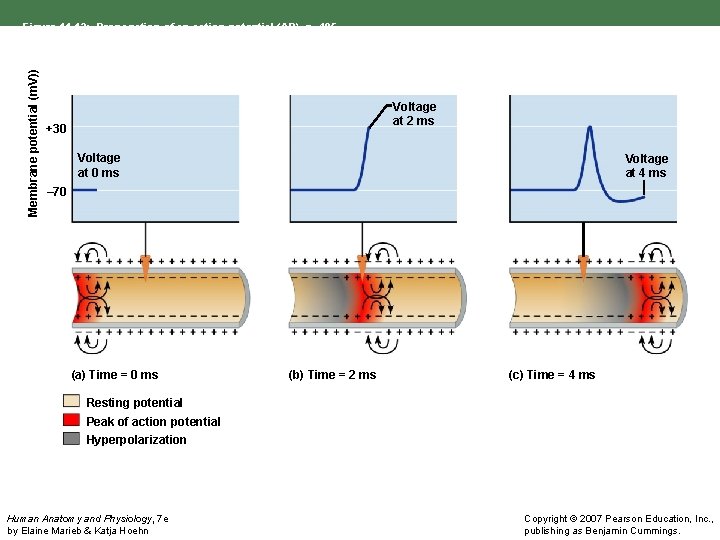
Membrane potential (m. V)) Figure 11. 13: Propagation of an action potential (AP), p. 405. Voltage at 2 ms +30 Voltage at 0 ms Voltage at 4 ms – 70 (a) Time = 0 ms (b) Time = 2 ms (c) Time = 4 ms Resting potential Peak of action potential Hyperpolarization Human Anatomy and Physiology, 7 e by Elaine Marieb & Katja Hoehn Copyright © 2007 Pearson Education, Inc. , publishing as Benjamin Cummings.
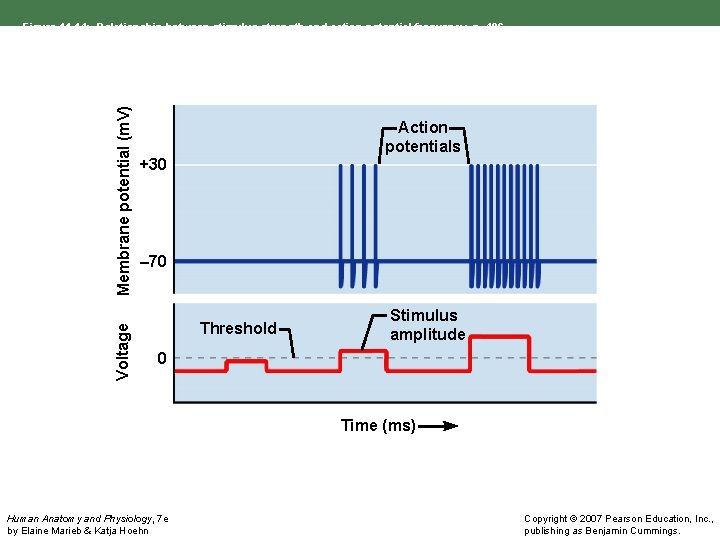
Voltage Membrane potential (m. V) Figure 11. 14: Relationship between stimulus strength and action potential frequency, p. 406. Action potentials +30 – 70 Threshold Stimulus amplitude 0 Time (ms) Human Anatomy and Physiology, 7 e by Elaine Marieb & Katja Hoehn Copyright © 2007 Pearson Education, Inc. , publishing as Benjamin Cummings.
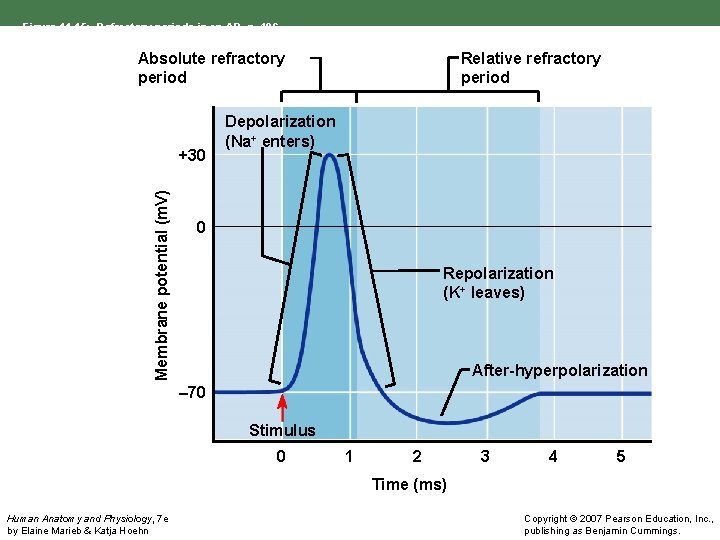
Figure 11. 15: Refractory periods in an AP, p. 406. Absolute refractory period Membrane potential (m. V) +30 Relative refractory period Depolarization (Na+ enters) 0 Repolarization (K+ leaves) After-hyperpolarization – 70 Stimulus 0 1 2 3 4 5 Time (ms) Human Anatomy and Physiology, 7 e by Elaine Marieb & Katja Hoehn Copyright © 2007 Pearson Education, Inc. , publishing as Benjamin Cummings.
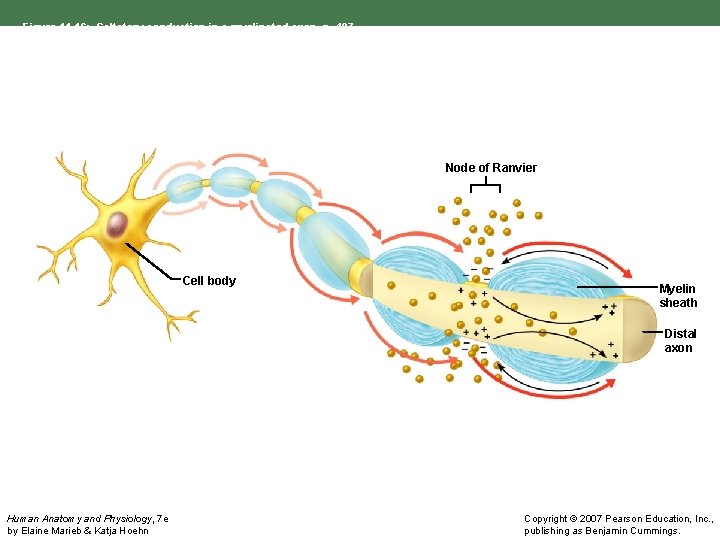
Figure 11. 16: Saltatory conduction in a myelinated axon, p. 407. Node of Ranvier Cell body Myelin sheath Distal axon Human Anatomy and Physiology, 7 e by Elaine Marieb & Katja Hoehn Copyright © 2007 Pearson Education, Inc. , publishing as Benjamin Cummings.
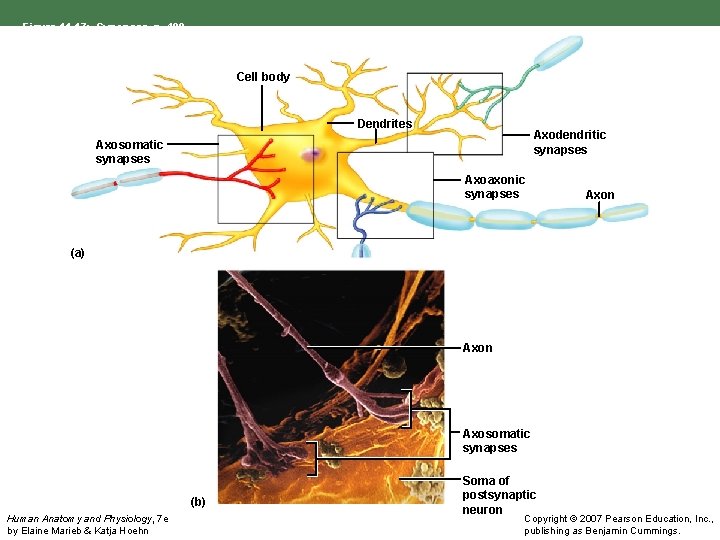
Figure 11. 17: Synapses, p. 409. Cell body Dendrites Axodendritic synapses Axosomatic synapses Axoaxonic synapses Axon (a) Axon Axosomatic synapses (b) Human Anatomy and Physiology, 7 e by Elaine Marieb & Katja Hoehn Soma of postsynaptic neuron Copyright © 2007 Pearson Education, Inc. , publishing as Benjamin Cummings.
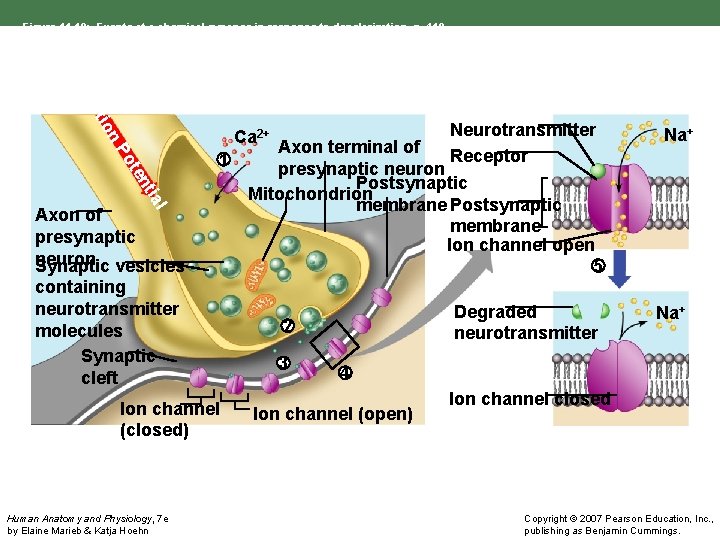
Figure 11. 18: Events at a chemical synapse in response to depolarization, p. 410. on ti Ac Neurotransmitter Receptor Ca 2+ ten Po 1 l tia Axon of presynaptic neuron Synaptic vesicles containing neurotransmitter molecules Synaptic cleft Ion channel (closed) Human Anatomy and Physiology, 7 e by Elaine Marieb & Katja Hoehn Axon terminal of presynaptic neuron Postsynaptic Mitochondrion membrane Postsynaptic membrane Ion channel open 5 Degraded neurotransmitter 2 3 Na+ 4 Ion channel (open) Ion channel closed Copyright © 2007 Pearson Education, Inc. , publishing as Benjamin Cummings.
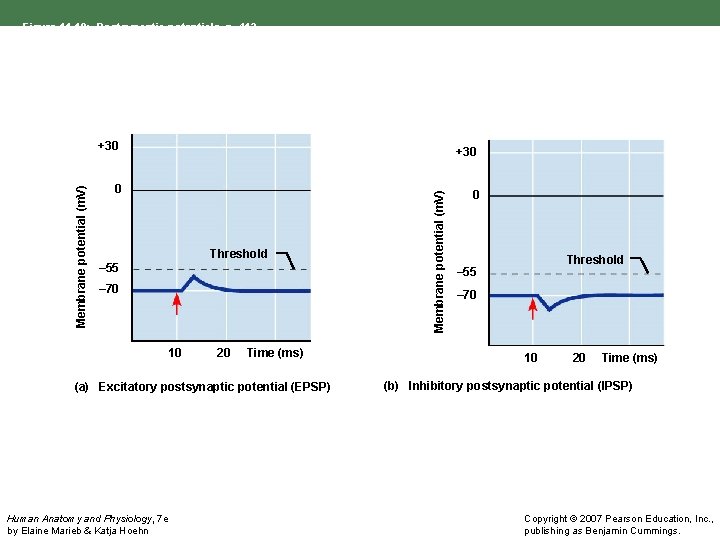
+30 0 0 Threshold – 55 – 70 10 20 Time (ms) (a) Excitatory postsynaptic potential (EPSP) Human Anatomy and Physiology, 7 e by Elaine Marieb & Katja Hoehn Membrane potential (m. V) Figure 11. 19: Postsynaptic potentials, p. 412. Threshold – 55 – 70 10 20 Time (ms) (b) Inhibitory postsynaptic potential (IPSP) Copyright © 2007 Pearson Education, Inc. , publishing as Benjamin Cummings.
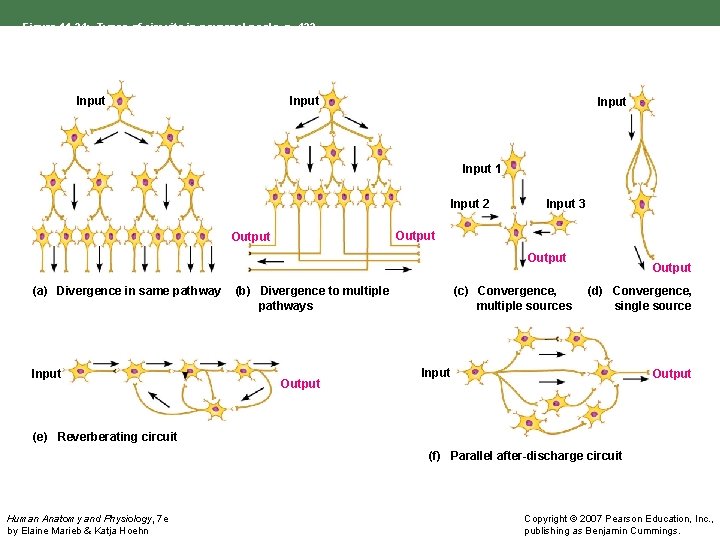
Figure 11. 24: Types of circuits in neuronal pools, p. 422. Input 1 Input 2 Input 3 Output (a) Divergence in same pathway Input (b) Divergence to multiple pathways Output (c) Convergence, multiple sources Output (d) Convergence, single source Input Output (e) Reverberating circuit (f) Parallel after-discharge circuit Human Anatomy and Physiology, 7 e by Elaine Marieb & Katja Hoehn Copyright © 2007 Pearson Education, Inc. , publishing as Benjamin Cummings.
Why Study Bird Song? Bird song has been a classic behavioral response studied in animals to help us understand sexually dimorphic differences in brain organization. By studying bird song and the neural and neuroendocrine basis of bird song, we can better understand the principles of how the brain organizes itself during development. This information about bird song can then be used to understand and/or predict aspects of organization of the brain of other animals including in humans.
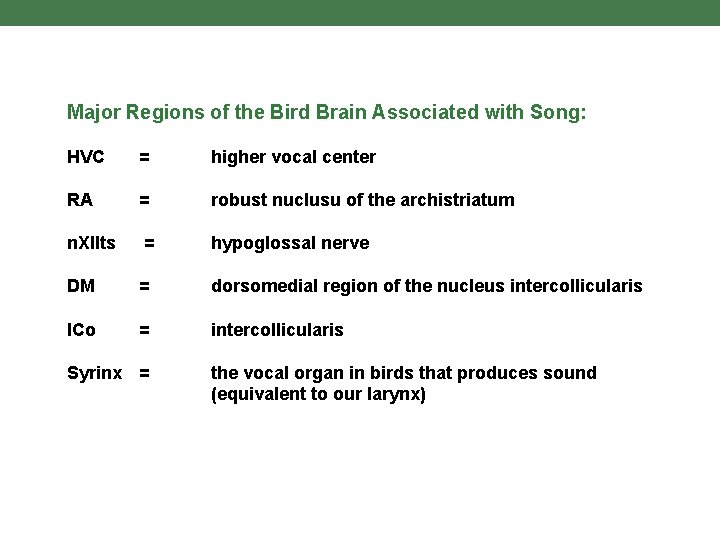
Major Regions of the Bird Brain Associated with Song: HVC = higher vocal center RA = robust nuclusu of the archistriatum n. XIIts = hypoglossal nerve DM = dorsomedial region of the nucleus intercollicularis ICo = intercollicularis Syrinx = the vocal organ in birds that produces sound (equivalent to our larynx)
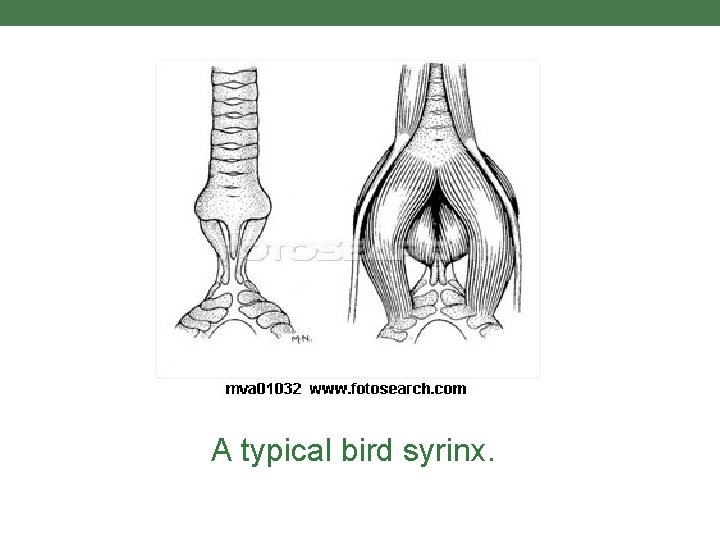
A typical bird syrinx.
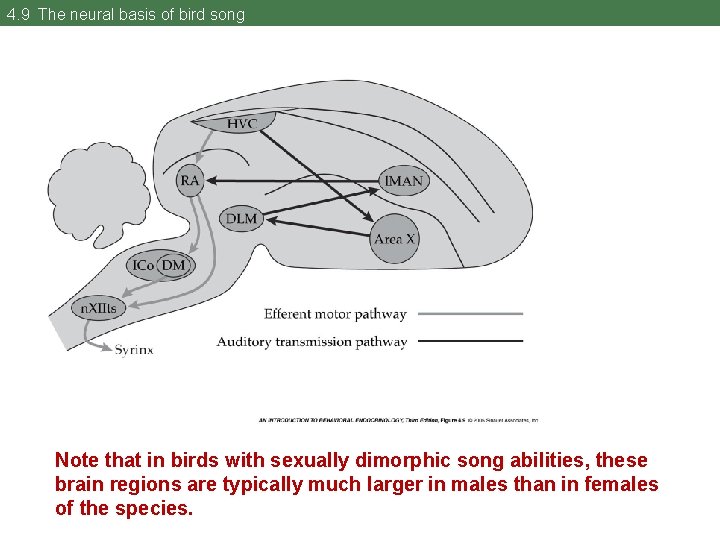
4. 9 The neural basis of bird song Note that in birds with sexually dimorphic song abilities, these brain regions are typically much larger in males than in females of the species.
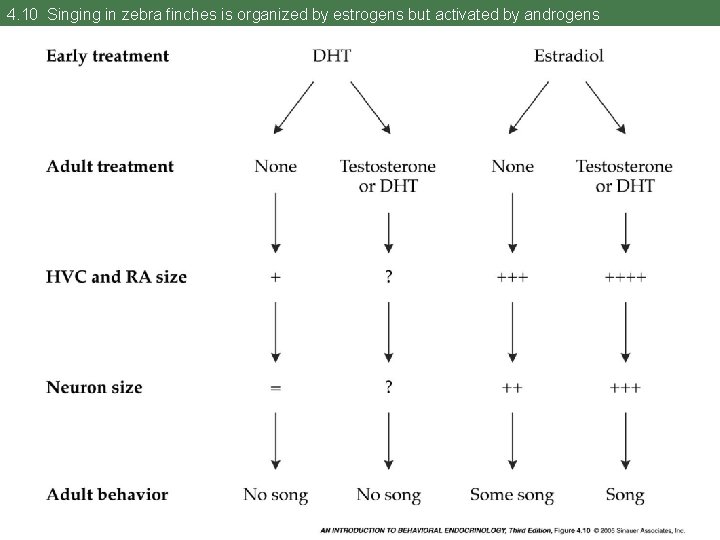
4. 10 Singing in zebra finches is organized by estrogens but activated by androgens
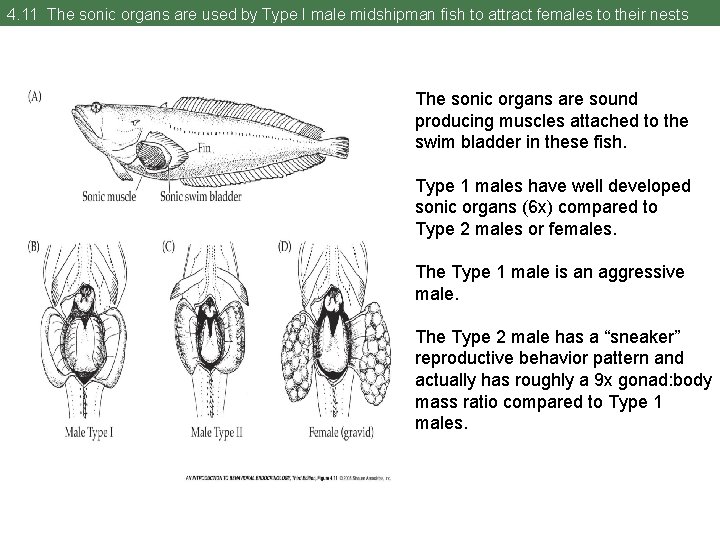
4. 11 The sonic organs are used by Type I male midshipman fish to attract females to their nests The sonic organs are sound producing muscles attached to the swim bladder in these fish. Type 1 males have well developed sonic organs (6 x) compared to Type 2 males or females. The Type 1 male is an aggressive male. The Type 2 male has a “sneaker” reproductive behavior pattern and actually has roughly a 9 x gonad: body mass ratio compared to Type 1 males.
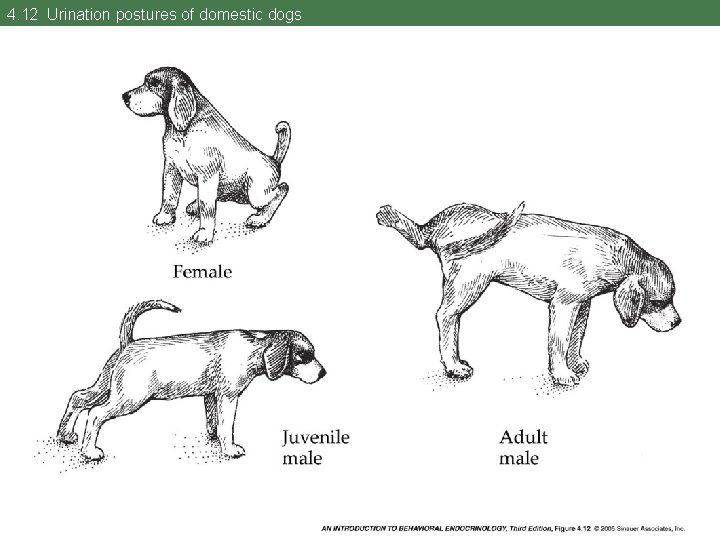
4. 12 Urination postures of domestic dogs
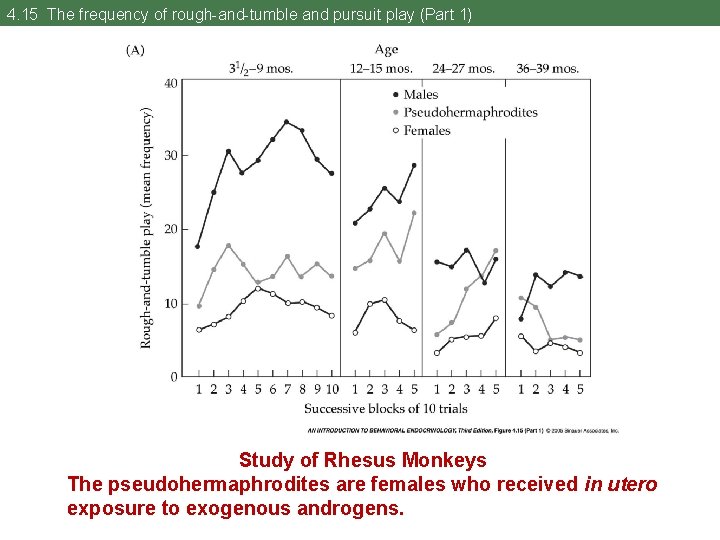
4. 15 The frequency of rough-and-tumble and pursuit play (Part 1) Study of Rhesus Monkeys The pseudohermaphrodites are females who received in utero exposure to exogenous androgens.
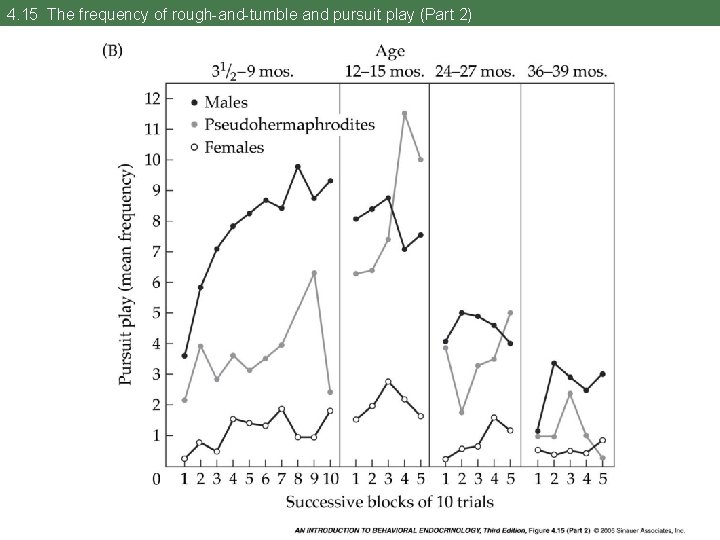
4. 15 The frequency of rough-and-tumble and pursuit play (Part 2)
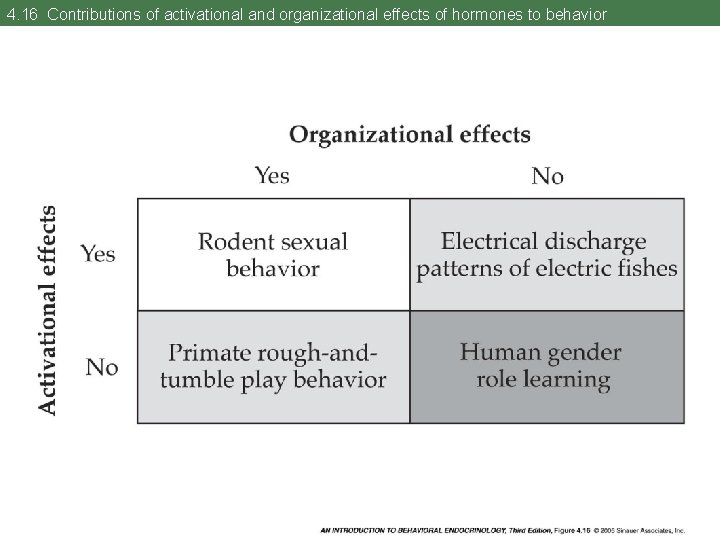
4. 16 Contributions of activational and organizational effects of hormones to behavior
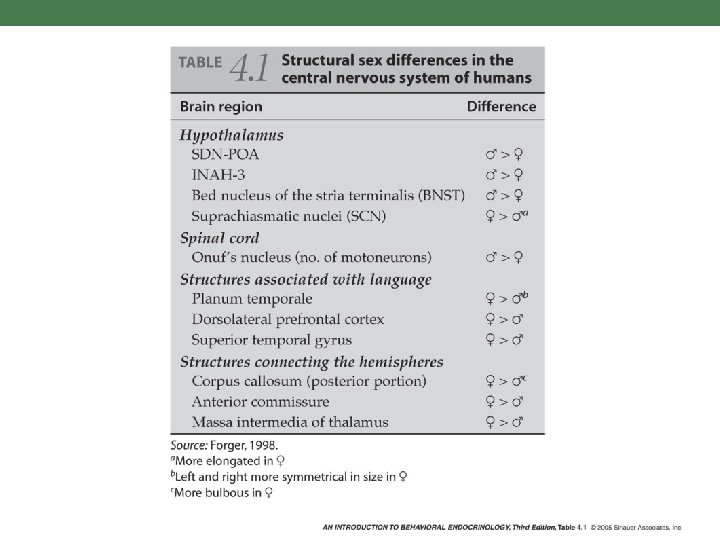
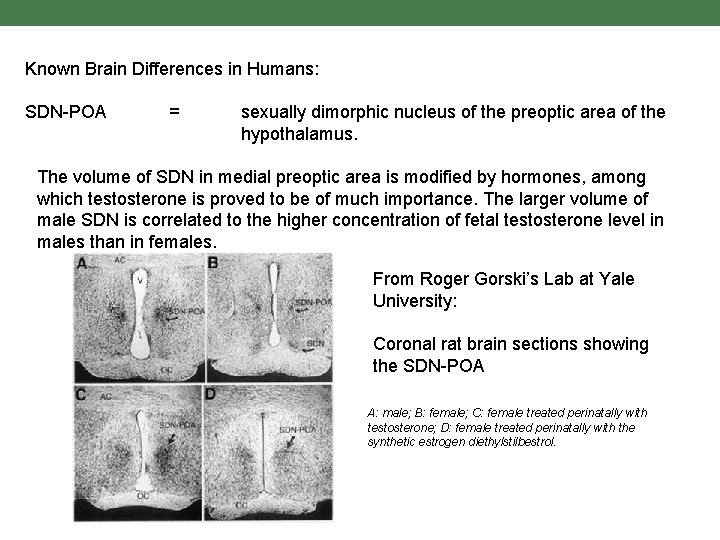
Known Brain Differences in Humans: SDN-POA = sexually dimorphic nucleus of the preoptic area of the hypothalamus. The volume of SDN in medial preoptic area is modified by hormones, among which testosterone is proved to be of much importance. The larger volume of male SDN is correlated to the higher concentration of fetal testosterone level in males than in females. From Roger Gorski’s Lab at Yale University: Coronal rat brain sections showing the SDN-POA A: male; B: female; C: female treated perinatally with testosterone; D: female treated perinatally with the synthetic estrogen diethylstilbestrol.
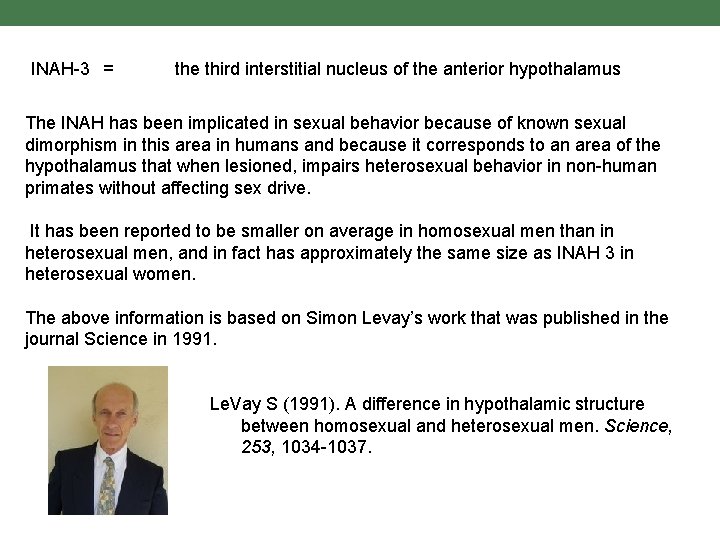
INAH-3 = the third interstitial nucleus of the anterior hypothalamus The INAH has been implicated in sexual behavior because of known sexual dimorphism in this area in humans and because it corresponds to an area of the hypothalamus that when lesioned, impairs heterosexual behavior in non-human primates without affecting sex drive. It has been reported to be smaller on average in homosexual men than in heterosexual men, and in fact has approximately the same size as INAH 3 in heterosexual women. The above information is based on Simon Levay’s work that was published in the journal Science in 1991. Le. Vay S (1991). A difference in hypothalamic structure between homosexual and heterosexual men. Science, 253, 1034 -1037.
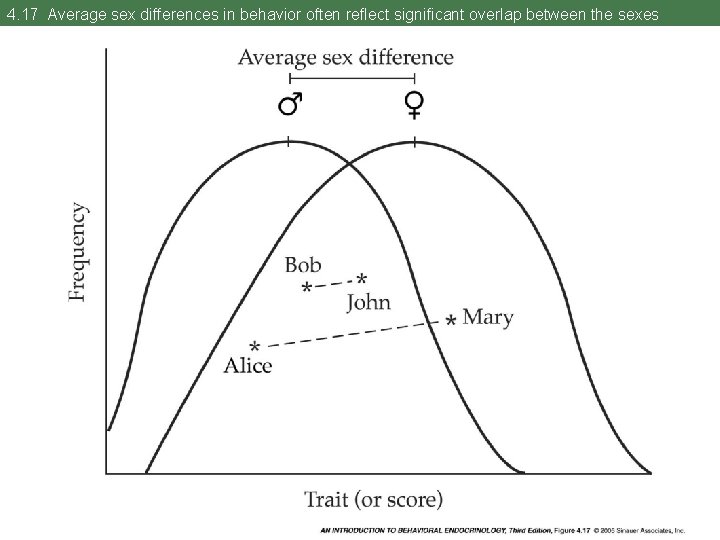
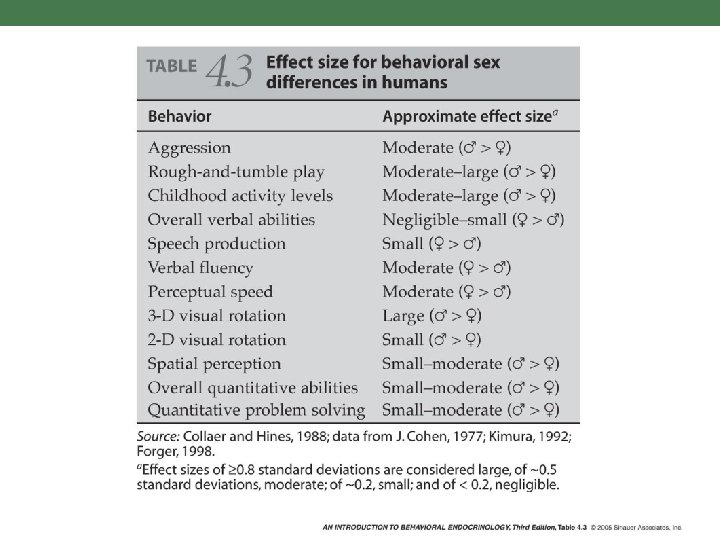
4. 17 Average sex differences in behavior often reflect significant overlap between the sexes
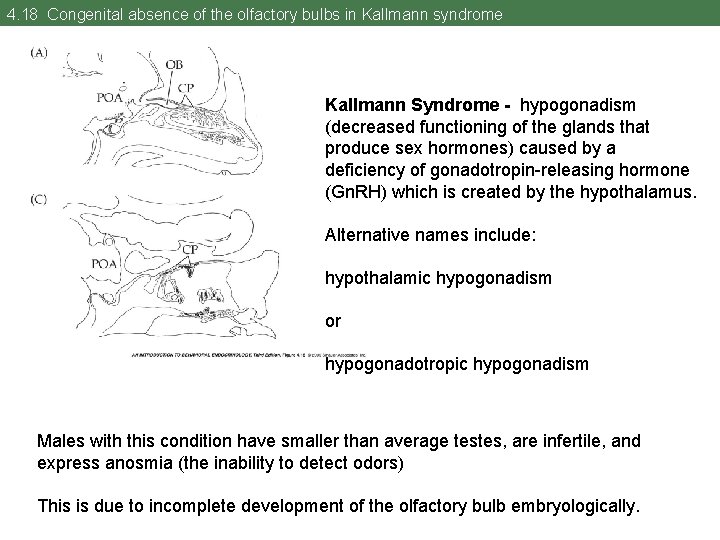
4. 18 Congenital absence of the olfactory bulbs in Kallmann syndrome Kallmann Syndrome - hypogonadism (decreased functioning of the glands that produce sex hormones) caused by a deficiency of gonadotropin-releasing hormone (Gn. RH) which is created by the hypothalamus. Alternative names include: hypothalamic hypogonadism or hypogonadotropic hypogonadism Males with this condition have smaller than average testes, are infertile, and express anosmia (the inability to detect odors) This is due to incomplete development of the olfactory bulb embryologically.
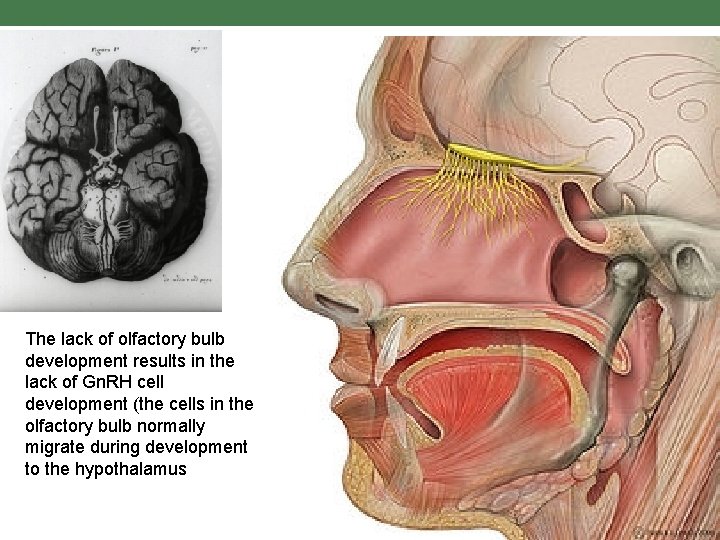
The lack of olfactory bulb development results in the lack of Gn. RH cell development (the cells in the olfactory bulb normally migrate during development to the hypothalamus
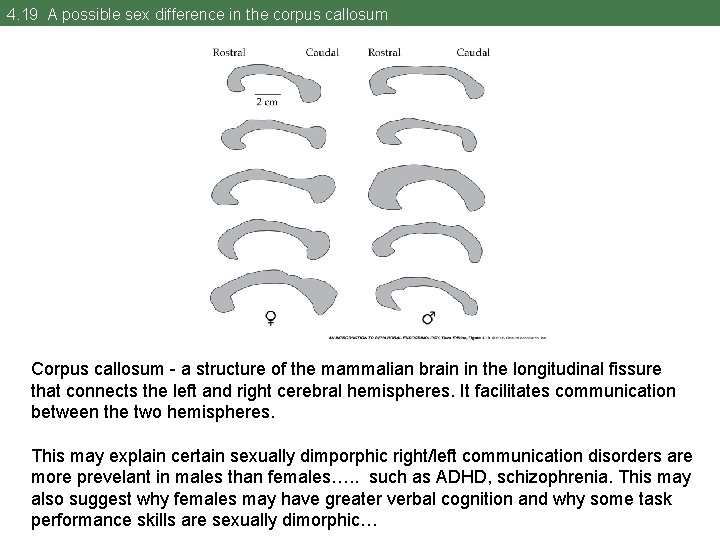
4. 19 A possible sex difference in the corpus callosum Corpus callosum - a structure of the mammalian brain in the longitudinal fissure that connects the left and right cerebral hemispheres. It facilitates communication between the two hemispheres. This may explain certain sexually dimporphic right/left communication disorders are more prevelant in males than females…. . such as ADHD, schizophrenia. This may also suggest why females may have greater verbal cognition and why some task performance skills are sexually dimorphic…
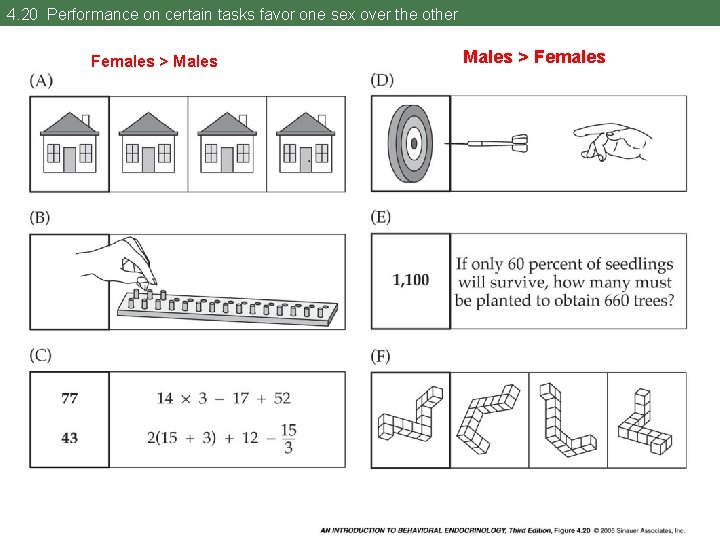
4. 20 Performance on certain tasks favor one sex over the other Females > Males > Females
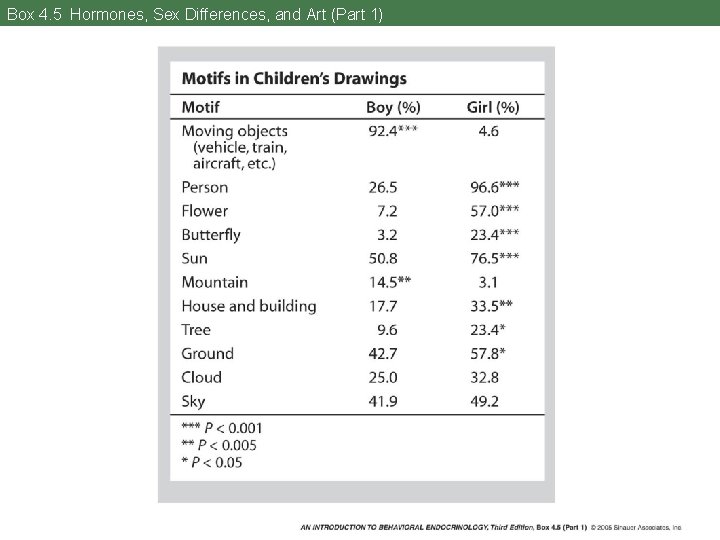
Box 4. 5 Hormones, Sex Differences, and Art (Part 1)
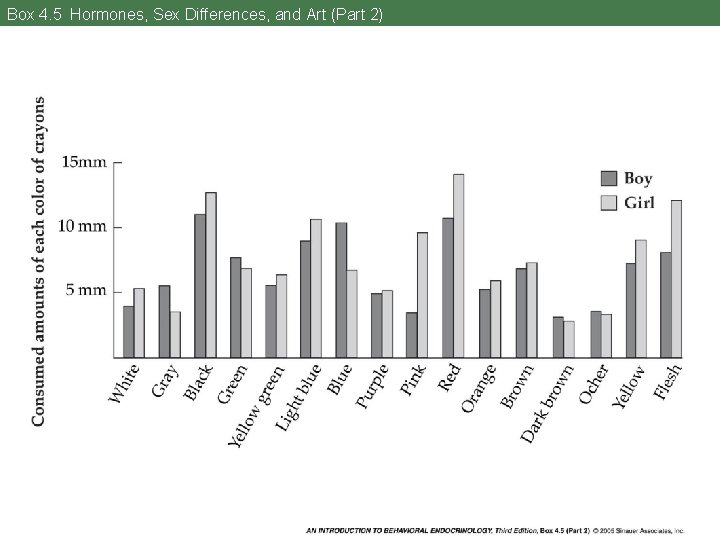
Box 4. 5 Hormones, Sex Differences, and Art (Part 2)
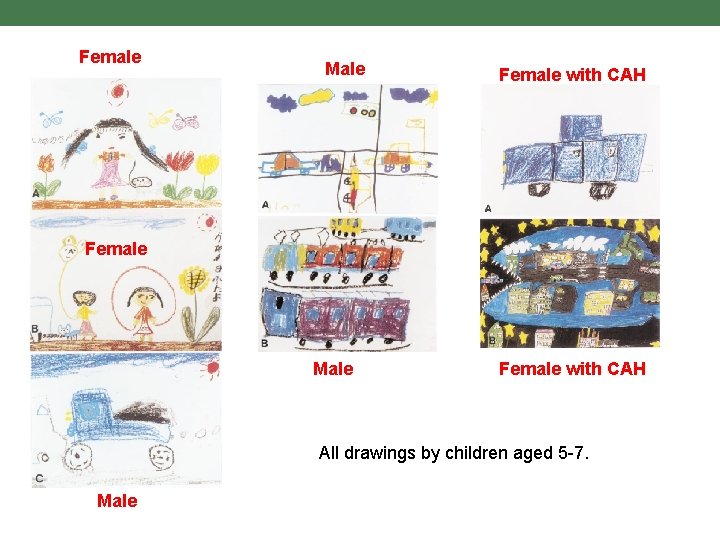
Female Male Female with CAH All drawings by children aged 5 -7. Male
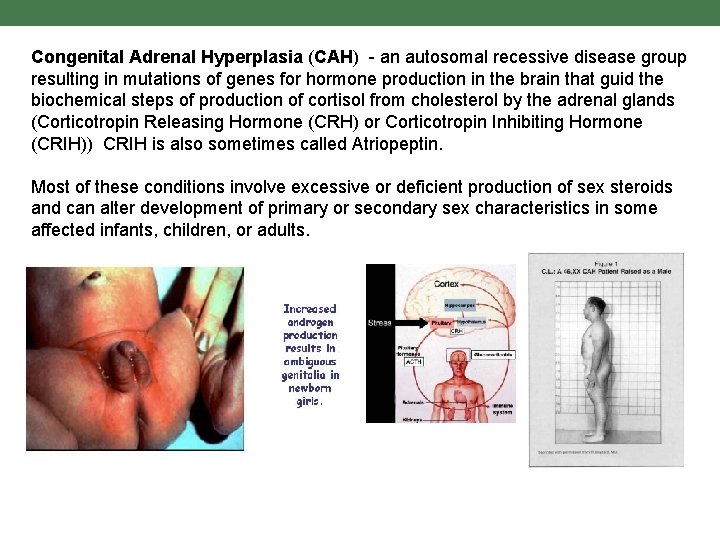
Congenital Adrenal Hyperplasia (CAH) - an autosomal recessive disease group resulting in mutations of genes for hormone production in the brain that guid the biochemical steps of production of cortisol from cholesterol by the adrenal glands (Corticotropin Releasing Hormone (CRH) or Corticotropin Inhibiting Hormone (CRIH)) CRIH is also sometimes called Atriopeptin. Most of these conditions involve excessive or deficient production of sex steroids and can alter development of primary or secondary sex characteristics in some affected infants, children, or adults.
- Slides: 48