
Topic 5 DNA Technology and Genomics OBJ 19
Topic 5: DNA Technology and Genomics
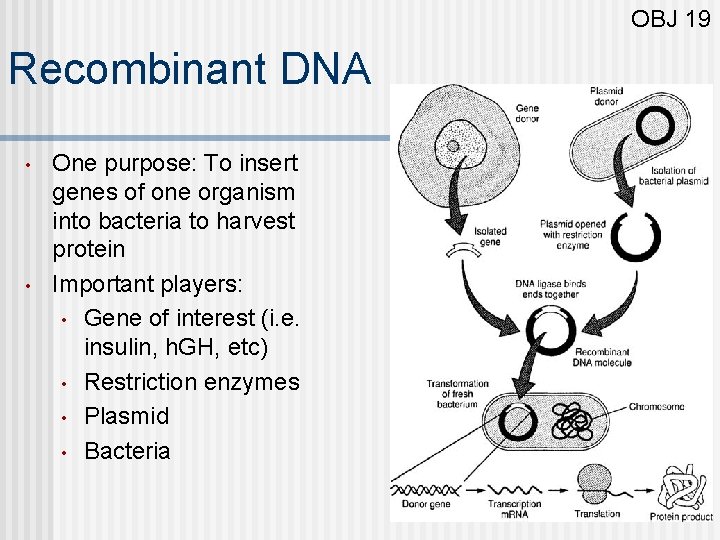
OBJ 19 Recombinant DNA • • One purpose: To insert genes of one organism into bacteria to harvest protein Important players: • Gene of interest (i. e. insulin, h. GH, etc) • Restriction enzymes • Plasmid • Bacteria
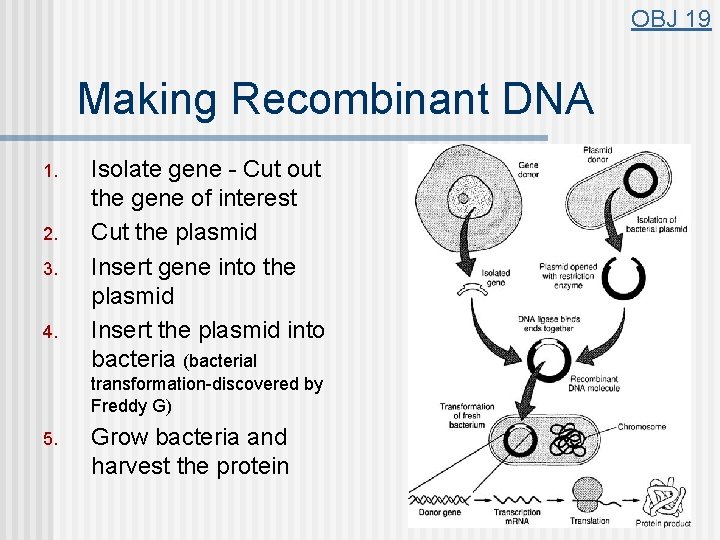
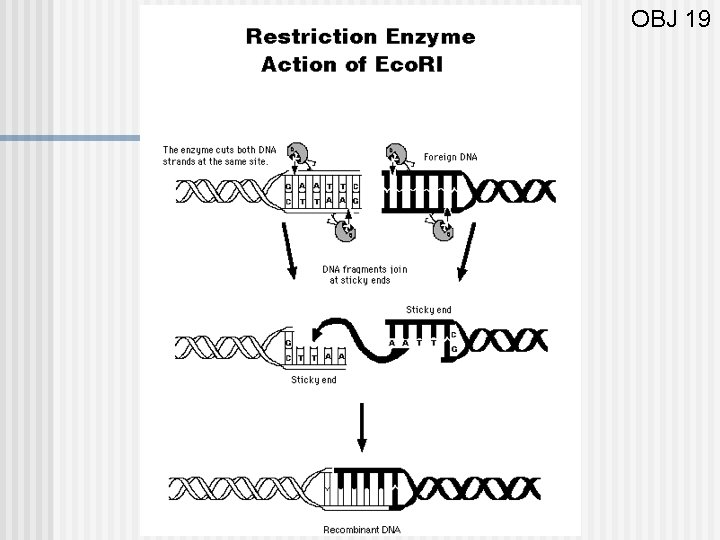
OBJ 19 Making Recombinant DNA 1. 2. 3. 4. Isolate gene - Cut out the gene of interest Cut the plasmid Insert gene into the plasmid Insert the plasmid into bacteria (bacterial transformation-discovered by Freddy G) 5. Grow bacteria and harvest the protein
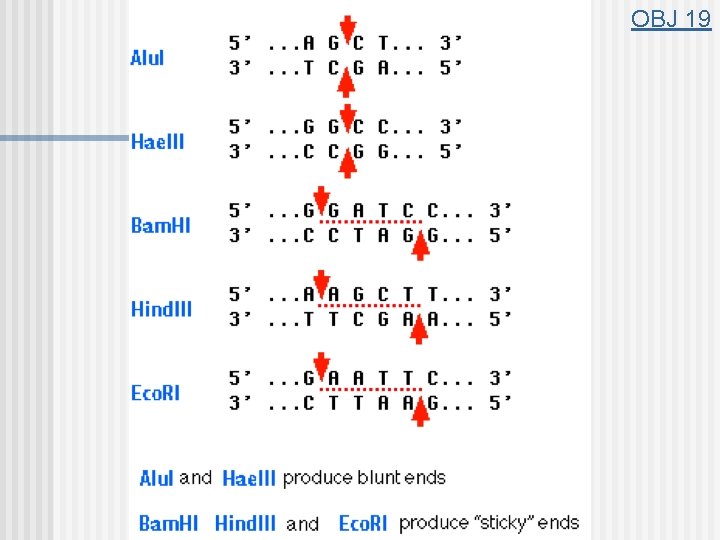
OBJ 19 Isolating the gene • • Use special proteins to cut the DNA strand at specific places Restriction enzymes: • • • Target very specific base sequences Are found in more than 100 different varieties Are used in nature to protect bacteria from foreign invaders
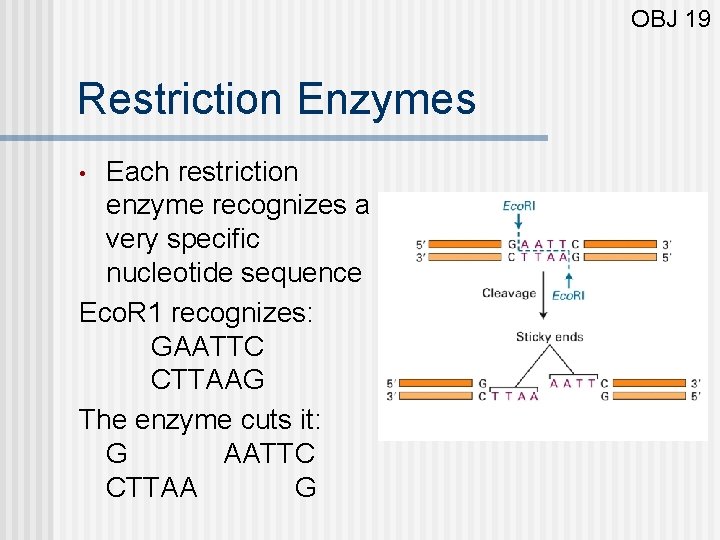
OBJ 19 Restriction Enzymes Each restriction enzyme recognizes a very specific nucleotide sequence Eco. R 1 recognizes: GAATTC CTTAAG The enzyme cuts it: G AATTC CTTAA G •
OBJ 19
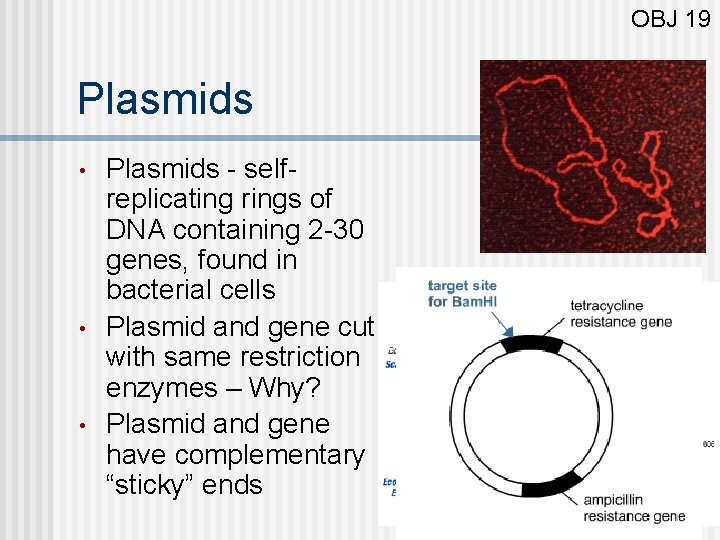
OBJ 19 Plasmids • • • Plasmids - selfreplicating rings of DNA containing 2 -30 genes, found in bacterial cells Plasmid and gene cut with same restriction enzymes – Why? Plasmid and gene have complementary “sticky” ends
OBJ 19
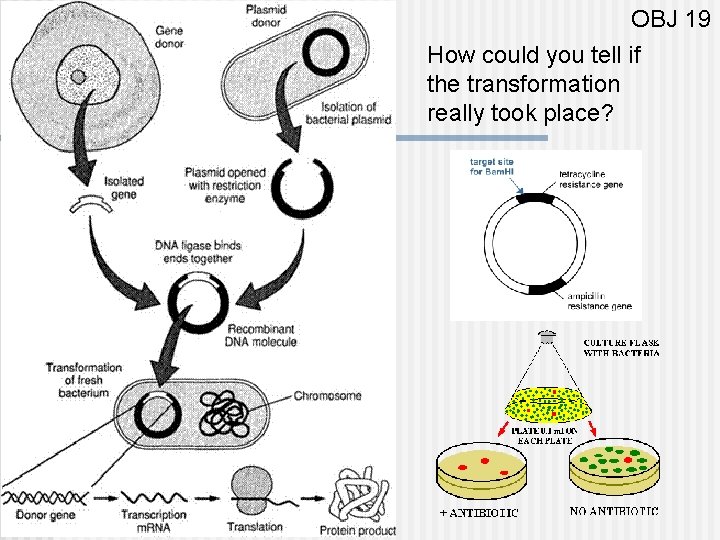
OBJ 19 How could you tell if the transformation really took place?
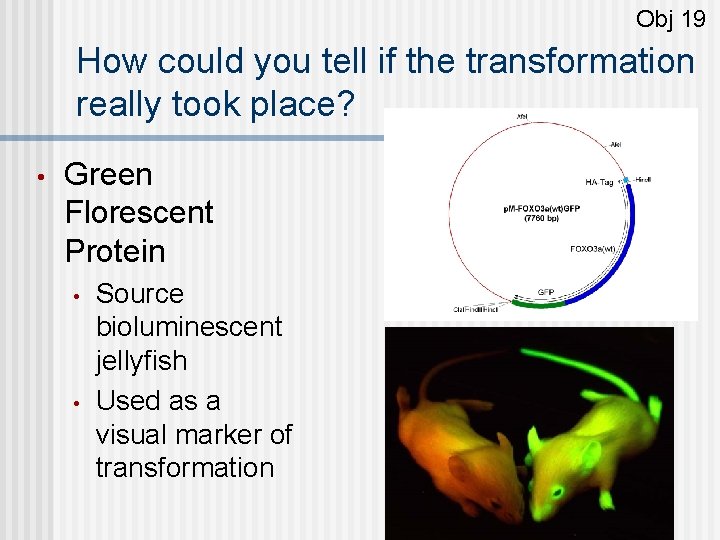
Obj 19 How could you tell if the transformation really took place? • Green Florescent Protein • • Source bioluminescent jellyfish Used as a visual marker of transformation
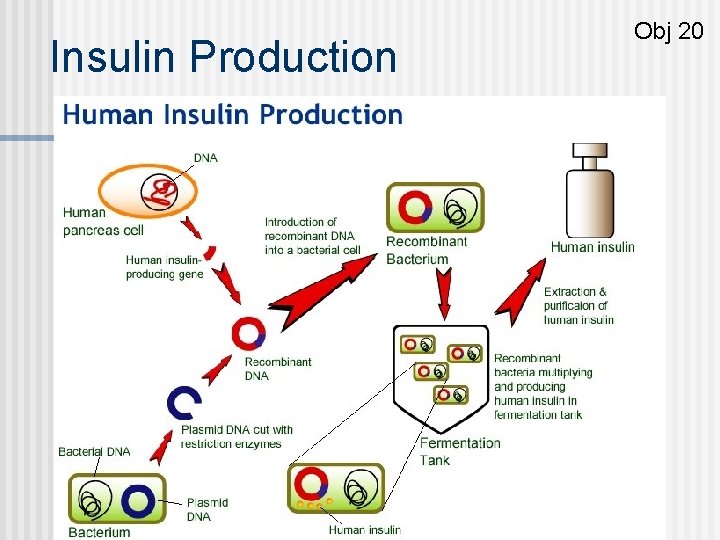
Insulin Production Obj 20
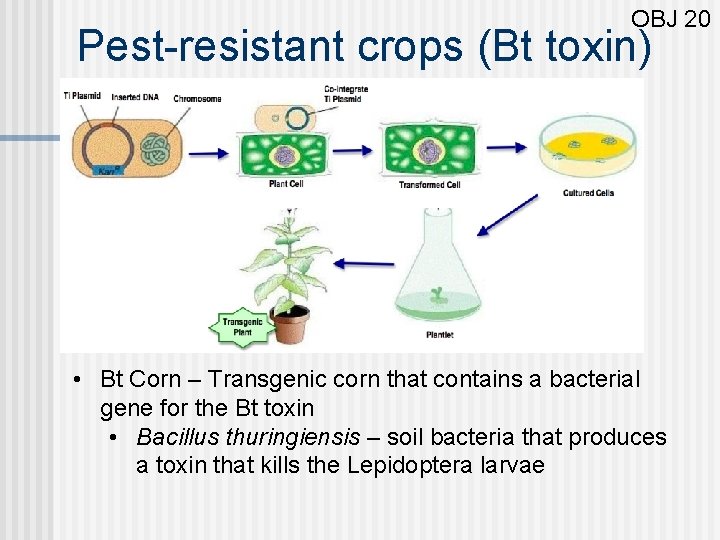
OBJ 20 Pest-resistant crops (Bt toxin) • Bt Corn – Transgenic corn that contains a bacterial gene for the Bt toxin • Bacillus thuringiensis – soil bacteria that produces a toxin that kills the Lepidoptera larvae
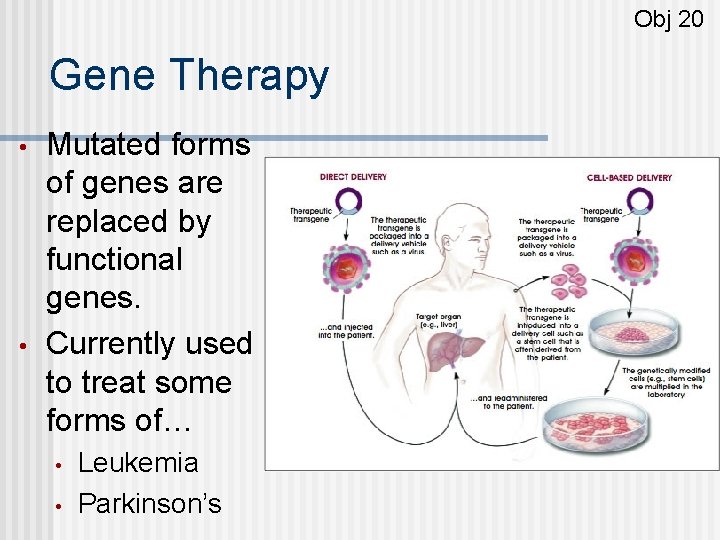
Obj 20 Gene Therapy • • Mutated forms of genes are replaced by functional genes. Currently used to treat some forms of… • • Leukemia Parkinson’s
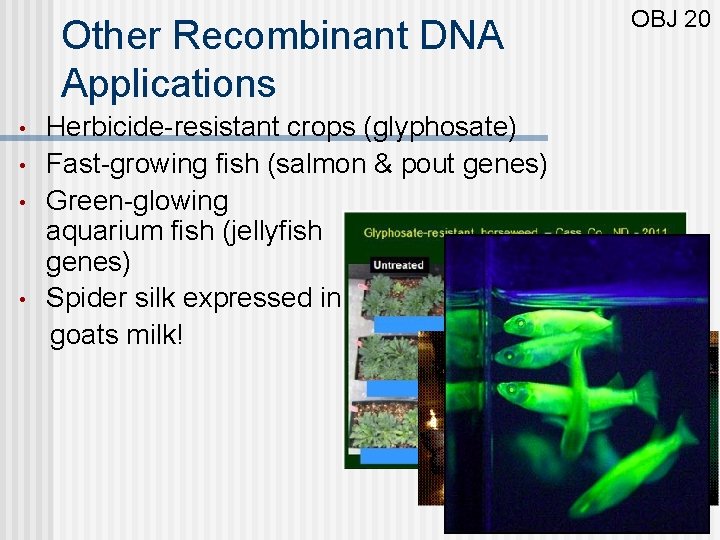
Other Recombinant DNA Applications • • Herbicide-resistant crops (glyphosate) Fast-growing fish (salmon & pout genes) Green-glowing aquarium fish (jellyfish genes) Spider silk expressed in goats milk! OBJ 20
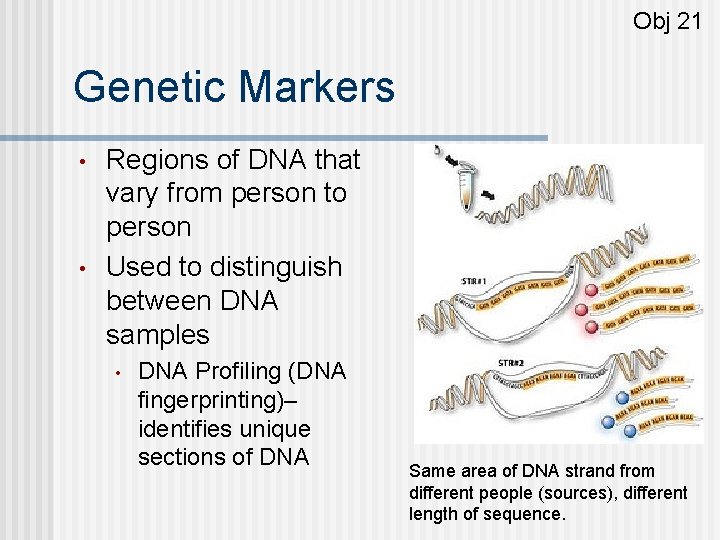
Obj 21 Genetic Markers • • Regions of DNA that vary from person to person Used to distinguish between DNA samples • DNA Profiling (DNA fingerprinting)– identifies unique sections of DNA Same area of DNA strand from different people (sources), different length of sequence.
DNA Profiling (DNA ‘fingerprinting’) • OBJ 21 Purpose: • • • Forensic science (crime scenes) Determining paternity Research (disease discovery and diagnosis) – targets coding regions
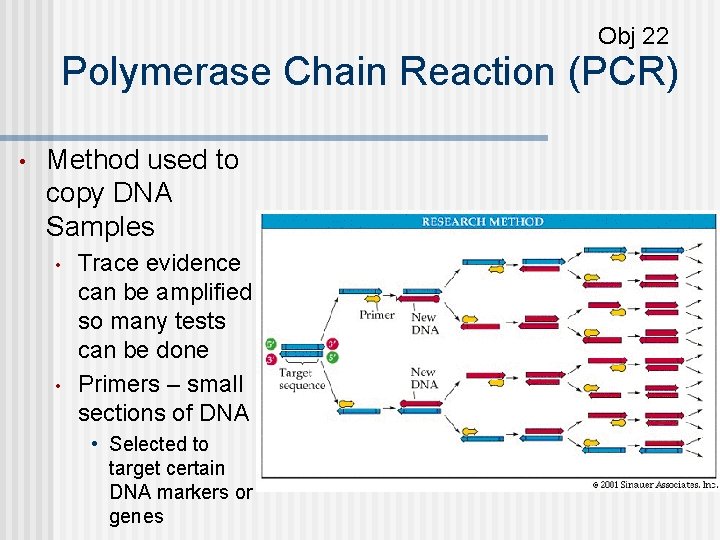
Obj 22 Polymerase Chain Reaction (PCR) • Method used to copy DNA Samples • • Trace evidence can be amplified so many tests can be done Primers – small sections of DNA • Selected to target certain DNA markers or genes
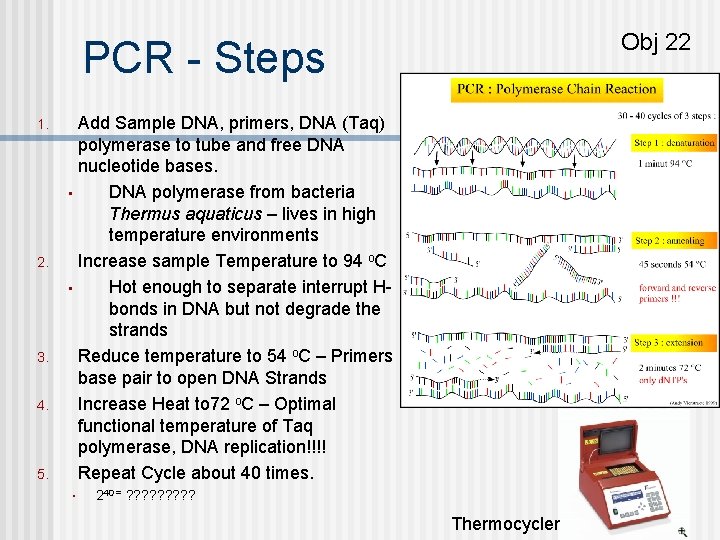
Obj 22 PCR - Steps 1. 2. 3. 4. 5. Add Sample DNA, primers, DNA (Taq) polymerase to tube and free DNA nucleotide bases. • DNA polymerase from bacteria Thermus aquaticus – lives in high temperature environments Increase sample Temperature to 94 o. C • Hot enough to separate interrupt Hbonds in DNA but not degrade the strands Reduce temperature to 54 o. C – Primers base pair to open DNA Strands Increase Heat to 72 o. C – Optimal functional temperature of Taq polymerase, DNA replication!!!! Repeat Cycle about 40 times. • 240 = ? ? ? ? ? Thermocycler
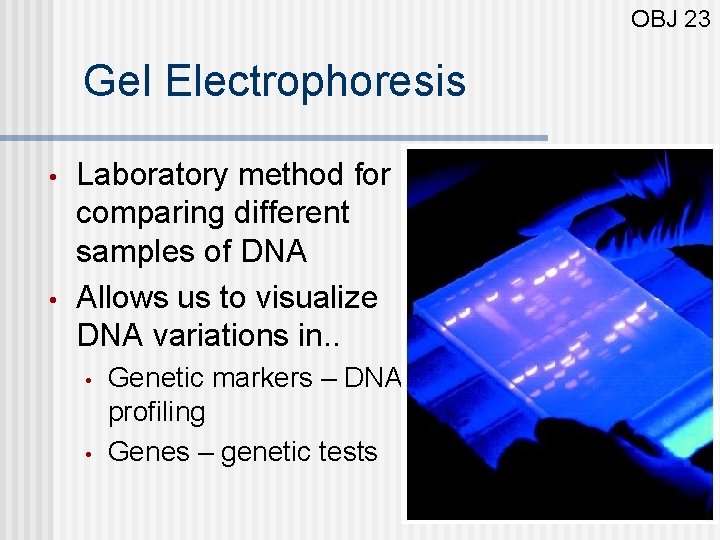
OBJ 23 Gel Electrophoresis • • Laboratory method for comparing different samples of DNA Allows us to visualize DNA variations in. . • • Genetic markers – DNA profiling Genes – genetic tests
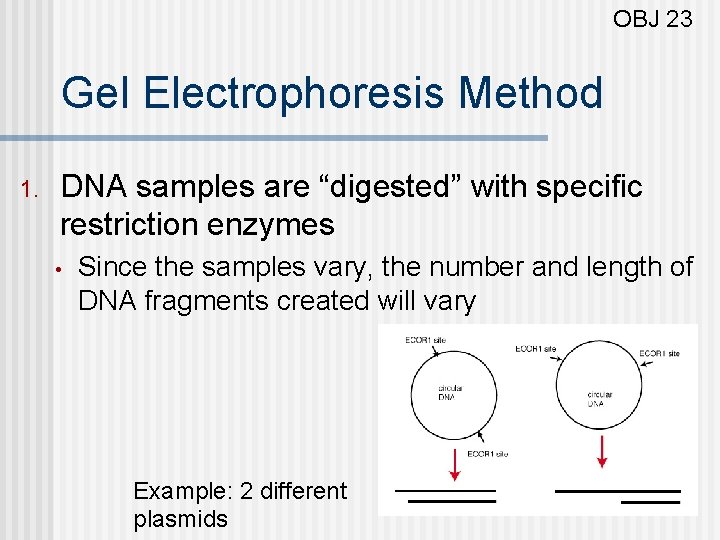
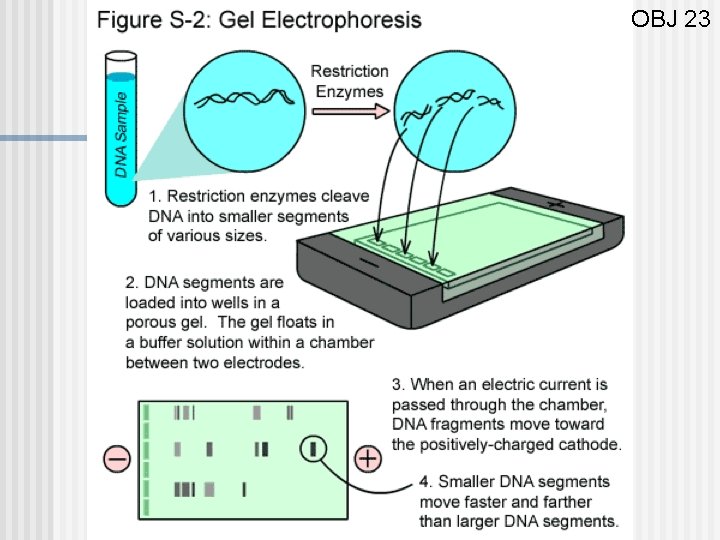
OBJ 23 Gel Electrophoresis Method 1. DNA samples are “digested” with specific restriction enzymes • Since the samples vary, the number and length of DNA fragments created will vary Example: 2 different plasmids
OBJ 23 Gel Electrophoresis Method DNA samples are “loaded” into the “wells” of an agarose gel that is submerged in buffer Electrical current is run through the buffer solution. 2. 3. • • • DNA is negative!! Phosphate groups PO 4 DNA fragments are pulled toward the positive pole Smaller fragments travel farther than larger fragments
OBJ 23
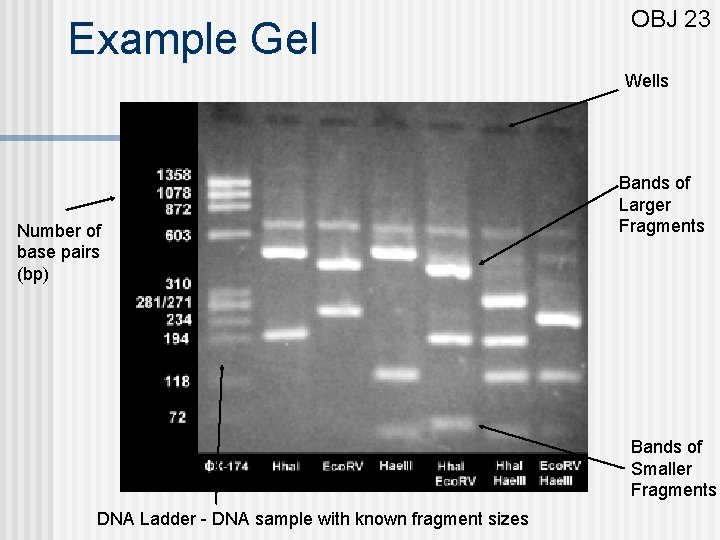
Example Gel OBJ 23 Wells Number of base pairs (bp) Bands of Larger Fragments Bands of Smaller Fragments DNA Ladder - DNA sample with known fragment sizes
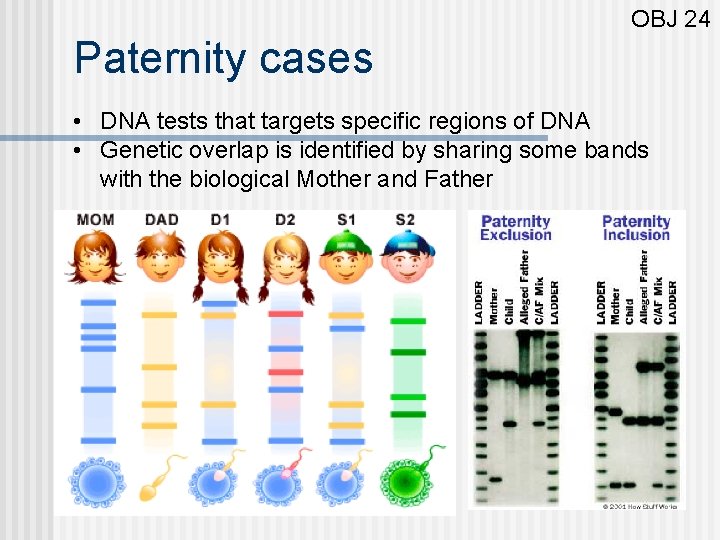
OBJ 24 Paternity cases • DNA tests that targets specific regions of DNA • Genetic overlap is identified by sharing some bands with the biological Mother and Father
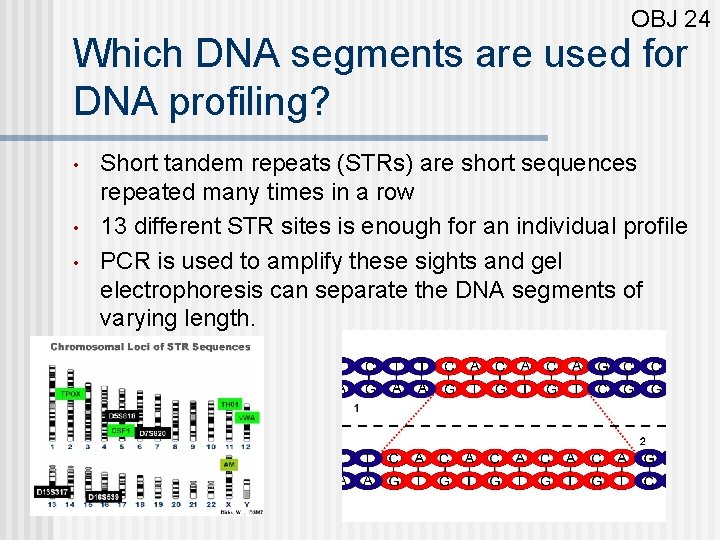
OBJ 24 Which DNA segments are used for DNA profiling? • • • Short tandem repeats (STRs) are short sequences repeated many times in a row 13 different STR sites is enough for an individual profile PCR is used to amplify these sights and gel electrophoresis can separate the DNA segments of varying length.
OBJ 24 Which DNA segments are used for DNA profiling? • Single nucleotide polymorphisms (SNPs) are single base-pair variations (like a substitution mutation) • Restriction fragment length polymorphisms (RFLPs) are SNPs that change the length of DNA fragments created by restriction enzymes
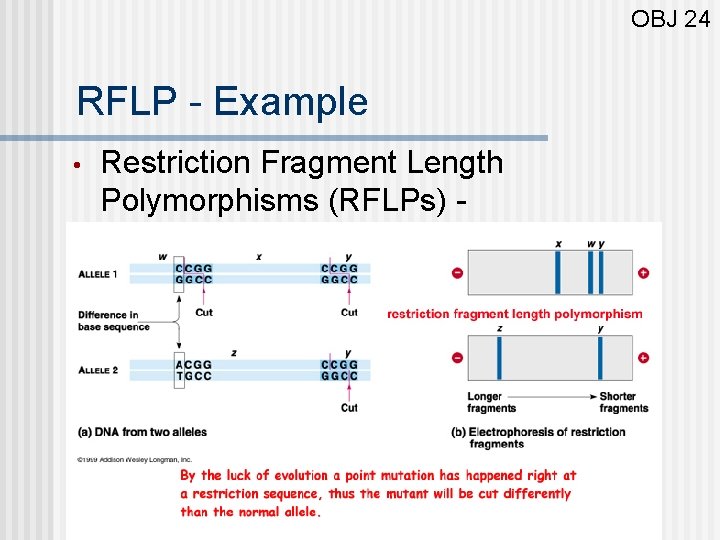
OBJ 24 RFLP - Example • Restriction Fragment Length Polymorphisms (RFLPs) -

OBJ 24 RFLP – Example 2

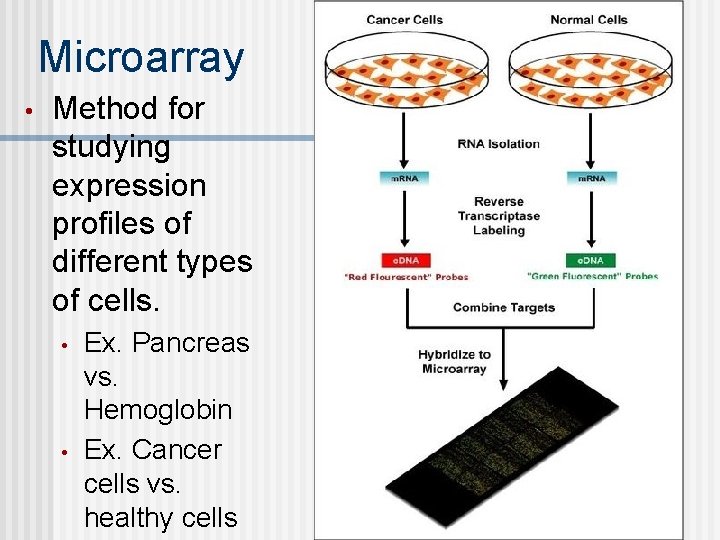
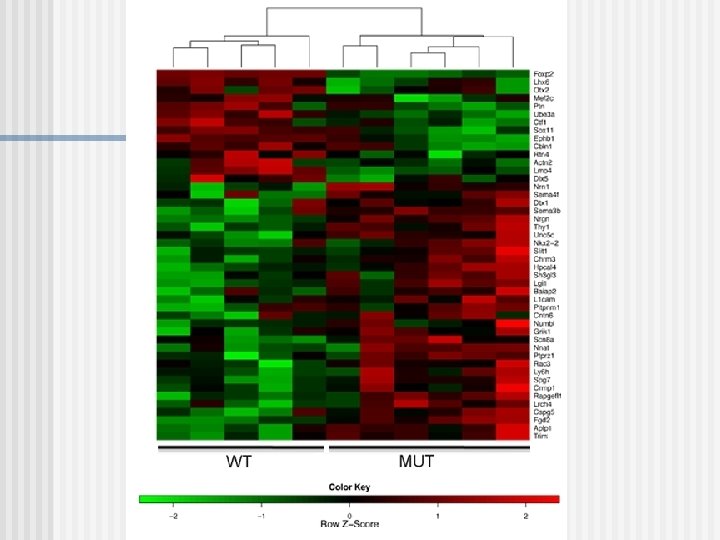
Microarray • Method for studying expression profiles of different types of cells. • • Ex. Pancreas vs. Hemoglobin Ex. Cancer cells vs. healthy cells
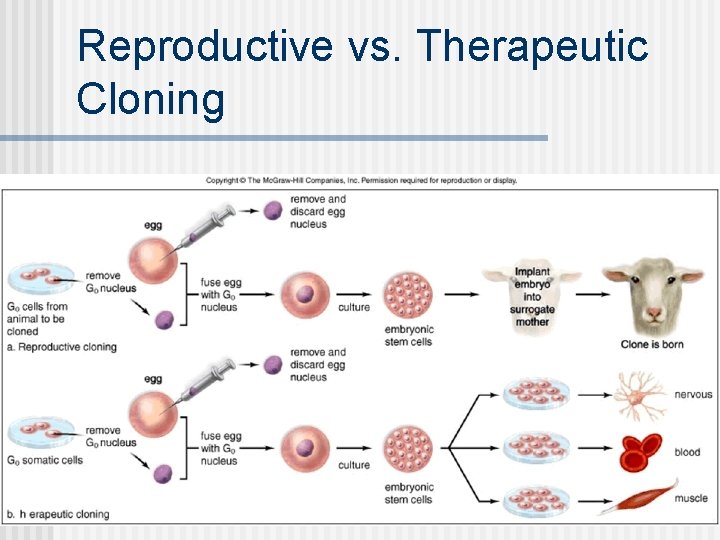
Reproductive vs. Therapeutic Cloning
Gene Therapy?
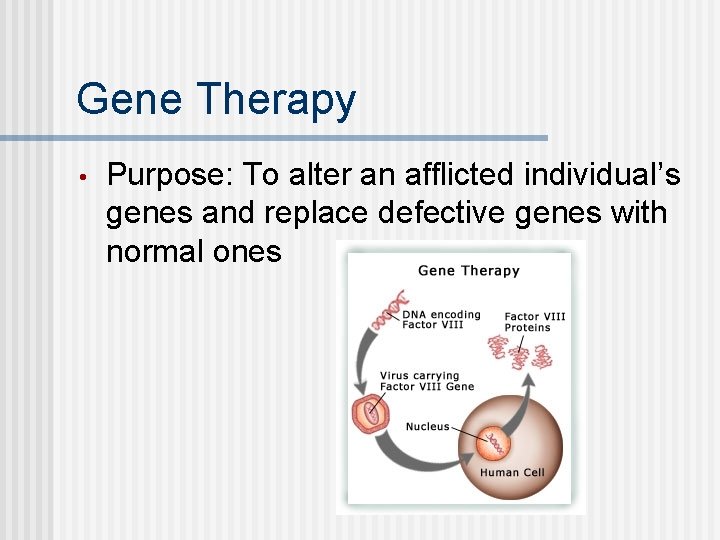
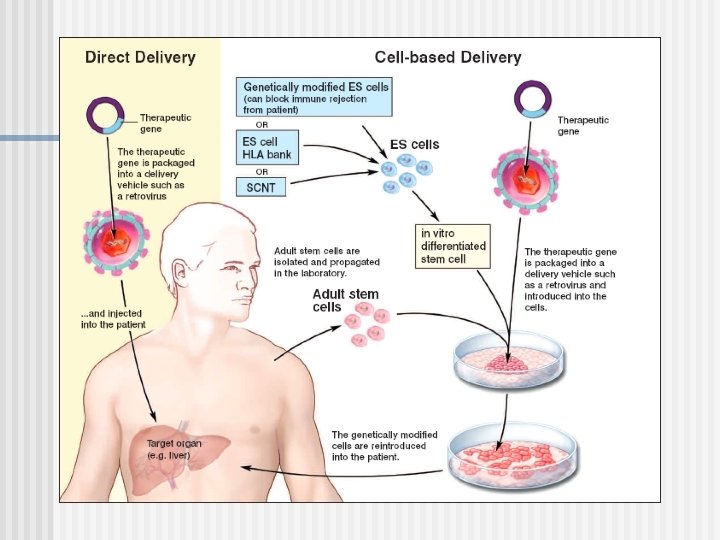
Gene Therapy • Purpose: To alter an afflicted individual’s genes and replace defective genes with normal ones
Gene Therapy • Technical issues: • • Can we ensure that cells will make the right amount of the protein, at the right time, in the right place? Can we ensure the gene’s insertion doesn’t harm the cell’s normal function?
Gene Therapy • Ethical issues: • • • Will it lead to eugenics, an effort to control the genetic makeup of humans? Should we try to eliminate genetic defects in our children and their descendents? Genetic variety is necessary for survival of a species over time!
- Slides: 37