
Topic 5 1 Introduction to Memory How Does


- Slides: 6
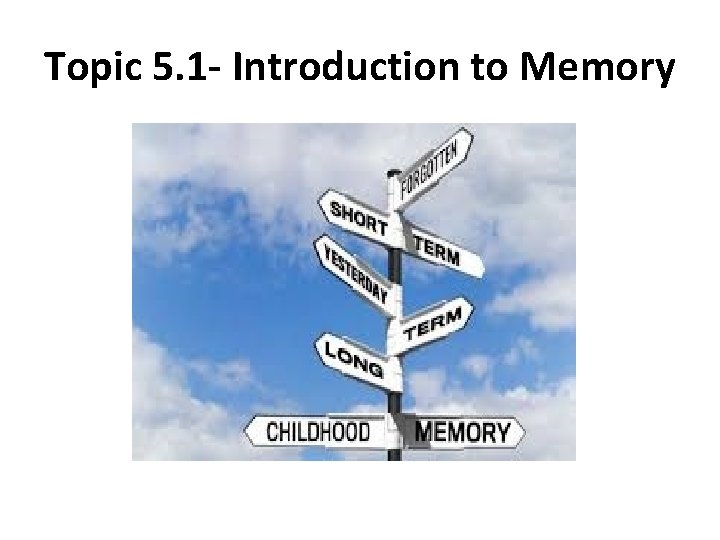
Topic 5. 1 - Introduction to Memory
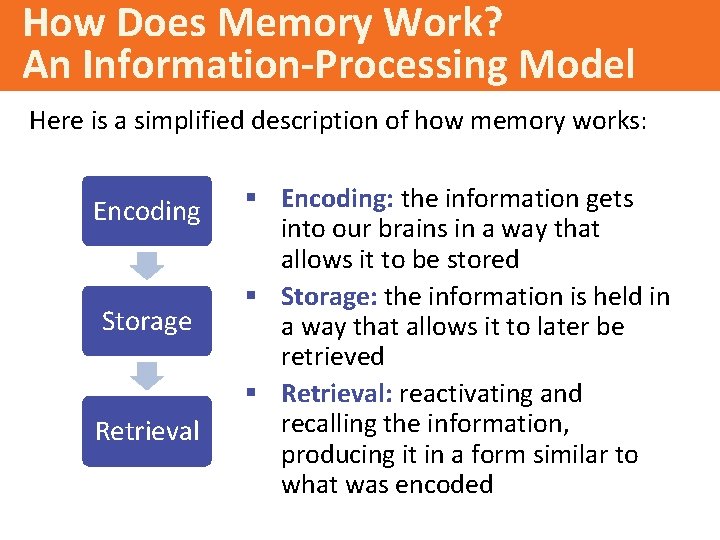
How Does Memory Work? An Information-Processing Model Here is a simplified description of how memory works: Encoding Storage Retrieval § Encoding: the information gets into our brains in a way that allows it to be stored § Storage: the information is held in a way that allows it to later be retrieved § Retrieval: reactivating and recalling the information, producing it in a form similar to what was encoded
Models of Memory Formation The Atkinson-Shiffrin Model (1968) 1. Stimuli are recorded by our senses and held briefly in sensory memory. 2. Some of this information is processed into short-term memory and encoded through rehearsal. 3. Information then moves into long-term memory where it can be retrieved later. Modifying the Model: §More goes on in shortterm memory besides rehearsal; this is now called working memory. §Some information seems to go straight from sensory experience into longterm memory; this is automatic processing.
Working Memory: Functions The short-term memory is “working” in many ways. § It holds information not just to rehearse it , but to process it (such as hearing a word problem in math and doing it in your head). Auditory rehearsal Executive functions Visuospatial “sketchpad” repeating a password to memorize it choosing what to attend to, respond to rearranging room furniture in your mind Short-term memory integrates information from long-term memory with new information coming in from sensory memory.
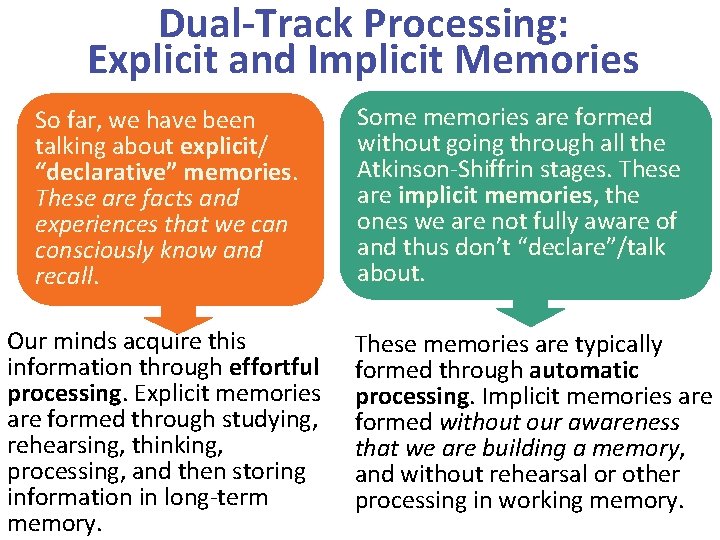
Dual-Track Processing: Explicit and Implicit Memories So far, we have been talking about explicit/ “declarative” memories. These are facts and experiences that we can consciously know and recall. Our minds acquire this information through effortful processing. Explicit memories are formed through studying, rehearsing, thinking, processing, and then storing information in long-term memory. Some memories are formed without going through all the Atkinson-Shiffrin stages. These are implicit memories, the ones we are not fully aware of and thus don’t “declare”/talk about. These memories are typically formed through automatic processing. Implicit memories are formed without our awareness that we are building a memory, and without rehearsal or other processing in working memory.
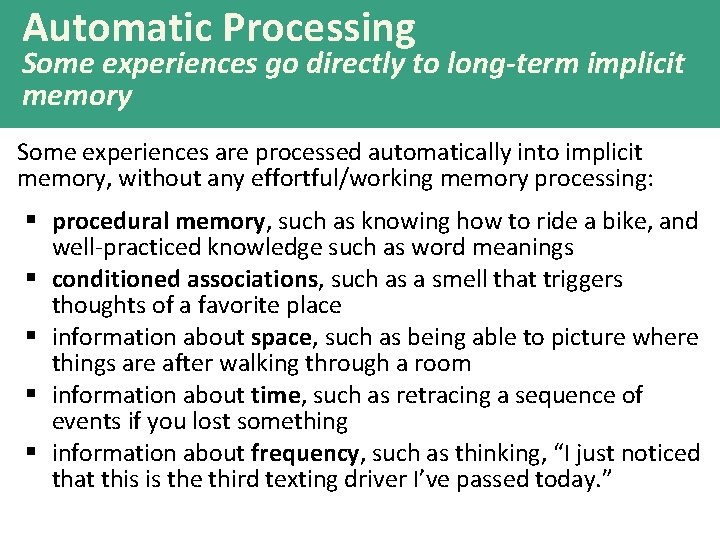
Automatic Processing Some experiences go directly to long-term implicit memory Some experiences are processed automatically into implicit memory, without any effortful/working memory processing: § procedural memory, such as knowing how to ride a bike, and well-practiced knowledge such as word meanings § conditioned associations, such as a smell that triggers thoughts of a favorite place § information about space, such as being able to picture where things are after walking through a room § information about time, such as retracing a sequence of events if you lost something § information about frequency, such as thinking, “I just noticed that this is the third texting driver I’ve passed today. ”