
TOPIC 4 Classification of waves Classification of Ultrasonic

- Slides: 8
TOPIC – 4 Classification of waves
Classification of Ultrasonic Waves are classified in three categories : - • LONGITUDINAL OR COMPRESSION WAVES • TRANSVERSE OR SHEAR WAVES • SURFACE OR REYLIGH WAVES 19: 30
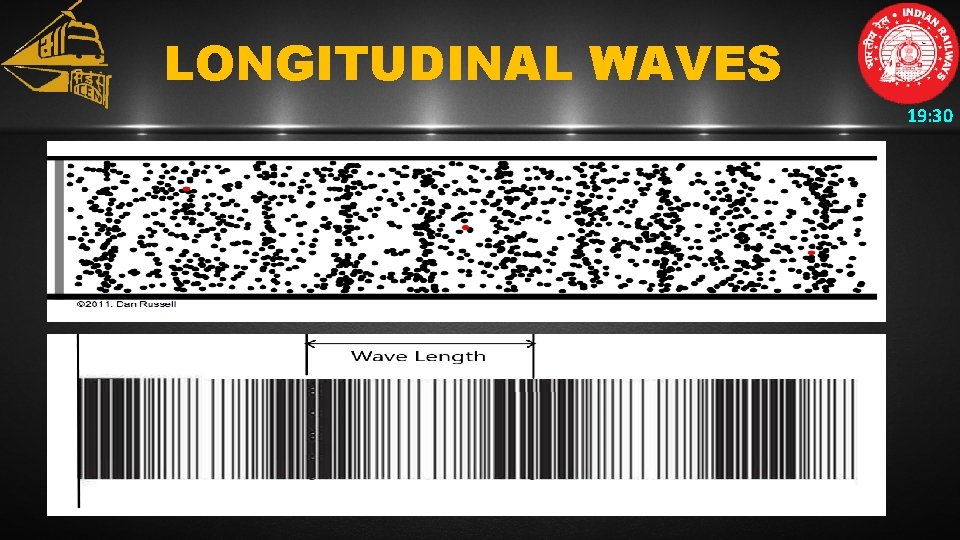
LONGITUDINAL WAVES 19: 30 • Vibration of the particles of the material are in the same direction as that of propagation of the wave. • Sound energy is transmitted from one particle to another by alternating compression & rarefaction hence these are also called compression waves. • These can travel through solids , liquid & gases. • These are the fastest of all wave types.
LONGITUDINAL WAVES 19: 30
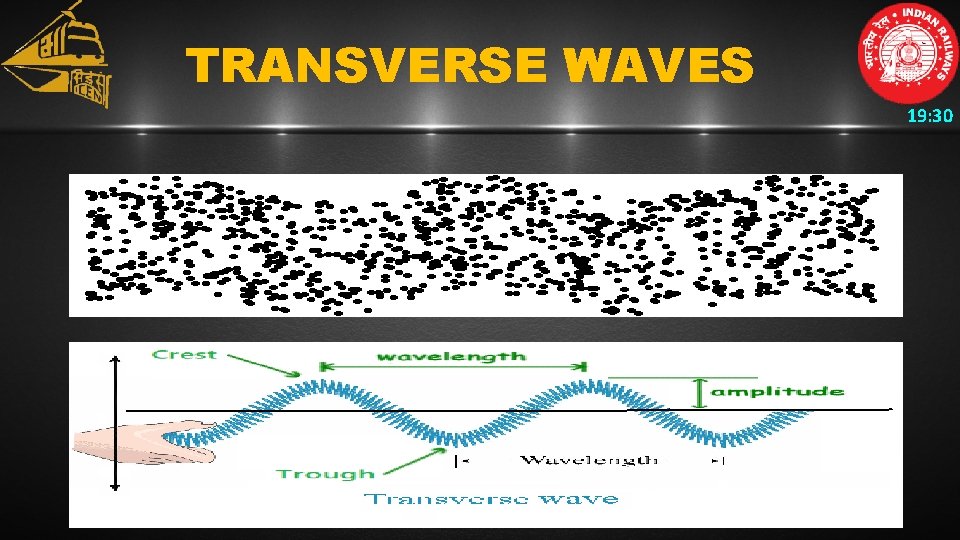
TRANSVERSE WAVES 19: 30 • Vibration of the particles of the material are in a direction perpendicular to the direction of propagation of the wave • Energy is transmitted from one particle to another by shear. Hence also known as shear waves. • These can travel only through solids and on surface of liquids. These can not travel through liquids and gases as they do not have any shear strength. • Their velocity in any given media is approx. half the velocity of longitudinal Waves.
TRANSVERSE WAVES 19: 30
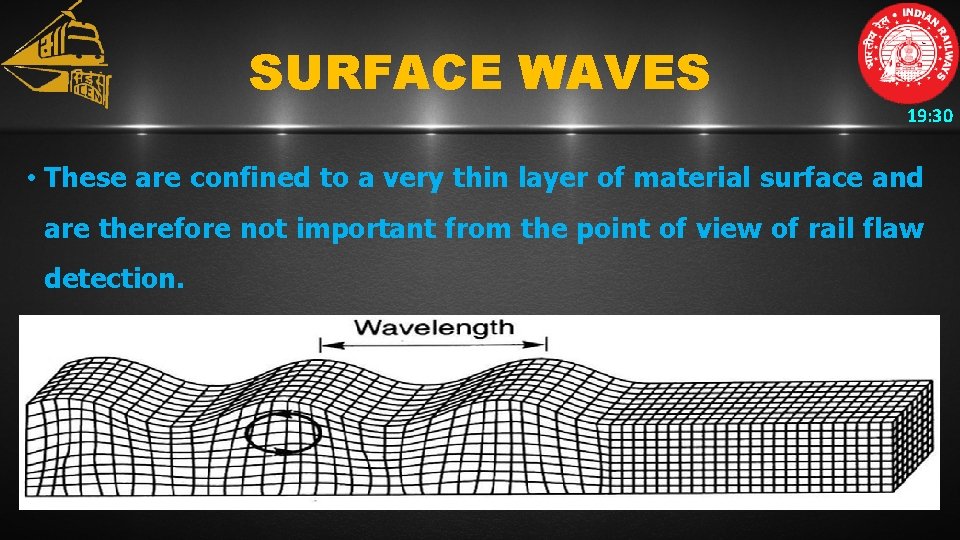
SURFACE WAVES 19: 30 • These are confined to a very thin layer of material surface and are therefore not important from the point of view of rail flaw detection.
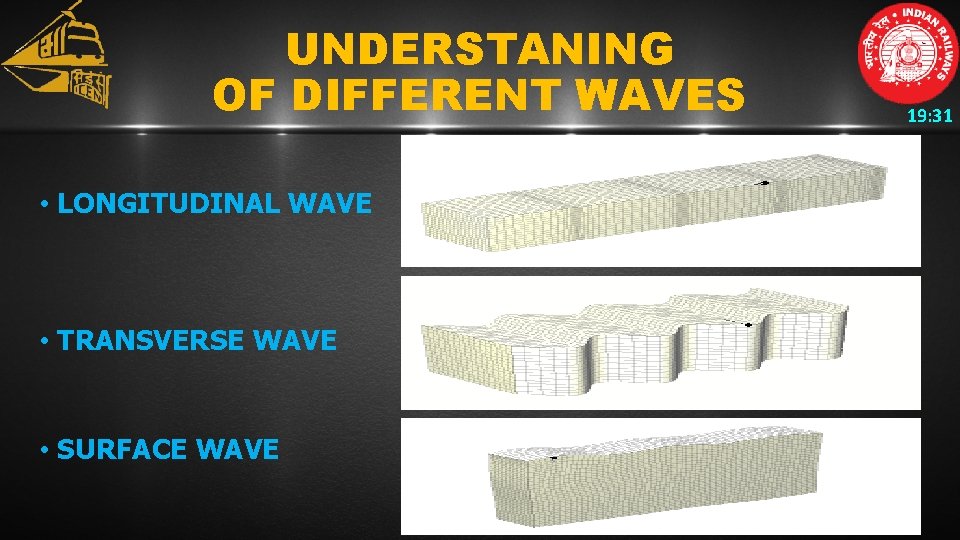
UNDERSTANING OF DIFFERENT WAVES • LONGITUDINAL WAVE • TRANSVERSE WAVE • SURFACE WAVE 19: 31