
TOPIC 4 4 AMERICA ON THE WORLD STAGE



- Slides: 12
TOPIC 4. 4 AMERICA ON THE WORLD STAGE 1800 -1824
LEARNING OBJECTIVE: • Explain how and why American foreign policy developed and expanded over time.
THEMATIC FOCUS: • Diplomatic, economic, cultural, and military interactions between empires, nations, and peoples shape the development of America and America’s increasingly important role in the world.
CHALLENGES TO U. S. NEUTRALITY • Napoleonic Wars • Trade Restrictions • Impressment • Chesapeake-Leopard Affair
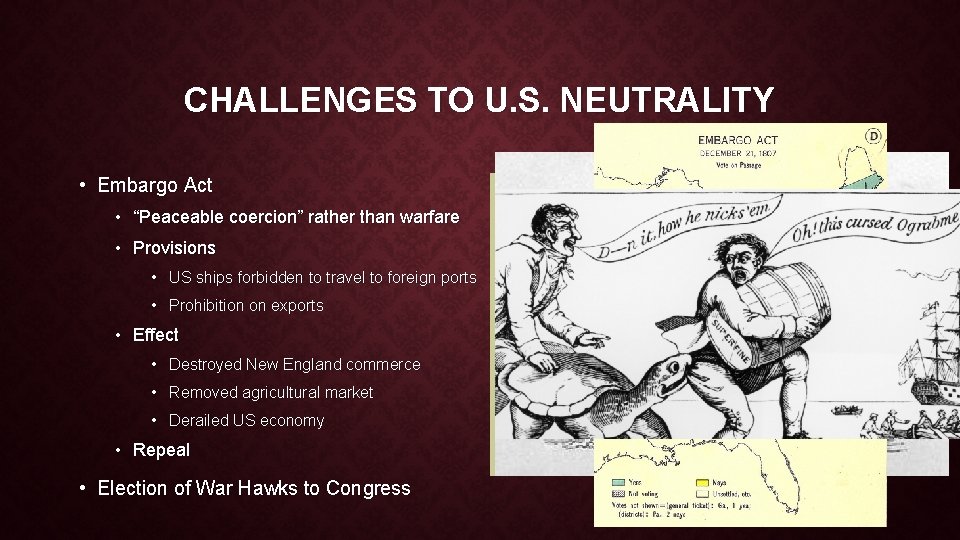
CHALLENGES TO U. S. NEUTRALITY • Embargo Act • “Peaceable coercion” rather than warfare • Provisions • US ships forbidden to travel to foreign ports • Prohibition on exports • Effect • Destroyed New England commerce • Removed agricultural market • Derailed US economy • Repeal • Election of War Hawks to Congress
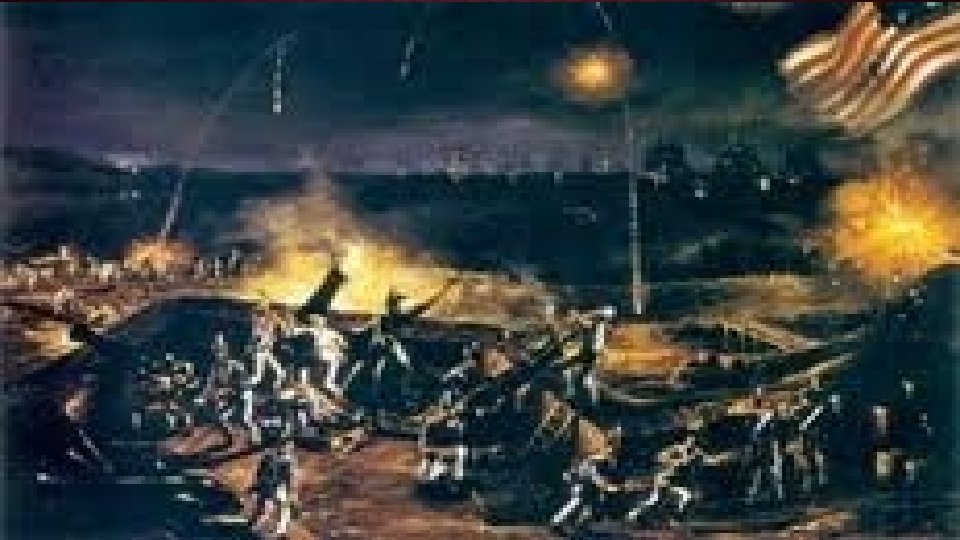
WAR OF 1812 • Causes • British impressments • British interference with US commerce • British aid to Native Americans • Tecumseh and Tippecanoe • U. S. desire to gain Canada • Conduct of the War • Opposing Sides—Britain vs. US • Invasion of Canada • Naval Victories—Oliver Hazard Perry • War in the Southwest—Andrew Jackson • Battle of Baltimore—Star-Spangled Banner
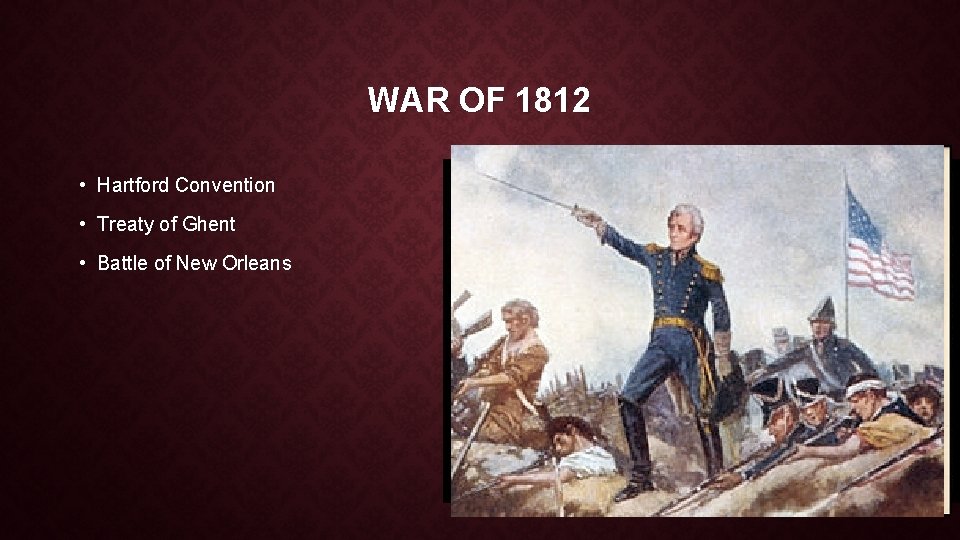
WAR OF 1812 • Hartford Convention • Treaty of Ghent • Battle of New Orleans
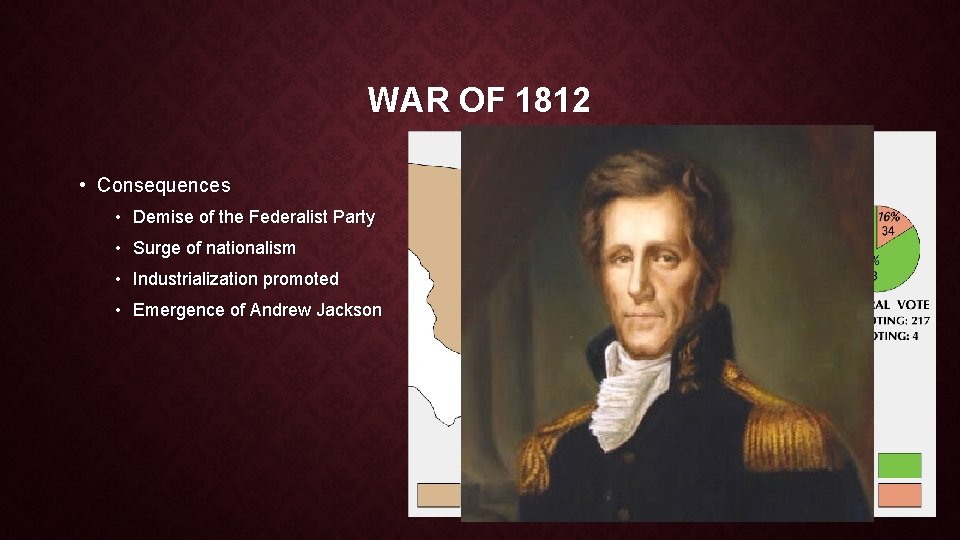
WAR OF 1812 • Consequences • Demise of the Federalist Party • Surge of nationalism • Industrialization promoted • Emergence of Andrew Jackson
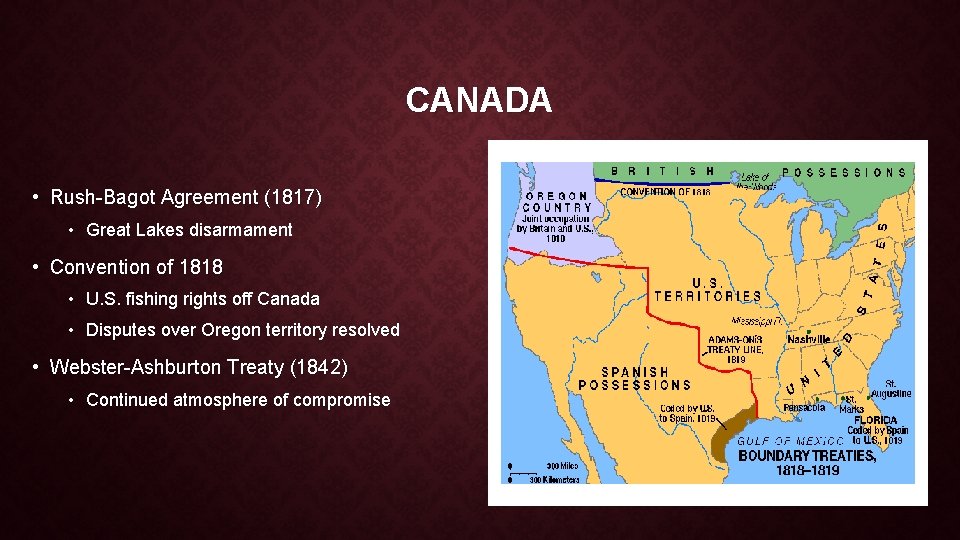
CANADA • Rush-Bagot Agreement (1817) • Great Lakes disarmament • Convention of 1818 • U. S. fishing rights off Canada • Disputes over Oregon territory resolved • Webster-Ashburton Treaty (1842) • Continued atmosphere of compromise
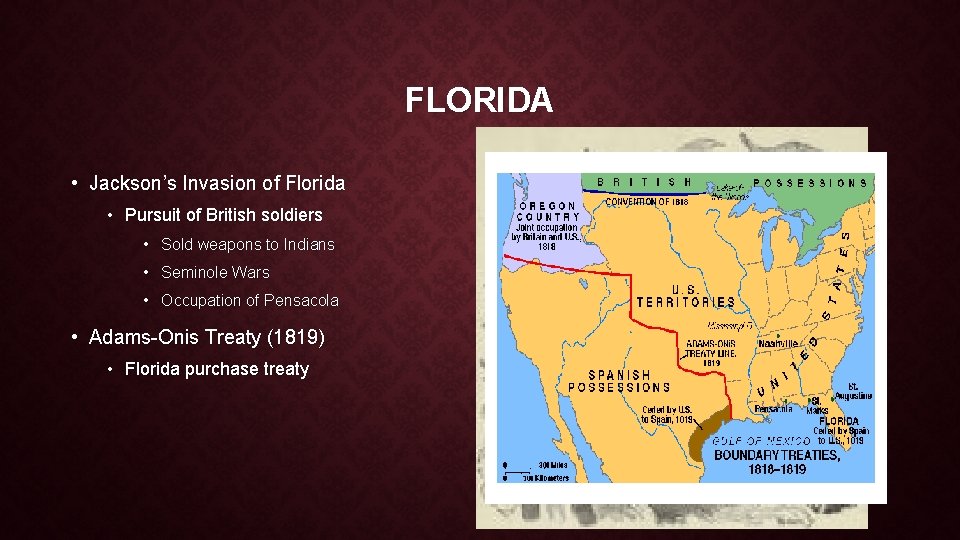
FLORIDA • Jackson’s Invasion of Florida • Pursuit of British soldiers • Sold weapons to Indians • Seminole Wars • Occupation of Pensacola • Adams-Onis Treaty (1819) • Florida purchase treaty
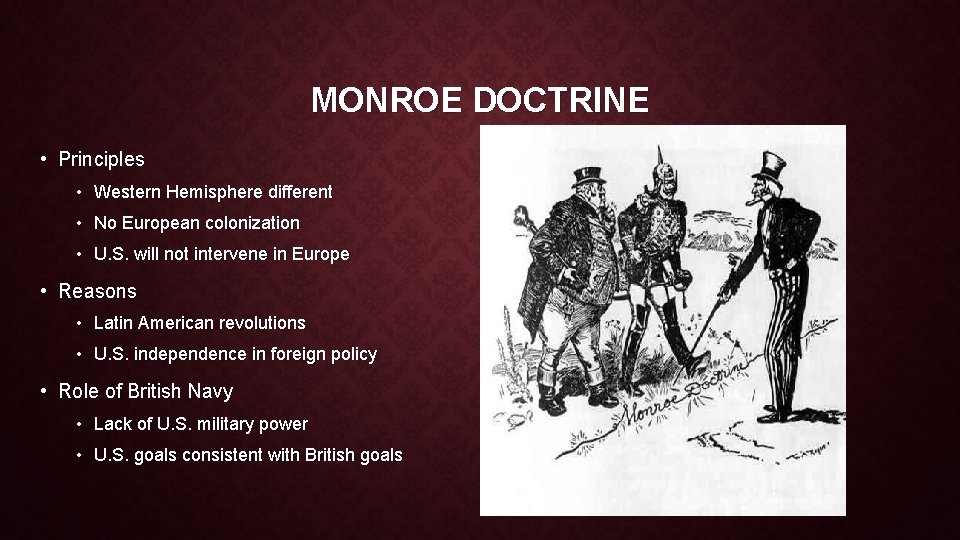
MONROE DOCTRINE • Principles • Western Hemisphere different • No European colonization • U. S. will not intervene in Europe • Reasons • Latin American revolutions • U. S. independence in foreign policy • Role of British Navy • Lack of U. S. military power • U. S. goals consistent with British goals