
Topic 3 The Constitution Section 3 2 Amendment
- Slides: 13
Topic 3: The Constitution Section 3. 2: Amendment Process
Changing with the Times • The Constitution is a Living Document: • The amendment process allows the Constitution to adapt to the changing needs of our nation and society. – The United States has gone from a farming nation of less than 4 million people to a high-tech country with a population of more than 300 million. Chapter 3, Section 2 Copyright © Pearson Education, Inc. Slide 2
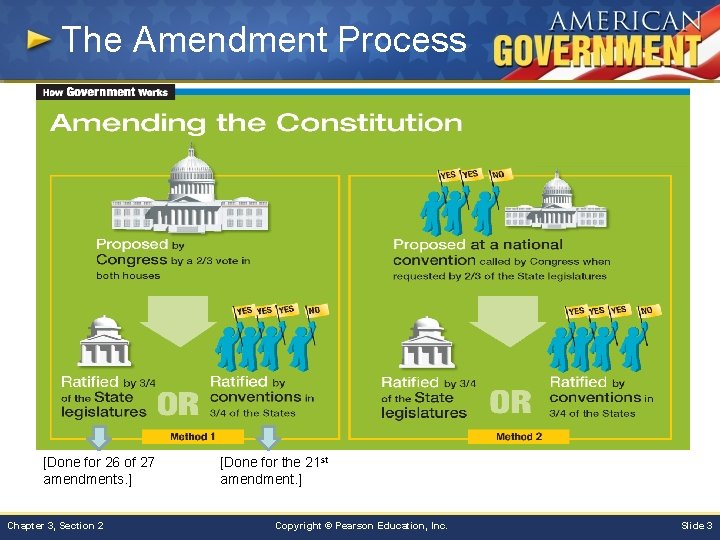
The Amendment Process [Done for 26 of 27 amendments. ] Chapter 3, Section 2 [Done for the 21 st amendment. ] Copyright © Pearson Education, Inc. Slide 3
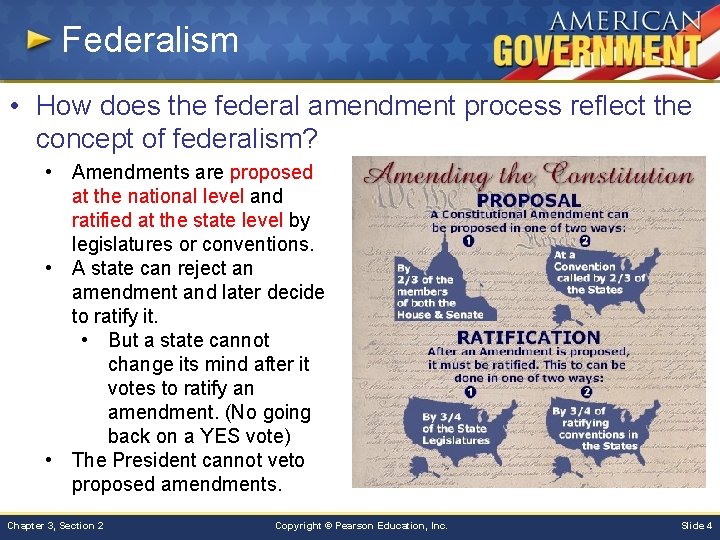
Federalism • How does the federal amendment process reflect the concept of federalism? • Amendments are proposed at the national level and ratified at the state level by legislatures or conventions. • A state can reject an amendment and later decide to ratify it. • But a state cannot change its mind after it votes to ratify an amendment. (No going back on a YES vote) • The President cannot veto proposed amendments. Chapter 3, Section 2 Copyright © Pearson Education, Inc. Slide 4
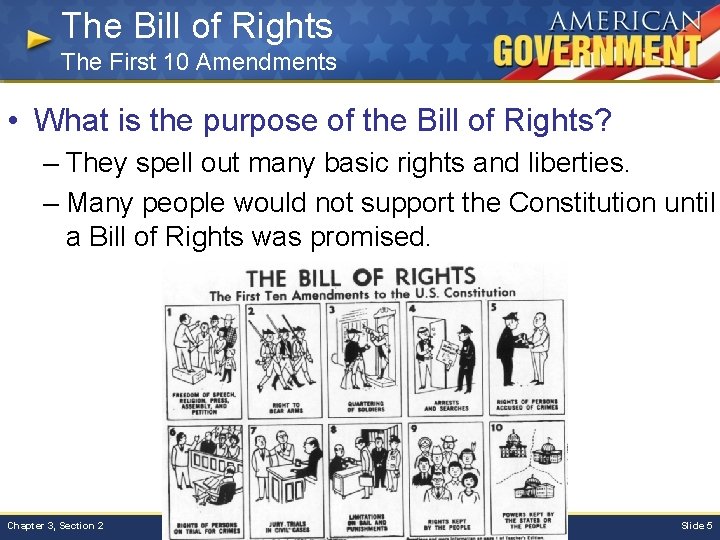
The Bill of Rights The First 10 Amendments • What is the purpose of the Bill of Rights? – They spell out many basic rights and liberties. – Many people would not support the Constitution until a Bill of Rights was promised. Chapter 3, Section 2 Copyright © Pearson Education, Inc. Slide 5
Proposed Amendments • Most suggested amendments are never proposed by Congress. – Congress has sent only 33 of some 15, 000 suggested amendments to the states. • Six proposed amendments have not ratified by the states. – Congress can set a “reasonable” time limit for ratification, usually around seven years. • 27 th Amendment (Limits Congressional Pay Raises) ratified 202 years after it was proposed as a part of the original Bill of Rights. Chapter 3, Section 2 Copyright © Pearson Education, Inc. Slide 6
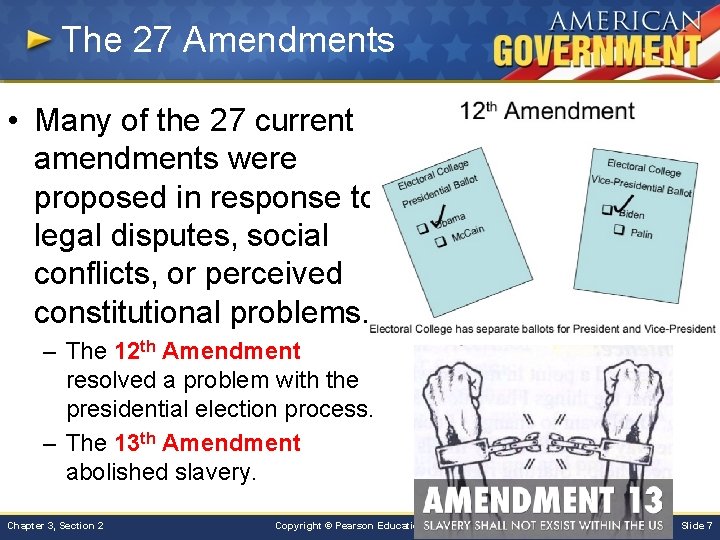
The 27 Amendments • Many of the 27 current amendments were proposed in response to legal disputes, social conflicts, or perceived constitutional problems. – The 12 th Amendment resolved a problem with the presidential election process. – The 13 th Amendment abolished slavery. Chapter 3, Section 2 Copyright © Pearson Education, Inc. Slide 7
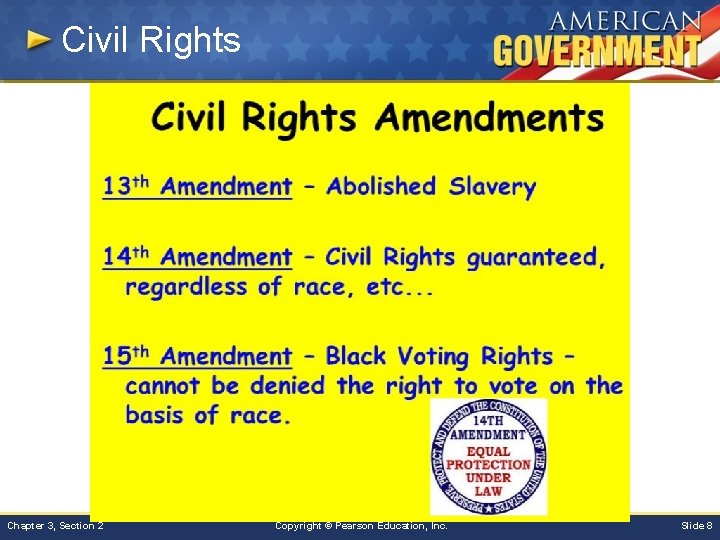
Civil Rights Chapter 3, Section 2 Copyright © Pearson Education, Inc. Slide 8
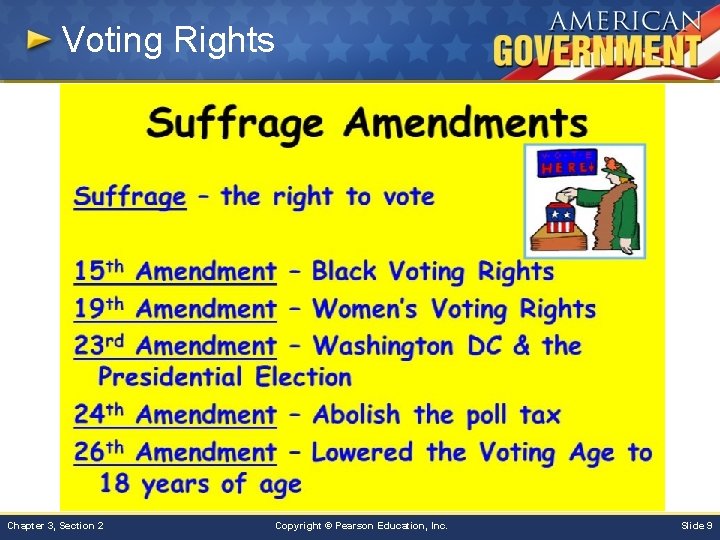
Voting Rights Chapter 3, Section 2 Copyright © Pearson Education, Inc. Slide 9
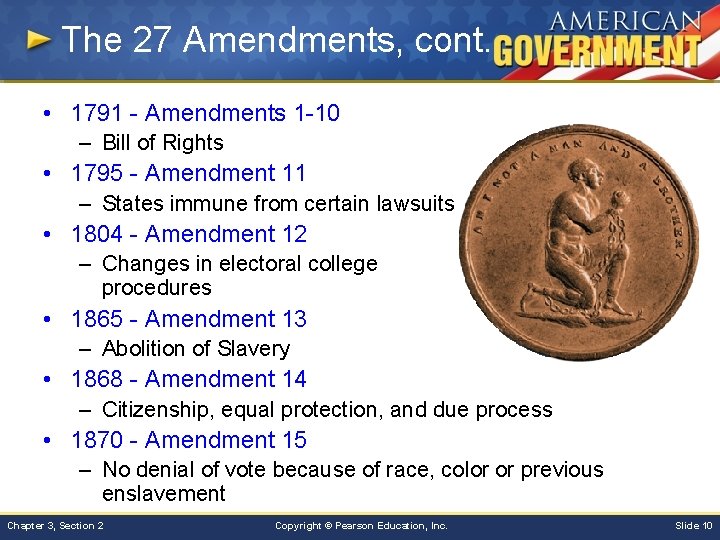
The 27 Amendments, cont. • 1791 - Amendments 1 -10 – Bill of Rights • 1795 - Amendment 11 – States immune from certain lawsuits • 1804 - Amendment 12 – Changes in electoral college procedures • 1865 - Amendment 13 – Abolition of Slavery • 1868 - Amendment 14 – Citizenship, equal protection, and due process • 1870 - Amendment 15 – No denial of vote because of race, color or previous enslavement Chapter 3, Section 2 Copyright © Pearson Education, Inc. Slide 10
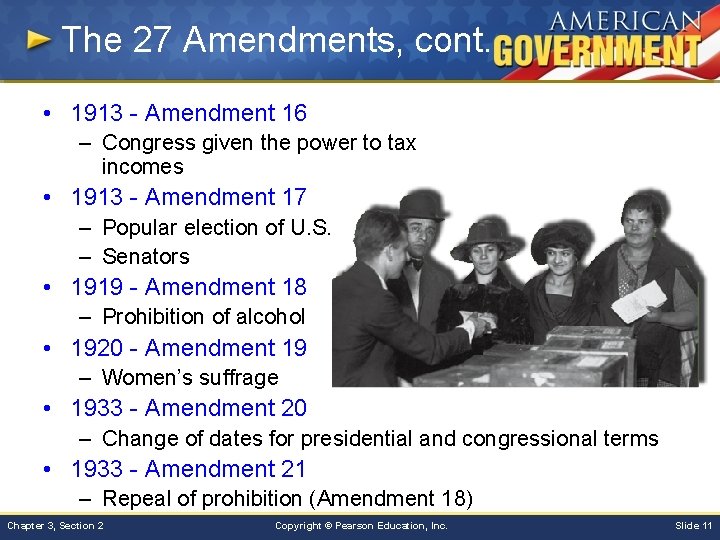
The 27 Amendments, cont. • 1913 - Amendment 16 – Congress given the power to tax incomes • 1913 - Amendment 17 – Popular election of U. S. – Senators • 1919 - Amendment 18 – Prohibition of alcohol • 1920 - Amendment 19 – Women’s suffrage • 1933 - Amendment 20 – Change of dates for presidential and congressional terms • 1933 - Amendment 21 – Repeal of prohibition (Amendment 18) Chapter 3, Section 2 Copyright © Pearson Education, Inc. Slide 11
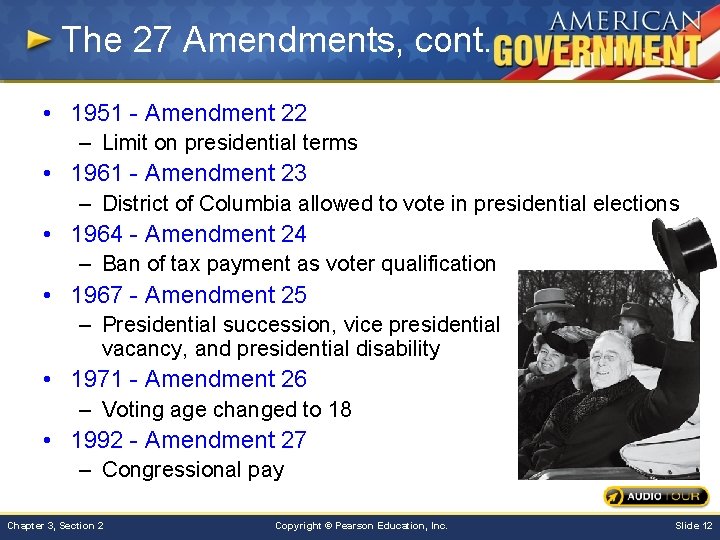
The 27 Amendments, cont. • 1951 - Amendment 22 – Limit on presidential terms • 1961 - Amendment 23 – District of Columbia allowed to vote in presidential elections • 1964 - Amendment 24 – Ban of tax payment as voter qualification • 1967 - Amendment 25 – Presidential succession, vice presidential vacancy, and presidential disability • 1971 - Amendment 26 – Voting age changed to 18 • 1992 - Amendment 27 – Congressional pay Chapter 3, Section 2 Copyright © Pearson Education, Inc. Slide 12
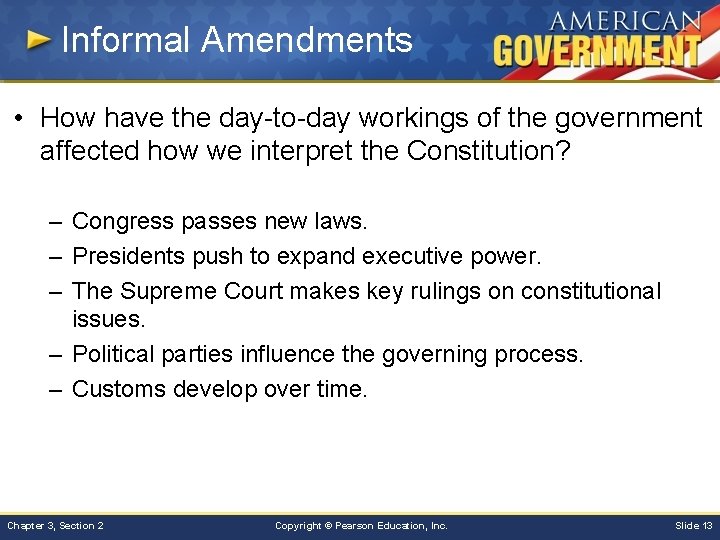
Informal Amendments • How have the day-to-day workings of the government affected how we interpret the Constitution? – Congress passes new laws. – Presidents push to expand executive power. – The Supreme Court makes key rulings on constitutional issues. – Political parties influence the governing process. – Customs develop over time. Chapter 3, Section 2 Copyright © Pearson Education, Inc. Slide 13