
Topic 3 revision Electrolytic Processes What is electrolysis


- Slides: 11
Topic 3 revision: Electrolytic Processes
What is electrolysis? • Breaking down an ionic substance using electricity. • Metals have a positive charge and non metals have a negative charge. • Hydrogen is an exception (it is a non metal with a positive charge.
= bromide ion Cathode Anode = lead ion
What happens at the electrodes? • Use the electrolysis of lead bromide as an example. • The ions discharge and elements re-form. • So, at the anode bromine forms and at the cathode lead forms.
Ionic half equations • Electrolysis of Cu. Cl 2 Anode: 2 Cl- Cl 2 + 2 e. Cathode: Cu 2+ + 2 e- Cu • Electrolyse these: • Ca. F 2 • Al. Br 3
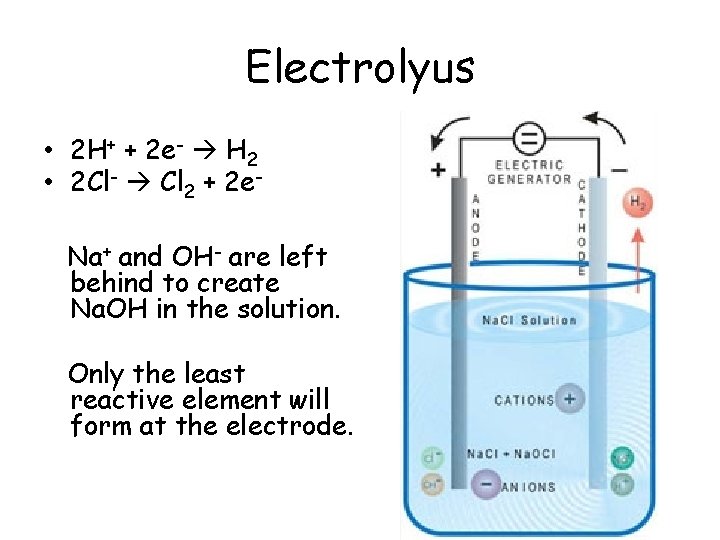
Electrolyus • 2 H+ + 2 e- H 2 • 2 Cl- Cl 2 + 2 e. Na+ and OH- are left behind to create Na. OH in the solution. Only the least reactive element will form at the electrode.
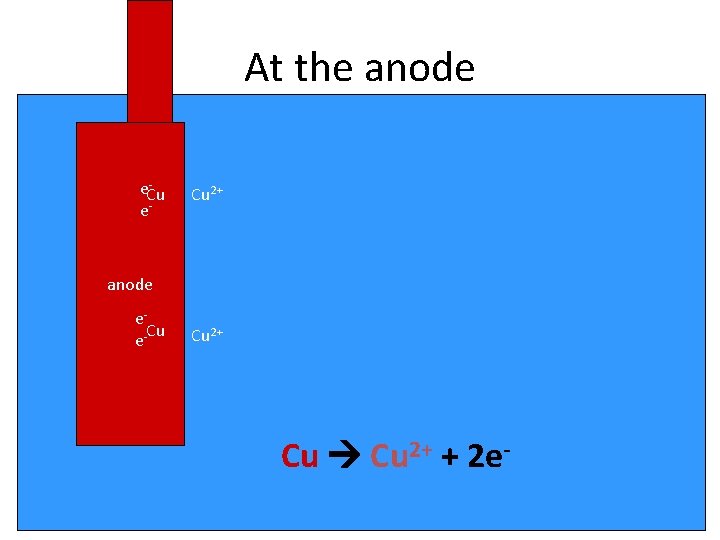
At the anode e. Cu e- Cu 2+ Cu 2+ + 2 e-
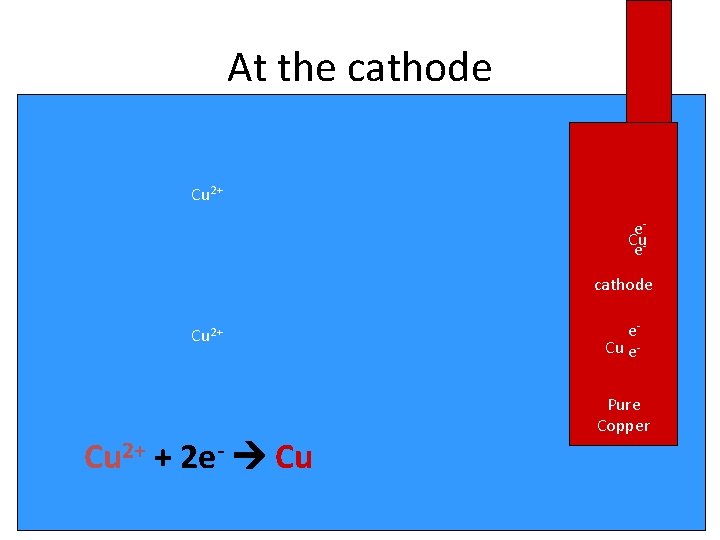
At the cathode Cu 2+ cathode e. Cucathode e cathode Cu 2+ + 2 e- Cu e. Pure Copper
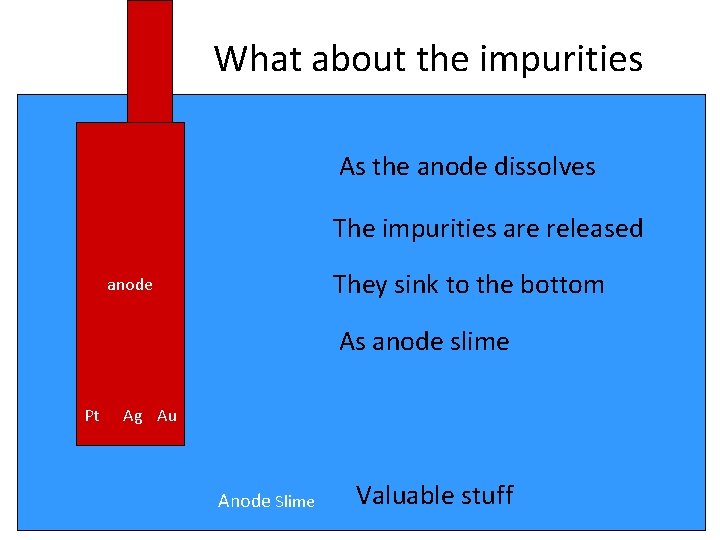
What about the impurities As the anode dissolves The impurities are released anode They sink to the bottom anode As anode slime Pt Ag Au Anode Slime Valuable stuff
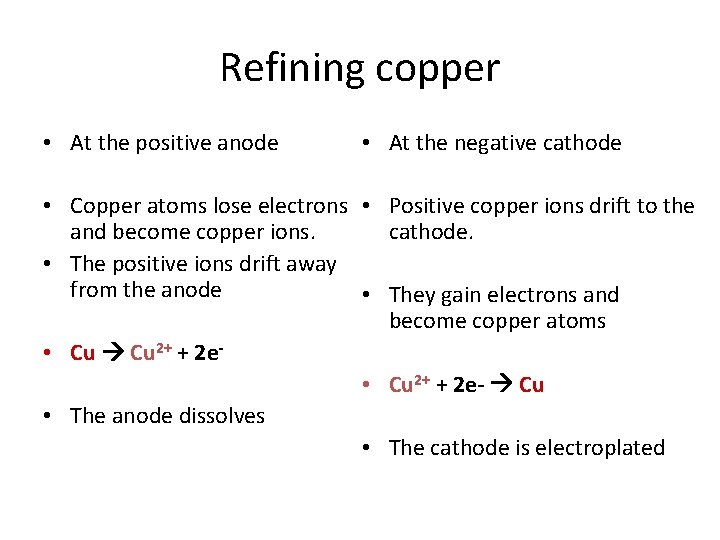
Refining copper • At the positive anode • At the negative cathode • Copper atoms lose electrons • Positive copper ions drift to the and become copper ions. cathode. • The positive ions drift away from the anode • They gain electrons and become copper atoms • Cu 2+ + 2 e- Cu • The anode dissolves • The cathode is electroplated
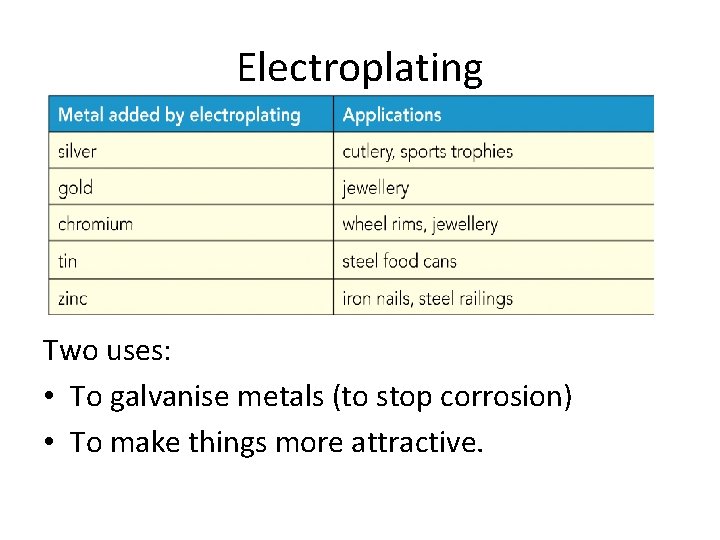
Electroplating Two uses: • To galvanise metals (to stop corrosion) • To make things more attractive.