
Topic 3 Reproduction of plants Selective reproduction consists
- Slides: 26
Topic 3 Reproduction of plants
Selective reproduction consists of choosing plants with particular characteristics and encouraging these plants to reproduce.
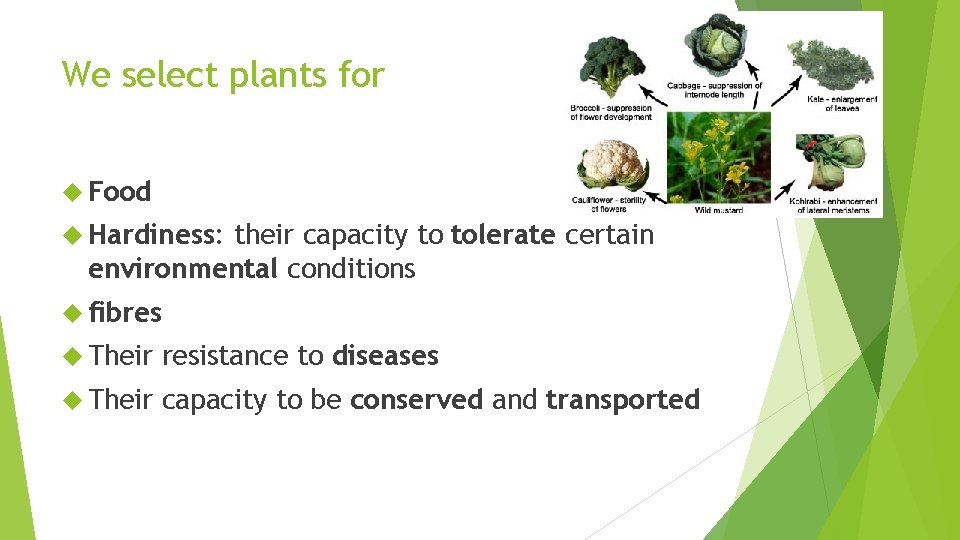
We select plants for Food Hardiness: their capacity to tolerate certain environmental conditions fibres Their resistance to diseases Their capacity to be conserved and transported
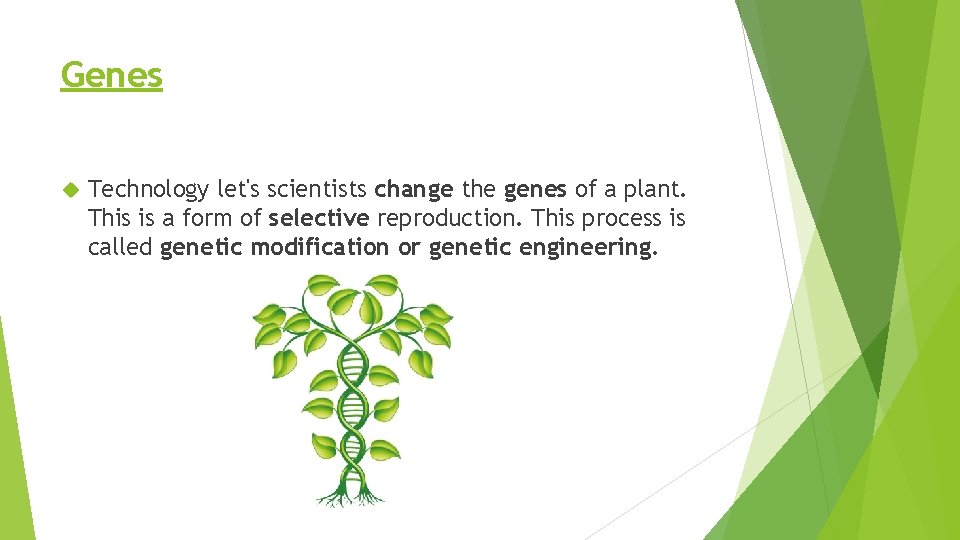
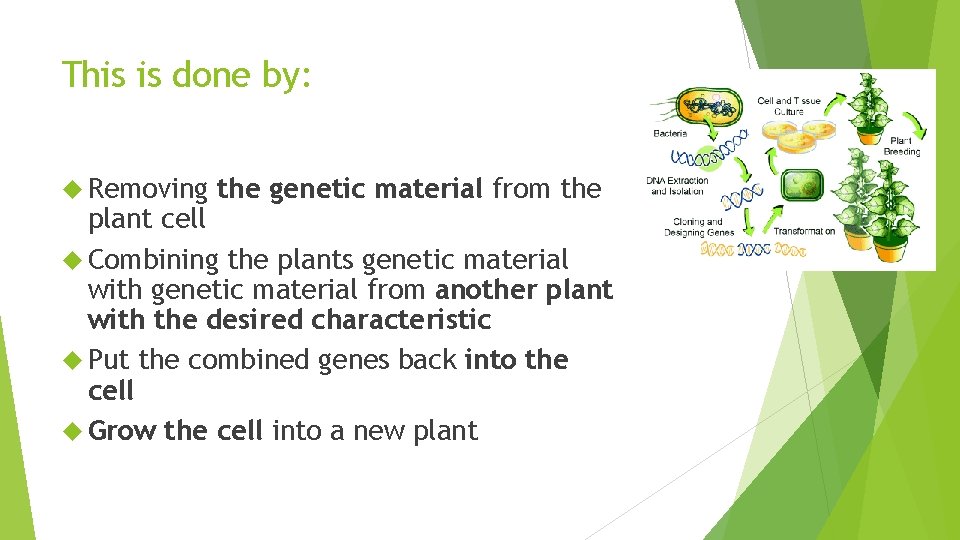
Genes Technology let's scientists change the genes of a plant. This is a form of selective reproduction. This process is called genetic modification or genetic engineering.
This is done by: Removing the genetic material from the plant cell Combining the plants genetic material with genetic material from another plant with the desired characteristic Put the combined genes back into the cell Grow the cell into a new plant
? Read "Did You Know" on page 117 and answer the following questions: ? What percentage of the following plants are genetically modified? 50% colza (rapeseed) 20% soy 35% corn
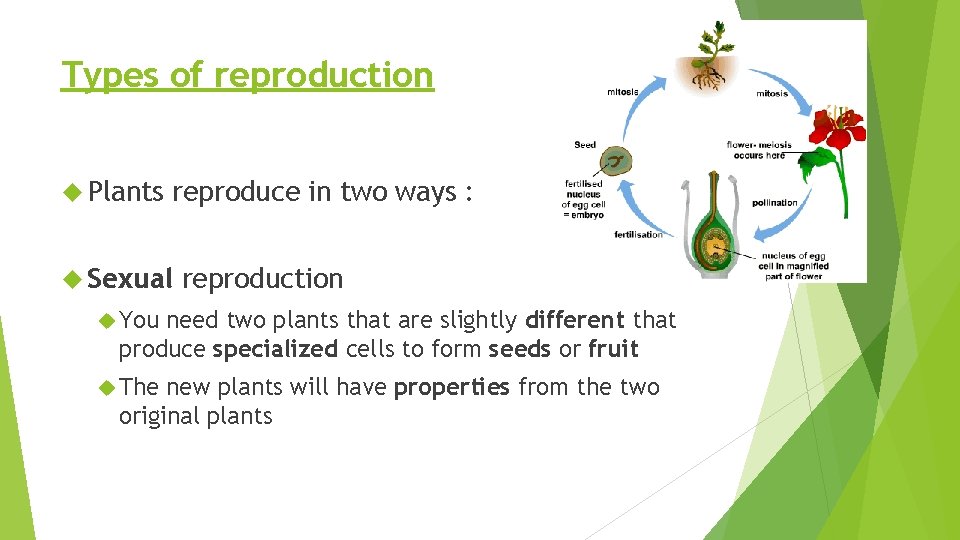
Types of reproduction Plants reproduce in two ways : Sexual reproduction You need two plants that are slightly different that produce specialized cells to form seeds or fruit The new plants will have properties from the two original plants
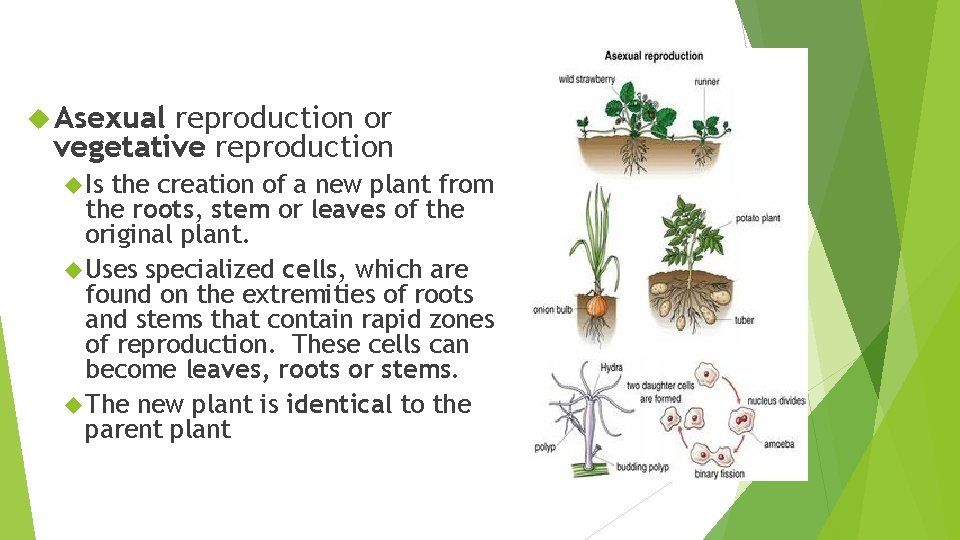
Asexual reproduction or vegetative reproduction Is the creation of a new plant from the roots, stem or leaves of the original plant. Uses specialized cells, which are found on the extremities of roots and stems that contain rapid zones of reproduction. These cells can become leaves, roots or stems. The new plant is identical to the parent plant
? Read Did you know page 118 and answer the following question: ? How do we know that all the plants are connected/the same plant? The leaves change colours at the exact same time
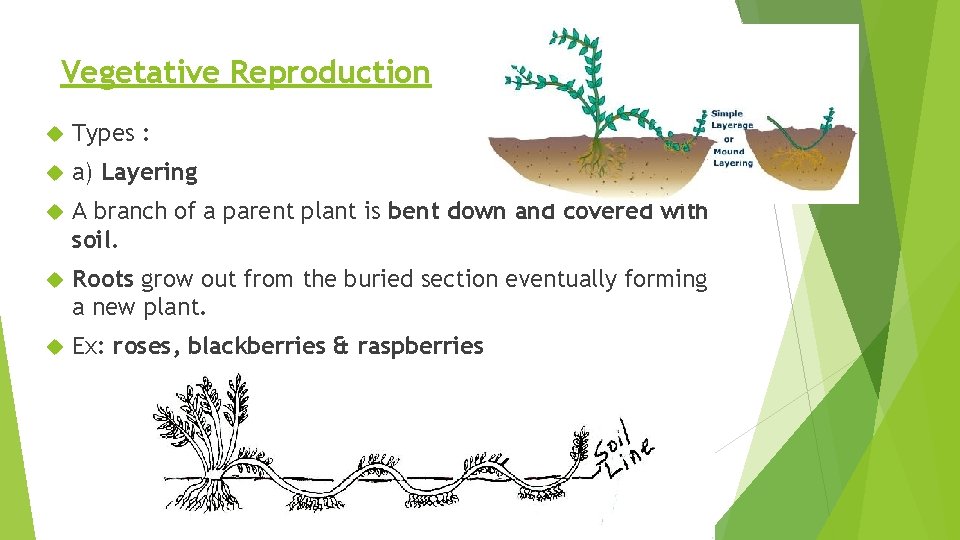
Vegetative Reproduction Types : a) Layering A branch of a parent plant is bent down and covered with soil. Roots grow out from the buried section eventually forming a new plant. Ex: roses, blackberries & raspberries
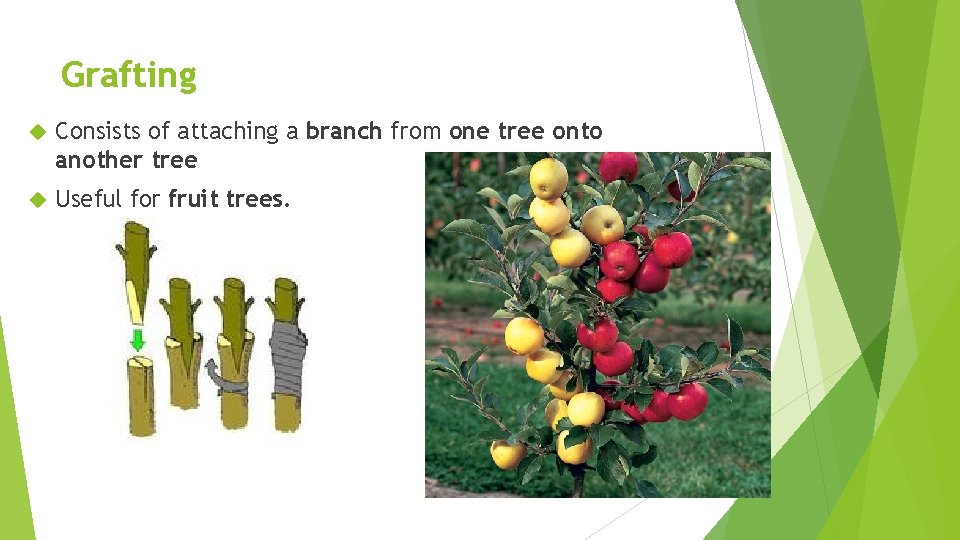
Grafting Consists of attaching a branch from one tree onto another tree Useful for fruit trees.
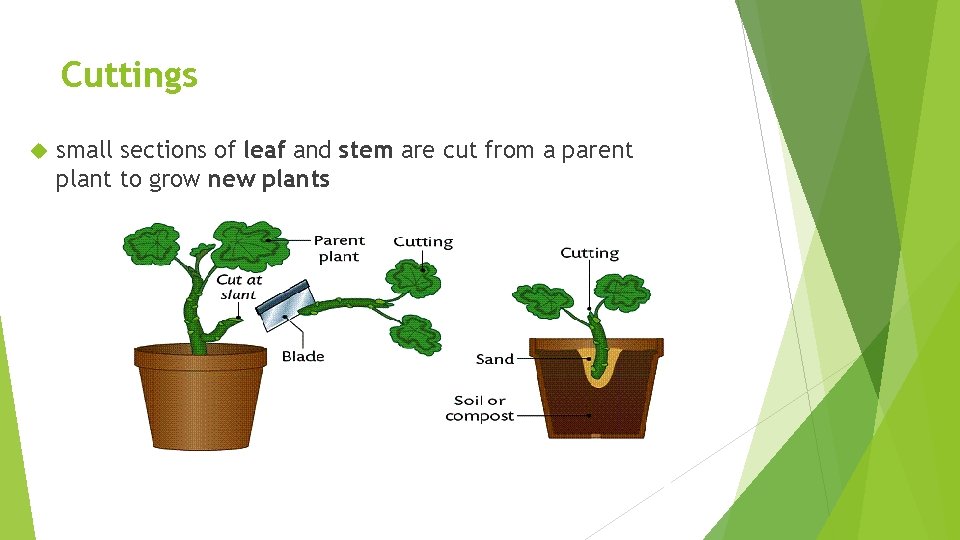
Cuttings small sections of leaf and stem are cut from a parent plant to grow new plants
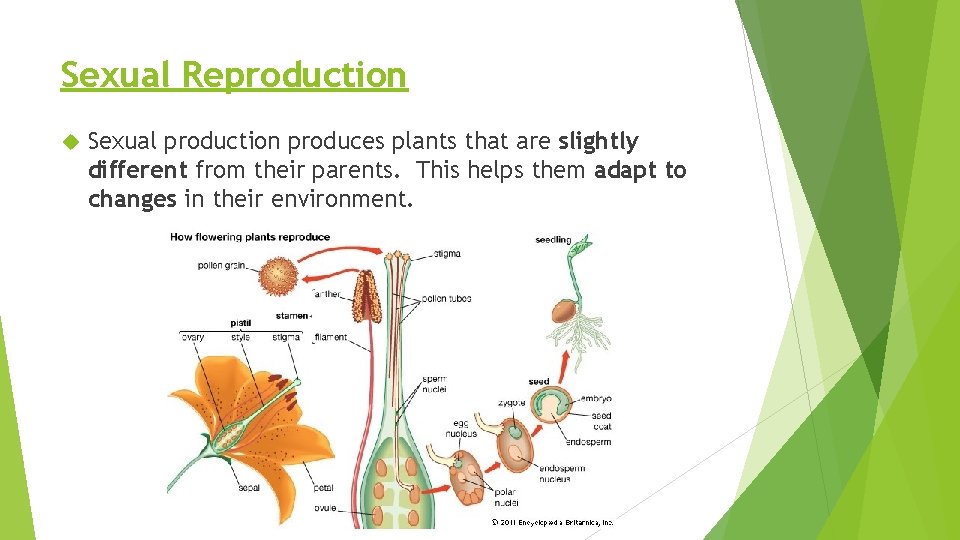
Sexual Reproduction Sexual production produces plants that are slightly different from their parents. This helps them adapt to changes in their environment.
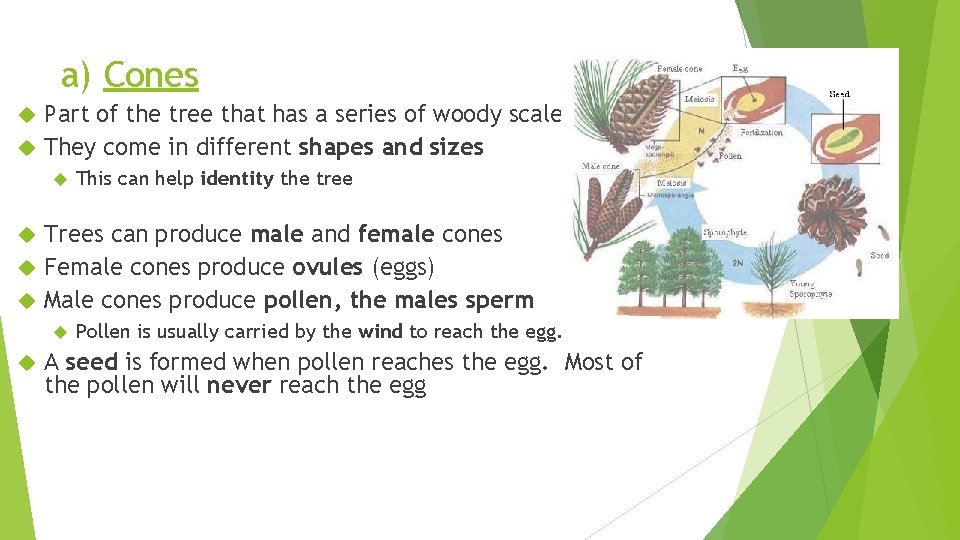
a) Cones Part of the tree that has a series of woody scales They come in different shapes and sizes This can help identity the tree Trees can produce male and female cones Female cones produce ovules (eggs) Male cones produce pollen, the males sperm Pollen is usually carried by the wind to reach the egg. A seed is formed when pollen reaches the egg. Most of the pollen will never reach the egg
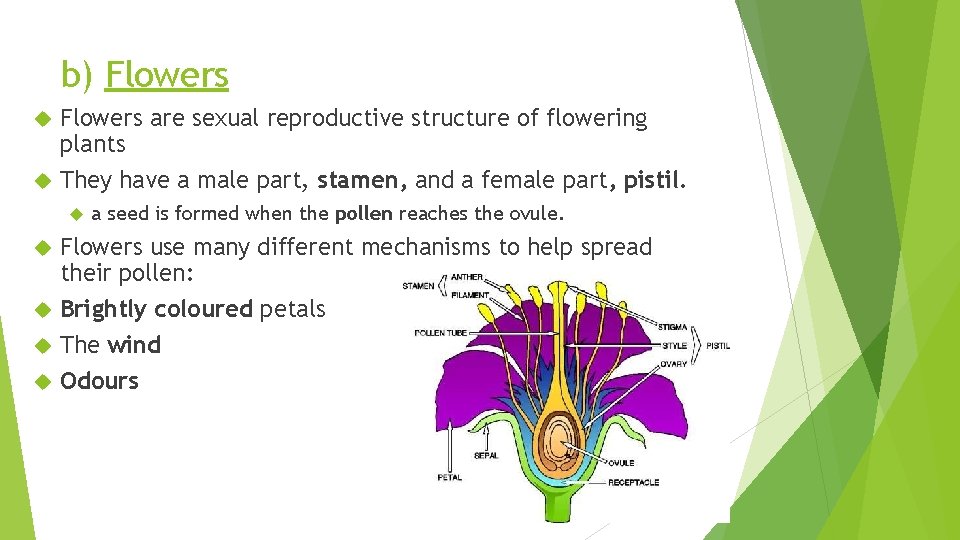
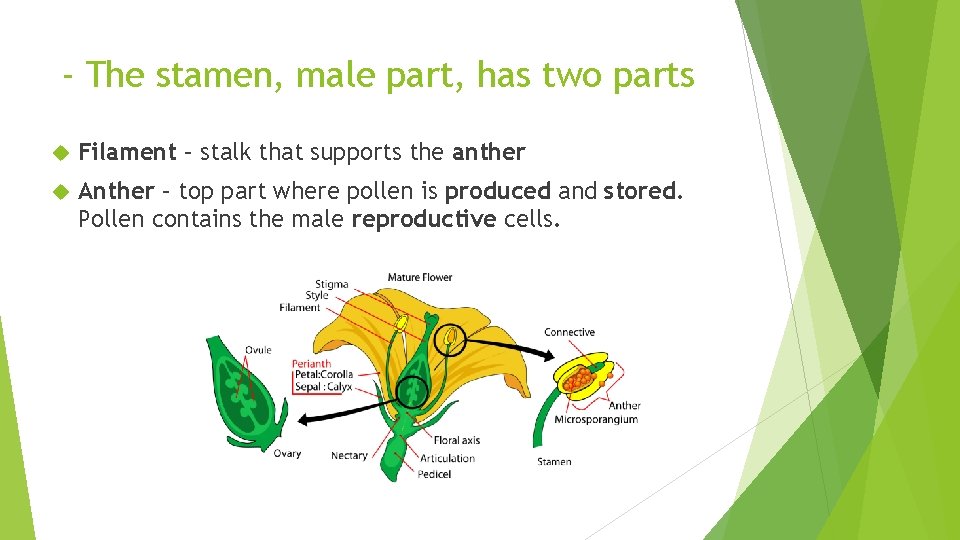
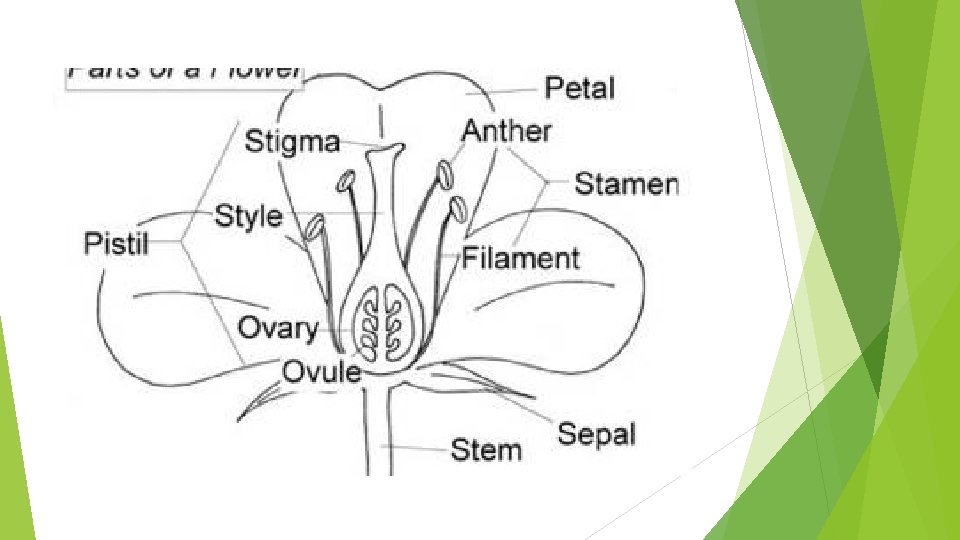
b) Flowers are sexual reproductive structure of flowering plants They have a male part, stamen, and a female part, pistil. a seed is formed when the pollen reaches the ovule. Flowers use many different mechanisms to help spread their pollen: Brightly coloured petals The wind Odours
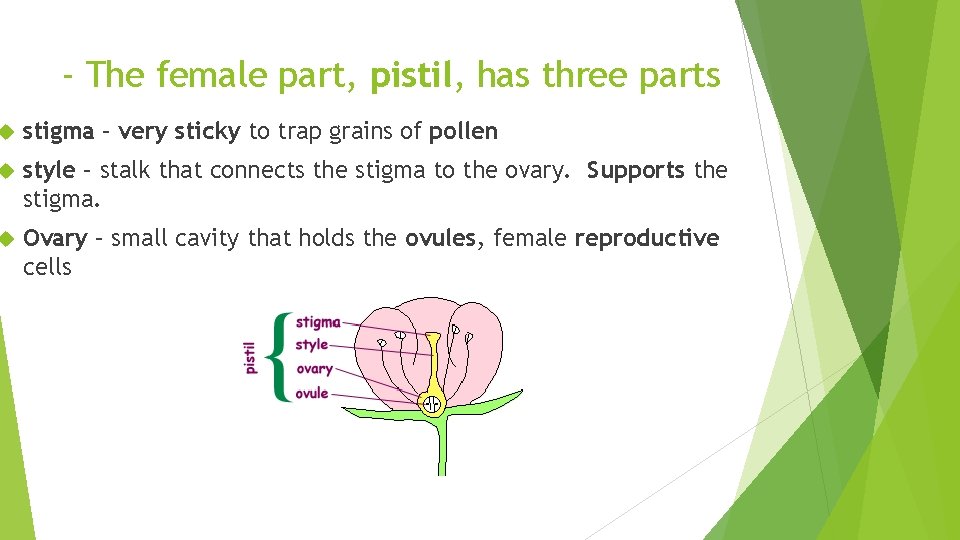
- The female part, pistil, has three parts stigma – very sticky to trap grains of pollen style – stalk that connects the stigma to the ovary. Supports the stigma. Ovary – small cavity that holds the ovules, female reproductive cells
- The stamen, male part, has two parts Filament – stalk that supports the anther Anther – top part where pollen is produced and stored. Pollen contains the male reproductive cells.
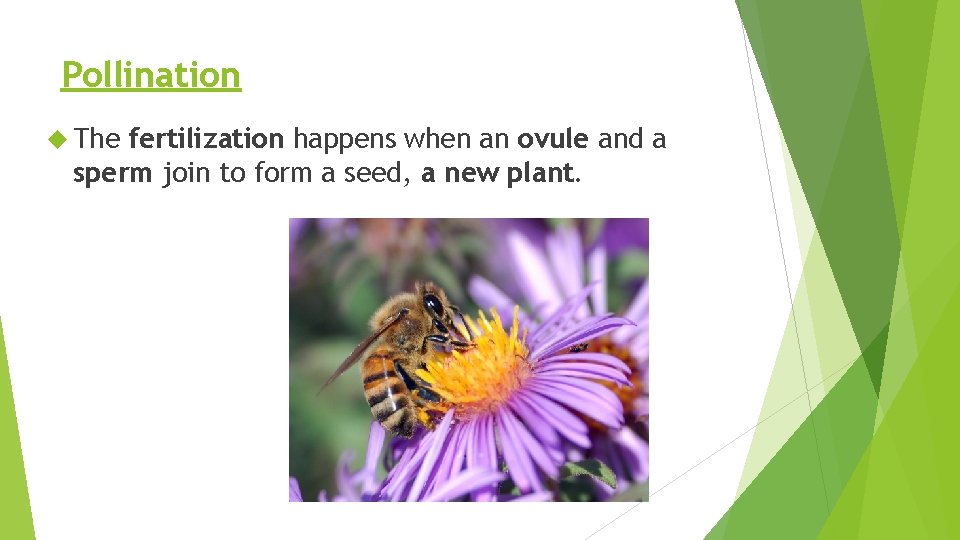
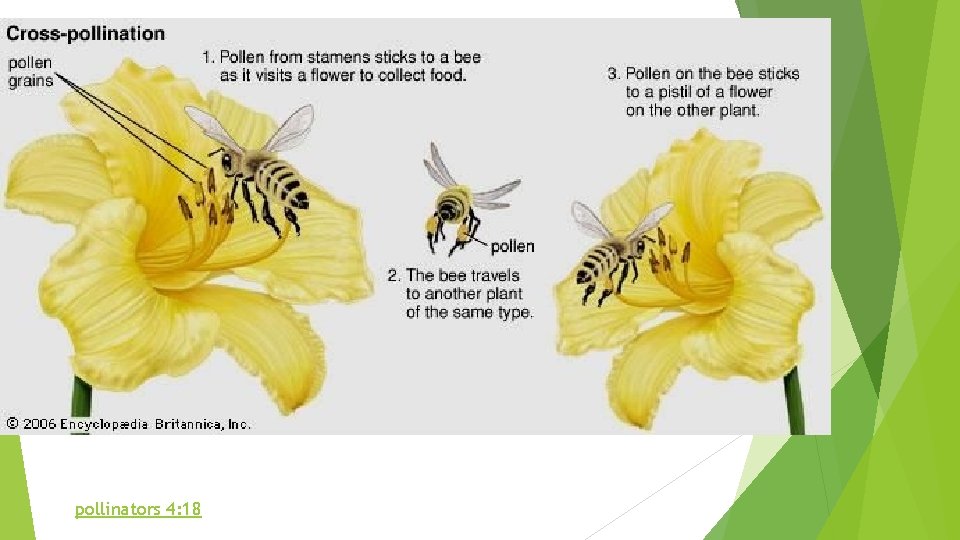
Pollination The fertilization happens when an ovule and a sperm join to form a seed, a new plant.
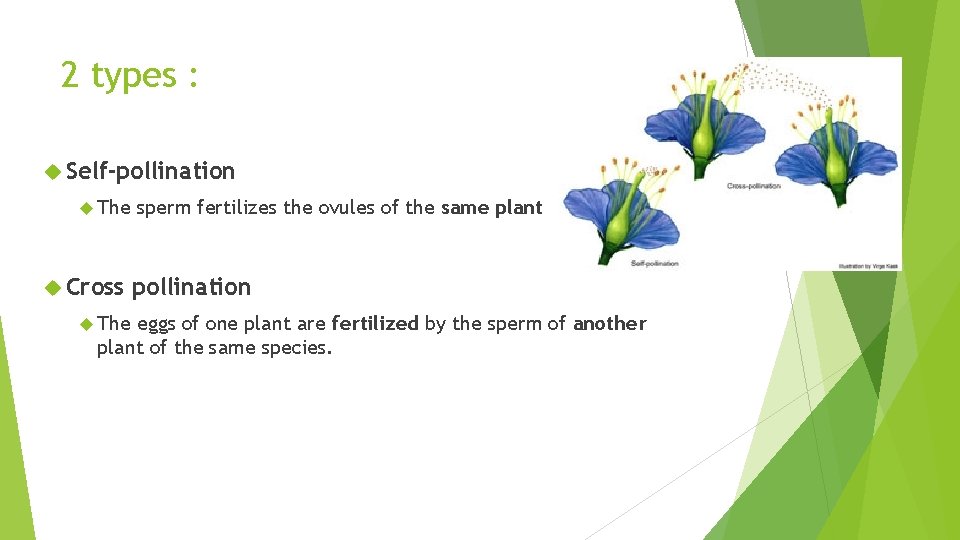
2 types : Self-pollination The Cross The sperm fertilizes the ovules of the same plant pollination eggs of one plant are fertilized by the sperm of another plant of the same species.
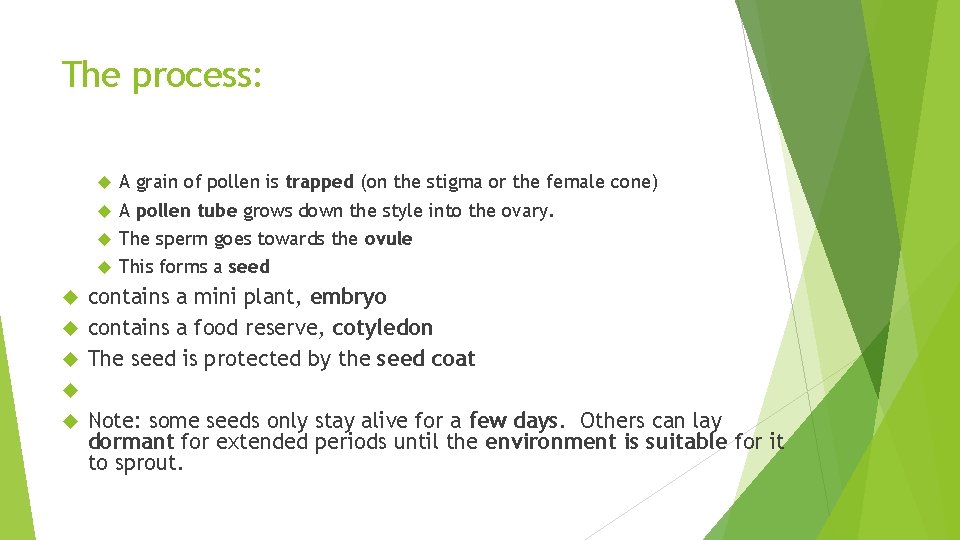
The process: A grain of pollen is trapped (on the stigma or the female cone) A pollen tube grows down the style into the ovary. The sperm goes towards the ovule This forms a seed contains a mini plant, embryo contains a food reserve, cotyledon The seed is protected by the seed coat Note: some seeds only stay alive for a few days. Others can lay dormant for extended periods until the environment is suitable for it to sprout.
pollinators 4: 18
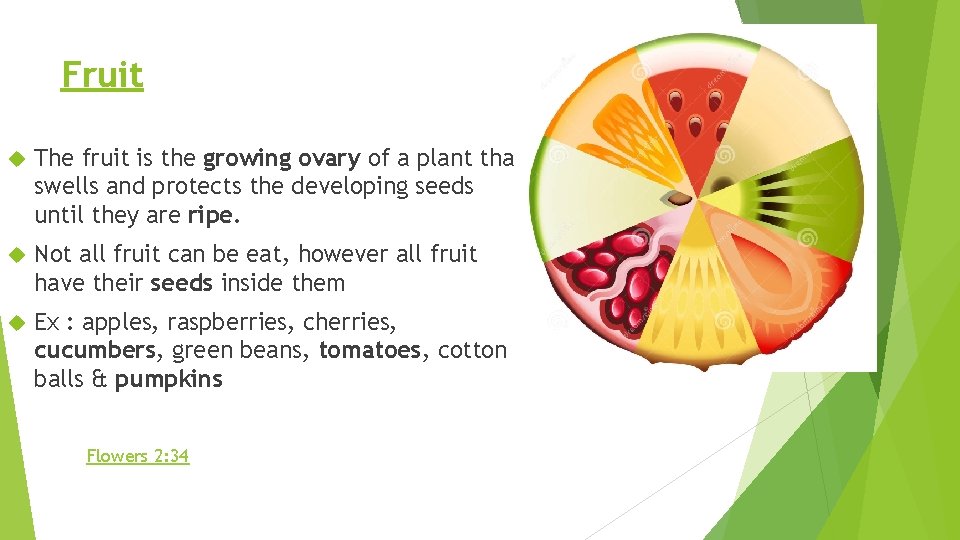
Fruit The fruit is the growing ovary of a plant that swells and protects the developing seeds until they are ripe. Not all fruit can be eat, however all fruit have their seeds inside them Ex : apples, raspberries, cherries, cucumbers, green beans, tomatoes, cotton balls & pumpkins Flowers 2: 34
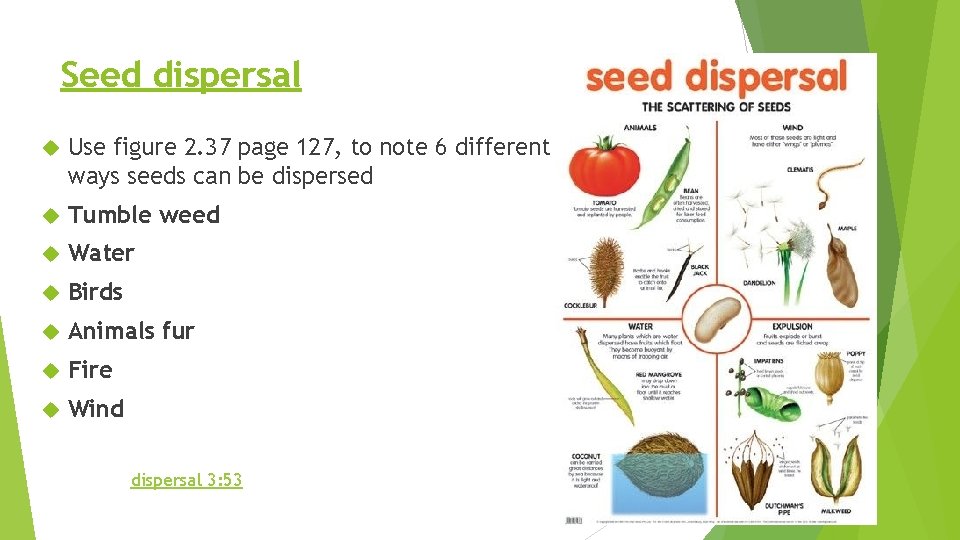
Seed dispersal Use figure 2. 37 page 127, to note 6 different ways seeds can be dispersed Tumble weed Water Birds Animals fur Fire Wind dispersal 3: 53
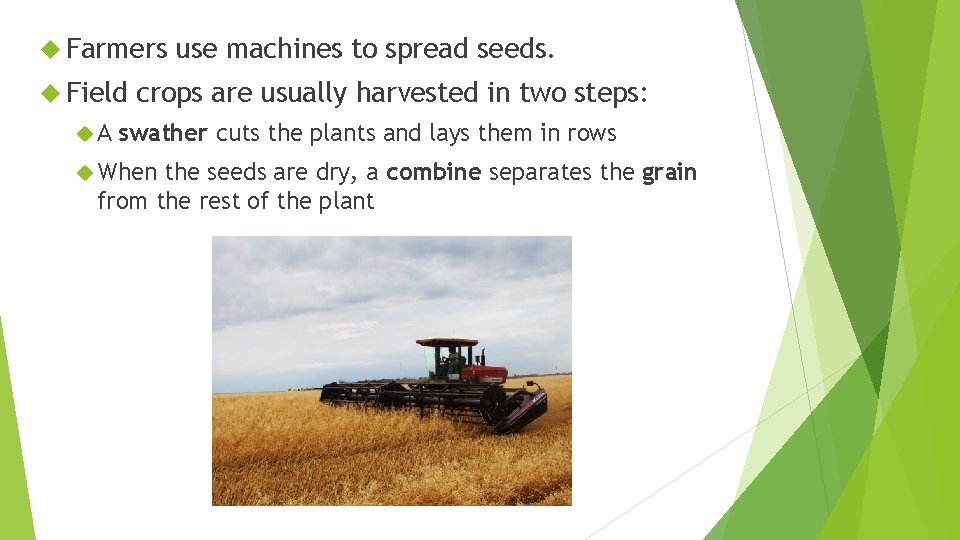
Farmers Field A use machines to spread seeds. crops are usually harvested in two steps: swather cuts the plants and lays them in rows When the seeds are dry, a combine separates the grain from the rest of the plant
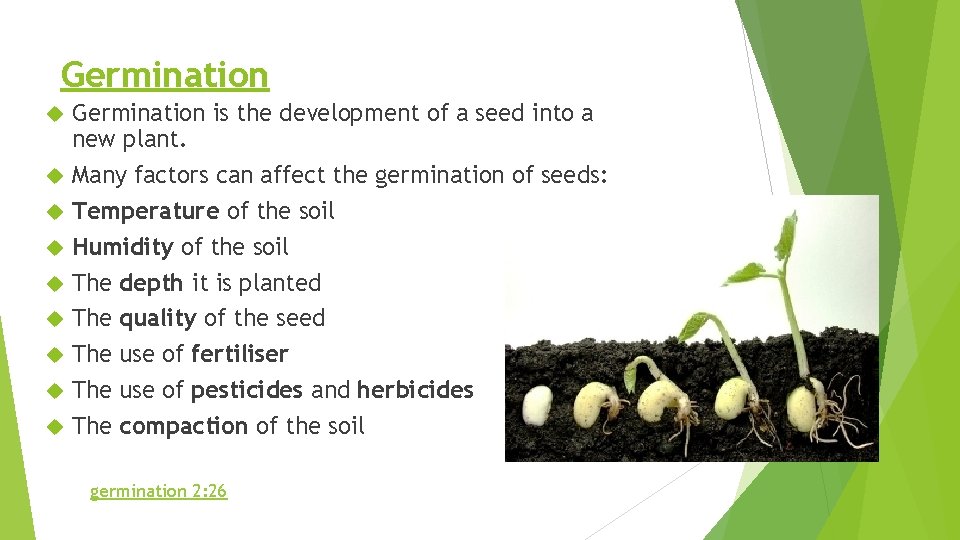
Germination Germination is the development of a seed into a new plant. Many factors can affect the germination of seeds: Temperature of the soil Humidity of the soil The depth it is planted The quality of the seed The use of fertiliser The use of pesticides and herbicides The compaction of the soil germination 2: 26