
Topic 3 Relational Perspective a k a the
- Slides: 28
Topic 3: Relational Perspective (a. k. a. the Resource Dependenceperspective) J. Pfeffer & G. Salancik, “The Social Control of Organizations”
What is power? power
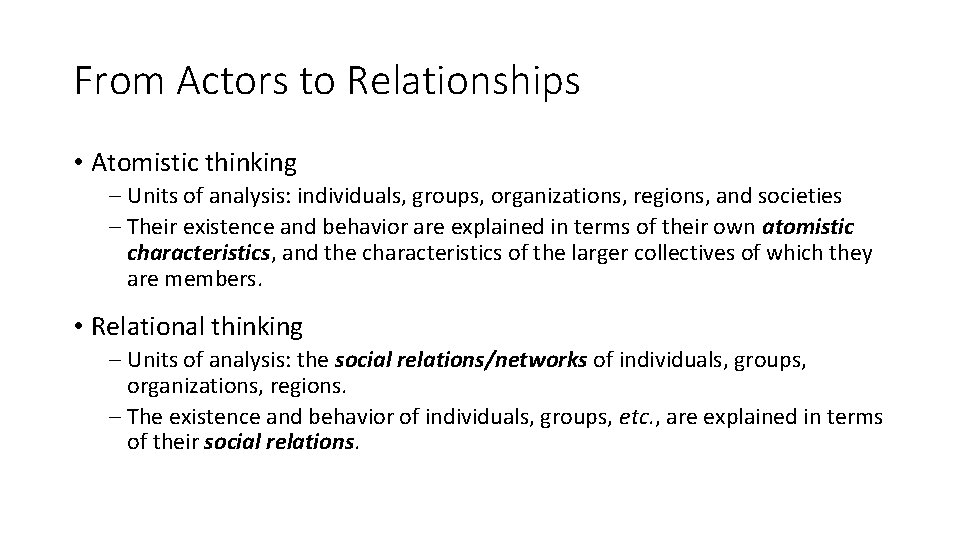
From Actors to Relationships • Atomistic thinking – Units of analysis: individuals, groups, organizations, regions, and societies – Their existence and behavior are explained in terms of their own atomistic characteristics, and the characteristics of the larger collectives of which they are members. • Relational thinking – Units of analysis: the social relations/networks of individuals, groups, organizations, regions. – The existence and behavior of individuals, groups, etc. , are explained in terms of their social relations.
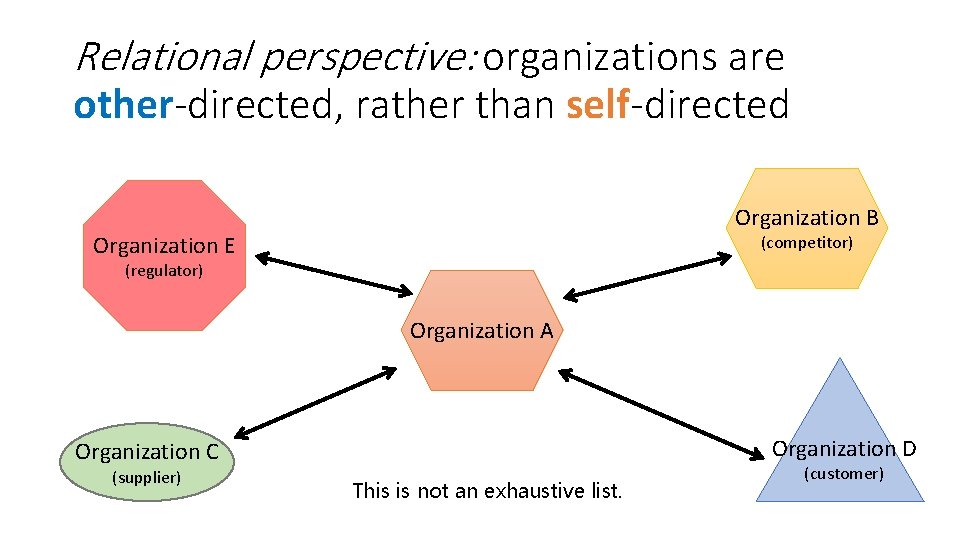
Relational perspective: organizations are other-directed, rather than self-directed Organization B Organization E (competitor) (regulator) Organization A Organization D Organization C (supplier) This is not an exhaustive list. (customer)
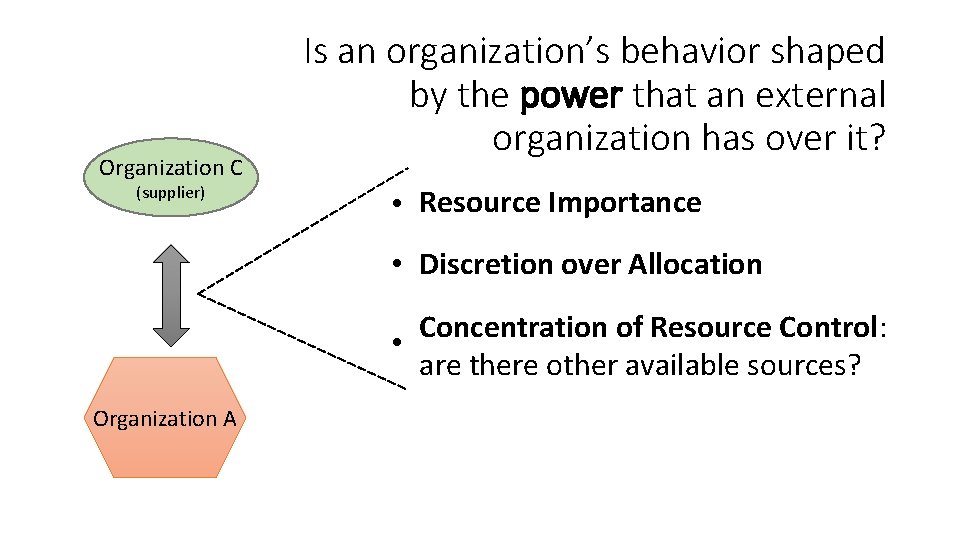
Organization C (supplier) Organization A Is an organization’s behavior shaped by the power that an external organization has over it? ● Resource Importance ● Discretion over Allocation ● Concentration of Resource Control: are there other available sources?
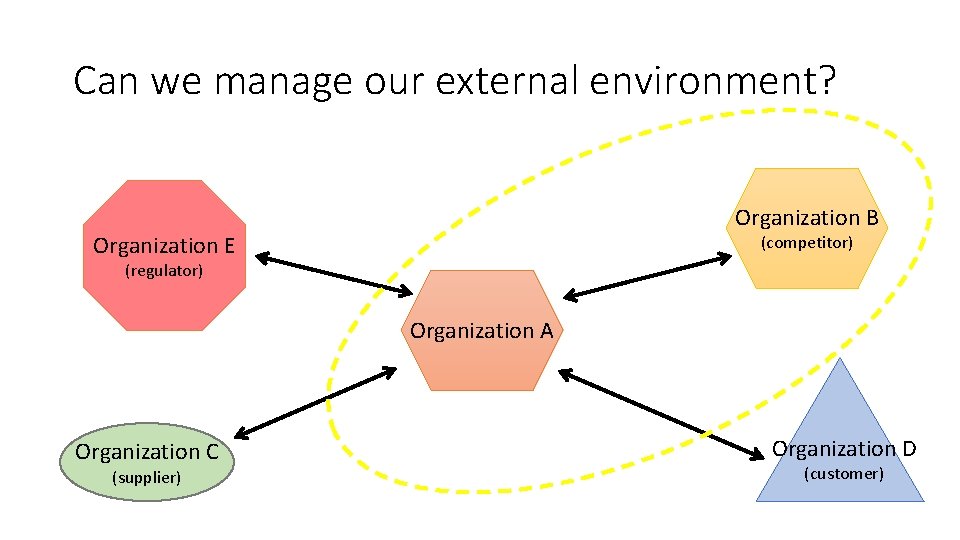
Can we manage our external environment? Organization B Organization E (competitor) (regulator) Organization A Organization C (supplier) Organization D (customer)
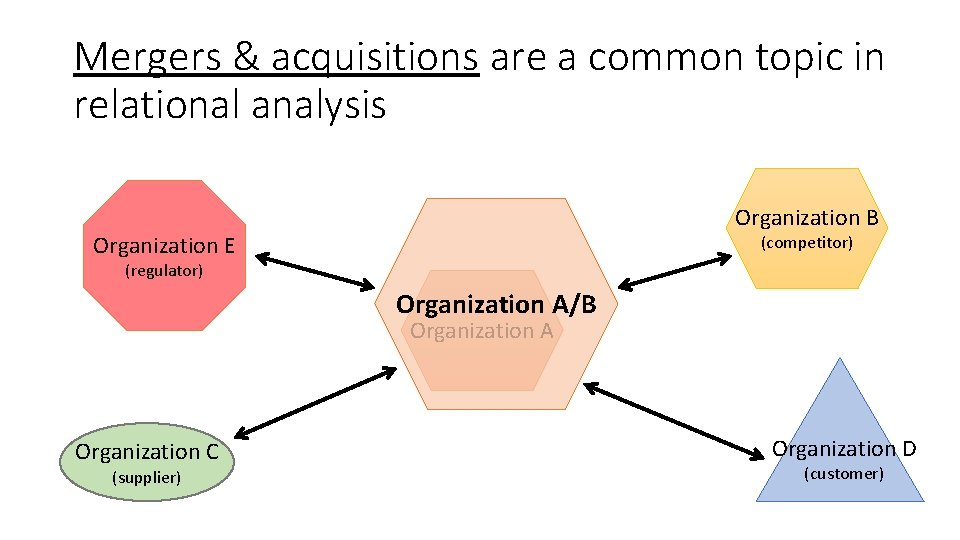
Mergers & acquisitions are a common topic in relational analysis Organization B Organization E (competitor) (regulator) Organization A/B Organization A Organization C (supplier) Organization D (customer)
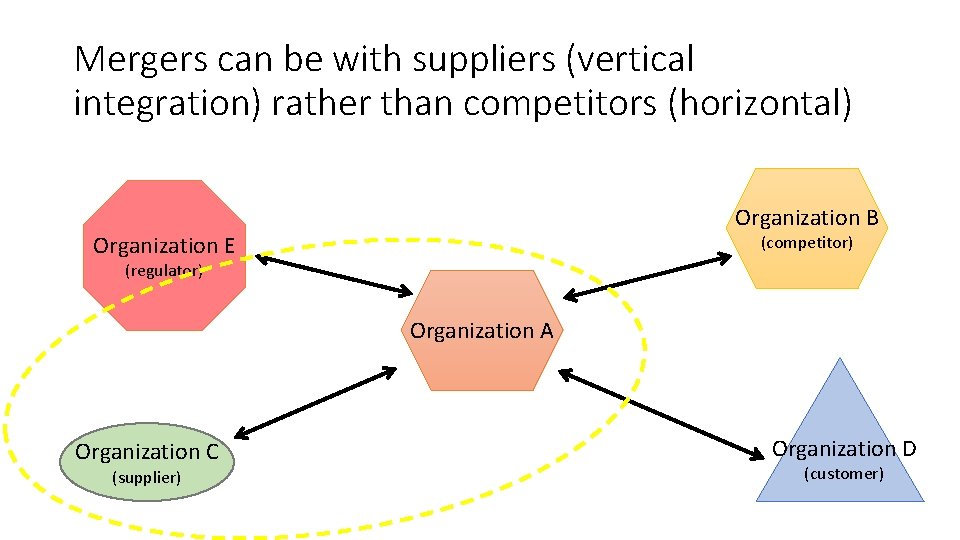
Mergers can be with suppliers (vertical integration) rather than competitors (horizontal) Organization B Organization E (competitor) (regulator) Organization A Organization C (supplier) Organization D (customer)
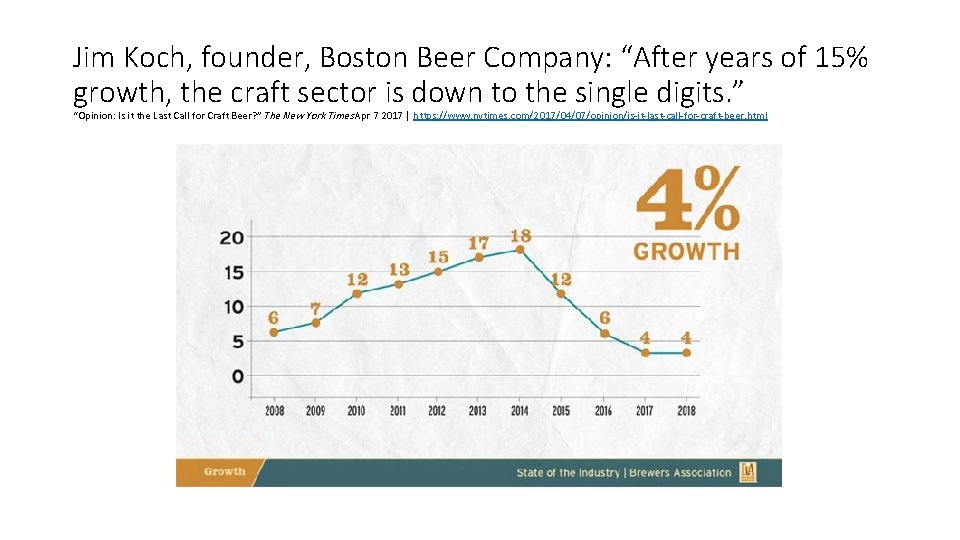
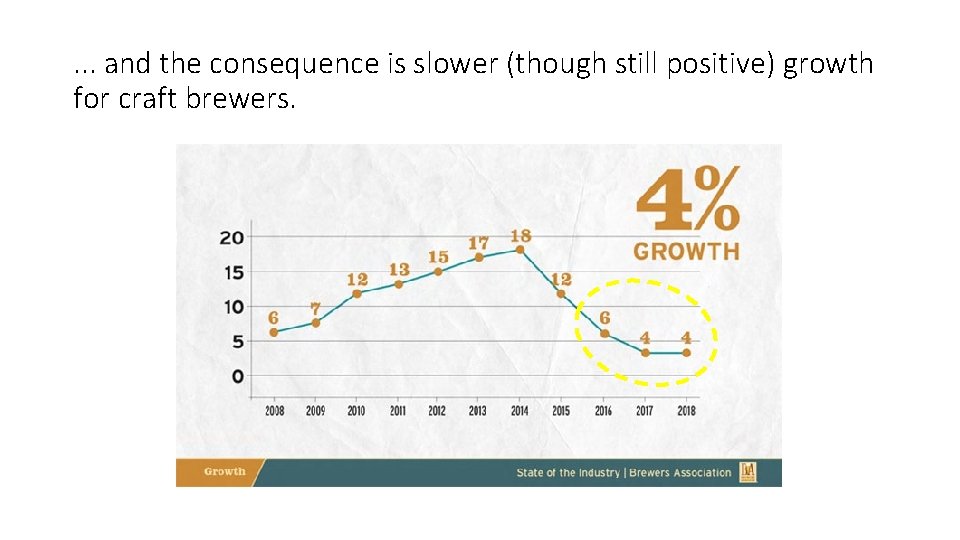
Jim Koch, founder, Boston Beer Company: “After years of 15% growth, the craft sector is down to the single digits. ” “Opinion: Is it the Last Call for Craft Beer? ” The New York Times Apr 7 2017 | https: //www. nytimes. com/2017/04/07/opinion/is-it-last-call-for-craft-beer. html
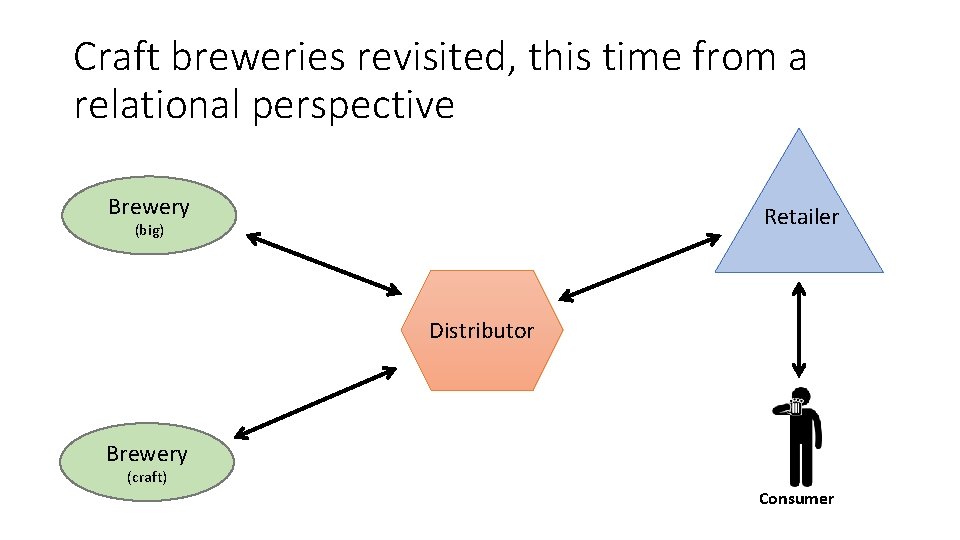
Craft breweries revisited, this time from a relational perspective Brewery Retailer (big) Distributor Brewery (craft) Consumer
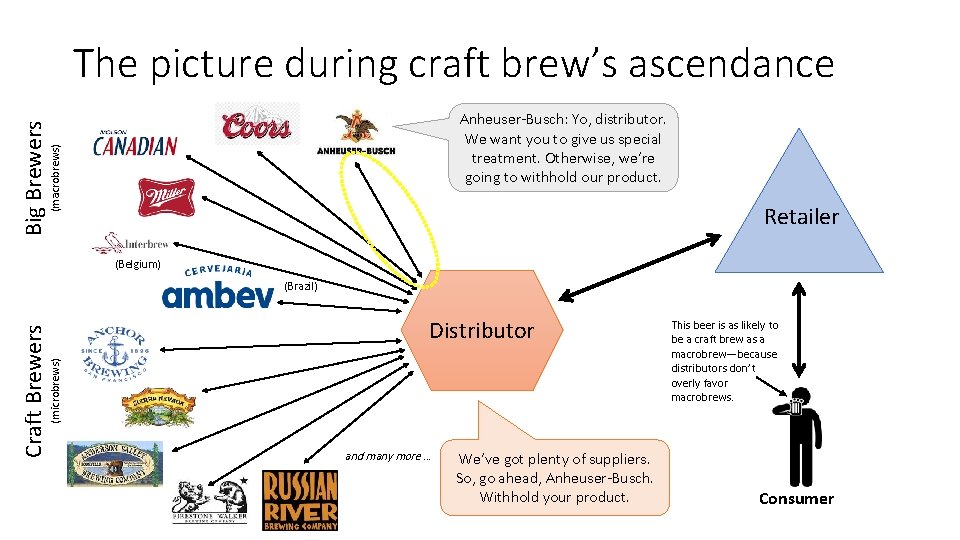
The picture during craft brew’s ascendance (macrobrews) Big Brewers Anheuser-Busch: Yo, distributor. We want you to give us special treatment. Otherwise, we’re going to withhold our product. Retailer (Belgium) Distributor (microbrews) Craft Brewers (Brazil) and many more … We’ve got plenty of suppliers. So, go ahead, Anheuser-Busch. Withhold your product. This beer is as likely to be a craft brew as a macrobrew—because distributors don’t overly favor macrobrews. Consumer
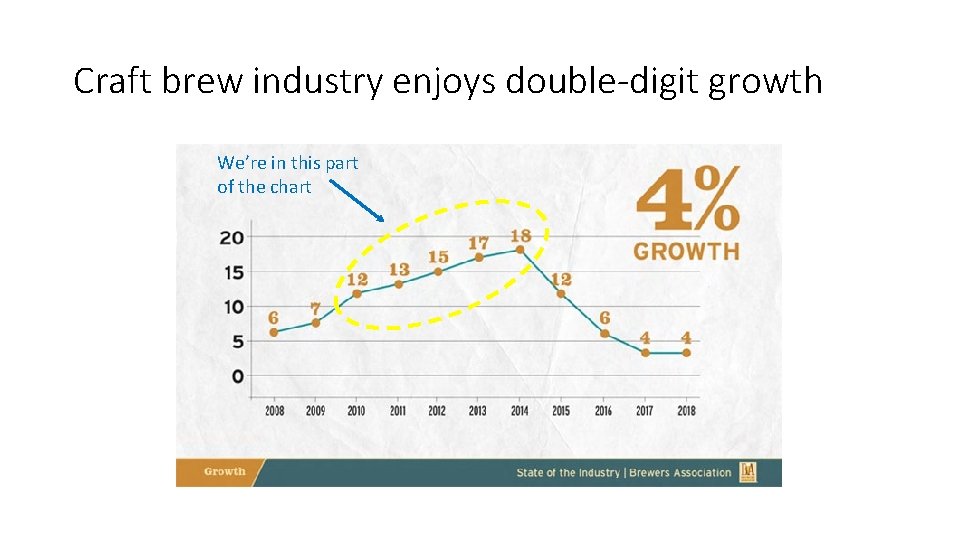
Craft brew industry enjoys double-digit growth We’re in this part of the chart
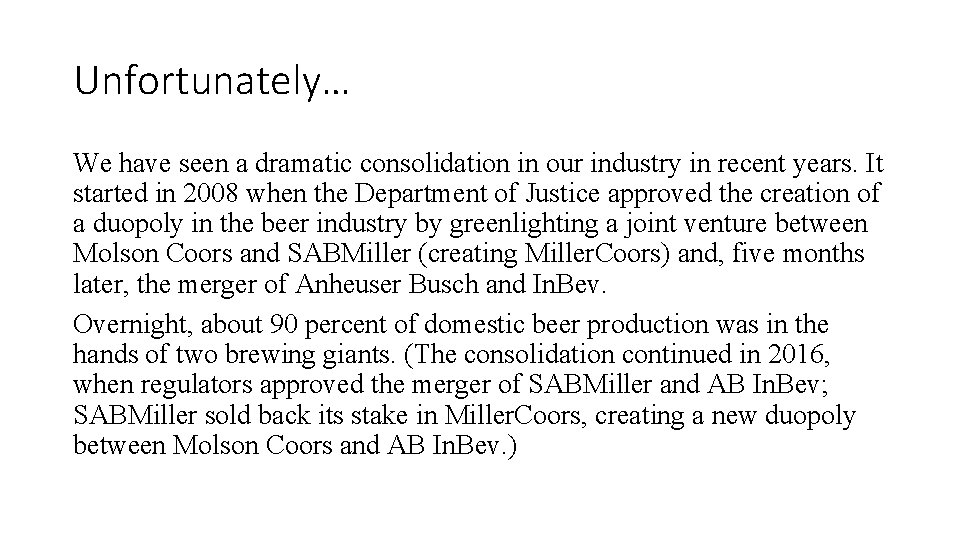
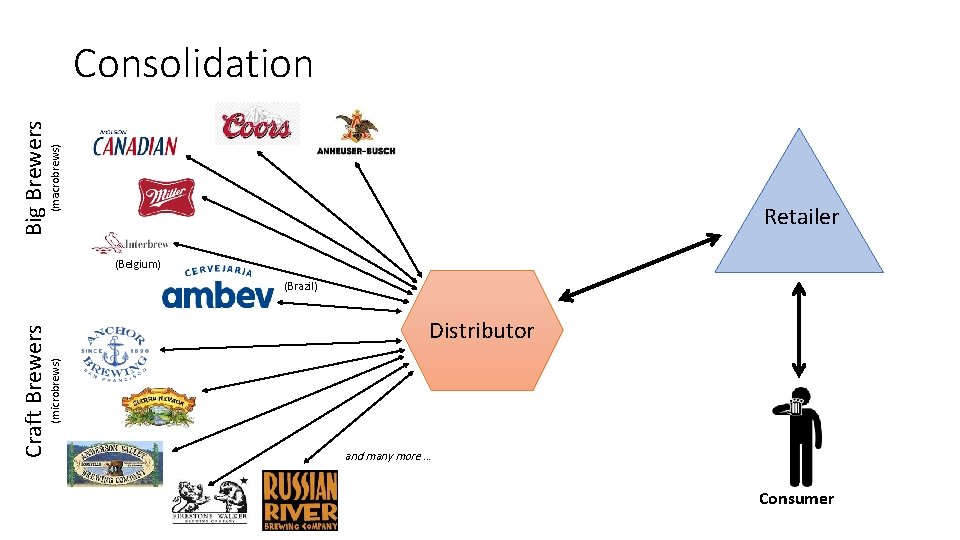
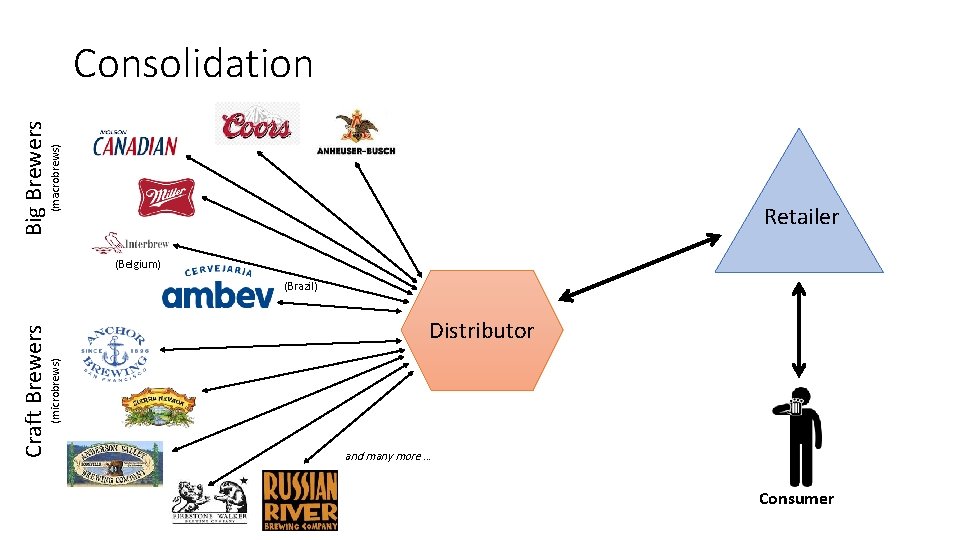
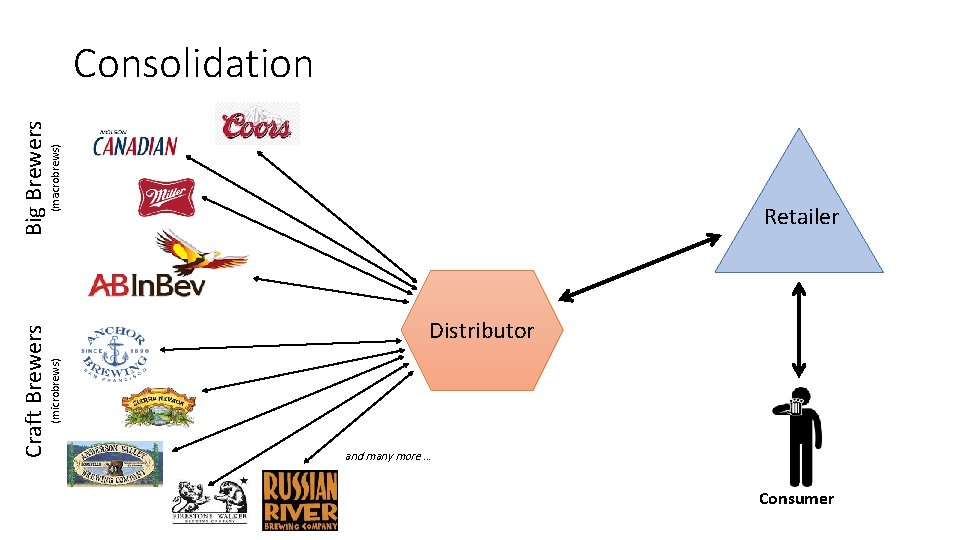
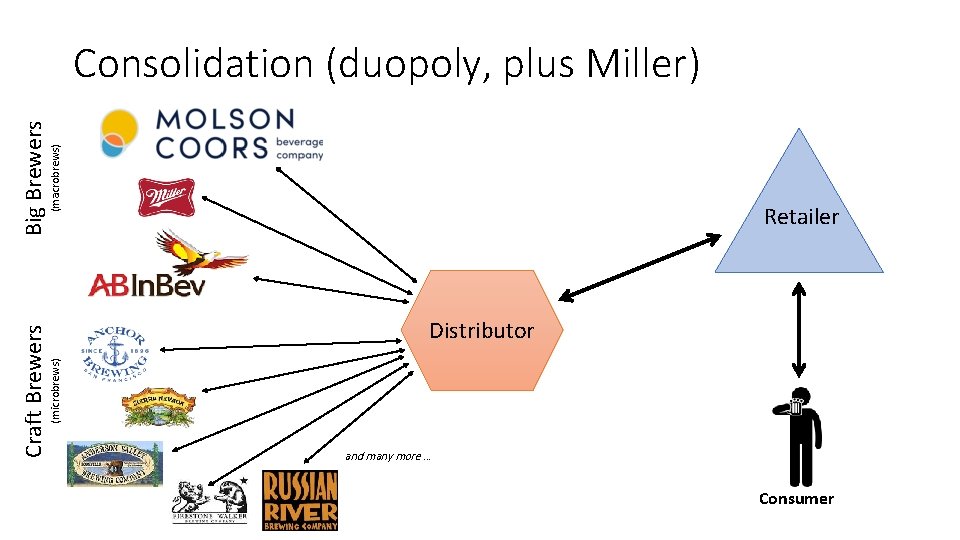
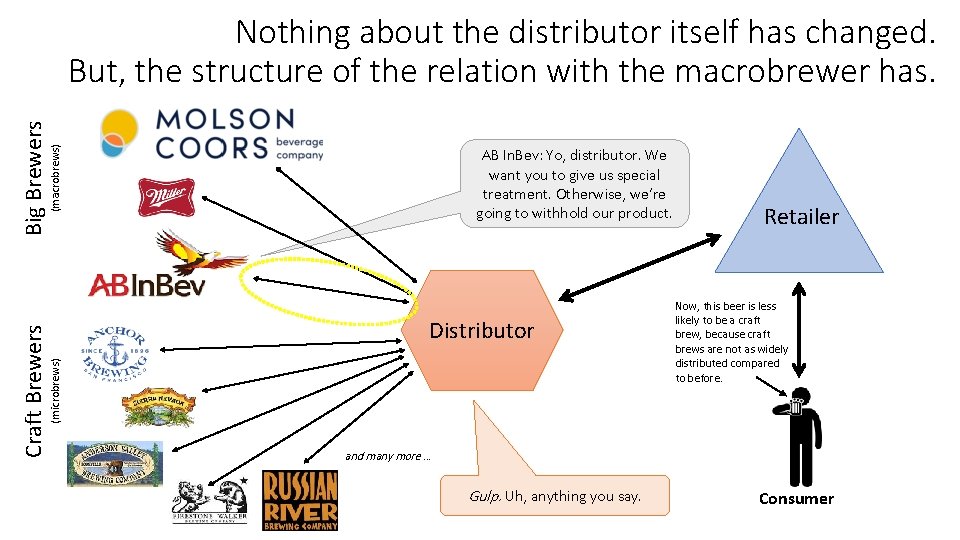
Unfortunately… We have seen a dramatic consolidation in our industry in recent years. It started in 2008 when the Department of Justice approved the creation of a duopoly in the beer industry by greenlighting a joint venture between Molson Coors and SABMiller (creating Miller. Coors) and, five months later, the merger of Anheuser Busch and In. Bev. Overnight, about 90 percent of domestic beer production was in the hands of two brewing giants. (The consolidation continued in 2016, when regulators approved the merger of SABMiller and AB In. Bev; SABMiller sold back its stake in Miller. Coors, creating a new duopoly between Molson Coors and AB In. Bev. )
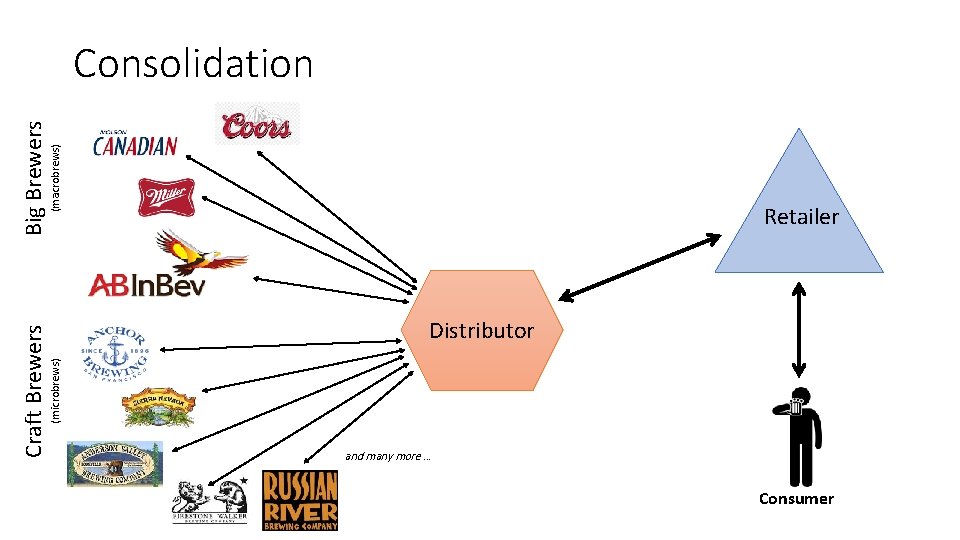
(macrobrews) Big Brewers Consolidation Retailer (Belgium) Distributor (microbrews) Craft Brewers (Brazil) and many more … Consumer
(macrobrews) Big Brewers Consolidation Retailer (Belgium) Distributor (microbrews) Craft Brewers (Brazil) and many more … Consumer
Retailer Distributor (microbrews) Craft Brewers (macrobrews) Big Brewers Consolidation and many more … Consumer
Retailer Distributor (microbrews) Craft Brewers (macrobrews) Big Brewers Consolidation and many more … Consumer
Retailer Distributor (microbrews) Craft Brewers (macrobrews) Big Brewers Consolidation (duopoly, plus Miller) and many more … Consumer
AB In. Bev: Yo, distributor. We want you to give us special treatment. Otherwise, we’re going to withhold our product. Distributor (microbrews) Craft Brewers (macrobrews) Big Brewers Nothing about the distributor itself has changed. But, the structure of the relation with the macrobrewer has. Retailer Now, this beer is less likely to be a craft brew, because craft brews are not as widely distributed compared to before. and many more … Gulp. Uh, anything you say. Consumer
“Sitting on brands” “Break up Budweiser. And Molson Coors too. The beer industry needs trustbusting. ” Slate Jul 9 2020 https: //slate. com/business/2020/07/break-up-big-beer. html Smaller brewers continue to share horror stories about their relationship with distributors franchised with AB In. Bev or Molson Coors. A former brewmaster at a small Midwestern brewery, who requested anonymity to protect his former company’s relationships in the industry, recalls signing a distribution agreement with a “red” distributor in Nebraska—in industry parlance, Anheuser-Busch–affiliated distributors are “red, ” while ones affiliated with Molson are “blue. ” The small brewery was promised placement in a few stores and given a few taps at local bars to introduce the brand to drinkers. But when it checked back to see how the beer was doing, it found that the promised six-packs were never delivered to the stores, and the taps were quickly replaced by IPAs from Goose Island, a craft label owned by AB In. Bev. It’s called “sitting on brands, ” says Bart Watson, chief economist for the Brewers Association, the independent craft beer industry group. …
. . . and the consequence is slower (though still positive) growth for craft brewers.
Sometimes, external control can be “good”
Should a staffing agency offer paid family leave to the workers it places? If they place people at Microsoft, they might have to. “Microsoft to Require Its Suppliers, Contractors to Give Paid Family Leave” The Wall Street Journal Aug 30 2018 https: //www. wsj. com/articles/microsoft-to-require-its-suppliers-contractors-to-give-paid-family-leave-1535635800 Microsoft Corp. will soon require its suppliers and contractors to provide at least 12 weeks of paid time off to new parents, the software giant said Thursday. The policy applies to Microsoft vendors with more than 50 employees and covers workers given substantial assignments for Microsoft. For example, a staffing agency that provides information-technology professionals to Microsoft and other clients would only have to cover employees assigned to Microsoft. It will impact thousands of workers around the country, the company said. The paid leave benefit requirement will be capped at $1, 000 a week in compensation, and Microsoft suppliers have 12 months to implement the change.
The metaphysics of a relational perspective v The relational/resource dependence perspective is not an “emancipatory” theory. It is not driven by a normative vision of a world where organizations are free from external control. v It merely offers an understanding of what organizations do, and why. v An externally-controlled organization may do regressive things as a result. But it is just as likely necessary that an organization be externally controlled in order to be made to do progressive things.
A problem v Pfeffer & Salancik give us tools for predicting if an organization is externally controlled by another. v But, how do we empirically test this prediction? v How do we “see” power operating within an organization?
How do you observe dependence and power? • Observe resource flows. – Where does money come from? – Where does it go to (people/depts/organizations)? – Who gets a career (upward mobility in income or rank)? • Observe official channels of authority and information. – Who manages whom? – Who has autonomy – who isn’t really managed? • Observe symbols. – Who gets the nicest work space? – Who gets the most recognition?
Criticism of rational adaptation v Organizational behavior must be understood as more than just a self -directed attempt to accomplish organizational goals. v Organizations are potentially constrained by their dependence on others for important inputs and outputs. Other organizations or collectivities may exercise external control over them. v Organizations can attempt to manage their dependencies. But, the general finding is that this is seldom successful.
Next time • A third perspective on organizational behavior that counters assumptions made by the rational adaptation perspective: the institutionalist perspective. • Read: P. Di. Maggio & W. Powell, “The Iron Cage Revisited”. • Both the population ecology and relational perspectives offer essentially “functionalist” understandings of the world; organizations behave as they do because actions reflect necessary responses to the embedding environment. • What do Di. Maggio & Powell say is it that constrains organizational behavior?