
Topic 3 Human population carrying capacity and resource
- Slides: 16
Topic 3: Human population, carrying capacity and resource use Part 1: Energy, Soil, Food and Water Resources
• Journal: • Rank the following in terms of their value: – Oil – Timber – Forest – Uranium – Coral Reef – Mangrove Swamp – Tropical Beach – Food Crops
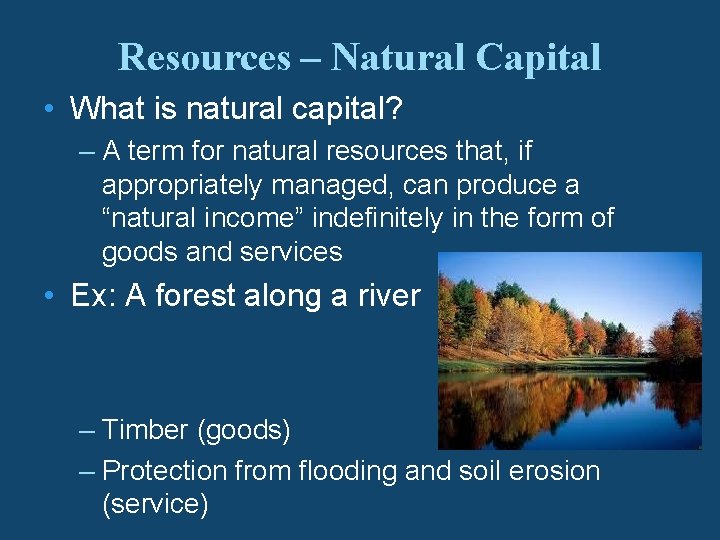
Resources – Natural Capital • What is natural capital? – A term for natural resources that, if appropriately managed, can produce a “natural income” indefinitely in the form of goods and services • Ex: A forest along a river – Timber (goods) – Protection from flooding and soil erosion (service)
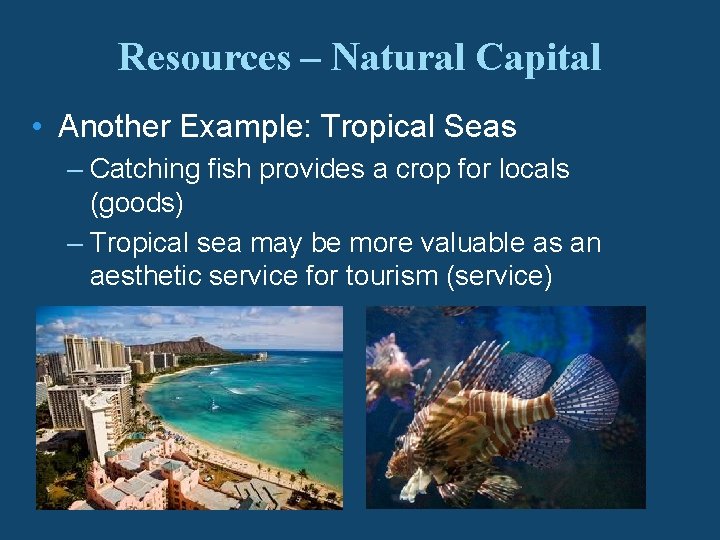
Resources – Natural Capital • Another Example: Tropical Seas – Catching fish provides a crop for locals (goods) – Tropical sea may be more valuable as an aesthetic service for tourism (service)
Resources – Natural Capital • Traditionally, man made products and human services have been given an economic value while little or no economic value has been placed “natural resources and services – Ex: Forests = free resource to be exploited • Cost = Loss of carbon uptake, disruption of water and nutrient cycles and loss of the aesthetic value
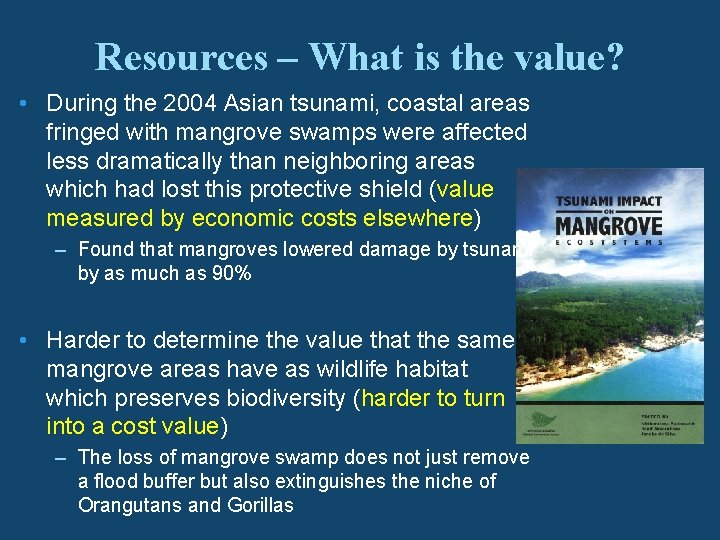
Resources – What is the value? • During the 2004 Asian tsunami, coastal areas fringed with mangrove swamps were affected less dramatically than neighboring areas which had lost this protective shield (value measured by economic costs elsewhere) – Found that mangroves lowered damage by tsunami by as much as 90% • Harder to determine the value that the same mangrove areas have as wildlife habitat which preserves biodiversity (harder to turn into a cost value) – The loss of mangrove swamp does not just remove a flood buffer but also extinguishes the niche of Orangutans and Gorillas
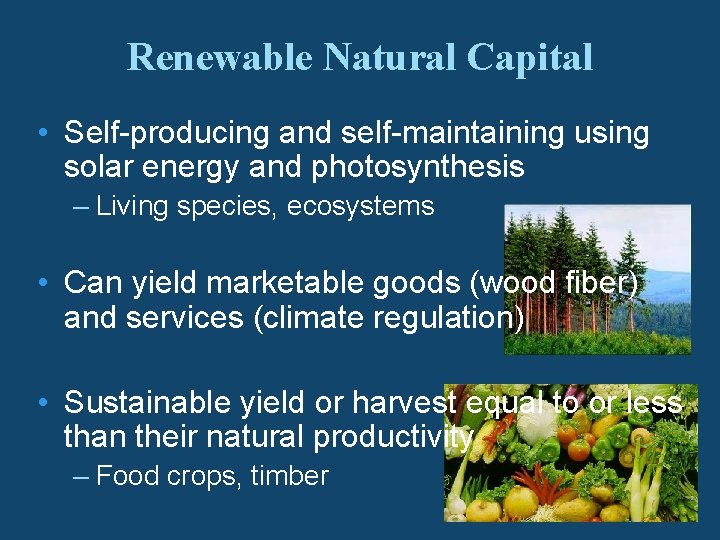
Renewable Natural Capital • Self-producing and self-maintaining using solar energy and photosynthesis – Living species, ecosystems • Can yield marketable goods (wood fiber) and services (climate regulation) • Sustainable yield or harvest equal to or less than their natural productivity – Food crops, timber
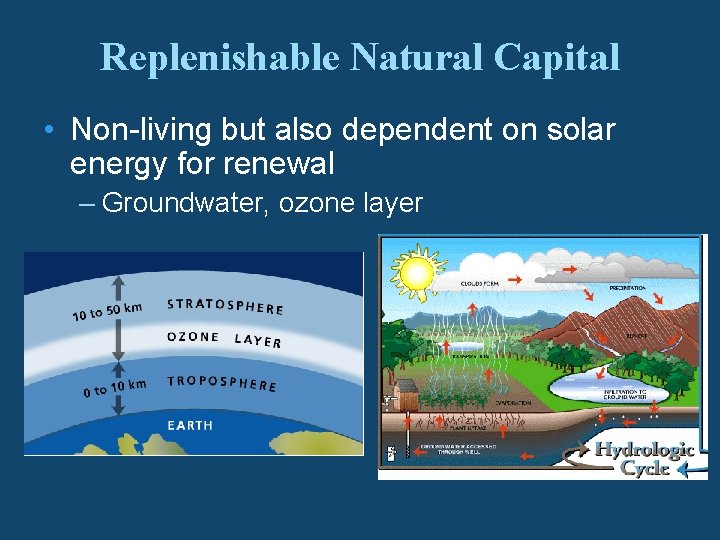
Replenishable Natural Capital • Non-living but also dependent on solar energy for renewal – Groundwater, ozone layer
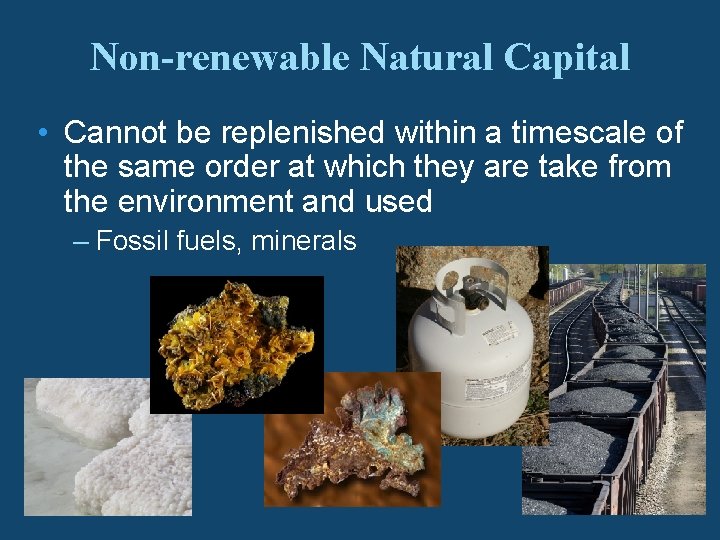
Non-renewable Natural Capital • Cannot be replenished within a timescale of the same order at which they are take from the environment and used – Fossil fuels, minerals
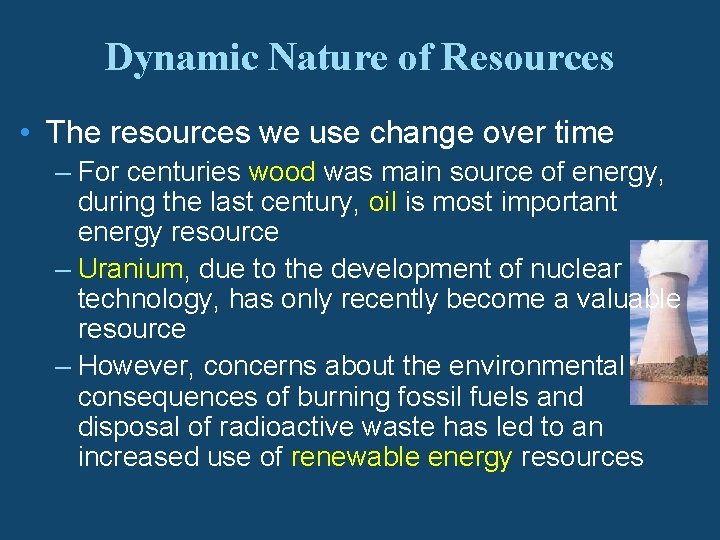
Dynamic Nature of Resources • The resources we use change over time – For centuries wood was main source of energy, during the last century, oil is most important energy resource – Uranium, due to the development of nuclear technology, has only recently become a valuable resource – However, concerns about the environmental consequences of burning fossil fuels and disposal of radioactive waste has led to an increased use of renewable energy resources
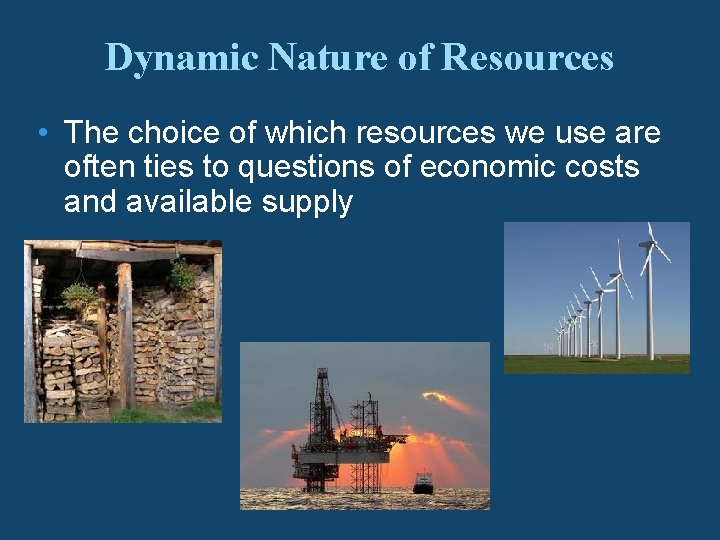
Dynamic Nature of Resources • The choice of which resources we use are often ties to questions of economic costs and available supply
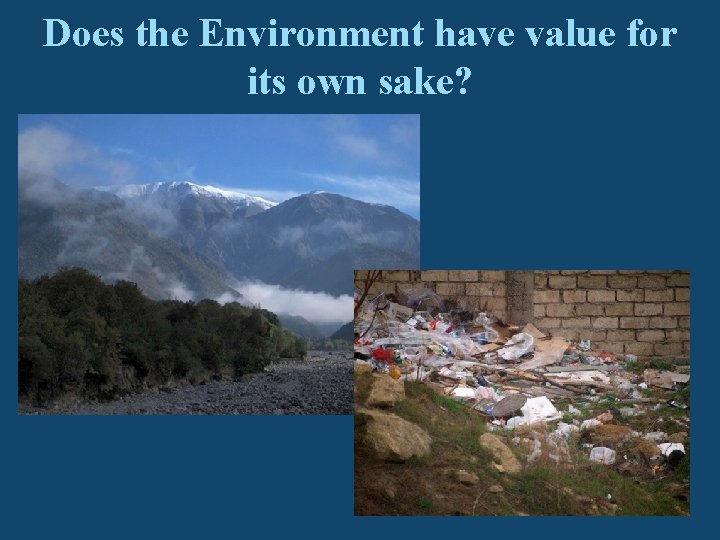
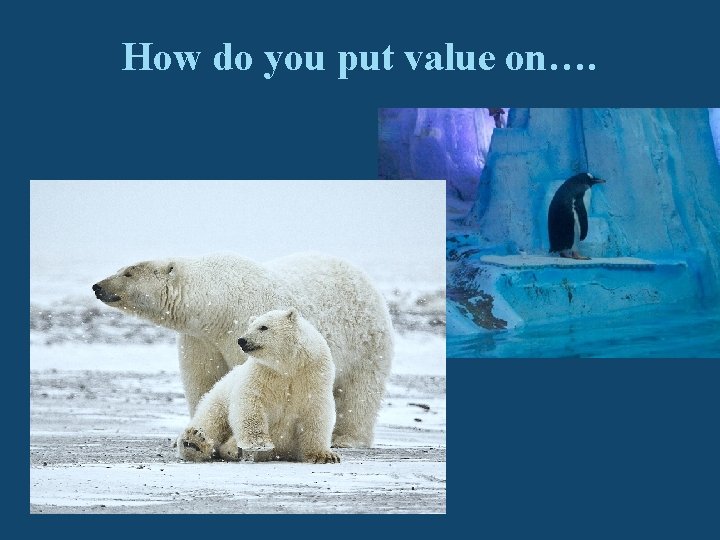
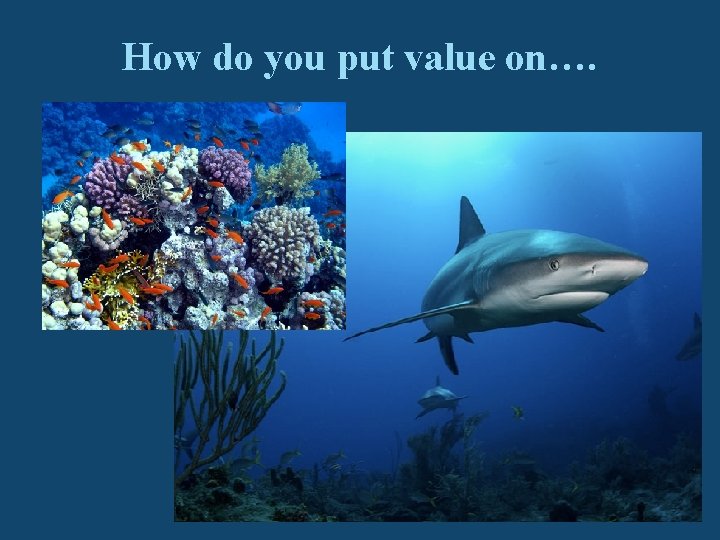
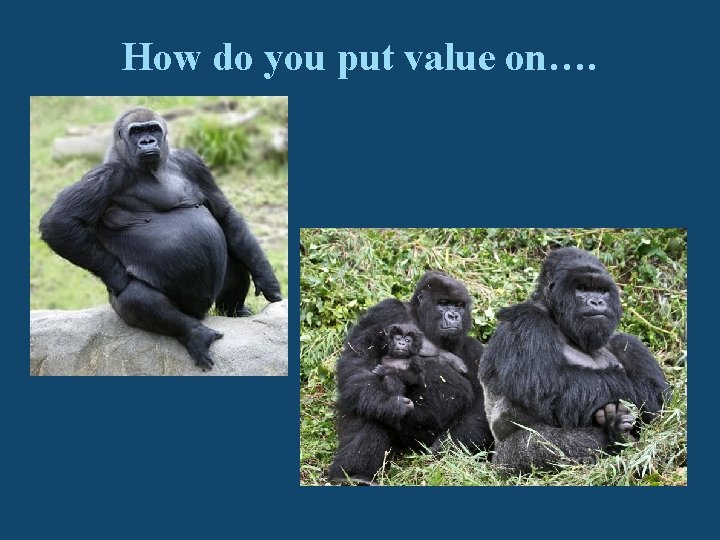
Does the Environment have value for its own sake?
How do you put value on….
How do you put value on….
How do you put value on….
Intrinsic Value • Organisms or ecosystems that are valued on aesthetic or intrinsic grounds may not provide commodities identifiable as goods or services • These remain undervalued from an economic viewpoint • Organisms or ecosystems that have intrinsic value (regarded from an ethical, spiritual or philosophical perspective) are valued regardless of their potential use to humans