
TOPIC 3 EARTH MOTIONS TRUE MOTIONS APPARENT MOTIONS

- Slides: 59
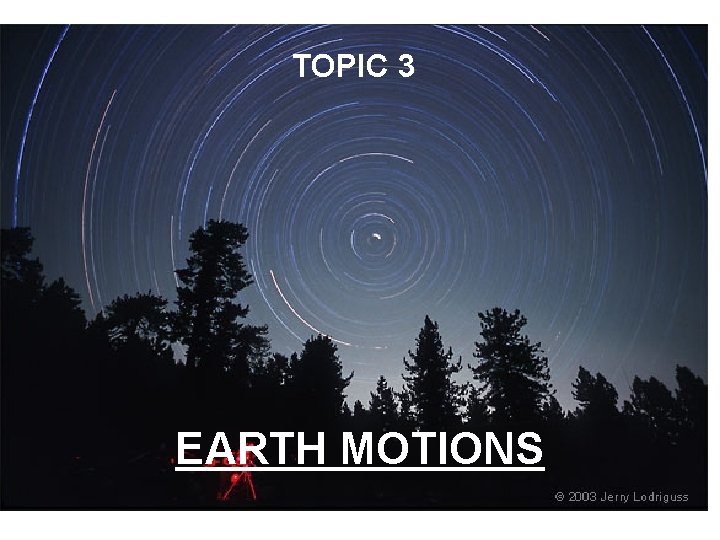
TOPIC 3 EARTH MOTIONS
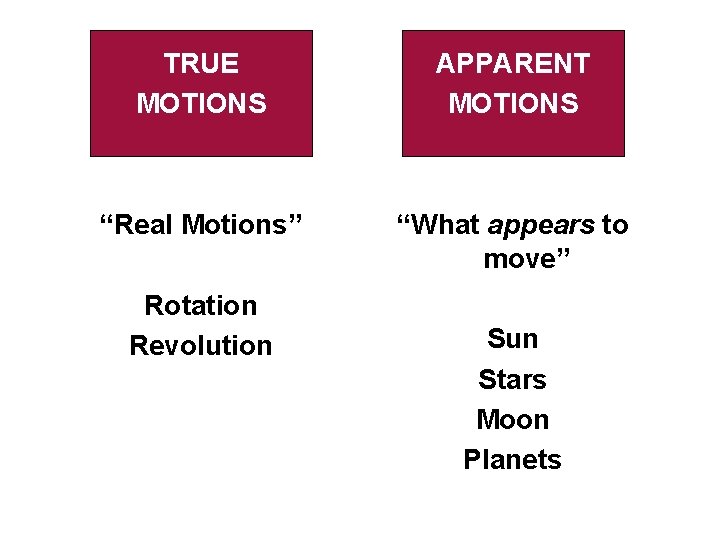
TRUE MOTIONS APPARENT MOTIONS “Real Motions” “What appears to move” Rotation Revolution Sun Stars Moon Planets
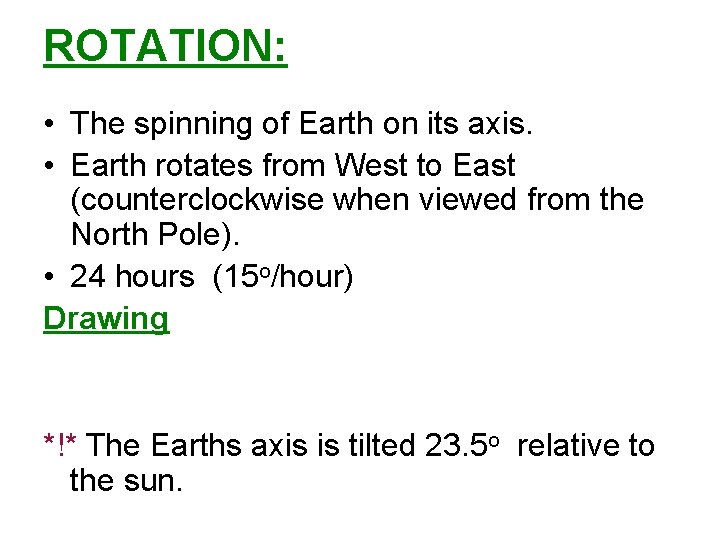
ROTATION: • The spinning of Earth on its axis. • Earth rotates from West to East (counterclockwise when viewed from the North Pole). • 24 hours (15 o/hour) Drawing *!* The Earths axis is tilted 23. 5 o relative to the sun.
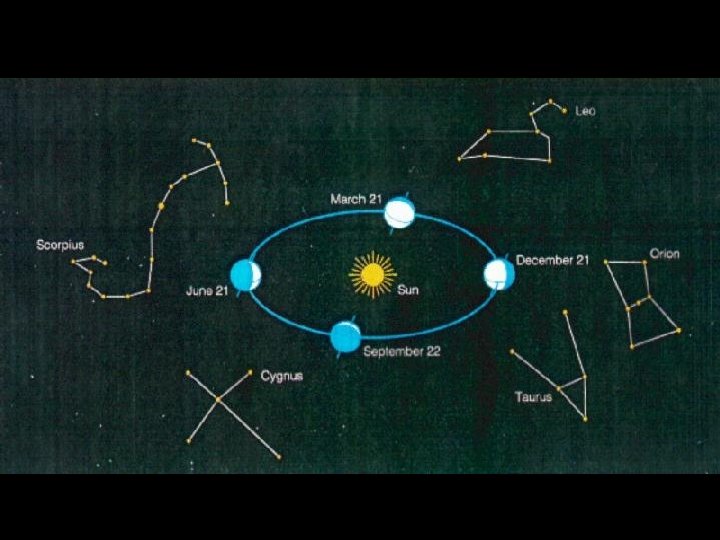
REVOLUTION: • The orbiting of Earth around the sun. • 365. 26 days (1 o /day) Drawing
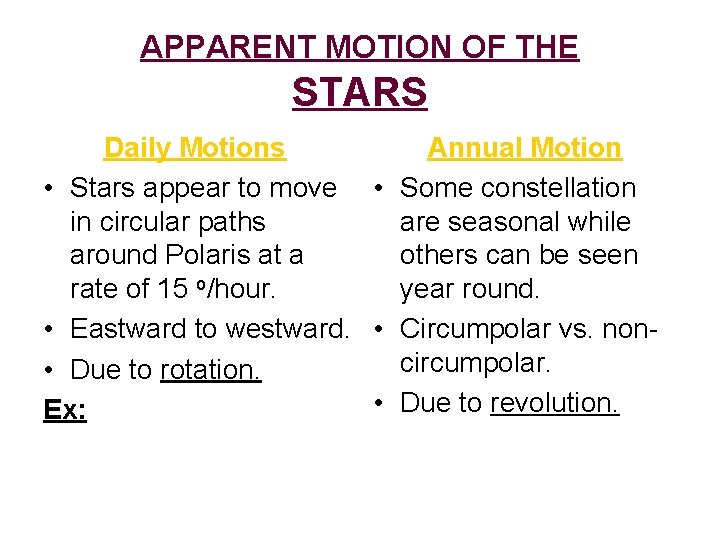
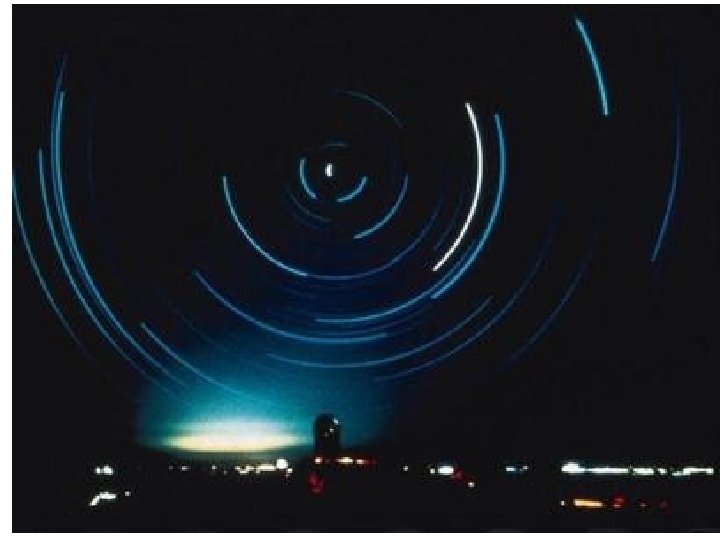
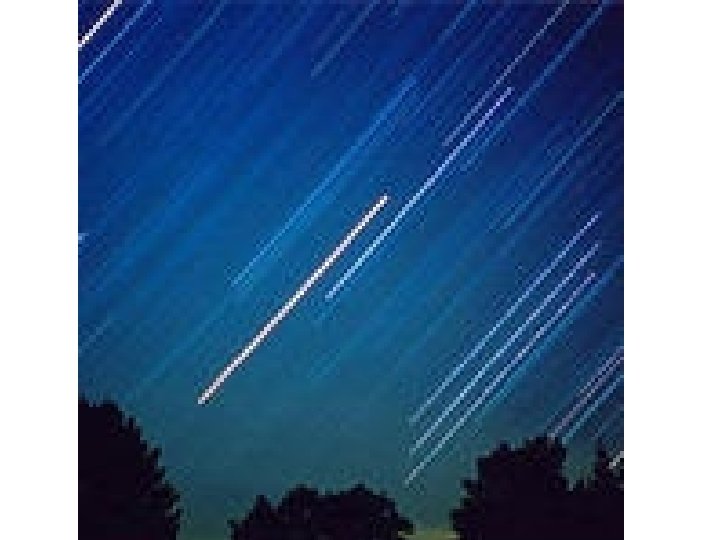
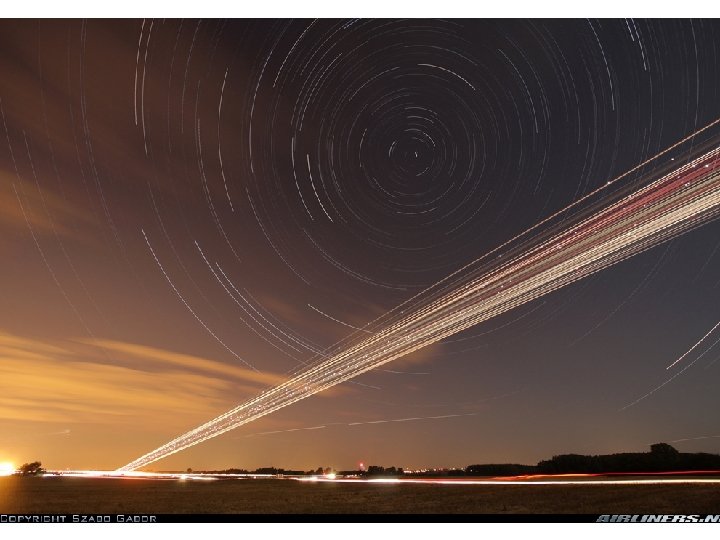
APPARENT MOTION OF THE STARS Daily Motions Annual Motion • Stars appear to move • Some constellation in circular paths are seasonal while around Polaris at a others can be seen rate of 15 o/hour. year round. • Eastward to westward. • Circumpolar vs. noncircumpolar. • Due to rotation. • Due to revolution. Ex:
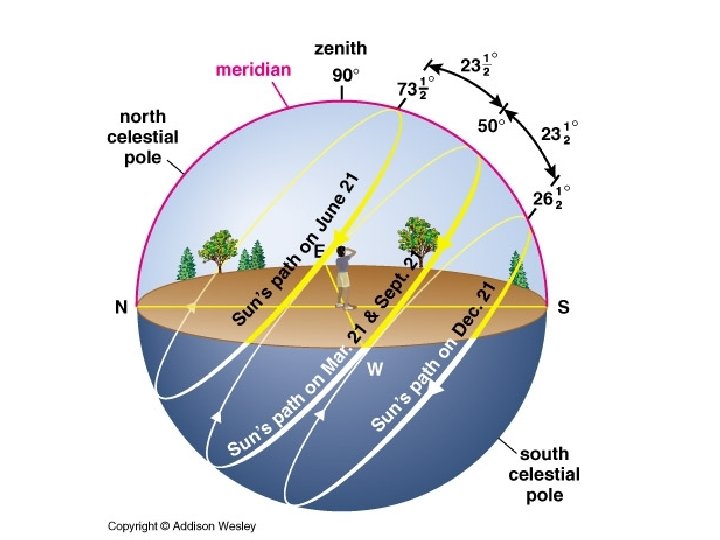
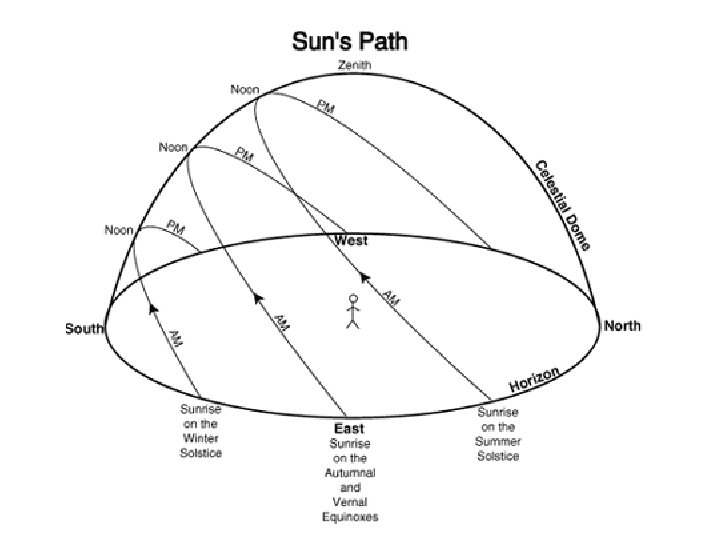
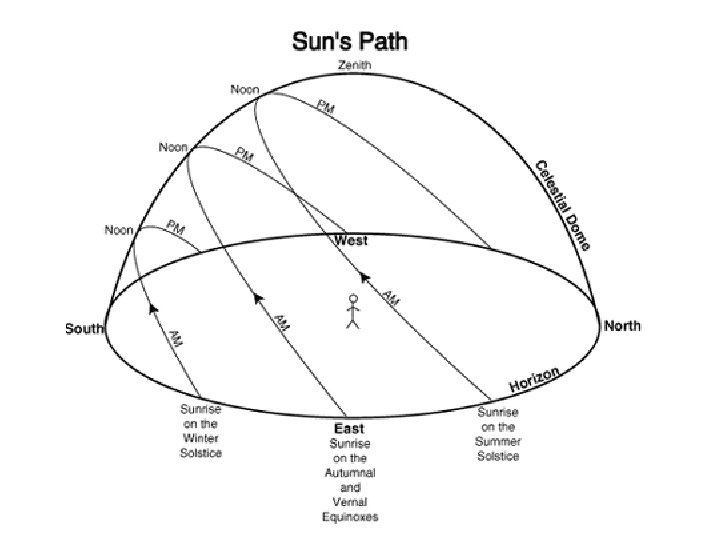
Apparent Motion of the Sun • The Sun appears to move from east to west at a rate of 15 o/hour. • The path of the sun changes with the seasons and with latitude. • Local solar noon- occurs when the sun reaches its highest point in the sky. • Only between 23. 5 N and 23. 5 S will the sun ever be directly overhead! (the tropics) • The sun is NEVER overhead for an observer in the continental U. S. • See sun’s path diagram
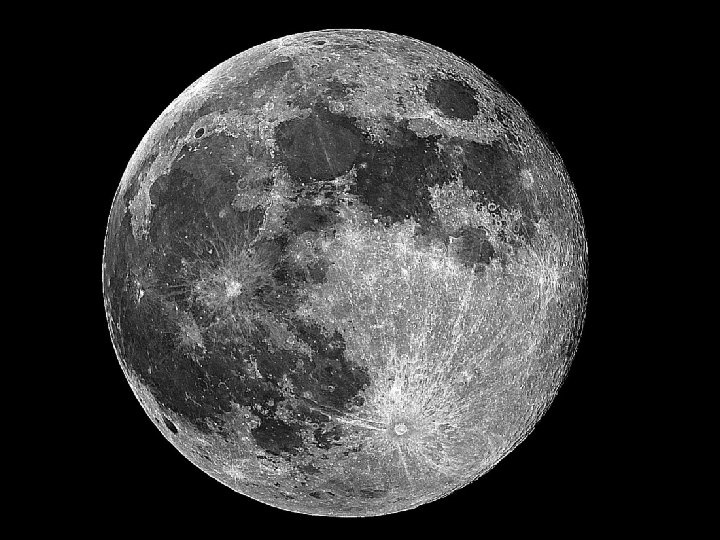
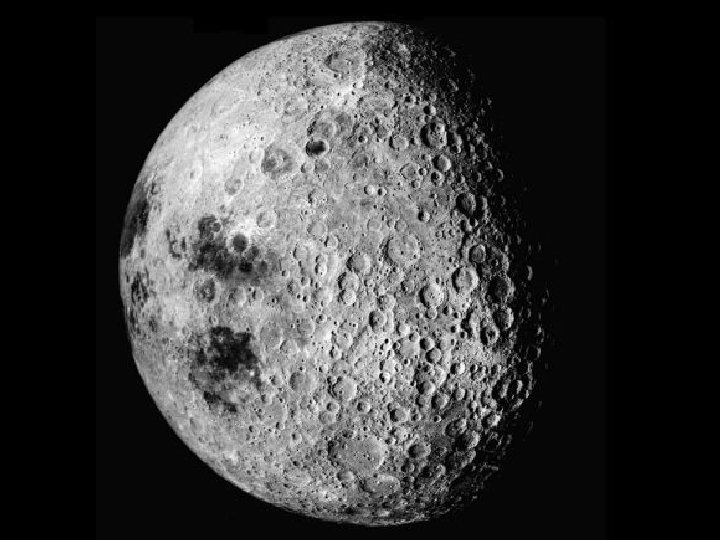
True Motions of the Moon • The Moon revolves around Earth and rotates on its axis once every 27 1/3 days. The revolution of the Moon is responsible for…. . 1. The phases of the Moon. 2. Tides 3. Eclipses
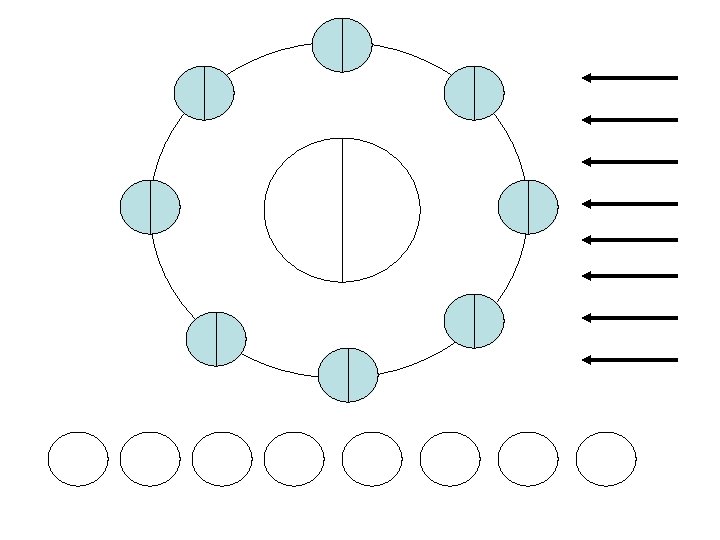
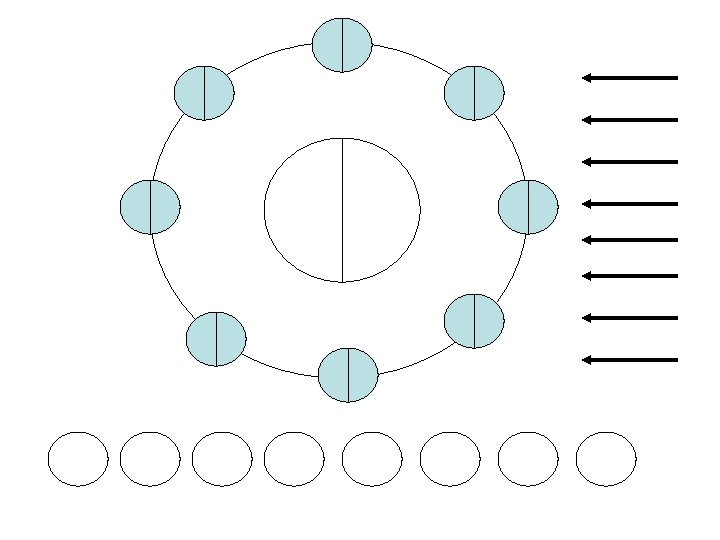
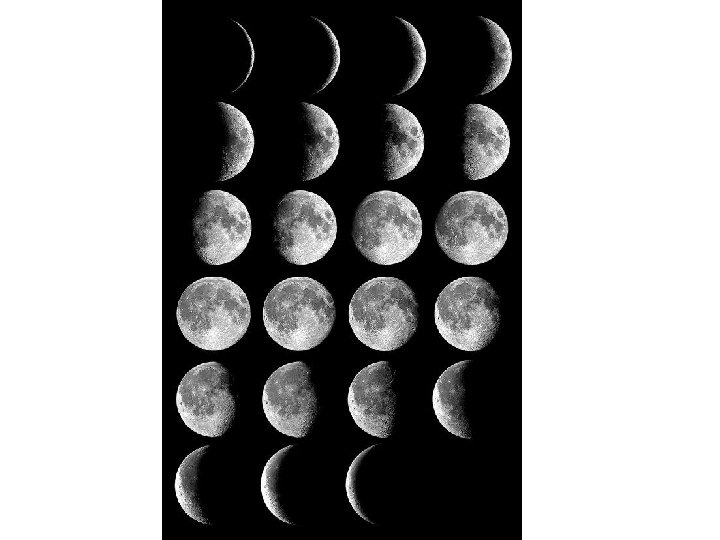
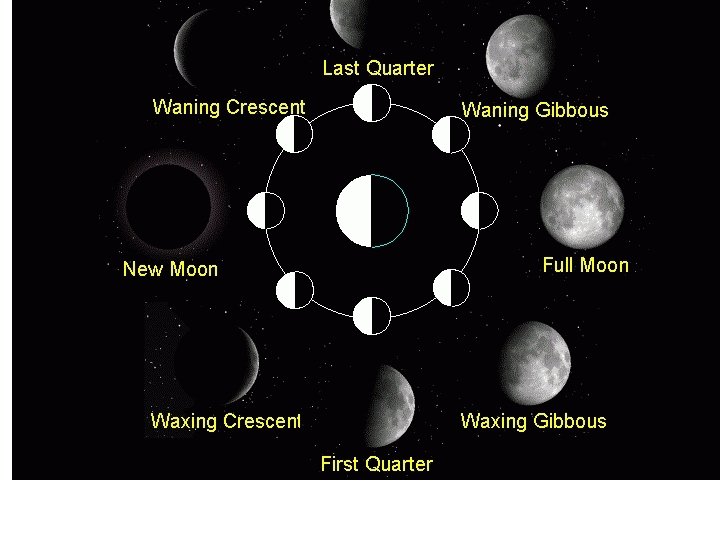
MOON PHASES • The varying amounts of the lighted moon as seen from Earth. • The period from one full moon to the next is 29 ½ days. • http: //www. astro. wisc. edu/~dolan/java/Mo on. Phase. html
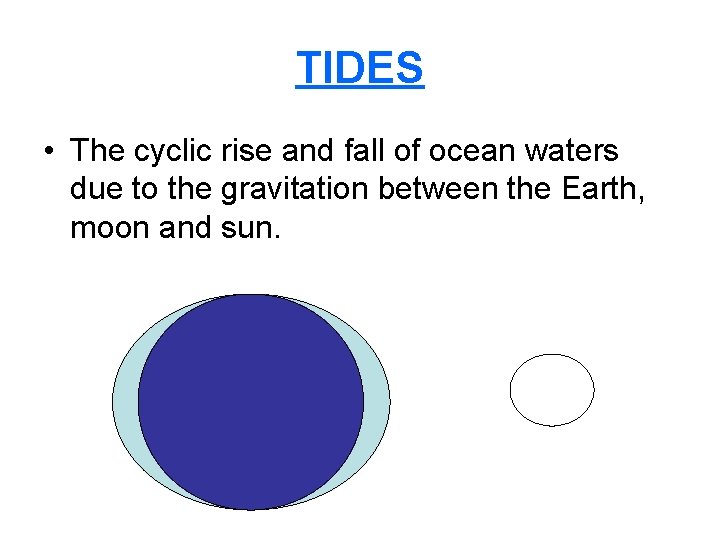
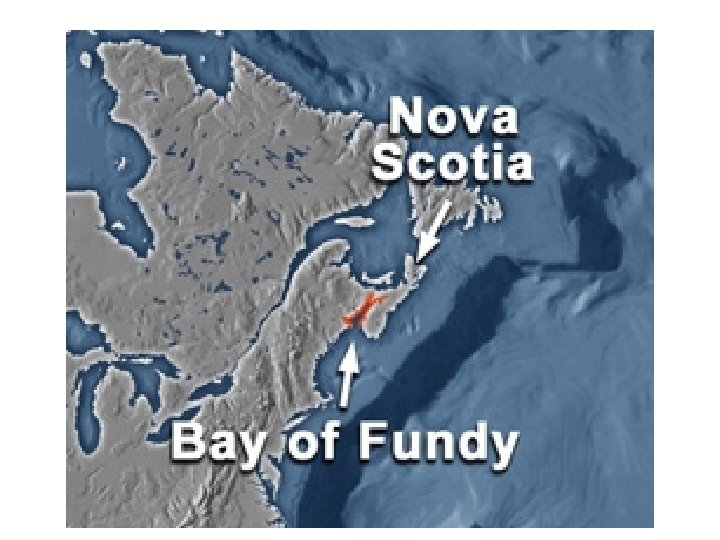
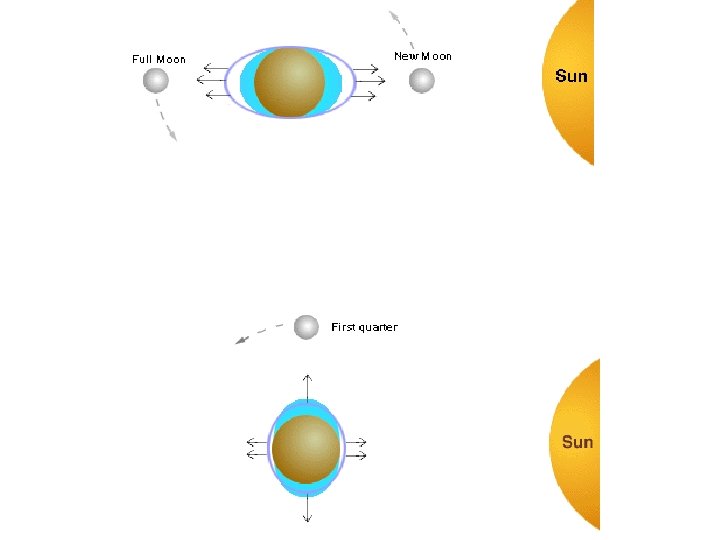
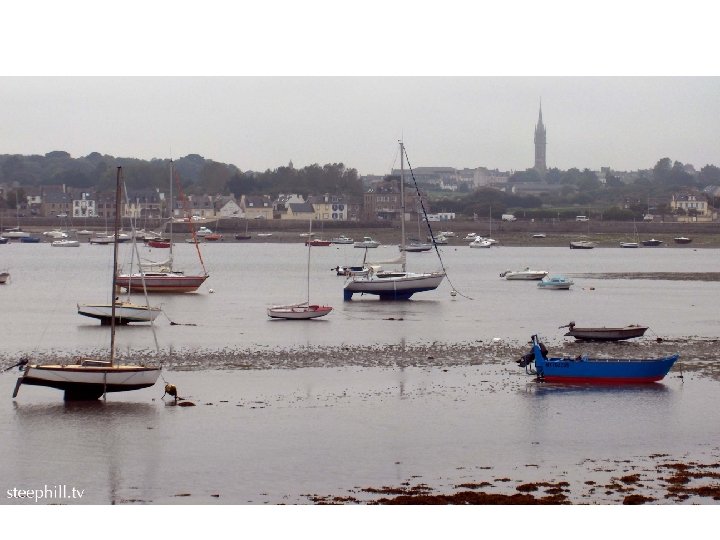
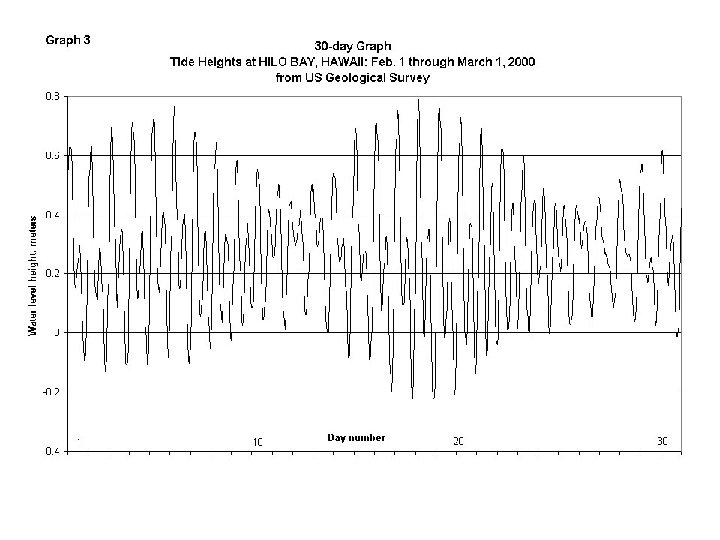
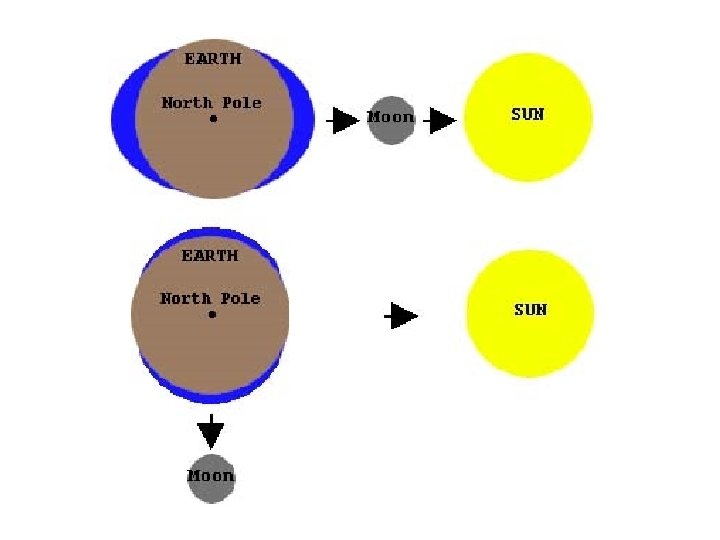
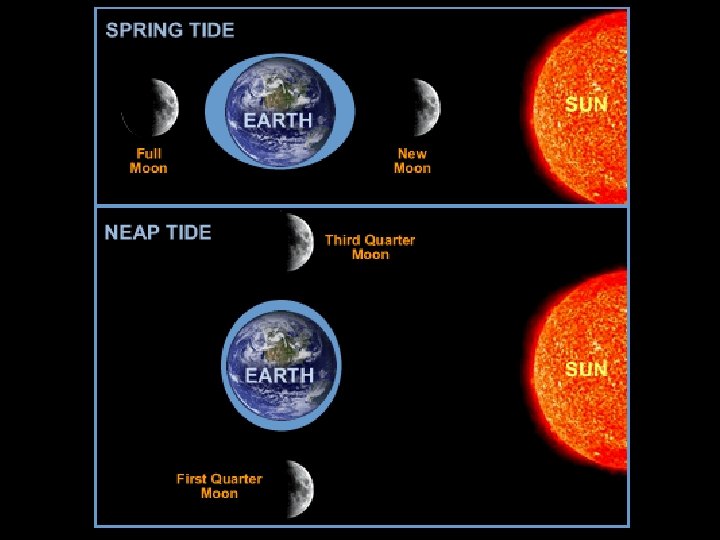
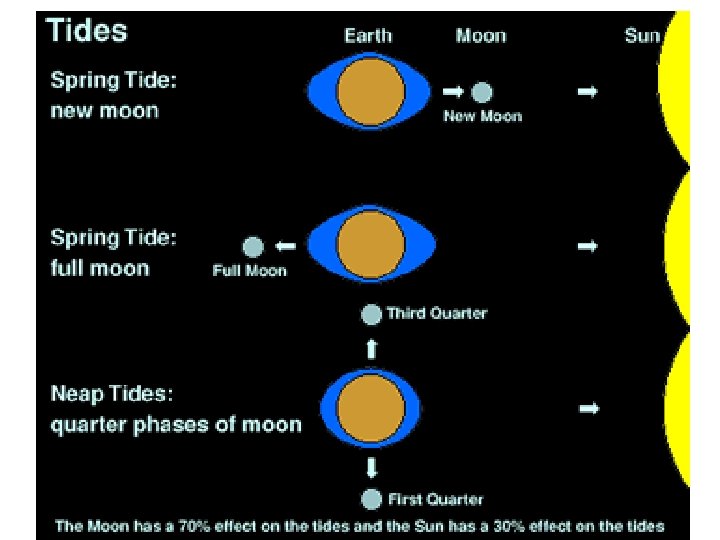
TIDES • The cyclic rise and fall of ocean waters due to the gravitation between the Earth, moon and sun.
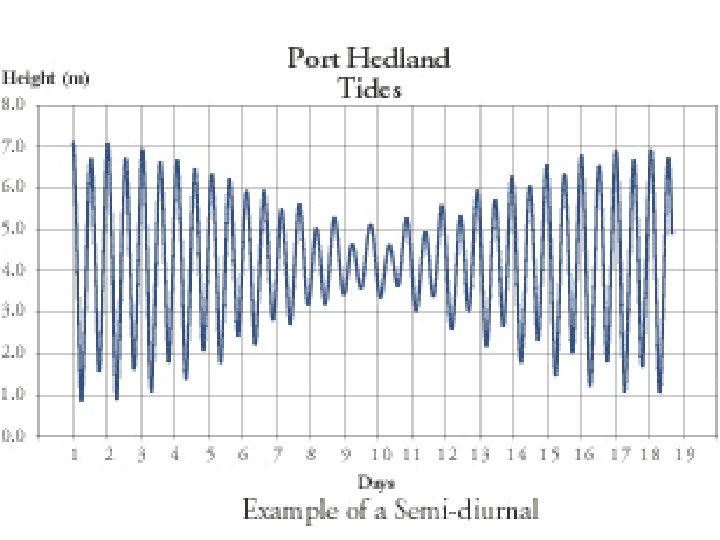
SPRING vs. NEAP TIDES SPRING TIDES Ø Higher high tides, lower low tides.
NEAP TIDES: Ø Lower high tides higher low tides.
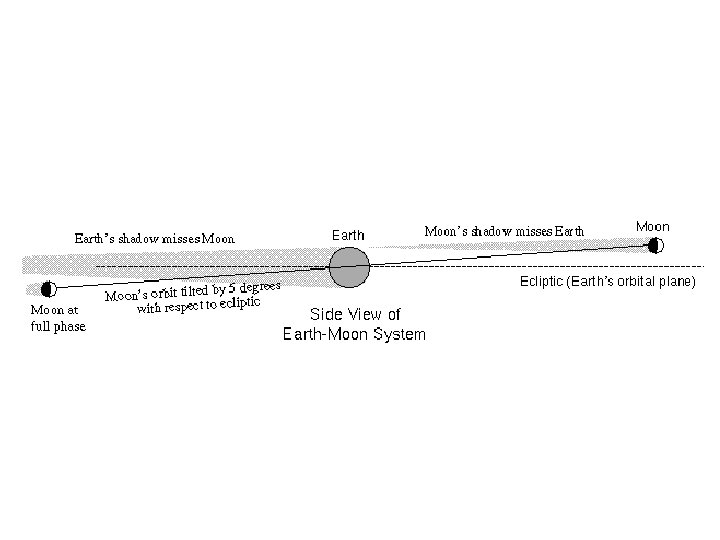
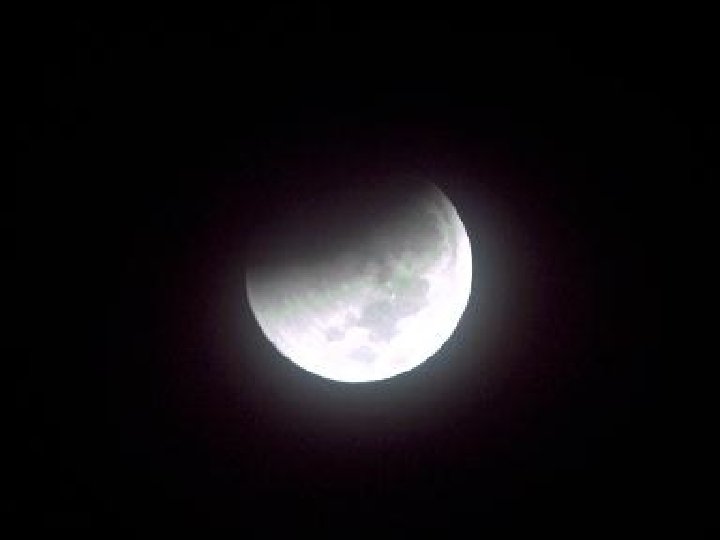
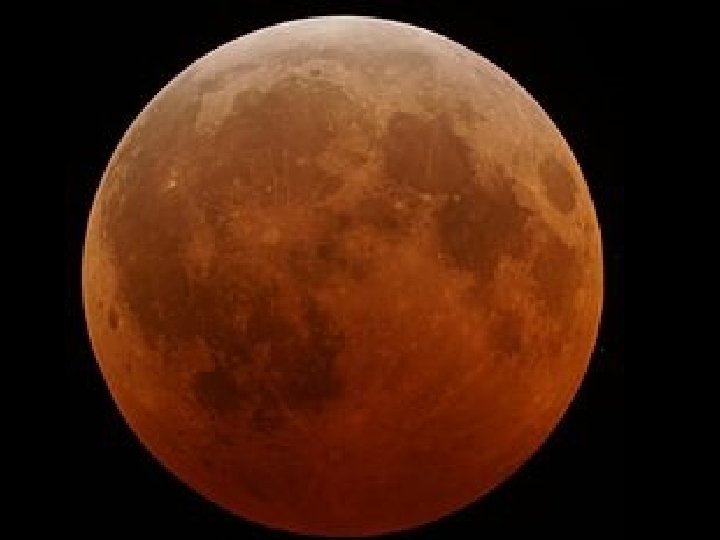
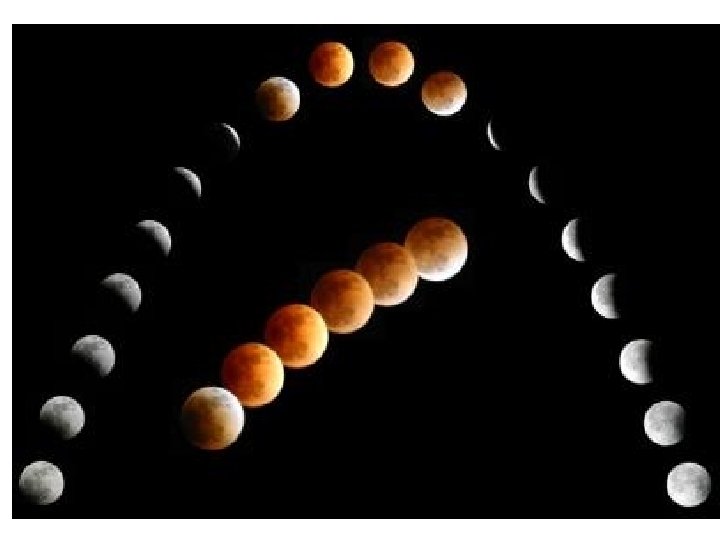
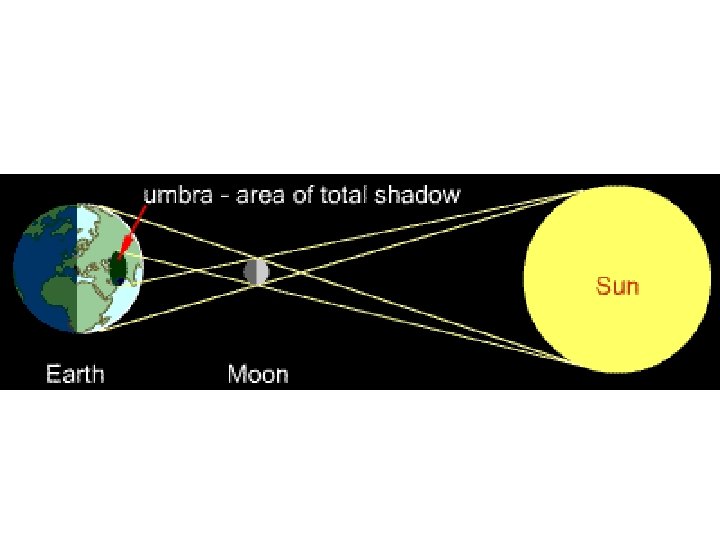
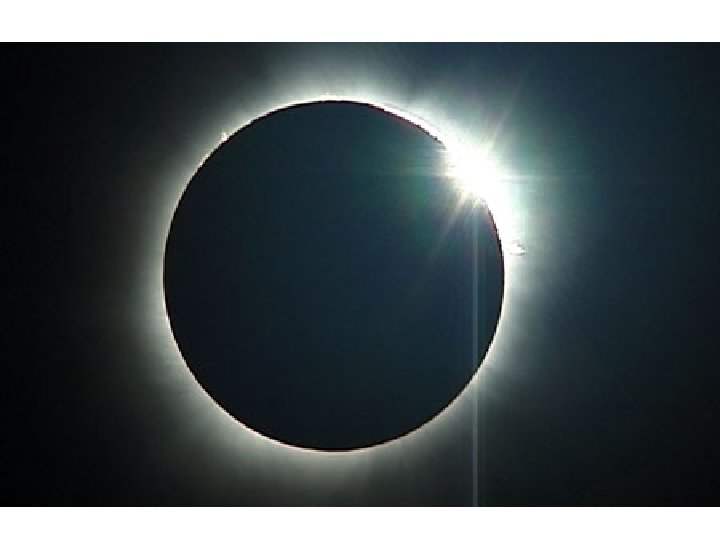
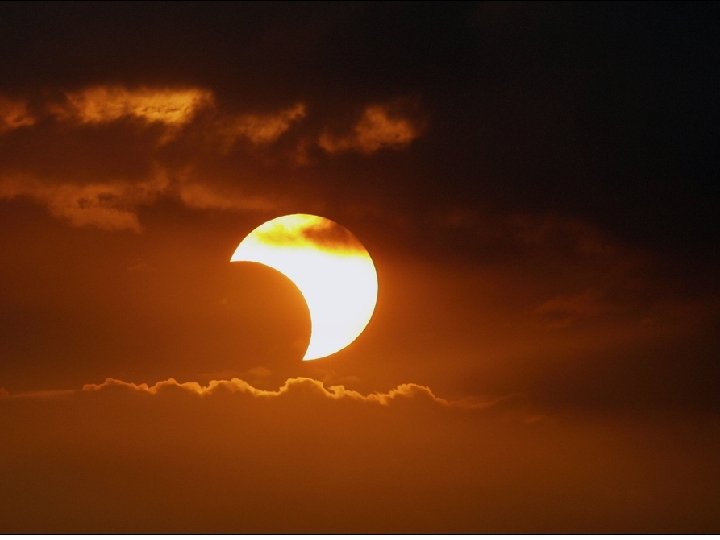
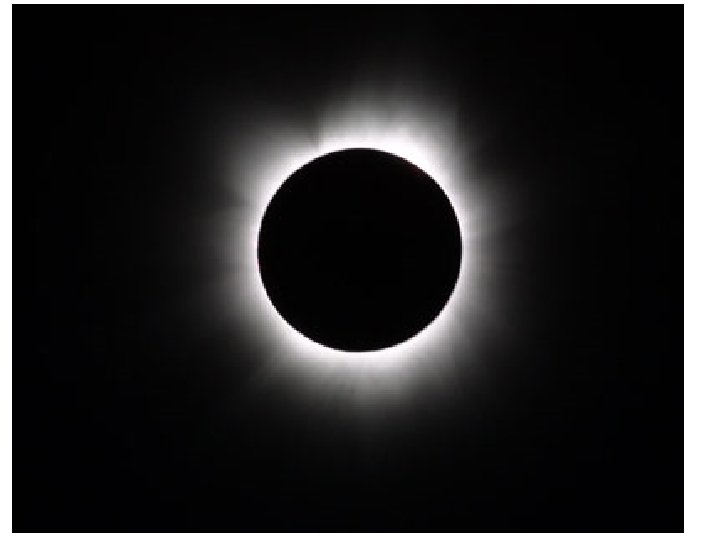
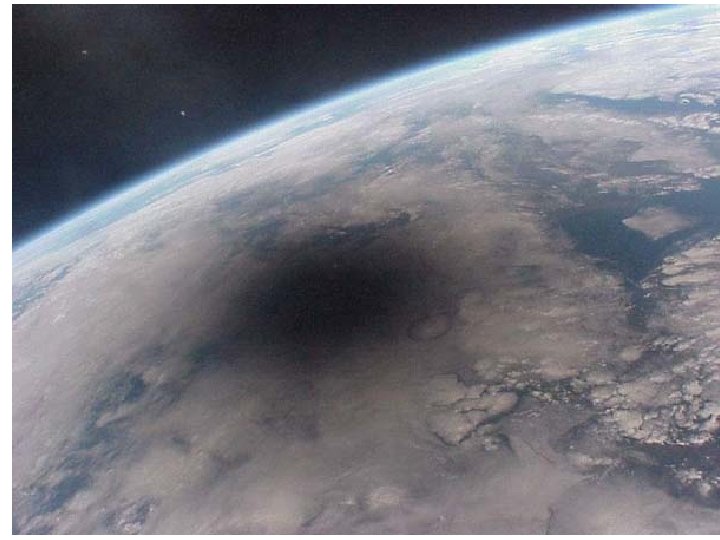
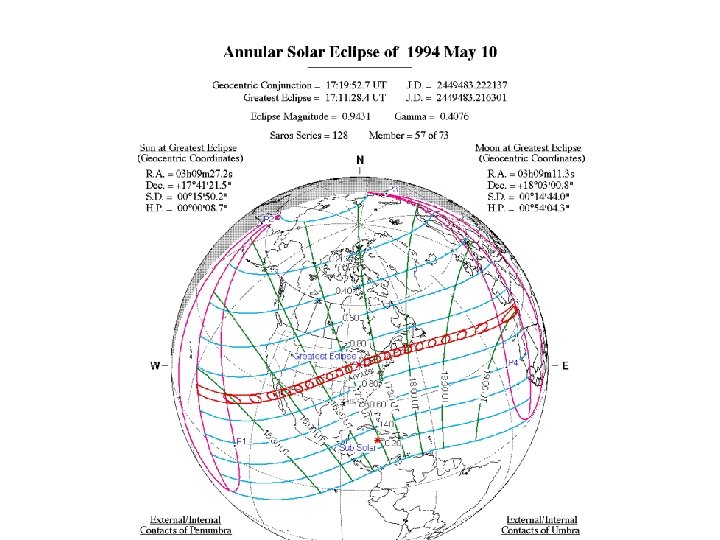
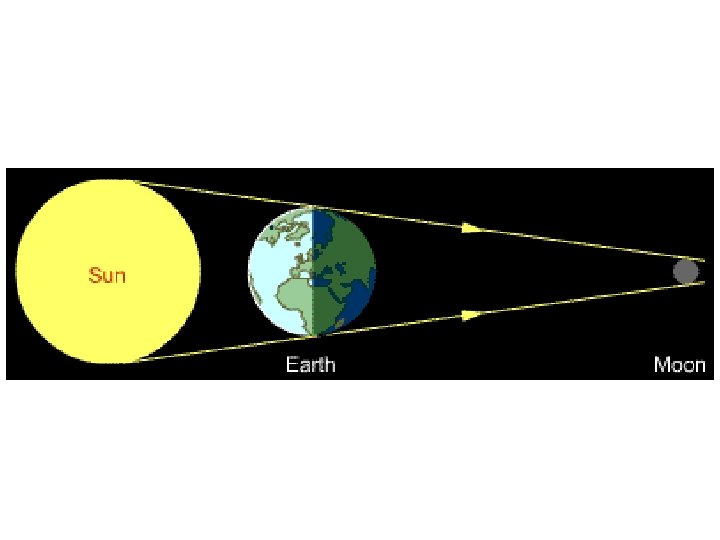
ECLIPSES: LUNAR SOLAR
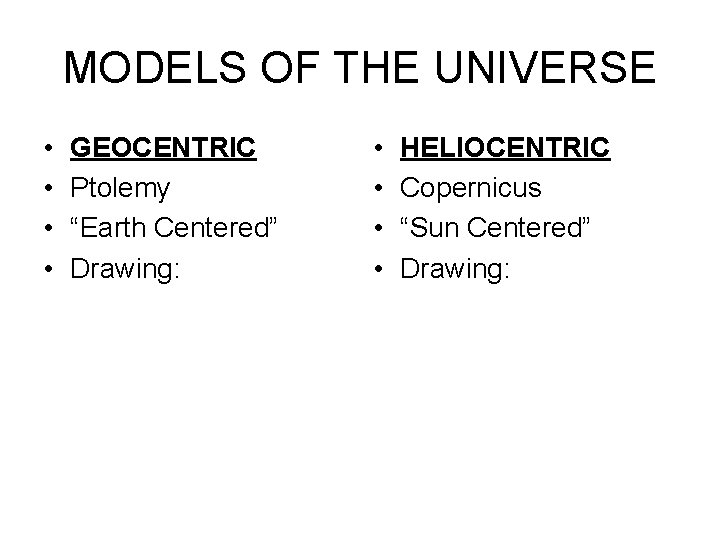
MODELS OF THE UNIVERSE • • GEOCENTRIC Ptolemy “Earth Centered” Drawing: • • HELIOCENTRIC Copernicus “Sun Centered” Drawing:
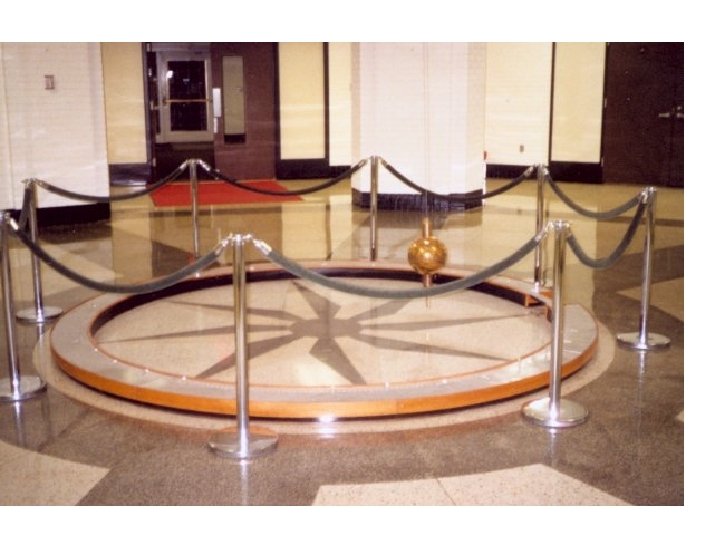
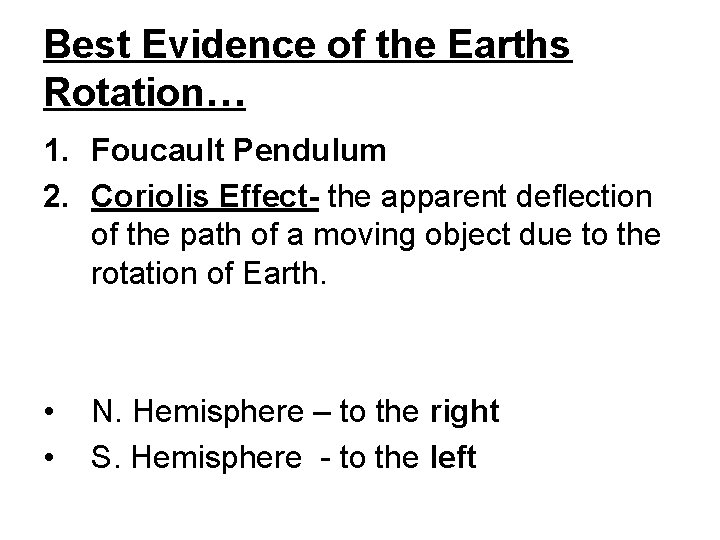
Best Evidence of the Earths Rotation… 1. Foucault Pendulum 2. Coriolis Effect- the apparent deflection of the path of a moving object due to the rotation of Earth. • • N. Hemisphere – to the right S. Hemisphere - to the left
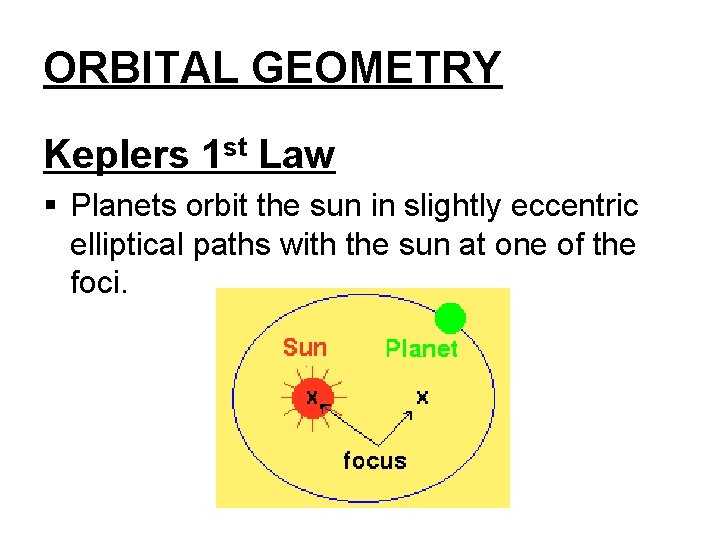
ORBITAL GEOMETRY Keplers 1 st Law § Planets orbit the sun in slightly eccentric elliptical paths with the sun at one of the foci.
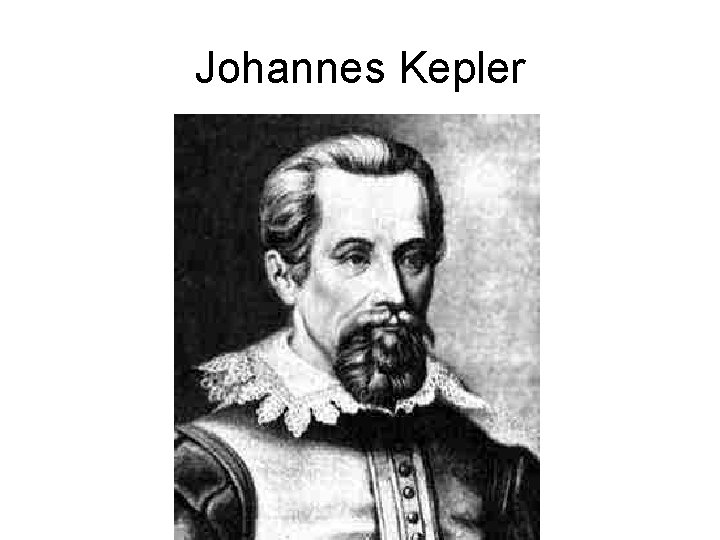
Johannes Kepler
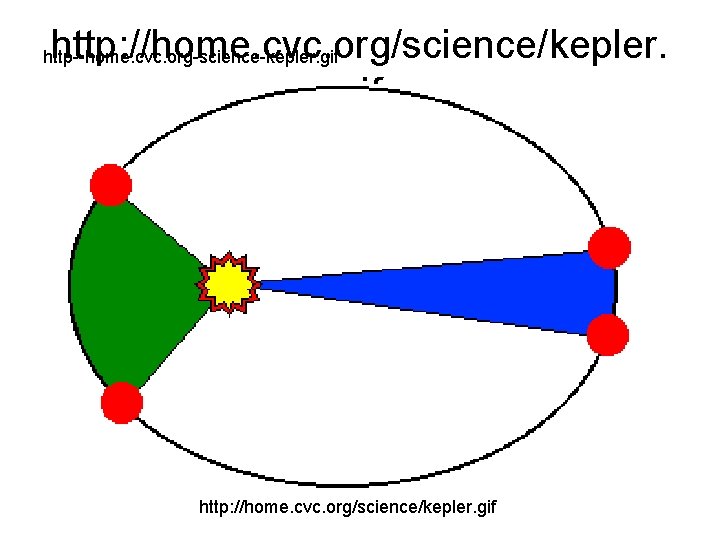
• http--home. cvc. org-science-kepler. gif
http: //home. cvc. org/science/kepler. gif http--home. cvc. org-science-kepler. gif http: //home. cvc. org/science/kepler. gif
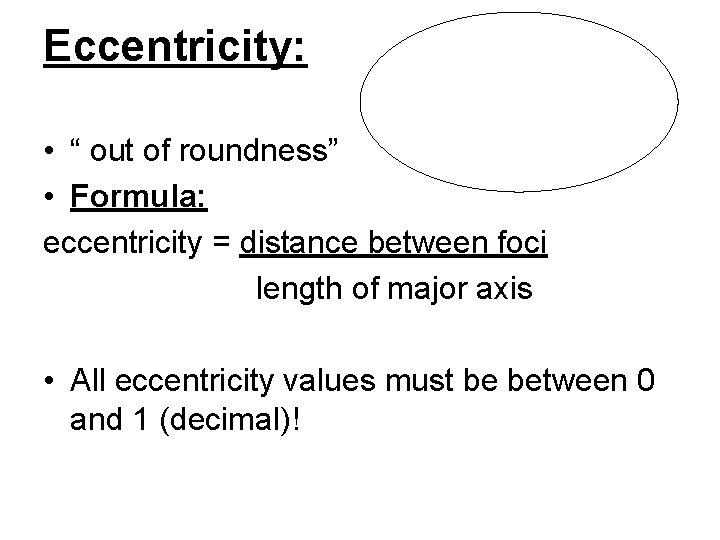
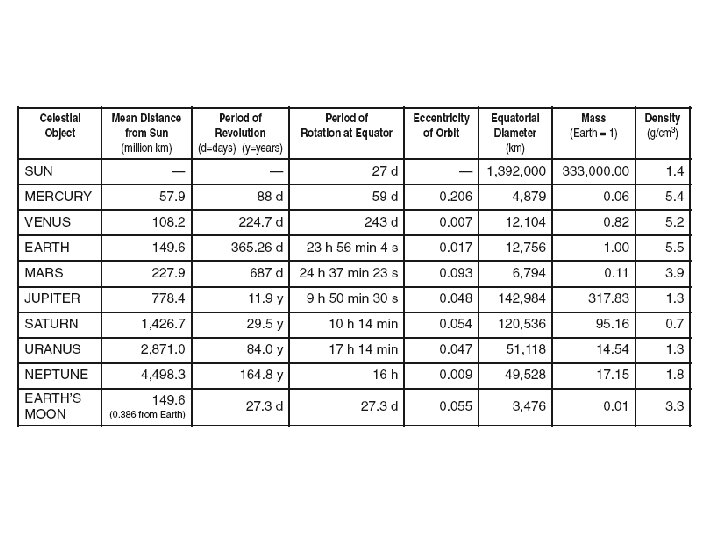
Eccentricity: • “ out of roundness” • Formula: eccentricity = distance between foci length of major axis • All eccentricity values must be between 0 and 1 (decimal)!
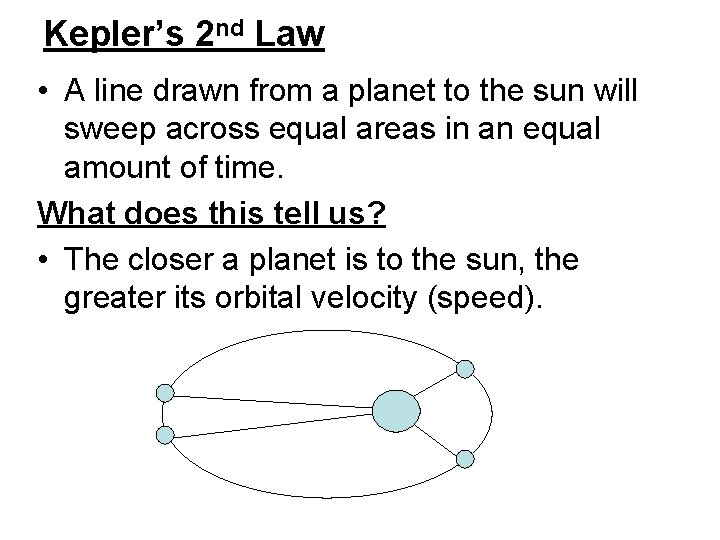
Kepler’s 2 nd Law • A line drawn from a planet to the sun will sweep across equal areas in an equal amount of time. What does this tell us? • The closer a planet is to the sun, the greater its orbital velocity (speed).
Kepler’s 3 rd Law • The period of a planet squared is equal to its distance from the sun cubed. (P 2=D 3) What does this tell us? • Planets that are further away from the sun take longer to revolve.
Perihelion • The point in a planets orbit when it is closest to the Sun. • Around Jan 4 th Aphelion • The point in a planets orbit when it is furthest from the Sun. • Around July 4 th