
Topic 3 5 Pressure in Fluids PASCALS LAW


- Slides: 16
Topic 3. 5 – Pressure in Fluids – PASCAL’S LAW Unit 2 – Mix and Flow of Matter
UNITS • Alright grade 8’s… – Name me as many units as you can think of… – Ready… – GO!!!!
Pressure • Pressure is the amount of force applied to a given area. – Measured in pascals (Pa) • A pascal equals the force of 1 N (newton) over an area of 1 m 2 • The MORE force you can apply to an area, the GREATER the pressure
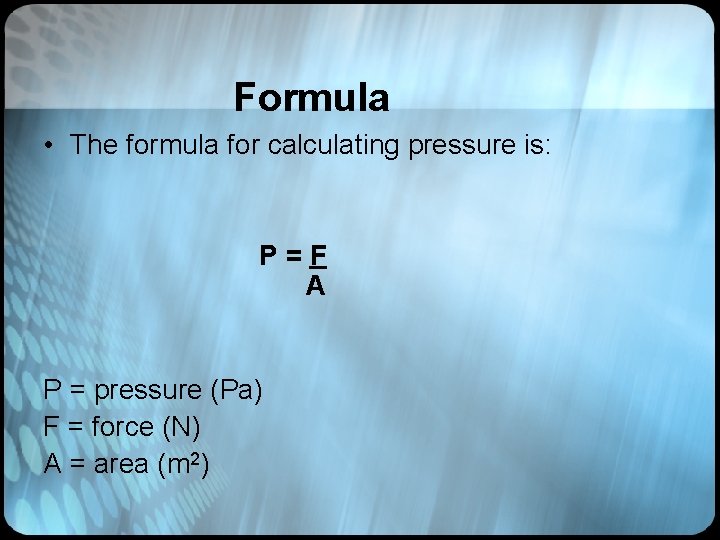
Formula • The formula for calculating pressure is: P=F A P = pressure (Pa) F = force (N) A = area (m 2)
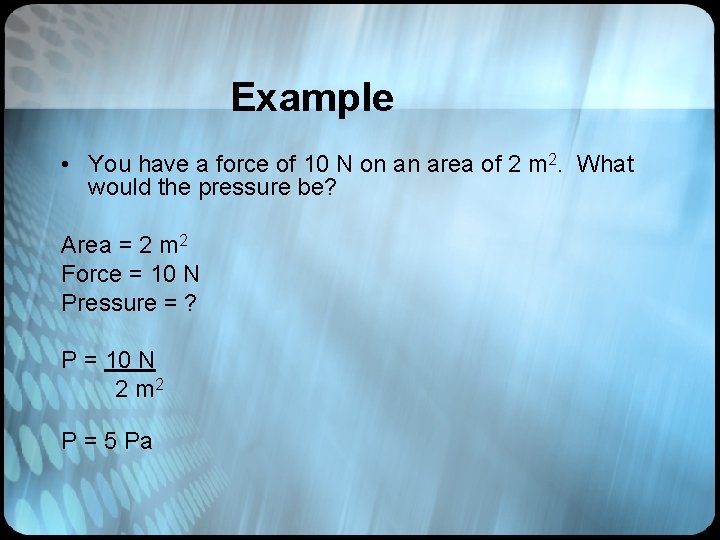
Example • You have a force of 10 N on an area of 2 m 2. What would the pressure be? Area = 2 m 2 Force = 10 N Pressure = ? P = 10 N 2 m 2 P = 5 Pa
Kilopascals • A pascal is a VERY SMALL amount of pressure. – Most scientists will measure pressure in kilopascals (k. Pa) • 1 k. Pa = 1000 Pa • A ballet dancer standing on the toes of ONE foot exerts 2500 k. Pa of pressure on the floor. – How many pascals is this?
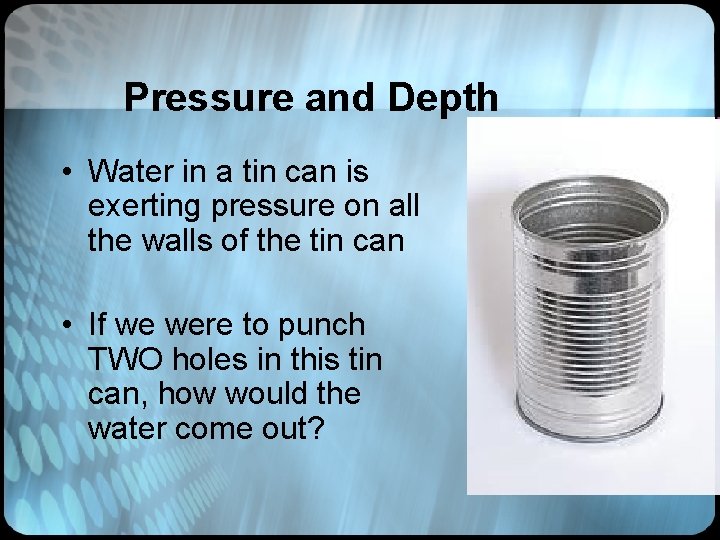
Pressure and Depth • Water in a tin can is exerting pressure on all the walls of the tin can • If we were to punch TWO holes in this tin can, how would the water come out?
Tin can experiment • The water is coming out almost in the exact same way. – Why is this? • The weight of the water in the upper part of the tin can is pressed down on the water in the lower part. – The more water above the hole, the more pressure.
Pascal’s Law • Meet Pascal ---- – Handsome man eh? • Pascal developed a law to explain how pressure is equal in all directions in fluids
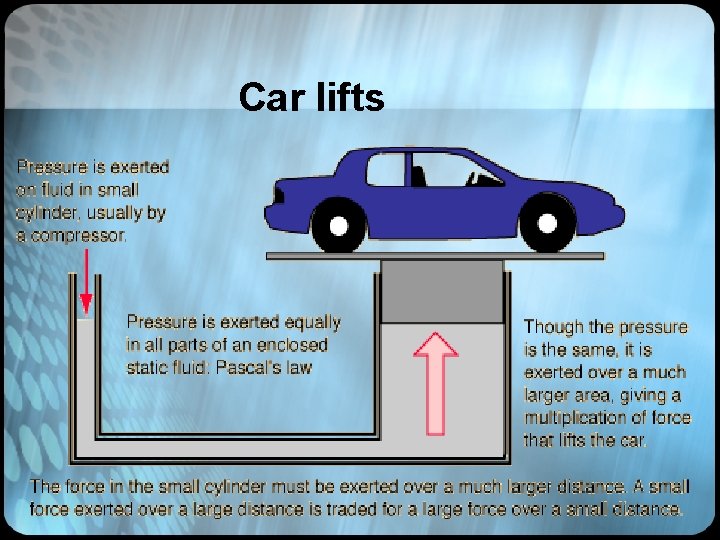
• Pascal’s Law states that an enclosed fluid transmits pressure EQUALLY in all directions. • Let’s look at some examples to figure out what the heck this handsome man (haha) is trying to tell us
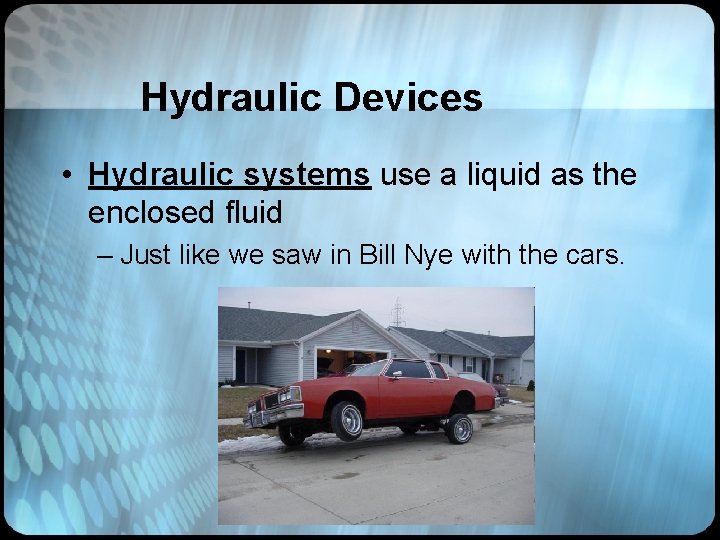
Hydraulic Devices • Hydraulic systems use a liquid as the enclosed fluid – Just like we saw in Bill Nye with the cars.
Car lifts
Advantages to Hydraulic Systems • In the lift we just saw, the output force is 16 TIMES greater than the input force. • A benefit of this type of system is it can multiply force.
Pneumatic Systems • Pneumatic systems use air to do tasks. – Examples of this would be • Dentist drills, jack hammers, paint sprayers and air brakes on trucks • These cost less and are more safe than hydraulic systems
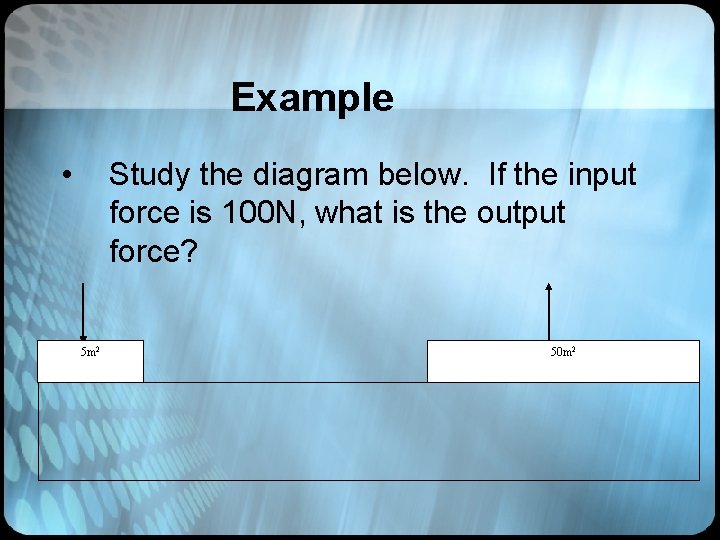
Example • Study the diagram below. If the input force is 100 N, what is the output force? 5 m 2 50 m 2
Maintaining Pressure • For a hydraulic and pneumatic system to function properly, the entire system must be SEALED – The smallest hole or leak causes the system to fail.