
Topic 3 3 Visual Anatomy Transduction Transforming signals
- Slides: 15
Topic 3. 3 - Visual Anatomy
Transduction • Transforming signals into neural impulses. • Information goes from the senses to the thalamus , then to the various areas in the brain. Remember Ethan in Sky High. He changes his body to slime. Solid form to liquid form. Change from one form of energy to another.
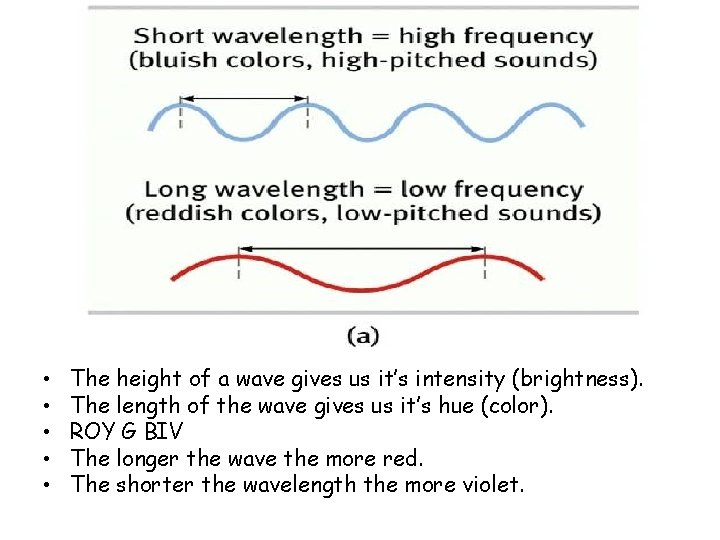
Phase One: Gathering Light • • • The height of a wave gives us it’s intensity (brightness). The length of the wave gives us it’s hue (color). ROY G BIV The longer the wave the more red. The shorter the wavelength the more violet.
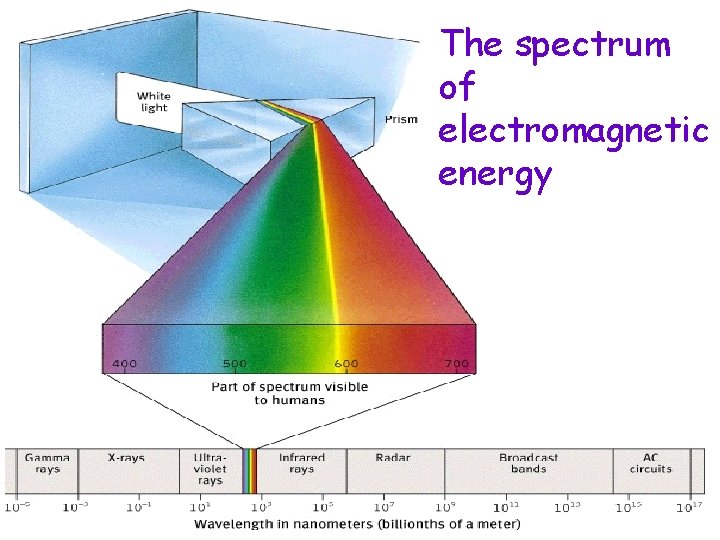
The spectrum of electromagnetic energy
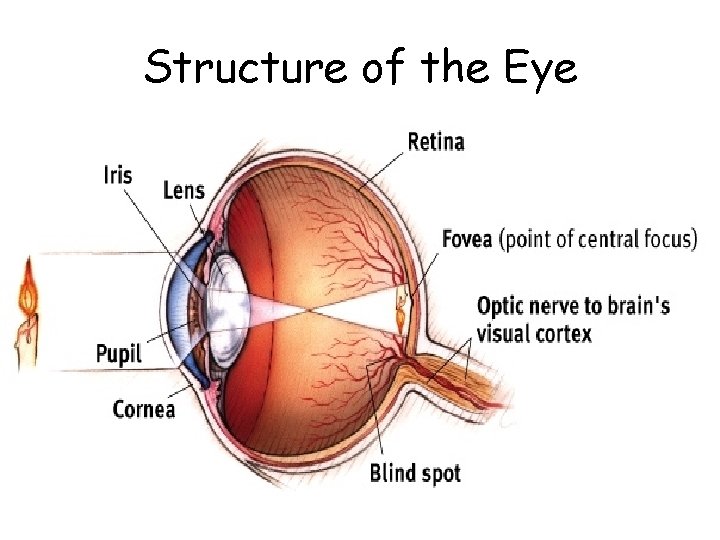
Structure of the Eye
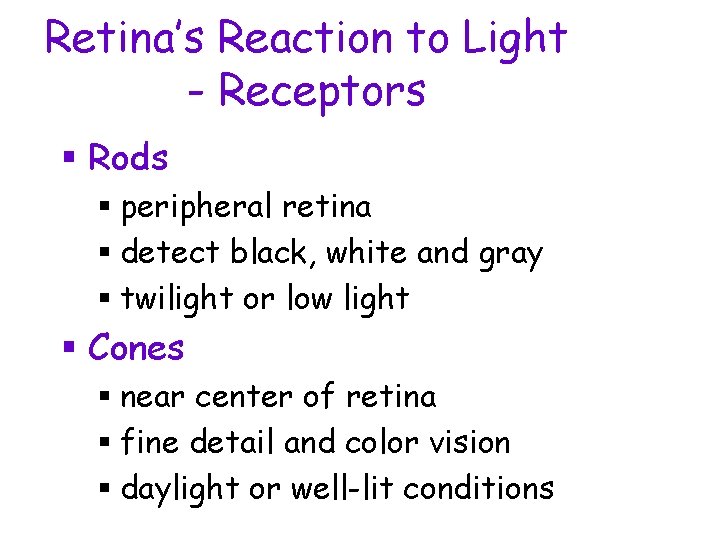
Retina’s Reaction to Light - Receptors § Rods § peripheral retina § detect black, white and gray § twilight or low light § Cones § near center of retina § fine detail and color vision § daylight or well-lit conditions
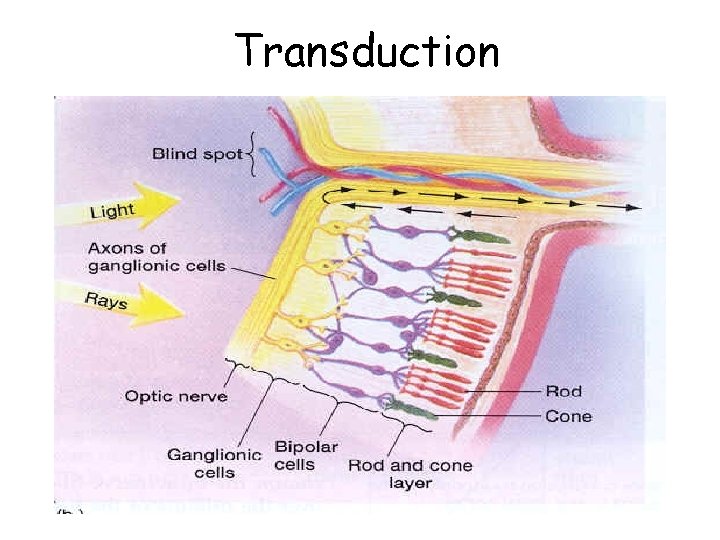
Transduction
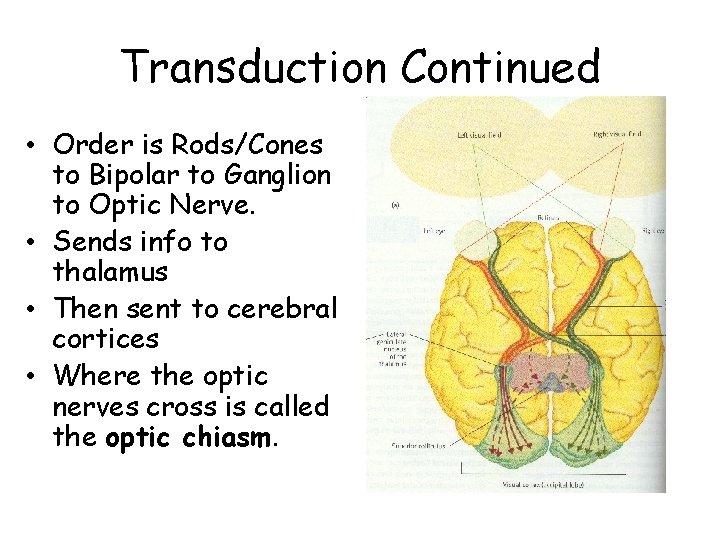
Transduction Continued • Order is Rods/Cones to Bipolar to Ganglion to Optic Nerve. • Sends info to thalamus • Then sent to cerebral cortices • Where the optic nerves cross is called the optic chiasm.
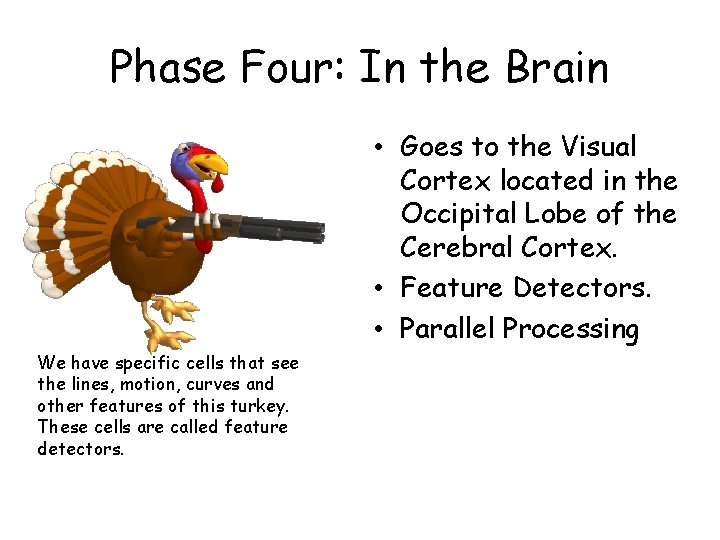
Phase Four: In the Brain • Goes to the Visual Cortex located in the Occipital Lobe of the Cerebral Cortex. • Feature Detectors. • Parallel Processing We have specific cells that see the lines, motion, curves and other features of this turkey. These cells are called feature detectors.
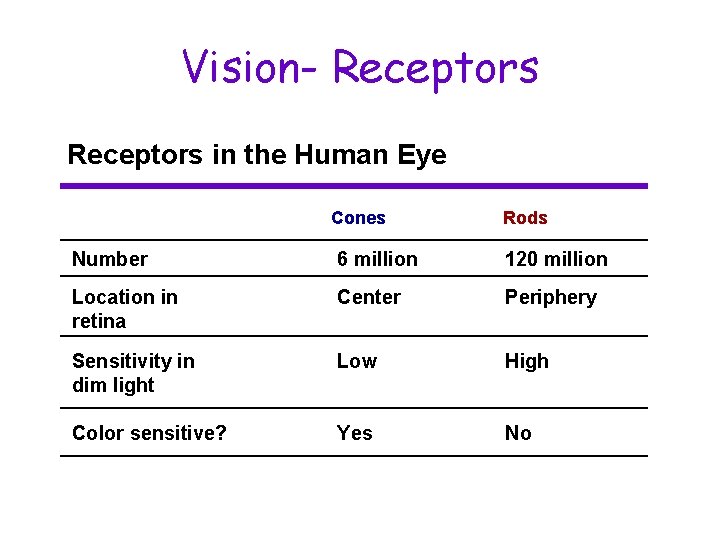
Vision- Receptors in the Human Eye Cones Rods Number 6 million 120 million Location in retina Center Periphery Sensitivity in dim light Low High Color sensitive? Yes No
Color Vision Two Major Theories
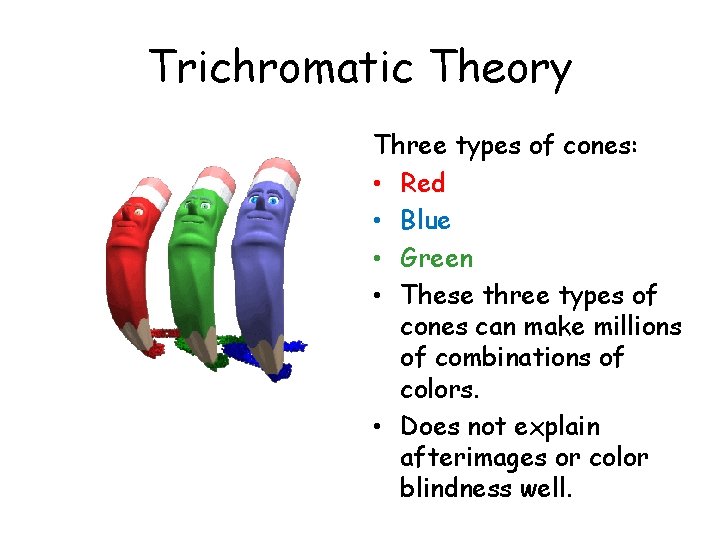
Trichromatic Theory Three types of cones: • Red • Blue • Green • These three types of cones can make millions of combinations of colors. • Does not explain afterimages or color blindness well.
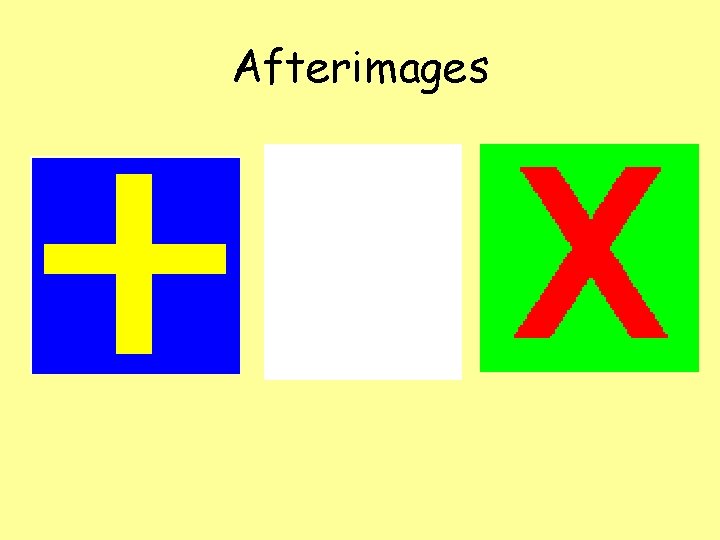
Opponent-Process theory The sensory receptors come in pairs. • Red/Green • Yellow/Blue • Black/White • If one color is stimulated, the other is inhibited.
Afterimages
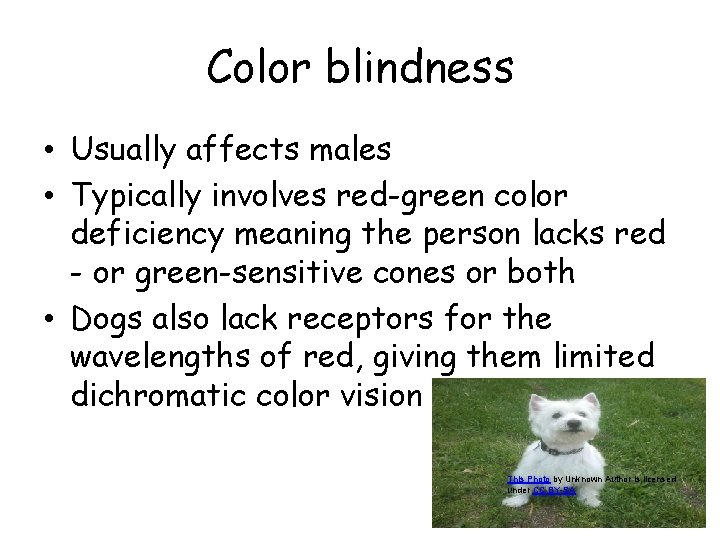
Color blindness • Usually affects males • Typically involves red-green color deficiency meaning the person lacks red - or green-sensitive cones or both • Dogs also lack receptors for the wavelengths of red, giving them limited dichromatic color vision This Photo by Unknown Author is licensed under CC BY-SA