
Topic 3 2 How is energy transformed Energy

- Slides: 8
Topic 3. 2: How is energy transformed? • Energy is transformed • In chemical reactions. • In nuclear reactions. • When light energy interacts with matter.
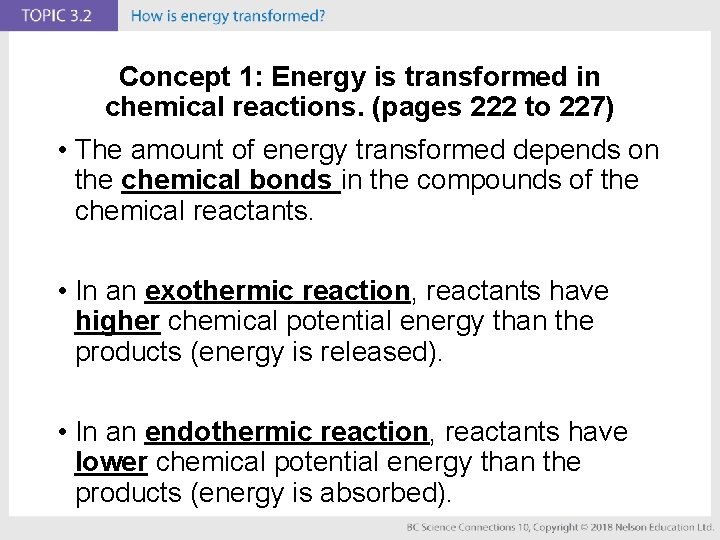
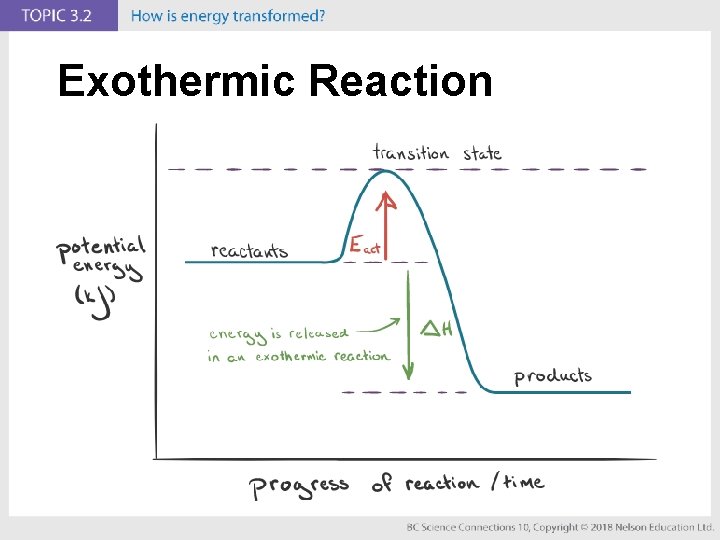
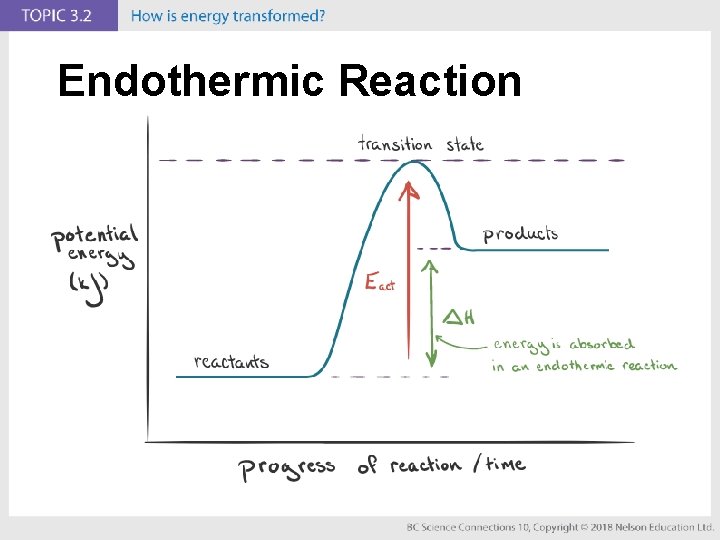
Concept 1: Energy is transformed in chemical reactions. (pages 222 to 227) • The amount of energy transformed depends on the chemical bonds in the compounds of the chemical reactants. • In an exothermic reaction, reactants have higher chemical potential energy than the products (energy is released). • In an endothermic reaction, reactants have lower chemical potential energy than the products (energy is absorbed).
Exothermic Reaction
Endothermic Reaction
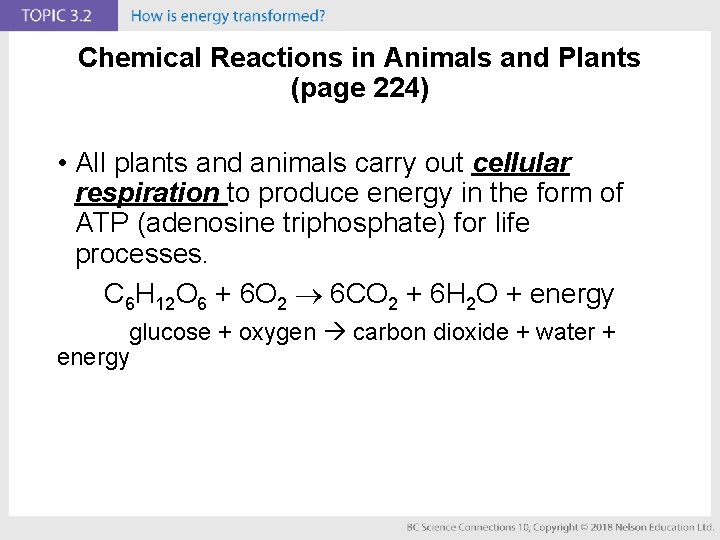
Chemical Reactions in Animals and Plants (page 224) • All plants and animals carry out cellular respiration to produce energy in the form of ATP (adenosine triphosphate) for life processes. C 6 H 12 O 6 + 6 O 2 6 CO 2 + 6 H 2 O + energy glucose + oxygen carbon dioxide + water + energy
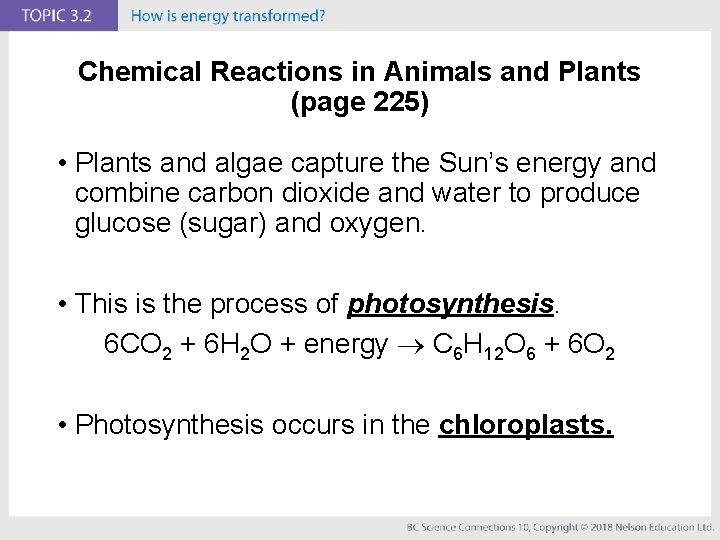
Chemical Reactions in Animals and Plants (page 225) • Plants and algae capture the Sun’s energy and combine carbon dioxide and water to produce glucose (sugar) and oxygen. • This is the process of photosynthesis. 6 CO 2 + 6 H 2 O + energy C 6 H 12 O 6 + 6 O 2 • Photosynthesis occurs in the chloroplasts.
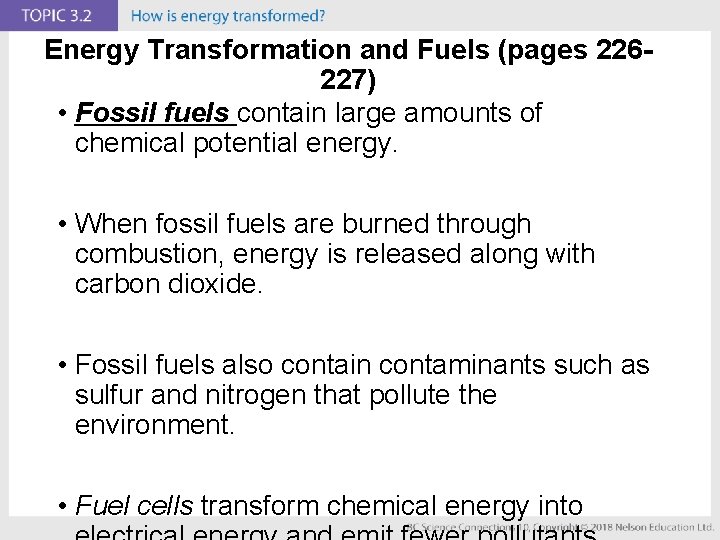
Energy Transformation and Fuels (pages 226227) • Fossil fuels contain large amounts of chemical potential energy. • When fossil fuels are burned through combustion, energy is released along with carbon dioxide. • Fossil fuels also contain contaminants such as sulfur and nitrogen that pollute the environment. • Fuel cells transform chemical energy into
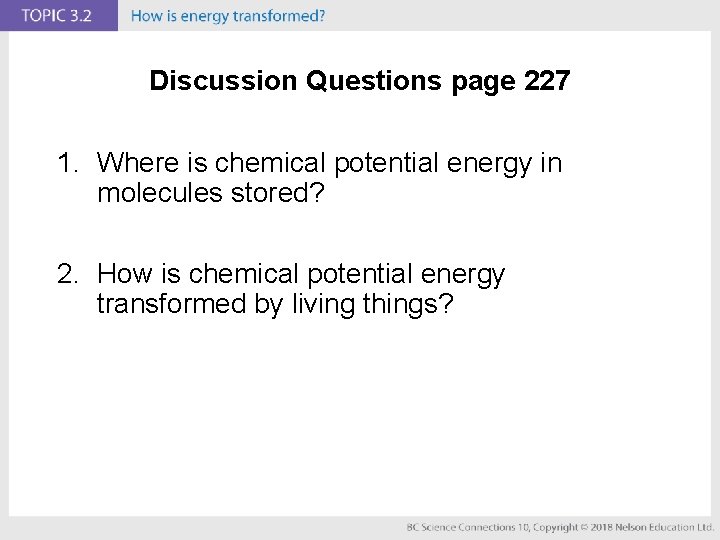
Discussion Questions page 227 1. Where is chemical potential energy in molecules stored? 2. How is chemical potential energy transformed by living things?