
Topic 2 Dual Process Theory of Thinking Prof

- Slides: 25
Topic 2: Dual Process Theory of Thinking Prof. Dr. Chew Keng Sheng Faculty of Medicine and Health Sciences, Universiti Malaysia Sarawak This Open. Course. Ware@UNIMAS and its related course materials are licensed under a Creative Commons Attribution-Non. Commercial-Share. Alike 4. 0 International License.
Objectives • By the end of this lecture, the learners will be able to 1. Explain the concept of dual process theory of thinking 2. Identify the interplay of Type 1 and Type 2 cognitive processes in clinical setting as well as everyday life 3. Describe clinical reasoning and two models of clinical reasoning 4. Describe the limitations and misconception of the dual process theory of thinking
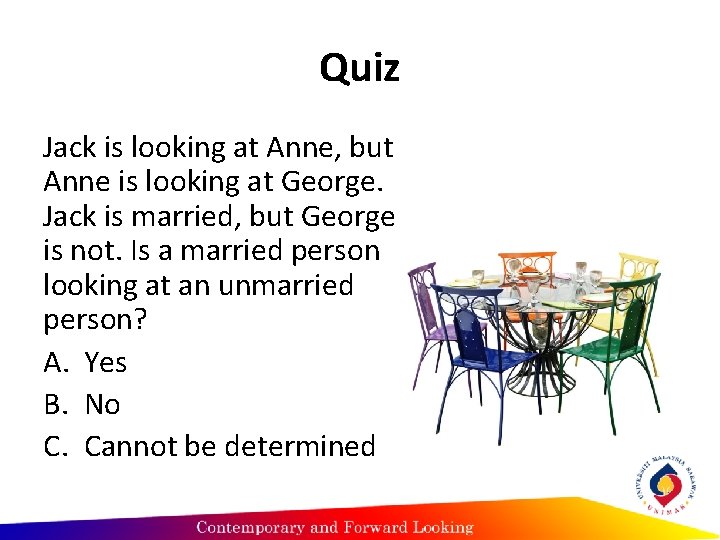
Quiz Jack is looking at Anne, but Anne is looking at George. Jack is married, but George is not. Is a married person looking at an unmarried person? A. Yes B. No C. Cannot be determined
Disjunctive Reasoning • Most people would have answered ‘C. cannot be determined’ • This thought process is called fully disjunctive reasoning – reasoning that considers all possibilities • Most people can carry out fully disjunctive reasoning when they are explicitly told that it is necessary but most do not automatically do so
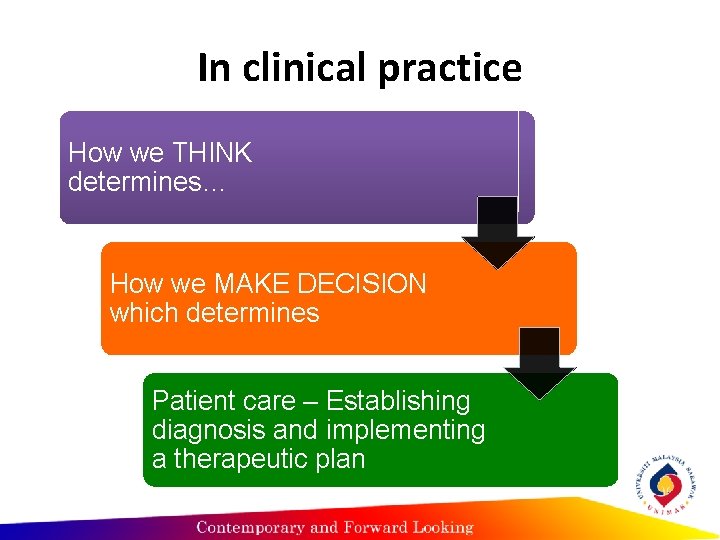
In clinical practice How we THINK determines… How we MAKE DECISION which determines Patient care – Establishing diagnosis and implementing a therapeutic plan
Why high diagnostic error rate? • Hovers round ~ 15% (Elstein 2009; Graber et al, 2012) • Usually not because of a lack of knowledge, but problems with the clinician’s thinking (cognitive biases/errors)
Dual Process Theory of Thinking • One of the dominant theories of reasoning is the dual process theory (DPT) of reasoning. • Traced back as early as to the works by James (1890) and Freud (1900) – reasoning takes 2 different modes of thought • Schneider and Shiffrin over 35 years ago (‘intuitive’ and ‘analytical’ thinking respectively) • The works Epstein, Tversky and Kahneman, Stanovich and West, and Evans, etc.
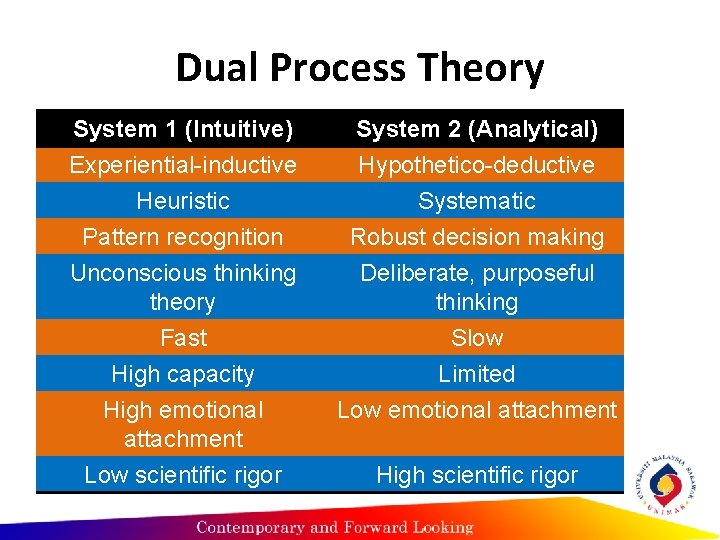
Dual Process Theory System 1 (Intuitive) Experiential-inductive Heuristic Pattern recognition Unconscious thinking theory Fast High capacity High emotional attachment Low scientific rigor System 2 (Analytical) Hypothetico-deductive Systematic Robust decision making Deliberate, purposeful thinking Slow Limited Low emotional attachment High scientific rigor
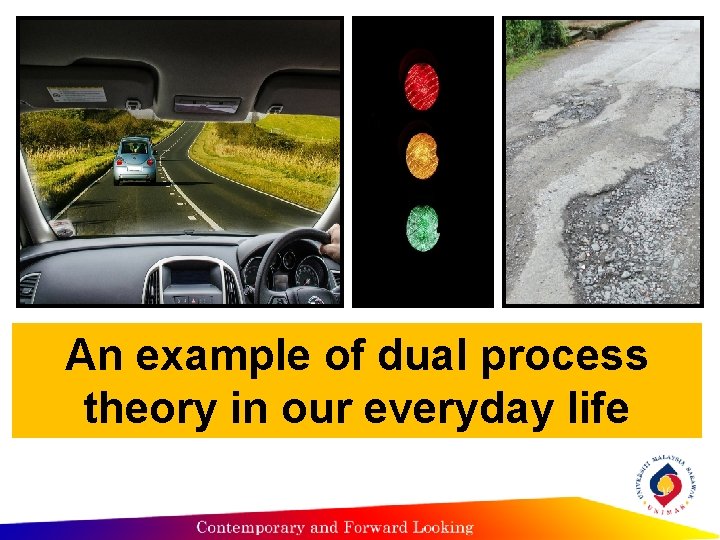
An example of dual process theory in our everyday life
Let’s Think and Discuss Give examples of some of the decisions that you make in your daily lives that are largely based on Type 1 and those that are based on Type 2
Misconceptions on the dual process theory • Misconception #1: DPT implies a dichotomy in our cognitive system • Misconception #2: Type 1 process is responsible for our bad thinking, while Type 2 process is responsible for our good thinking
DPT is not as dichotomous as it seems • Should not perceive Type 1 and Type 2 as two discrete styles of thinking. • Rather should perceive Type 1 and Type 2 as two modes of thinking that can vary continuously (Evans & Stanovich, 2013) • Osman (2004) questioned the adequacy of DPT to full range of cognitive processes and proposed a unified, single cognitive framework.
Defining Features of Type 1 & Type 2 • Defining feature of Type 1 thinking is automaticity – facilitates fast decision-making independent of higherlevel control (Stanovich & Toplak, 2012; Evans & Stanovich, 2013 ). • Defining feature of Type 2 thinking is cognitive decoupling – analytical ability to create imaginative, hypothetical copies of the real world that enables the decision maker to evaluate various alternatives in a simulated world before making a decision
Metacognition (‘Thinking about thinking’) • Metacognition (‘Type 3’) to regulate and recruit either Type 1 and Type 2 proceses and to resolve conflicts between Type 1 and Type 2 • Stanovich splits Type 2 into two further processes: the ‘reflective mind’ and the ‘algorithmic mind’. Reflective mind regulates the decision whether algorithmic mind should overrides Type 1 or not (‘tripartite model’)
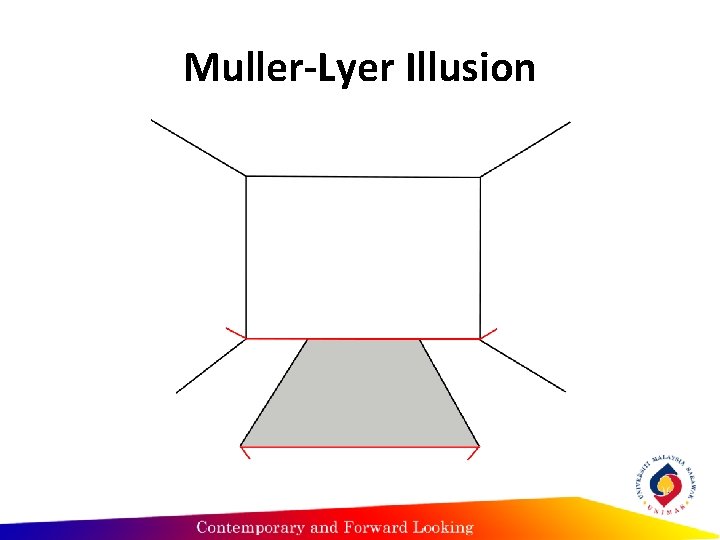
Muller-Lyer Illusion
“Now that you have measured the lines, you – your System 2, the conscious being you call ‘I’ – have a new belief: you know that the lines are equal…You have chosen to believe the measurement, but you cannot prevent System 1 from doing its thing: you cannot decide to see the lines as equal, although you know they are. To resist the illusion…, you must learn to mistrust your impressions of the length of the lines. . To implement that rule, you must be able to recognize the illusory pattern and recall what you know about it. If you can do this, you will never again be fooled by the Muller-Lyer illusion. But you will still see one line as being longer than the other. ” – Daniel Kahneman, Thinking Fast and Slow
Clinical Reasoning • Is defined by Barrows and Tamblyn (1980) as: • ‘the cognitive process that is necessary to evaluate and manage a patient’s medical problems” • Clinical reasoning is idiosyncratic, multi-faceted and highly complex skill, characterized by different processes that mobilize specific knowledge held in long-term memory (Schmidt et al, 1990).
Integrated model of clinical reasoning • In clinical reasoning, Type 1 and Type 2 are not mutually exclusive (Eva, 2005) • Elstein (2009): • ‘When does the physician need to engage in a slow, careful logical process of hypothesis generation and testing, and when will shortcut methods like pattern recognition and recalling the solution to a previous case work just as well or better? ’
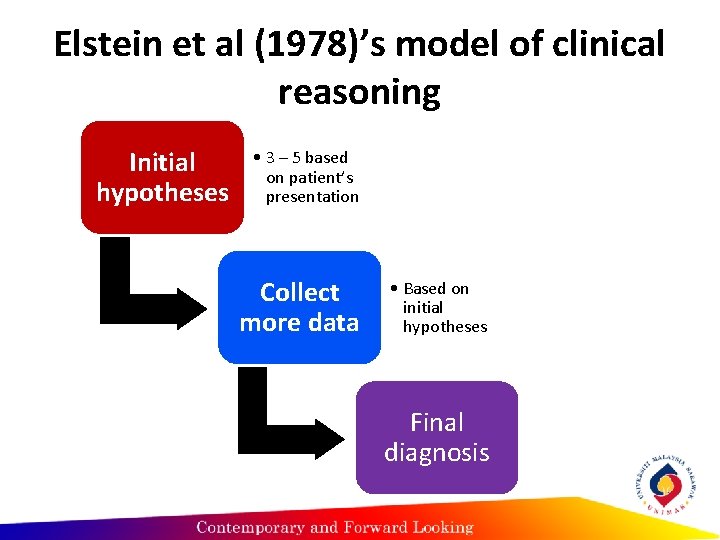
Elstein et al (1978)’s model of clinical reasoning Initial hypotheses • 3 – 5 based on patient’s presentation Collect more data • Based on initial hypotheses Final diagnosis
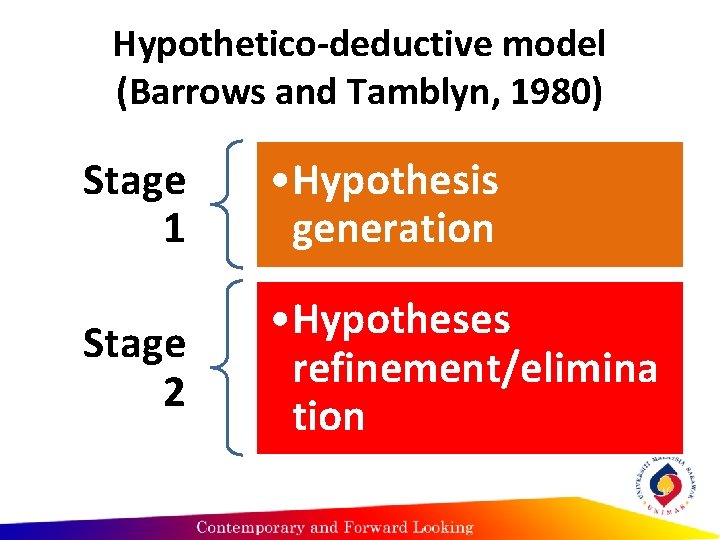
Hypothetico-deductive model (Barrows and Tamblyn, 1980) Stage 1 • Hypothesis generation Stage 2 • Hypotheses refinement/elimina tion
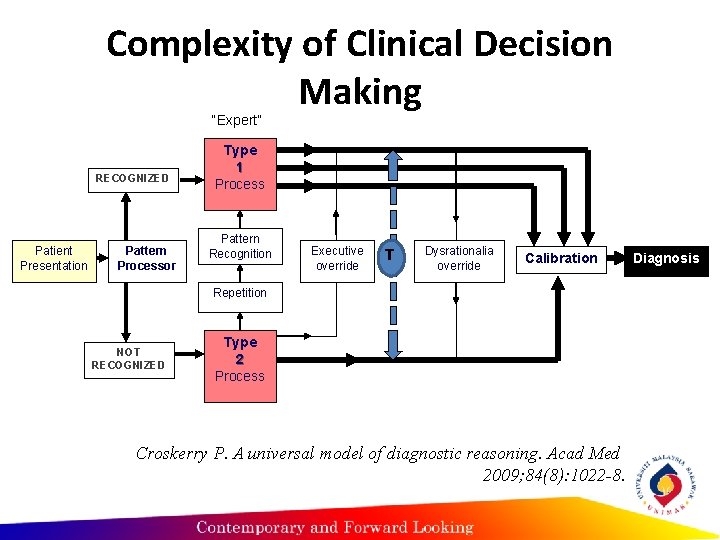
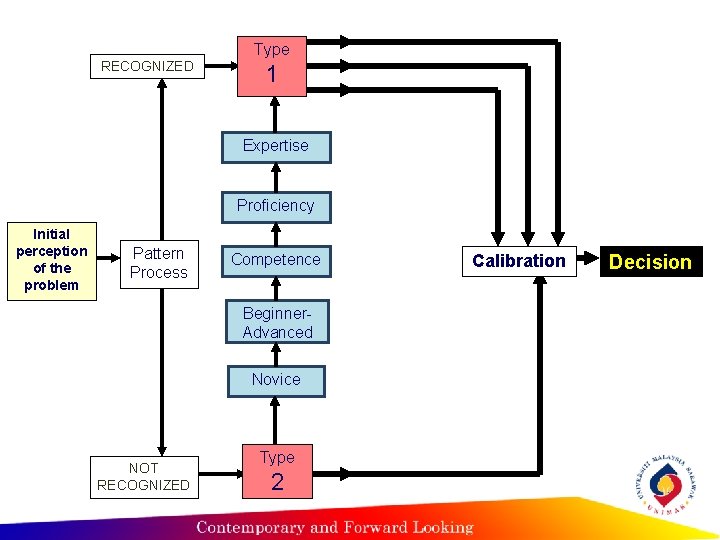
Complexity of Clinical Decision Making “Expert” RECOGNIZED Patient Presentation Pattern Processor Type 1 Process Pattern Recognition Executive override T Dysrationalia override Calibration Repetition NOT RECOGNIZED Type 2 Process Croskerry P. A universal model of diagnostic reasoning. Acad Med 2009; 84(8): 1022 -8. Diagnosis
Type RECOGNIZED 1 Expertise Proficiency Initial perception of the problem Pattern Process Competence Beginner. Advanced Novice NOT RECOGNIZED Type 2 Calibration Decision
Conclusion • DPT, despite its limitations and potential misconceptions, is still useful in clinical reasoning for purpose of education and research • Partitioning of analytical vs non-analytical processes • Clinical reasoning is highly complex and contextualized • Should not lead to simplistic assumption
References and Further Reading • Elstein A Thinking about diagnostic thinking: a 30 year perspective. Adv Health Sci Educ Theory Pract 2009; 14: 7– 18. • Graber ML, Kissam S, Payne VL, Meyer AND, Sorensen A, Lenfestey N, Tant E, Henriksen K, La. Bresh K, Singh H. Cognitive interventions to reduce diagnostic error: A narrative review. BMJ Qual Saf 2012; 21: 535 e 557 • Croskerry P. The importance of cognitive errors in diagnosis and strategies to prevent them. Acad Med 2003; 78: 1 -6.
References and Further Reading • Evans JSBT, Stanovich KE. Dual-process theories of higher cognition: advancing the debate. Perspect Psychol Sci 2013; 8(3): 223 -41.