
Topic 2 Cell division and Stem cells 1
- Slides: 68
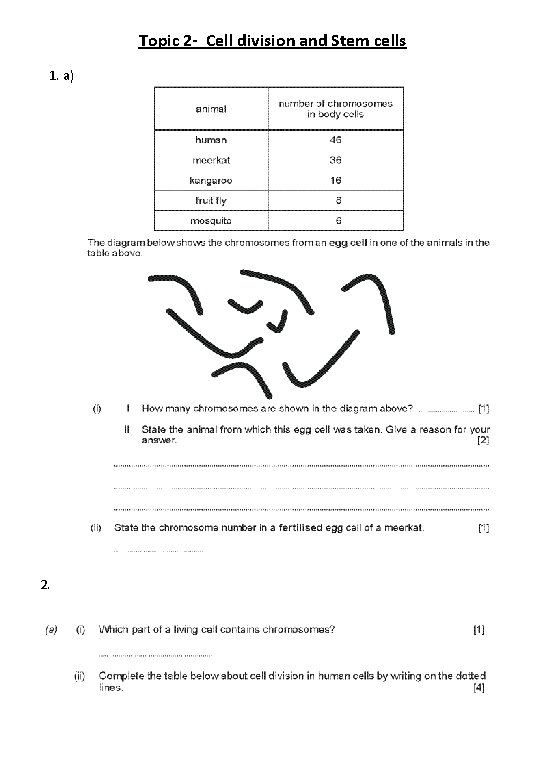
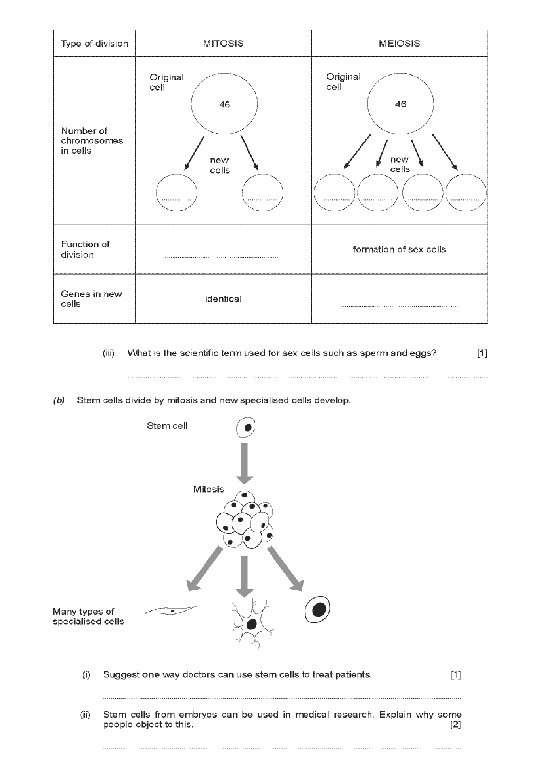
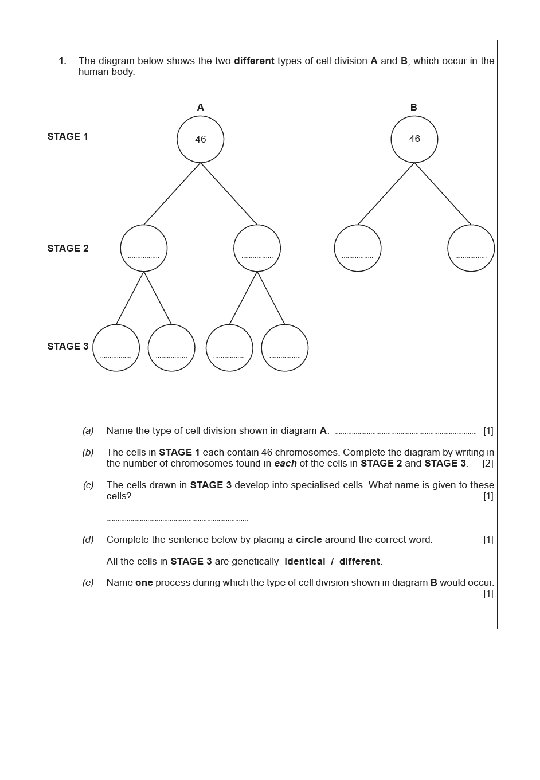
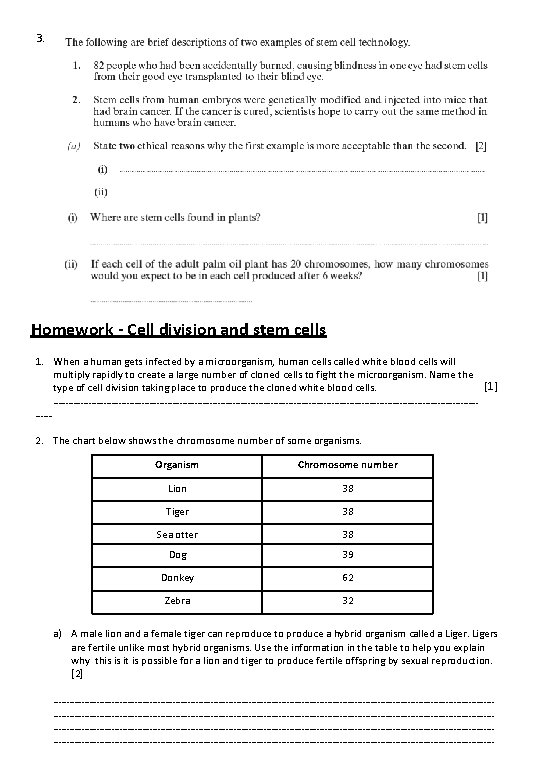
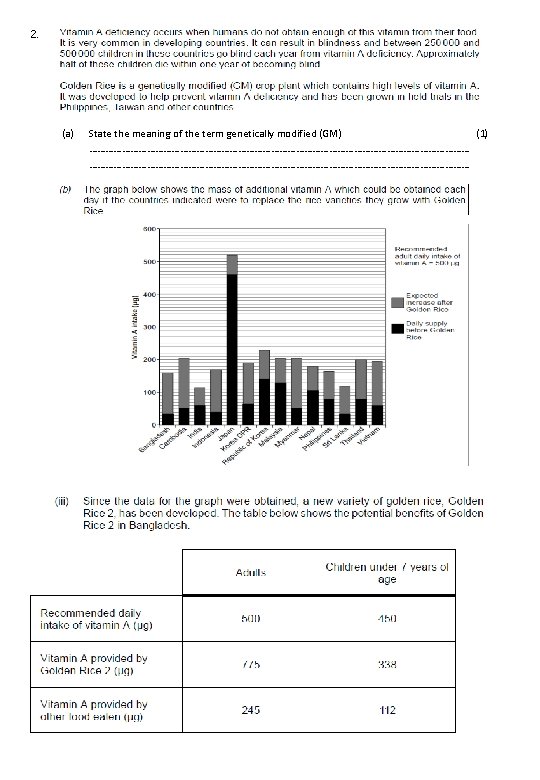
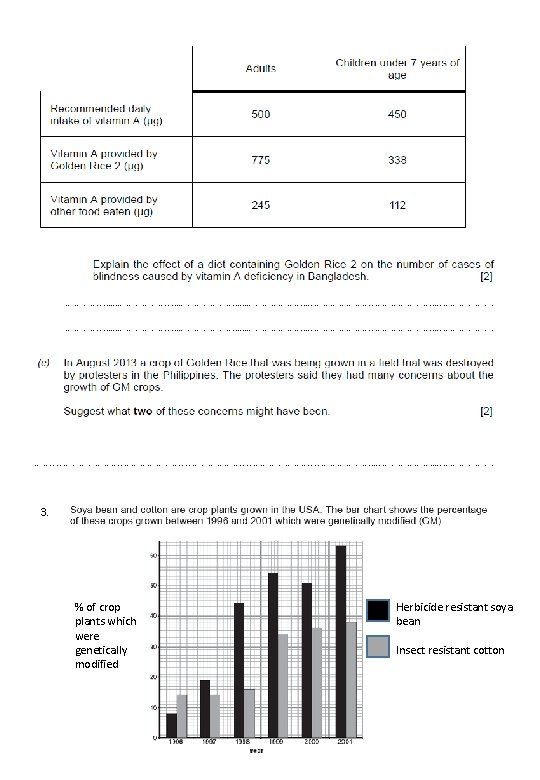
Topic 2 - Cell division and Stem cells 1. a) 2.
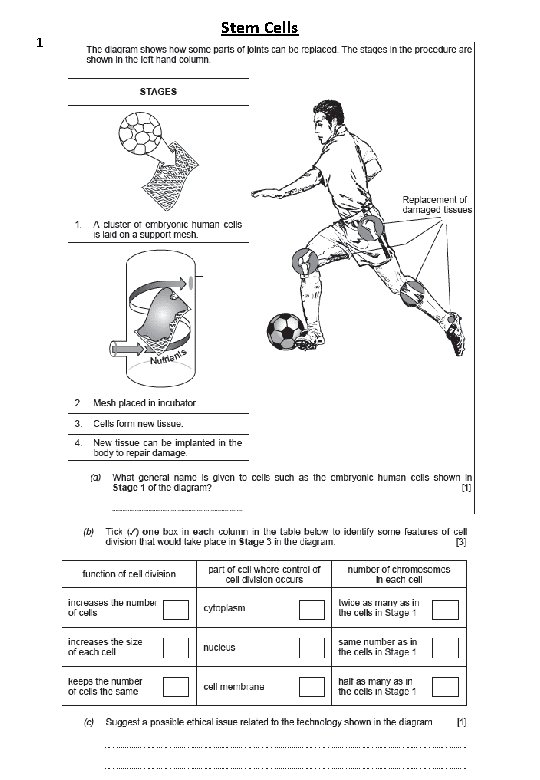
1 Stem Cells
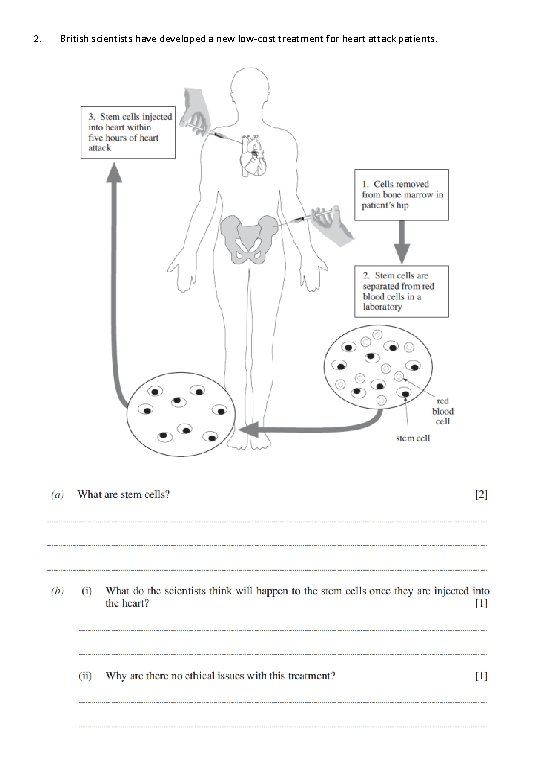
2. British scientists have developed a new low-cost treatment for heart attack patients.
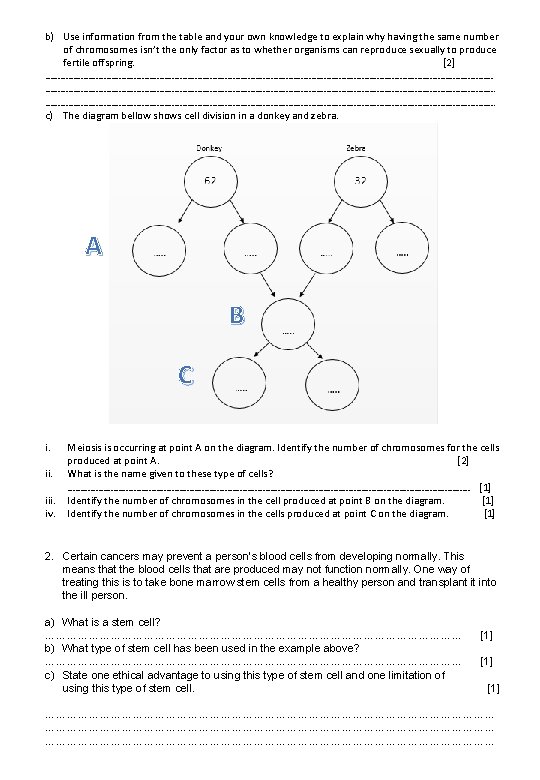
3. Homework - Cell division and stem cells 1. When a human gets infected by a microorganism, human cells called white blood cells will multiply rapidly to create a large number of cloned cells to fight the microorganism. Name the [1] type of cell division taking place to produce the cloned white blood cells. ………………………………………………………………………… ……. 2. The chart below shows the chromosome number of some organisms. Organism Chromosome number Lion 38 Tiger 38 Sea otter 38 Dog 39 Donkey 62 Zebra 32 a) A male lion and a female tiger can reproduce to produce a hybrid organism called a Ligers are fertile unlike most hybrid organisms. Use the information in the table to help you explain why this is it is possible for a lion and tiger to produce fertile offspring by sexual reproduction. [2] …………………………………………………………………………………………………………………………………………………………
b) Use information from the table and your own knowledge to explain why having the same number of chromosomes isn’t the only factor as to whether organisms can reproduce sexually to produce fertile offspring. [2] ……………………………………………………………………………………………………………………………………………………………. c) The diagram bellow shows cell division in a donkey and zebra. A B C i. iii. iv. Meiosis is occurring at point A on the diagram. Identify the number of chromosomes for the cells produced at point A. [2] What is the name given to these type of cells? ……………………………………………………………………… [1] Identify the number of chromosomes in the cell produced at point B on the diagram. [1] Identify the number of chromosomes in the cells produced at point C on the diagram. [1] 2. Certain cancers may prevent a person’s blood cells from developing normally. This means that the blood cells that are produced may not function normally. One way of treating this is to take bone marrow stem cells from a healthy person and transplant it into the ill person. a) What is a stem cell? ………………………………………………… b) What type of stem cell has been used in the example above? ………………………………………………… c) State one ethical advantage to using this type of stem cell and one limitation of using this type of stem cell. [1] [1] ……………………………………………………………………………………………………………
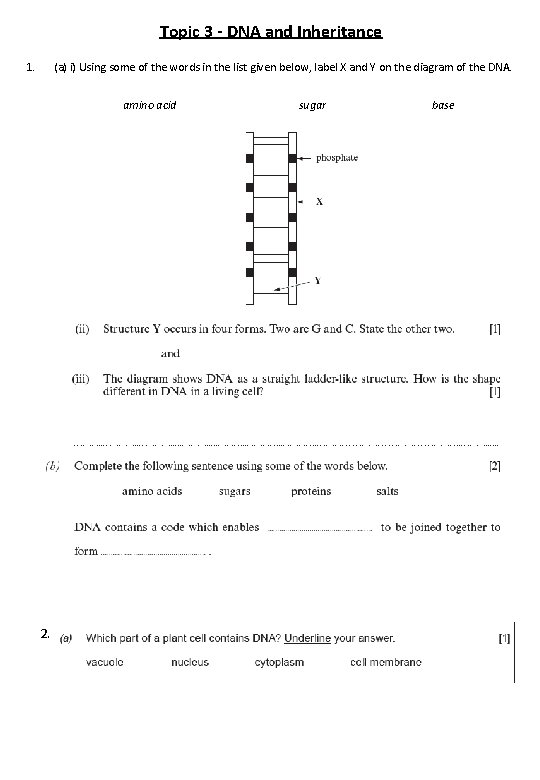
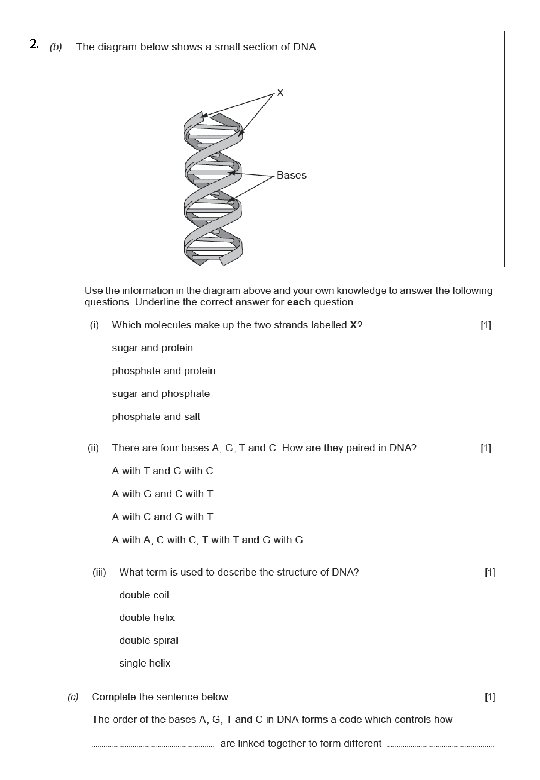
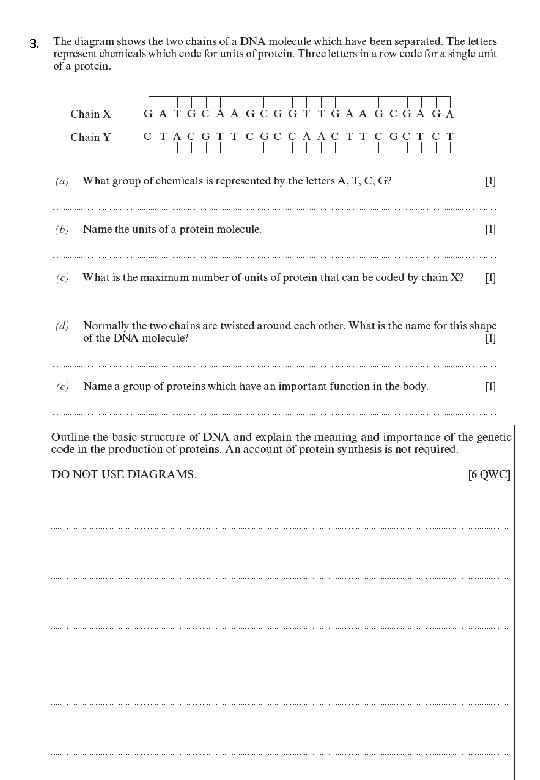
Topic 3 - DNA and Inheritance 1. (a) i) Using some of the words in the list given below, label X and Y on the diagram of the DNA. amino acid 2. sugar base
2.
3.
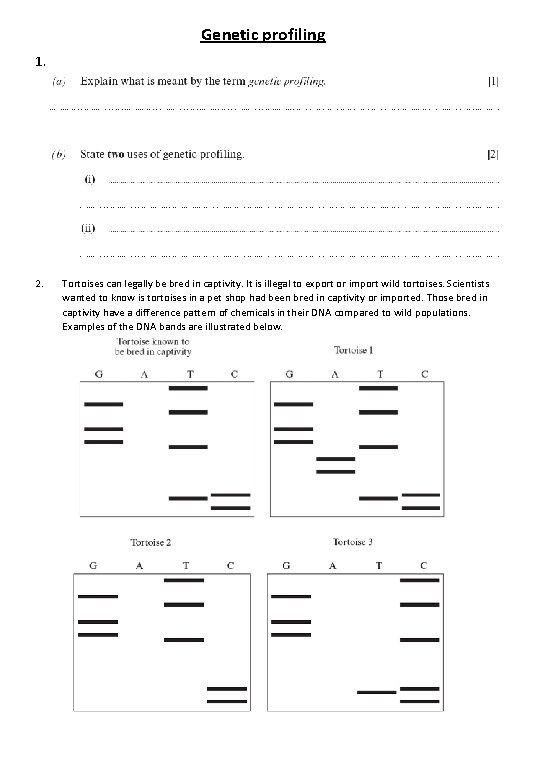
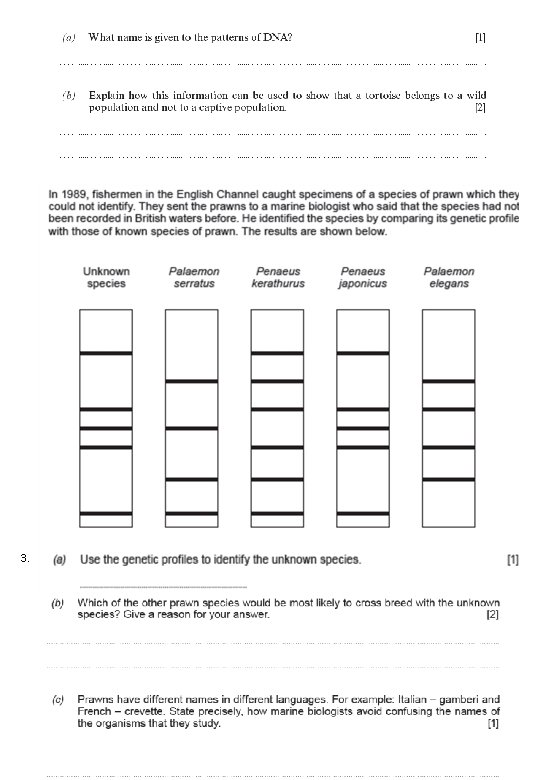
Genetic profiling 1. 2. Tortoises can legally be bred in captivity. It is illegal to export or import wild tortoises. Scientists wanted to know is tortoises in a pet shop had been bred in captivity or imported. Those bred in captivity have a difference pattern of chemicals in their DNA compared to wild populations. Examples of the DNA bands are illustrated below.
3.
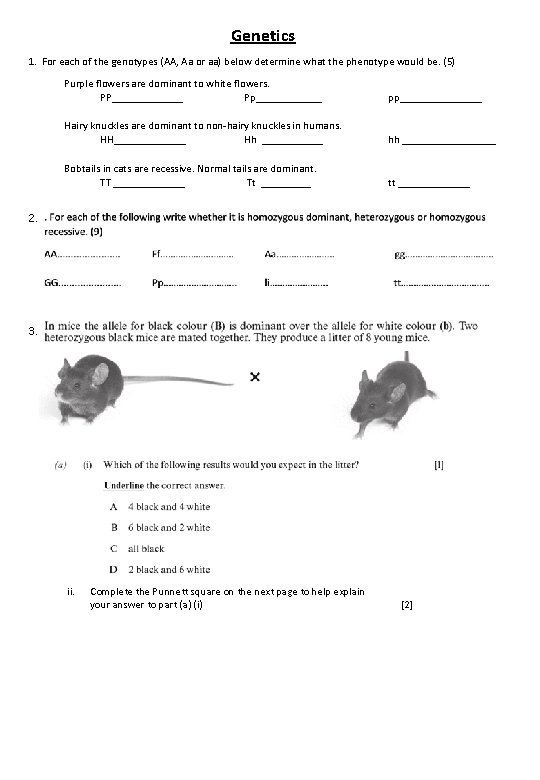
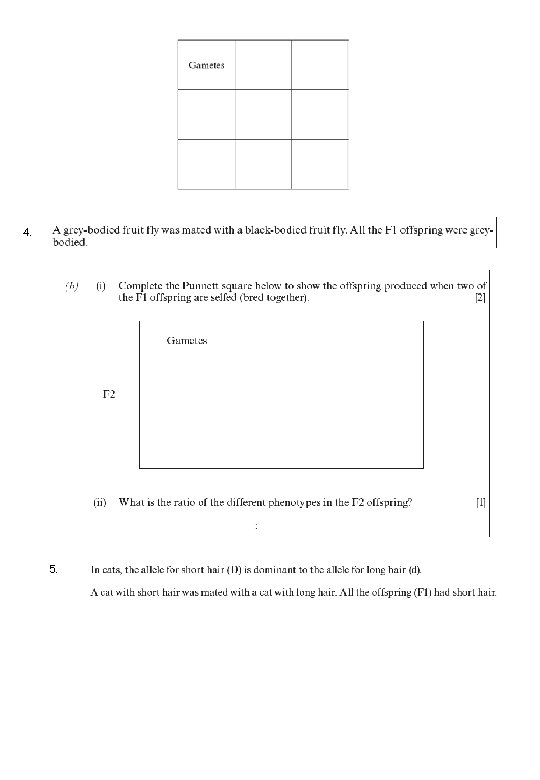
Genetics 1. For each of the genotypes (AA, Aa or aa) below determine what the phenotype would be. (5) Purple flowers are dominant to white flowers. PP_______ Pp______ pp________ Hairy knuckles are dominant to non-hairy knuckles in humans. HH_______ Hh ______ hh _________ Bobtails in cats are recessive. Normal tails are dominant. TT _______ Tt _____ tt _______ 2. 3. ii. Complete the Punnett square on the next page to help explain your answer to part (a) (i) [2]
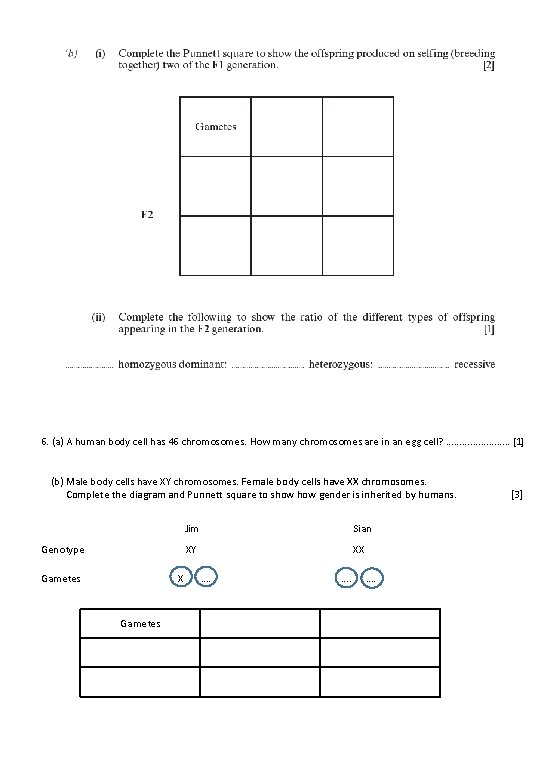
4. 5.
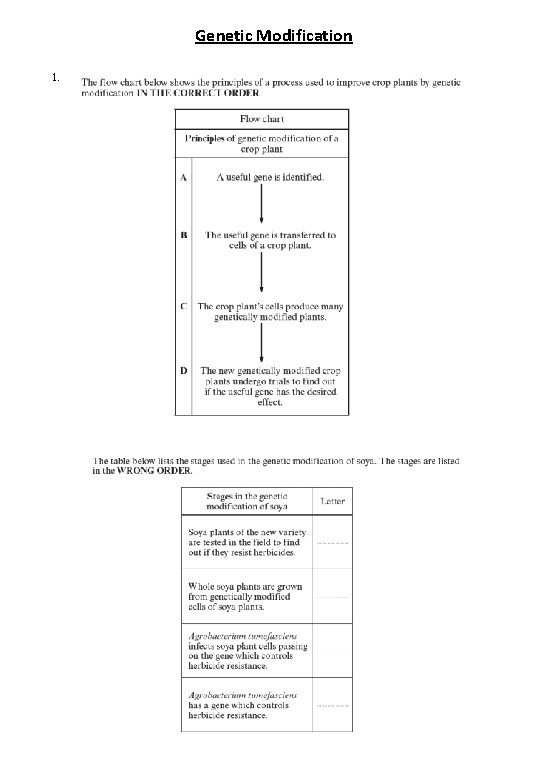
6. (a) A human body cell has 46 chromosomes. How many chromosomes are in an egg cell? . . . [1] (b) Male body cells have XY chromosomes. Female body cells have XX chromosomes. Complete the diagram and Punnett square to show gender is inherited by humans. Genotype Gametes X Gametes Jim Sian XY XX …. …. [3]
Genetic Modification 1.
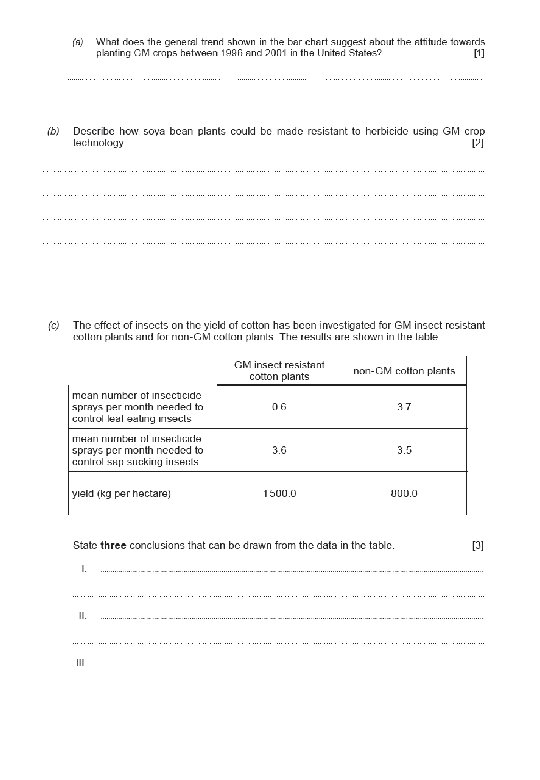
3. % of crop plants which were genetically modified Herbicide resistant soya bean Insect resistant cotton
3.
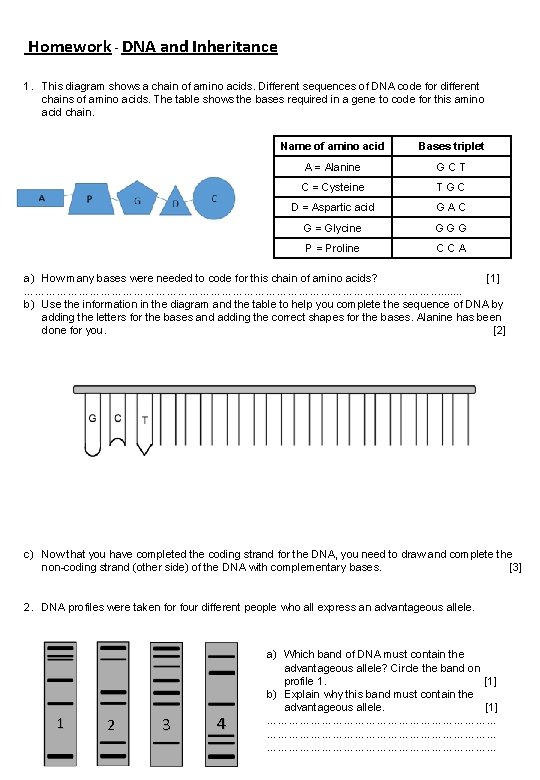
Homework - DNA and Inheritance 1. This diagram shows a chain of amino acids. Different sequences of DNA code for different chains of amino acids. The table shows the bases required in a gene to code for this amino acid chain. Name of amino acid Bases triplet A = Alanine GCT C = Cysteine TGC D = Aspartic acid GAC G = Glycine GGG P = Proline CCA a) How many bases were needed to code for this chain of amino acids? [1] …………………………………………………. . b) Use the information in the diagram and the table to help you complete the sequence of DNA by adding the letters for the bases and adding the correct shapes for the bases. Alanine has been done for you. [2] c) Now that you have completed the coding strand for the DNA, you need to draw and complete the non-coding strand (other side) of the DNA with complementary bases. [3] 2. DNA profiles were taken for four different people who all express an advantageous allele. 1 2 3 4 a) Which band of DNA must contain the advantageous allele? Circle the band on profile 1. [1] b) Explain why this band must contain the advantageous allele. [1] ………………………………………………………
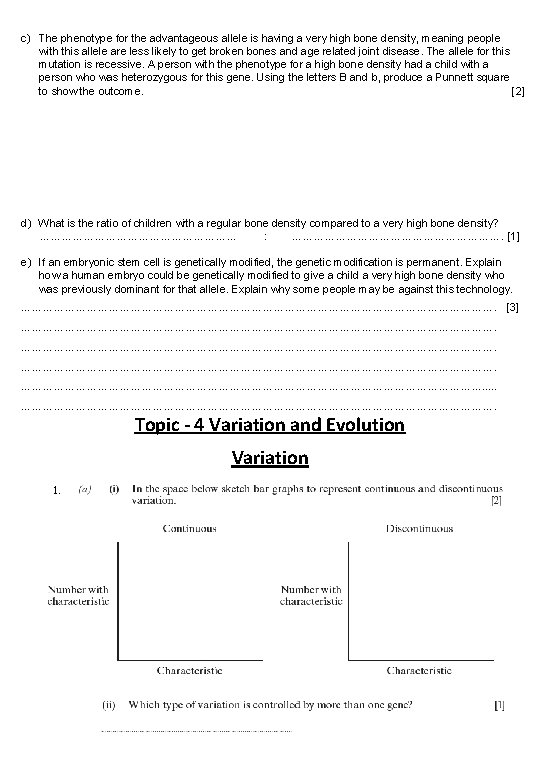
c) The phenotype for the advantageous allele is having a very high bone density, meaning people with this allele are less likely to get broken bones and age related joint disease. The allele for this mutation is recessive. A person with the phenotype for a high bone density had a child with a person who was heterozygous for this gene. Using the letters B and b, produce a Punnett square to show the outcome. [2] d) What is the ratio of children with a regular bone density compared to a very high bone density? ……………………… : …………………………. [1] e) If an embryonic stem cell is genetically modified, the genetic modification is permanent. Explain how a human embryo could be genetically modified to give a child a very high bone density who was previously dominant for that allele. Explain why some people may be against this technology. …………………………………………………………. [3] …………………………………………………………………………………………………………………. . . . …………………………………………………………. Topic - 4 Variation and Evolution Variation 1.
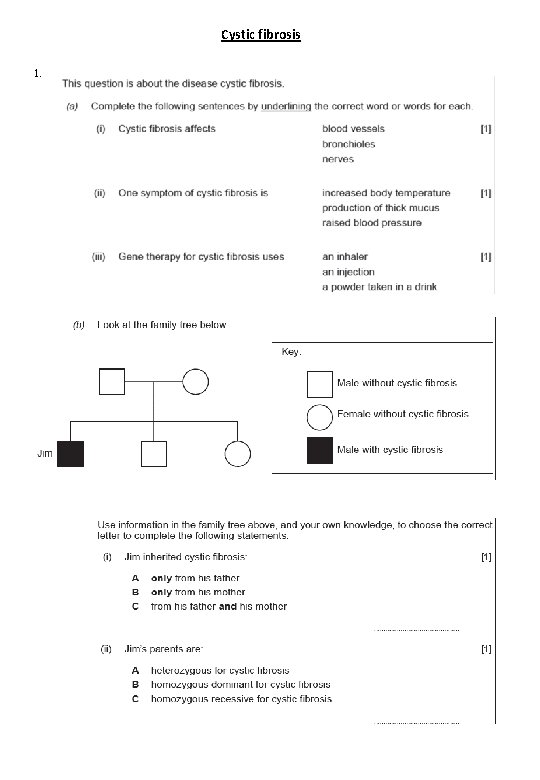
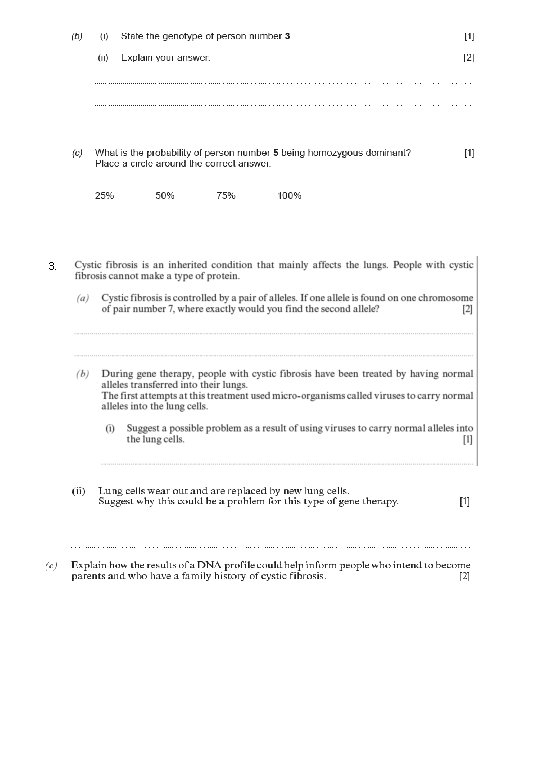
Cystic fibrosis 1.
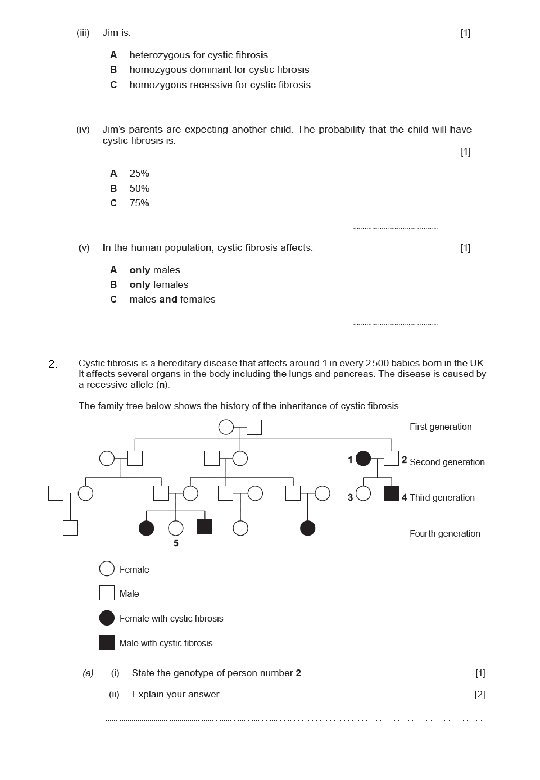
2.
3.
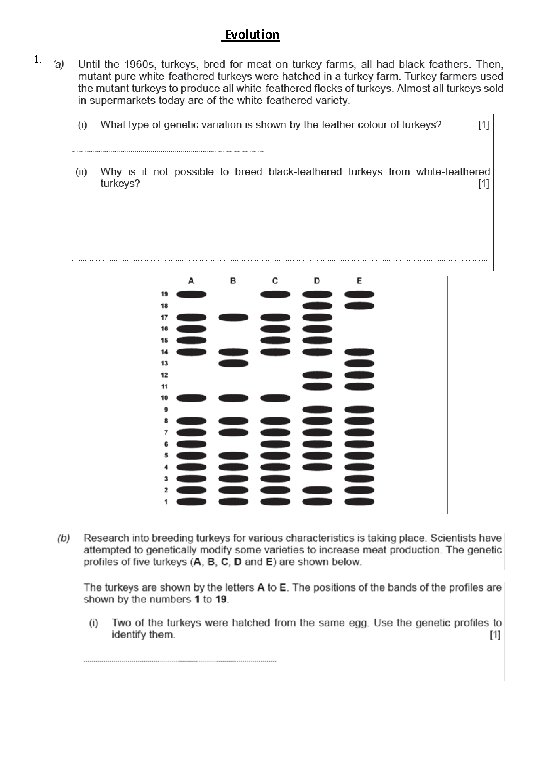
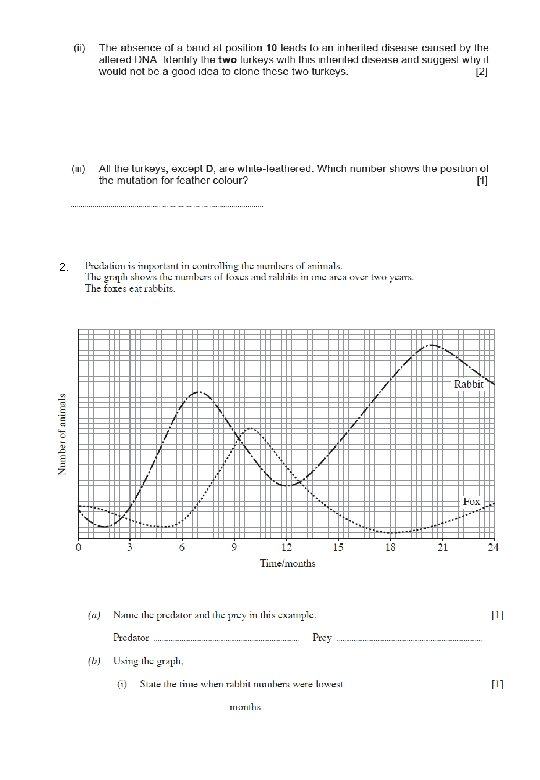
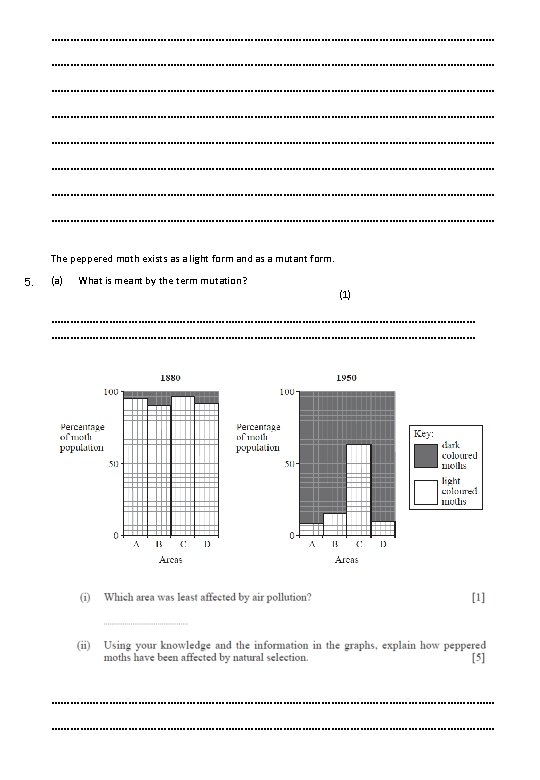
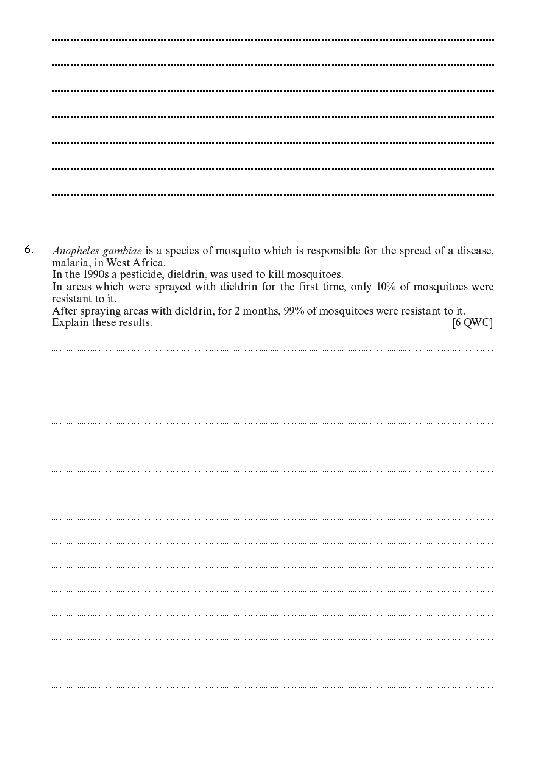
Evolution 1.
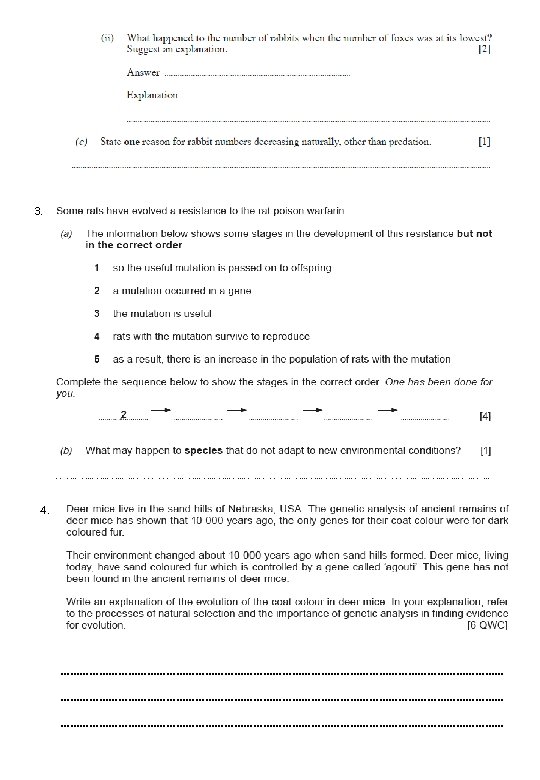
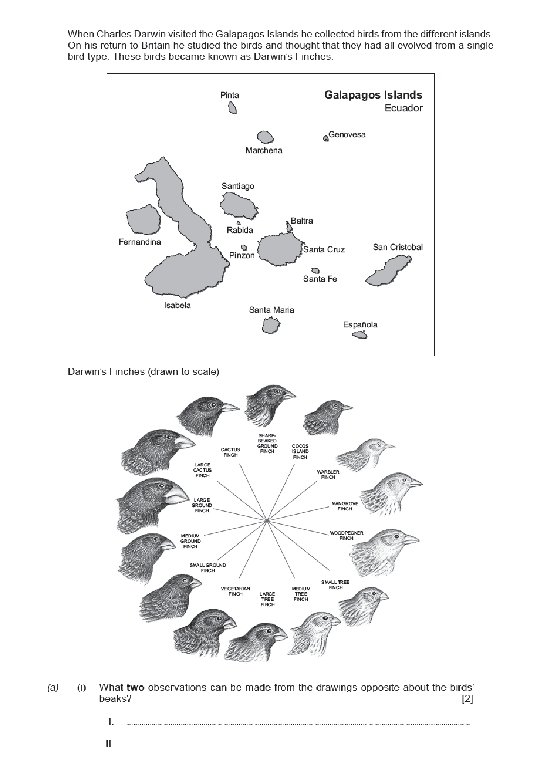
2.
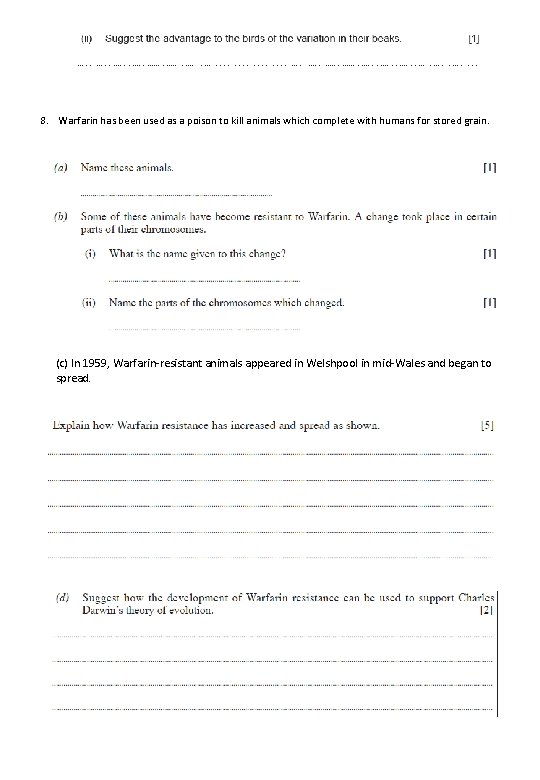
8. Warfarin has been used as a poison to kill animals which complete with humans for stored grain. (c) In 1959, Warfarin-resistant animals appeared in Welshpool in mid-Wales and began to spread.
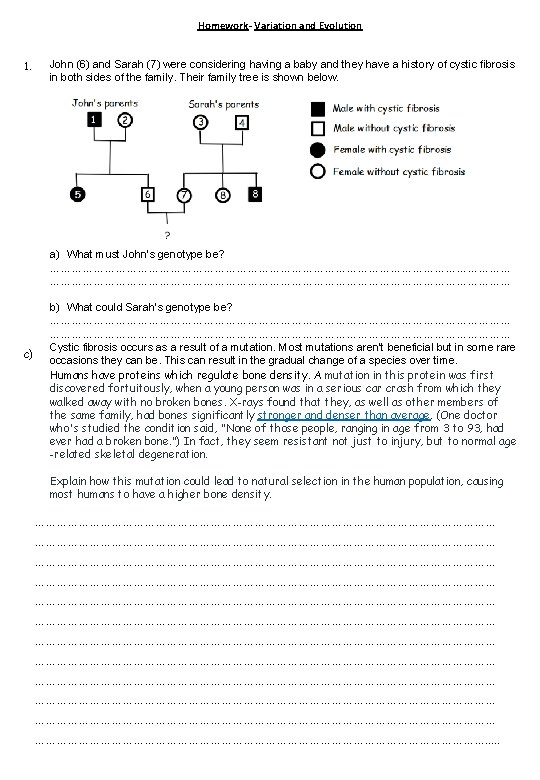
Homework- Variation and Evolution 1. John (6) and Sarah (7) were considering having a baby and they have a history of cystic fibrosis in both sides of the family. Their family tree is shown below. a) What must John’s genotype be? ……………………………………………………………………………………………………………… c) b) What could Sarah’s genotype be? ……………………………………………………………………………………………………………… Cystic fibrosis occurs as a result of a mutation. Most mutations aren’t beneficial but in some rare occasions they can be. This can result in the gradual change of a species over time. Humans have proteins which regulate bone density. A mutation in this protein was first discovered fortuitously, when a young person was in a serious car crash from which they walked away with no broken bones. X-rays found that they, as well as other members of the same family, had bones significantly stronger and denser than average. (One doctor who's studied the condition said, "None of those people, ranging in age from 3 to 93, had ever had a broken bone. ") In fact, they seem resistant not just to injury, but to normal age -related skeletal degeneration. Explain how this mutation could lead to natural selection in the human population, causing most humans to have a higher bone density. ……………………………………………………………………………………………………………… ……………………………………………………………………………………………………………… ……………………………………………………………………………………………………………… ……………………………………………………. . . .
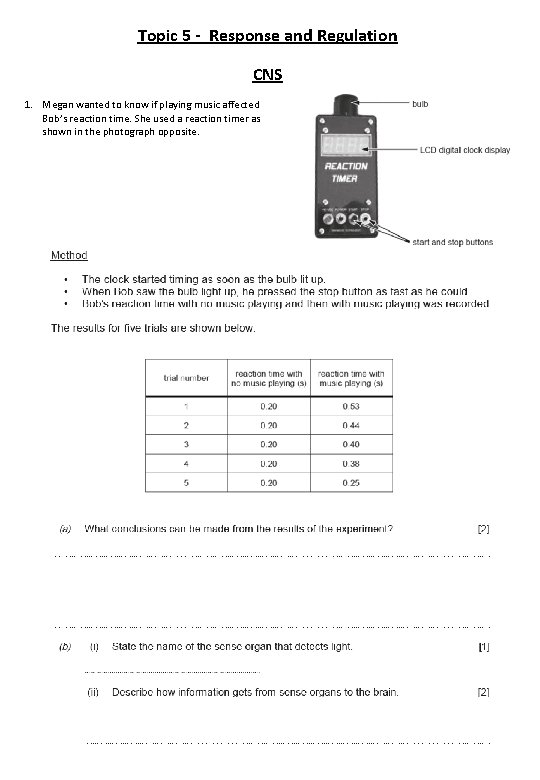
Topic 5 - Response and Regulation CNS 1. Megan wanted to know if playing music affected Bob’s reaction time. She used a reaction timer as shown in the photograph opposite.
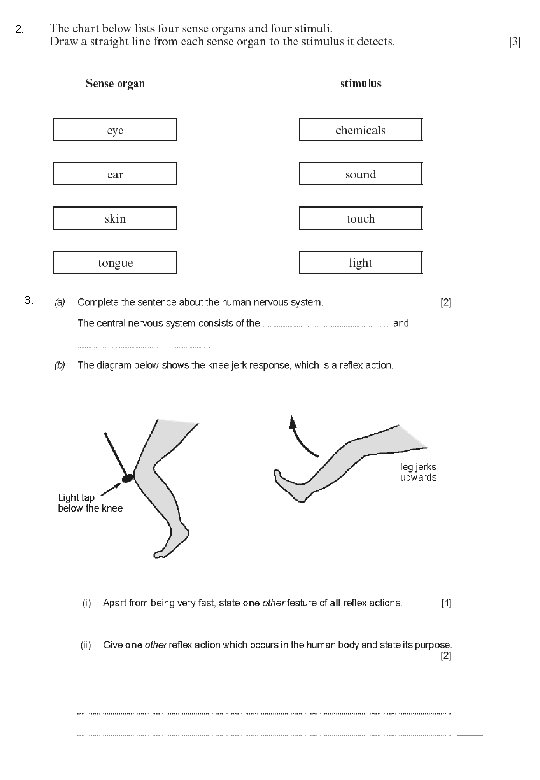
2. 3.
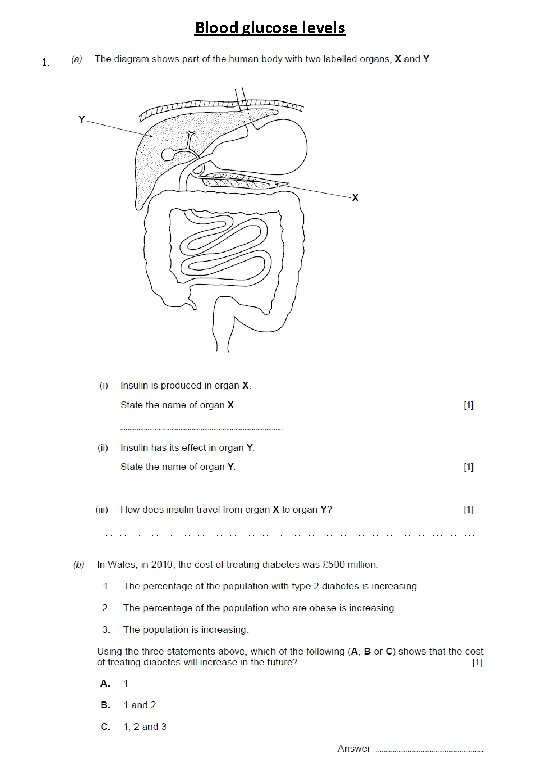
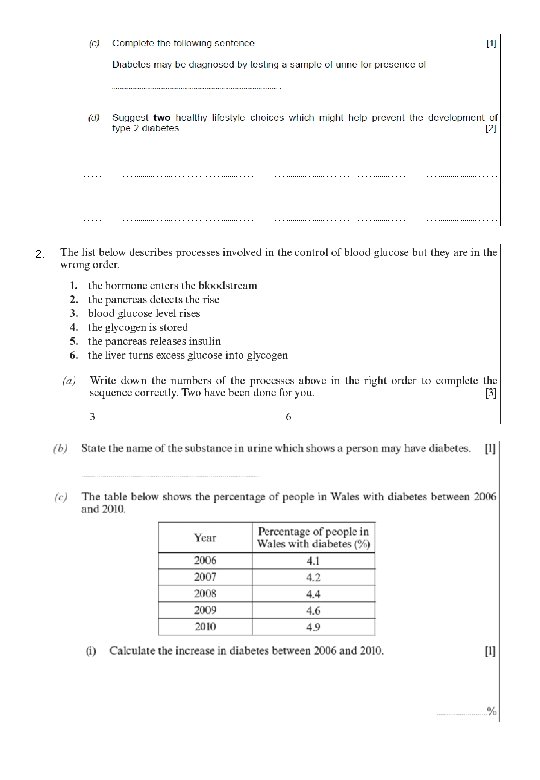
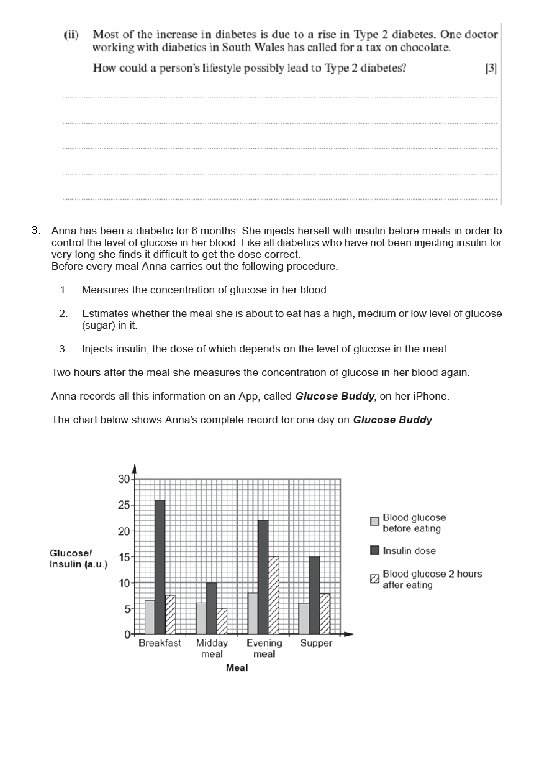
Blood glucose levels 1.
2.
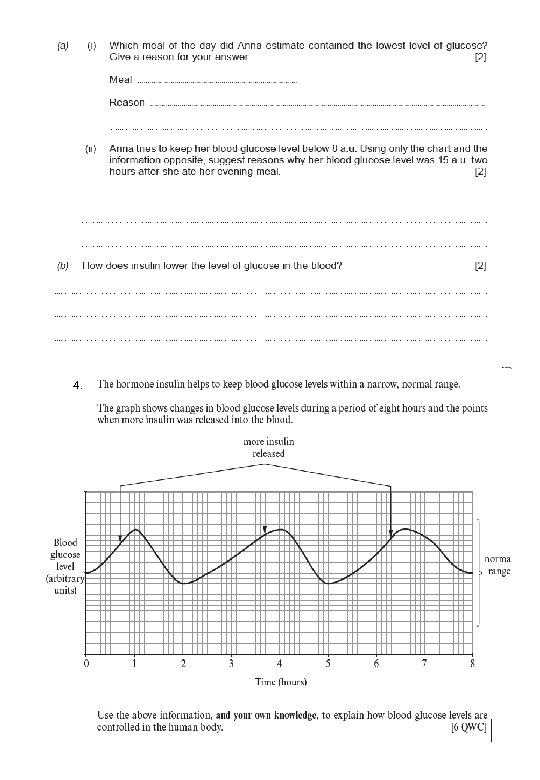
3.
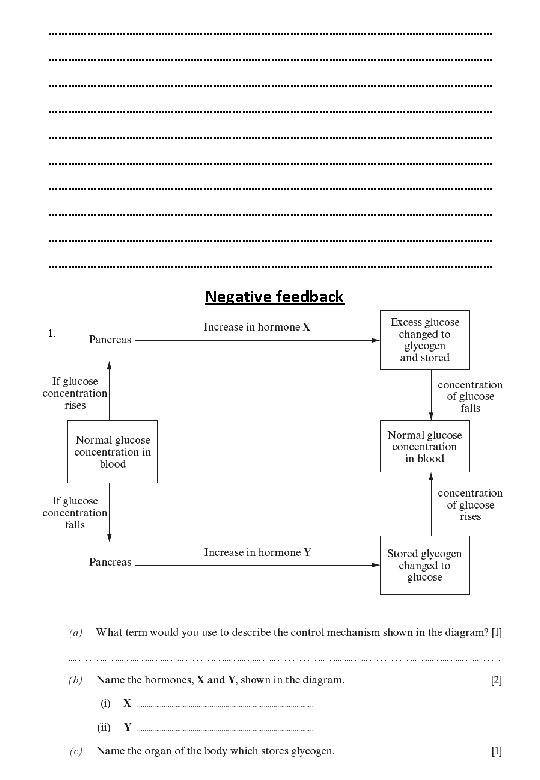
4.
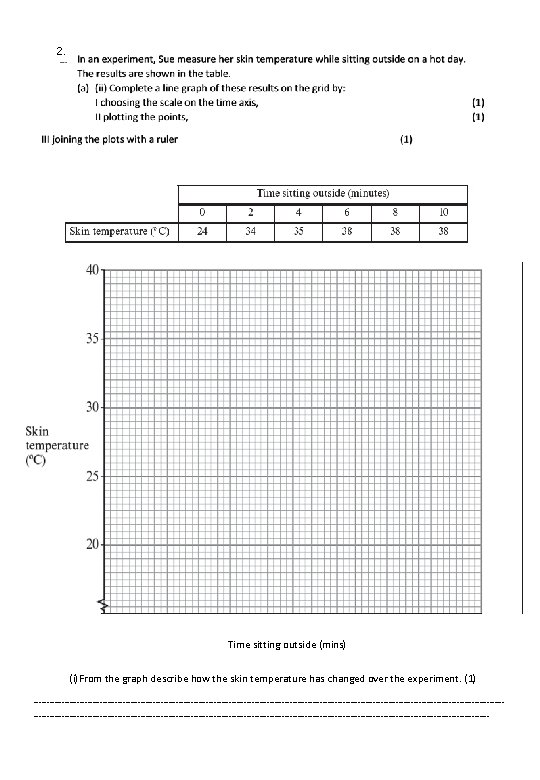
2. Time sitting outside (mins) (i)From the graph describe how the skin temperature has changed over the experiment. (1) …………………………………………………………………………………
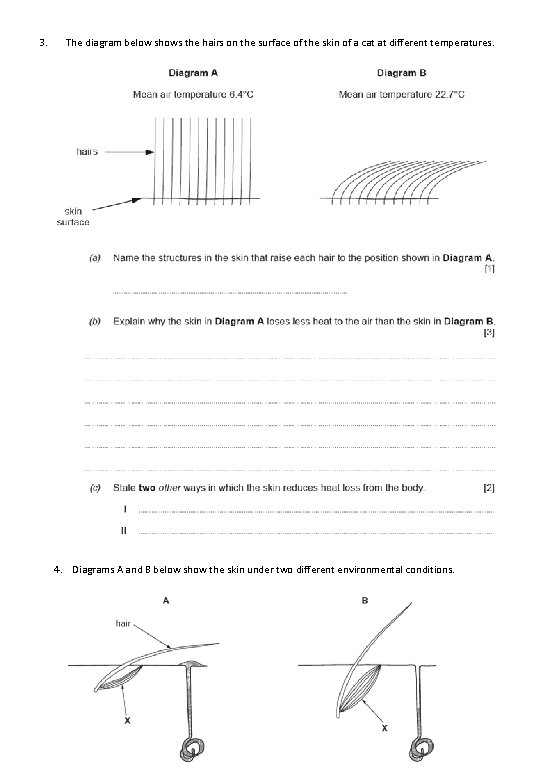
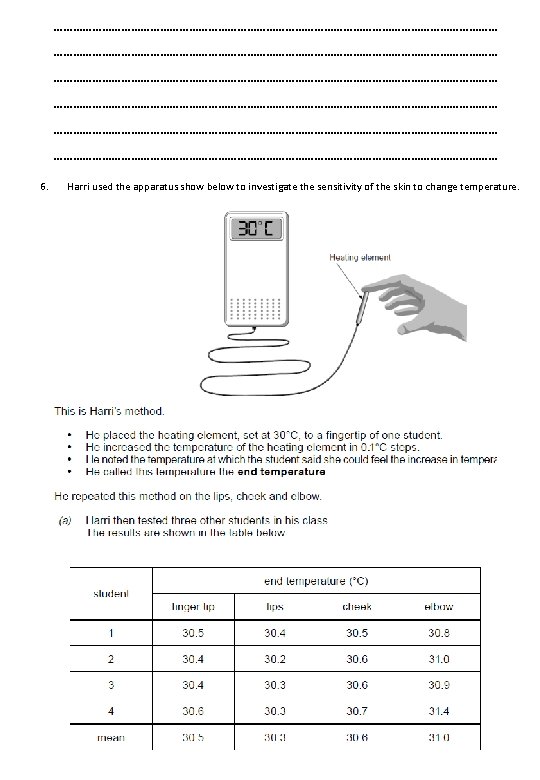
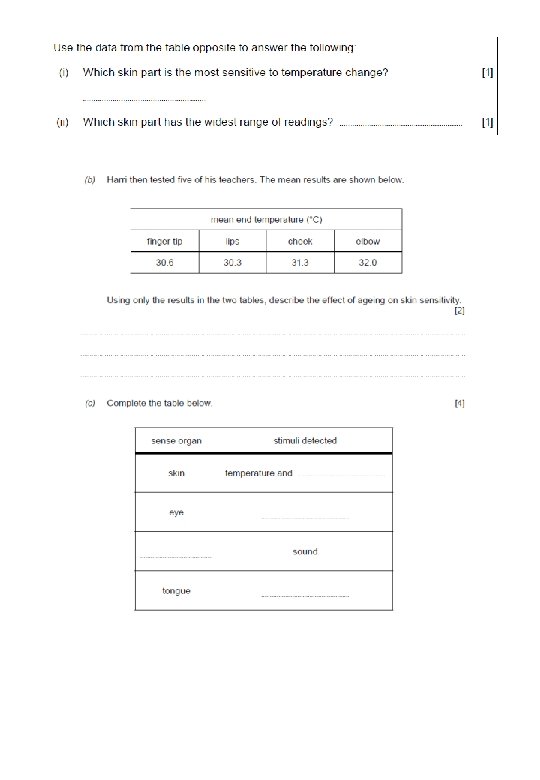
3. The diagram below shows the hairs on the surface of the skin of a cat at different temperatures. 4. Diagrams A and B below show the skin under two different environmental conditions.
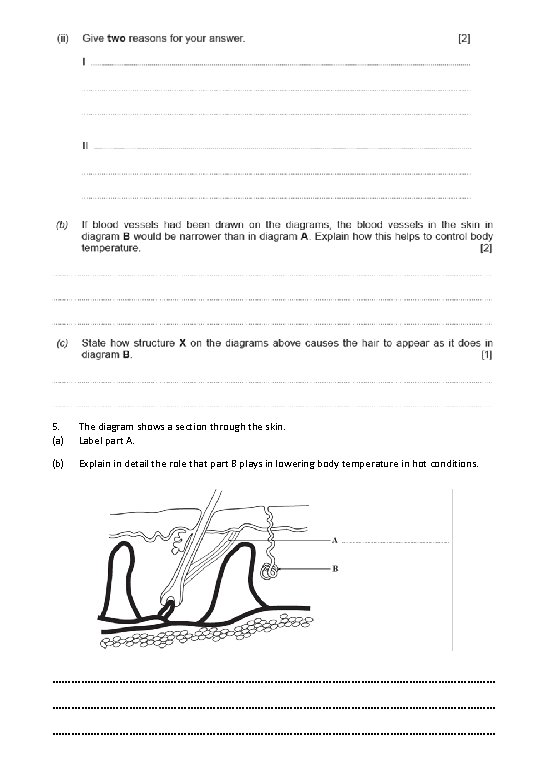
5. (a) The diagram shows a section through the skin. Label part A. (b) Explain in detail the role that part B plays in lowering body temperature in hot conditions. …………………………………………………………………………………………………………………………
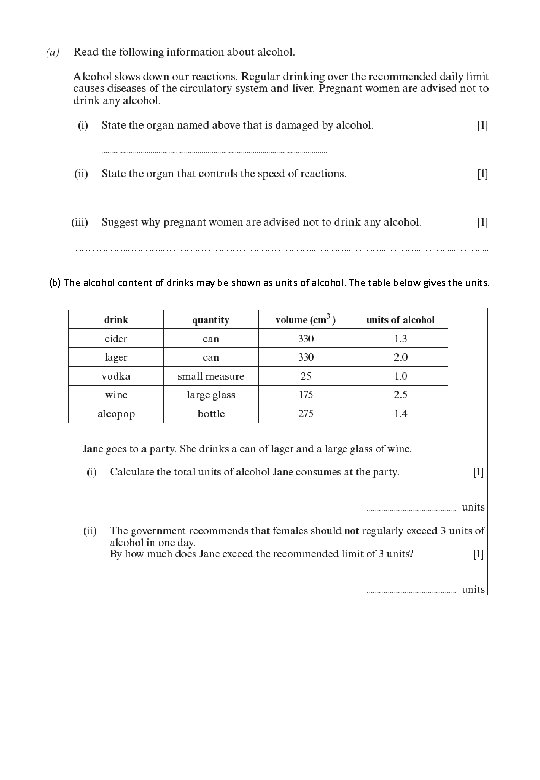
(b) The alcohol content of drinks may be shown as units of alcohol. The table below gives the units.
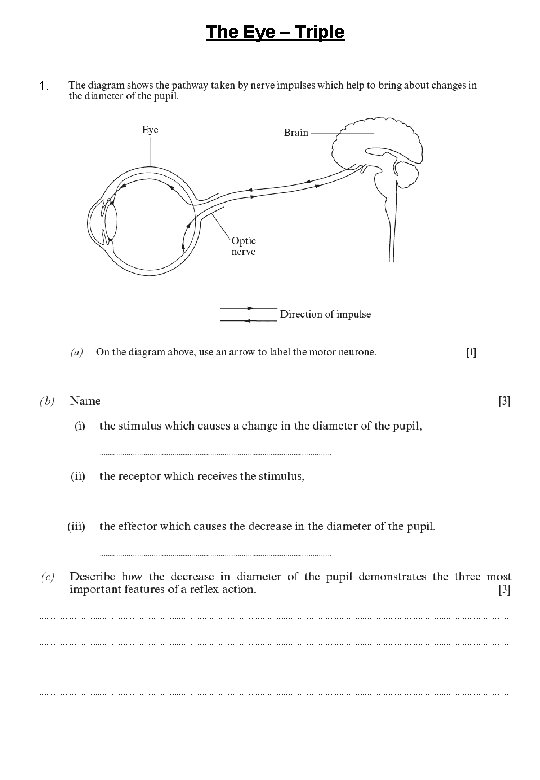
The Eye – Triple 1.
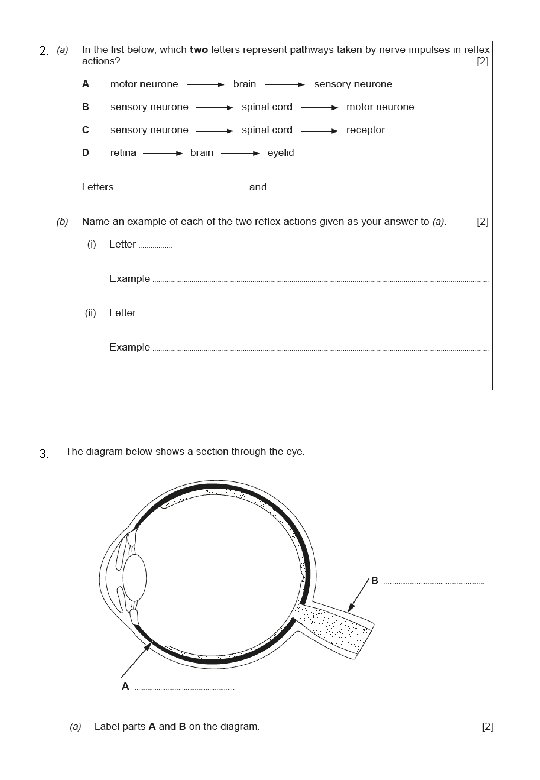
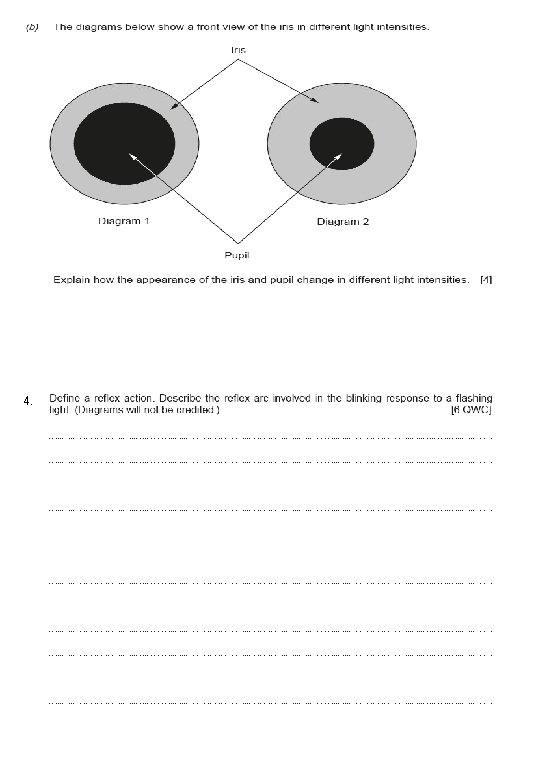
2. 3.
4.
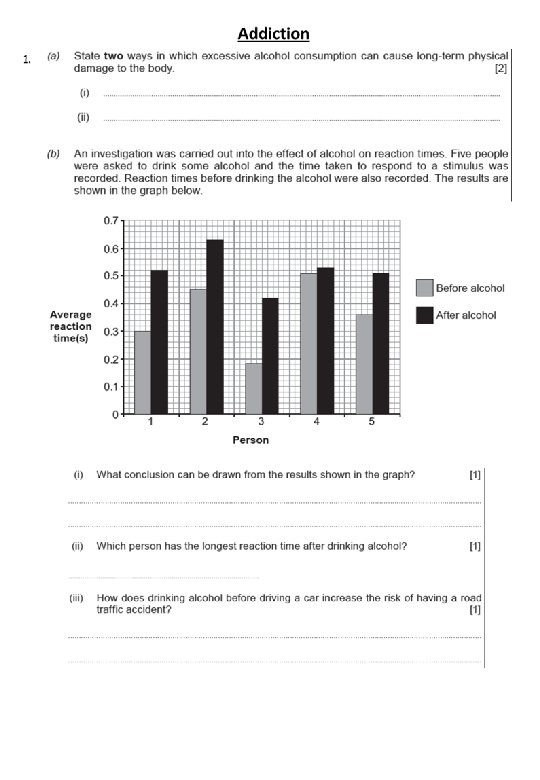
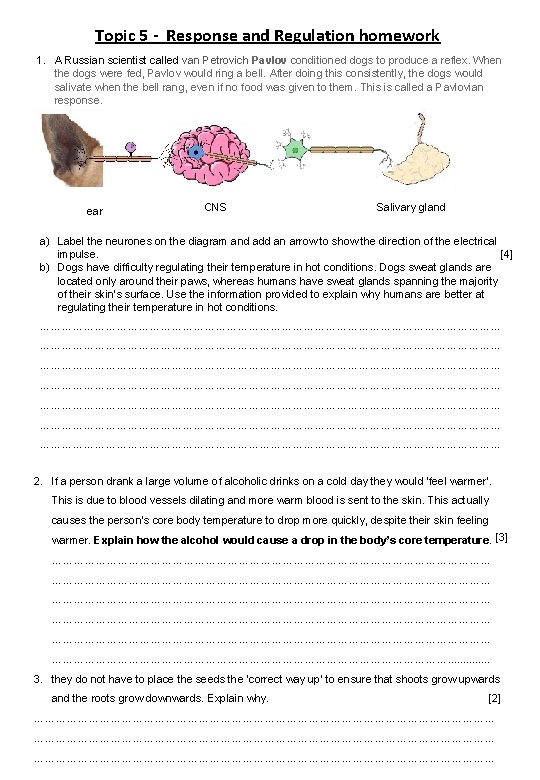
Topic 5 - Response and Regulation homework 1. A Russian scientist called van Petrovich Pavlov conditioned dogs to produce a reflex. When the dogs were fed, Pavlov would ring a bell. After doing this consistently, the dogs would salivate when the bell rang, even if no food was given to them. This is called a Pavlovian response. ear CNS Salivary gland a) Label the neurones on the diagram and add an arrow to show the direction of the electrical impulse. [4] b) Dogs have difficulty regulating their temperature in hot conditions. Dogs sweat glands are located only around their paws, whereas humans have sweat glands spanning the majority of their skin’s surface. Use the information provided to explain why humans are better at regulating their temperature in hot conditions. ……………………………………………………………………………………………………………… ………………………………………………………………………………………………………………. . . 2. If a person drank a large volume of alcoholic drinks on a cold day they would ‘feel warmer’. This is due to blood vessels dilating and more warm blood is sent to the skin. This actually causes the person’s core body temperature to drop more quickly, despite their skin feeling warmer. Explain how the alcohol would cause a drop in the body’s core temperature. [3] ………………………………………………………………………………………………………… ……………………………………………………. . . 3. they do not have to place the seeds the ‘correct way up’ to ensure that shoots grow upwards and the roots grow downwards. Explain why. [2] ………………………………………………………………………………………………………………
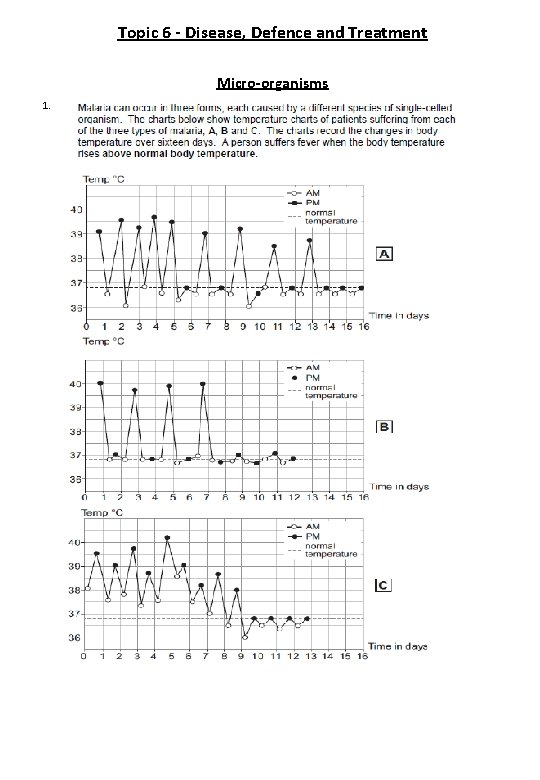
Topic 6 - Disease, Defence and Treatment Micro-organisms 1.
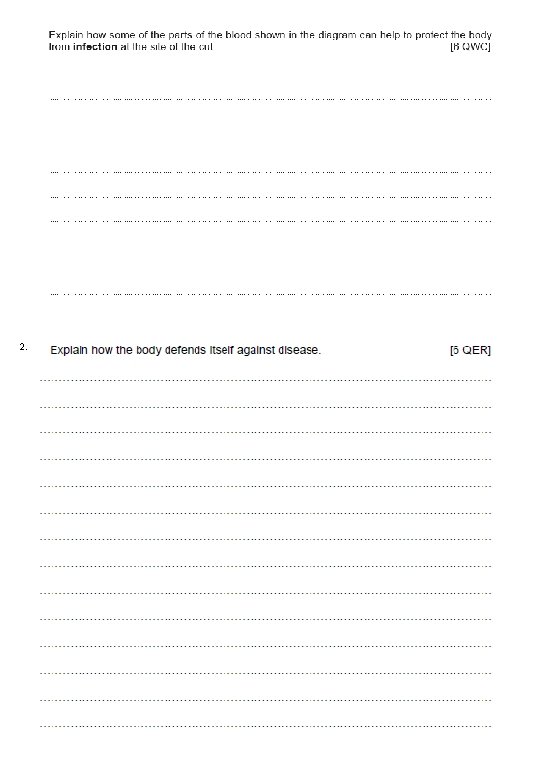
Our Body’s Defence 1. The diagram shows a section through the skin after it has just been cut.
2.
3. Level of antibodies Time in weeks
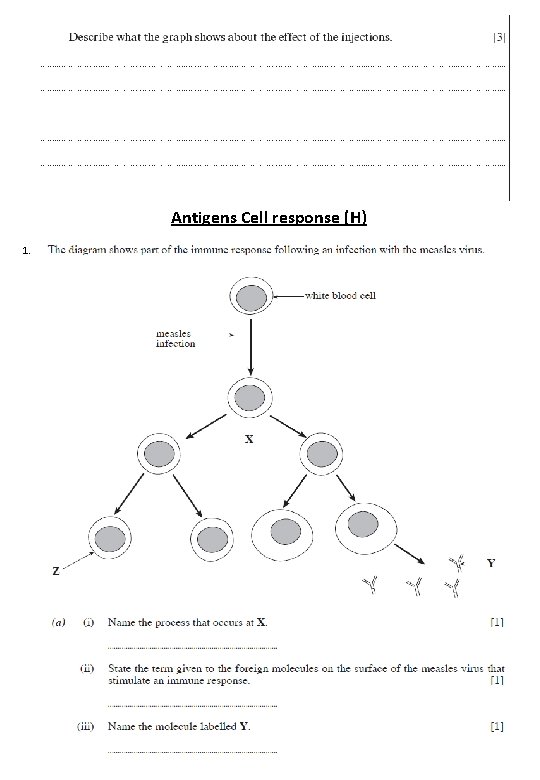
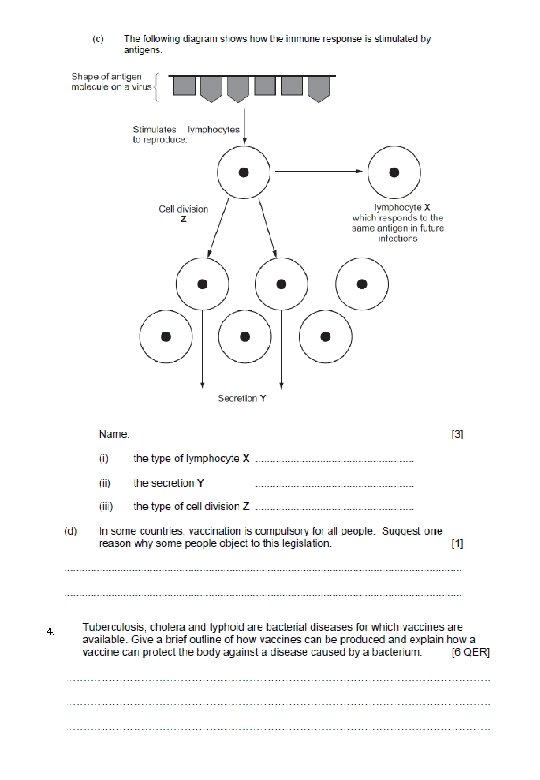
Antigens Cell response (H) 1.
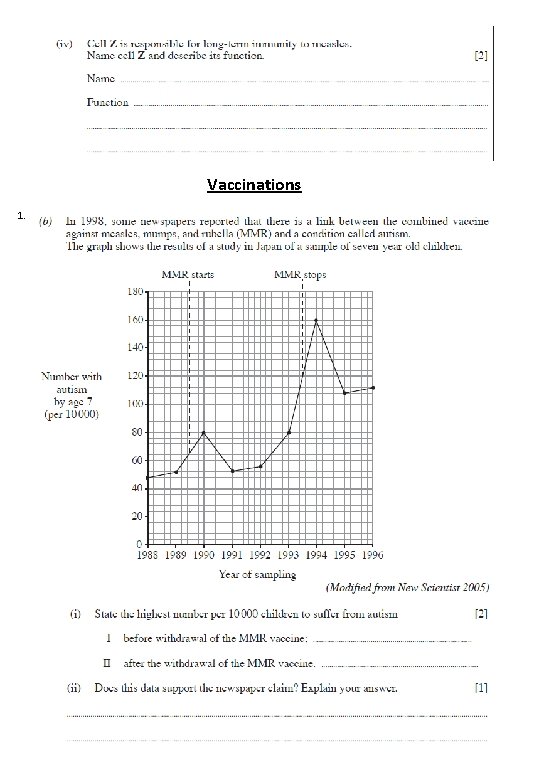
Vaccinations 1.
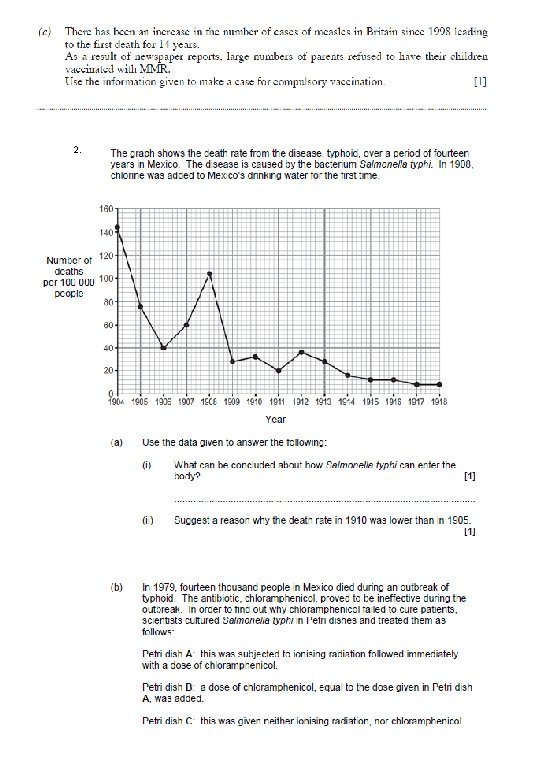
2.
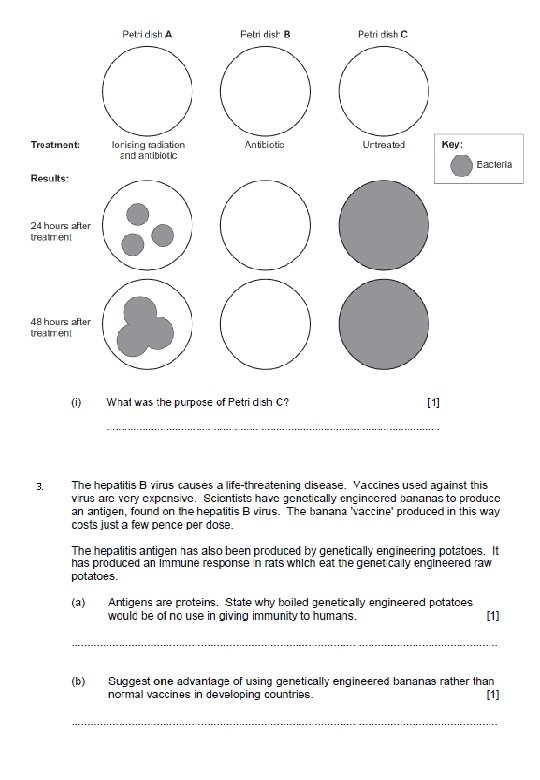
3.
4.
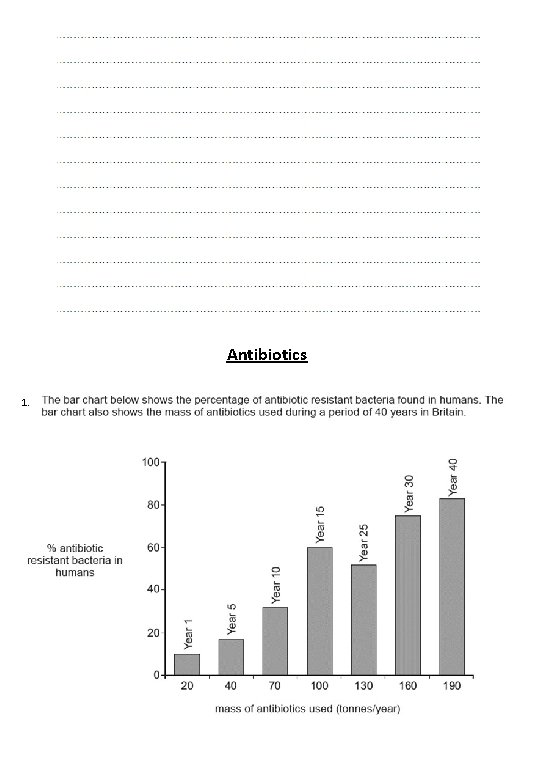
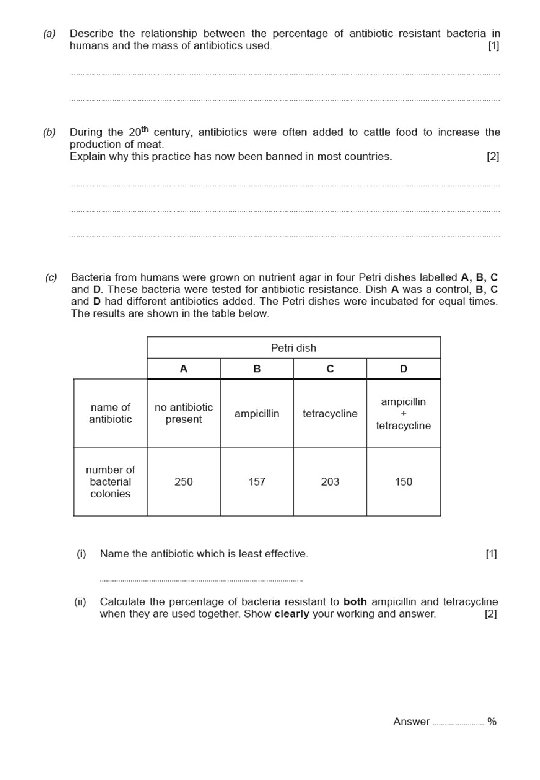
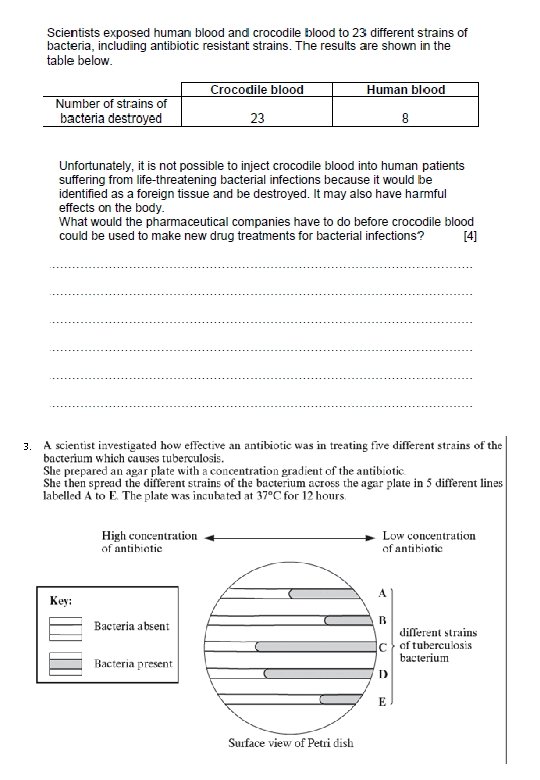
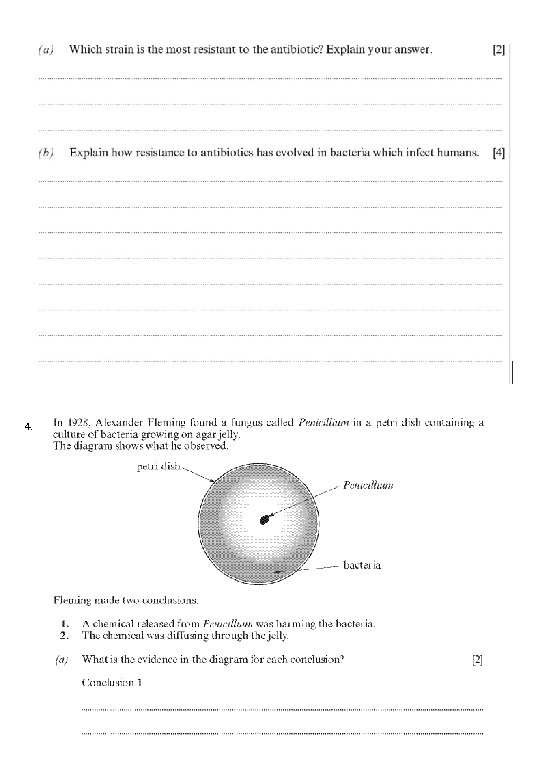
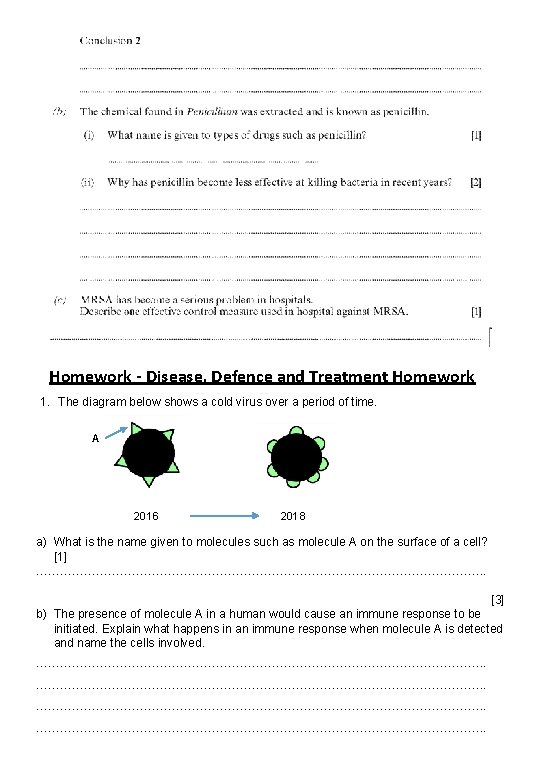
Antibiotics 1.
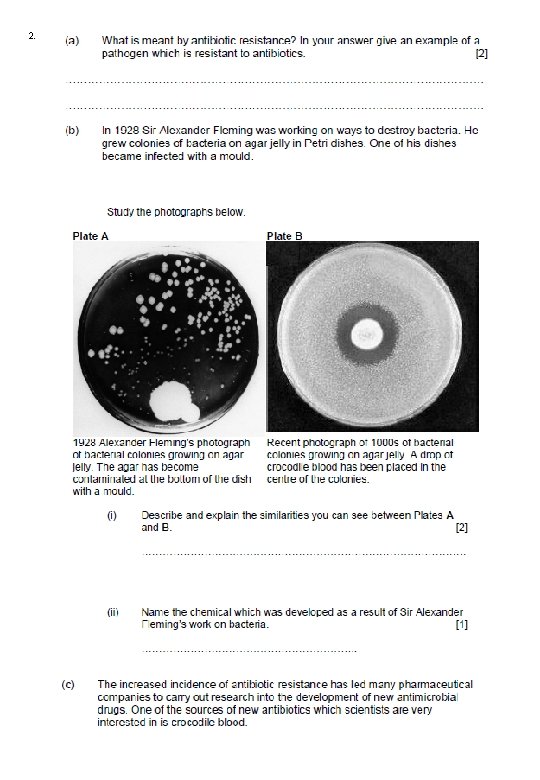
2.
3.
4.
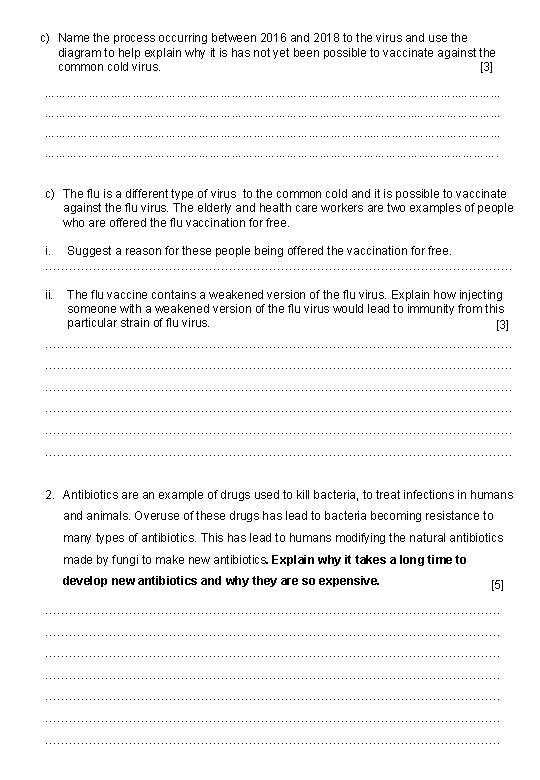
Homework - Disease, Defence and Treatment Homework 1. The diagram below shows a cold virus over a period of time. A 2016 2018 a) What is the name given to molecules such as molecule A on the surface of a cell? [1] …………………………………………………. . [3] b) The presence of molecule A in a human would cause an immune response to be initiated. Explain what happens in an immune response when molecule A is detected and name the cells involved. …………………………………………………………………………………………………. .
c) Name the process occurring between 2016 and 2018 to the virus and use the diagram to help explain why it is has not yet been possible to vaccinate against the common cold virus. [3] …………………………………………………. . ………………………………………………………………………. c) The flu is a different type of virus to the common cold and it is possible to vaccinate against the flu virus. The elderly and health care workers are two examples of people who are offered the flu vaccination for free. i. Suggest a reason for these people being offered the vaccination for free. …………………………………………………… ii. The flu vaccine contains a weakened version of the flu virus. Explain how injecting someone with a weakened version of the flu virus would lead to immunity from this particular strain of flu virus. [3] ……………………………………………………………………………………………………… ……………………………………………………………………………………………………… 2. Antibiotics are an example of drugs used to kill bacteria, to treat infections in humans and animals. Overuse of these drugs has lead to bacteria becoming resistance to many types of antibiotics. This has lead to humans modifying the natural antibiotics made by fungi to make new antibiotics. Explain why it takes a long time to develop new antibiotics and why they are so expensive. [5] …………………………………………………………………………………………………… ……………………………………………………………………………………………………