
Topic 2 4 Plasma Membranes IB Biology S
Topic 2. 4 – Plasma Membranes IB Biology S. Dosman Adapted by Laura Sugden

Explanation of Homework 2. 4 • Answer the following 10 questions (next slide) on a separate paper. I will stamp your assignment if you can show me that you have done ~ ½ of it on Wednesday. I will post the answers on the website Wednesday after school so you can check them. We will have a short quiz Thursday. • Begin by going through the slides in the following Powerpoint to refresh your memory. • Next use your book, chapter 2. 4 (orange) or 8 (green) to help you! • 40 points (4 pt/question) and 10 points for the stamp for 50 points total.
Homework 2. 4 (50 points) 1. Draw a basic phospholipid molecule and identify which part(s) are hydrophobic and which part(s) are hydrophilic. 2. Explain how phospholipids are arranged in the plasma membrane and how this arrangement allows a cell membrane to maintain its structure. 3. What is a glycoprotein? 4. List and give a brief explanation of the 6 functions of membrane proteins. 5. Particles are in constant random motion. Explain the role of random motion in particles moving across a semi-permeable membrane. 6. What is a concentration gradient? 7. What role do membrane proteins play in diffusion? 8. Compare active and passive transport. 9. Use the sodium-potassium pump to explain how active transport can be used to move particles against a concentration gradient. 10. Explain how vesicles are used to transport materials within a cell during endocytosis and exocytosis.
Hydrophobic • Having an aversion to water; tending to coalesce and form droplets in water. • Hydrophobic is a term used to describe how molecules react with water. Molecules that are hydrophobic have an aversion to water and are often referred to as “water fearing”.
Hydrophilic • Having an affinity for water. • Hydrophilic is a term used to describe how molecules react with water. Molecules that are hydrophilic have an affinity for water. Hydrophilic is often referred to as “water loving”.
Integral protein • Typically a transmembrane protein with hydrophobic regions that completely spans the hydrophobic interior of the membrane. • The integral proteins in the plasma membrane penetrate the lipid bilayer from one side to the other. • These proteins control the entry and exit of specific molecules from the cell. They also have a hydrophobic and hydrophilic region which helps keep them in place in the membrane.

Integral Proteins
Peripheral protein • A protein appendage loosely bound to the surface of a membrane and not embedded in the lipid bilayer. • The protein molecules are not fixed in one spot of the membrane and they actually float in the fluid phospholipid bilayer or are attached to an integral protein. • Peripheral proteins are known as glycoproteins because they have a carbohydrate attached. The function in immune responses and are involved in cell to cell recognition.

Peripheral Proteins
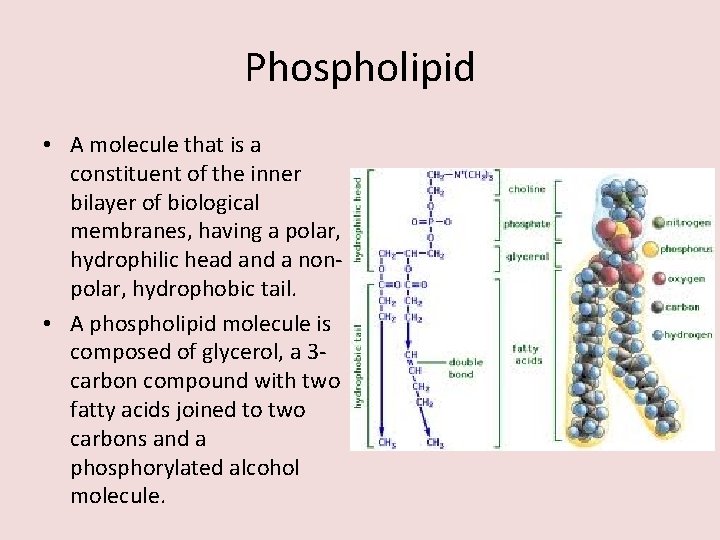
Phospholipid • A molecule that is a constituent of the inner bilayer of biological membranes, having a polar, hydrophilic head and a nonpolar, hydrophobic tail. • A phospholipid molecule is composed of glycerol, a 3 carbon compound with two fatty acids joined to two carbons and a phosphorylated alcohol molecule.
Osmosis • The diffusion of water across a selectively permeable membrane. • The movement occurs from an area of higher concentration to an area of lower concentration. • Water can move by osmosis across the plasma membrane in both directions very easily because the plasma membrane is very permeable to water.
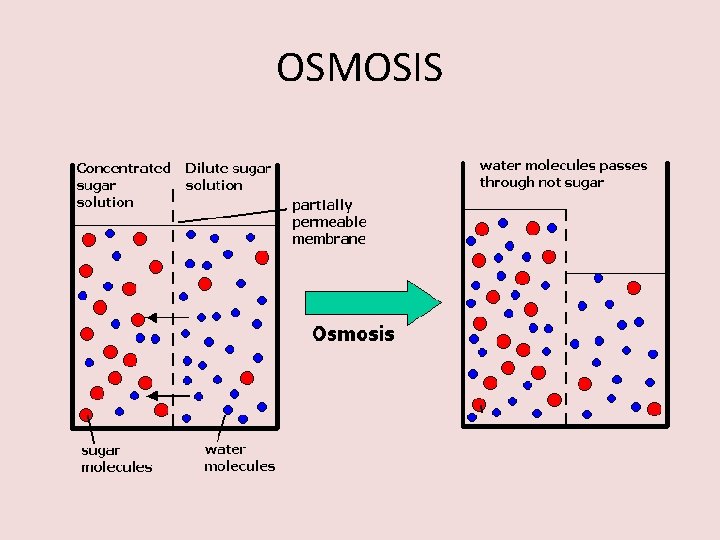
OSMOSIS
Osmotic balance • Also known as water balance, osmotic balance is obtained when there as many water molecules moving into an area as there are moving out. • Osmotic balance is a form of dynamic equilibrium.
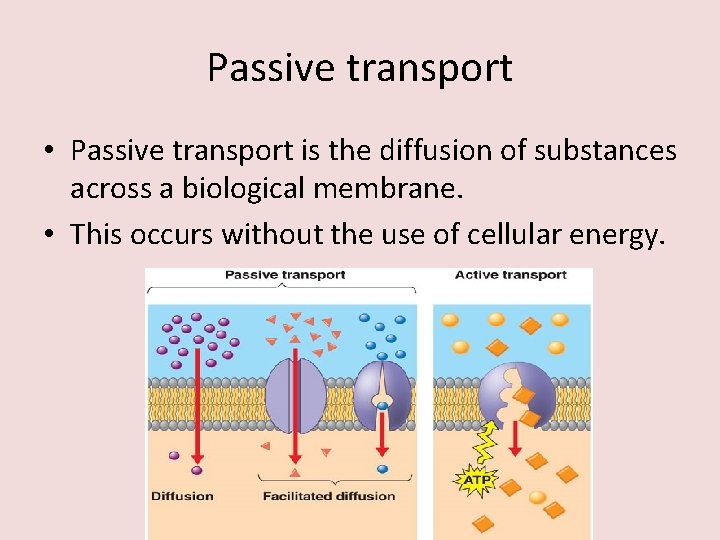
Passive transport • Passive transport is the diffusion of substances across a biological membrane. • This occurs without the use of cellular energy.
Diffusion • The spontaneous tendency of a substance to move down its concentration gradient from a more concentrated to a less concentrated area. • This movement of particles happens as a result of the random motion of particles and the existence of a concentration gradient.
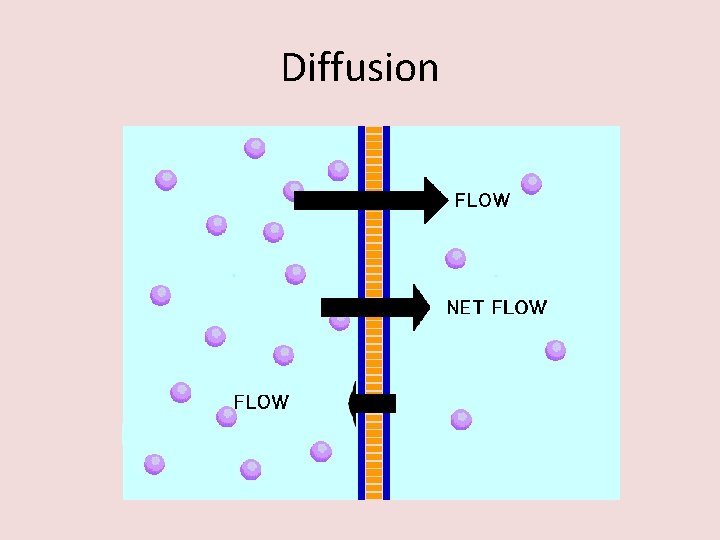
Diffusion
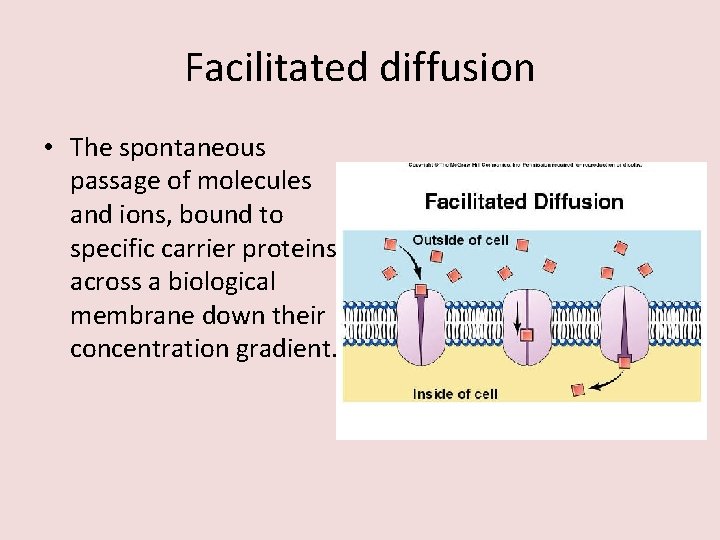
Facilitated diffusion • The spontaneous passage of molecules and ions, bound to specific carrier proteins, across a biological membrane down their concentration gradient.
Active transport • The movement of a substance across a biological membrane against its concentration or electrochemical gradient with the help of energy input and specific transport proteins. • This movement of particles occurs against the concentration gradient or from an area of low concentration to an area of high concentration with the use of ATP.
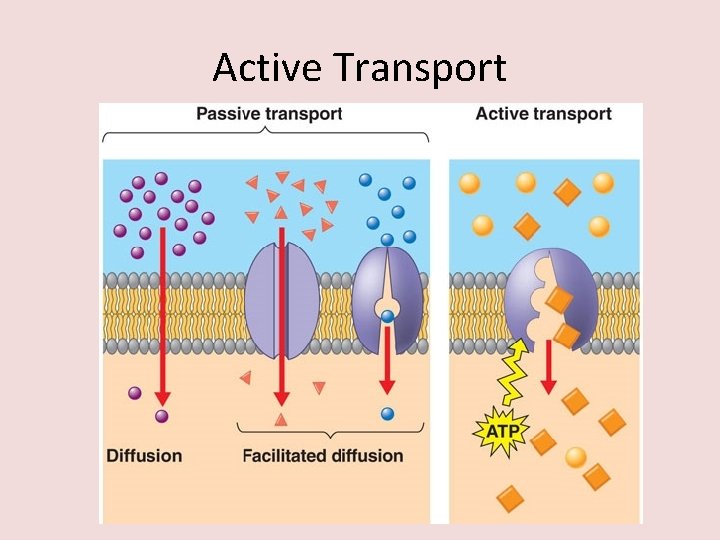
Active Transport
Endocytosis • The cellular uptake of macromolecules and particulate substances by localized regions of the plasma membrane that surround the substance and pinch off to form an intracellular vesicle. • Cells can bring in solids and liquids using this process.
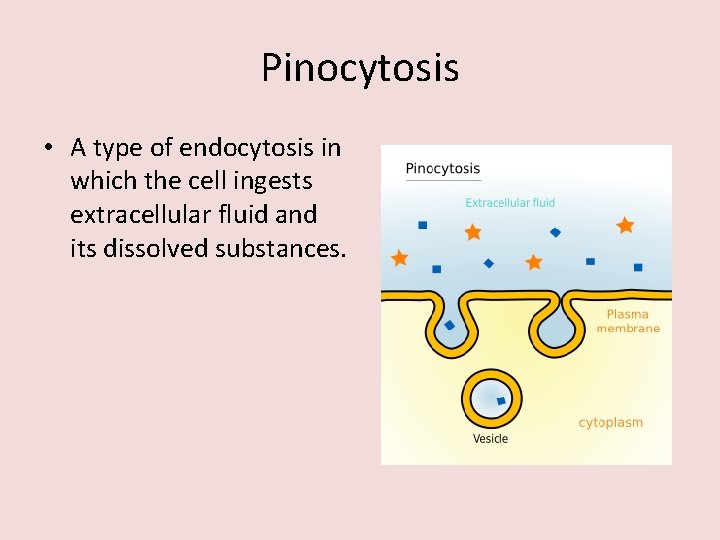
Pinocytosis • A type of endocytosis in which the cell ingests extracellular fluid and its dissolved substances.
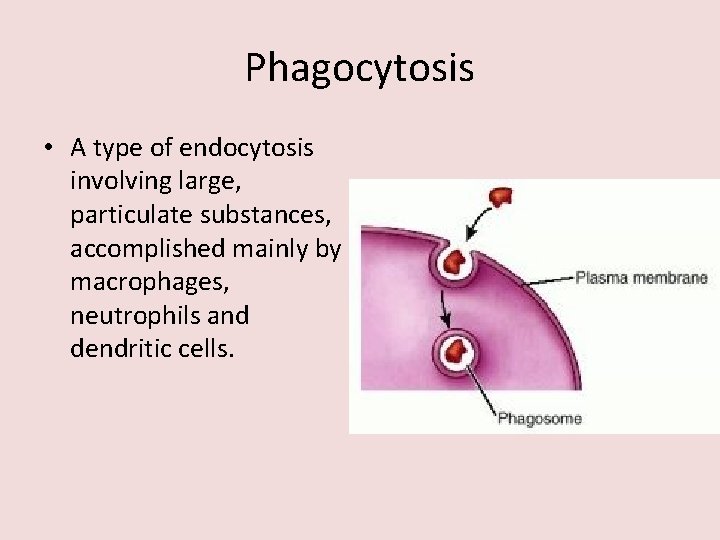
Phagocytosis • A type of endocytosis involving large, particulate substances, accomplished mainly by macrophages, neutrophils and dendritic cells.
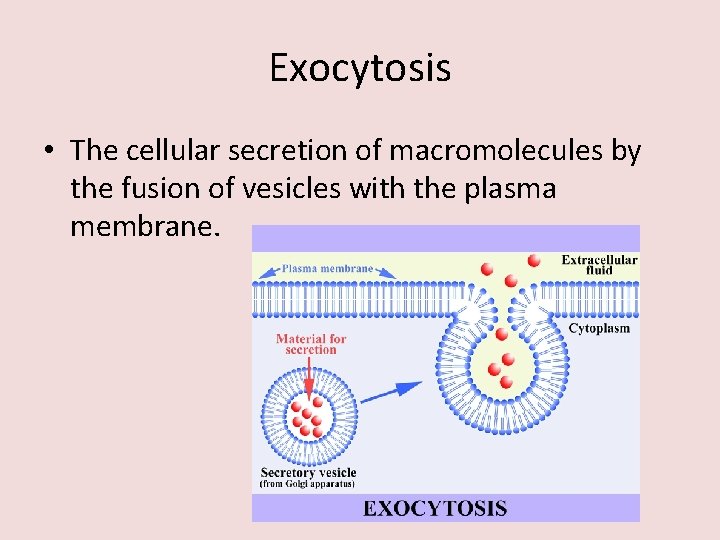
Exocytosis • The cellular secretion of macromolecules by the fusion of vesicles with the plasma membrane.
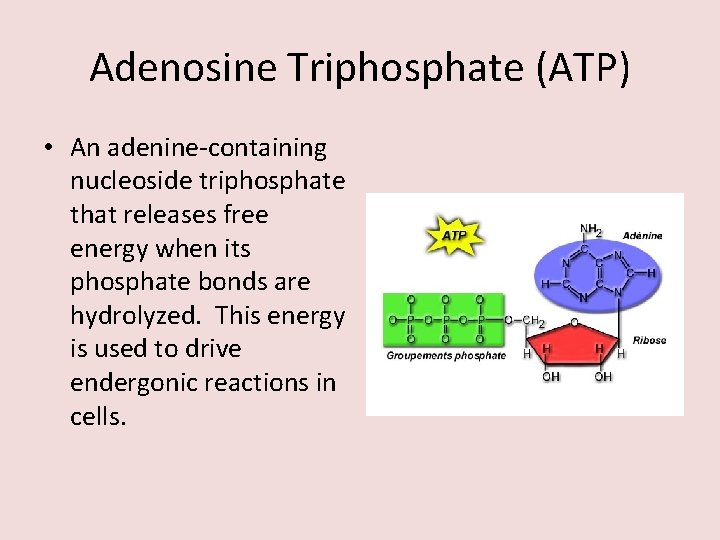
Adenosine Triphosphate (ATP) • An adenine-containing nucleoside triphosphate that releases free energy when its phosphate bonds are hydrolyzed. This energy is used to drive endergonic reactions in cells.
- Slides: 24