
Topic 2 3 CARBOHYDRATES LIPIDS Topic Outline AUDIO
Topic 2. 3 CARBOHYDRATES & LIPIDS
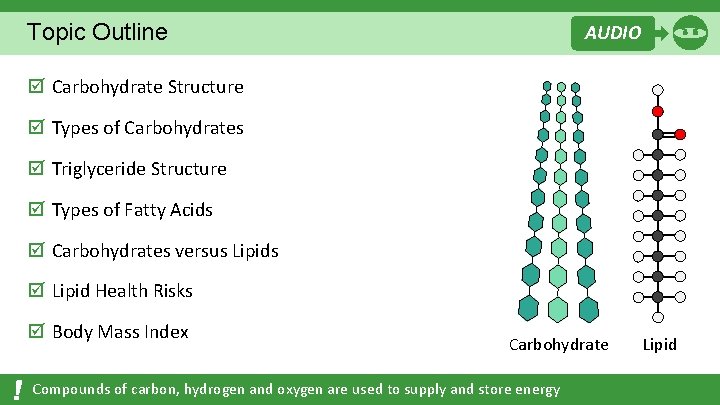
Topic Outline AUDIO þ Carbohydrate Structure þ Types of Carbohydrates þ Triglyceride Structure þ Types of Fatty Acids þ Carbohydrates versus Lipids þ Lipid Health Risks þ Body Mass Index Carbohydrate Compounds of carbon, hydrogen and oxygen are used to supply and store energy Lipid
![Carbohydrates function primarily as a short-term energy source ( formula: [CH 2 O]n )](http://slidetodoc.com/presentation_image_h/a9745023bd4672b9f654e59a77aea20c/image-3.jpg "Carbohydrates function primarily as a short-term energy source ( formula: [CH 2 O]n )")
Carbohydrates function primarily as a short-term energy source ( formula: [CH 2 O]n ) • Monosaccharides can be joined together via condensation reactions to form more complex carbohydrates such as disaccharides and polysaccharides CH 2 OH O HO OH OH OH + O O HO OH CH 2 OH OH OH HO OH OH H 2 O Monosaccharides are linked together by condensation reactions to form disaccharides / polysaccharides
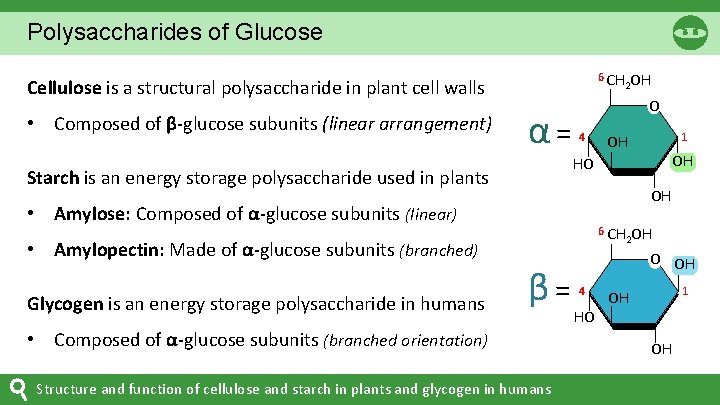
Polysaccharides of Glucose 6 CH Cellulose is a structural polysaccharide in plant cell walls • Composed of β-glucose subunits (linear arrangement) α= Starch is an energy storage polysaccharide used in plants O 4 1 OH OH HO OH • Amylose: Composed of α-glucose subunits (linear) 6 CH • Amylopectin: Made of α-glucose subunits (branched) Glycogen is an energy storage polysaccharide in humans 2 OH β= • Composed of α-glucose subunits (branched orientation) Structure and function of cellulose and starch in plants and glycogen in humans 2 OH O OH 4 1 OH HO OH

Polysaccharide Comparisons Cellulose Starch Amylose Amylopectin Glycogen Source Plant Animal Subunits β-glucose α-glucose Branching None (1 -4 only) Yes (1 -4 and 1 -6) Forms repeating flat sheets Forms a spiral (helical structure) Branches less Branches more Shape (per 20 subunits) (per 10 subunits)
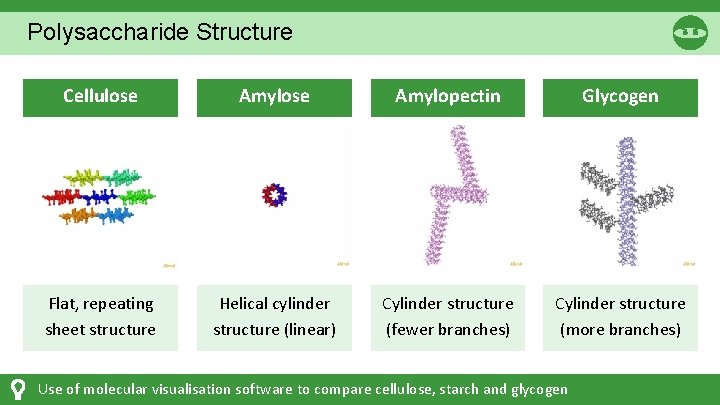
Polysaccharide Structure Cellulose Amylopectin Glycogen Flat, repeating sheet structure Helical cylinder structure (linear) Cylinder structure (fewer branches) Cylinder structure (more branches) Use of molecular visualisation software to compare cellulose, starch and glycogen
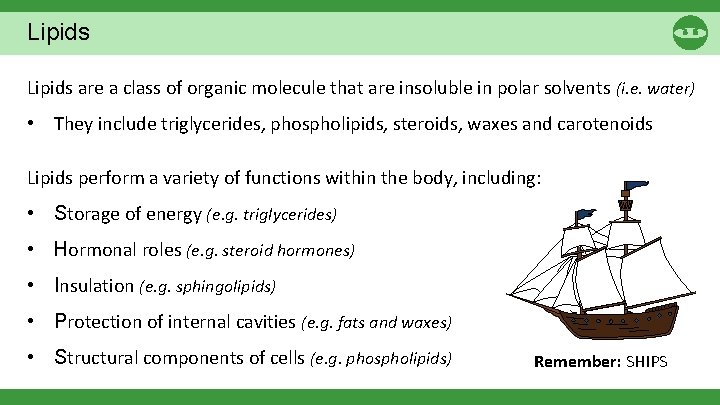
Lipids are a class of organic molecule that are insoluble in polar solvents (i. e. water) • They include triglycerides, phospholipids, steroids, waxes and carotenoids Lipids perform a variety of functions within the body, including: • Storage of energy (e. g. triglycerides) • Hormonal roles (e. g. steroid hormones) • Insulation (e. g. sphingolipids) • Protection of internal cavities (e. g. fats and waxes) • Structural components of cells (e. g. phospholipids) Remember: SHIPS
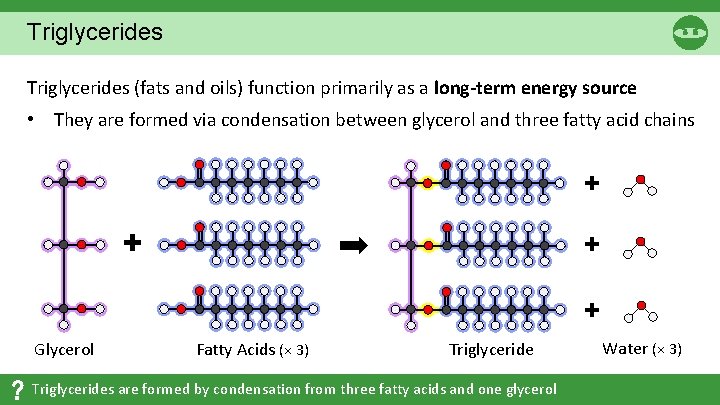
Triglycerides (fats and oils) function primarily as a long-term energy source • They are formed via condensation between glycerol and three fatty acid chains + + Glycerol Fatty Acids (× 3) Triglycerides are formed by condensation from three fatty acids and one glycerol Water (× 3)
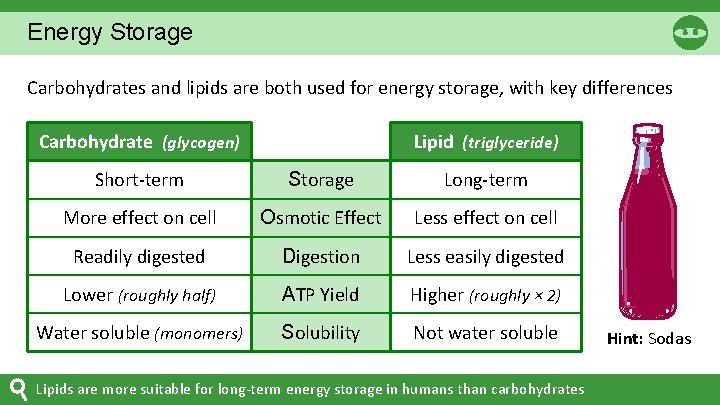
Energy Storage Carbohydrates and lipids are both used for energy storage, with key differences Carbohydrate (glycogen) Lipid (triglyceride) Short-term Storage Long-term More effect on cell Osmotic Effect Less effect on cell Readily digested Digestion Less easily digested Lower (roughly half) ATP Yield Higher (roughly × 2) Water soluble (monomers) Solubility Not water soluble Lipids are more suitable for long-term energy storage in humans than carbohydrates Hint: Sodas
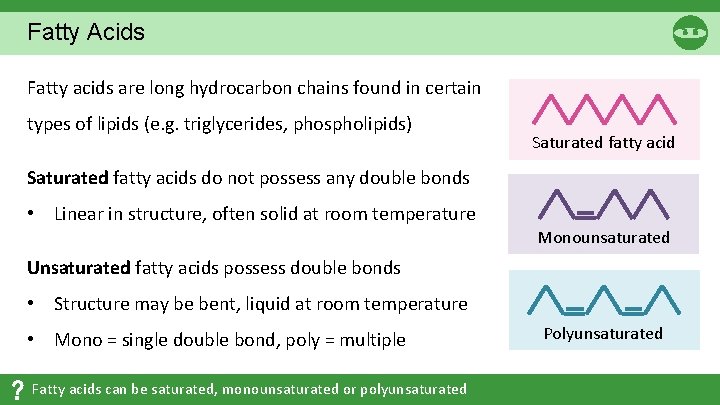
Fatty Acids Fatty acids are long hydrocarbon chains found in certain types of lipids (e. g. triglycerides, phospholipids) Saturated fatty acids do not possess any double bonds • Linear in structure, often solid at room temperature Monounsaturated Unsaturated fatty acids possess double bonds • Structure may be bent, liquid at room temperature • Mono = single double bond, poly = multiple Fatty acids can be saturated, monounsaturated or polyunsaturated Polyunsaturated
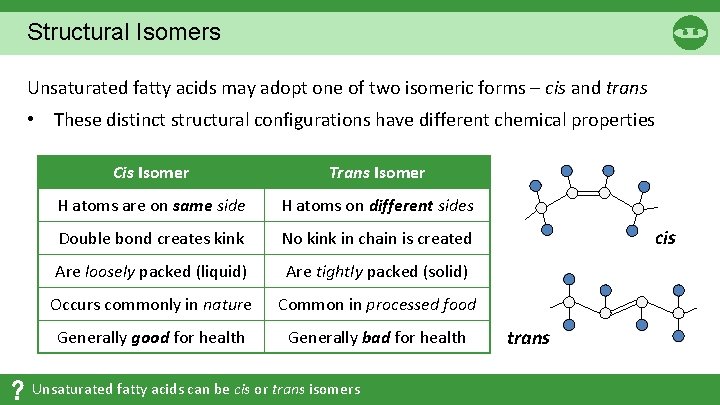
Structural Isomers Unsaturated fatty acids may adopt one of two isomeric forms – cis and trans • These distinct structural configurations have different chemical properties Cis Isomer Trans Isomer H atoms are on same side H atoms on different sides Double bond creates kink No kink in chain is created Are loosely packed (liquid) Are tightly packed (solid) Occurs commonly in nature Common in processed food Generally good for health Generally bad for health Unsaturated fatty acids can be cis or trans isomers cis trans
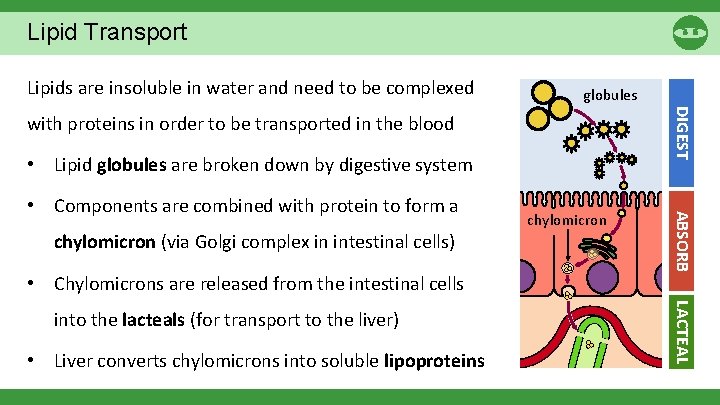
Lipid Transport Lipids are insoluble in water and need to be complexed globules DIGEST with proteins in order to be transported in the blood • Lipid globules are broken down by digestive system chylomicron (via Golgi complex in intestinal cells) • Chylomicrons are released from the intestinal cells • Liver converts chylomicrons into soluble lipoproteins LACTEAL into the lacteals (for transport to the liver) chylomicron ABSORB • Components are combined with protein to form a
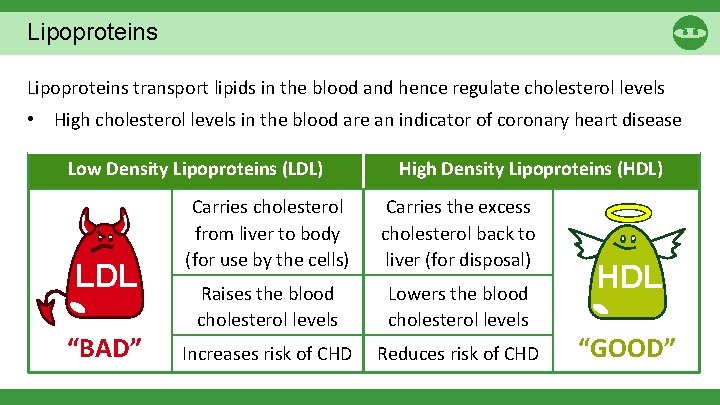
Lipoproteins transport lipids in the blood and hence regulate cholesterol levels • High cholesterol levels in the blood are an indicator of coronary heart disease Low Density Lipoproteins (LDL) LDL “BAD” High Density Lipoproteins (HDL) Carries cholesterol from liver to body (for use by the cells) Carries the excess cholesterol back to liver (for disposal) Raises the blood cholesterol levels Lowers the blood cholesterol levels Increases risk of CHD Reduces risk of CHD HDL “GOOD”
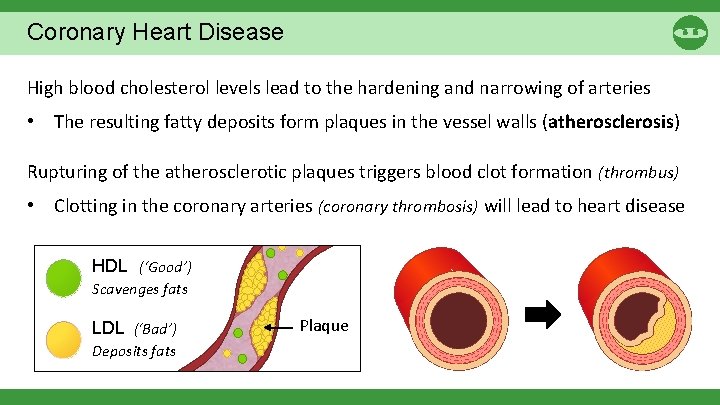
Coronary Heart Disease High blood cholesterol levels lead to the hardening and narrowing of arteries • The resulting fatty deposits form plaques in the vessel walls (atherosclerosis) Rupturing of the atherosclerotic plaques triggers blood clot formation (thrombus) • Clotting in the coronary arteries (coronary thrombosis) will lead to heart disease HDL (‘Good’) Scavenges fats LDL (‘Bad’) Deposits fats Plaque
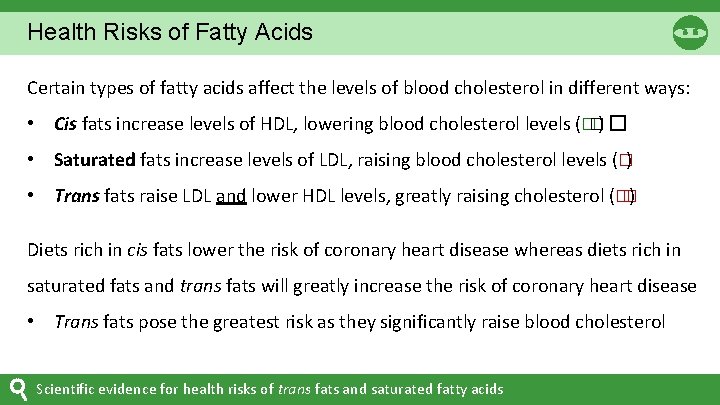
Health Risks of Fatty Acids Certain types of fatty acids affect the levels of blood cholesterol in different ways: • Cis fats increase levels of HDL, lowering blood cholesterol levels (��) � • Saturated fats increase levels of LDL, raising blood cholesterol levels (�) • Trans fats raise LDL and lower HDL levels, greatly raising cholesterol (��) Diets rich in cis fats lower the risk of coronary heart disease whereas diets rich in saturated fats and trans fats will greatly increase the risk of coronary heart disease • Trans fats pose the greatest risk as they significantly raise blood cholesterol Scientific evidence for health risks of trans fats and saturated fatty acids
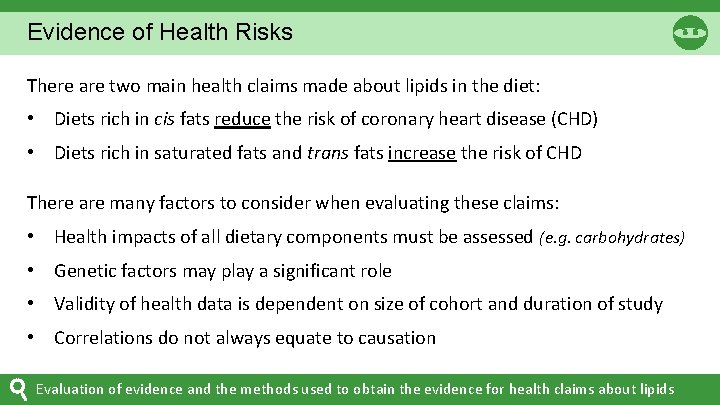
Evidence of Health Risks There are two main health claims made about lipids in the diet: • Diets rich in cis fats reduce the risk of coronary heart disease (CHD) • Diets rich in saturated fats and trans fats increase the risk of CHD There are many factors to consider when evaluating these claims: • Health impacts of all dietary components must be assessed (e. g. carbohydrates) • Genetic factors may play a significant role • Validity of health data is dependent on size of cohort and duration of study • Correlations do not always equate to causation Evaluation of evidence and the methods used to obtain the evidence for health claims about lipids
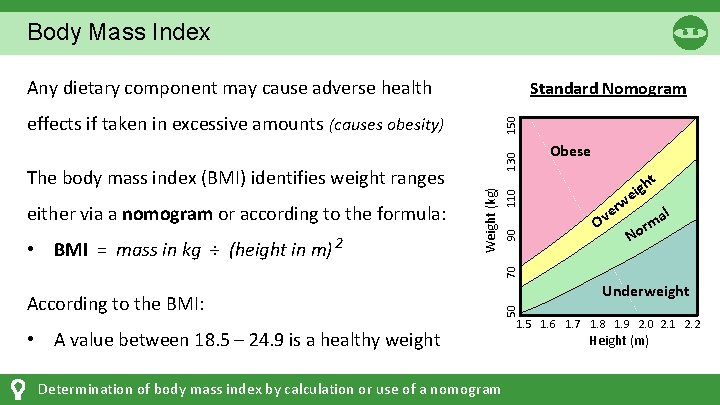
Body Mass Index Any dietary component may cause adverse health Standard Nomogram 130 110 Obese t h eig w er v O N al orm 70 • BMI = mass in kg ÷ (height in m) 2 90 either via a nomogram or according to the formula: Weight (kg) The body mass index (BMI) identifies weight ranges 150 effects if taken in excessive amounts (causes obesity) • A value between 18. 5 – 24. 9 is a healthy weight Determination of body mass index by calculation or use of a nomogram Underweight 50 According to the BMI: 1. 5 1. 6 1. 7 1. 8 1. 9 2. 0 2. 1 2. 2 Height (m)
Topic Review Can you do the following? • Describe how carbohydrates form polymers • Compare glycogen, cellulose and starch • Describe how triglycerides are formed • Contrast sugars and lipids as energy sources • Outline the different types of fatty acids • Evaluate the health impacts of different fats • Calculate BMI from formula or nomogram
- Slides: 18