
Topic 2 1 How and why do we

- Slides: 12
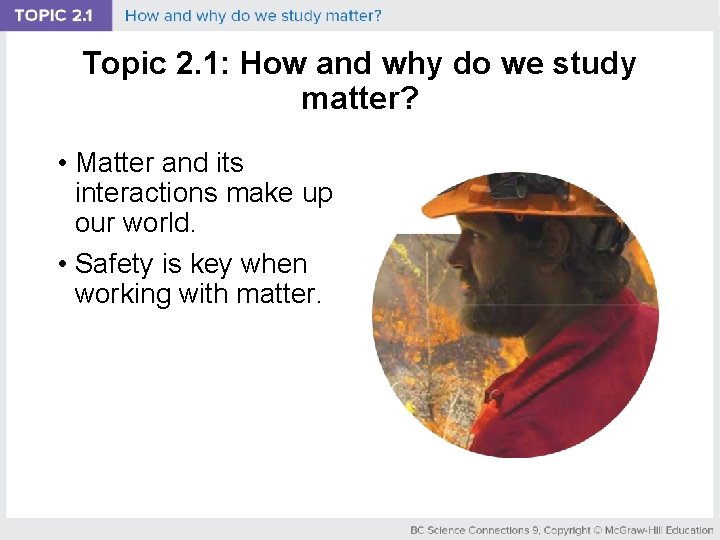
Topic 2. 1: How and why do we study matter? • Matter and its interactions make up our world. • Safety is key when working with matter.
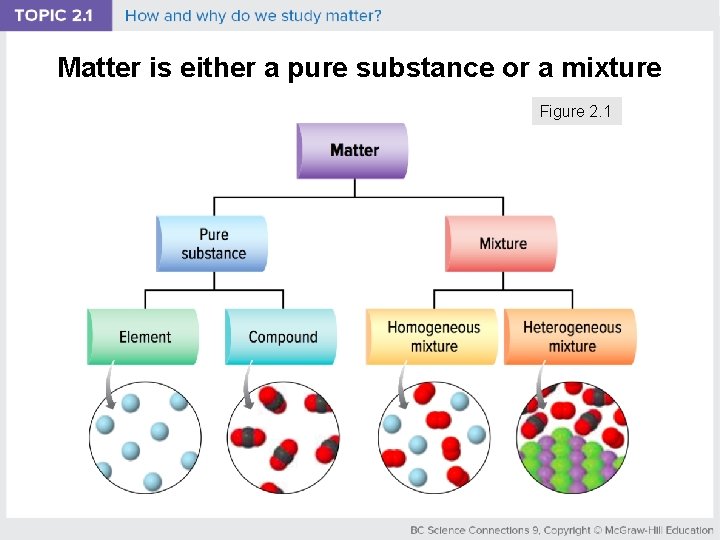
Concept 1: Matter and its interactions make up our world. Matter: anything that has mass and takes up space • Classification of matter • Pure substance: made up of one type of particle; cannot be separated by physical means • Mixture: made up of two or more pure substances; can be separated by physical means
Matter is either a pure substance or a mixture Figure 2. 1
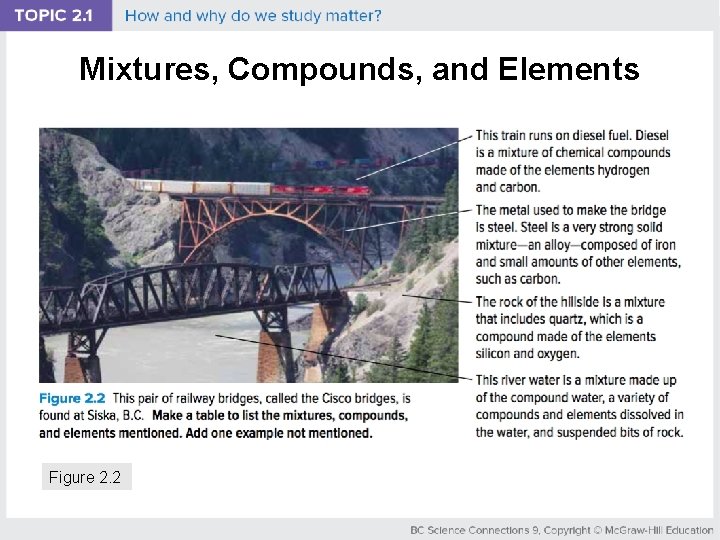
Mixtures: Homogeneous and Heterogeneous Mixtures can be classified as • Homogeneous mixtures (solutions): mixed uniformly; cannot see their components • Example: air (nitrogen, oxygen, hydrogen), steel (iron and other elements) • Heterogeneous mixture: have different components that you can see • Example: beach sand, salad dressing
Pure Substances: Compounds and Elements Pure substances can be classified as • Elements: made up of one type of atom; cannot be broken down into simpler substances (example: gold) • Compounds: made up of two or more elements; can be broken down into simpler substances (example: sodium chloride)
Mixtures, Compounds, and Elements Figure 2. 2
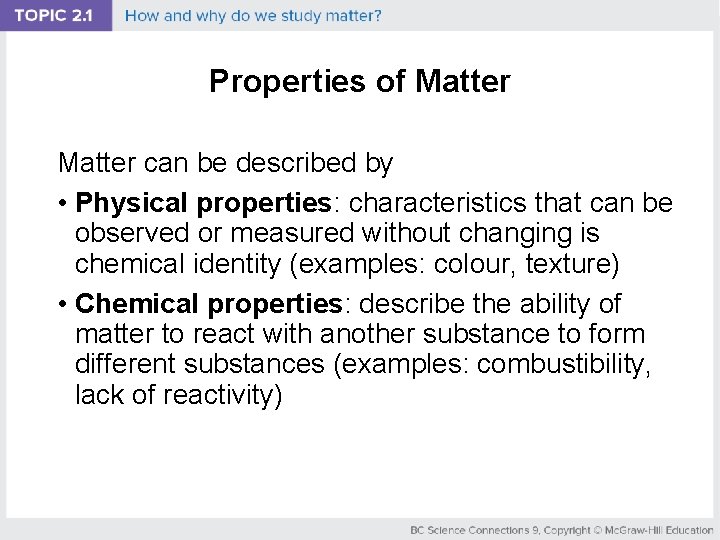
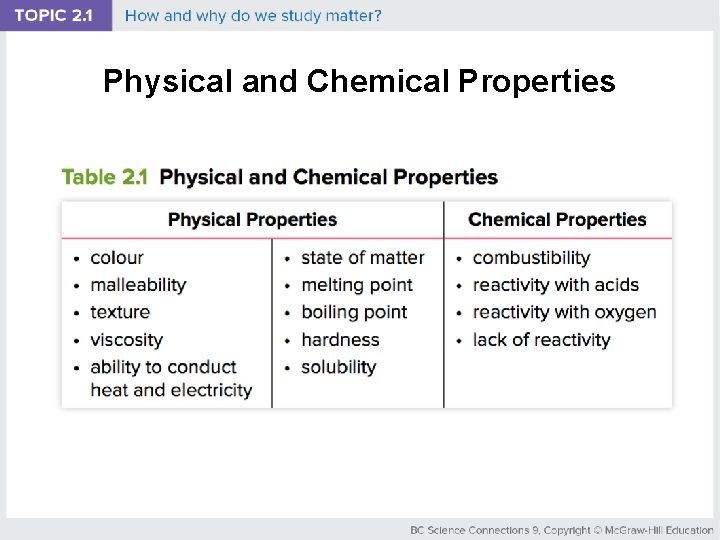
Properties of Matter can be described by • Physical properties: characteristics that can be observed or measured without changing is chemical identity (examples: colour, texture) • Chemical properties: describe the ability of matter to react with another substance to form different substances (examples: combustibility, lack of reactivity)
Physical and Chemical Properties
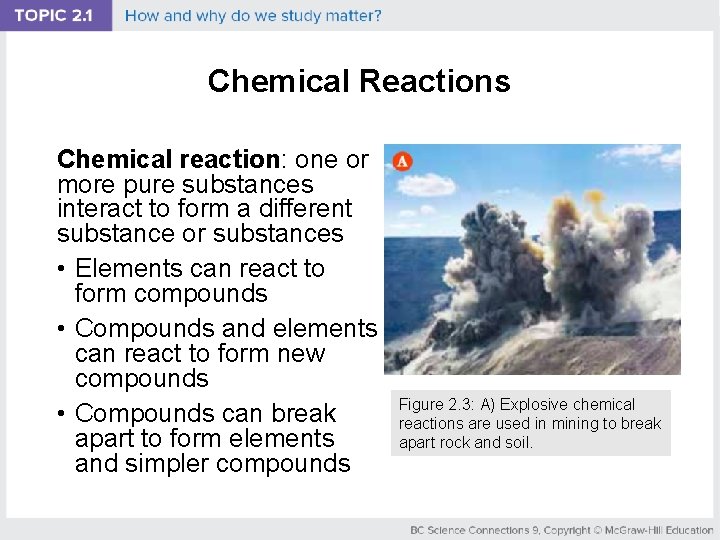
Chemical Reactions Chemical reaction: one or more pure substances interact to form a different substance or substances • Elements can react to form compounds • Compounds and elements can react to form new compounds • Compounds can break apart to form elements and simpler compounds Figure 2. 3: A) Explosive chemical reactions are used in mining to break apart rock and soil.
Discussion Questions 1. What is the difference between a pure substance and a mixture? Use diagrams in your answer. 2. List three physical properties of water at room temperature.
Discussion Questions 3. Give one example of an element and one example of a compound. Explain how they are different. 4. What happens in a chemical reaction?
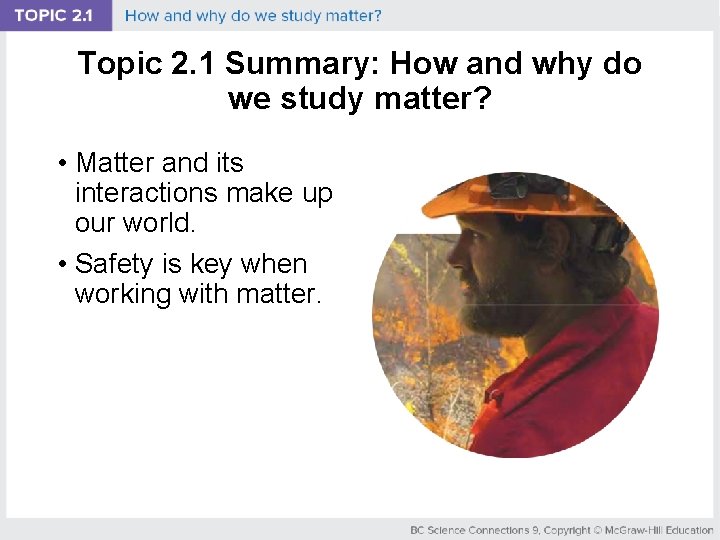
Topic 2. 1 Summary: How and why do we study matter? • Matter and its interactions make up our world. • Safety is key when working with matter.