
Topic 2 1 Cell Theory Assessment Statements 2
- Slides: 47
Topic 2. 1 Cell Theory
Assessment Statements 2. 1. 1 Outline the cell theory. 2. 1. 2 Discuss the evidence for the cell theory.
Watch this:
Try this: Cell Theory Jigsaw activity 1. Split into two groups A and B. 2. Each group has a different version of a text with some key words missing. 3. Read through your text and write a list of questions you could ask to identify the missing words. 4. Pair up with a student in the other group and take it in turns to read out the text and ask questions.
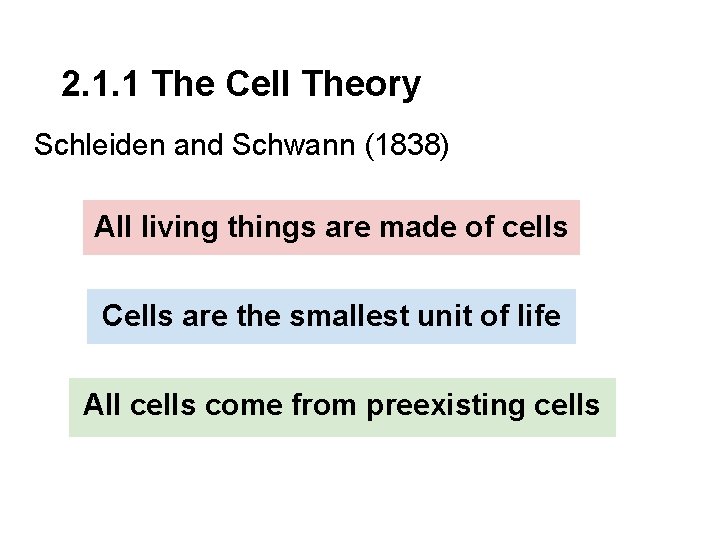
2. 1. 1 The Cell Theory Schleiden and Schwann (1838) All living things are made of cells Cells are the smallest unit of life All cells come from preexisting cells
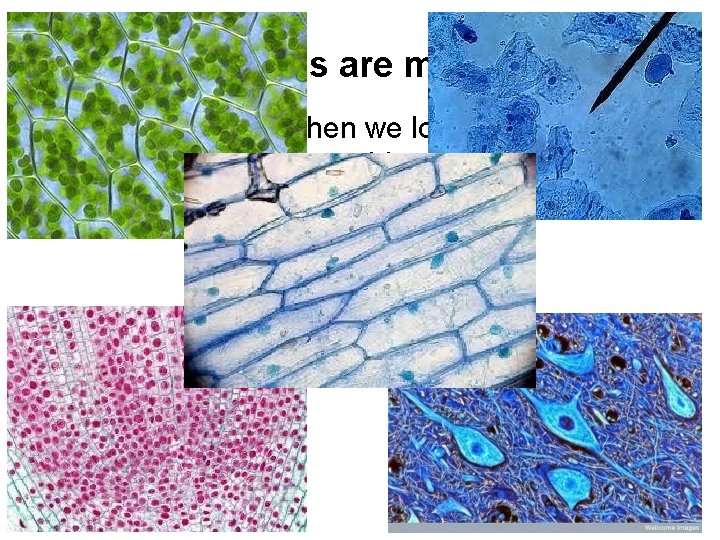
2. 1. 2 Evidence for Cell Theory All living things are made of cells… When we look at living things under a microscope they appear to be made of cells
All living things are made of cells We can see them when we look down the microscope: . Can you identify these cells?
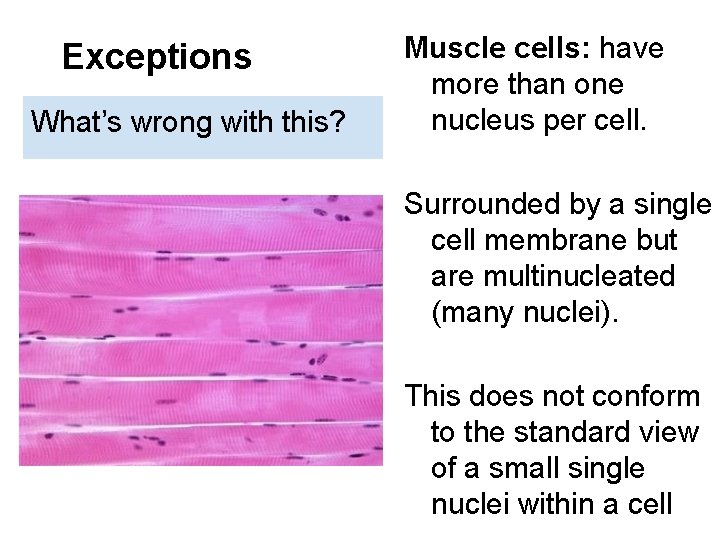
Exceptions What’s wrong with this? Muscle cells: have more than one nucleus per cell. Surrounded by a single cell membrane but are multinucleated (many nuclei). This does not conform to the standard view of a small single nuclei within a cell
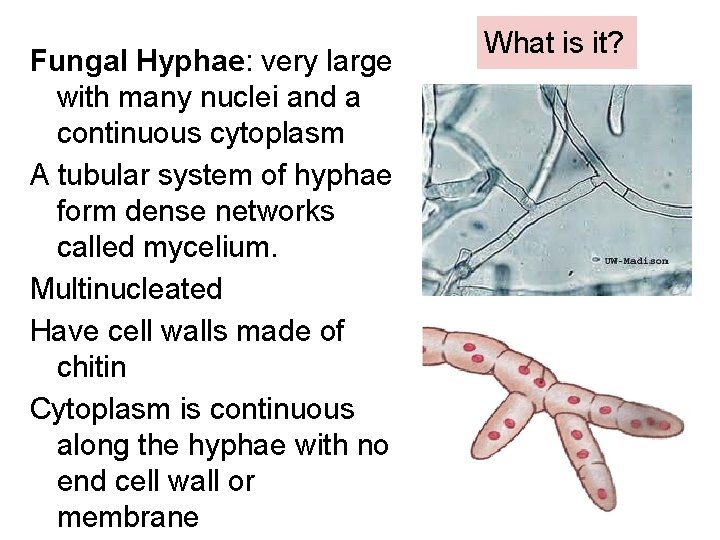
Fungal Hyphae: very large with many nuclei and a continuous cytoplasm A tubular system of hyphae form dense networks called mycelium. Multinucleated Have cell walls made of chitin Cytoplasm is continuous along the hyphae with no end cell wall or membrane What is it?
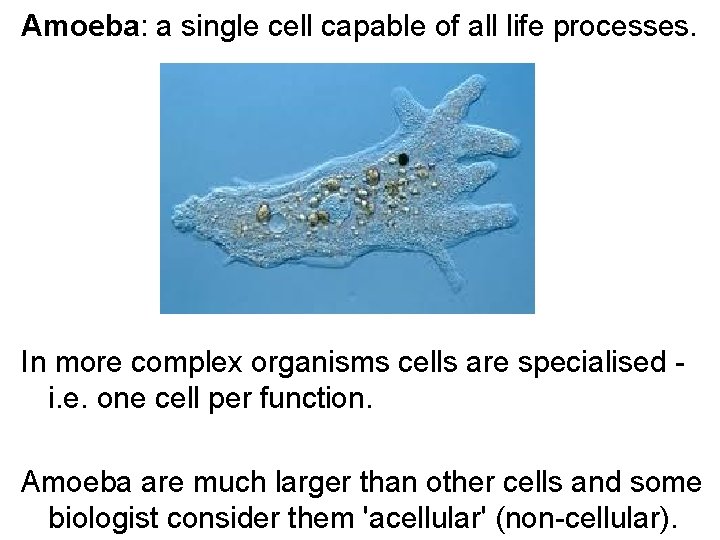
Amoeba: a single cell capable of all life processes. In more complex organisms cells are specialised i. e. one cell per function. Amoeba are much larger than other cells and some biologist consider them 'acellular' (non-cellular).
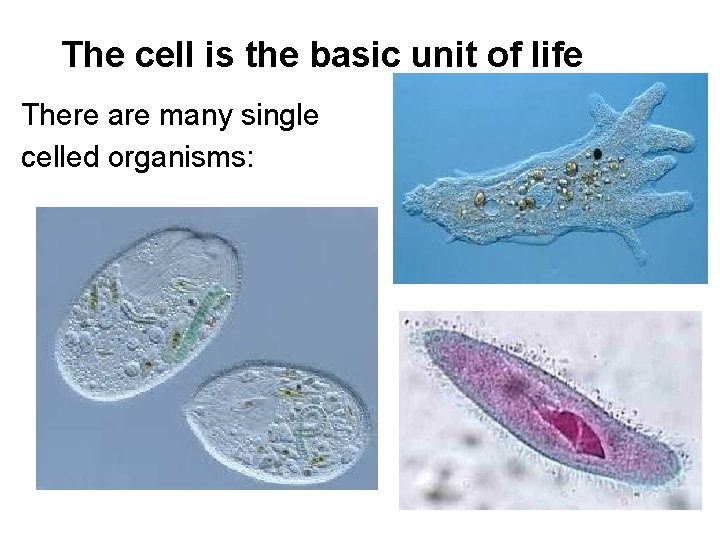
The cell is the basic unit of life There are many single celled organisms:
The cell is the smallest unit of organisation that can show all the characteristics of living things. Organelles often require the cooperation of other organelles for their successful function. Read this: http: //learn. genetics. utah. edu/content/begin /cells/organelles/ to learn about how cells evolved.
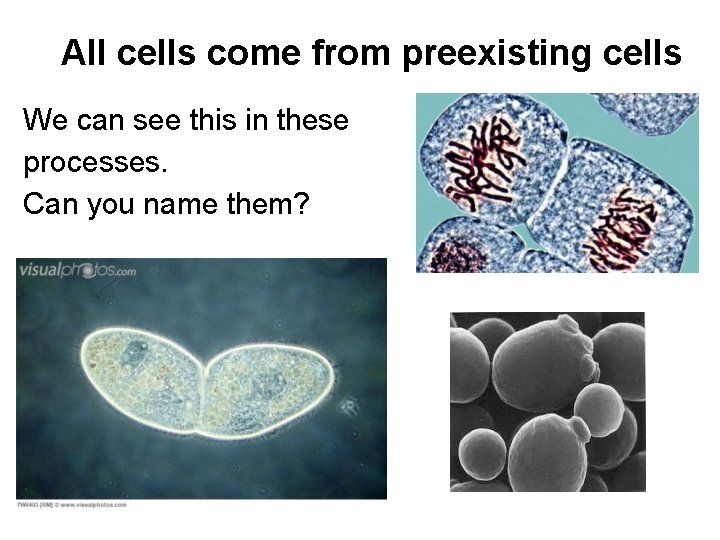
All cells come from preexisting cells We can see this in these processes. Can you name them?
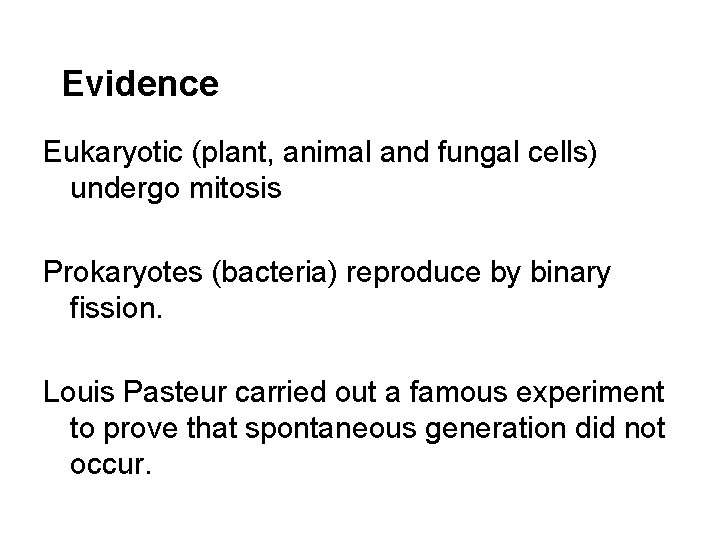
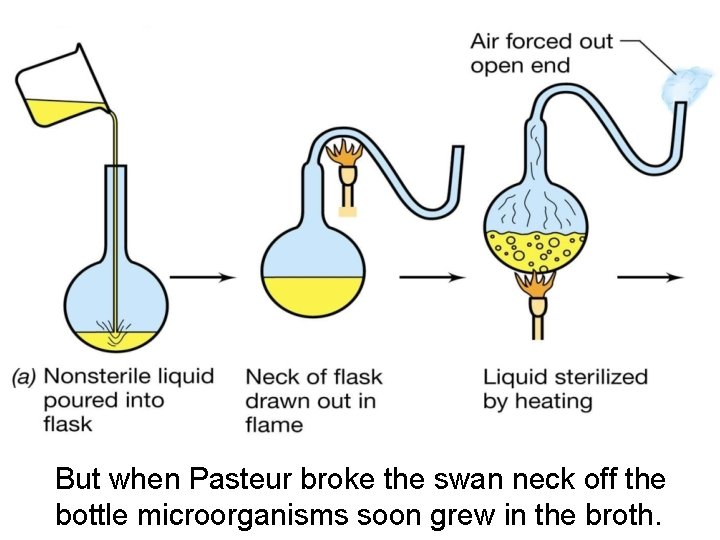
Evidence Eukaryotic (plant, animal and fungal cells) undergo mitosis Prokaryotes (bacteria) reproduce by binary fission. Louis Pasteur carried out a famous experiment to prove that spontaneous generation did not occur.
But when Pasteur broke the swan neck off the bottle microorganisms soon grew in the broth.
Watch this:
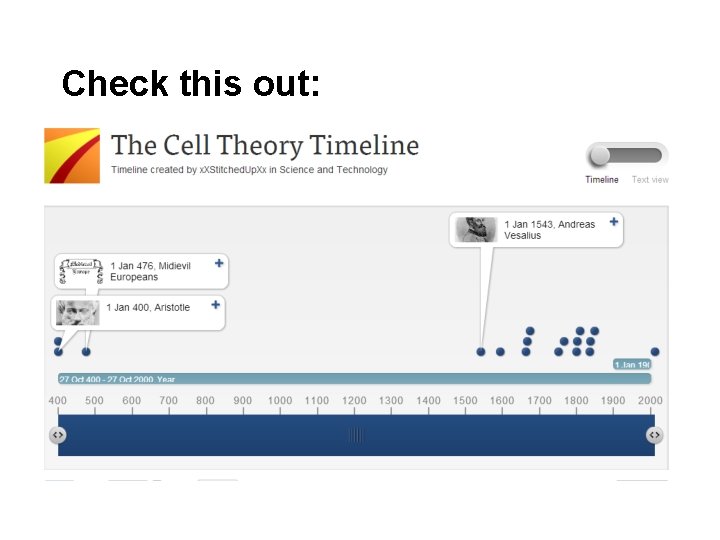
Check this out:
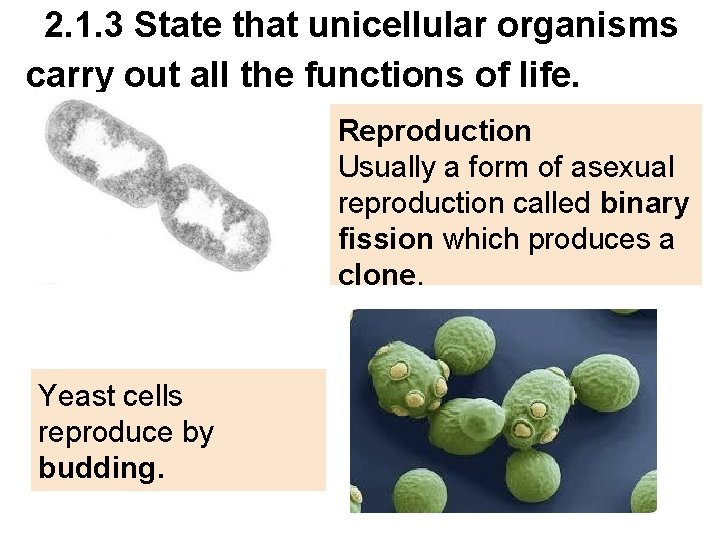
2. 1. 3 State that unicellular organisms carry out all the functions of life. Reproduction Usually a form of asexual reproduction called binary fission which produces a clone. Yeast cells reproduce by budding.
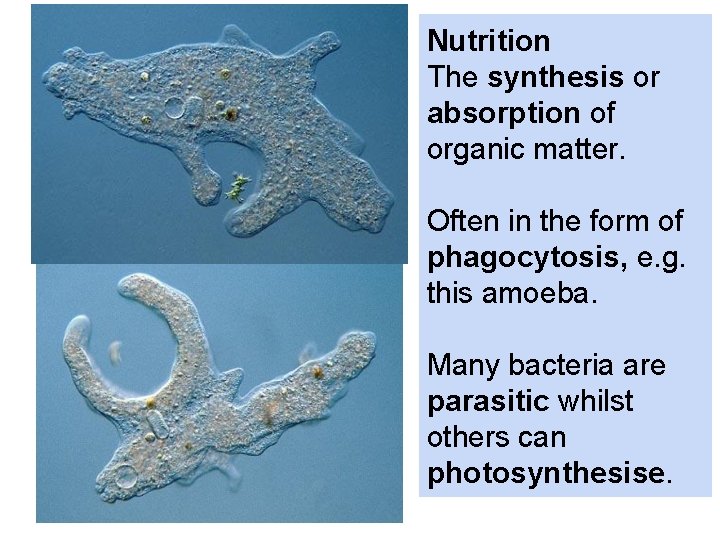
Nutrition The synthesis or absorption of organic matter. Often in the form of phagocytosis, e. g. this amoeba. Many bacteria are parasitic whilst others can photosynthesise.
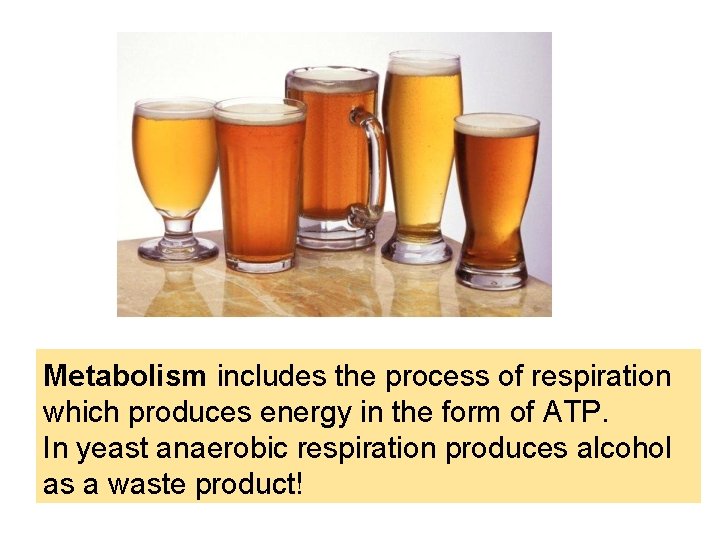
Metabolism includes the process of respiration which produces energy in the form of ATP. In yeast anaerobic respiration produces alcohol as a waste product!
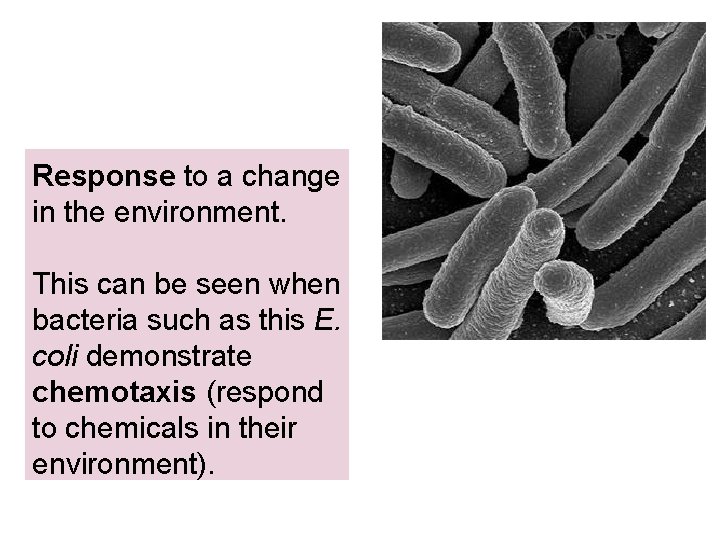
Response to a change in the environment. This can be seen when bacteria such as this E. coli demonstrate chemotaxis (respond to chemicals in their environment).
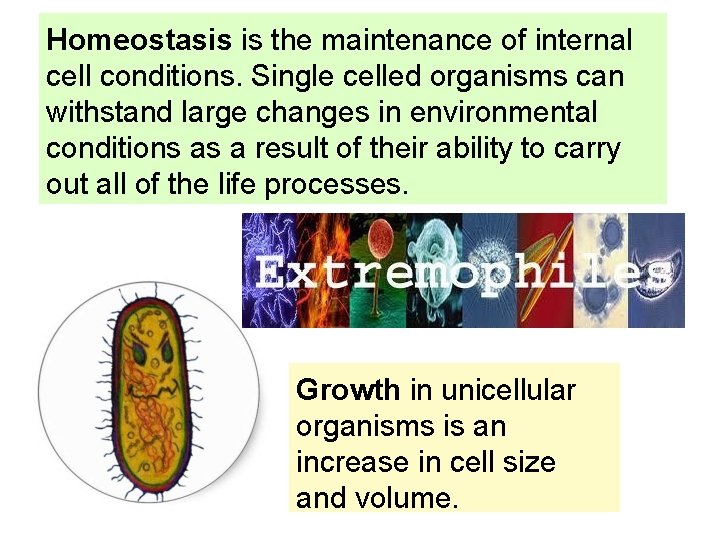
Homeostasis is the maintenance of internal cell conditions. Single celled organisms can withstand large changes in environmental conditions as a result of their ability to carry out all of the life processes. Growth in unicellular organisms is an increase in cell size and volume.
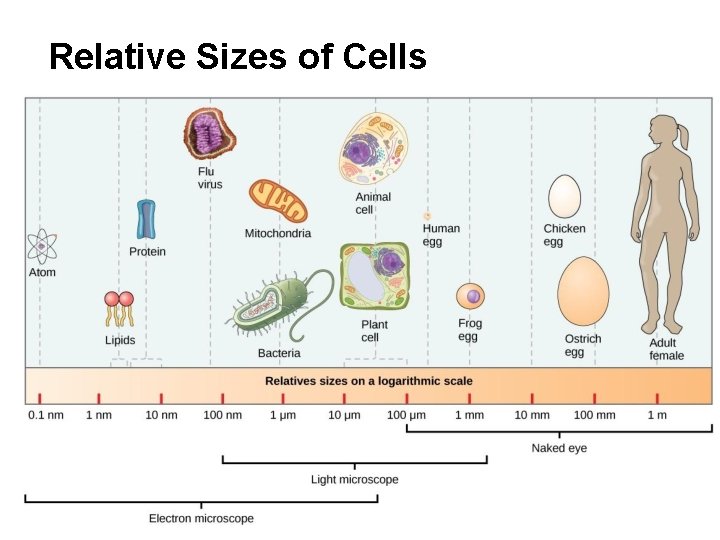
Assessment Statement 2. 1. 4 Compare the relative sizes of molecules, cell membrane thickness, viruses, bacteria, organelles and cells, using the appropriate SI unit.
Relative Sizes of Cells
Assessment Statement: 2. 1. 5 Calculate the linear magnification of drawings and the actual size of specimens in images of known magnification.
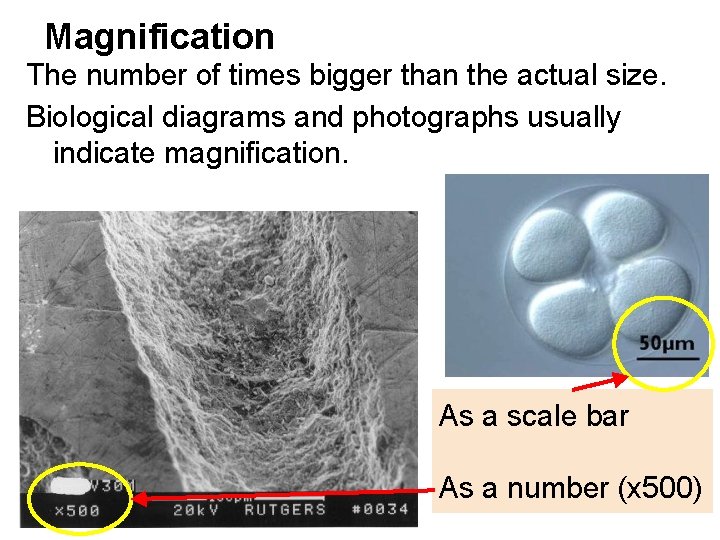
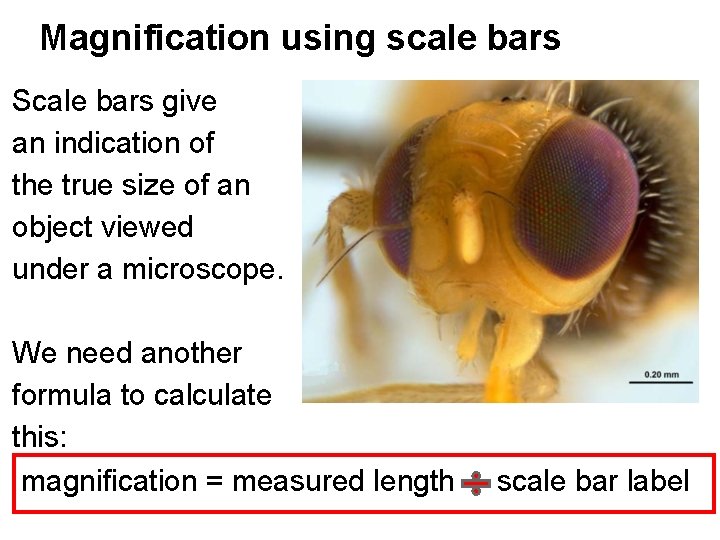
Magnification The number of times bigger than the actual size. Biological diagrams and photographs usually indicate magnification. As a scale bar As a number (x 500)
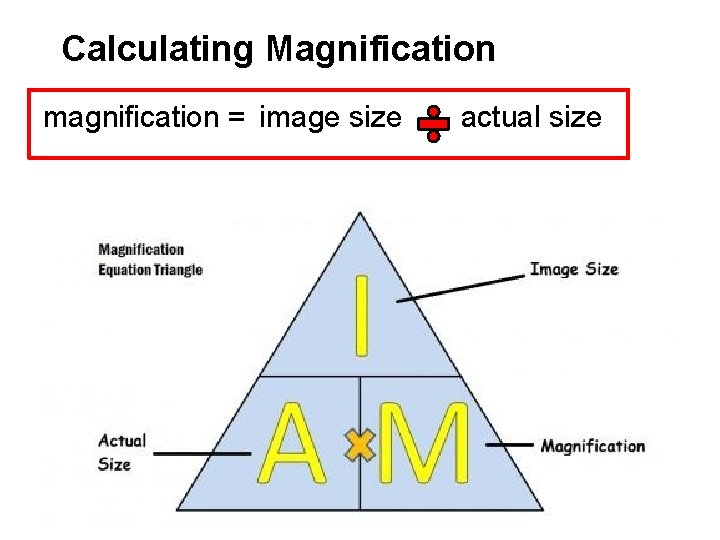
Calculating Magnification magnification = image size actual size
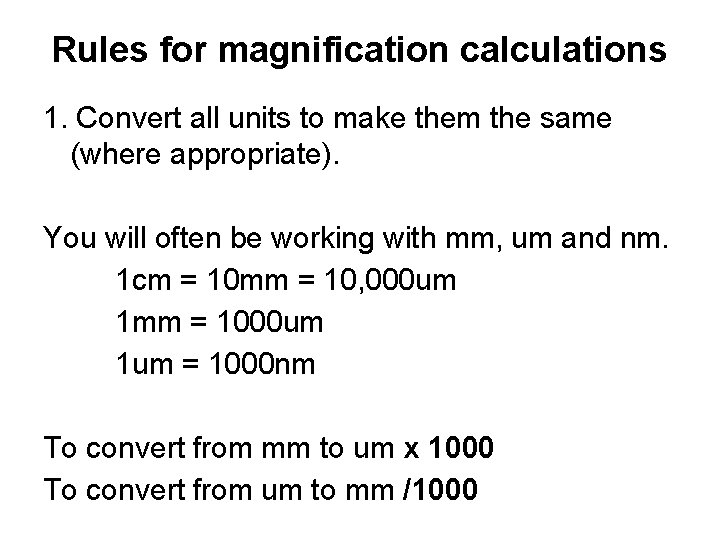
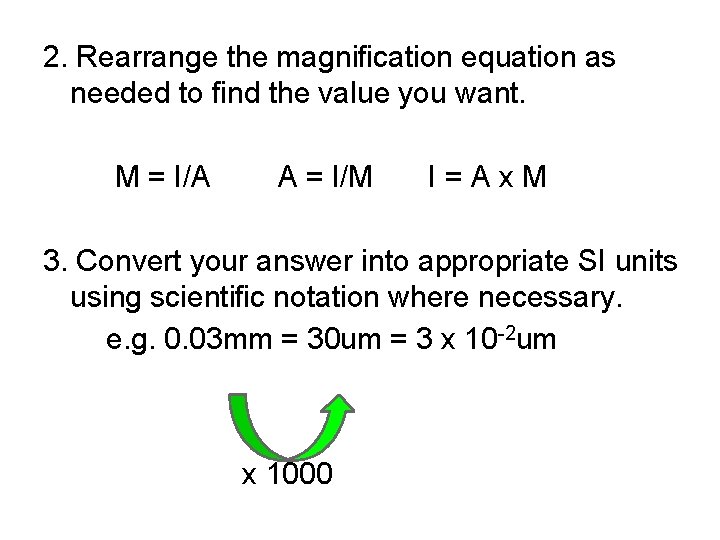
Rules for magnification calculations 1. Convert all units to make them the same (where appropriate). You will often be working with mm, um and nm. 1 cm = 10 mm = 10, 000 um 1 mm = 1000 um 1 um = 1000 nm To convert from mm to um x 1000 To convert from um to mm /1000
2. Rearrange the magnification equation as needed to find the value you want. M = I/A A = I/M I=Ax. M 3. Convert your answer into appropriate SI units using scientific notation where necessary. e. g. 0. 03 mm = 30 um = 3 x 10 -2 um x 1000
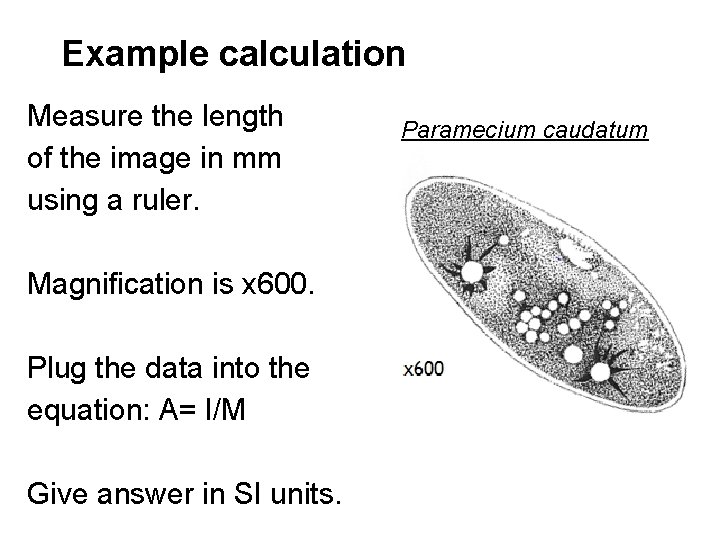
Example calculation Measure the length of the image in mm using a ruler. Magnification is x 600. Plug the data into the equation: A= I/M Give answer in SI units. Paramecium caudatum
Magnification using scale bars Scale bars give an indication of the true size of an object viewed under a microscope. We need another formula to calculate this: magnification = measured length scale bar label
Assessment Statement 2. 1. 6 Explain the importance of the surface area to volume ratio as a factor limiting cell size.
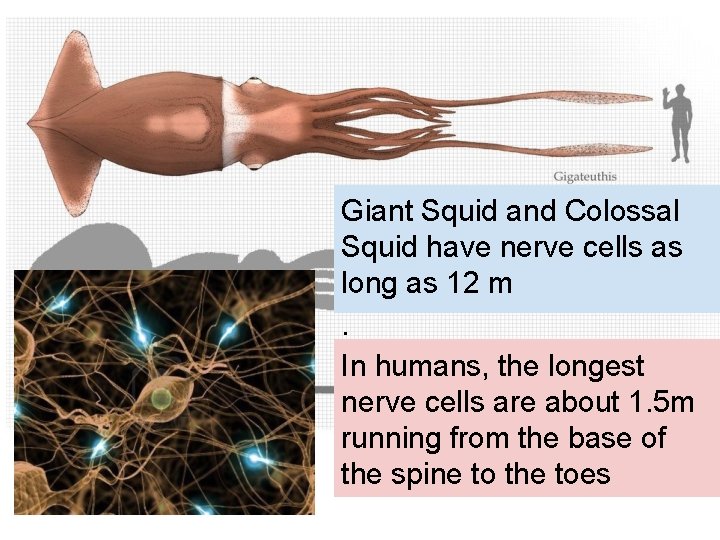
Giant Squid and Colossal Squid have nerve cells as long as 12 m. In humans, the longest nerve cells are about 1. 5 m running from the base of the spine to the toes
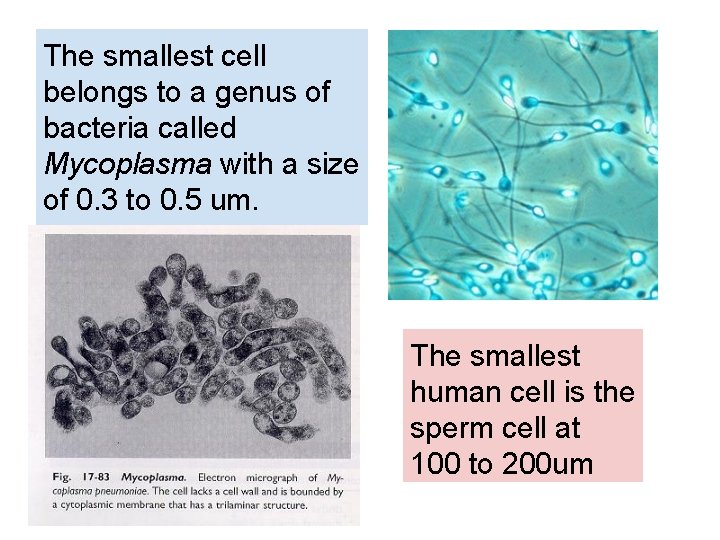
The smallest cell belongs to a genus of bacteria called Mycoplasma with a size of 0. 3 to 0. 5 um. The smallest human cell is the sperm cell at 100 to 200 um
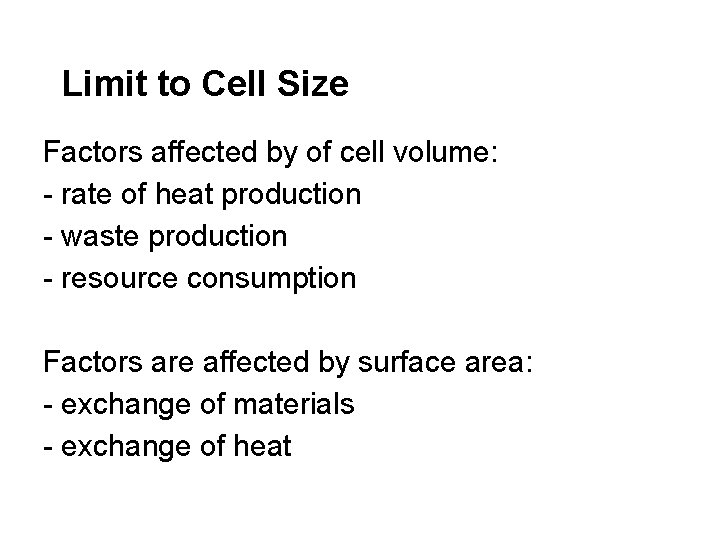
Limit to Cell Size Factors affected by of cell volume: - rate of heat production - waste production - resource consumption Factors are affected by surface area: - exchange of materials - exchange of heat
Assessment Statement: 2. 1. 7 State that multicellular organisms show emergent properties.
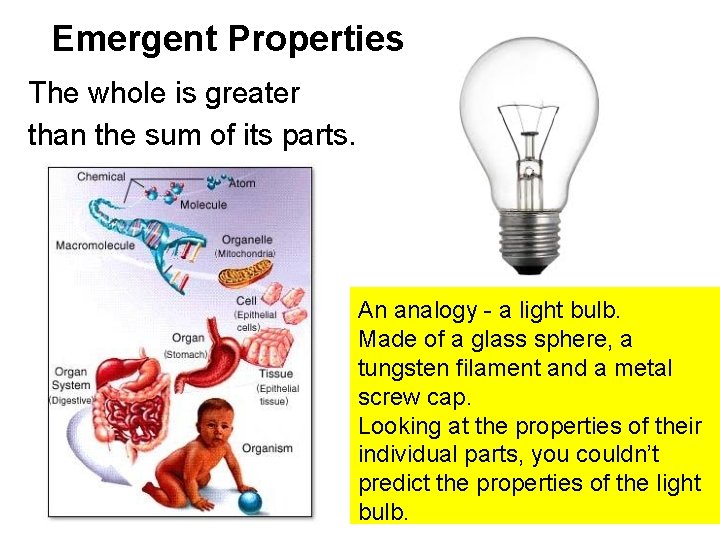
Emergent Properties The whole is greater than the sum of its parts. An analogy - a light bulb. Made of a glass sphere, a tungsten filament and a metal screw cap. Looking at the properties of their individual parts, you couldn’t predict the properties of the light bulb.
Examples • New properties that emerge with each step upward in the hierarchy of life, owing to the arrangement and interaction of parts as complexity increases. • Na is a metal, Cl is a poisonous gas – together, they are edible • Do macromolecules behave like a composite of monomers? • If you put chlorophyll and all molecules from plant cell into test tube, could they perform photosynthesis? • If you put functioning nerve cells together, will there be thought? • Cycling of nutrients in an ecosystem involves complex interaction of all members.
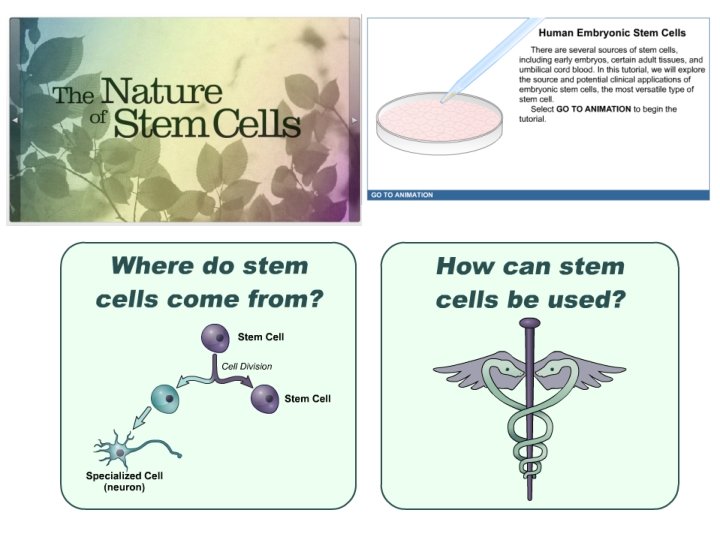
Assessment Statements: 2. 1. 8 Explain that cells in multicellular organisms differentiate to carry out specialized functions by expressing some of their genes but not others. 2. 1. 9 State that stem cells retain the capacity to divide and have the ability to differentiate along different pathways. 2. 1. 10 Outline one therapeutic use of stem cells.
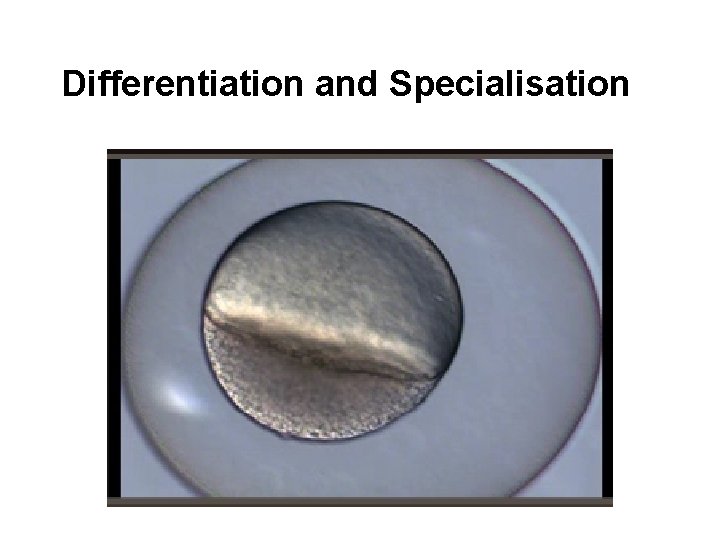
Differentiation and Specialisation
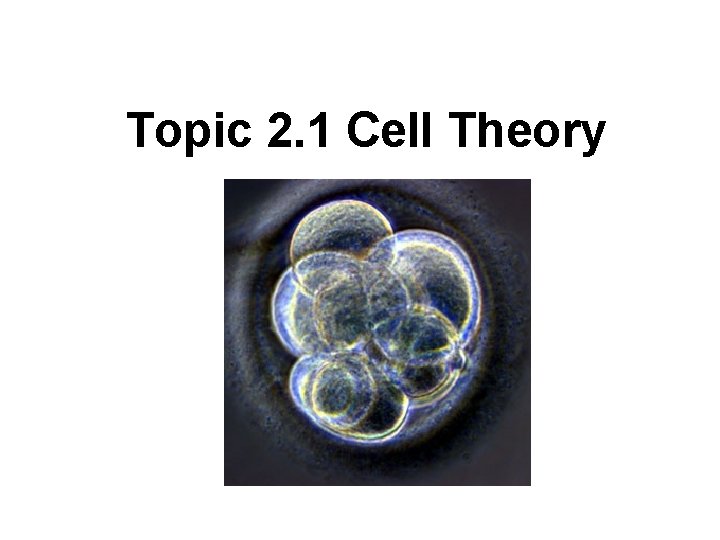
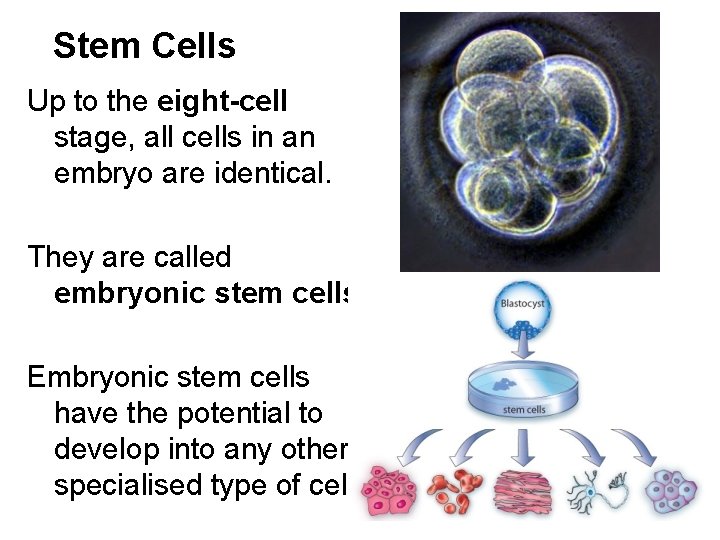
Stem Cells Up to the eight-cell stage, all cells in an embryo are identical. They are called embryonic stem cells. Embryonic stem cells have the potential to develop into any other specialised type of cell.
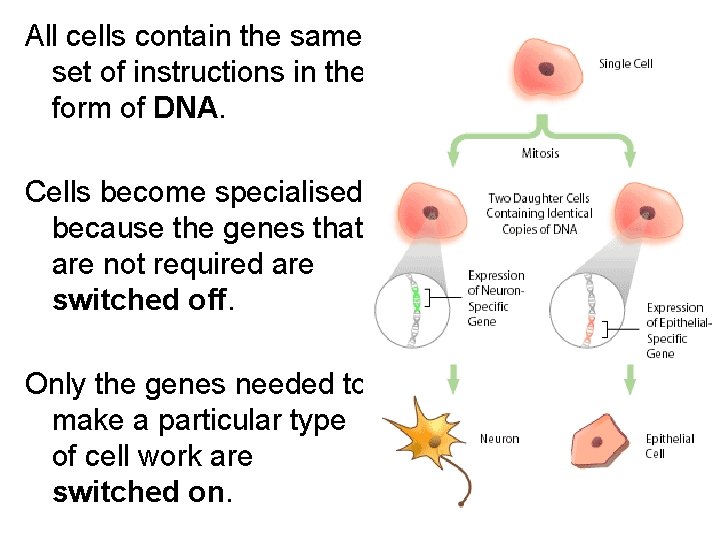
All cells contain the same set of instructions in the form of DNA. Cells become specialised because the genes that are not required are switched off. Only the genes needed to make a particular type of cell work are switched on.
Watch these:
Stem Cell Debate In your groups you will be given a character profile. Read the information and decide if your character is for or against the use of stem cells. Produce a 3 minute speech by your character in response to the task outlined on your brief.
What you need to be able to do: 2. 1. 1 Outline the cell theory. 2. 1. 2 Discuss the evidence for the cell theory. 2. 1. 3 State that unicellular organisms carry out all the functions of life. 2. 1. 4 Compare the relative sizes of molecules, cell membrane thickness, viruses, bacteria, organelles and cells, using the appropriate SI unit. 2. 1. 5 Calculate the linear magnification of drawings and the actual size of specimens in images of known magnification. 2. 1. 6 Explain the importance of the surface area to volume ratio as a factor limiting cell size. 2. 1. 7 State that multicellular organisms show emergent properties. 2. 1. 8 Explain that cells in multicellular organisms differentiate to carry out specialized functions by expressing some of their genes but not others. 2. 1. 9 State that stem cells retain the capacity to divide and have the ability to differentiate along different pathways. 2. 1. 10 Outline one therapeutic use of stem cells.