
Topic 12 The Dynamic Crust Principle of Original

- Slides: 78
Topic 12 The Dynamic Crust
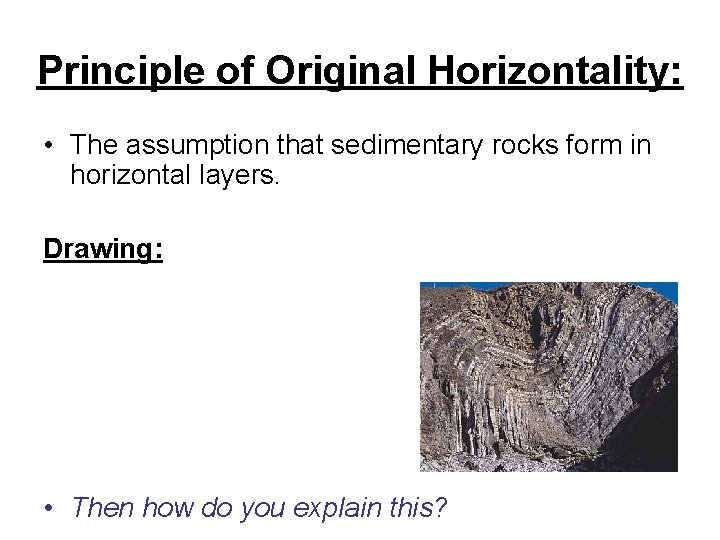
Principle of Original Horizontality: • The assumption that sedimentary rocks form in horizontal layers. Drawing: • Then how do you explain this?
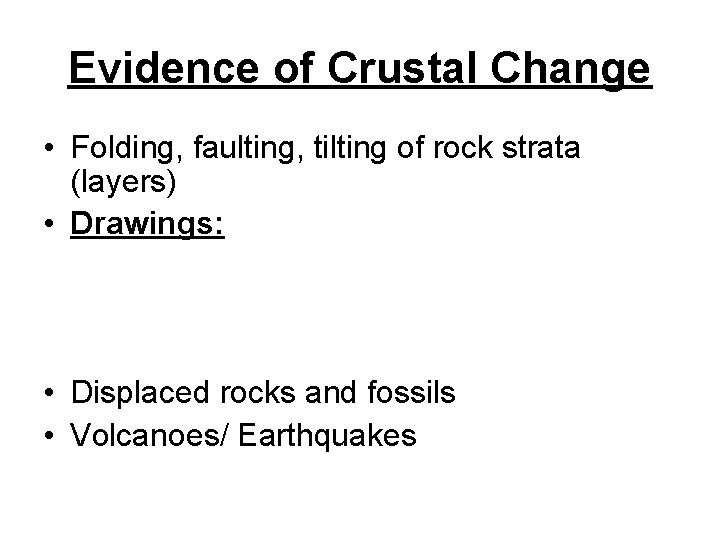
Evidence of Crustal Change • Folding, faulting, tilting of rock strata (layers) • Drawings: • Displaced rocks and fossils • Volcanoes/ Earthquakes
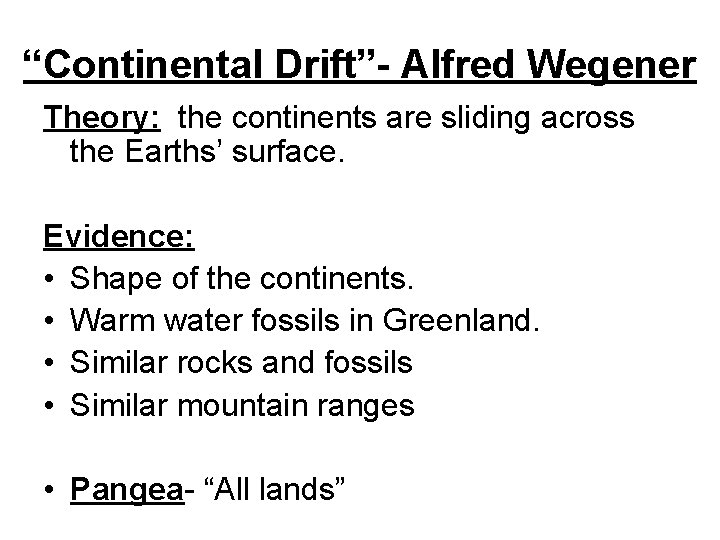
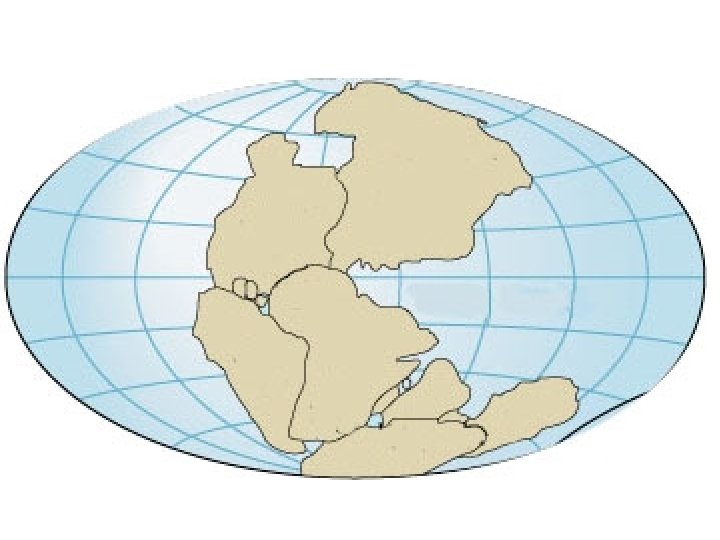
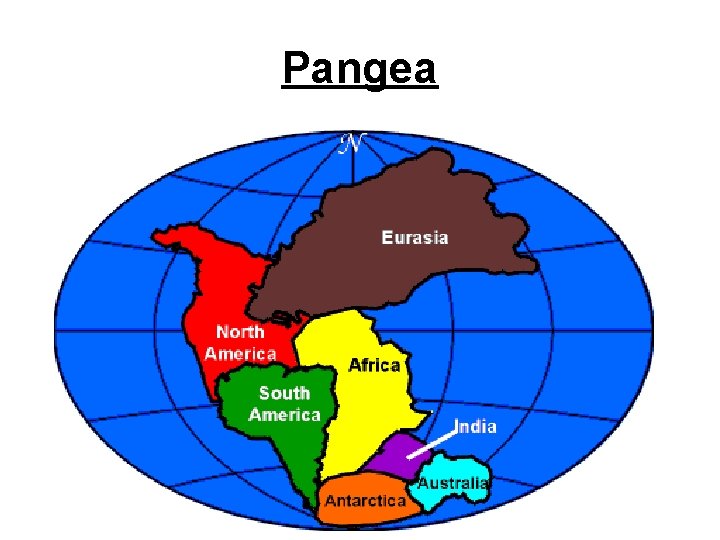
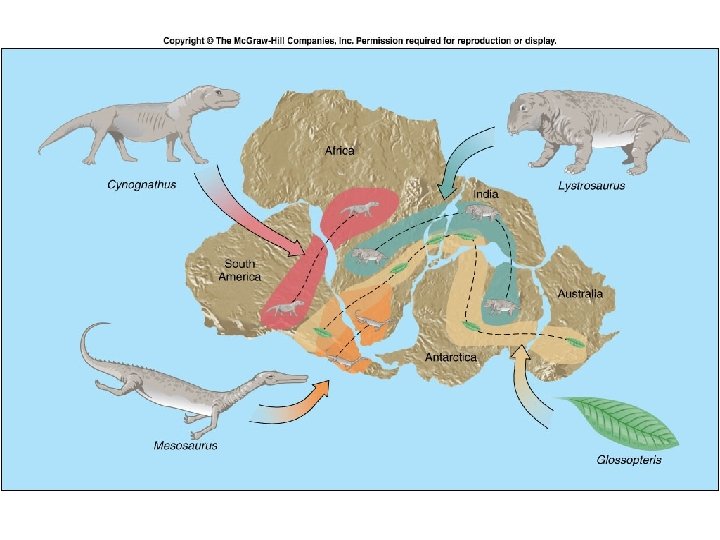
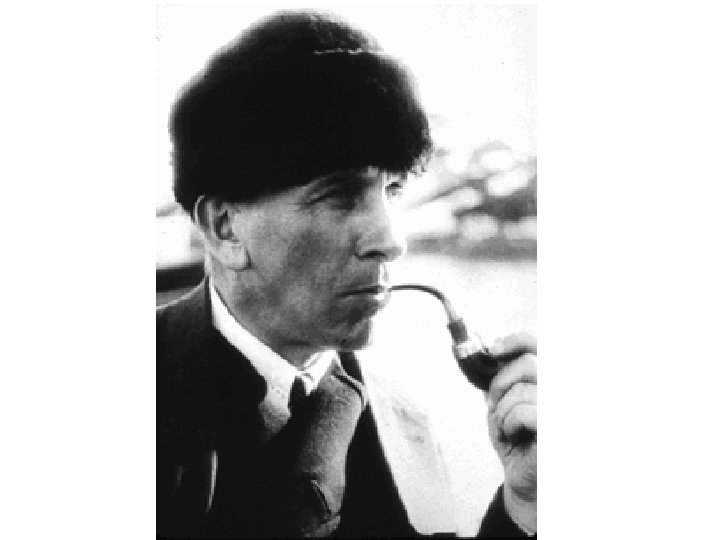
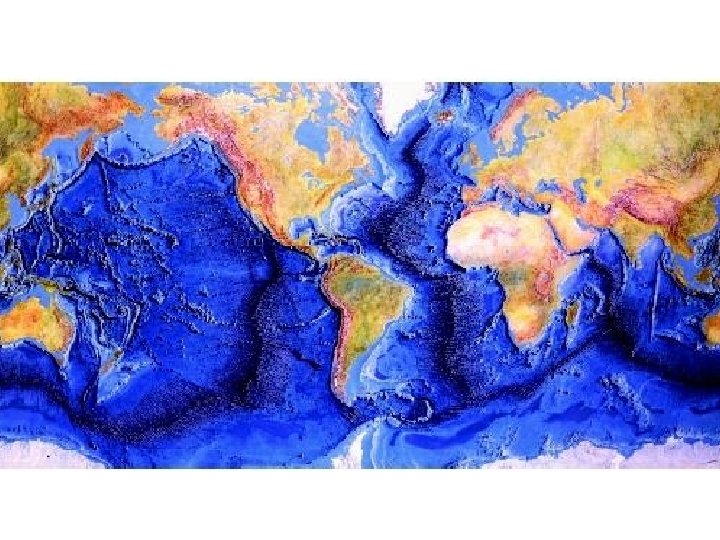
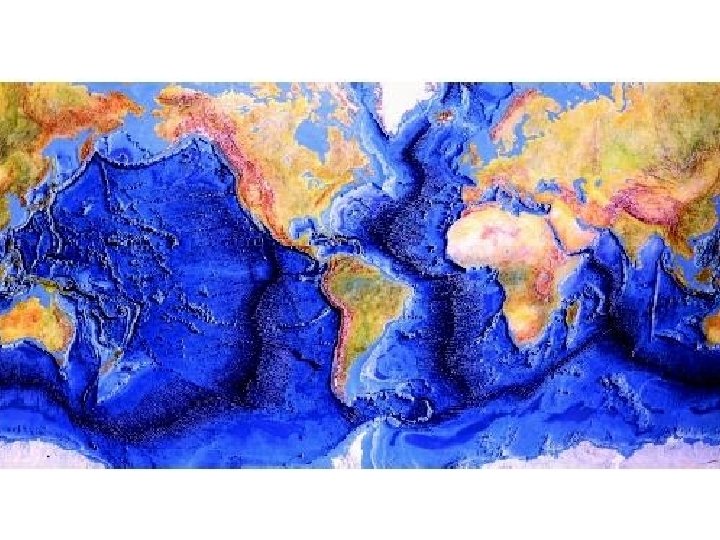
“Continental Drift”- Alfred Wegener Theory: the continents are sliding across the Earths’ surface. Evidence: • Shape of the continents. • Warm water fossils in Greenland. • Similar rocks and fossils • Similar mountain ranges • Pangea- “All lands”
Pangea
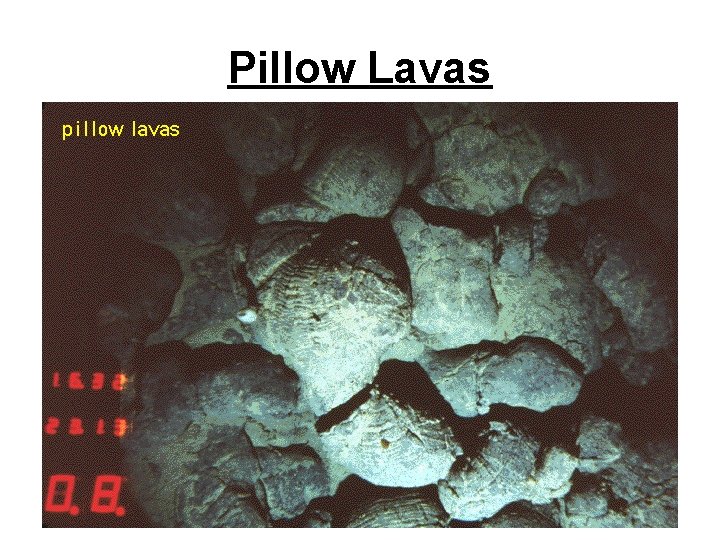
Pillow Lavas
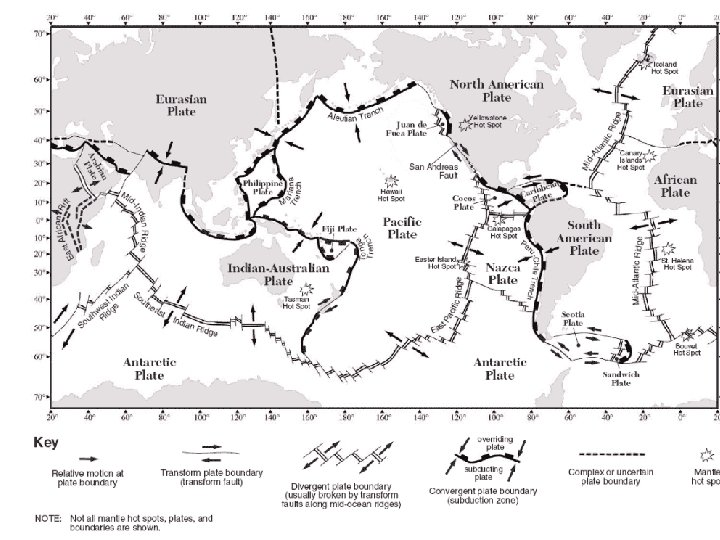
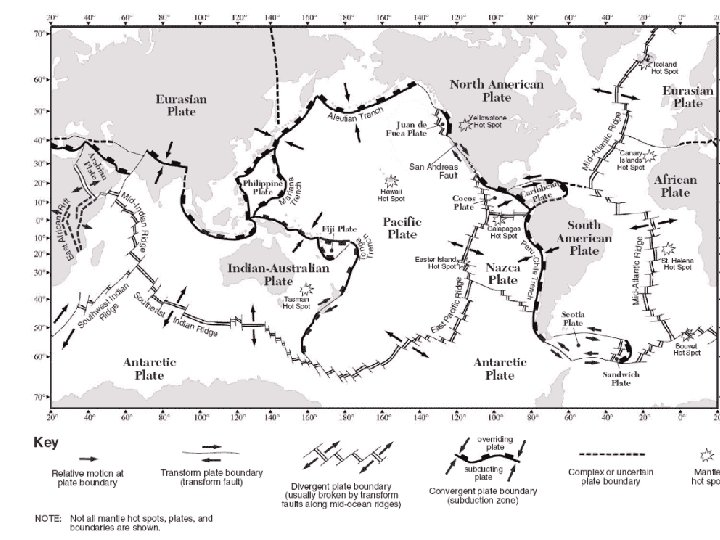
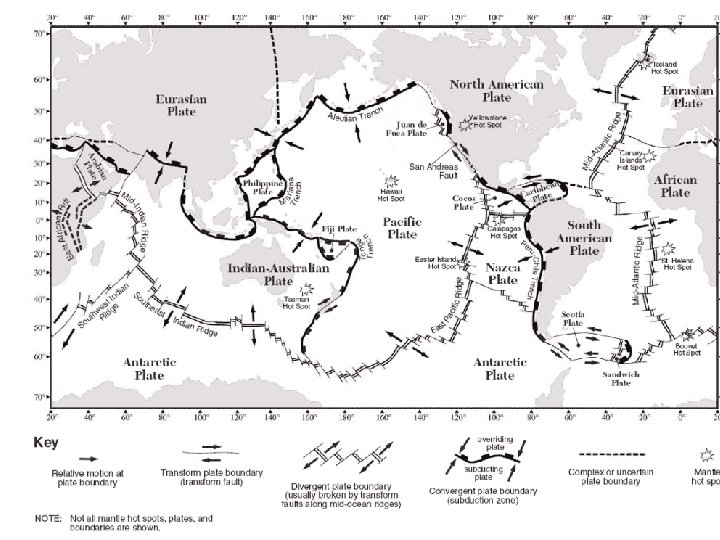
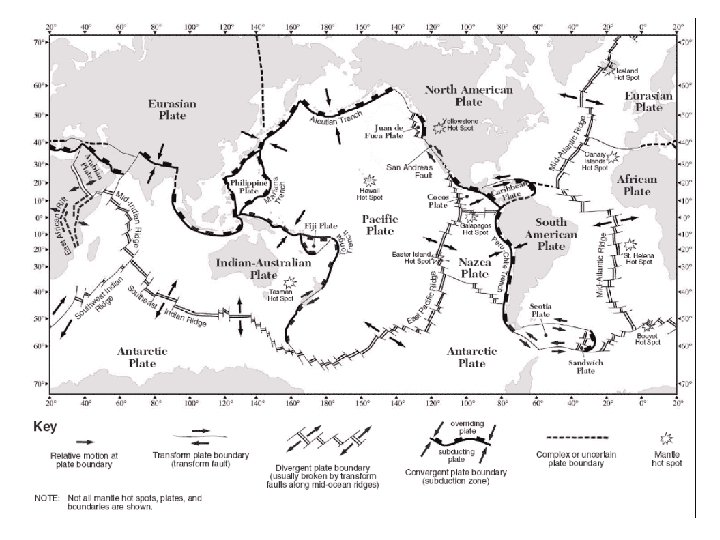
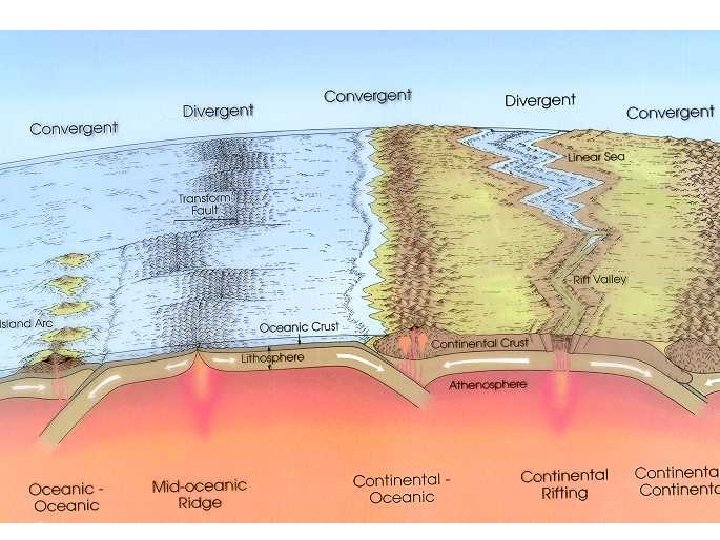
Plate Tectonics Theory: • Earth’s crust is made up of a variety of plates that are moving.
• • • Divergent Sea floor spreading Alfred Wegener Plate tectonics Volcano Convergent • • • Mid ocean ridge Transform Boundary Mantle Convection Currents Trench Subduction
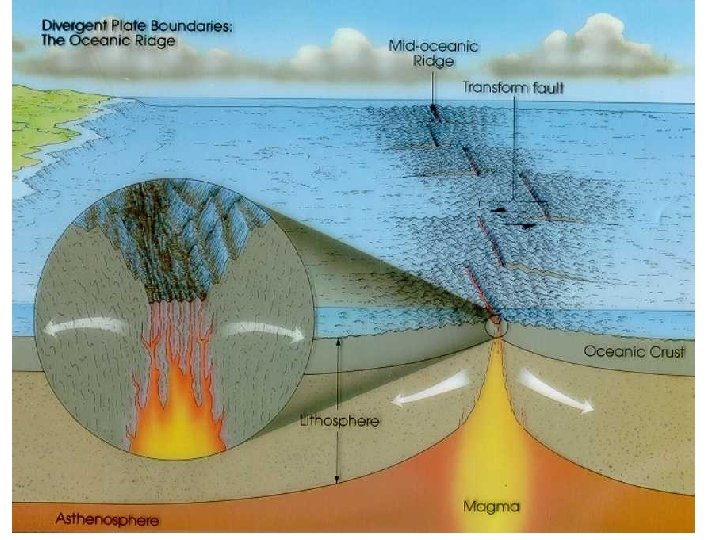
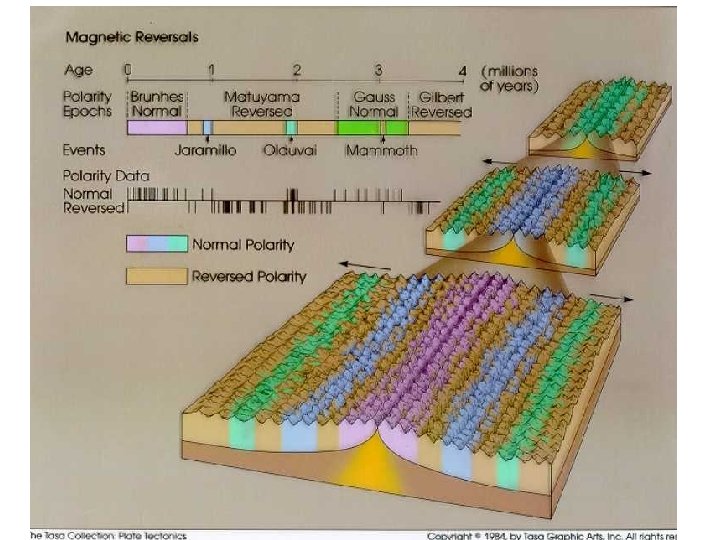
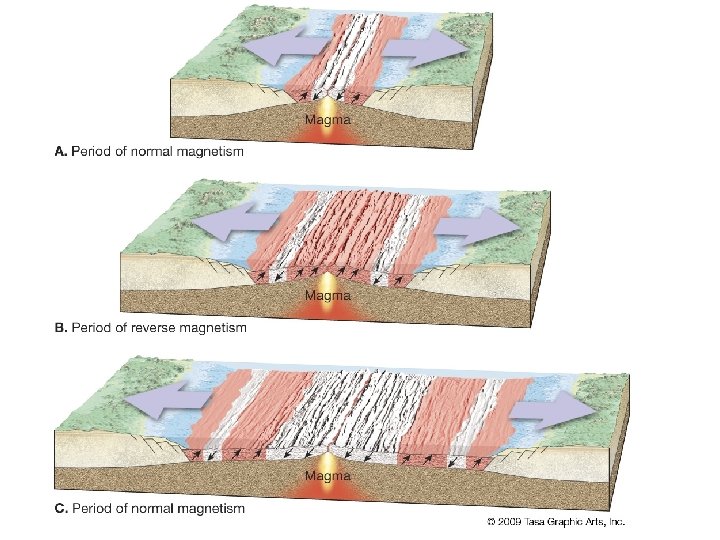
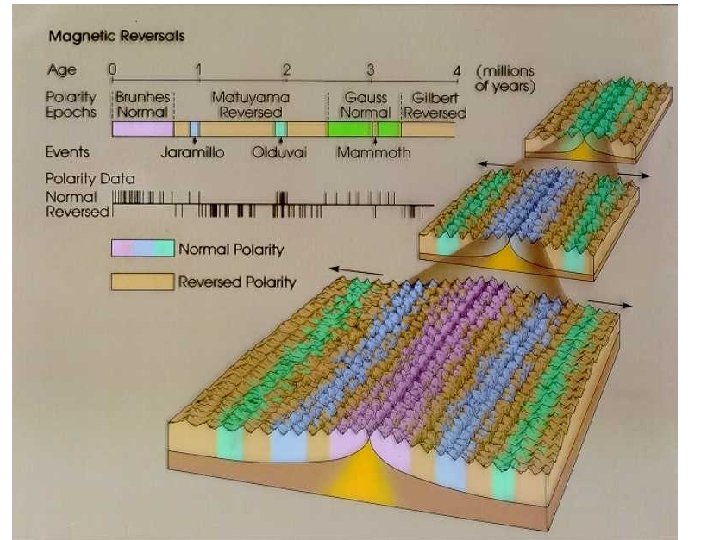
Mid Ocean Ridge • Underwater mountain range that wraps around the Earth Evidence of Sea Floor Spreading 1. Age of rocks 2. Temperature of Rocks 3. Basalt Pillow lavas (igneous extrusive) 4. Paleomagnetism
Drawing:
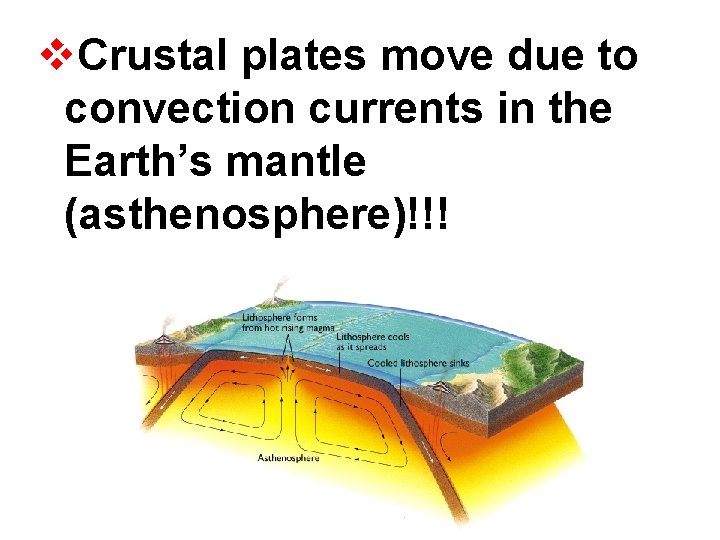
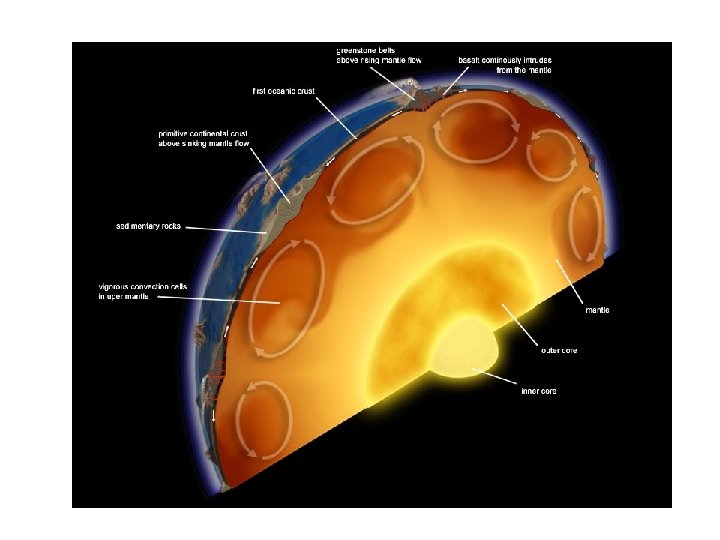
v. Crustal plates move due to convection currents in the Earth’s mantle (asthenosphere)!!!
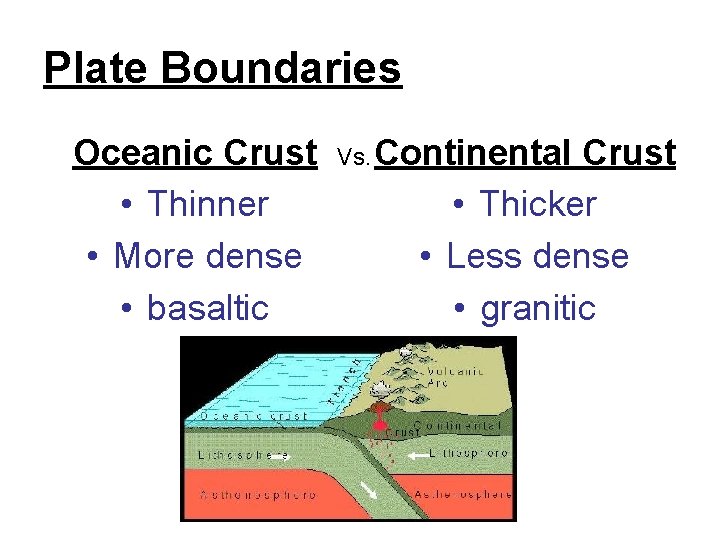
Plate Boundaries Oceanic Crust • Thinner • More dense • basaltic Vs. Continental Crust • Thicker • Less dense • granitic
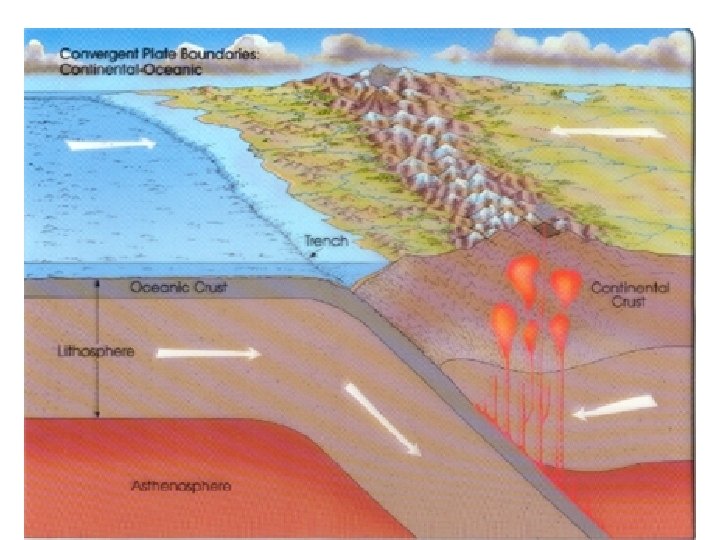
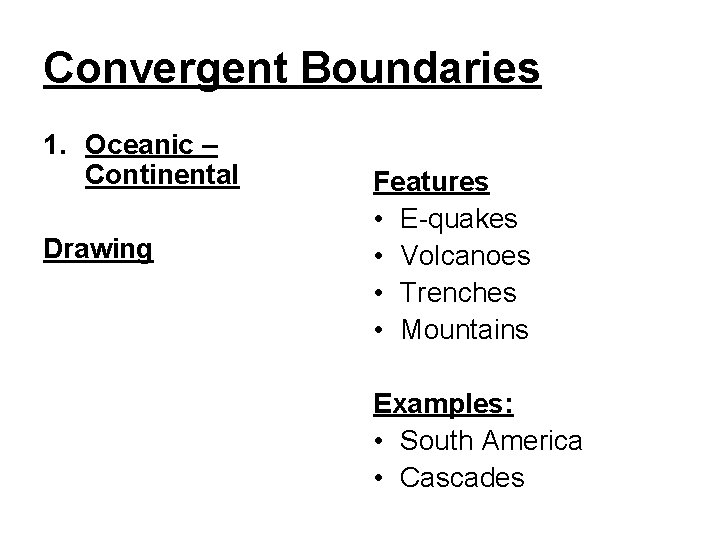
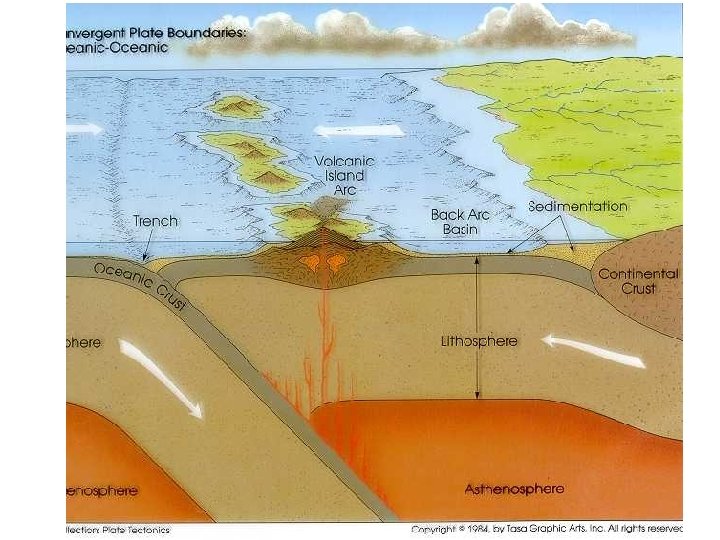
Convergent Boundaries 1. Oceanic – Continental Drawing Features • E-quakes • Volcanoes • Trenches • Mountains Examples: • South America • Cascades
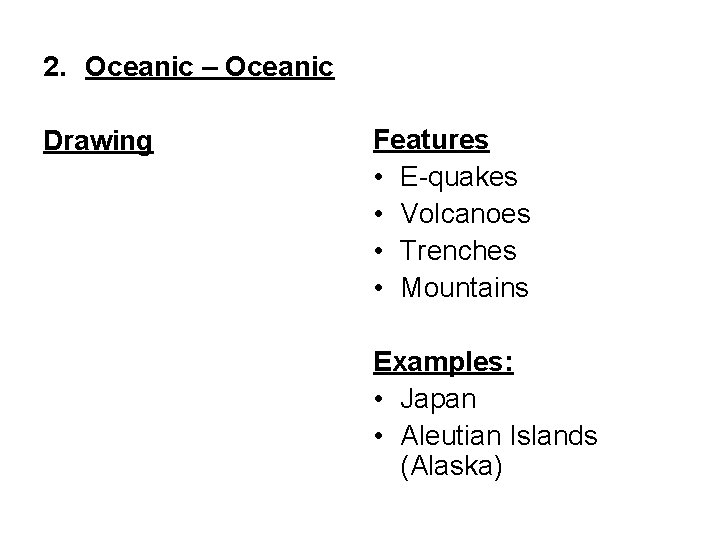
2. Oceanic – Oceanic Drawing Features • E-quakes • Volcanoes • Trenches • Mountains Examples: • Japan • Aleutian Islands (Alaska)
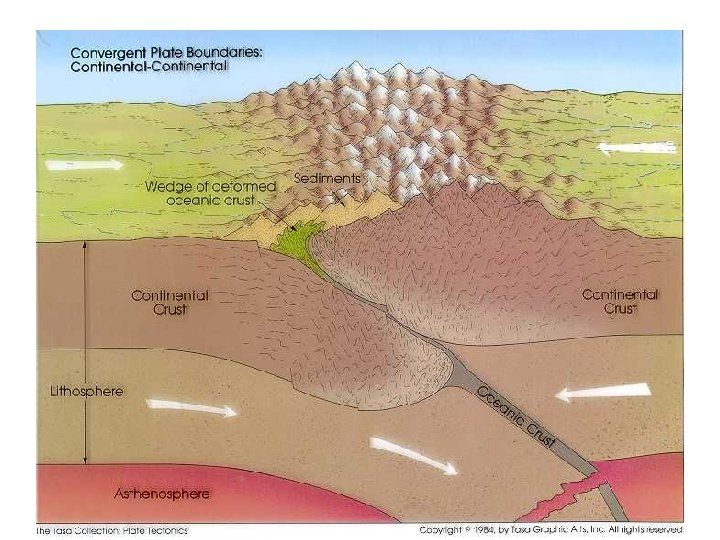
3. Continental – Continental Drawing Features • E-quakes • Mountains • Volcanoes (extinct) Examples: • Himalayas
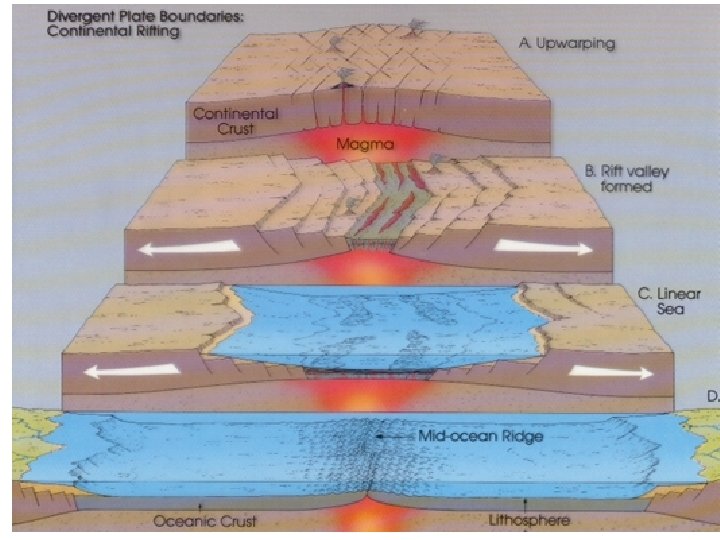
Divergent Boundaries: 1. Mid Ocean Ridges 2. Rift Zones
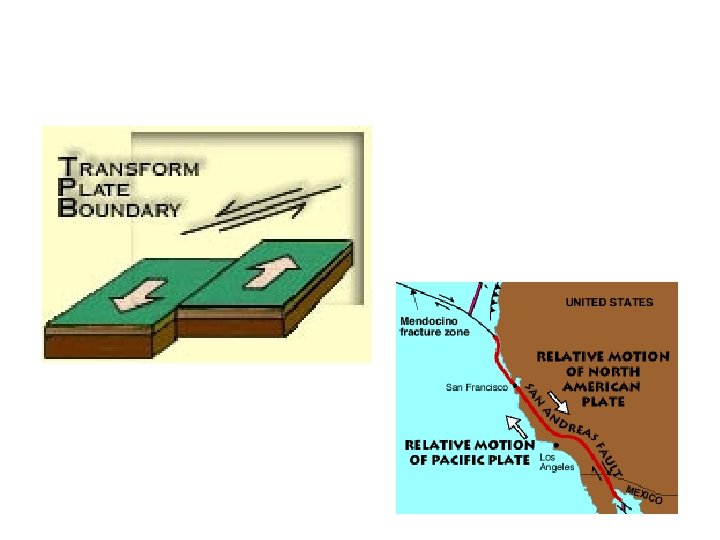
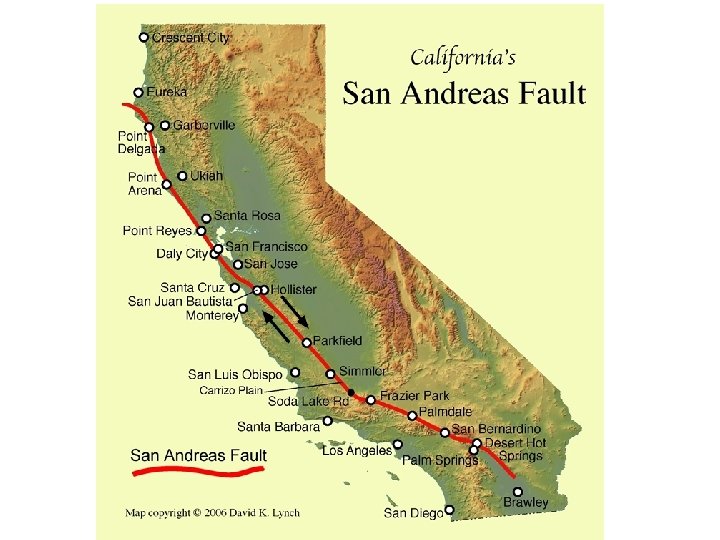
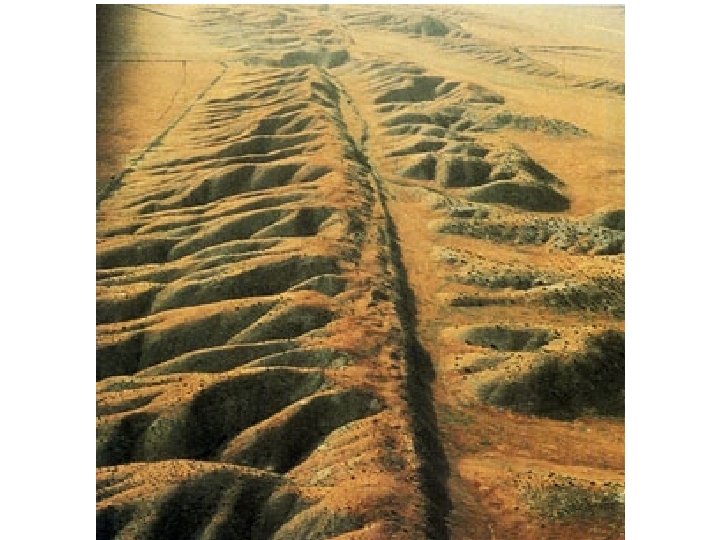
Transform Boundary: • Boundary where plates slide by each other. Drawing: Example: • San Andreas Fault
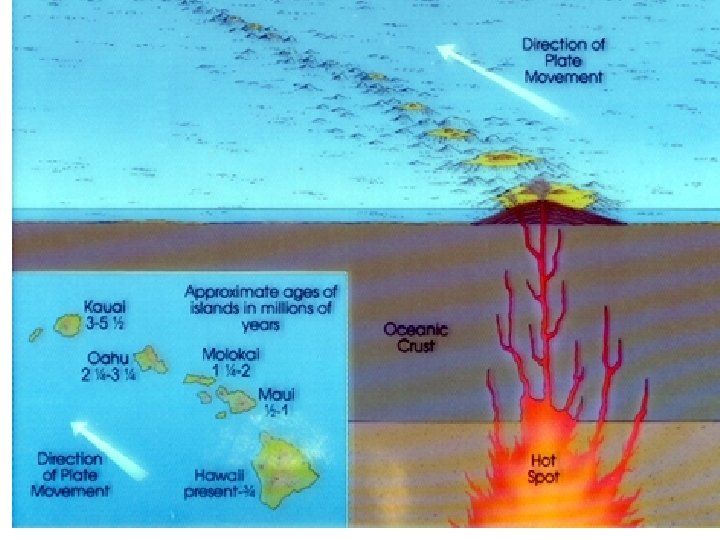
“Hot Spots” • Regions of volcanic (magmatic) activity usually away from plate edges. Example: • Hawaii
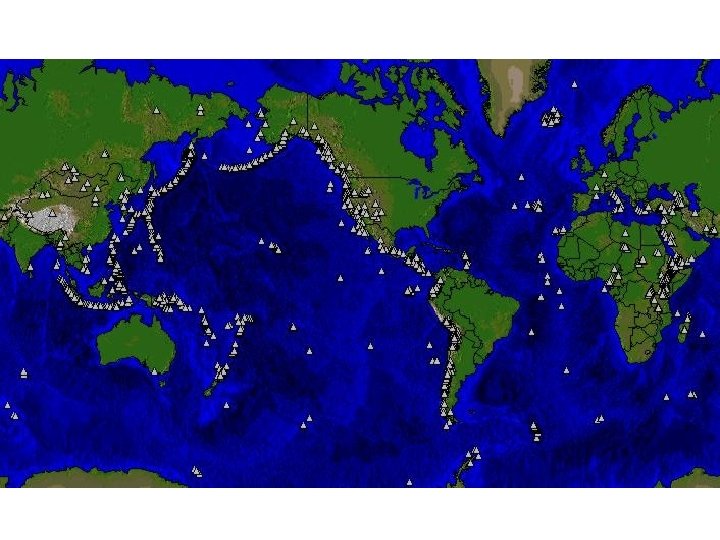
v. Earthquakes, volcanoes and mountains are usually associated with plate boundaries.
BONUS: • What is the relationship between the distance a planet is from the Sun and the gravitational force between the planet and the Sun?
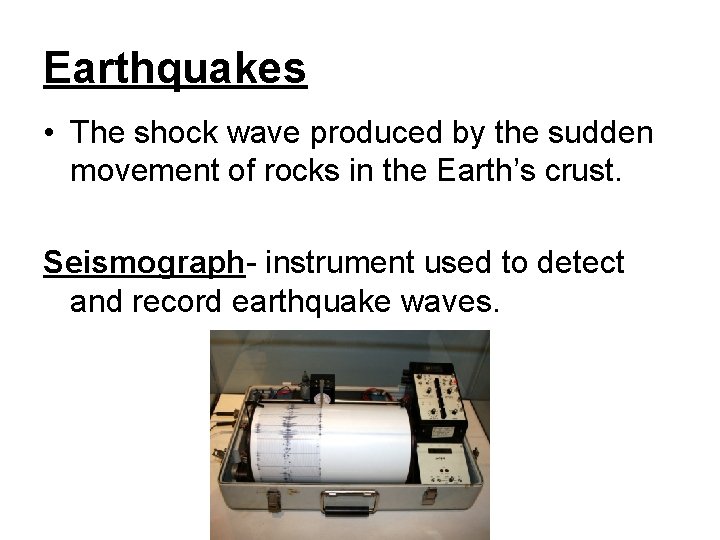
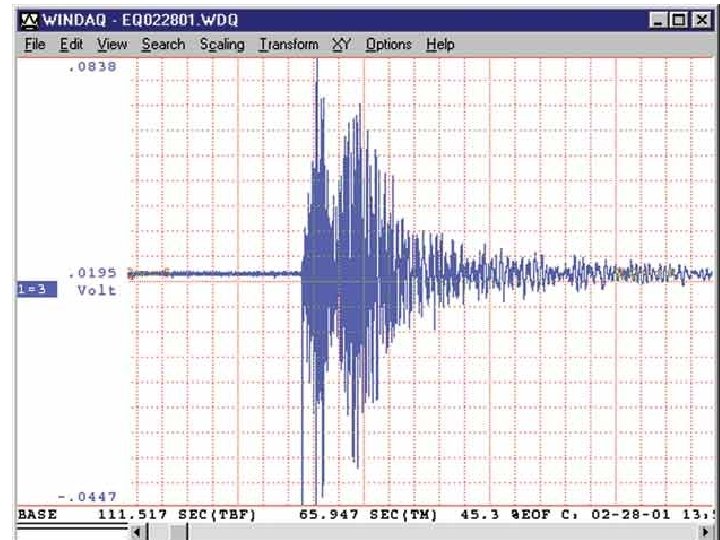
Earthquakes • The shock wave produced by the sudden movement of rocks in the Earth’s crust. Seismograph- instrument used to detect and record earthquake waves.
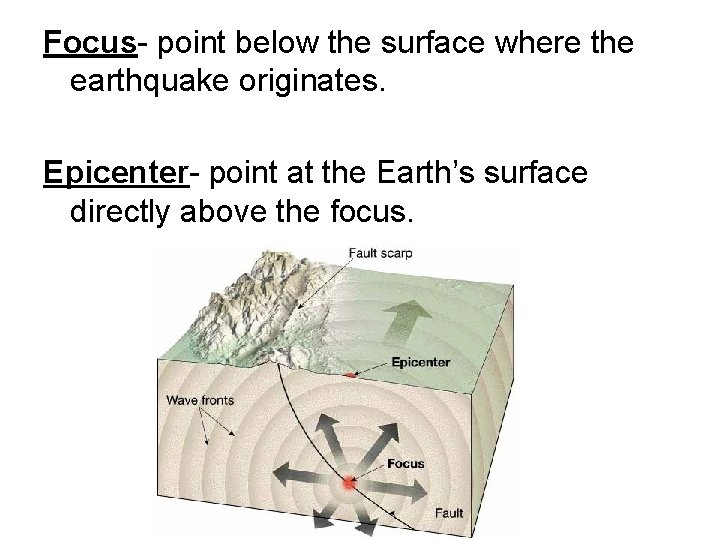
Focus- point below the surface where the earthquake originates. Epicenter- point at the Earth’s surface directly above the focus.
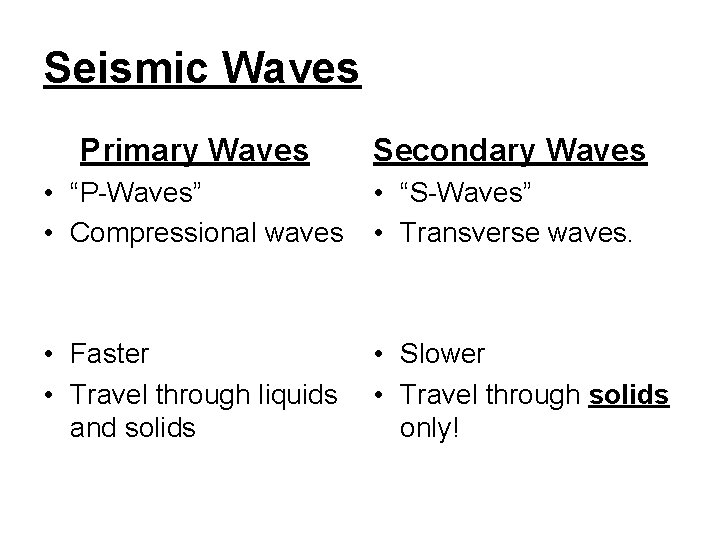
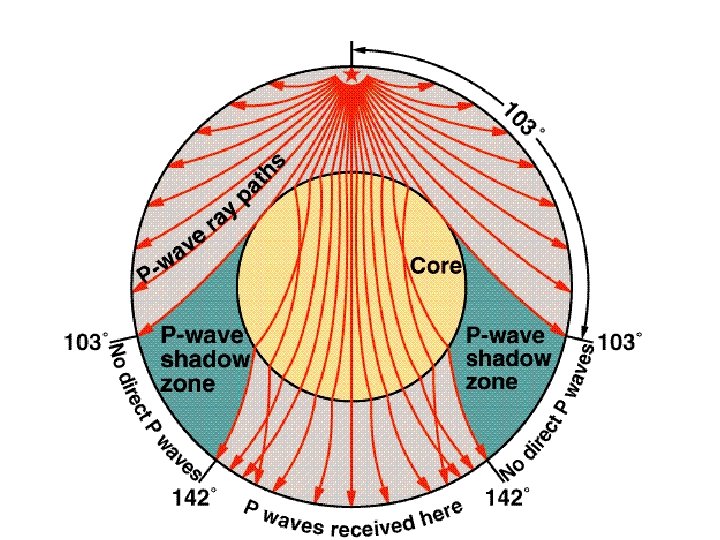
Seismic Waves Primary Waves Secondary Waves • “P-Waves” • Compressional waves • “S-Waves” • Transverse waves. • Faster • Travel through liquids and solids • Slower • Travel through solids only!
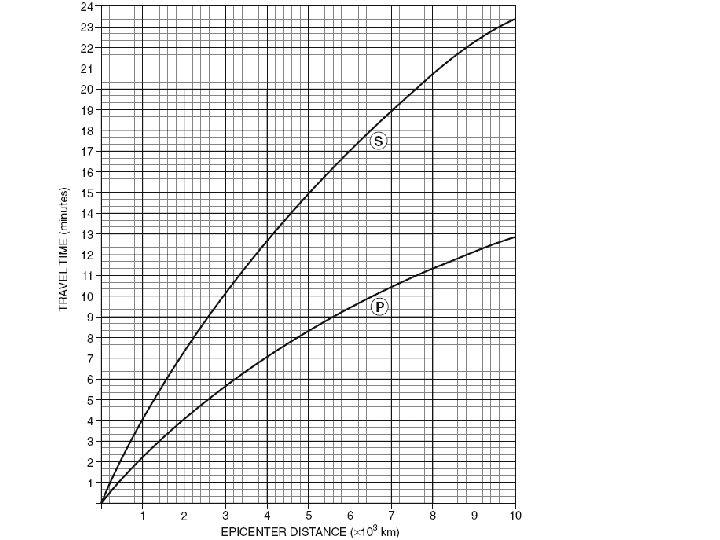
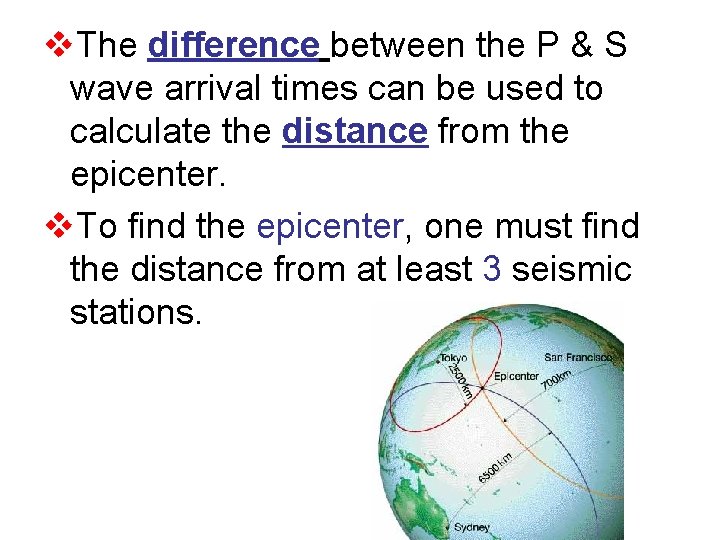
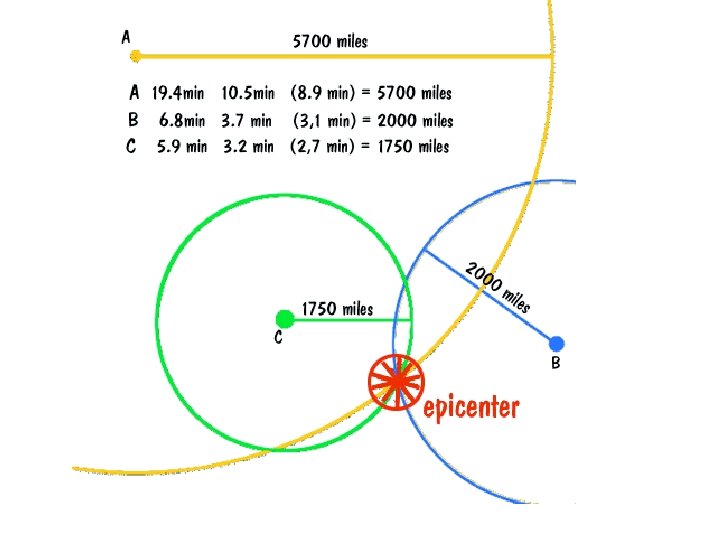
v. The difference between the P & S wave arrival times can be used to calculate the distance from the epicenter. v. To find the epicenter, one must find the distance from at least 3 seismic stations.
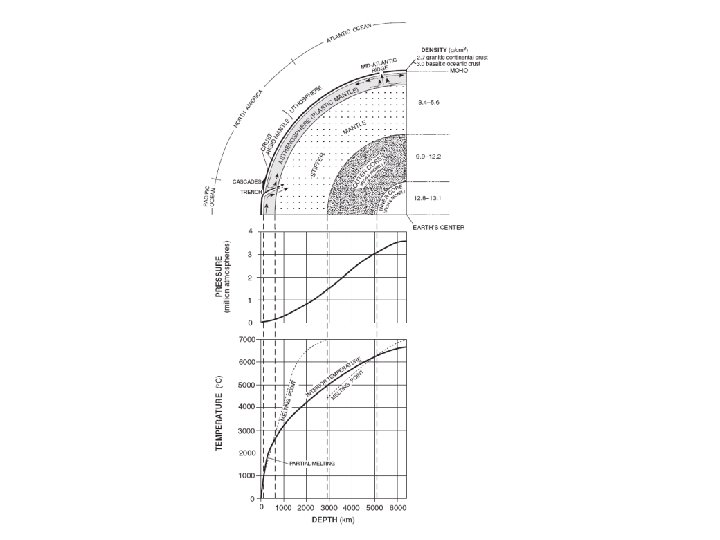
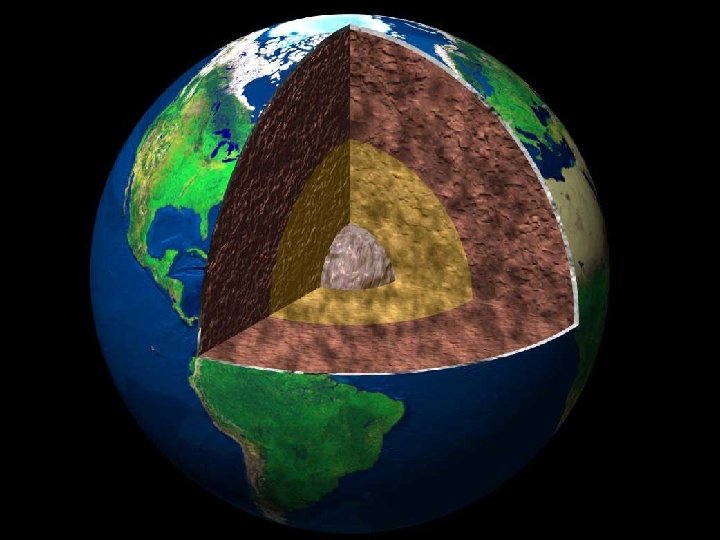
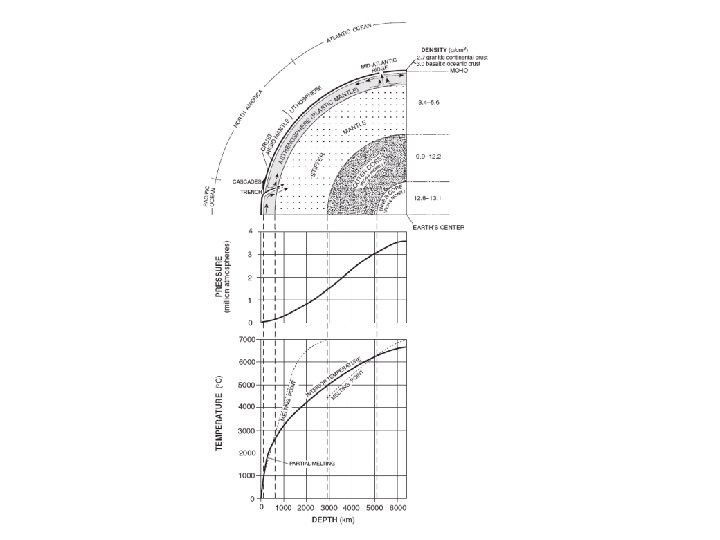
Earth’s Interior: • See diagram p. 10 in the Earth Science Reference Tables. Evidence: • Seismic Data • Meteor Composition • Earths Magnetic Field • Moon Composition
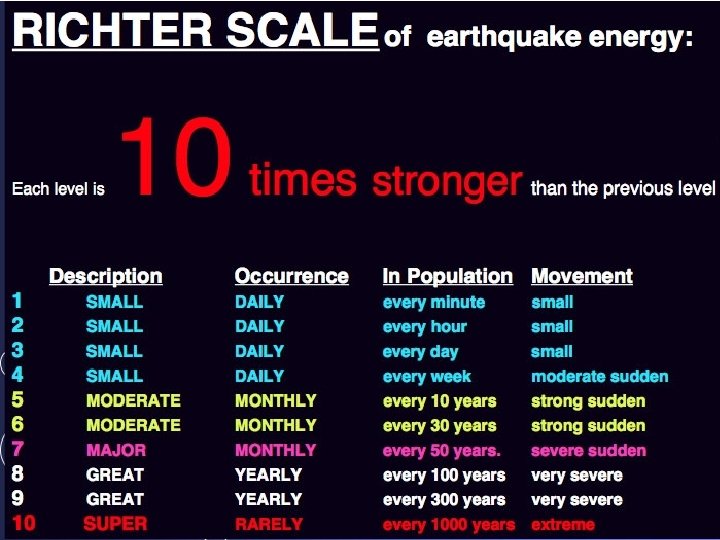
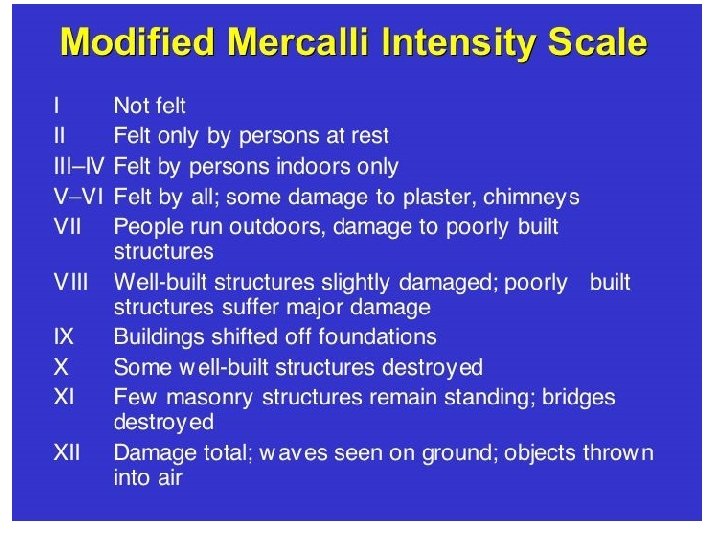
Earthquake Damage Depends on… • Magnitude of the earthquake • Distance from the epicenter • Building structure • Type of surface Richter Scale vs. Mercalli Scale
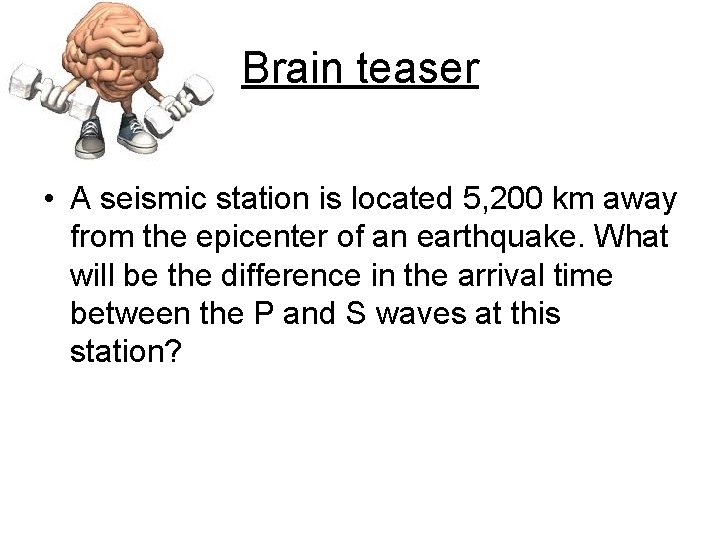
Brain teaser • A seismic station is located 5, 200 km away from the epicenter of an earthquake. What will be the difference in the arrival time between the P and S waves at this station?
Earthquake Emergency Planning Individual- “Drop, Cover and Hold” • Drop down under strong object (desk, table) • Cover your eyes • Hold onto the strong object you are under. • Earthquake drills • Have emergency supplies on hand. v. Do not try to run out of buildings!!!
Earthquake Emergency Planning Community • Proper planning of building sites • Proper building construction • Retrofitting older buildings to make them safer
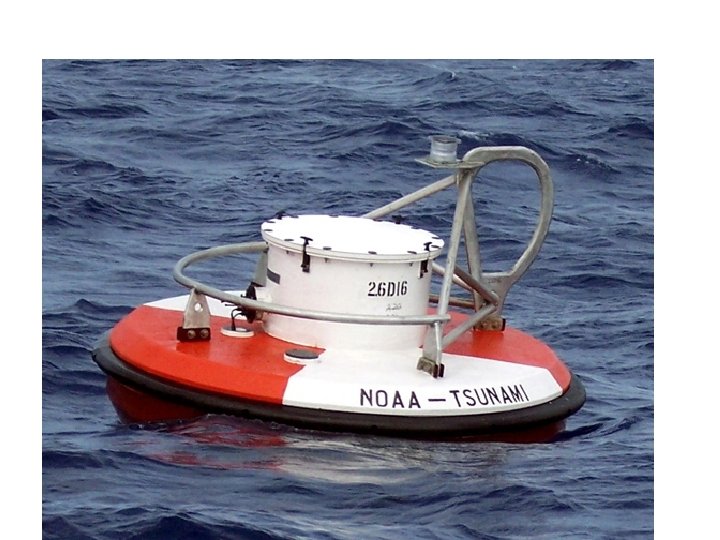
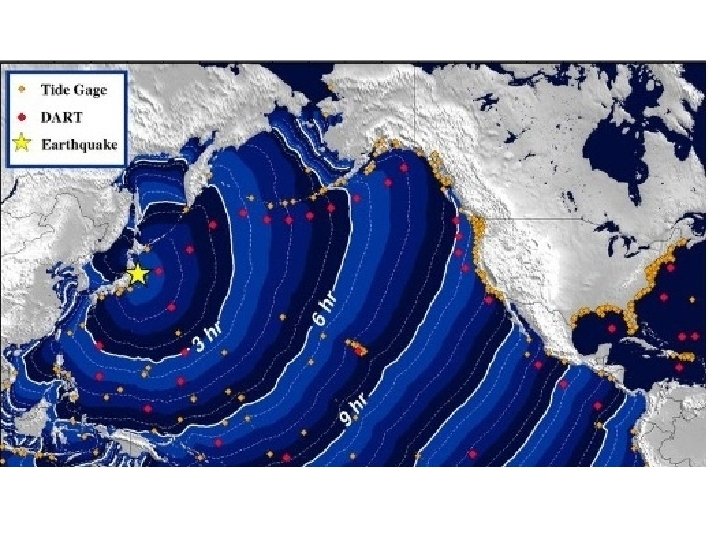
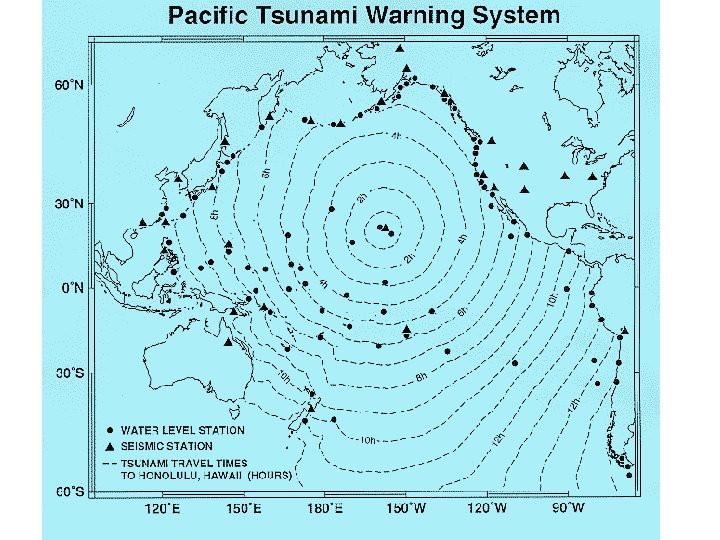
Tsunami • Large wavelength ocean wave produced by disruption of the ocean floor.
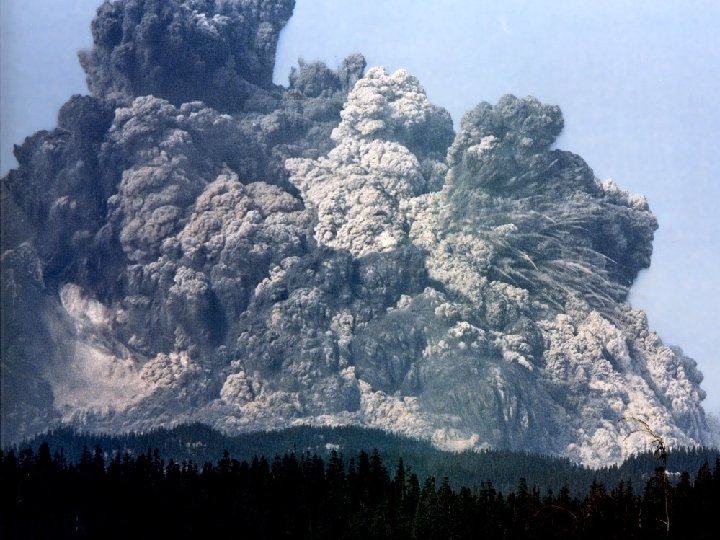
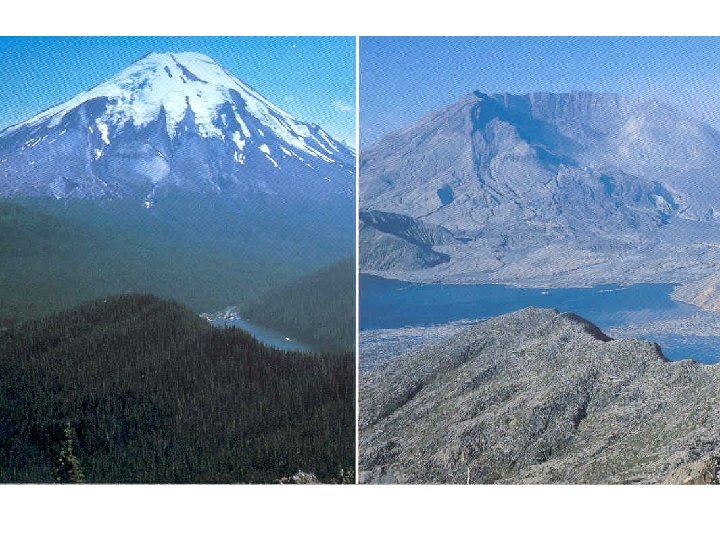
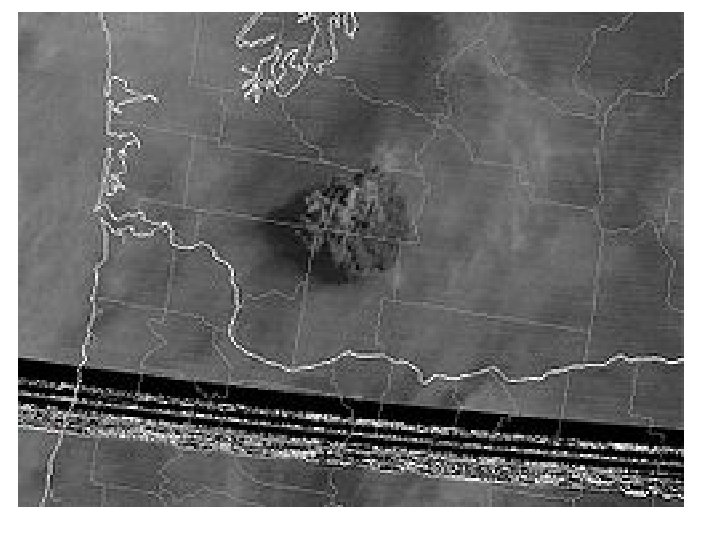
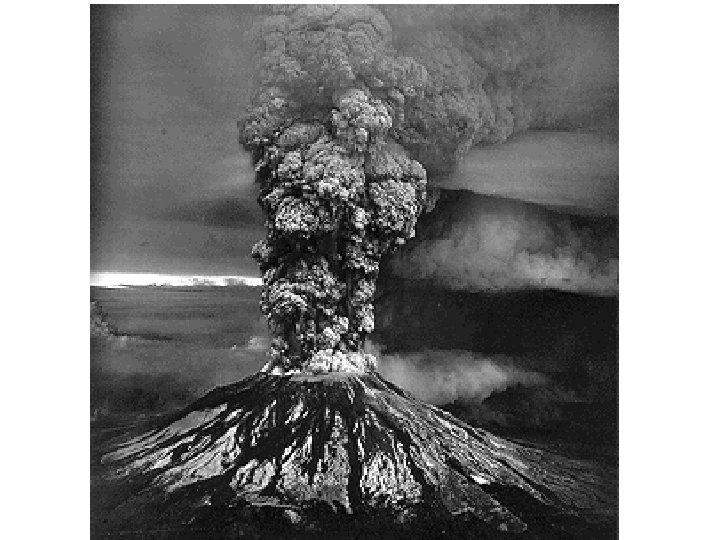
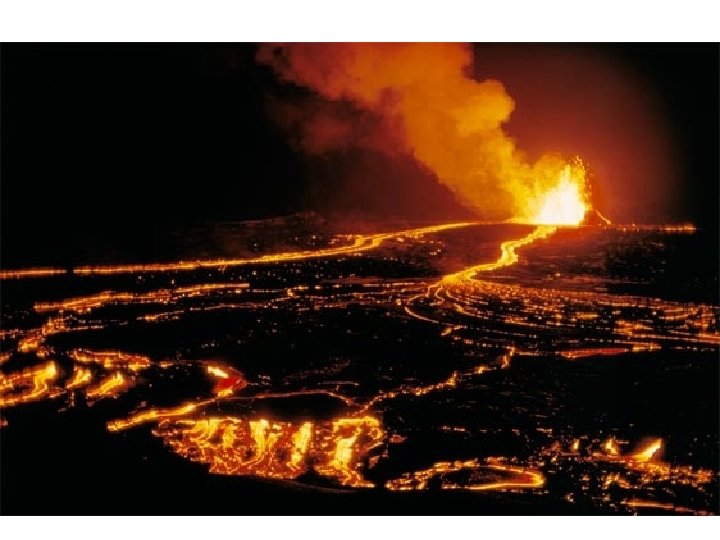
Volcanoes • A mountain composed of igneous extrusive rock. Violent Eruptions vs. Non-Violent Eruptions Mt. St. Helens Hawaii
BONUS: • What was the name of the scientist who developed the Theory of Continental Drift?
BONUS: • The epicenter of an earthquake is 4800 km away from a seismic station. What is the difference in arrival time of the P and S waves at that station?
In Loving Memory of Ebony 2006 -2012