
Topic 10 Articles of Confederation and Constitution What

- Slides: 43
Topic #10 Articles of Confederation and Constitution
What was the first American form of government, how did it operate, and what problems did it face?
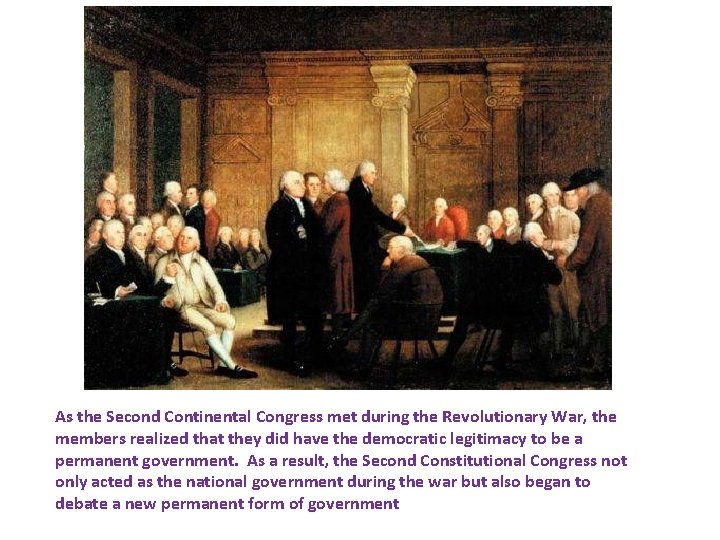
As the Second Continental Congress met during the Revolutionary War, the members realized that they did have the democratic legitimacy to be a permanent government. As a result, the Second Constitutional Congress not only acted as the national government during the war but also began to debate a new permanent form of government
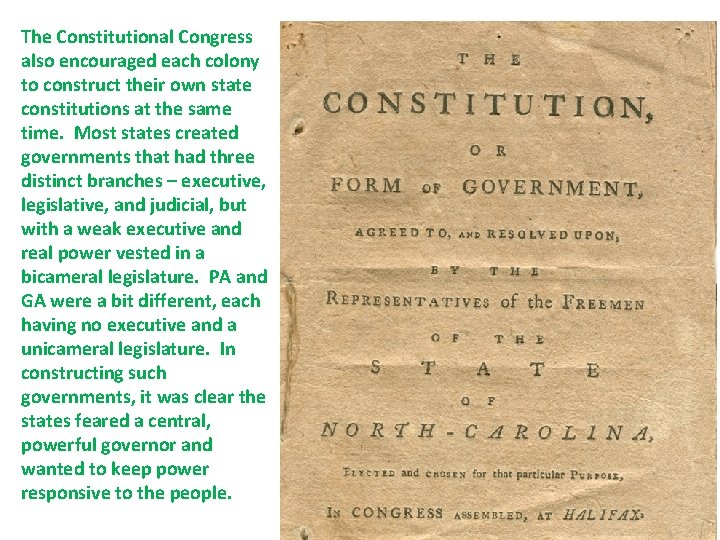
The Constitutional Congress also encouraged each colony to construct their own state constitutions at the same time. Most states created governments that had three distinct branches – executive, legislative, and judicial, but with a weak executive and real power vested in a bicameral legislature. PA and GA were a bit different, each having no executive and a unicameral legislature. In constructing such governments, it was clear the states feared a central, powerful governor and wanted to keep power responsive to the people.
Articles of Confederation
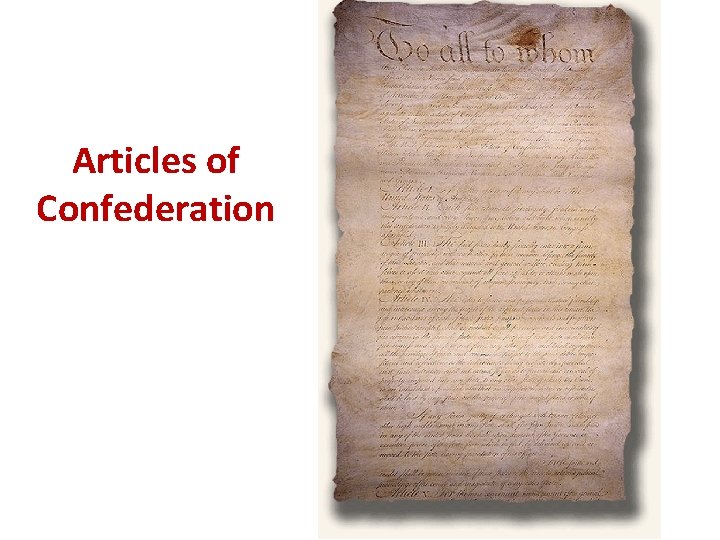
Articles of Confederation established a weak central government: 1) Unicameral legislature elected each year a. each state could have between 2 -7 delegates but, regardless, each had only one vote 1) No executive or judicial branches 2) Congress was weak: a. routine decisions required 7 states while more important decisions required a supermajority of 9 states. b. to amend the constitution it had to be unanimous c. Congress could not tax or regulate commerce d. only real power Congress had was to regulate weights and measures, supervise Indian affairs, establish and run a postal service, and conduct foreign affairs e. It could not raise an army
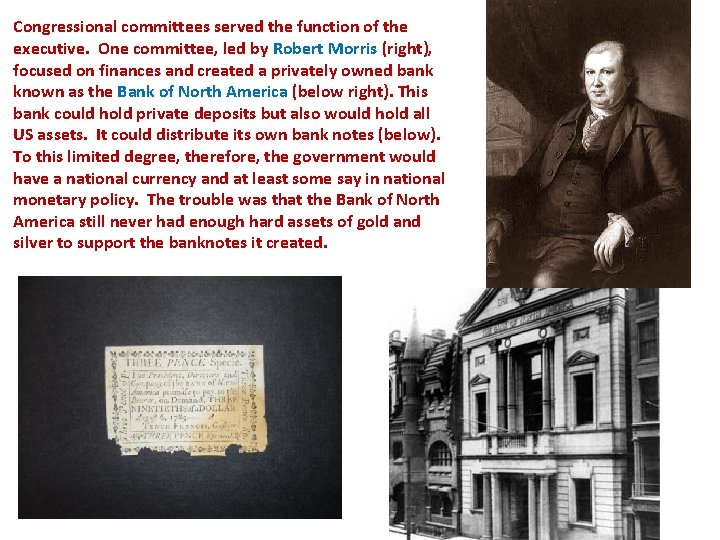
Congressional committees served the function of the executive. One committee, led by Robert Morris (right), focused on finances and created a privately owned bank known as the Bank of North America (below right). This bank could hold private deposits but also would hold all US assets. It could distribute its own bank notes (below). To this limited degree, therefore, the government would have a national currency and at least some say in national monetary policy. The trouble was that the Bank of North America still never had enough hard assets of gold and silver to support the banknotes it created.
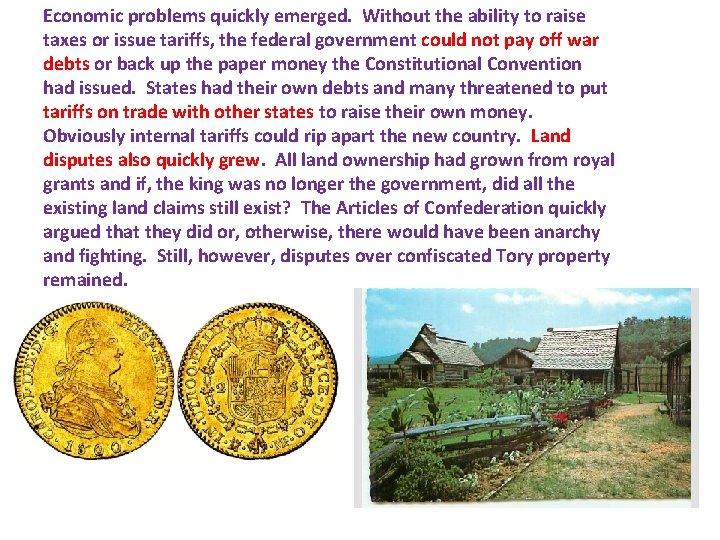
Economic problems quickly emerged. Without the ability to raise taxes or issue tariffs, the federal government could not pay off war debts or back up the paper money the Constitutional Convention had issued. States had their own debts and many threatened to put tariffs on trade with other states to raise their own money. Obviously internal tariffs could rip apart the new country. Land disputes also quickly grew. All land ownership had grown from royal grants and if, the king was no longer the government, did all the existing land claims still exist? The Articles of Confederation quickly argued that they did or, otherwise, there would have been anarchy and fighting. Still, however, disputes over confiscated Tory property remained.
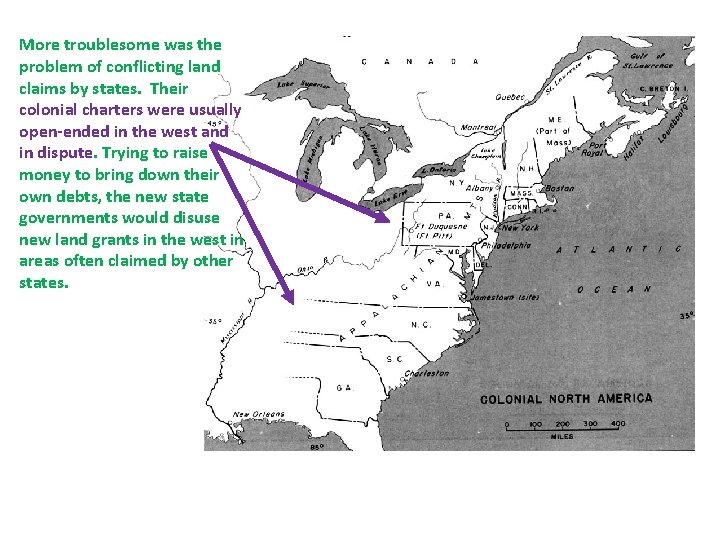
More troublesome was the problem of conflicting land claims by states. Their colonial charters were usually open-ended in the west and in dispute. Trying to raise money to bring down their own debts, the new state governments would disuse new land grants in the west in areas often claimed by other states.
Land speculation was a big business, and a lot of these land grants were huge and went to wealthy people or groups who would hold onto them driving up prices unfairly and keeping common people out of the market
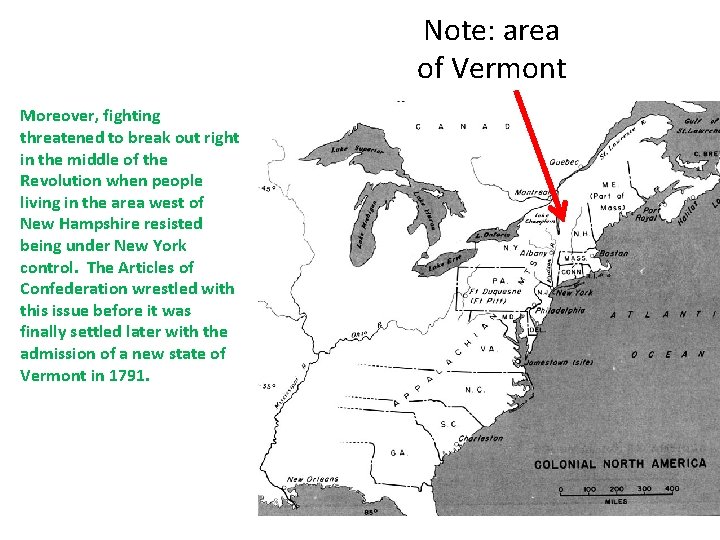
Note: area of Vermont Moreover, fighting threatened to break out right in the middle of the Revolution when people living in the area west of New Hampshire resisted being under New York control. The Articles of Confederation wrestled with this issue before it was finally settled later with the admission of a new state of Vermont in 1791.
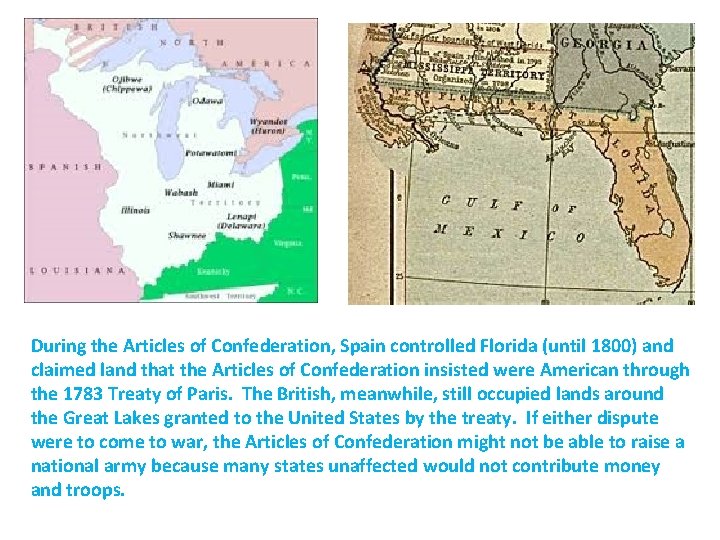
During the Articles of Confederation, Spain controlled Florida (until 1800) and claimed land that the Articles of Confederation insisted were American through the 1783 Treaty of Paris. The British, meanwhile, still occupied lands around the Great Lakes granted to the United States by the treaty. If either dispute were to come to war, the Articles of Confederation might not be able to raise a national army because many states unaffected would not contribute money and troops.
Given the structure of the Articles of Confederation, other problems were probably more obvious: 1. With seven states required to make any decision and nine required to make important decisions, any decision was difficult to make. 2. With each state having only one vote, the larger states resented the relative power of the smaller states 3. With the legislatures elected every year and with transportation slow and the constant need to campaign back home, there were rarely enough legislators present o conduct business. 4. With a unanimous vote required to amend the Articles of Confederation itself, any reform was virtually impossible.
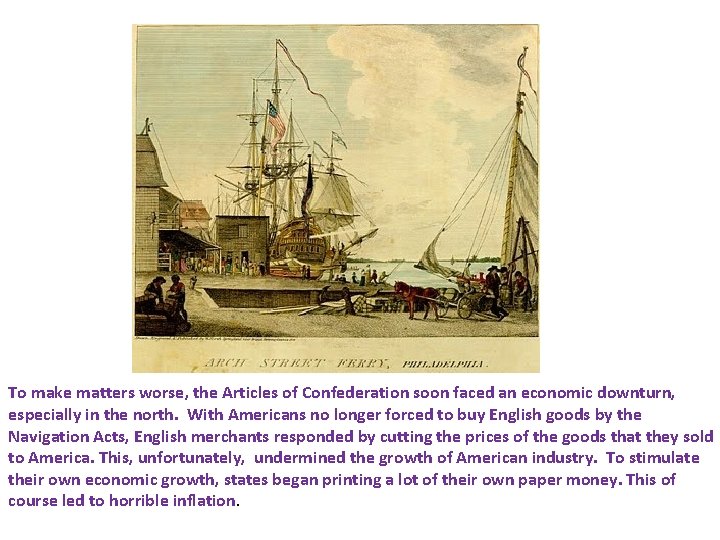
To make matters worse, the Articles of Confederation soon faced an economic downturn, especially in the north. With Americans no longer forced to buy English goods by the Navigation Acts, English merchants responded by cutting the prices of the goods that they sold to America. This, unfortunately, undermined the growth of American industry. To stimulate their own economic growth, states began printing a lot of their own paper money. This of course led to horrible inflation.
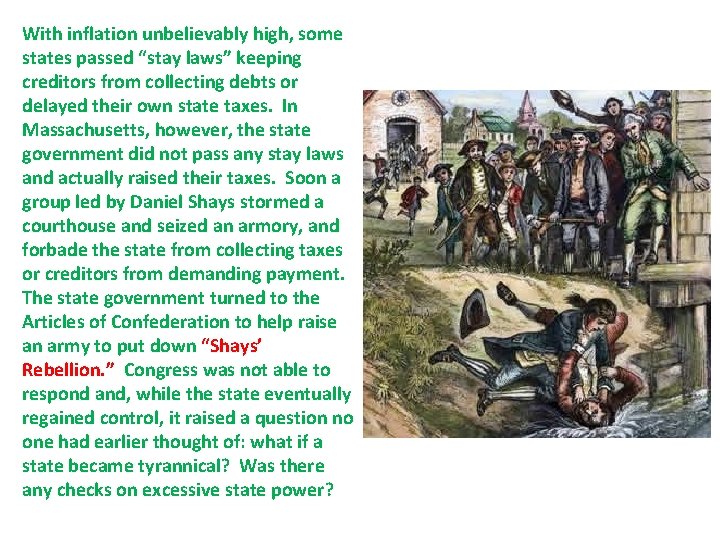
With inflation unbelievably high, some states passed “stay laws” keeping creditors from collecting debts or delayed their own state taxes. In Massachusetts, however, the state government did not pass any stay laws and actually raised their taxes. Soon a group led by Daniel Shays stormed a courthouse and seized an armory, and forbade the state from collecting taxes or creditors from demanding payment. The state government turned to the Articles of Confederation to help raise an army to put down “Shays’ Rebellion. ” Congress was not able to respond and, while the state eventually regained control, it raised a question no one had earlier thought of: what if a state became tyrannical? Was there any checks on excessive state power?
Facing so many problems, did the Articles of Confederation have any successes?
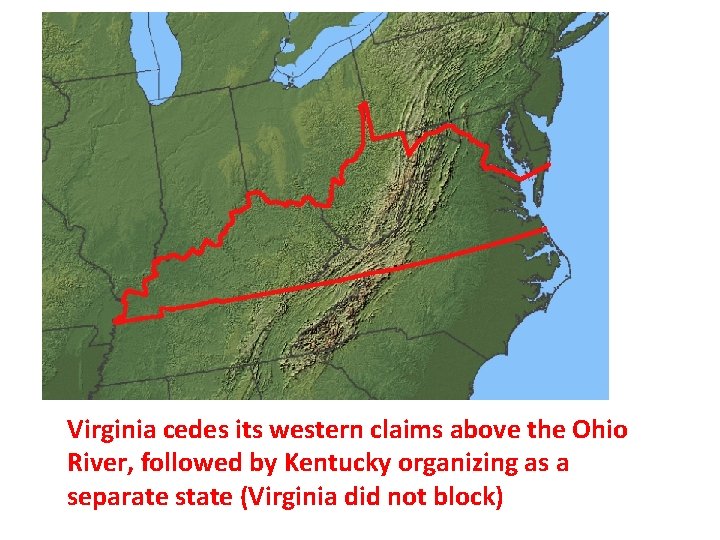
Virginia cedes its western claims above the Ohio River, followed by Kentucky organizing as a separate state (Virginia did not block)
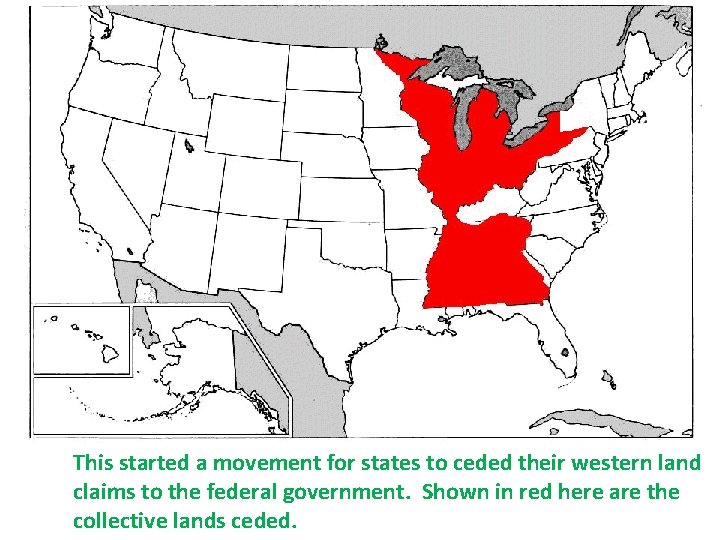
This started a movement for states to ceded their western land claims to the federal government. Shown in red here are the collective lands ceded.
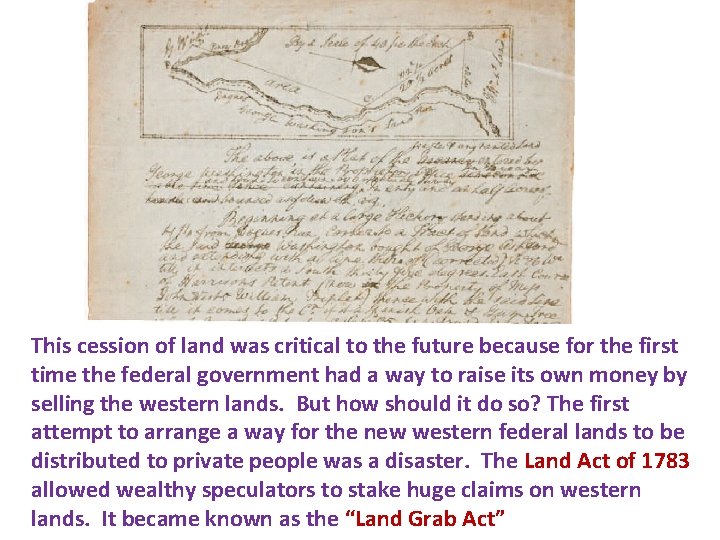
This cession of land was critical to the future because for the first time the federal government had a way to raise its own money by selling the western lands. But how should it do so? The first attempt to arrange a way for the new western federal lands to be distributed to private people was a disaster. The Land Act of 1783 allowed wealthy speculators to stake huge claims on western lands. It became known as the “Land Grab Act”
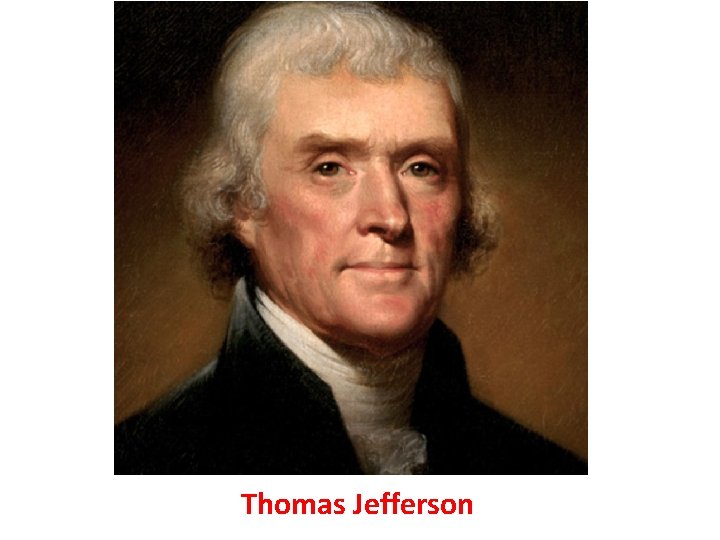
Thomas Jefferson
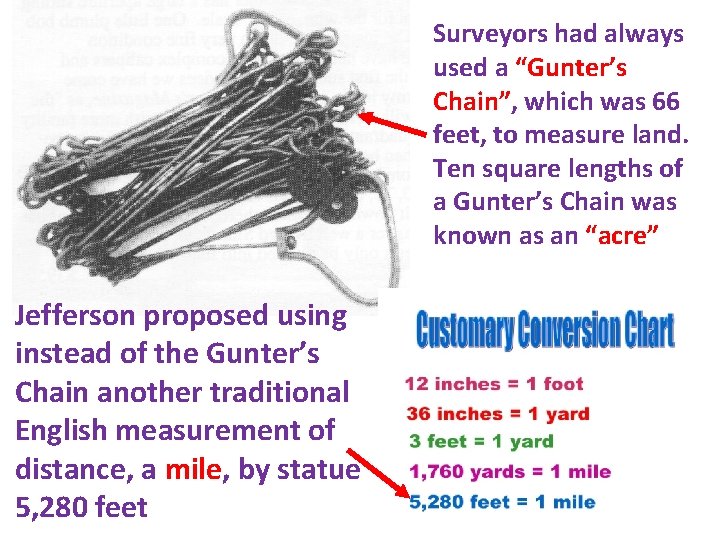
Surveyors had always used a “Gunter’s Chain”, which was 66 feet, to measure land. Ten square lengths of a Gunter’s Chain was known as an “acre” Jefferson proposed using instead of the Gunter’s Chain another traditional English measurement of distance, a mile, by statue 5, 280 feet
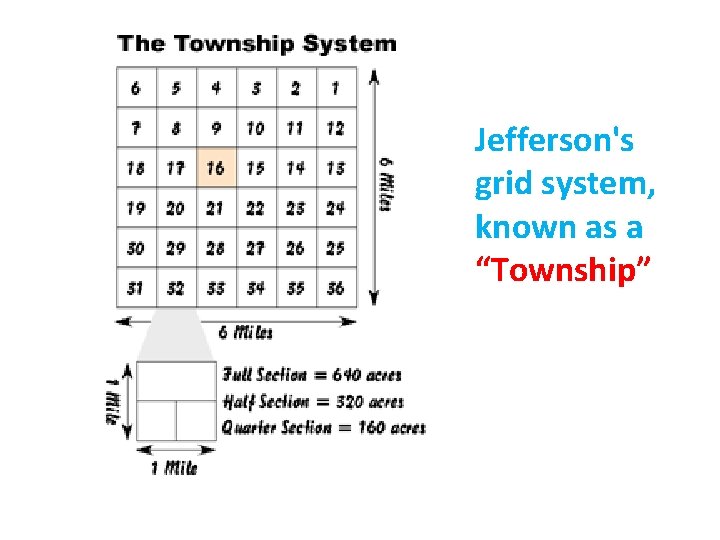
Jefferson's grid system, known as a “Township”
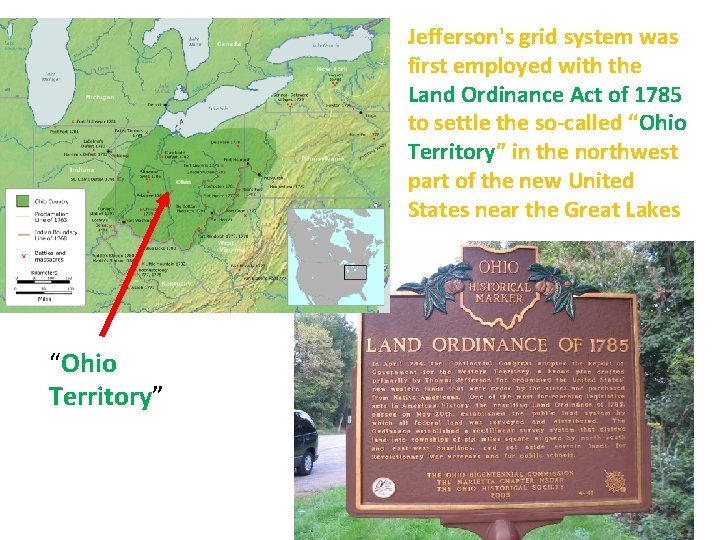
Jefferson's grid system was first employed with the Land Ordinance Act of 1785 to settle the so-called “Ohio Territory” in the northwest part of the new United States near the Great Lakes “Ohio Territory”
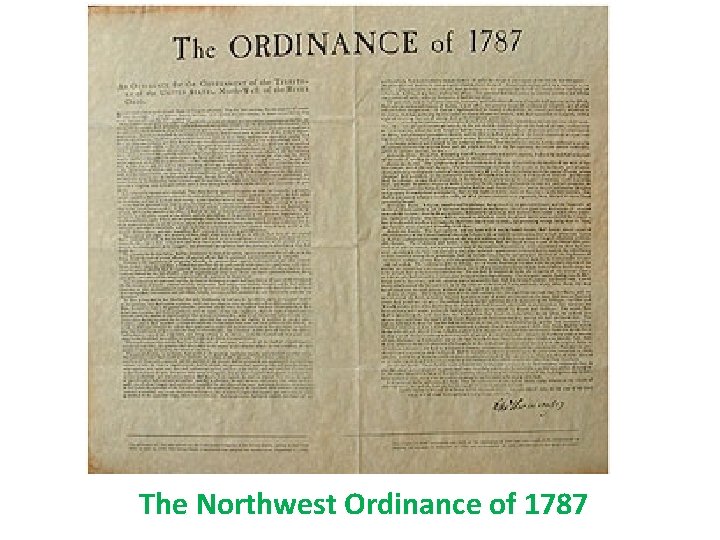
The Northwest Ordinance of 1787
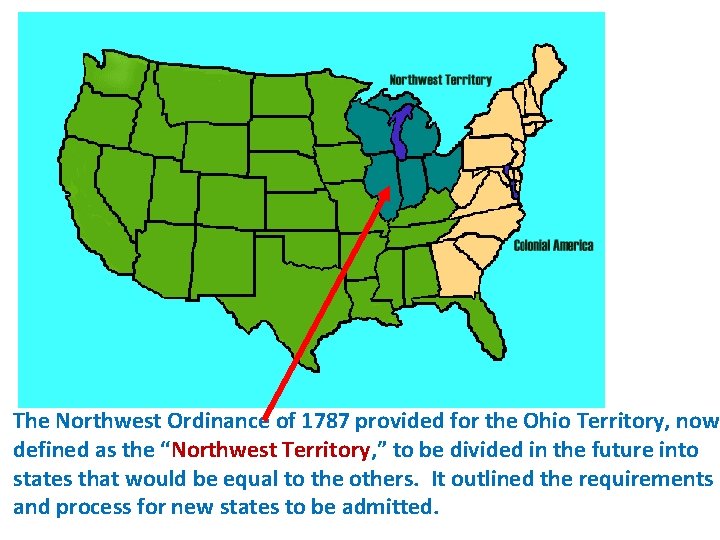
The Northwest Ordinance of 1787 provided for the Ohio Territory, now defined as the “Northwest Territory, ” to be divided in the future into states that would be equal to the others. It outlined the requirements and process for new states to be admitted.
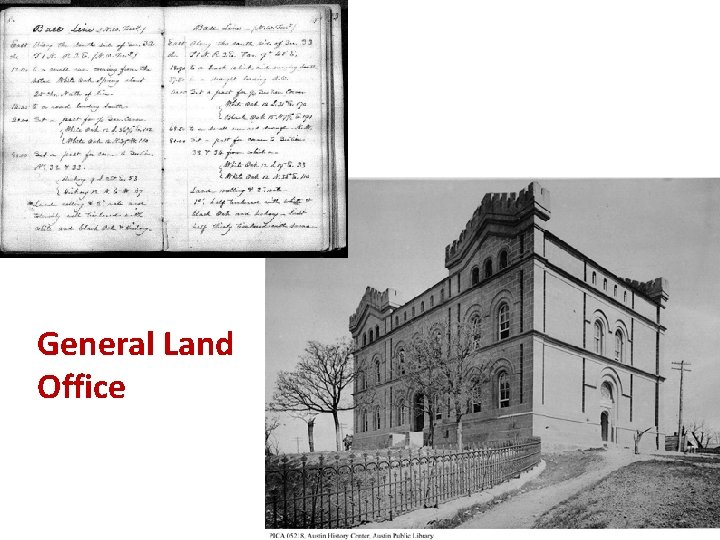
General Land Office
These early land laws were absolutely critical in American history! They ensured that there would be a large landowning middle class and not a more feudal society where only a few people own all the land everybody else works for them. Also, land ownership gave people a sense of belonging and stability. Finally, the process of admitting states as equal to the others ensured that the United States would grow without great internal tension.
What led to the Constitutional Convention and how did it arrive at the government the United States has today?
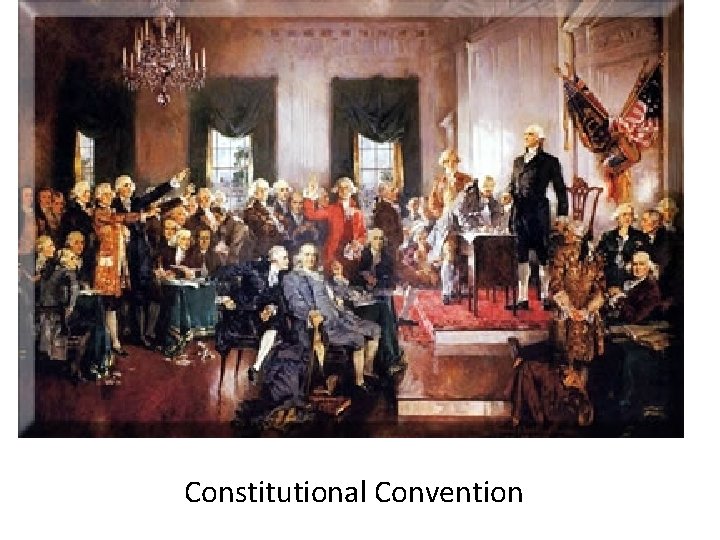
Constitutional Convention
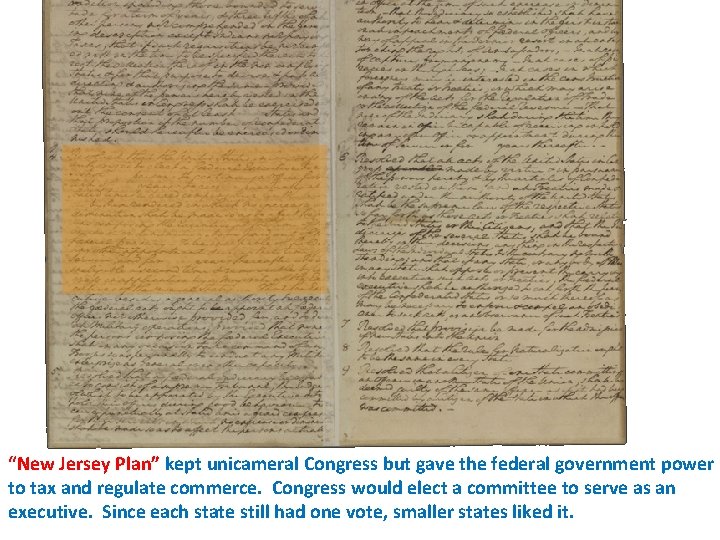
“New Jersey Plan” kept unicameral Congress but gave the federal government power to tax and regulate commerce. Congress would elect a committee to serve as an executive. Since each state still had one vote, smaller states liked it.
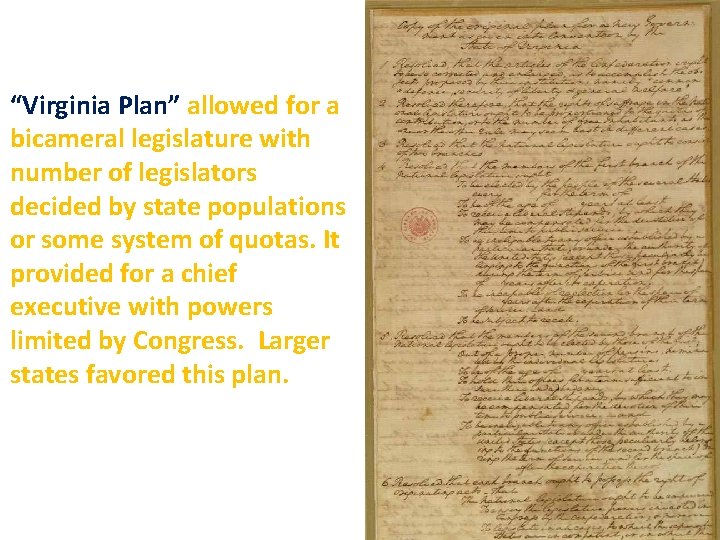
“Virginia Plan” allowed for a bicameral legislature with number of legislators decided by state populations or some system of quotas. It provided for a chief executive with powers limited by Congress. Larger states favored this plan.
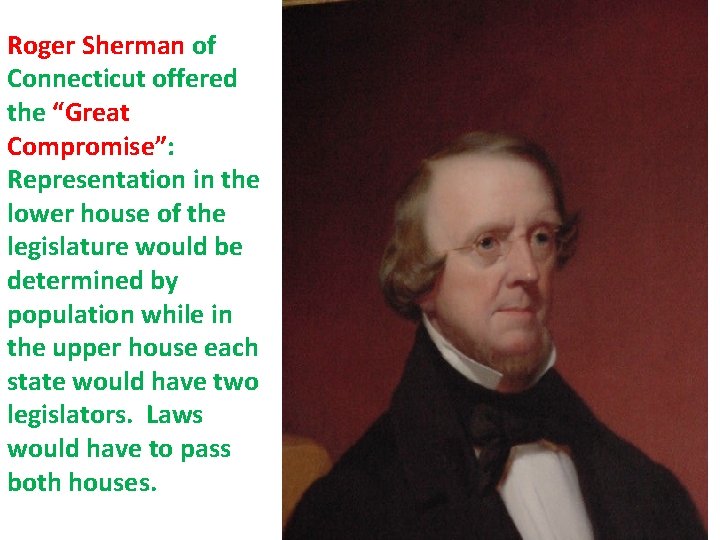
Roger Sherman of Connecticut offered the “Great Compromise”: Representation in the lower house of the legislature would be determined by population while in the upper house each state would have two legislators. Laws would have to pass both houses.
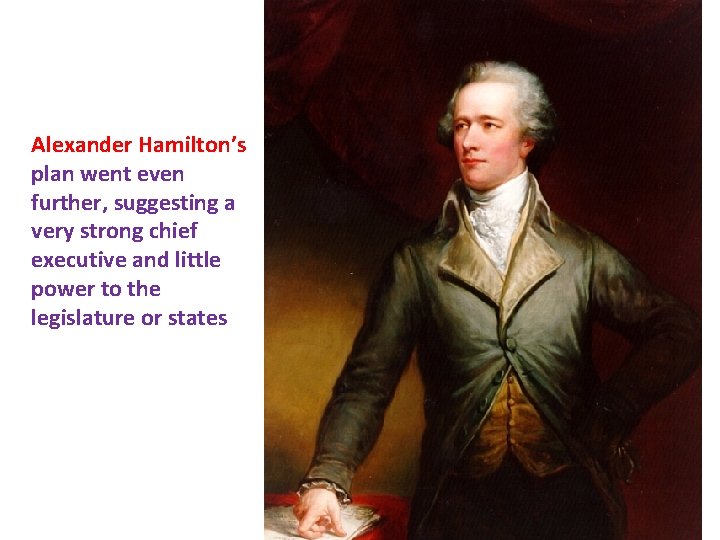
Alexander Hamilton’s plan went even further, suggesting a very strong chief executive and little power to the legislature or states
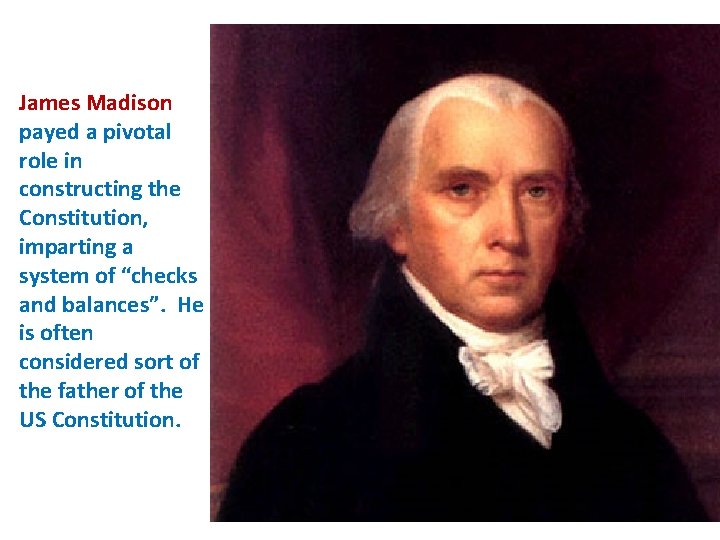
James Madison payed a pivotal role in constructing the Constitution, imparting a system of “checks and balances”. He is often considered sort of the father of the US Constitution.
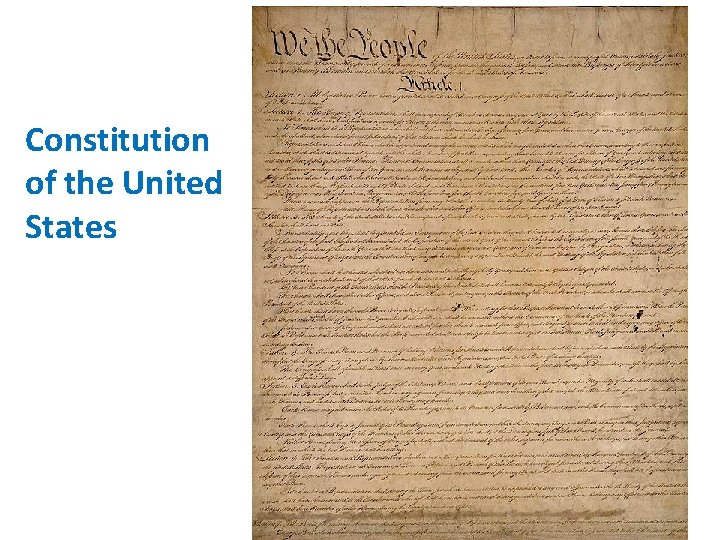
Constitution of the United States
US Constitution: 1. Made federal law supreme law of the land. The federal government had the right to tax, and the exclusive rights to coin money and regulate trade. The federal government had to exclusive right to control all foreign affairs. 2. Created a series of federal courts led by a supreme court to handle all disputes between states or citizens of different states, or matters of federal or constitutional law 3. Created Electoral College System 4. Provided for chief executive - “president” – elected every four years 5. Brilliance was in its “Balance of Powers”: a. For a bill to become law it had to pass both houses of Congress and be signed by the president. The president could veto the bill, but Congress could override the veto with a two-thirds vote b. president was commander of the military but Congress had the right to declare war c. Congress had the “Power of the Purse”: Only Congress could appropriate money for government (all appropriations bills had to originate in lower house, which was seen closer to people)and president led daily operations of government and the execution of laws d. President could negotiate treaties but all treaties had to be ratified by the upper house e. Upper house elected every six years and lower house elected every two years f. President appoints Supreme Court but with the “advice and consent” – the approval – of the upper house. Justices were elected for life.
The Constitution left specific questions about the role and size of the government open (note “Elastic Clause” or “Necessary and Proper Clause” versus constitutional guarantees that the federal government was solely limited to the specific roles directly outlined. ------------------------------------“Democracy” versus “Republic”
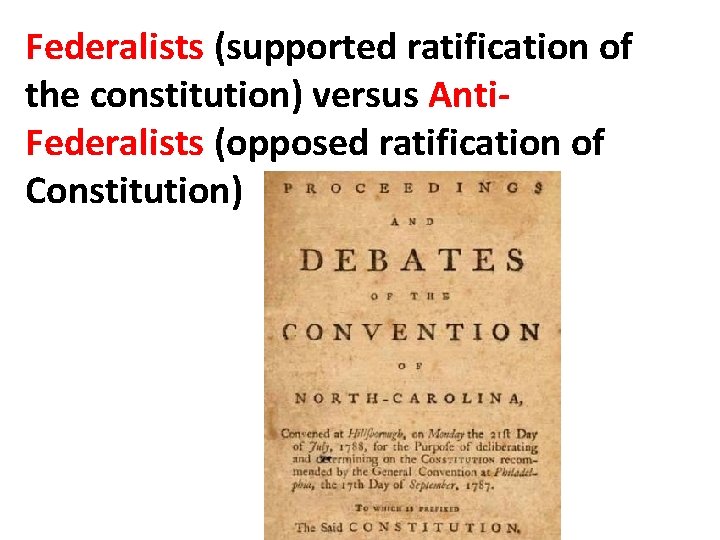
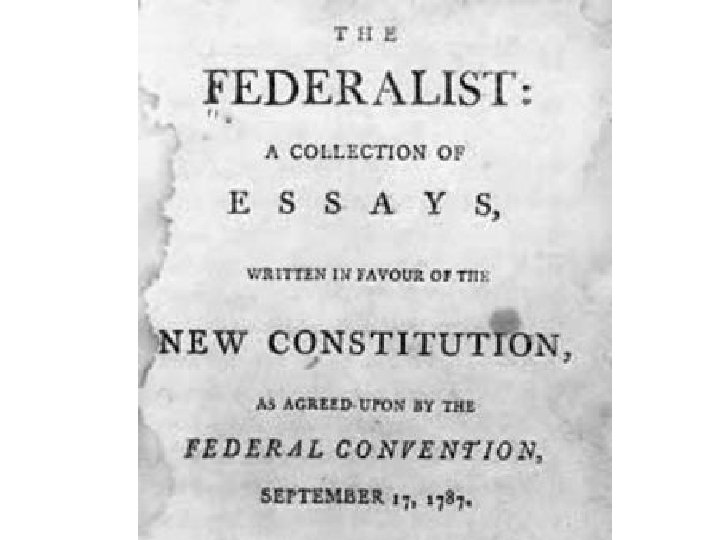
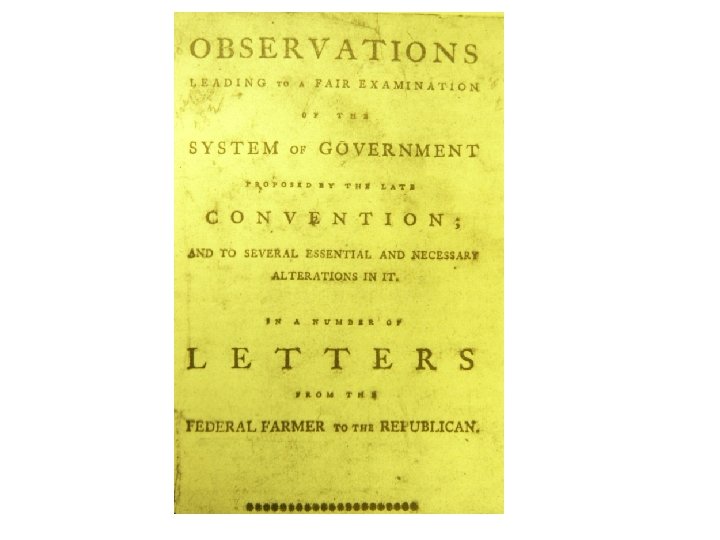
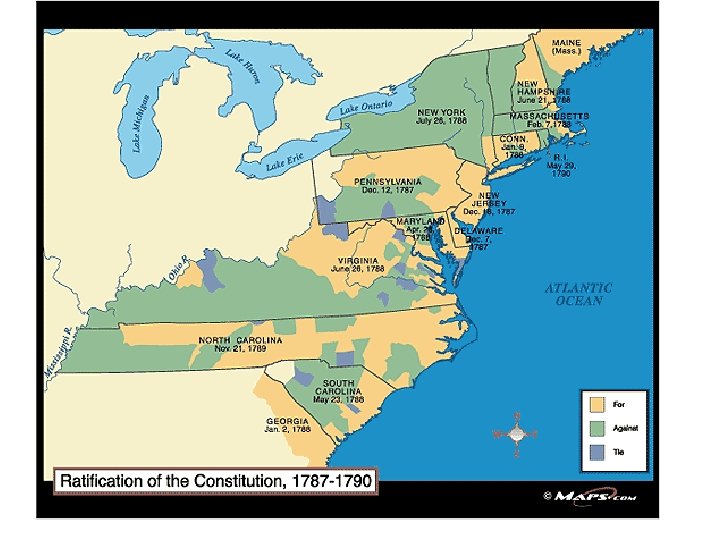
Federalists (supported ratification of the constitution) versus Anti. Federalists (opposed ratification of Constitution)
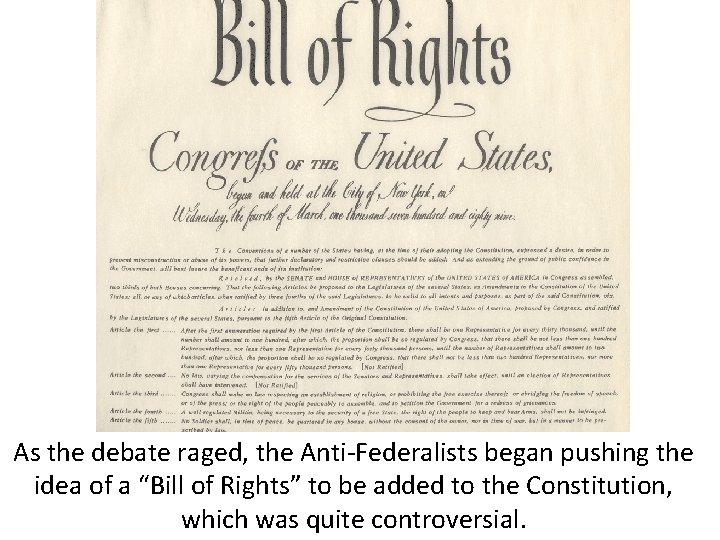
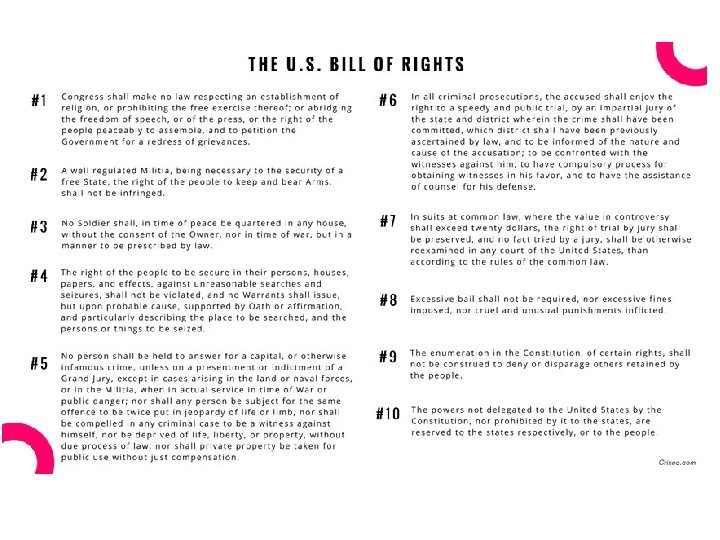
As the debate raged, the Anti-Federalists began pushing the idea of a “Bill of Rights” to be added to the Constitution, which was quite controversial.