
Topic 1 Systems and Models Assessment Statements 1
- Slides: 19
Topic 1 Systems and Models
Assessment Statements 1. 1 Outline the concepts and characteristics of a system 1. 2 Apply the systems concept on a range of scales 1. 3 Define the terms open, closed, and isolated systems 1. 4 Describe how the 1 st and 2 nd laws of thermodynamics are relevant to environmental systems
Assessment Statements Continued 1. 5 Explain the nature of equilibria 1. 6 Define and explain the principles of positive and negative feedback 1. 7 Describe transfer and transformation processes 1. 8 Distinguish between flows (inputs and outputs) and storages (stock) in relation to systems
Assessment Statements Continued 1. 9 Construct and analyze quantitative models involving flows and storages in a system 1. 10 Evaluate the strength and limitations of models
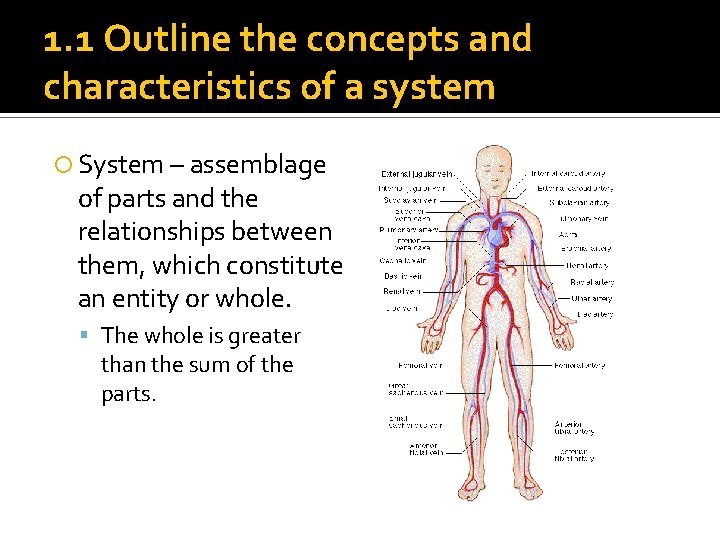
1. 1 Outline the concepts and characteristics of a system System – assemblage of parts and the relationships between them, which constitute an entity or whole. The whole is greater than the sum of the parts.
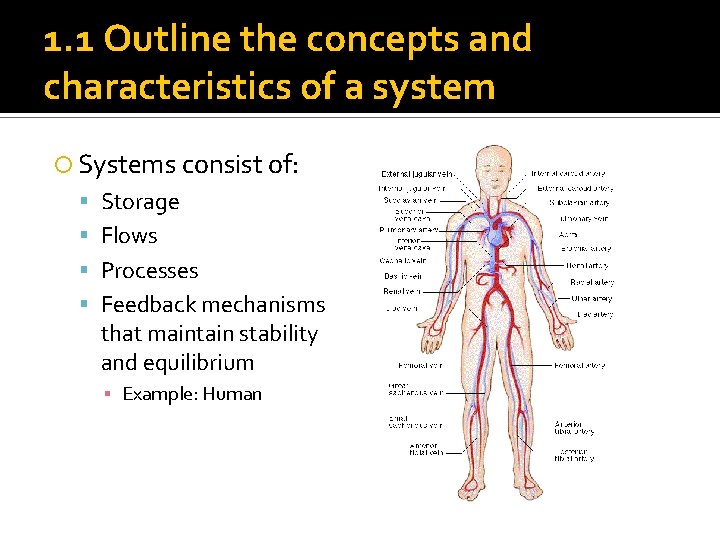
1. 1 Outline the concepts and characteristics of a system Systems consist of: Storage Flows Processes Feedback mechanisms that maintain stability and equilibrium ▪ Example: Human
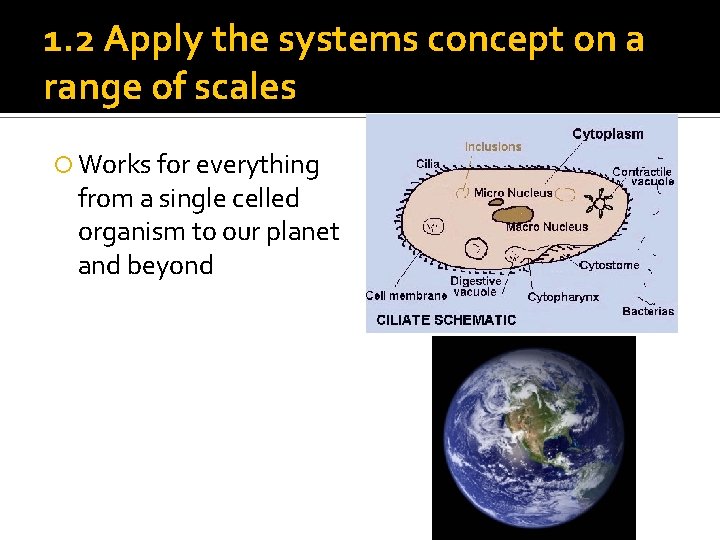
1. 2 Apply the systems concept on a range of scales Works for everything from a single celled organism to our planet and beyond
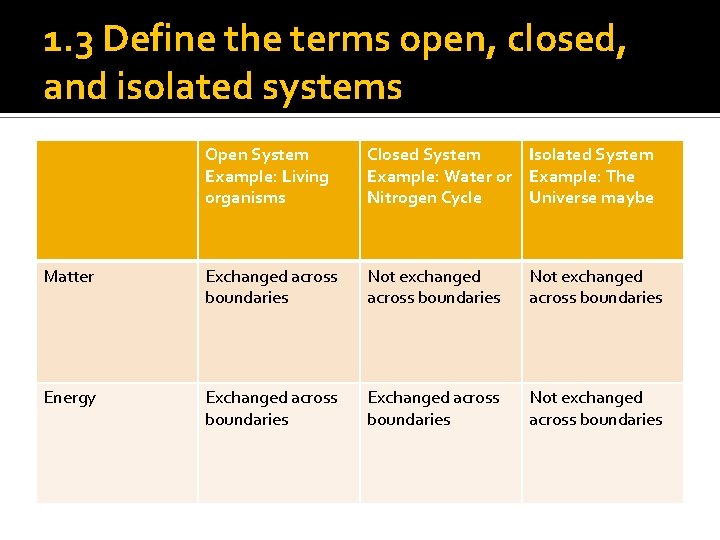
1. 3 Define the terms open, closed, and isolated systems Open System Example: Living organisms Closed System Isolated System Example: Water or Example: The Nitrogen Cycle Universe maybe Matter Exchanged across boundaries Not exchanged across boundaries Energy Exchanged across boundaries Not exchanged across boundaries
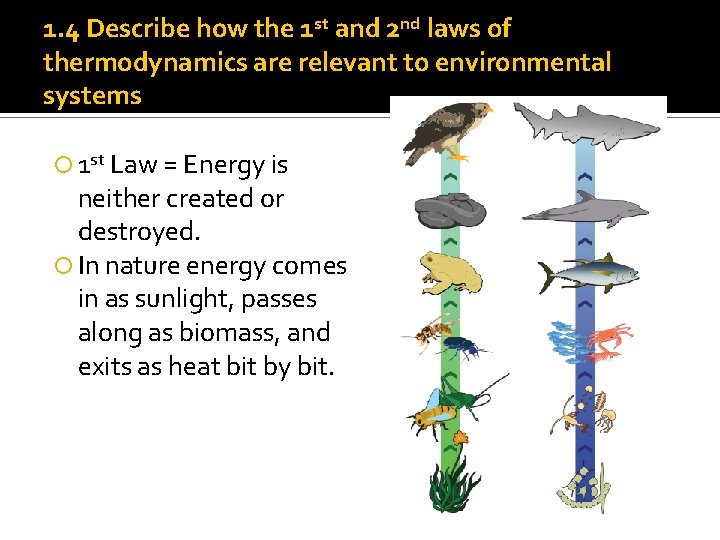
1. 4 Describe how the 1 st and 2 nd laws of thermodynamics are relevant to environmental systems 1 st Law = Energy is neither created or destroyed. In nature energy comes in as sunlight, passes along as biomass, and exits as heat bit by bit.
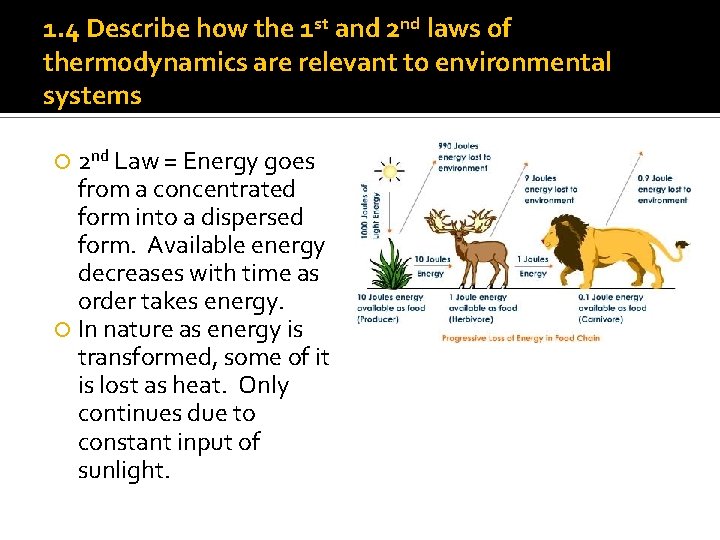
1. 4 Describe how the 1 st and 2 nd laws of thermodynamics are relevant to environmental systems 2 nd Law = Energy goes from a concentrated form into a dispersed form. Available energy decreases with time as order takes energy. In nature as energy is transformed, some of it is lost as heat. Only continues due to constant input of sunlight.
1. 5 Explain the nature of equilibria Steady-state equilibrium – Maintains a stable system due to constant flow of inputs and outputs Static doesn’t apply to natural systems as there are no inputs or outputs so no change occurs. Refers to state of balance Static – always in balance Inanimate objects Stable – Returns to balance after disturbance Rubber Unstable – Achieves new balance after disturbance Car Crash
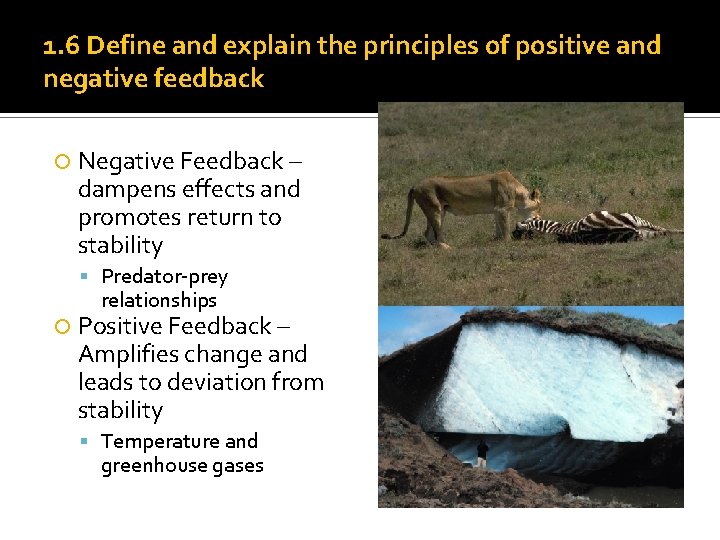
1. 6 Define and explain the principles of positive and negative feedback Negative Feedback – dampens effects and promotes return to stability Predator-prey relationships Positive Feedback – Amplifies change and leads to deviation from stability Temperature and greenhouse gases
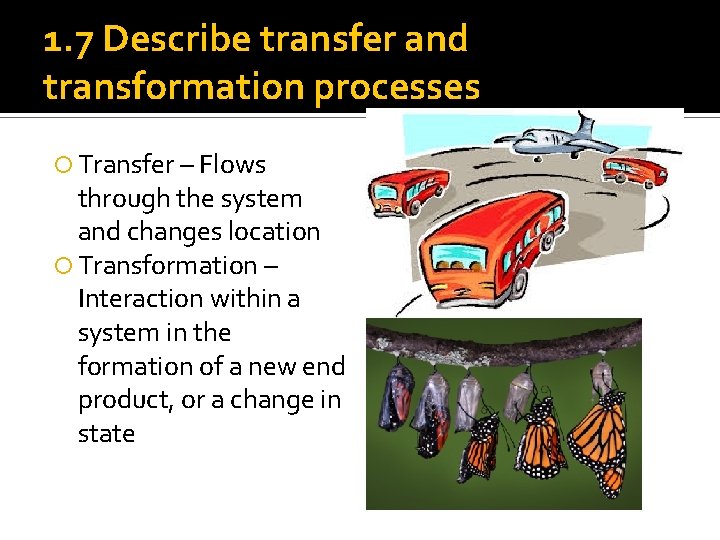
1. 7 Describe transfer and transformation processes Transfer – Flows through the system and changes location Transformation – Interaction within a system in the formation of a new end product, or a change in state
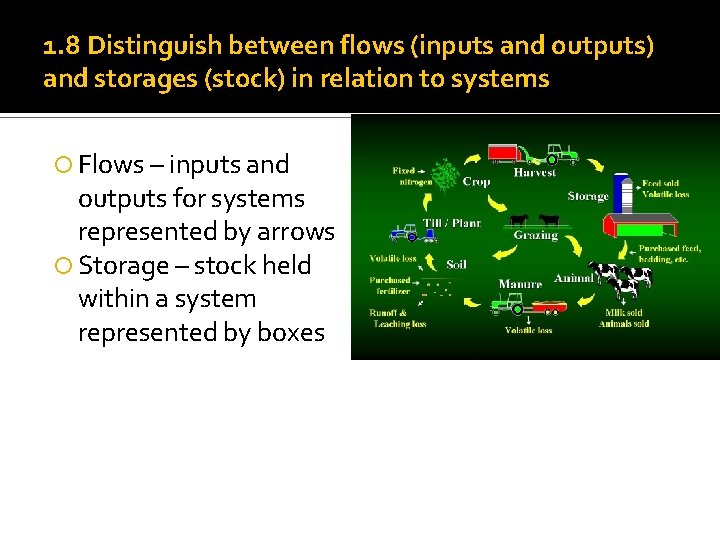
1. 8 Distinguish between flows (inputs and outputs) and storages (stock) in relation to systems Flows – inputs and outputs for systems represented by arrows Storage – stock held within a system represented by boxes
1. 9 Construct and analyze quantitative models involving flows and storages in a system Model – Simplified description designed to show the structure or workings of an object, system or concept. This is why we are doing the systems poster. We will add storages to it, and it will meet this assessment statement.
1. 10 Evaluate the strength and limitations of models ADVANTAGES DISADVANTAGES Can predict and simplify complex systems Inputs can be changed and outputs examined without waiting for real events Results can be shown to others May not be accurate Rely on the expertise of those making it Different people may interpret them in different ways Vested interests may hijack them politically Only as good as the data that goes in Different models may show different effects with same data
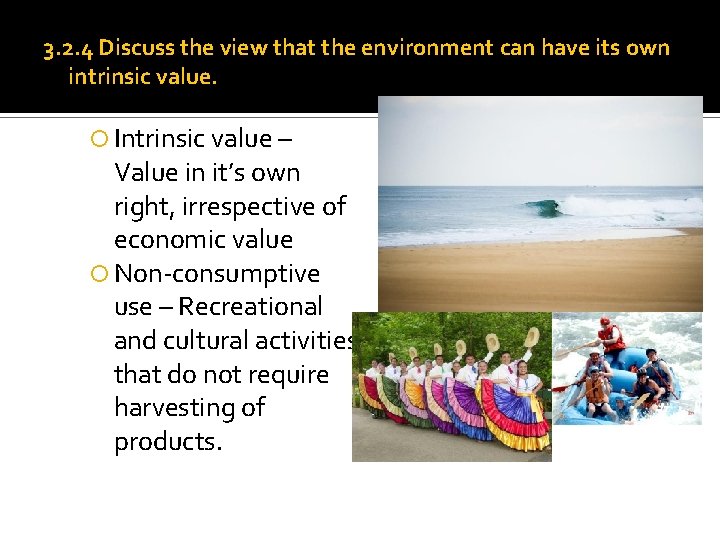
3. 2. 4 Discuss the view that the environment can have its own intrinsic value. Intrinsic value – Value in it’s own right, irrespective of economic value Non-consumptive use – Recreational and cultural activities that do not require harvesting of products.
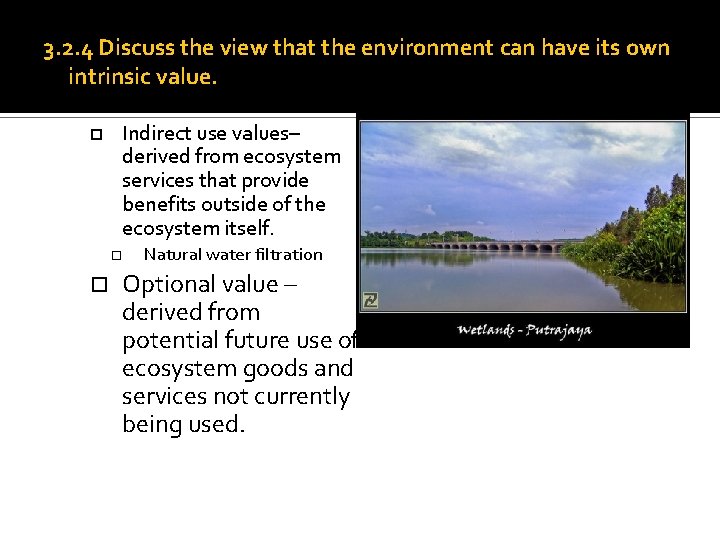
3. 2. 4 Discuss the view that the environment can have its own intrinsic value. Indirect use values– derived from ecosystem services that provide benefits outside of the ecosystem itself. Natural water filtration Optional value – derived from potential future use of ecosystem goods and services not currently being used.
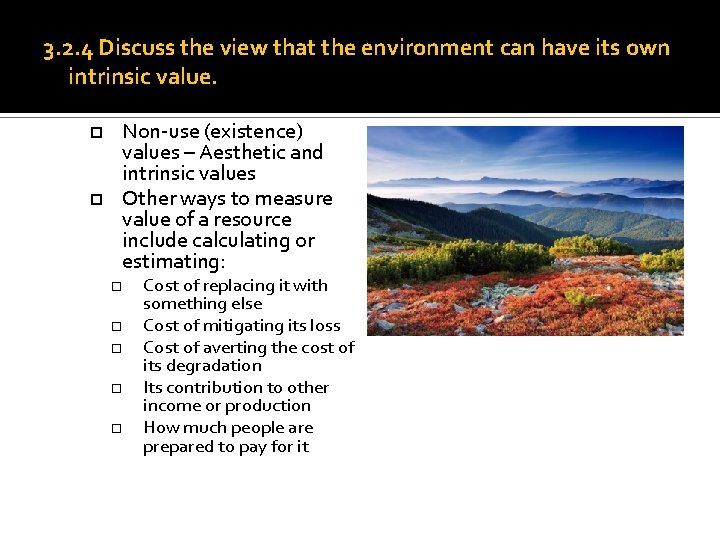
3. 2. 4 Discuss the view that the environment can have its own intrinsic value. Non-use (existence) values – Aesthetic and intrinsic values Other ways to measure value of a resource include calculating or estimating: Cost of replacing it with something else Cost of mitigating its loss Cost of averting the cost of its degradation Its contribution to other income or production How much people are prepared to pay for it