
Topic 1 Cells 1 6 Cell division IB
Topic 1 Cells 1. 6 Cell division IB Biology SFP - Mark Polko
Nature of science Serendipity and scientific discoveries—the discovery of cyclins was accidental. (1. 4) Understandings: Mitosis is division of the nucleus into two genetically identical daughter nuclei. Chromosomes condense by supercoiling during mitosis. Cytokinesis occurs after mitosis and is different in plant and animal cells. Interphase is a very active phase of the cell cycle with many processes occurring in the nucleus and cytoplasm. Cyclins are involved in the control of the cell cycle. Mutagens, oncogenes and metastasis are involved in the development of primary and secondary tumours. IB Biology SFP - Mark Polko 2
Applications and skills Application: The correlation between smoking and incidence of cancers. Skill: Identification of phases of mitosis in cells viewed with a microscope or in a micrograph. Skill: Determination of a mitotic index from a micrograph. To. K A number of scientific discoveries are claimed to be incidental or serendipitous. To what extent might some of these scientific discoveries be the result of intuition rather than luck? Essential idea: Cell division is essential but must be controlled IB Biology SFP - Mark Polko 3
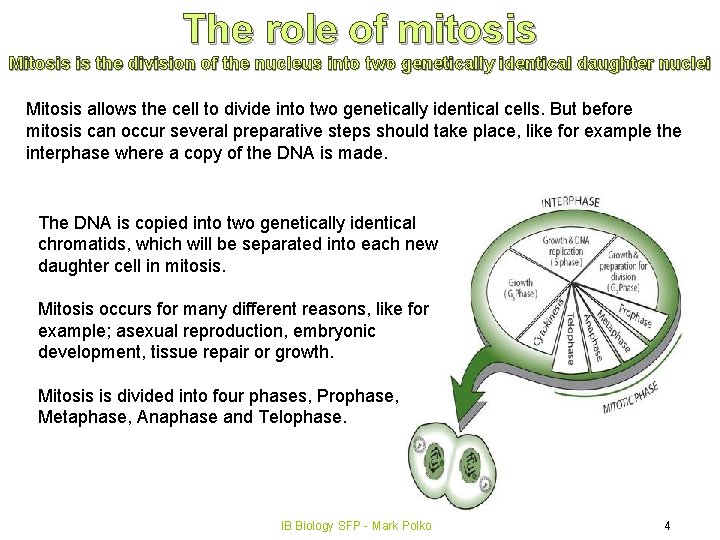
The role of mitosis Mitosis is the division of the nucleus into two genetically identical daughter nuclei Mitosis allows the cell to divide into two genetically identical cells. But before mitosis can occur several preparative steps should take place, like for example the interphase where a copy of the DNA is made. The DNA is copied into two genetically identical chromatids, which will be separated into each new daughter cell in mitosis. Mitosis occurs for many different reasons, like for example; asexual reproduction, embryonic development, tissue repair or growth. Mitosis is divided into four phases, Prophase, Metaphase, Anaphase and Telophase. IB Biology SFP - Mark Polko 4
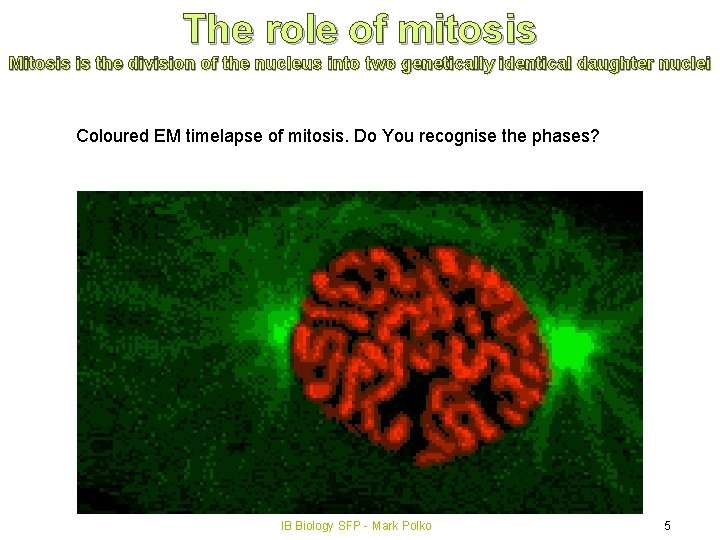
The role of mitosis Mitosis is the division of the nucleus into two genetically identical daughter nuclei Coloured EM timelapse of mitosis. Do You recognise the phases? IB Biology SFP - Mark Polko 5
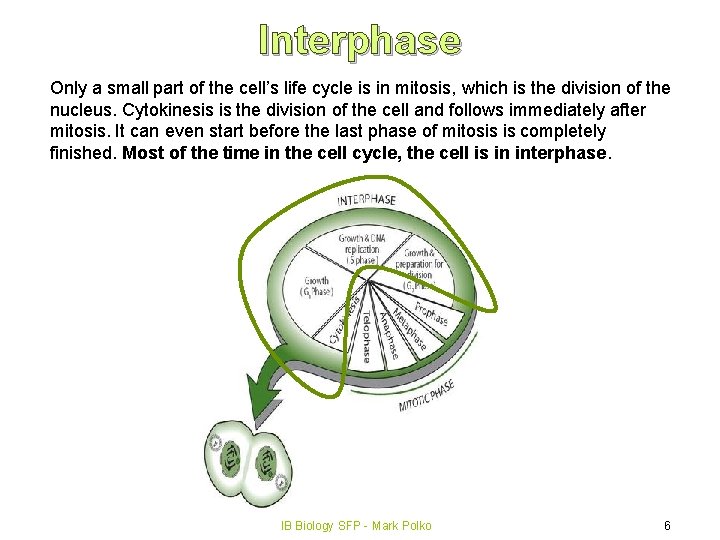
Interphase Only a small part of the cell’s life cycle is in mitosis, which is the division of the nucleus. Cytokinesis is the division of the cell and follows immediately after mitosis. It can even start before the last phase of mitosis is completely finished. Most of the time in the cell cycle, the cell is in interphase. IB Biology SFP - Mark Polko 6
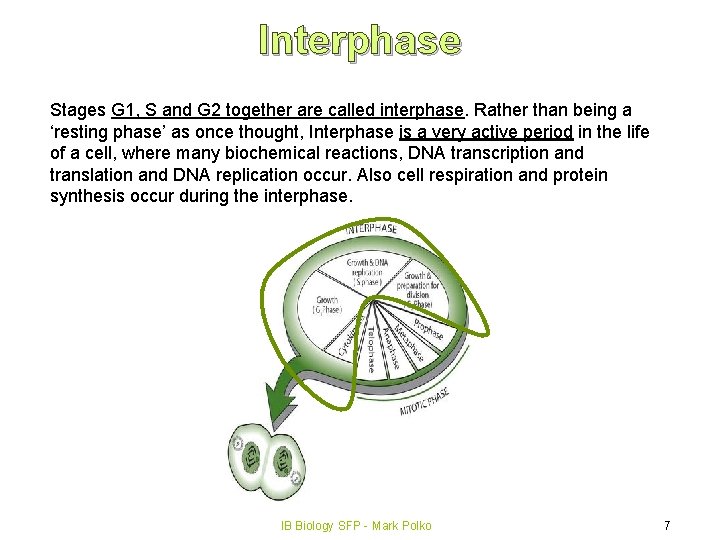
Interphase Stages G 1, S and G 2 together are called interphase. Rather than being a ‘resting phase’ as once thought, Interphase is a very active period in the life of a cell, where many biochemical reactions, DNA transcription and translation and DNA replication occur. Also cell respiration and protein synthesis occur during the interphase. IB Biology SFP - Mark Polko 7
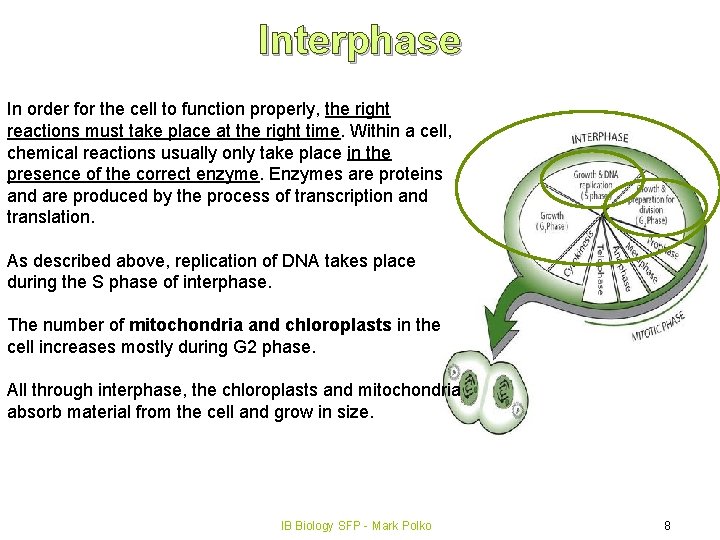
Interphase In order for the cell to function properly, the right reactions must take place at the right time. Within a cell, chemical reactions usually only take place in the presence of the correct enzyme. Enzymes are proteins and are produced by the process of transcription and translation. As described above, replication of DNA takes place during the S phase of interphase. The number of mitochondria and chloroplasts in the cell increases mostly during G 2 phase. All through interphase, the chloroplasts and mitochondria absorb material from the cell and grow in size. IB Biology SFP - Mark Polko 8
Supercoiling of the chromatin Chromosomes condense by supercoiling during the mitosis Suring mitosis the two chromatids which make u a chromosome must be separated to opposite poles f the cell. The nucleus is about 5µm long, but the molecules of the DNA 50 000µm so you can imagine that then must condense a lot to be able to fit in it. This process in known as the condensation of chromosomes and happens in the fist stage of mitosis. Condensation happens by supercoiling the DNA into short, wide chromosomes. The proteins called histones which are associated with the eukaryotic chromosomes help with this process, just as several enzymes. More or less like this: IB Biology SFP - Mark Polko 9
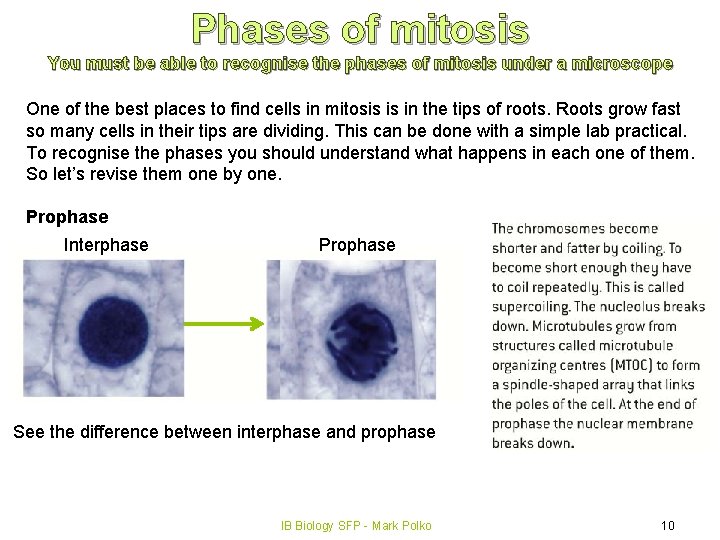
Phases of mitosis You must be able to recognise the phases of mitosis under a microscope One of the best places to find cells in mitosis is in the tips of roots. Roots grow fast so many cells in their tips are dividing. This can be done with a simple lab practical. To recognise the phases you should understand what happens in each one of them. So let’s revise them one by one. Prophase Interphase Prophase See the difference between interphase and prophase IB Biology SFP - Mark Polko 10
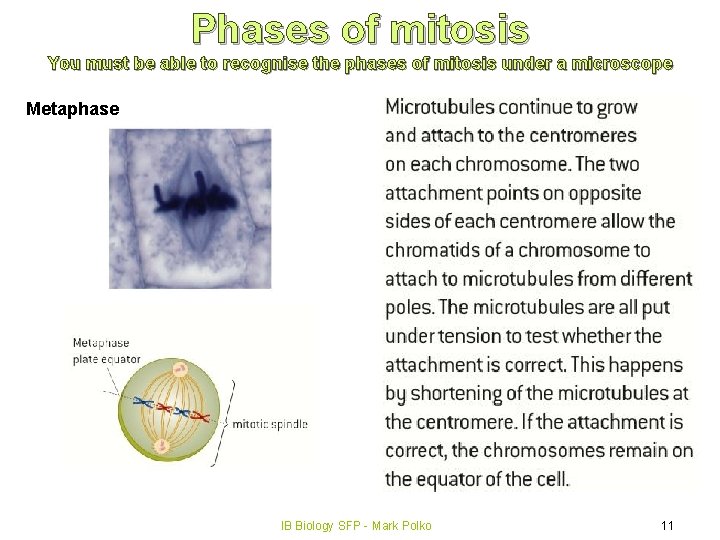
Phases of mitosis You must be able to recognise the phases of mitosis under a microscope Metaphase IB Biology SFP - Mark Polko 11
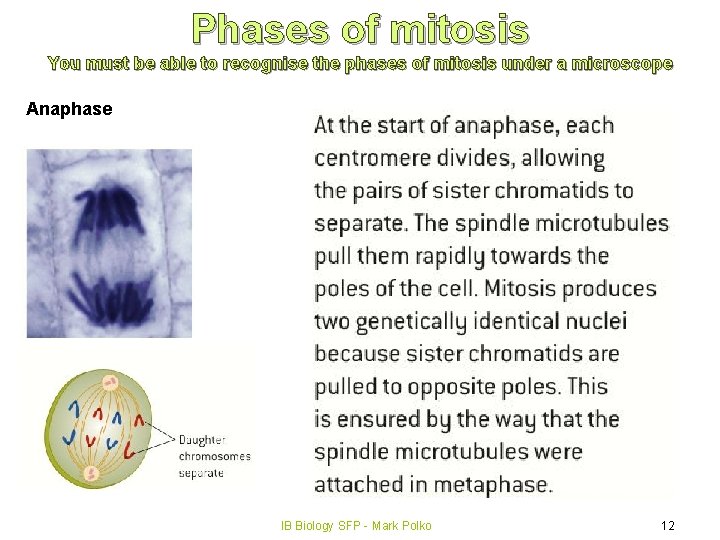
Phases of mitosis You must be able to recognise the phases of mitosis under a microscope Anaphase IB Biology SFP - Mark Polko 12
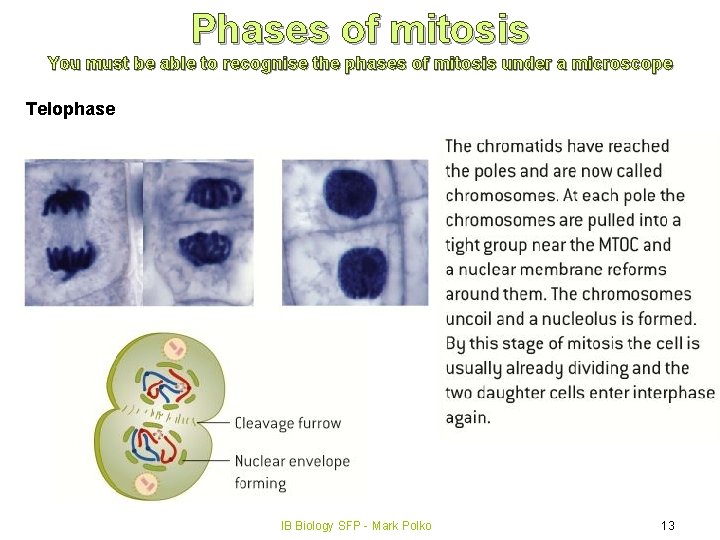
Phases of mitosis You must be able to recognise the phases of mitosis under a microscope Telophase IB Biology SFP - Mark Polko 13
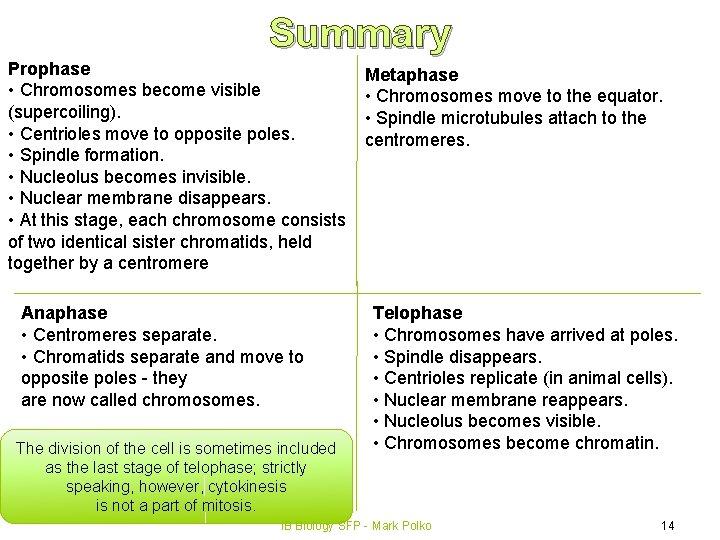
Summary Prophase • Chromosomes become visible (supercoiling). • Centrioles move to opposite poles. • Spindle formation. • Nucleolus becomes invisible. • Nuclear membrane disappears. • At this stage, each chromosome consists of two identical sister chromatids, held together by a centromere Anaphase • Centromeres separate. • Chromatids separate and move to opposite poles - they are now called chromosomes. The division of the cell is sometimes included as the last stage of telophase; strictly speaking, however, cytokinesis is not a part of mitosis. Metaphase • Chromosomes move to the equator. • Spindle microtubules attach to the centromeres. Telophase • Chromosomes have arrived at poles. • Spindle disappears. • Centrioles replicate (in animal cells). • Nuclear membrane reappears. • Nucleolus becomes visible. • Chromosomes become chromatin. IB Biology SFP - Mark Polko 14
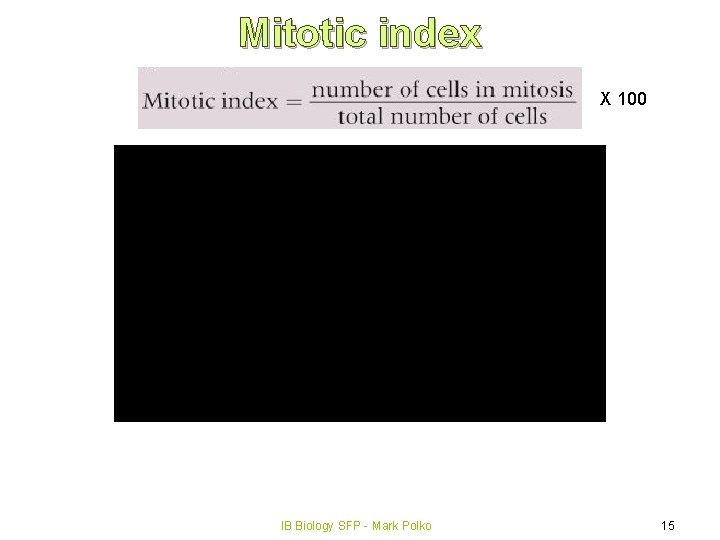
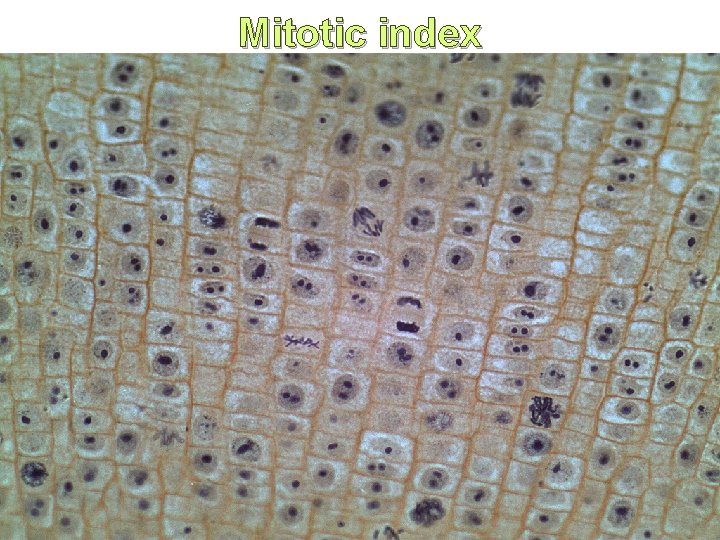
Mitotic index X 100 IB Biology SFP - Mark Polko 15
Mitotic index IB Biology SFP - Mark Polko 16
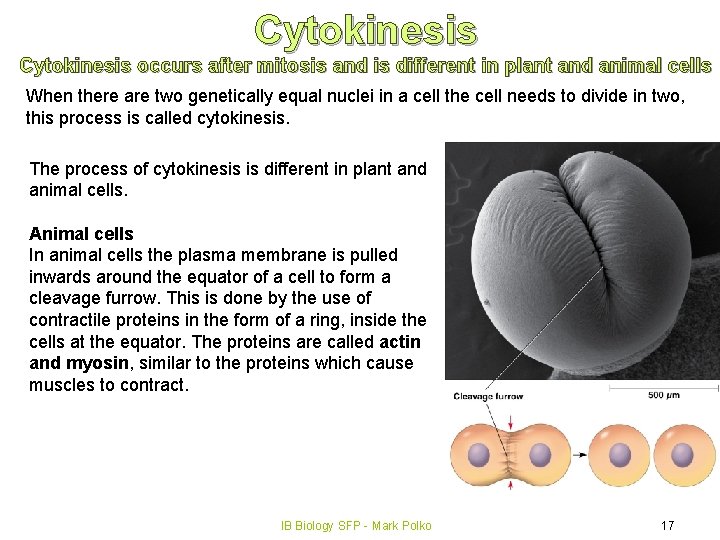
Cytokinesis occurs after mitosis and is different in plant and animal cells When there are two genetically equal nuclei in a cell the cell needs to divide in two, this process is called cytokinesis. The process of cytokinesis is different in plant and animal cells. Animal cells In animal cells the plasma membrane is pulled inwards around the equator of a cell to form a cleavage furrow. This is done by the use of contractile proteins in the form of a ring, inside the cells at the equator. The proteins are called actin and myosin, similar to the proteins which cause muscles to contract. IB Biology SFP - Mark Polko LINK 17
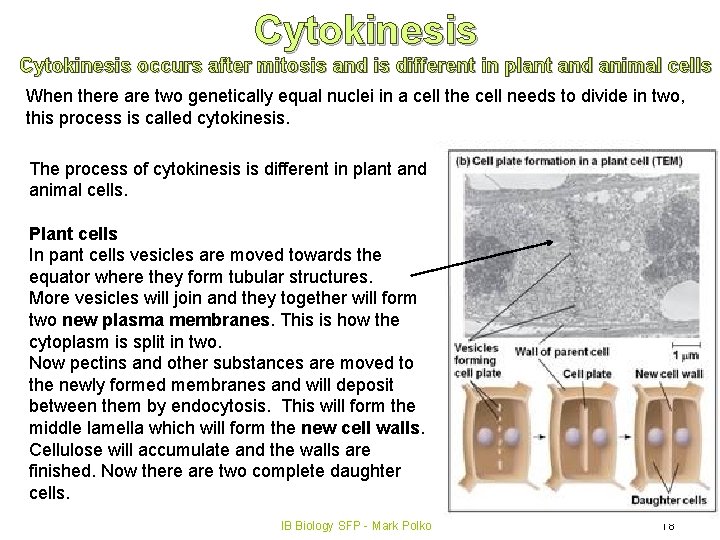
Cytokinesis occurs after mitosis and is different in plant and animal cells When there are two genetically equal nuclei in a cell the cell needs to divide in two, this process is called cytokinesis. The process of cytokinesis is different in plant and animal cells. Plant cells In pant cells vesicles are moved towards the equator where they form tubular structures. More vesicles will join and they together will form two new plasma membranes. This is how the cytoplasm is split in two. Now pectins and other substances are moved to the newly formed membranes and will deposit between them by endocytosis. This will form the middle lamella which will form the new cell walls. Cellulose will accumulate and the walls are finished. Now there are two complete daughter cells. IB Biology SFP - Mark Polko 18
Cyclins and the control of the cell cycle IB Biology SFP - Mark Polko 19
Cyclins and the control of the cell cycle IB Biology SFP - Mark Polko 20
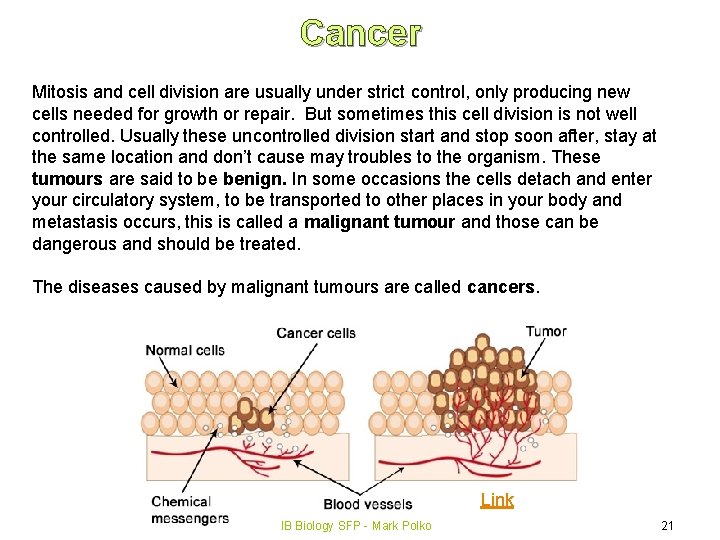
Cancer Mitosis and cell division are usually under strict control, only producing new cells needed for growth or repair. But sometimes this cell division is not well controlled. Usually these uncontrolled division start and stop soon after, stay at the same location and don’t cause may troubles to the organism. These tumours are said to be benign. In some occasions the cells detach and enter your circulatory system, to be transported to other places in your body and metastasis occurs, this is called a malignant tumour and those can be dangerous and should be treated. The diseases caused by malignant tumours are called cancers. Link IB Biology SFP - Mark Polko 21
Cancer Some common causes of cancer Certain kinds of radiation and certain chemicals are known to be carcinogenic, mostly they increase the chances of mutation, although some seem to increase the effect of mutations already present. Viruses inserting their genetic material into the chromosomes of the host, may also contribute to the formation of tumour cells. Certain forms of electromagnetic radiation also increase the rate of mutation (mutagenic) and are therefore also carcinogenic. There is a strong correlation between the amount of ultraviolet light and the incidence of skin cancer. A series of genetic changes in a cell is needed before it becomes a tumour cell. However, the changes accumulate over the years, making cancer quite common in the aging population and a very common cause of death. IB Biology SFP - Mark Polko 22
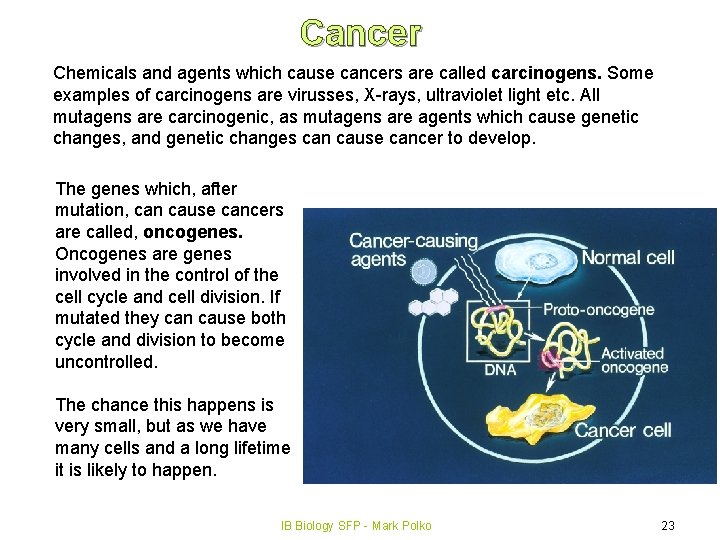
Cancer Chemicals and agents which cause cancers are called carcinogens. Some examples of carcinogens are virusses, X-rays, ultraviolet light etc. All mutagens are carcinogenic, as mutagens are agents which cause genetic changes, and genetic changes can cause cancer to develop. The genes which, after mutation, can cause cancers are called, oncogenes. Oncogenes are genes involved in the control of the cell cycle and cell division. If mutated they can cause both cycle and division to become uncontrolled. The chance this happens is very small, but as we have many cells and a long lifetime it is likely to happen. IB Biology SFP - Mark Polko 23
Cancer Some tumours are harmless or benign e. g. warts. Others may become malignant and spread to other tissues and other parts of the body and are then called cancer. Cancer can be treated in a number of ways: • surgical removal • radiation therapy • chemotherapy Surgical removal of the tumour cells before they can grow further and spread. Radiation therapy (radiotherapy) using a strong ionising or nuclear radiation beam which can be directed to a precise point and will ‘burn’ all cells in the area. Chemotherapy uses chemicals that destroy all rapidly dividing cells by medication. Unfortunately this also includes cells responsible for the growth of hair, cells which form the lining of the gut and sperm -producing cells. This cause the side-effects involved with this treatment. Link IB Biology SFP - Mark Polko 24
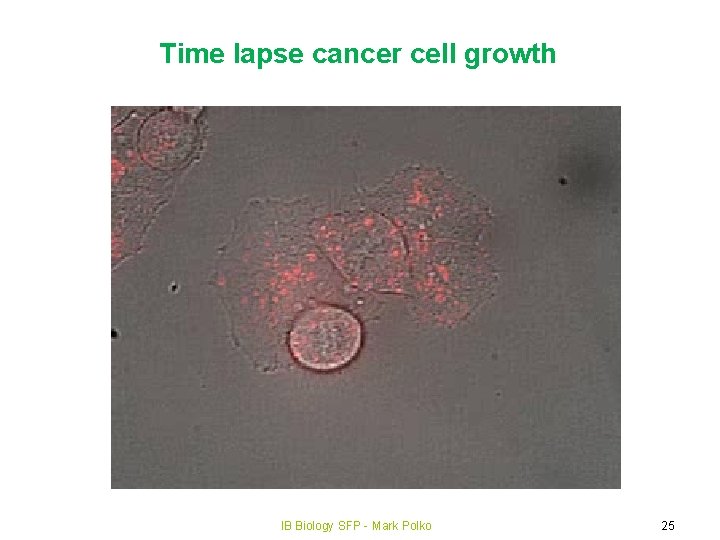
Time lapse cancer cell growth IB Biology SFP - Mark Polko 25
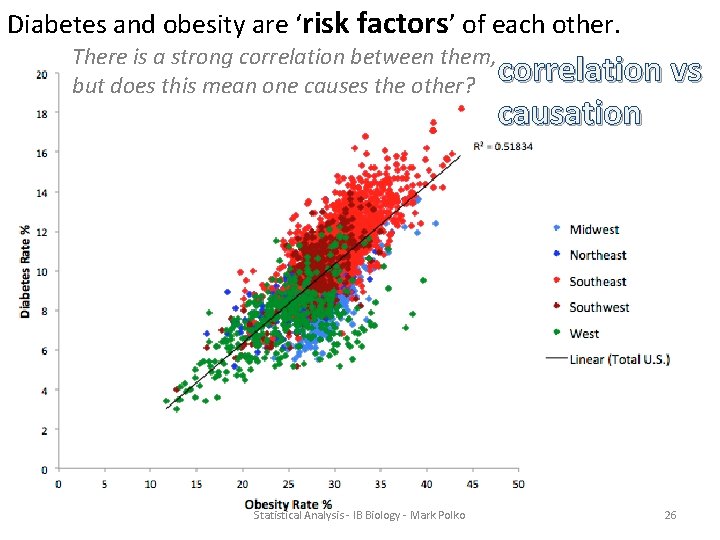
Diabetes and obesity are ‘risk factors’ of each other. There is a strong correlation between them, correlation vs but does this mean one causes the other? causation Statistical Analysis - IB Biology - Mark Polko 26
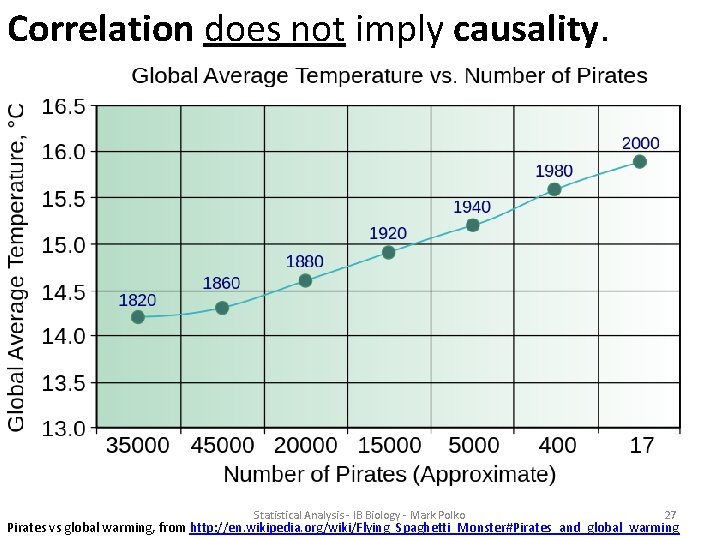
Correlation does not imply causality. Statistical Analysis - IB Biology - Mark Polko 27 Pirates vs global warming, from http: //en. wikipedia. org/wiki/Flying_Spaghetti_Monster#Pirates_and_global_warming
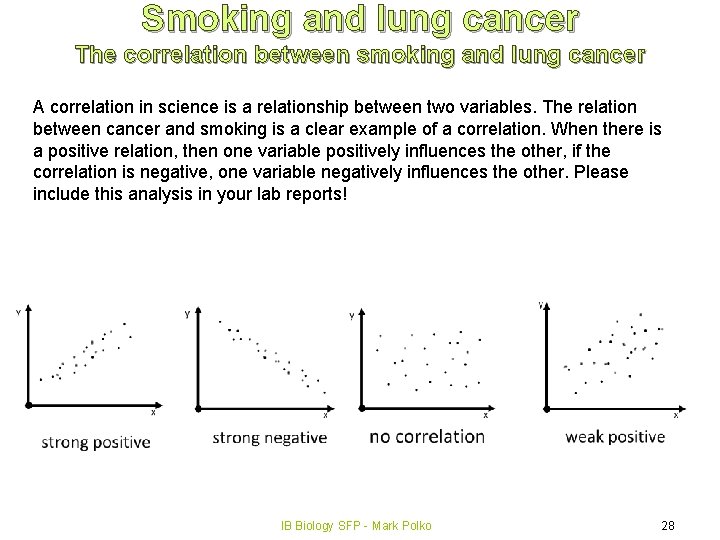
Smoking and lung cancer The correlation between smoking and lung cancer A correlation in science is a relationship between two variables. The relation between cancer and smoking is a clear example of a correlation. When there is a positive relation, then one variable positively influences the other, if the correlation is negative, one variable negatively influences the other. Please include this analysis in your lab reports! IB Biology SFP - Mark Polko 28
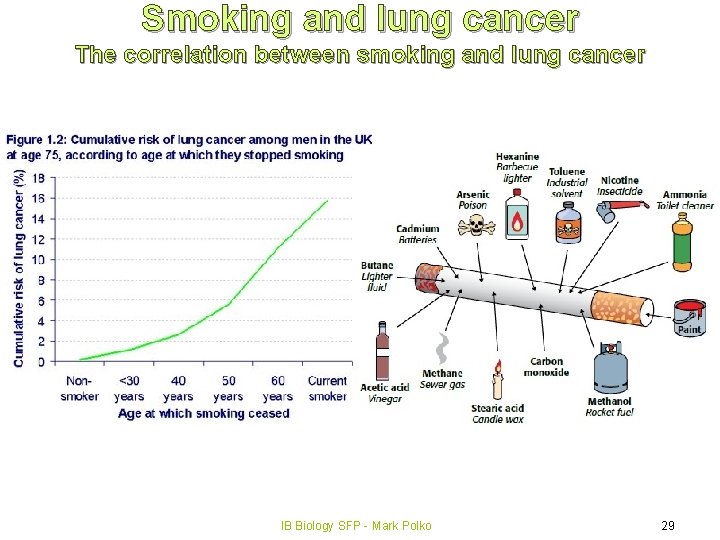
Smoking and lung cancer The correlation between smoking and lung cancer IB Biology SFP - Mark Polko 29
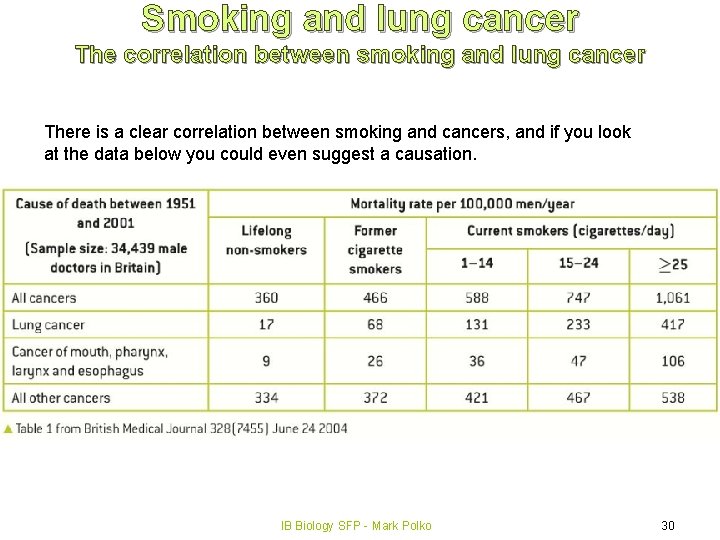
Smoking and lung cancer The correlation between smoking and lung cancer There is a clear correlation between smoking and cancers, and if you look at the data below you could even suggest a causation. IB Biology SFP - Mark Polko 30
Topic 1 Cells 1. 6 Cell division IB Biology SFP - Mark Polko
- Slides: 31