
TOPIC 1 CELL BIOLOGY THE EVOLUTION OF MULTICELLULAR
TOPIC 1: CELL BIOLOGY THE EVOLUTION OF MULTICELLULAR ORGANISMS ALLOWED CELL SPECIALIZATION AND CELL REPLACEMENT.
SNOWBALL! 1. Brainstorm what details you can remember about CELLS.
YOU ARE GOING TO INTRODUCE THE TOPIC OF CELLS TO A YEAR 9 CLASS. 2. How would you do it?
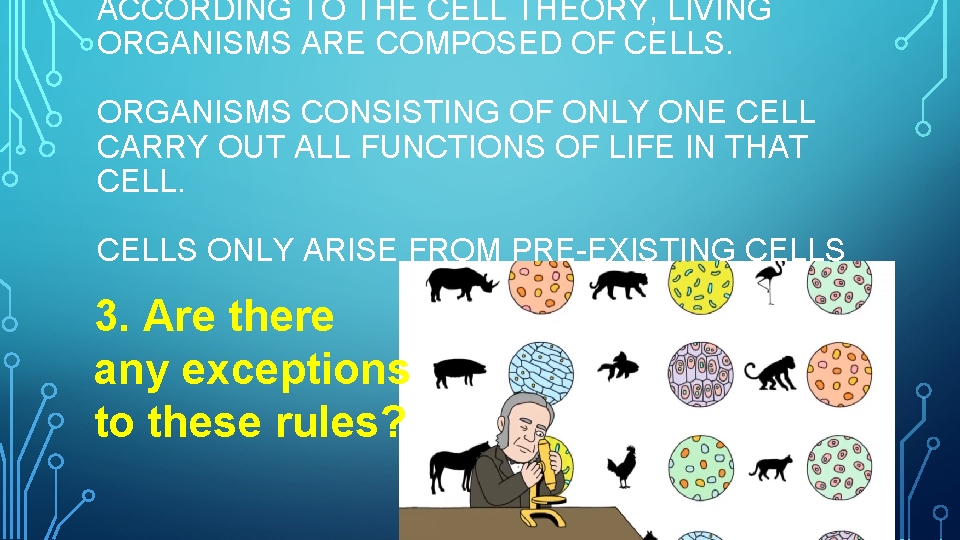
ACCORDING TO THE CELL THEORY, LIVING ORGANISMS ARE COMPOSED OF CELLS. ORGANISMS CONSISTING OF ONLY ONE CELL CARRY OUT ALL FUNCTIONS OF LIFE IN THAT CELLS ONLY ARISE FROM PRE-EXISTING CELLS 3. Are there any exceptions to these rules?
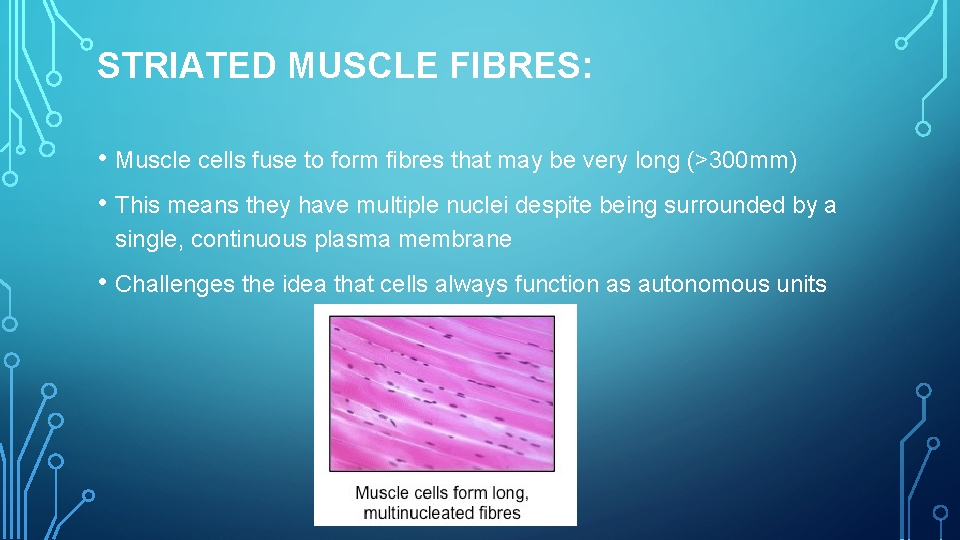
STRIATED MUSCLE FIBRES: • Muscle cells fuse to form fibres that may be very long (>300 mm) • This means they have multiple nuclei despite being surrounded by a single, continuous plasma membrane • Challenges the idea that cells always function as autonomous units
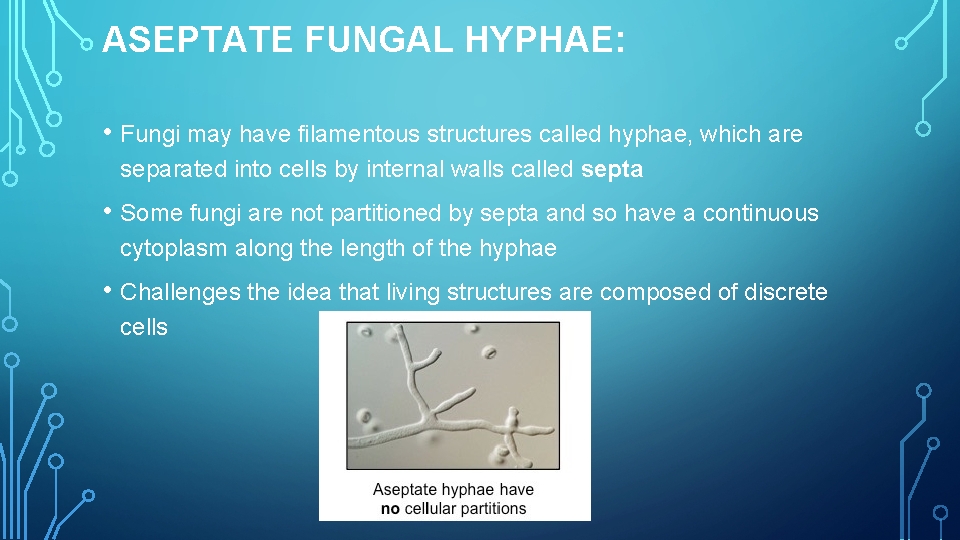
ASEPTATE FUNGAL HYPHAE: • Fungi may have filamentous structures called hyphae, which are separated into cells by internal walls called septa • Some fungi are not partitioned by septa and so have a continuous cytoplasm along the length of the hyphae • Challenges the idea that living structures are composed of discrete cells
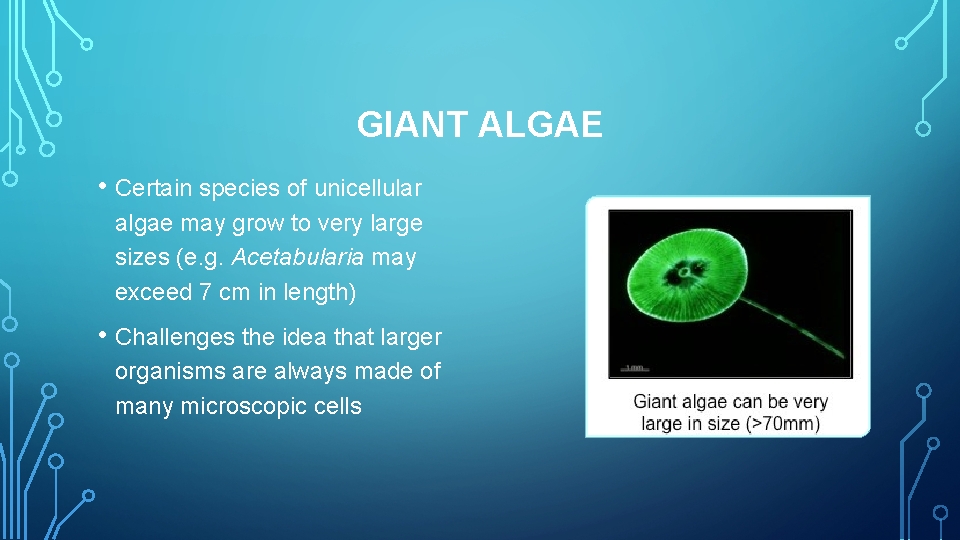
GIANT ALGAE • Certain species of unicellular algae may grow to very large sizes (e. g. Acetabularia may exceed 7 cm in length) • Challenges the idea that larger organisms are always made of many microscopic cells
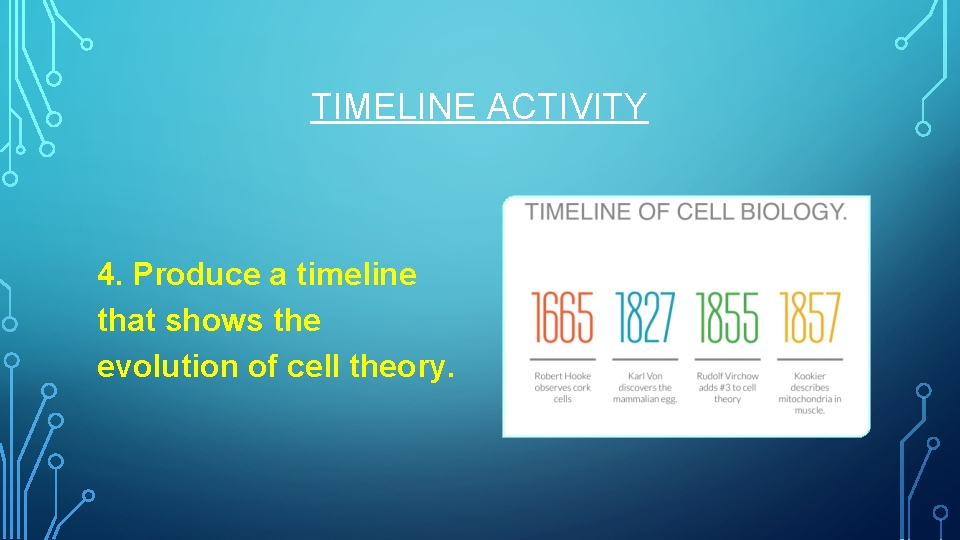
TIMELINE ACTIVITY 4. Produce a timeline that shows the evolution of cell theory.
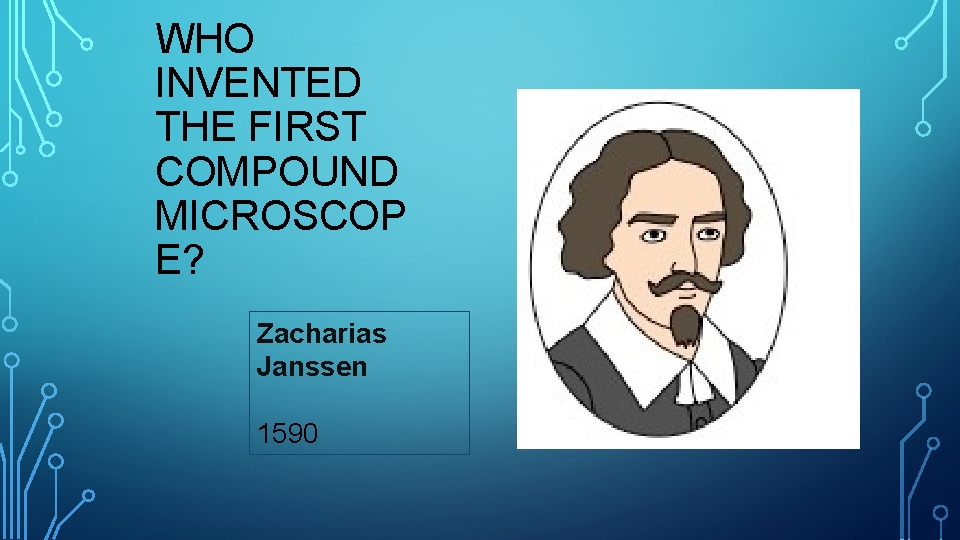
WHO INVENTED THE FIRST COMPOUND MICROSCOP E? Zacharias Janssen 1590
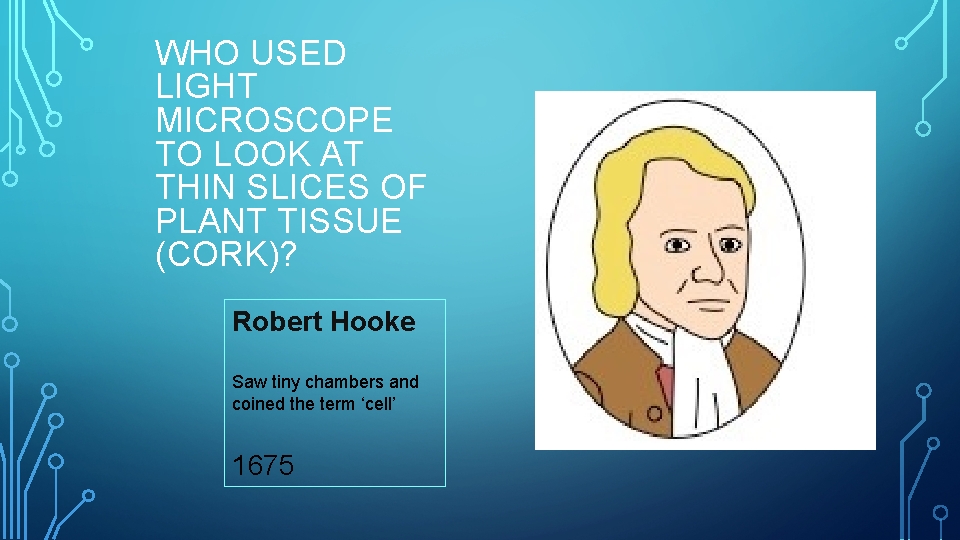
WHO USED LIGHT MICROSCOPE TO LOOK AT THIN SLICES OF PLANT TISSUE (CORK)? Robert Hooke Saw tiny chambers and coined the term ‘cell’ 1675
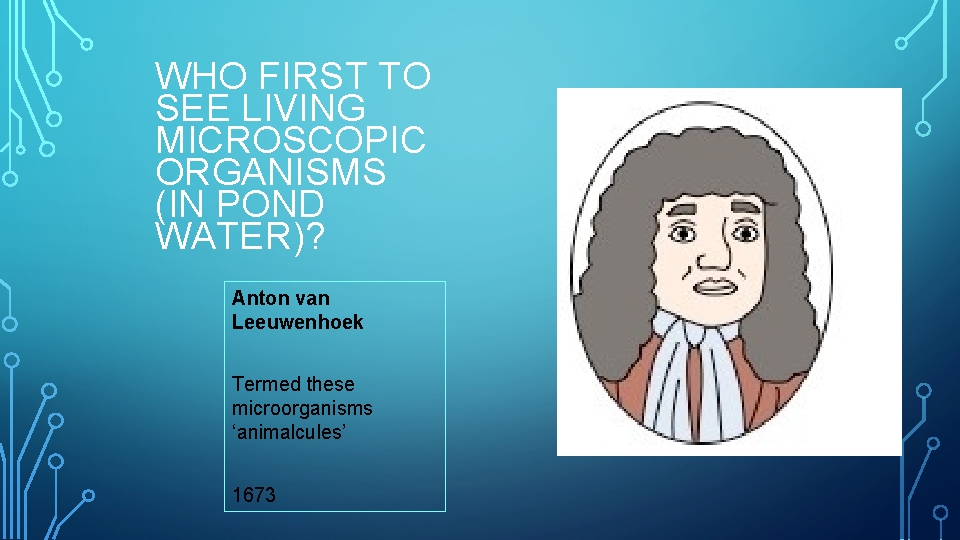
WHO FIRST TO SEE LIVING MICROSCOPIC ORGANISMS (IN POND WATER)? Anton van Leeuwenhoek Termed these microorganisms ‘animalcules’ 1673
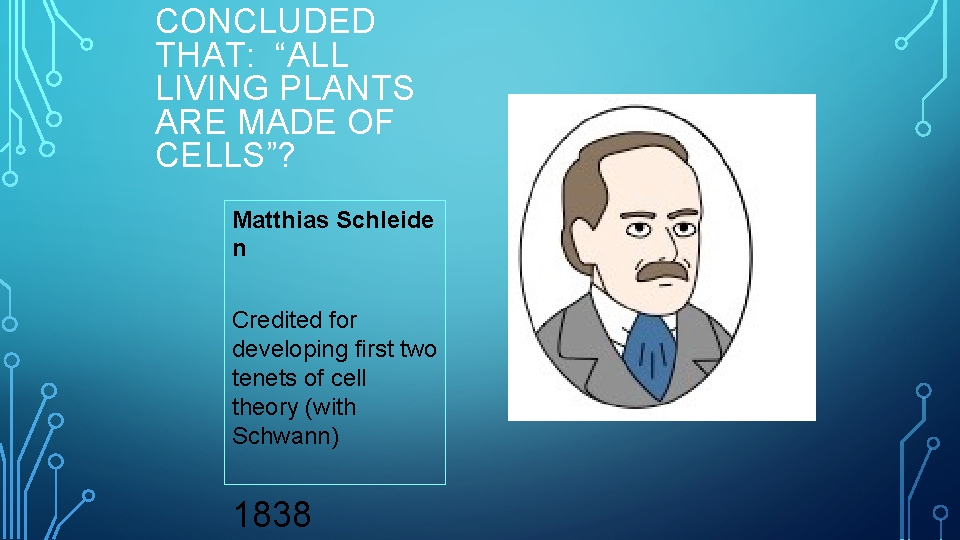
CONCLUDED THAT: “ALL LIVING PLANTS ARE MADE OF CELLS”? Matthias Schleide n Credited for developing first two tenets of cell theory (with Schwann) 1838
WHO CONCLUDED THAT: “ALL LIVING ANIMALS ARE MADE OF CELLS”? Theodore Schwann Credited for developing first two tenets of cell theory (with Schleiden)
WHO CONCLUDED THAT: “WHERE A CELL EXISTS, THERE MUST HAVE BEEN A PRE-EXISTING CELL”? Rudolph Virchow Credited for developing the third tenet of the cell theory 1855
THERE IS AN UNBROKEN CHAIN OF LIFE FROM THE FIRST CELLS ON EARTH, TO ALL CELLS IN ORGANISMS ALIVE TODAY CELLS CAN ONLY BE FORMED BY DIVISION OF PRE -EXISTING CELLS, BUT THE FIRST CELLS MUST HAVE ARISEN FROM NON-LIVING MATERIAL 5. What theories can you find that suggest how the first cells were formed?
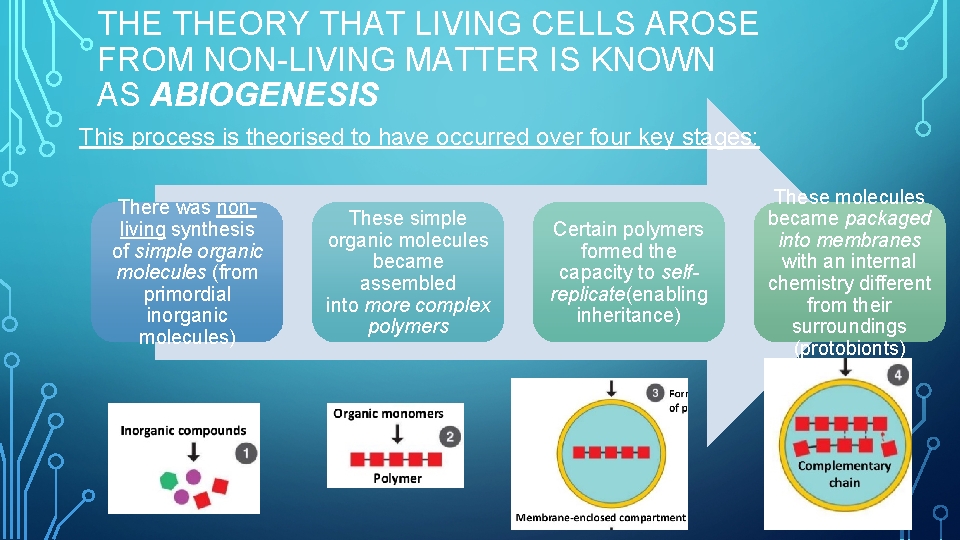
THE THEORY THAT LIVING CELLS AROSE FROM NON-LIVING MATTER IS KNOWN AS ABIOGENESIS This process is theorised to have occurred over four key stages: There was nonliving synthesis of simple organic molecules (from primordial inorganic molecules) These simple organic molecules became assembled into more complex polymers Certain polymers formed the capacity to selfreplicate(enabling inheritance) These molecules became packaged into membranes with an internal chemistry different from their surroundings (protobionts)
6. CAN YOU FIND ANY EVIDENCE THAT SUPPORTS THEORY THAT LIVING CELLS AROSE FROM NONLIVING MATTER?
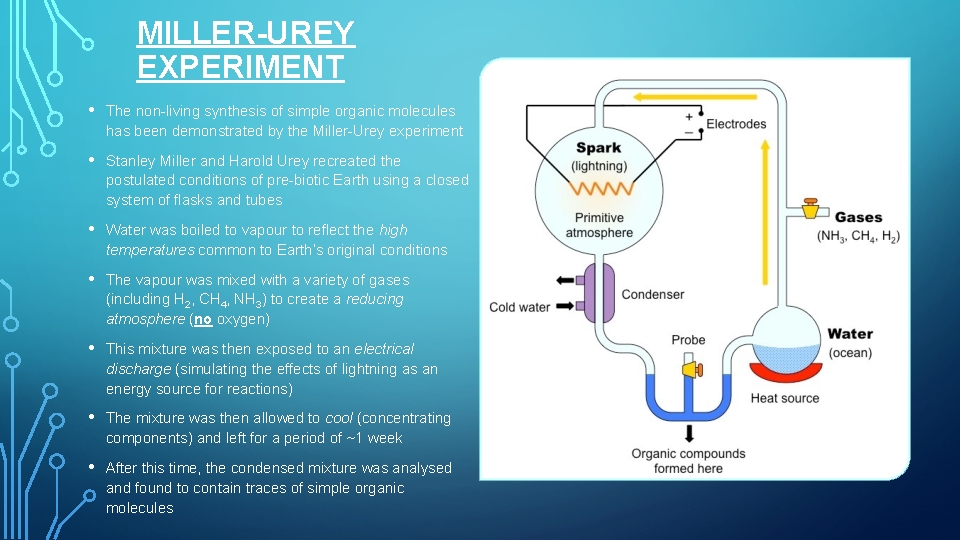
MILLER-UREY EXPERIMENT • The non-living synthesis of simple organic molecules has been demonstrated by the Miller-Urey experiment • Stanley Miller and Harold Urey recreated the postulated conditions of pre-biotic Earth using a closed system of flasks and tubes • Water was boiled to vapour to reflect the high temperatures common to Earth’s original conditions • The vapour was mixed with a variety of gases (including H 2, CH 4, NH 3) to create a reducing atmosphere (no oxygen) • This mixture was then exposed to an electrical discharge (simulating the effects of lightning as an energy source for reactions) • The mixture was then allowed to cool (concentrating components) and left for a period of ~1 week • After this time, the condensed mixture was analysed and found to contain traces of simple organic molecules
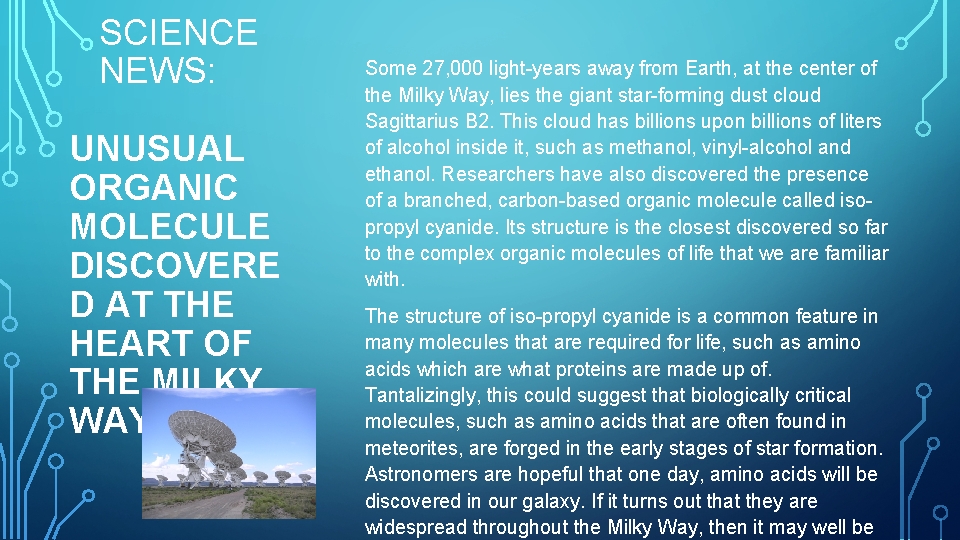
SCIENCE NEWS: UNUSUAL ORGANIC MOLECULE DISCOVERE D AT THE HEART OF THE MILKY WAY Some 27, 000 light-years away from Earth, at the center of the Milky Way, lies the giant star-forming dust cloud Sagittarius B 2. This cloud has billions upon billions of liters of alcohol inside it, such as methanol, vinyl-alcohol and ethanol. Researchers have also discovered the presence of a branched, carbon-based organic molecule called isopropyl cyanide. Its structure is the closest discovered so far to the complex organic molecules of life that we are familiar with. The structure of iso-propyl cyanide is a common feature in many molecules that are required for life, such as amino acids which are what proteins are made up of. Tantalizingly, this could suggest that biologically critical molecules, such as amino acids that are often found in meteorites, are forged in the early stages of star formation. Astronomers are hopeful that one day, amino acids will be discovered in our galaxy. If it turns out that they are widespread throughout the Milky Way, then it may well be
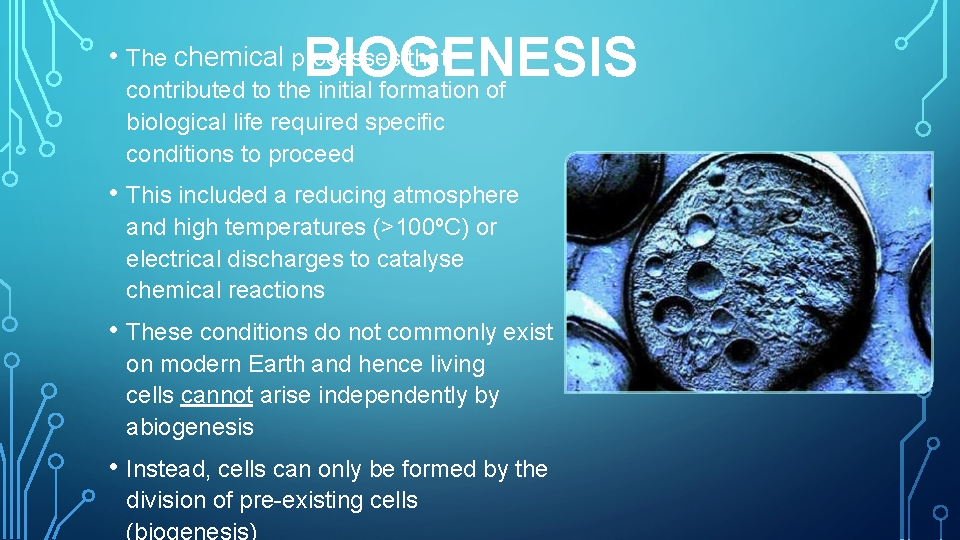
BIOGENESIS contributed to the initial formation of • The chemical processes that biological life required specific conditions to proceed • This included a reducing atmosphere and high temperatures (>100ºC) or electrical discharges to catalyse chemical reactions • These conditions do not commonly exist on modern Earth and hence living cells cannot arise independently by abiogenesis • Instead, cells can only be formed by the division of pre-existing cells
7. WHO IS CREDITED AS PROVING THEORY OF BIOGENESIS? • And disproving Spontaneous Generation theory? • How was it done?
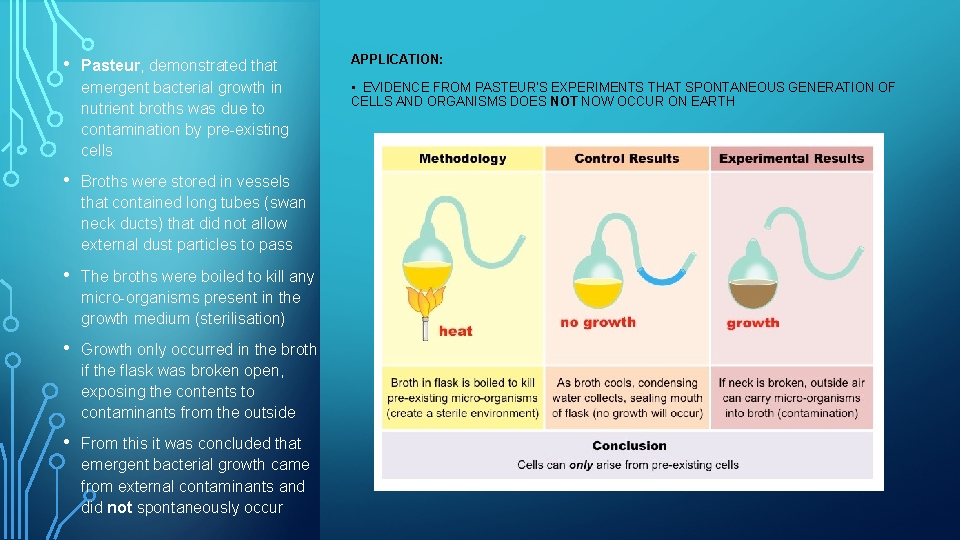
• Pasteur, demonstrated that emergent bacterial growth in nutrient broths was due to contamination by pre-existing cells • Broths were stored in vessels that contained long tubes (swan neck ducts) that did not allow external dust particles to pass • The broths were boiled to kill any micro-organisms present in the growth medium (sterilisation) • Growth only occurred in the broth if the flask was broken open, exposing the contents to contaminants from the outside • From this it was concluded that emergent bacterial growth came from external contaminants and did not spontaneously occur APPLICATION: • EVIDENCE FROM PASTEUR’S EXPERIMENTS THAT SPONTANEOUS GENERATION OF CELLS AND ORGANISMS DOES NOT NOW OCCUR ON EARTH
8. IF WE ASUME THAT THE ORGANISMS IN THE EXPERIMENT WERE UNICELLULAR, WHAT LIFE PROCESSES MUST EACH CELL BE ABLE TO PERFORM? “Organisms consisting of only one cell carry out all functions of life in that cell. ”
UNDERSTANDING: • Metabolism – Living things undertake • UNICELLULAR ORGANISMS CARRY essential chemical reactions • Reproduction – Living things produce OUT ALL FUNCTIONS OF LIFE offspring, either sexually or asexually • Sensitivity – Living things are responsive to IN THAT CELL internal and external stimuli Unicellular organisms (e. g. Euglena, amoeba) are the smallest organisms capable of independent life. • Homeostasis – Living things maintain a All living things carry out 7 basic functions integral to survival: • Nutrition – Living things exchange materials stable internal environment • Excretion – Living things exhibit the removal of waste products and gases with the environment • Growth – Living things can move and change shape or size • Mnemonic: MR SHENG
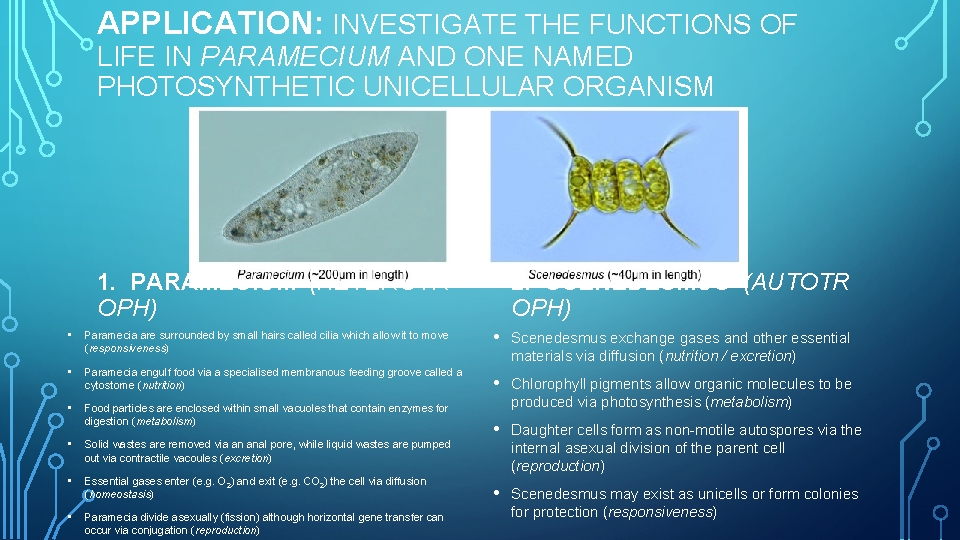
APPLICATION: INVESTIGATE THE FUNCTIONS OF LIFE IN PARAMECIUM AND ONE NAMED PHOTOSYNTHETIC UNICELLULAR ORGANISM 2. SCENEDESMUS (AUTOTR OPH) 1. PARAMECIUM (HETEROTR OPH) • Paramecia are surrounded by small hairs called cilia which allow it to move (responsiveness) • Paramecia engulf food via a specialised membranous feeding groove called a cytostome (nutrition) • Food particles are enclosed within small vacuoles that contain enzymes for digestion (metabolism) • Solid wastes are removed via an anal pore, while liquid wastes are pumped out via contractile vacoules (excretion) • Essential gases enter (e. g. O 2) and exit (e. g. CO 2) the cell via diffusion (homeostasis) • Paramecia divide asexually (fission) although horizontal gene transfer can occur via conjugation (reproduction) • Scenedesmus exchange gases and other essential materials via diffusion (nutrition / excretion) • Chlorophyll pigments allow organic molecules to be produced via photosynthesis (metabolism) • Daughter cells form as non-motile autospores via the internal asexual division of the parent cell (reproduction) • Scenedesmus may exist as unicells or form colonies for protection (responsiveness)
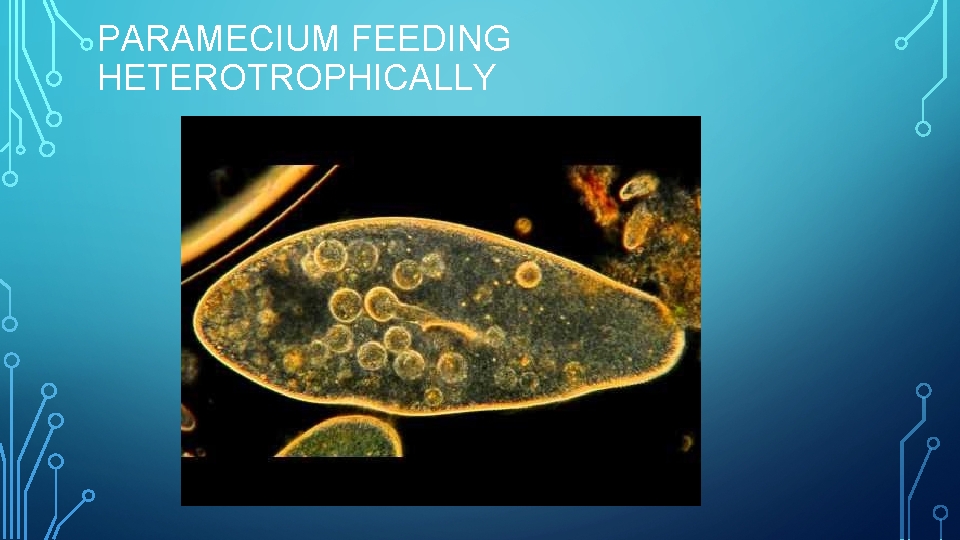
PARAMECIUM FEEDING HETEROTROPHICALLY
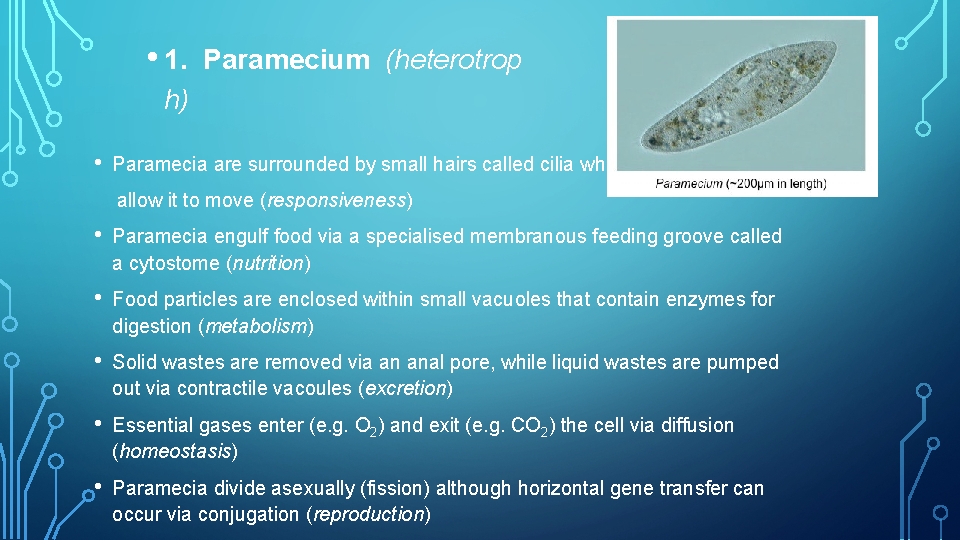
• 1. Paramecium (heterotrop h) • Paramecia are surrounded by small hairs called cilia which allow it to move (responsiveness) • Paramecia engulf food via a specialised membranous feeding groove called a cytostome (nutrition) • Food particles are enclosed within small vacuoles that contain enzymes for digestion (metabolism) • Solid wastes are removed via an anal pore, while liquid wastes are pumped out via contractile vacoules (excretion) • Essential gases enter (e. g. O 2) and exit (e. g. CO 2) the cell via diffusion (homeostasis) • Paramecia divide asexually (fission) although horizontal gene transfer can occur via conjugation (reproduction)
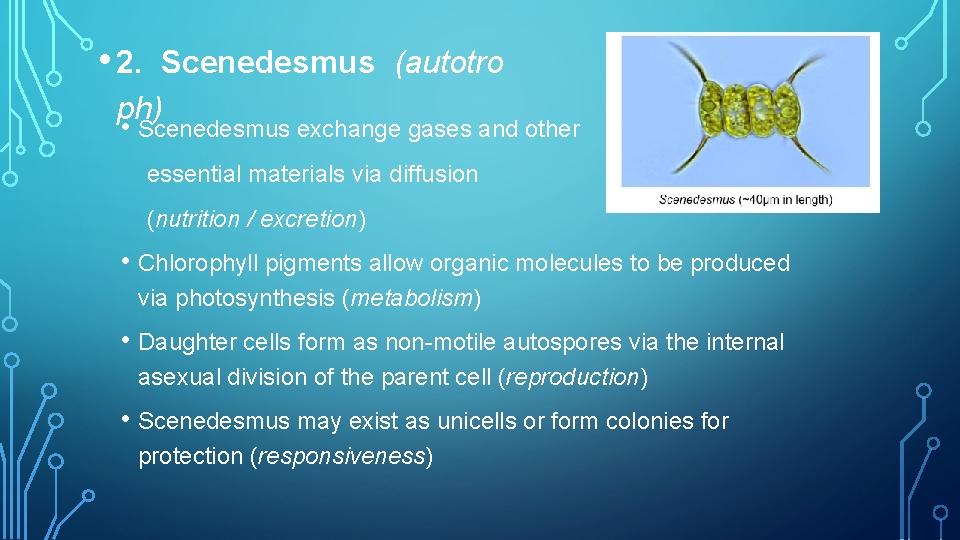
• 2. Scenedesmus (autotro ph) • Scenedesmus exchange gases and other essential materials via diffusion (nutrition / excretion) • Chlorophyll pigments allow organic molecules to be produced via photosynthesis (metabolism) • Daughter cells form as non-motile autospores via the internal asexual division of the parent cell (reproduction) • Scenedesmus may exist as unicells or form colonies for protection (responsiveness)
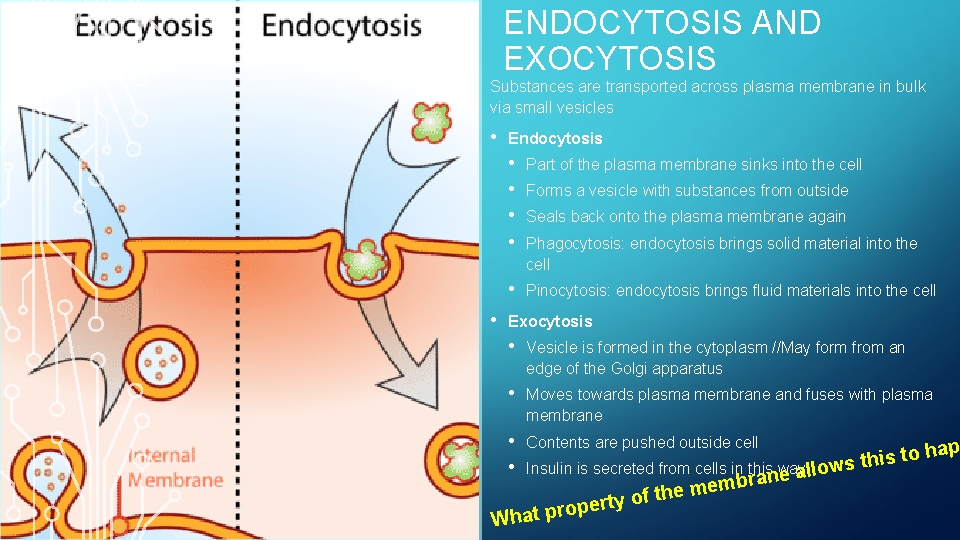
ENDOCYTOSIS AND EXOCYTOSIS Substances are transported across plasma membrane in bulk via small vesicles • • Endocytosis • • Part of the plasma membrane sinks into the cell • Pinocytosis: endocytosis brings fluid materials into the cell Forms a vesicle with substances from outside Seals back onto the plasma membrane again Phagocytosis: endocytosis brings solid material into the cell Exocytosis • Vesicle is formed in the cytoplasm //May form from an edge of the Golgi apparatus • Moves towards plasma membrane and fuses with plasma membrane • • Contents are pushed outside cell ap to h s i h t s Insulin is secreted from cells in this way llow a e n a r emb m e h t f rty o e p o r p What
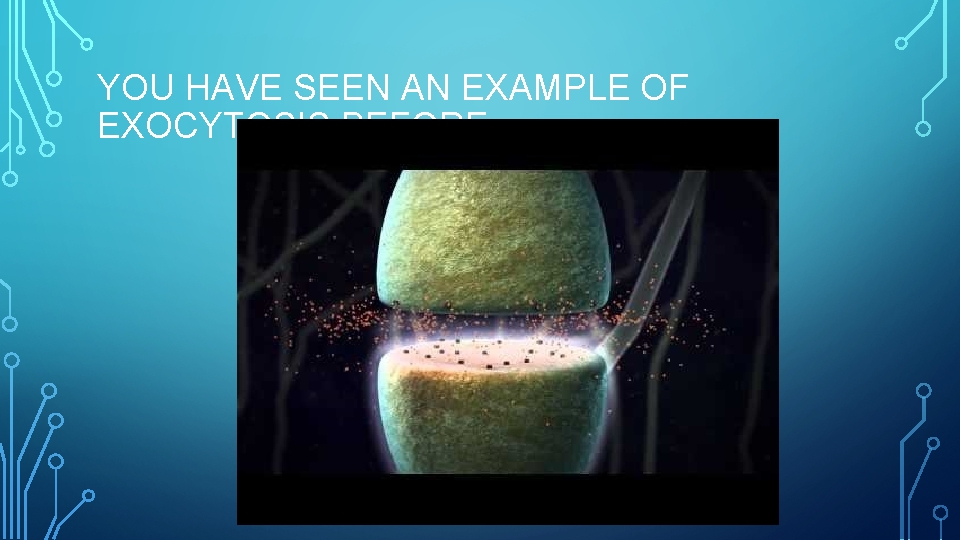
YOU HAVE SEEN AN EXAMPLE OF EXOCYTOSIS BEFORE:
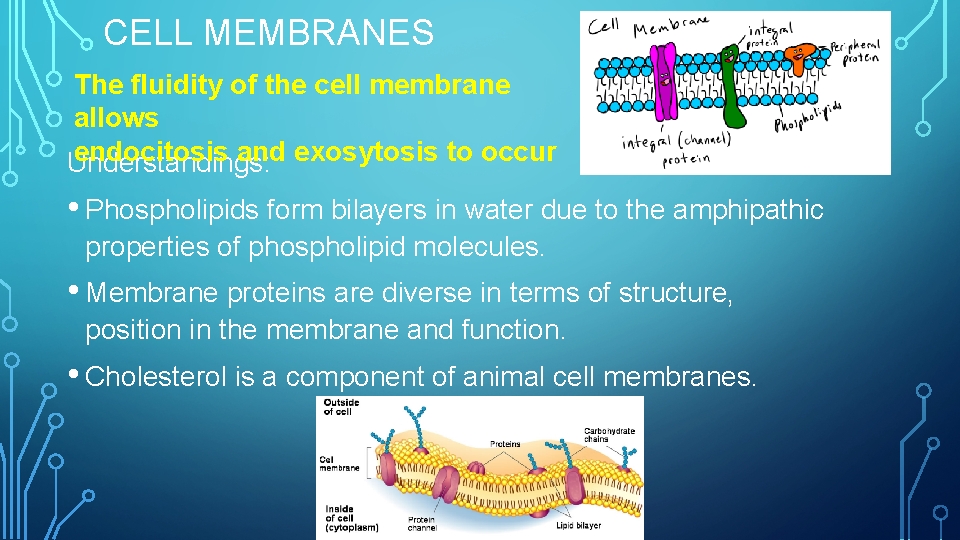
CELL MEMBRANES The fluidity of the cell membrane allows endocitosis and exosytosis to occur Understandings: • Phospholipids form bilayers in water due to the amphipathic properties of phospholipid molecules. • Membrane proteins are diverse in terms of structure, position in the membrane and function. • Cholesterol is a component of animal cell membranes.
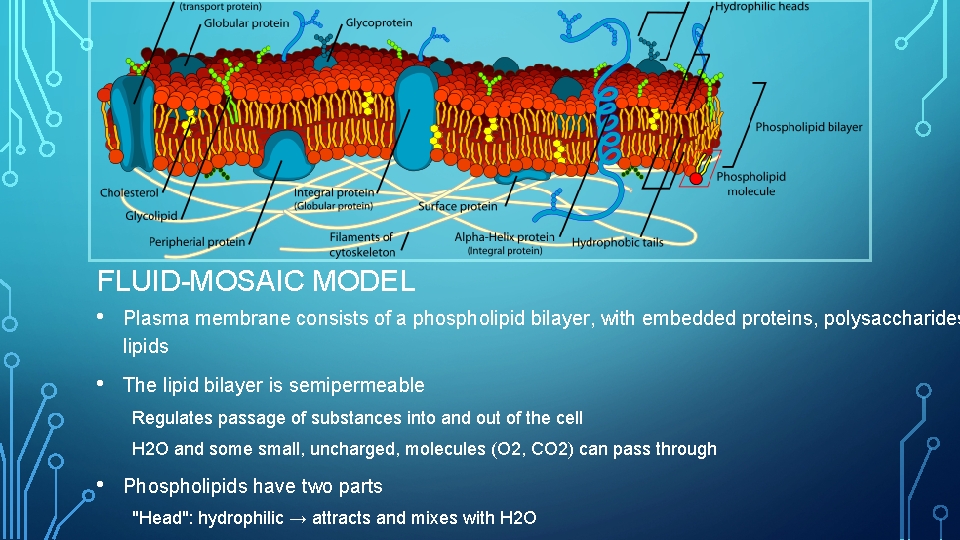
FLUID-MOSAIC MODEL • Plasma membrane consists of a phospholipid bilayer, with embedded proteins, polysaccharides lipids • The lipid bilayer is semipermeable Regulates passage of substances into and out of the cell H 2 O and some small, uncharged, molecules (O 2, CO 2) can pass through • Phospholipids have two parts "Head": hydrophilic → attracts and mixes with H 2 O

DRAWING THE PHOSPHOLIPID BILAYER Sharp pencil, use a ruler to label the diagram Draw and label the: • Outside and inside • Hydrophilic heads • Hydrophobic tails • Cholesterol • Integral protein • Peripheral protein • Glycoprotein • Carbohydrate chain • Bracket and label the phospholipid
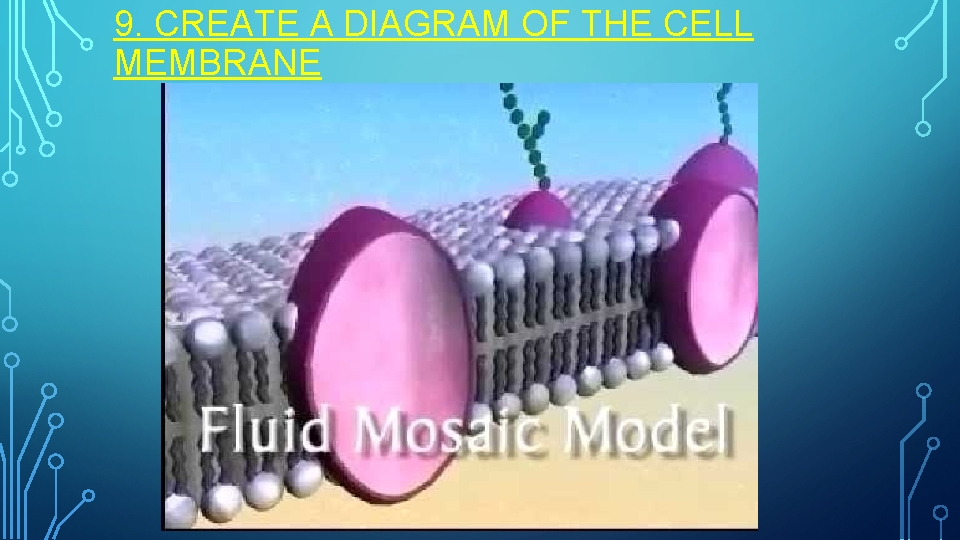
9. CREATE A DIAGRAM OF THE CELL MEMBRANE
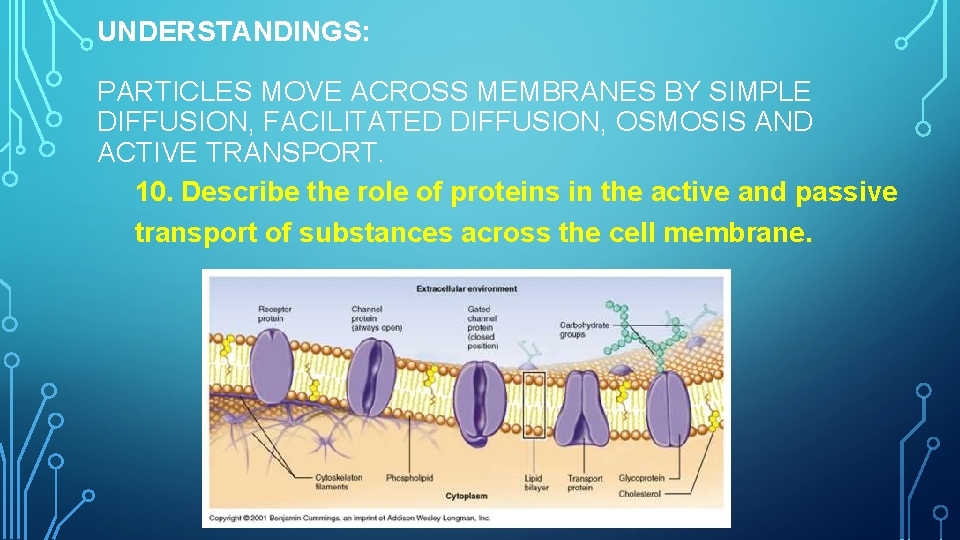
UNDERSTANDINGS: PARTICLES MOVE ACROSS MEMBRANES BY SIMPLE DIFFUSION, FACILITATED DIFFUSION, OSMOSIS AND ACTIVE TRANSPORT. 10. Describe the role of proteins in the active and passive transport of substances across the cell membrane.
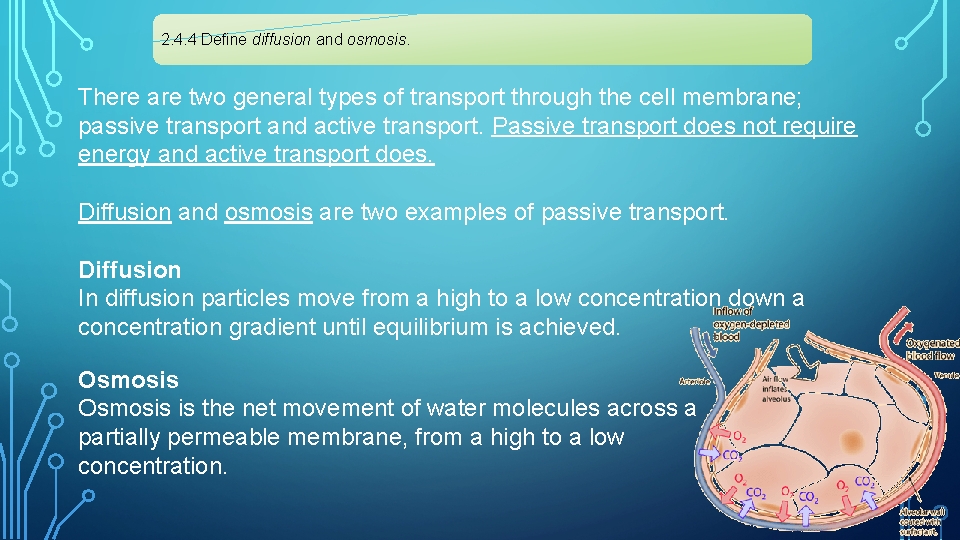
2. 4. 4 Define diffusion and osmosis. There are two general types of transport through the cell membrane; passive transport and active transport. Passive transport does not require energy and active transport does. Diffusion and osmosis are two examples of passive transport. Diffusion In diffusion particles move from a high to a low concentration down a concentration gradient until equilibrium is achieved. Osmosis is the net movement of water molecules across a partially permeable membrane, from a high to a low concentration. 36
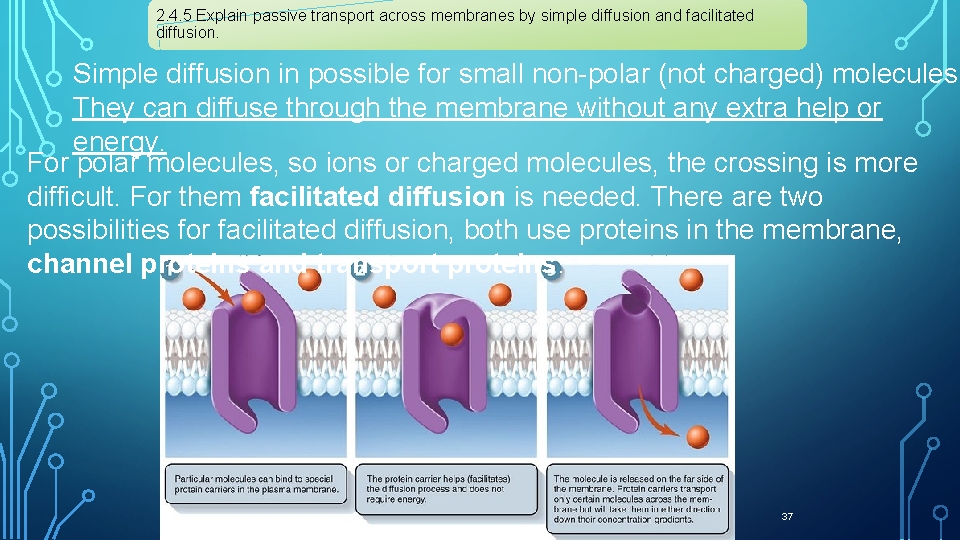
2. 4. 5 Explain passive transport across membranes by simple diffusion and facilitated diffusion. Simple diffusion in possible for small non-polar (not charged) molecules. They can diffuse through the membrane without any extra help or energy. For polar molecules, so ions or charged molecules, the crossing is more difficult. For them facilitated diffusion is needed. There are two possibilities for facilitated diffusion, both use proteins in the membrane, channel proteins and transport proteins. 37
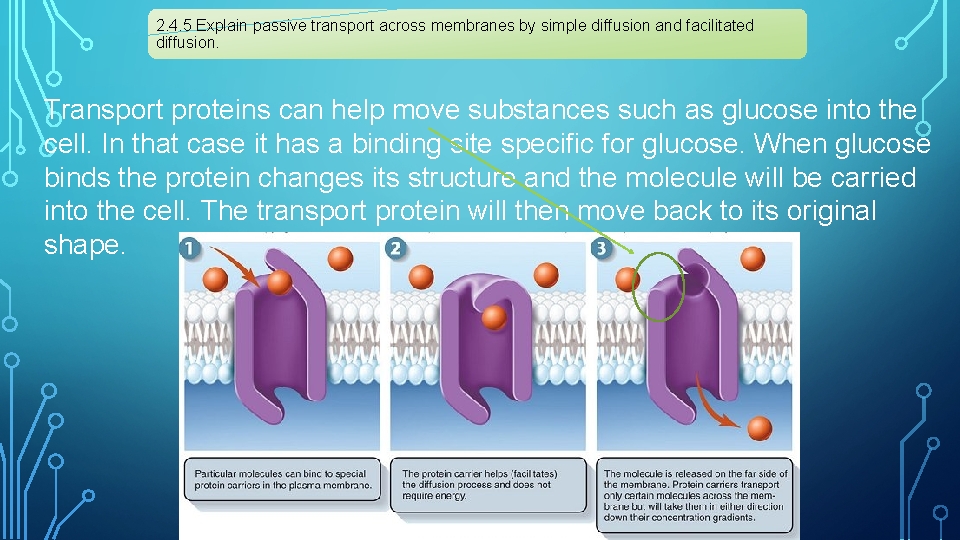
2. 4. 5 Explain passive transport across membranes by simple diffusion and facilitated diffusion. Transport proteins can help move substances such as glucose into the cell. In that case it has a binding site specific for glucose. When glucose binds the protein changes its structure and the molecule will be carried into the cell. The transport protein will then move back to its original shape. 38
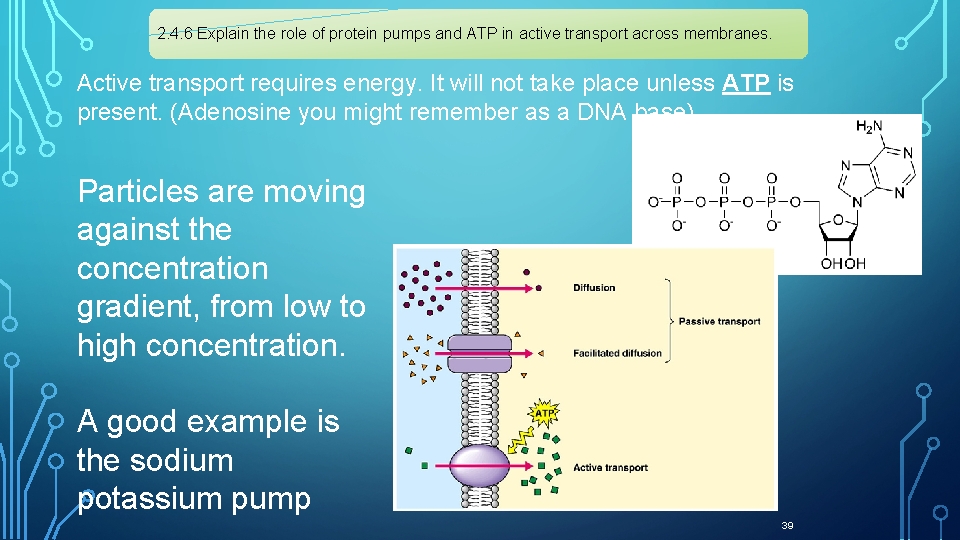
2. 4. 6 Explain the role of protein pumps and ATP in active transport across membranes. Active transport requires energy. It will not take place unless ATP is present. (Adenosine you might remember as a DNA base). Particles are moving against the concentration gradient, from low to high concentration. A good example is the sodium potassium pump 39
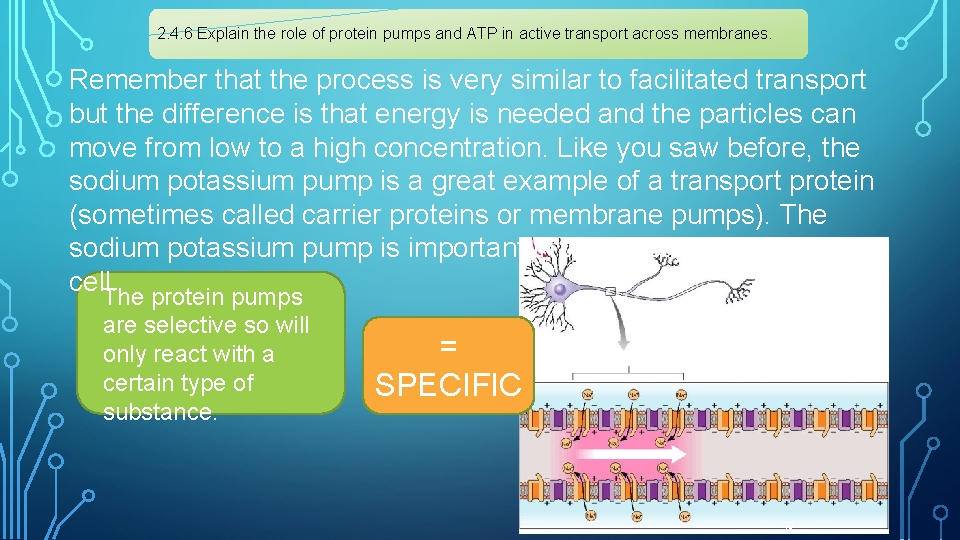
2. 4. 6 Explain the role of protein pumps and ATP in active transport across membranes. Remember that the process is very similar to facilitated transport but the difference is that energy is needed and the particles can move from low to a high concentration. Like you saw before, the sodium potassium pump is a great example of a transport protein (sometimes called carrier proteins or membrane pumps). The sodium potassium pump is important in the functioning of a nerve cell. The protein pumps are selective so will only react with a certain type of substance. = SPECIFIC 40
Membranes control the composition of cells by active and passive transport UNDERSTANDINGS: PARTICLES MOVE ACROSS MEMBRANES BY SIMPLE DIFFUSION, FACILITATED DIFFUSION, OSMOSIS AND ACTIVE TRANSPORT. 11. FIND A GOOD VIDEO THAT EXPLAINS HOW SODIUM POTASSIUM PUMPS WORK AND POST A LINK ON TODAYSMEET. COM Application: Structure and function of sodium–potassium pumps for active transport and potassium channels for facilitated diffusion in axons.
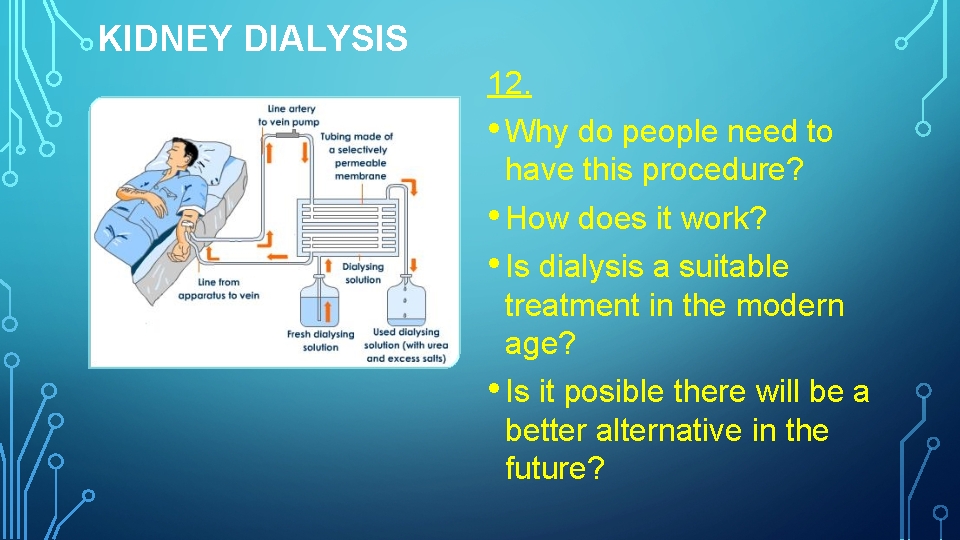
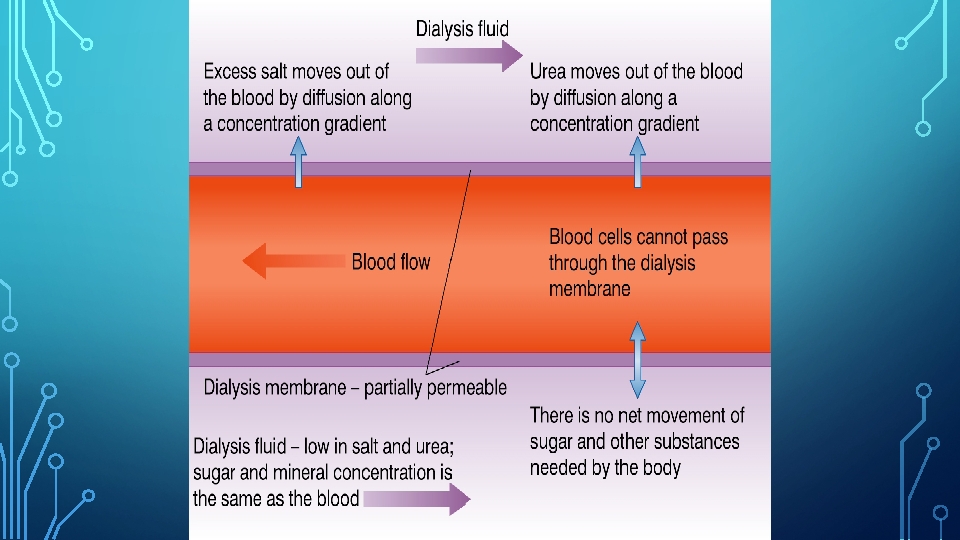
KIDNEY DIALYSIS 12. • Why do people need to have this procedure? • How does it work? • Is dialysis a suitable treatment in the modern age? • Is it posible there will be a better alternative in the future?
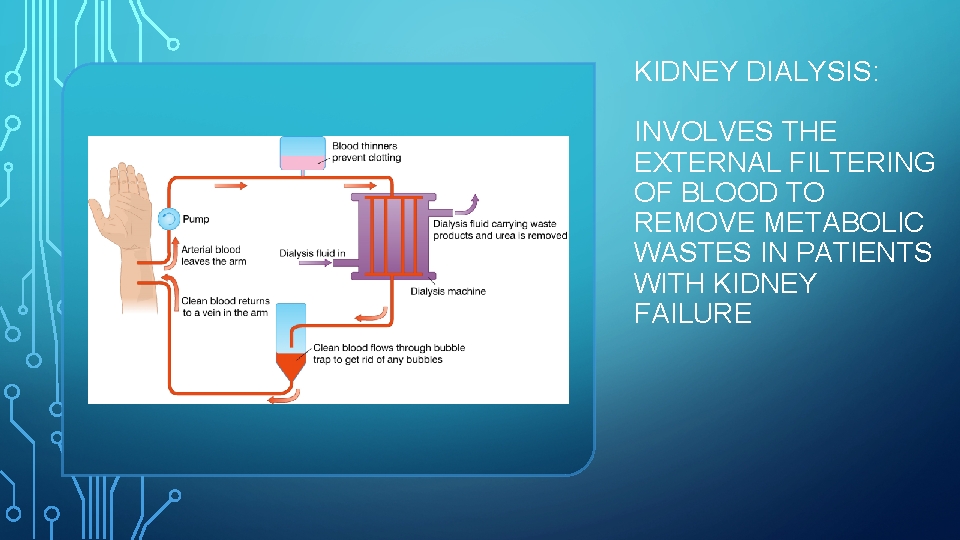
KIDNEY DIALYSIS: INVOLVES THE EXTERNAL FILTERING OF BLOOD TO REMOVE METABOLIC WASTES IN PATIENTS WITH KIDNEY FAILURE
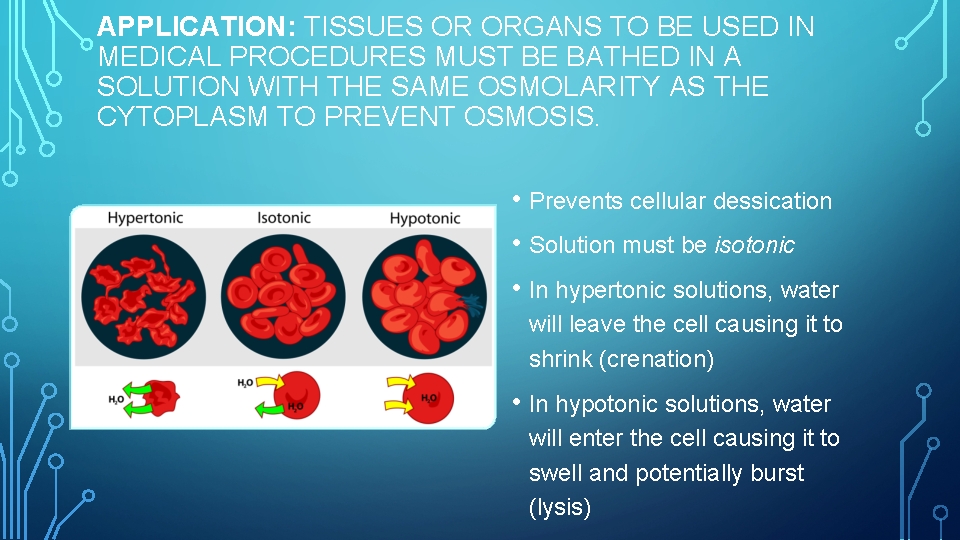
APPLICATION: TISSUES OR ORGANS TO BE USED IN MEDICAL PROCEDURES MUST BE BATHED IN A SOLUTION WITH THE SAME OSMOLARITY AS THE CYTOPLASM TO PREVENT OSMOSIS. • Prevents cellular dessication • Solution must be isotonic • In hypertonic solutions, water will leave the cell causing it to shrink (crenation) • In hypotonic solutions, water will enter the cell causing it to swell and potentially burst (lysis)
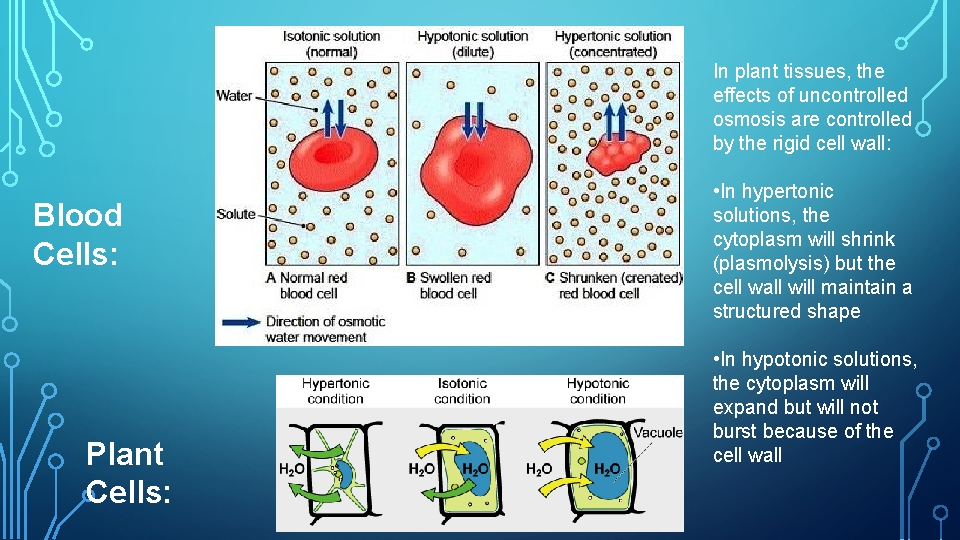
In plant tissues, the effects of uncontrolled osmosis are controlled by the rigid cell wall: Blood Cells: Plant Cells: • In hypertonic solutions, the cytoplasm will shrink (plasmolysis) but the cell wall will maintain a structured shape • In hypotonic solutions, the cytoplasm will expand but will not burst because of the cell wall
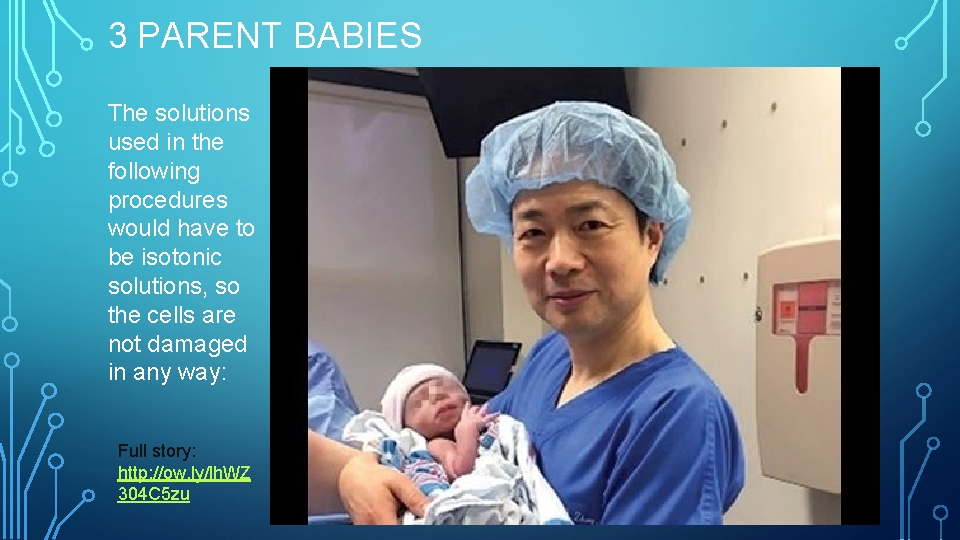
3 PARENT BABIES The solutions used in the following procedures would have to be isotonic solutions, so the cells are not damaged in any way: Full story: http: //ow. ly/lh. WZ 304 C 5 zu
UNDERSTANDINGS: THE ORIGIN OF EUKARYOTIC CELLS CAN BE EXPLAINED BY THE ENDOSYMBIOTIC THEORY. (1. 5) 13. RESEARCH THE ABOVE THEORY SO YOU CAN GIVE A BRIEF DESCRIPTION OF ITS MAIN POINTS
UNDERSTANDINGS: THE ORIGIN OF EUKARYOTIC CELLS CAN BE EXPLAINED BY THE ENDOSYMBIOTIC THEORY. (1. 5) An endosymbiont is a cell which ……………. Eukaryotic cells are believed to have evolved from early prokaryotes that…………. . Through the process of …………. This contributed new functionality (for example …………. . ) to original cell so……………… Over subsequent generations …………. .
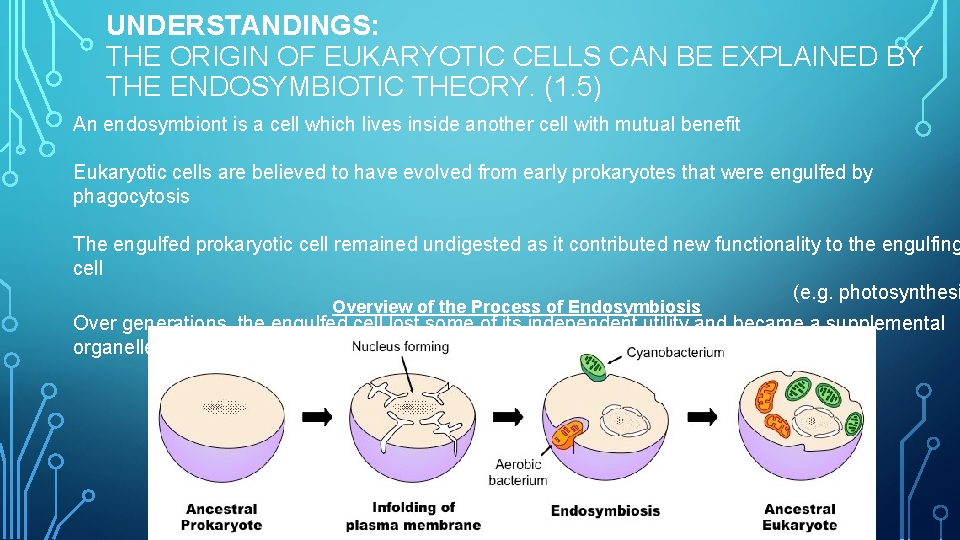
UNDERSTANDINGS: THE ORIGIN OF EUKARYOTIC CELLS CAN BE EXPLAINED BY THE ENDOSYMBIOTIC THEORY. (1. 5) An endosymbiont is a cell which lives inside another cell with mutual benefit Eukaryotic cells are believed to have evolved from early prokaryotes that were engulfed by phagocytosis The engulfed prokaryotic cell remained undigested as it contributed new functionality to the engulfing cell (e. g. photosynthesi Overview of the Process of Endosymbiosis Over generations, the engulfed cell lost some of its independent utility and became a supplemental organelle
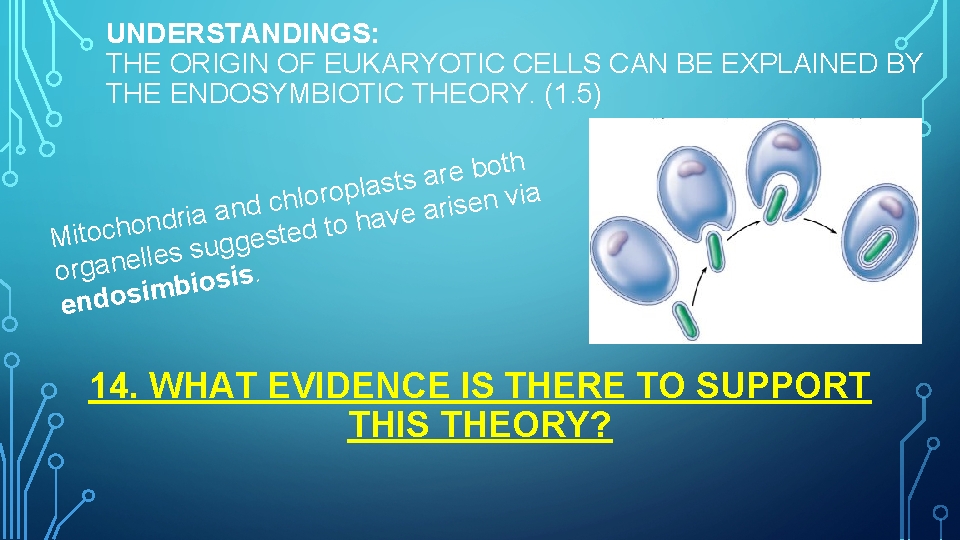
UNDERSTANDINGS: THE ORIGIN OF EUKARYOTIC CELLS CAN BE EXPLAINED BY THE ENDOSYMBIOTIC THEORY. (1. 5) h t o b e r a s t s a l p a ro i o v l h n c e s d ri n a a e a i v r a d h n o o t h c d o e t t i s M e g g u s s lle e n a g r o s. i s o i b m i s o d en 14. WHAT EVIDENCE IS THERE TO SUPPORT THIS THEORY?
Evidence for Endosymbiosis Mitochondria and chloroplasts are both organelles suggested to have arisen via endosimbiosis. Evidence that supports the extracellular origins of these organelles can be seen by looking at certain key features: • Membranes (double membrane bound) • Antibiotics (susceptibility) • Division (mode of replication) • DNA (presence and structural composition) • Ribosomes (size) Mnmemonic: MAD DR (mad doctor)
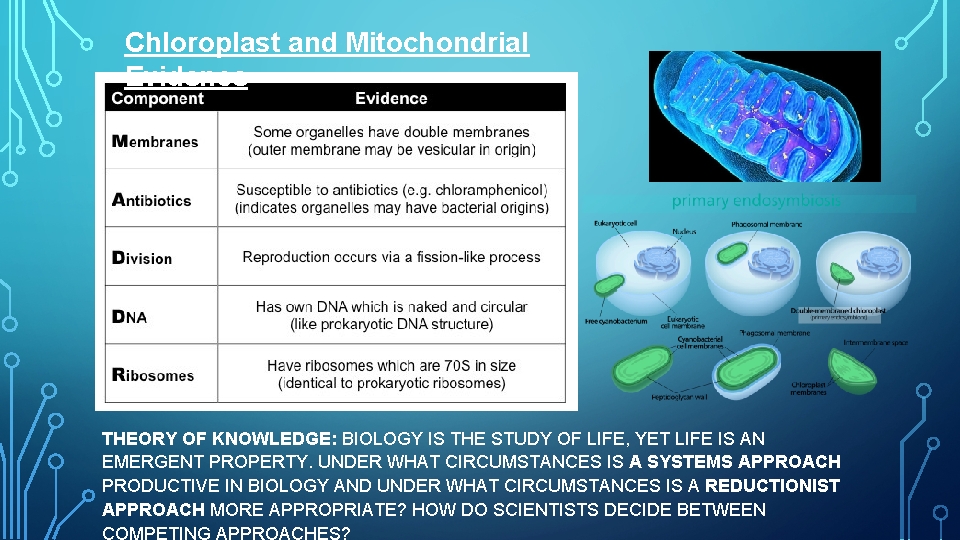
Chloroplast and Mitochondrial Evidence THEORY OF KNOWLEDGE: BIOLOGY IS THE STUDY OF LIFE, YET LIFE IS AN EMERGENT PROPERTY. UNDER WHAT CIRCUMSTANCES IS A SYSTEMS APPROACH PRODUCTIVE IN BIOLOGY AND UNDER WHAT CIRCUMSTANCES IS A REDUCTIONIST APPROACH MORE APPROPRIATE? HOW DO SCIENTISTS DECIDE BETWEEN COMPETING APPROACHES?
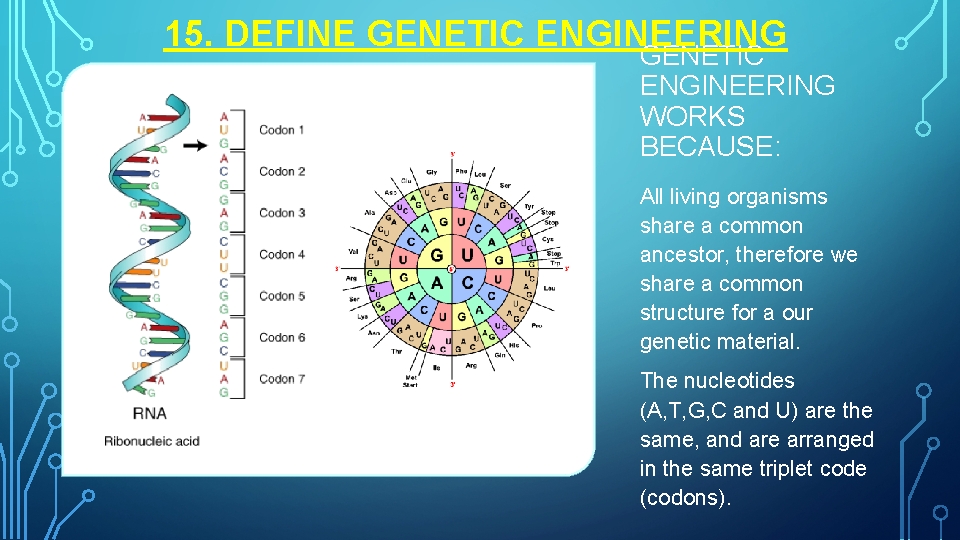
15. DEFINE GENETIC ENGINEERING WORKS BECAUSE: All living organisms share a common ancestor, therefore we share a common structure for a our genetic material. The nucleotides (A, T, G, C and U) are the same, and are arranged in the same triplet code (codons).
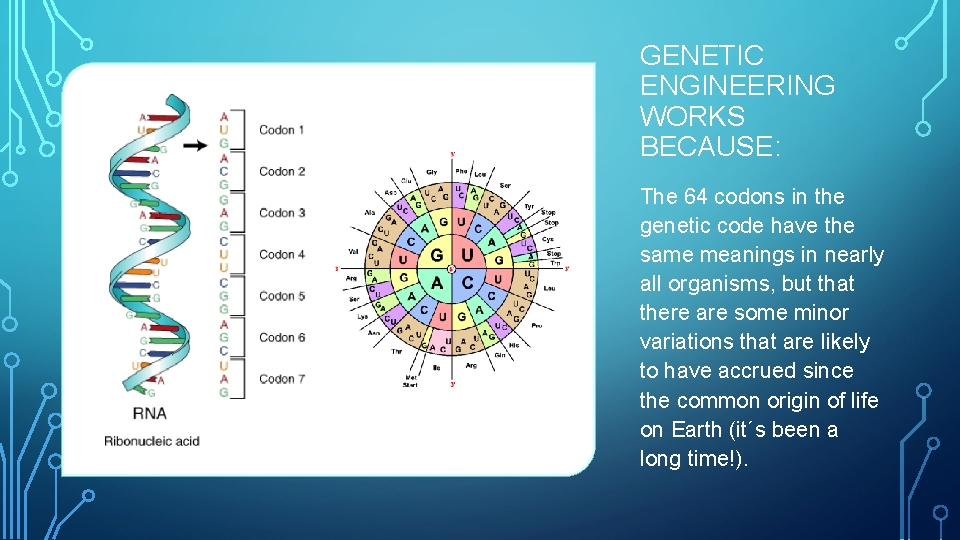
GENETIC ENGINEERING WORKS BECAUSE: The 64 codons in the genetic code have the same meanings in nearly all organisms, but that there are some minor variations that are likely to have accrued since the common origin of life on Earth (it´s been a long time!).
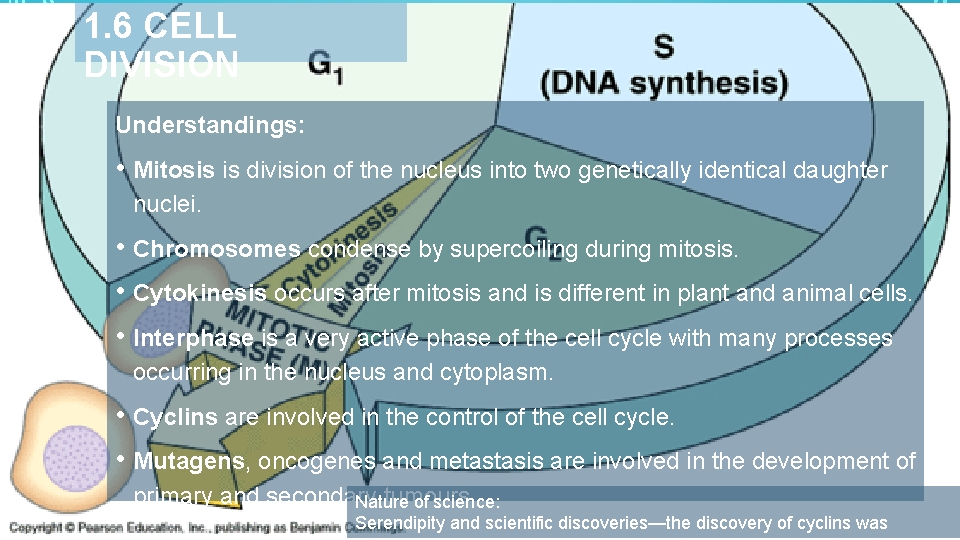
1. 6 CELL DIVISION Understandings: • Mitosis is division of the nucleus into two genetically identical daughter nuclei. • Chromosomes condense by supercoiling during mitosis. • Cytokinesis occurs after mitosis and is different in plant and animal cells. • Interphase is a very active phase of the cell cycle with many processes occurring in the nucleus and cytoplasm. • Cyclins are involved in the control of the cell cycle. • Mutagens, oncogenes and metastasis are involved in the development of primary and secondary tumours Nature of science: Serendipity and scientific discoveries—the discovery of cyclins was
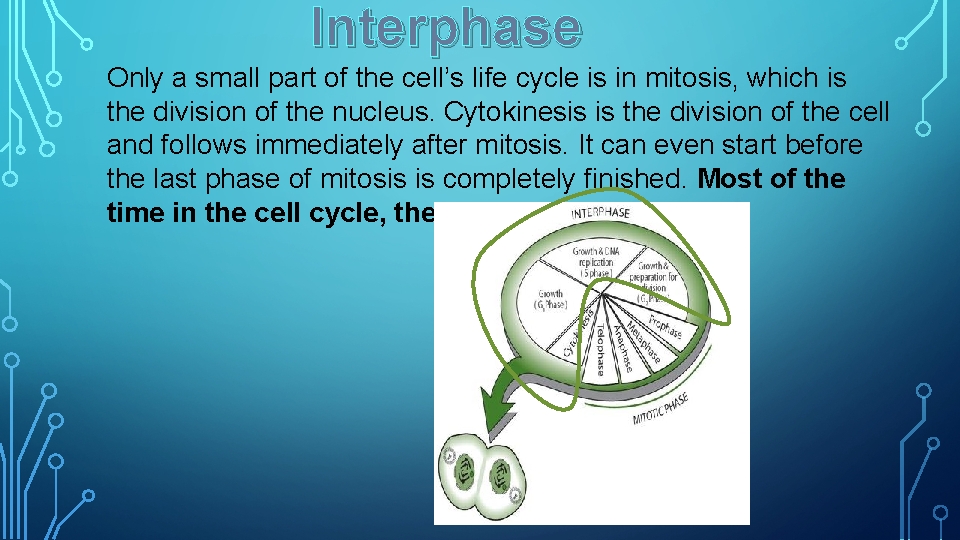
Interphase Only a small part of the cell’s life cycle is in mitosis, which is the division of the nucleus. Cytokinesis is the division of the cell and follows immediately after mitosis. It can even start before the last phase of mitosis is completely finished. Most of the time in the cell cycle, the cell is in interphase.
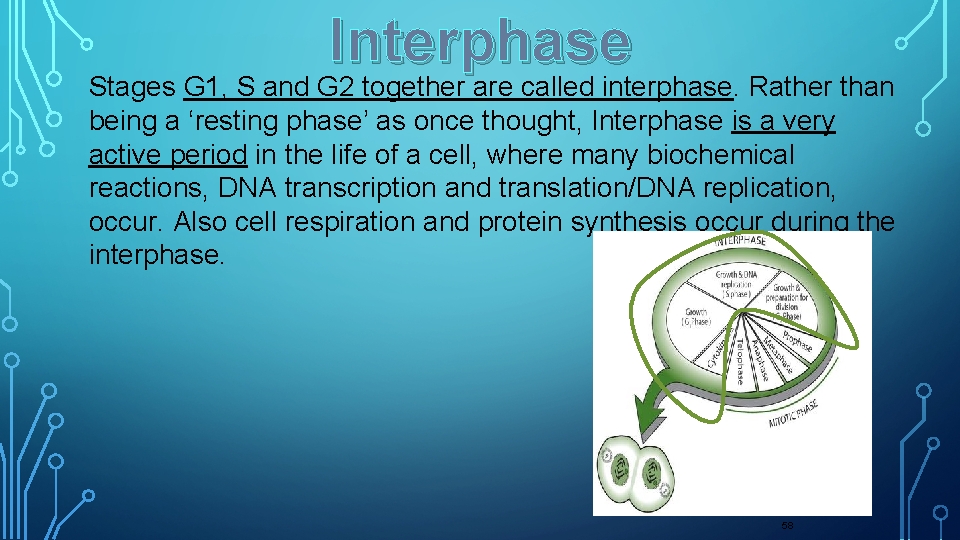
Interphase Stages G 1, S and G 2 together are called interphase. Rather than being a ‘resting phase’ as once thought, Interphase is a very active period in the life of a cell, where many biochemical reactions, DNA transcription and translation/DNA replication, occur. Also cell respiration and protein synthesis occur during the interphase. 58
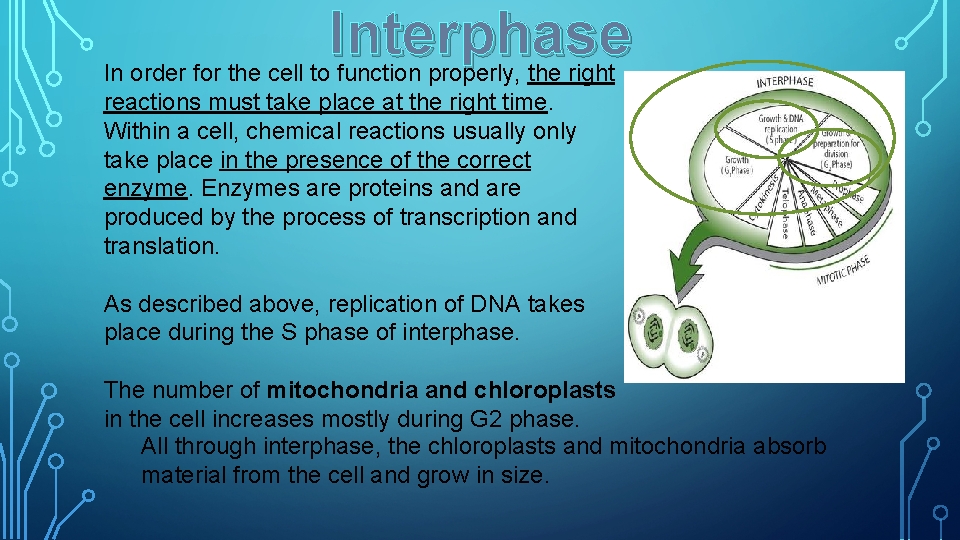
Interphase In order for the cell to function properly, the right reactions must take place at the right time. Within a cell, chemical reactions usually only take place in the presence of the correct enzyme. Enzymes are proteins and are produced by the process of transcription and translation. As described above, replication of DNA takes place during the S phase of interphase. The number of mitochondria and chloroplasts in the cell increases mostly during G 2 phase. All through interphase, the chloroplasts and mitochondria absorb material from the cell and grow in size.
Supercoiling of the chromatin Chromosomes condense by supercoiling during the mitosis During mitosis the two chromatids which make up a chromosome must be separated to opposite poles of the cell. The nucleus is about 5µm long, but molecules of DNA can be 50 000µm long, so you can imagine that then must condense a lot to be able to fit in! This process in known as the condensation of chromosomes and happens in the fist stage of mitosis. Condensation happens by supercoiling the DNA into short, wide chromosomes. The proteins called histones which are associated with the eukaryotic chromosomes help with this process, just as several enzymes. 60
Summary Prophase • Chromosomes become visible (supercoiling). • Centrioles move to opposite poles. • Spindle formation. • Nucleolus becomes invisible. • Nuclear membrane disappears. • At this stage, each chromosome consists of two identical sister chromatids, held together by a centromere Anaphase • Centromeres separate. • Chromatids separate and move to opposite poles - they are now called chromosomes. The division of the cell is sometimes included as the last stage of telophase; strictly speaking, however, cytokinesis is not a part of mitosis. Metaphase • Chromosomes move to the equator. • Spindle microtubules attach to the centromeres. Telophase • Chromosomes have arrived at poles. • Spindle disappears. • Centrioles replicate (in animal cells). • Nuclear membrane reappears. • Nucleolus becomes visible. • Chromosomes become chromatin. 61
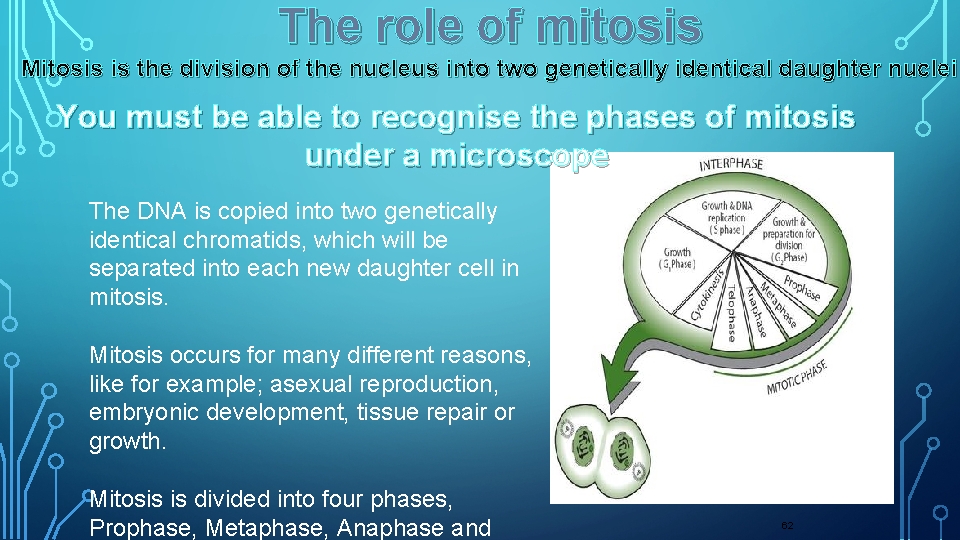
The role of mitosis Mitosis is the division of the nucleus into two genetically identical daughter nuclei You must be able to recognise the phases of mitosis under a microscope The DNA is copied into two genetically identical chromatids, which will be separated into each new daughter cell in mitosis. Mitosis occurs for many different reasons, like for example; asexual reproduction, embryonic development, tissue repair or growth. Mitosis is divided into four phases, Prophase, Metaphase, Anaphase and 62
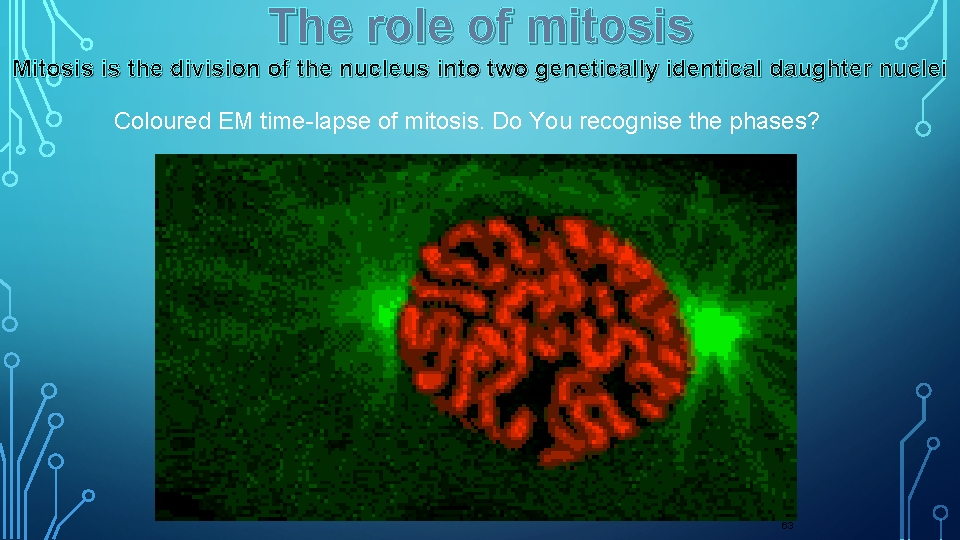
The role of mitosis Mitosis is the division of the nucleus into two genetically identical daughter nuclei Coloured EM time-lapse of mitosis. Do You recognise the phases? 63
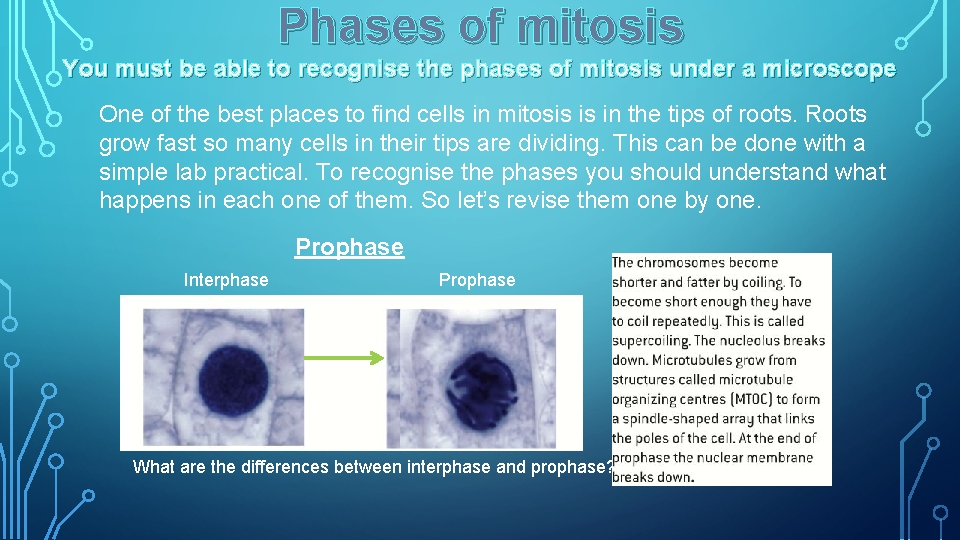
Phases of mitosis You must be able to recognise the phases of mitosis under a microscope One of the best places to find cells in mitosis is in the tips of roots. Roots grow fast so many cells in their tips are dividing. This can be done with a simple lab practical. To recognise the phases you should understand what happens in each one of them. So let’s revise them one by one. Prophase Interphase Prophase What are the differences between interphase and prophase?
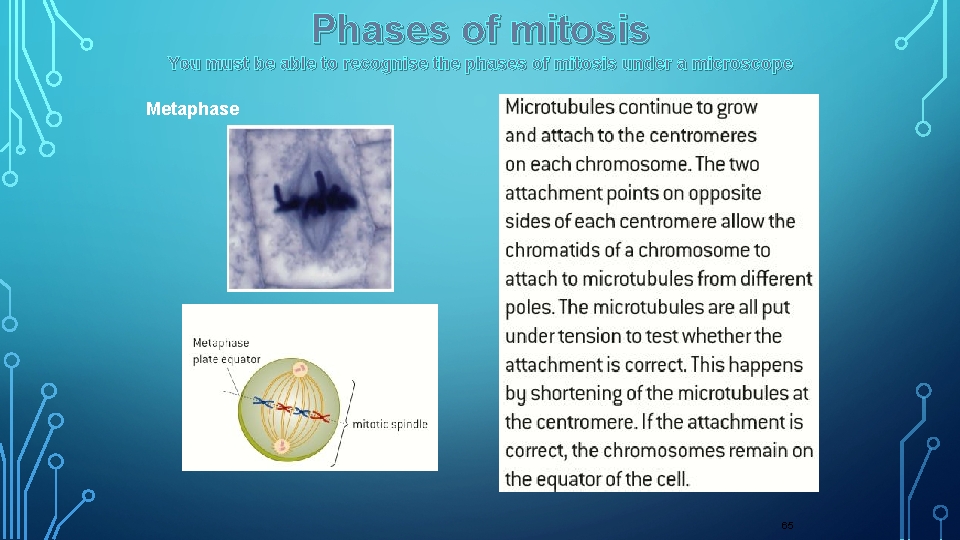
Phases of mitosis You must be able to recognise the phases of mitosis under a microscope Metaphase 65
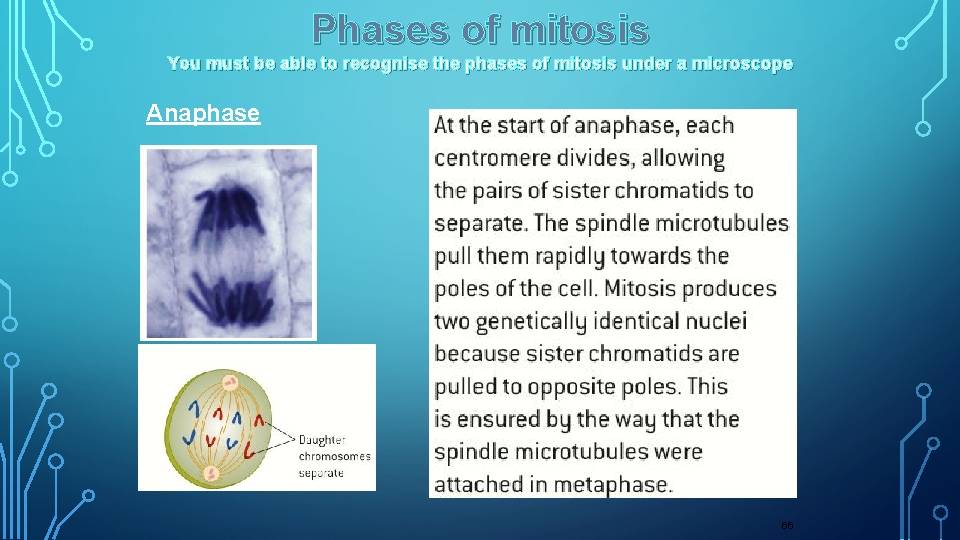
Phases of mitosis You must be able to recognise the phases of mitosis under a microscope Anaphase 66
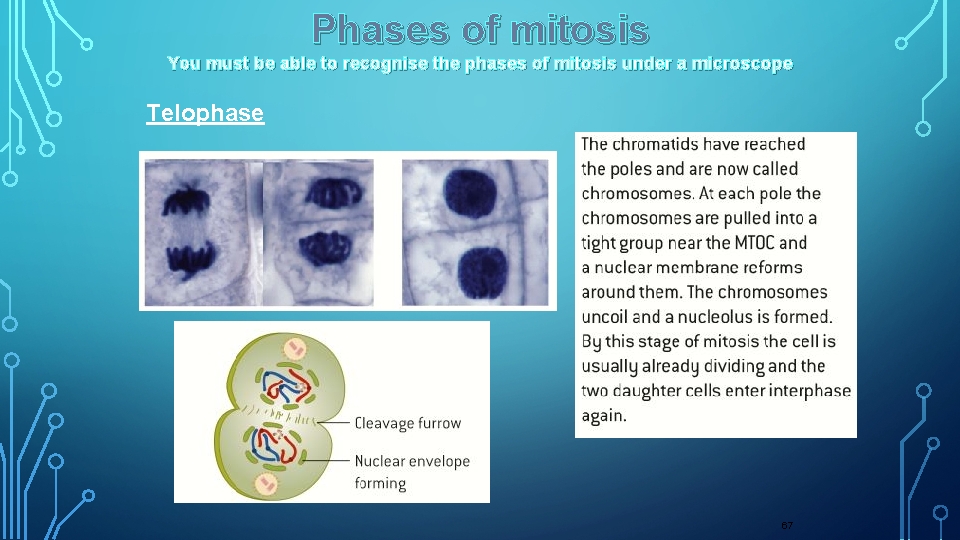
Phases of mitosis You must be able to recognise the phases of mitosis under a microscope Telophase 67
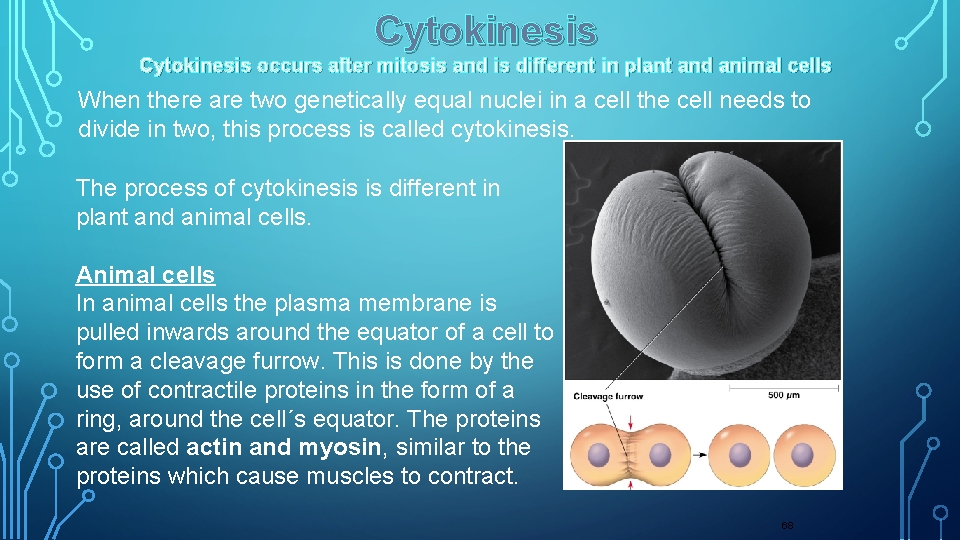
Cytokinesis occurs after mitosis and is different in plant and animal cells When there are two genetically equal nuclei in a cell the cell needs to divide in two, this process is called cytokinesis. The process of cytokinesis is different in plant and animal cells. LINK Animal cells In animal cells the plasma membrane is pulled inwards around the equator of a cell to form a cleavage furrow. This is done by the use of contractile proteins in the form of a ring, around the cell´s equator. The proteins are called actin and myosin, similar to the proteins which cause muscles to contract. 68
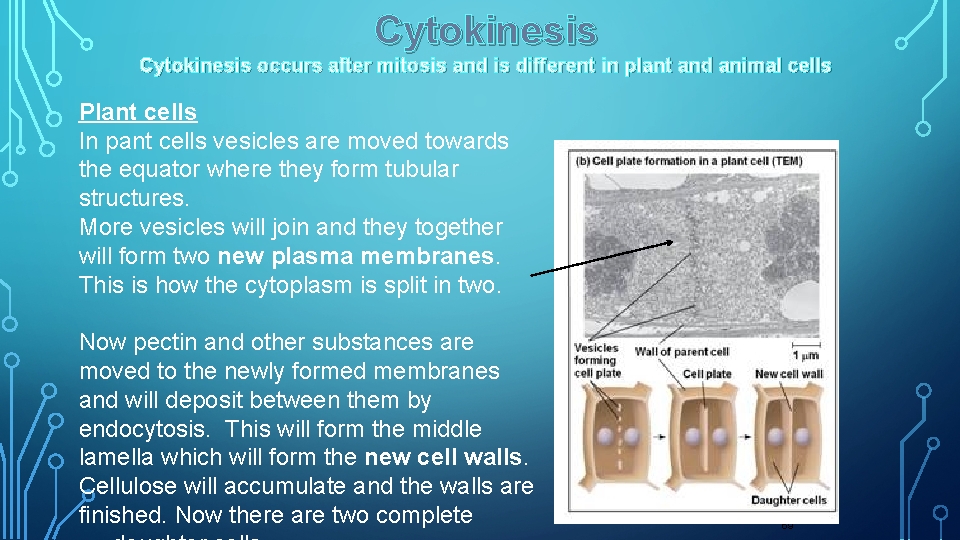
Cytokinesis occurs after mitosis and is different in plant and animal cells Plant cells In pant cells vesicles are moved towards the equator where they form tubular structures. More vesicles will join and they together will form two new plasma membranes. This is how the cytoplasm is split in two. Now pectin and other substances are moved to the newly formed membranes and will deposit between them by endocytosis. This will form the middle lamella which will form the new cell walls. Cellulose will accumulate and the walls are finished. Now there are two complete 69
Cyclins and the control of the cell cycle 70
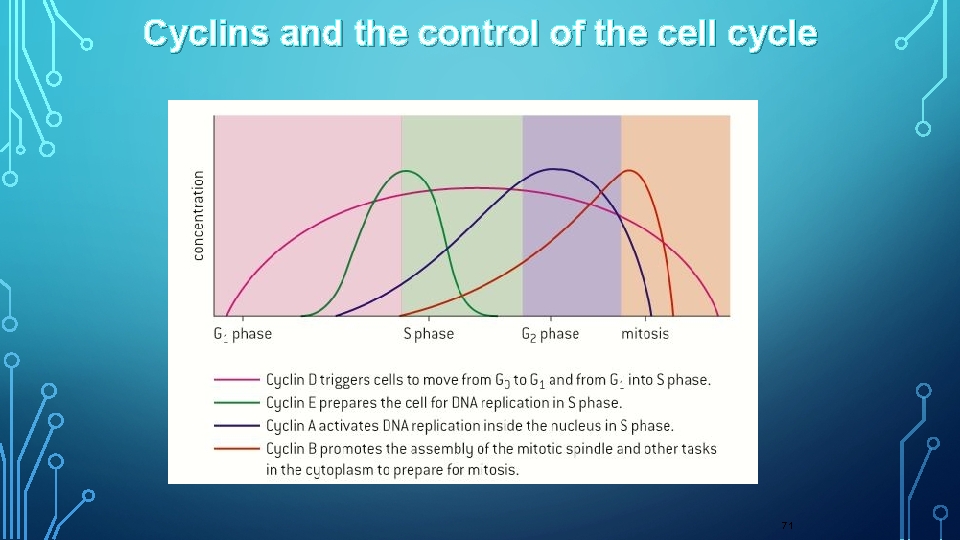
Cyclins and the control of the cell cycle 71
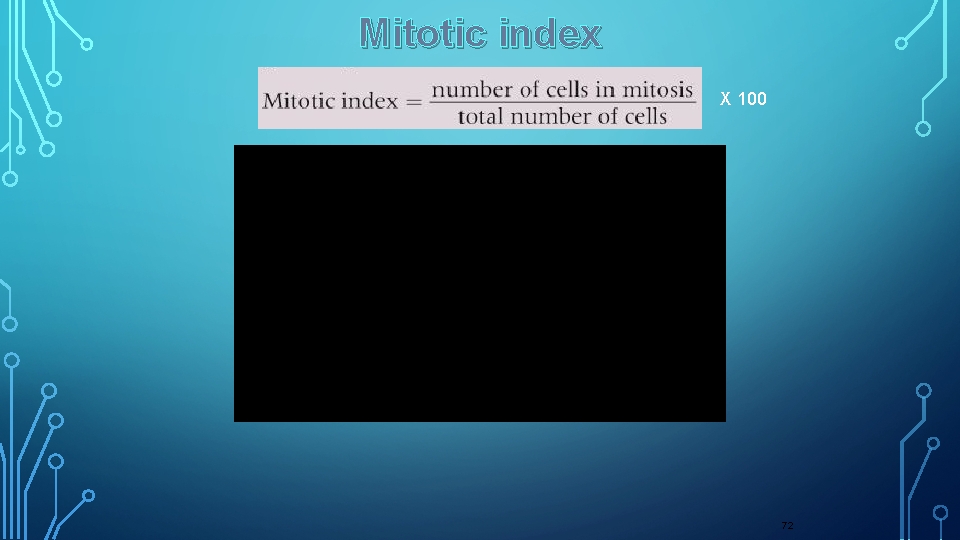
Mitotic index X 100 72
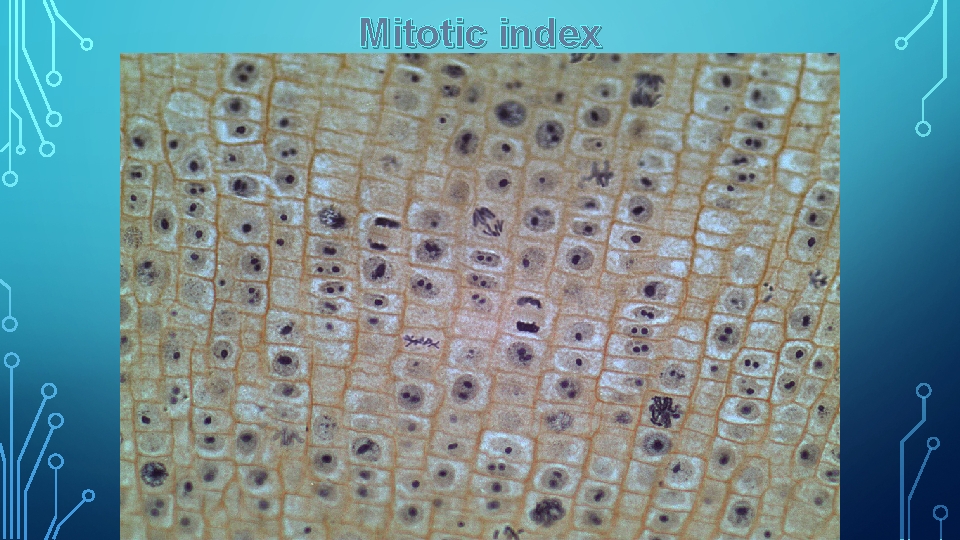
Mitotic index 73

Applications and skills Application: The correlation between smoking and incidence of cancers. Skill: Identification of phases of mitosis in cells viewed with a microscope or in a micrograph. Skill: Determination of a mitotic index from a micrograph. To. K Serendipity and scientific discoveries —the discovery of cyclins was accidental. (1. 4) A number of scientific discoveries are claimed to be incidental or serendipitous. To what extent might some of these scientific discoveries be the result of intuition rather than luck?

Diabetes and obesity are ‘risk factors’ of each other. There is a strong correlation between them, but does this mean one causes the other? correlation vs causation 75

Correlation does not imply causality. 76 Pirates vs global warming, from

Smoking and lung cancer The correlation between smoking and lung cancer A correlation in science is a relationship between two variables. The relation between cancer and smoking is a clear example of a correlation. When there is a positive relation, then one variable positively influences the other, if the correlation is negative, one variable negatively influences the other. Please include this analysis in your lab reports! 77

Smoking and lung cancer The correlation between smoking and lung cancer 78

Smoking and lung cancer The correlation between smoking and lung cancer There is a clear correlation between smoking and cancers: 79

The main categories of cancer Cancers can be grouped according to the type of cell they start in. There are 5 main categories: 1. Carcinoma – cancer that begins in the skin or in tissues that line or cover internal organs. 2. Sarcoma – cancer that begins in the connective or supportive tissues such as bone, cartilage, fat, muscle, or blood vessels 3. Leukaemia – cancer that starts in blood forming tissue such as the bone marrow and causes large numbers of abnormal blood cells to be produced and go into the blood 4. Lymphoma and myeloma – cancers that begin in the cells of the immune system 5. Brain and spinal cord cancers – these are known as central nervous system cancers Note: Cancers can also be classified according to where they start in the body, such as breast cancer or lung cancer. http: //www. cancerresearchuk. org/about-cancer/what-iscancer/how-cancer-starts/types-of-cancer

TISSUE RENEWAL AND RATES OF CANCER Tissue renewal determines the rate of cell division. In many tissues, renewal derives from stem cells. The mitotic rate of specialised cells from stem cells sets the relative risk of cancer. About 90% of human cancers arise in epithelial tissues. Epithelial layers in certain organs, such as the intestine and skin, renew continuously throughout life. The epithelium of the human colon turns over at least once per week throughout life. As cells die at the surface, they are replaced by new cell divisions. By age 60, a person has been through at least 3, 000 replacement cycles, which means that some cell lineages must pass through many generations. Those renewing lineages would be at high risk for accumulating mutations and progressing to cancer.


How have each of these cells become specialised to perform a specific function? Differentiation involves the expression of some genes, and not others, in a cell´s genome

ES CELLS • Embryonic stem (ES) cells are formed as a normal part of embryonic development. They can be isolated from an early embryo and grown in a dish. • Potential as therapy • ES cells have the potential to become any type of cell in the body, making them a promising source of cells for treating many diseases.

THE STEM CELL DEBAT E:

Consider the following: 1. Why are stem cells considered so valuable for medical research? 2. What are three sources of stem cells and the advantages and disadvantages associated with using each? 3. How might a stem cell be used to treat a disease such as Stargardt’s Disease? 4. What issues surround the debate over government funding of stem cell research? 5. What issue do you think needs to be debated as we make decisions about stem cell research?


STARGARDT´S DISEASE USE OF STEM CELLS • Embyonic SCs are made into • Recessive genetic disease retina cells • Affecrs children between 6 and 12 • Injected into eyes of mice yrs • Not rejected, no tumours • Degeneration of photoreceptive cells in the retina • Can result in blindness developed • Attached to retina • Eyesight improved
- Slides: 88