
TopDown Network Design Chapter Five Designing a Network
- Slides: 35
Top-Down Network Design Chapter Five Designing a Network Topology Copyright 2010 Cisco Press & Priscilla Oppenheimer
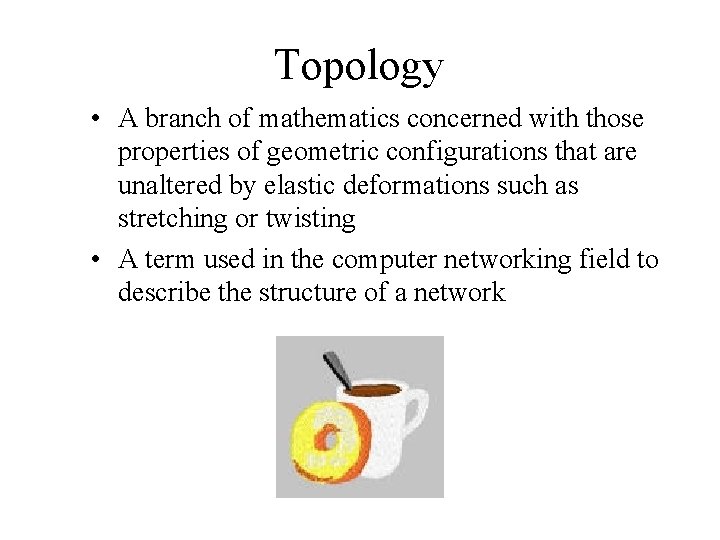
Topology • A branch of mathematics concerned with those properties of geometric configurations that are unaltered by elastic deformations such as stretching or twisting • A term used in the computer networking field to describe the structure of a network
Network Topology Design Themes • • • Hierarchy Redundancy Modularity Well-defined entries and exits Protected perimeters
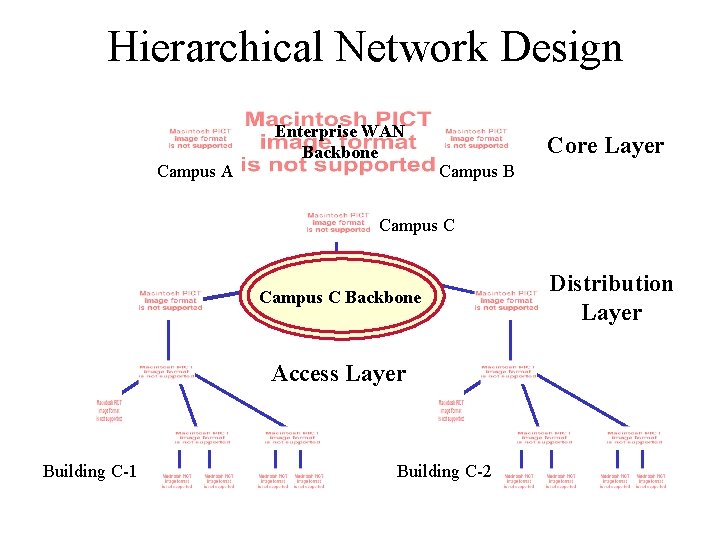
Why Use a Hierarchical Model? • Reduces workload on network devices – Avoids devices having to communicate with too many other devices (reduces “CPU adjacencies”) • • Constrains broadcast domains Enhances simplicity and understanding Facilitates changes Facilitates scaling to a larger size
Hierarchical Network Design Campus A Enterprise WAN Backbone Core Layer Campus B Campus C Backbone Access Layer Building C-1 Building C-2 Distribution Layer
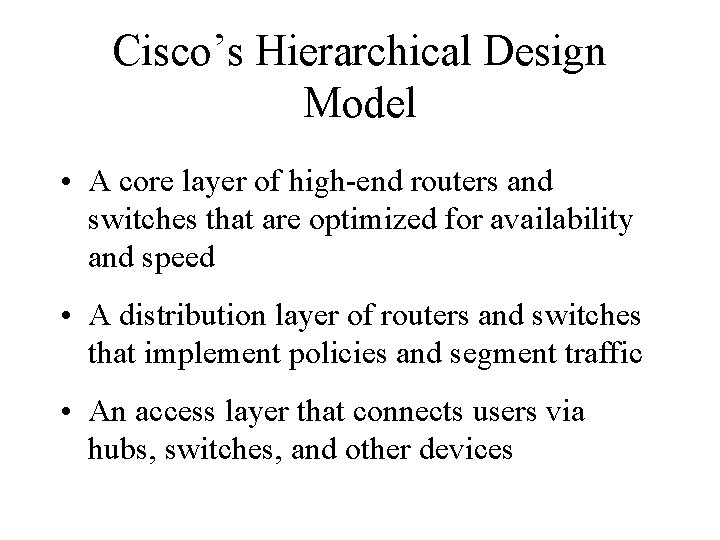
Cisco’s Hierarchical Design Model • A core layer of high-end routers and switches that are optimized for availability and speed • A distribution layer of routers and switches that implement policies and segment traffic • An access layer that connects users via hubs, switches, and other devices
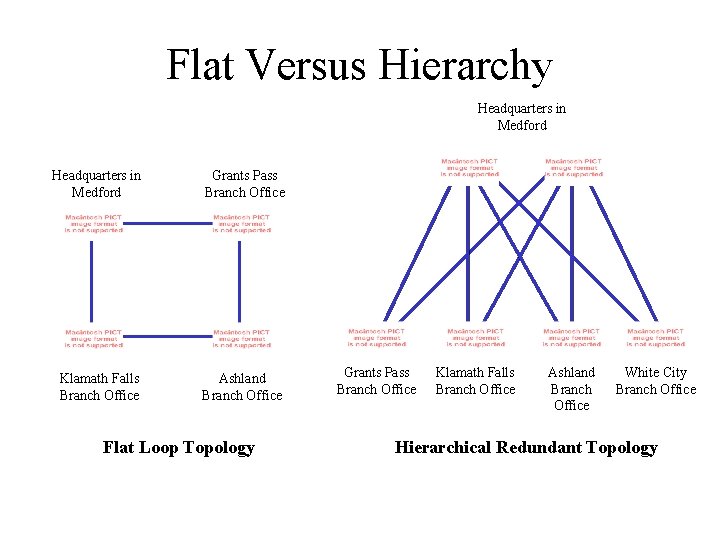
Flat Versus Hierarchy Headquarters in Medford Grants Pass Branch Office Klamath Falls Branch Office Ashland Branch Office Flat Loop Topology Grants Pass Branch Office Klamath Falls Branch Office Ashland Branch Office White City Branch Office Hierarchical Redundant Topology
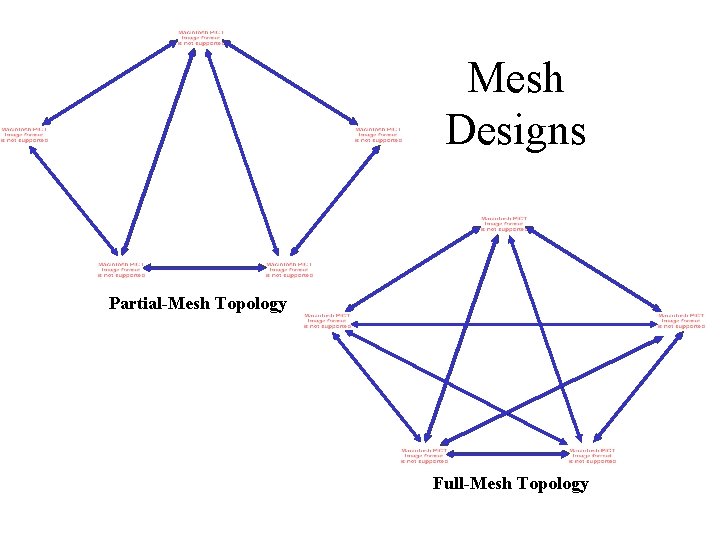
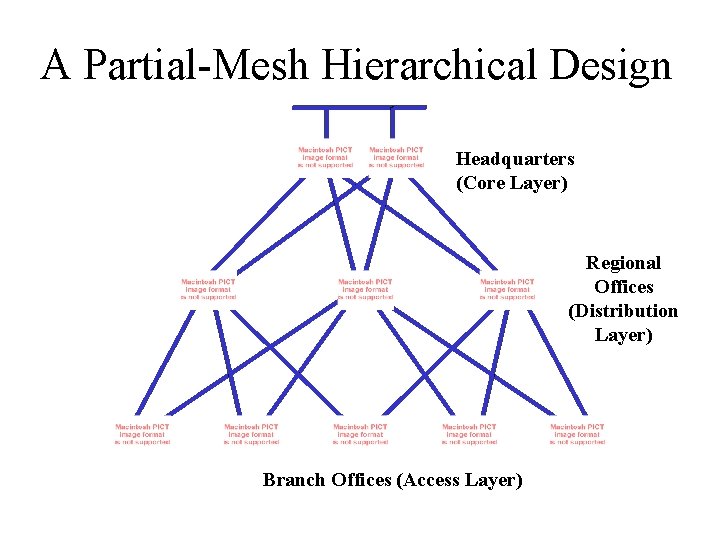
Mesh Designs Partial-Mesh Topology Full-Mesh Topology
A Partial-Mesh Hierarchical Design Headquarters (Core Layer) Regional Offices (Distribution Layer) Branch Offices (Access Layer)
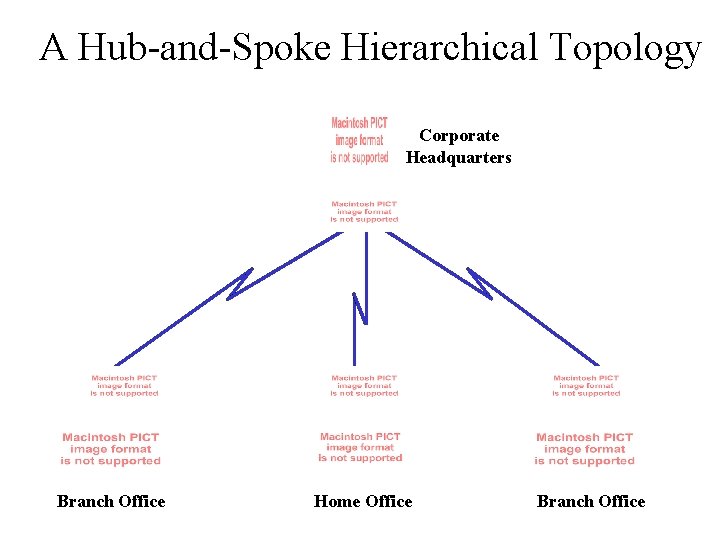
A Hub-and-Spoke Hierarchical Topology Corporate Headquarters Branch Office Home Office Branch Office
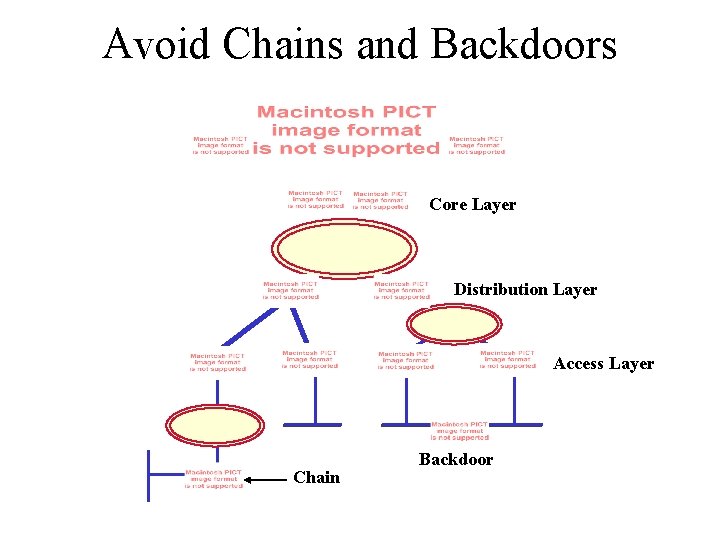
Avoid Chains and Backdoors Core Layer Distribution Layer Access Layer Chain Backdoor
How Do You Know When You Have a Good Design? • When you already know how to add a new building, floor, WAN link, remote site, ecommerce service, and so on • When new additions cause only local change, to the directly-connected devices • When your network can double or triple in size without major design changes • When troubleshooting is easy because there are no complex protocol interactions to wrap your brain around
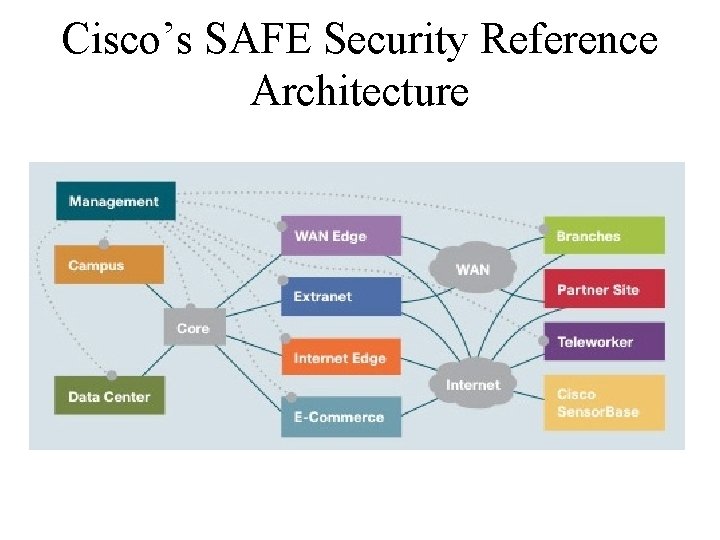
Cisco’s SAFE Security Reference Architecture
Campus Topology Design • • Use a hierarchical, modular approach Minimize the size of bandwidth domains Minimize the size of broadcast domains Provide redundancy – Mirrored servers – Multiple ways for workstations to reach a router for off-net communications
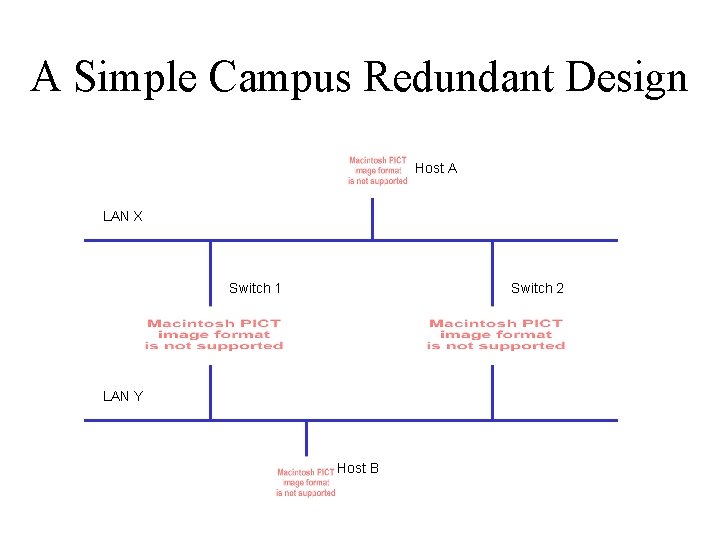
A Simple Campus Redundant Design Host A LAN X Switch 1 Switch 2 LAN Y Host B
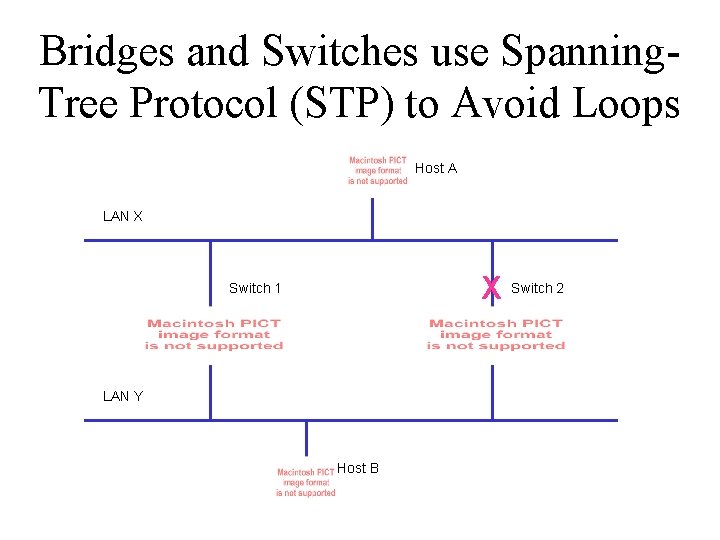
Bridges and Switches use Spanning. Tree Protocol (STP) to Avoid Loops Host A LAN X X Switch 2 Switch 1 LAN Y Host B
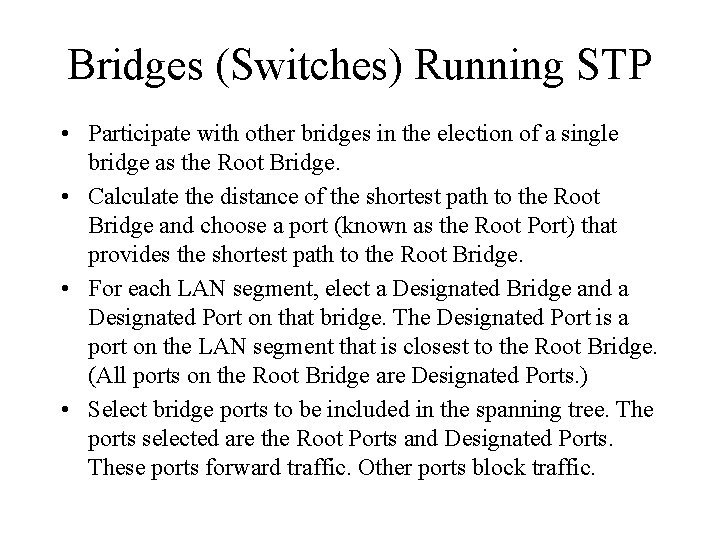
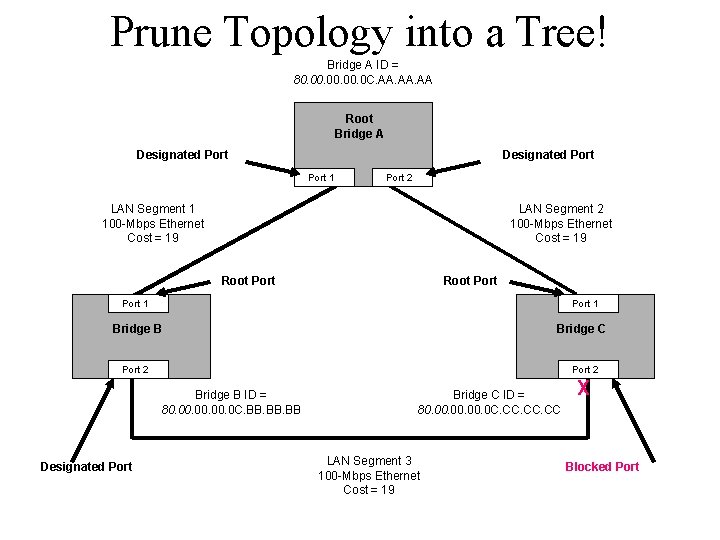
Bridges (Switches) Running STP • Participate with other bridges in the election of a single bridge as the Root Bridge. • Calculate the distance of the shortest path to the Root Bridge and choose a port (known as the Root Port) that provides the shortest path to the Root Bridge. • For each LAN segment, elect a Designated Bridge and a Designated Port on that bridge. The Designated Port is a port on the LAN segment that is closest to the Root Bridge. (All ports on the Root Bridge are Designated Ports. ) • Select bridge ports to be included in the spanning tree. The ports selected are the Root Ports and Designated Ports. These ports forward traffic. Other ports block traffic.
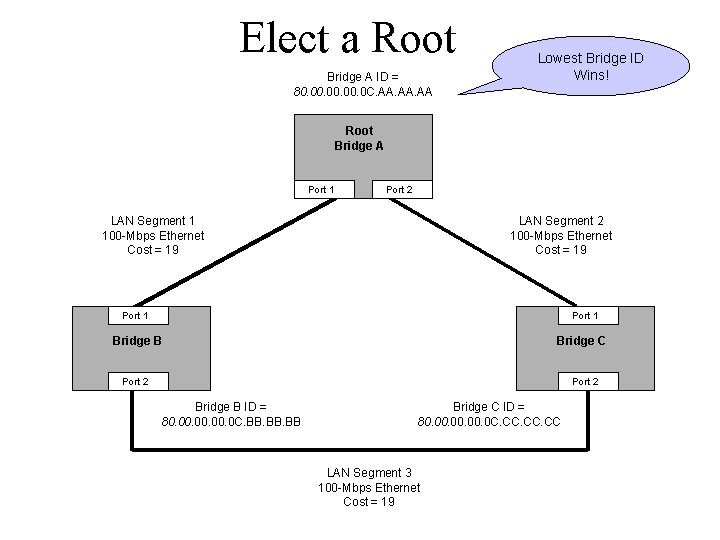
Elect a Root Bridge A ID = 80. 00. 0 C. AA. AA Lowest Bridge ID Wins! Root Bridge A Port 1 Port 2 LAN Segment 1 100 -Mbps Ethernet Cost = 19 LAN Segment 2 100 -Mbps Ethernet Cost = 19 Port 1 Bridge B Bridge C Port 2 Bridge B ID = 80. 00. 0 C. BB. BB Bridge C ID = 80. 00. 0 C. CC. CC LAN Segment 3 100 -Mbps Ethernet Cost = 19
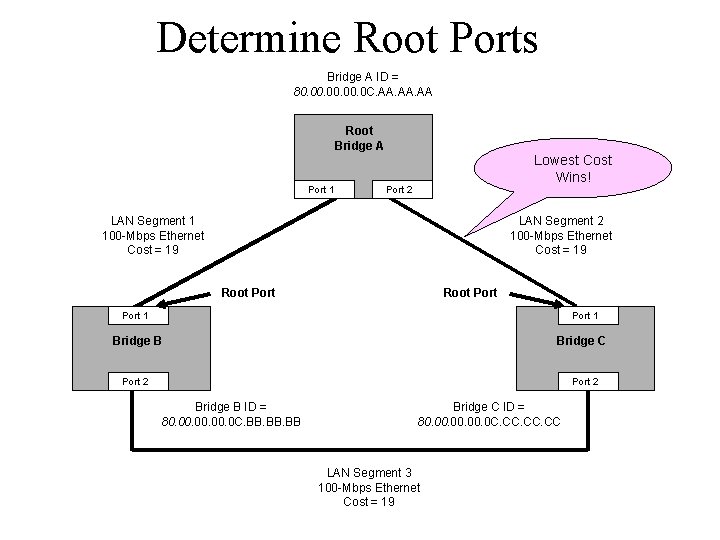
Determine Root Ports Bridge A ID = 80. 00. 0 C. AA. AA Root Bridge A Port 1 Lowest Cost Wins! Port 2 LAN Segment 1 100 -Mbps Ethernet Cost = 19 LAN Segment 2 100 -Mbps Ethernet Cost = 19 Root Port 1 Bridge B Bridge C Port 2 Bridge B ID = 80. 00. 0 C. BB. BB Bridge C ID = 80. 00. 0 C. CC. CC LAN Segment 3 100 -Mbps Ethernet Cost = 19
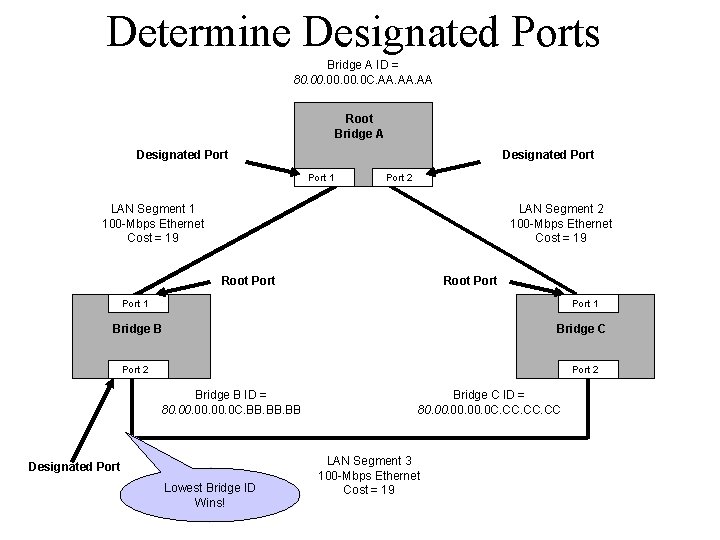
Determine Designated Ports Bridge A ID = 80. 00. 0 C. AA. AA Root Bridge A Designated Port 1 Port 2 LAN Segment 1 100 -Mbps Ethernet Cost = 19 LAN Segment 2 100 -Mbps Ethernet Cost = 19 Root Port 1 Bridge B Bridge C Port 2 Bridge B ID = 80. 00. 0 C. BB. BB Designated Port Lowest Bridge ID Wins! Bridge C ID = 80. 00. 0 C. CC. CC LAN Segment 3 100 -Mbps Ethernet Cost = 19
Prune Topology into a Tree! Bridge A ID = 80. 00. 0 C. AA. AA Root Bridge A Designated Port 1 Port 2 LAN Segment 1 100 -Mbps Ethernet Cost = 19 LAN Segment 2 100 -Mbps Ethernet Cost = 19 Root Port 1 Bridge B Bridge C Port 2 Bridge B ID = 80. 00. 0 C. BB. BB Designated Port Bridge C ID = 80. 00. 0 C. CC. CC LAN Segment 3 100 -Mbps Ethernet Cost = 19 X Blocked Port
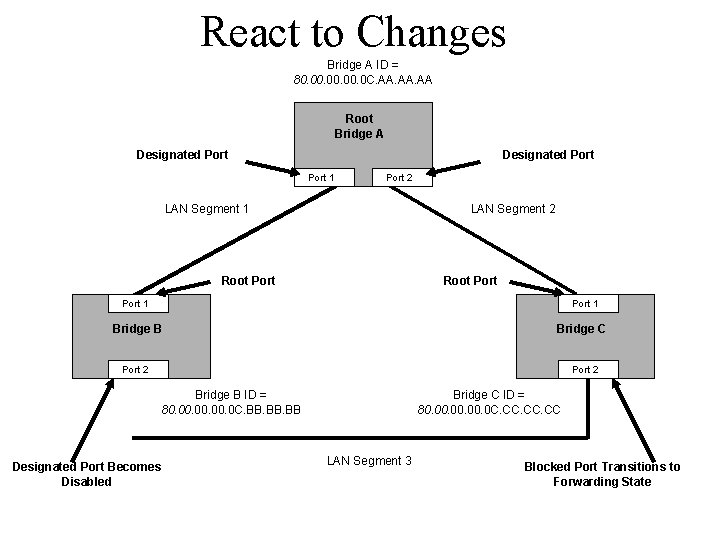
React to Changes Bridge A ID = 80. 00. 0 C. AA. AA Root Bridge A Designated Port 1 Port 2 LAN Segment 1 LAN Segment 2 Root Port 1 Bridge B Bridge C Port 2 Bridge B ID = 80. 00. 0 C. BB. BB Designated Port Becomes Disabled Bridge C ID = 80. 00. 0 C. CC. CC LAN Segment 3 Blocked Port Transitions to Forwarding State
Scaling the Spanning Tree Protocol • Keep the switched network small – It shouldn’t span more than seven switches • Use BPDU skew detection on Cisco switches • Use IEEE 802. 1 w – Provides rapid reconfiguration of the spanning tree – Also known as RSTP
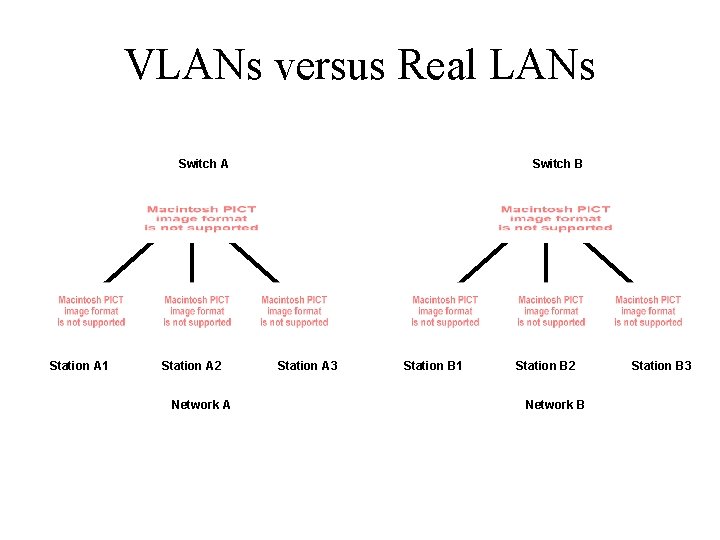
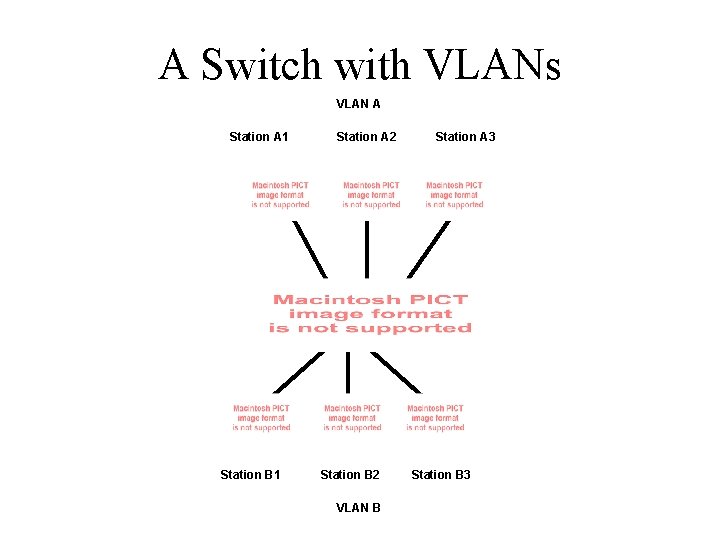
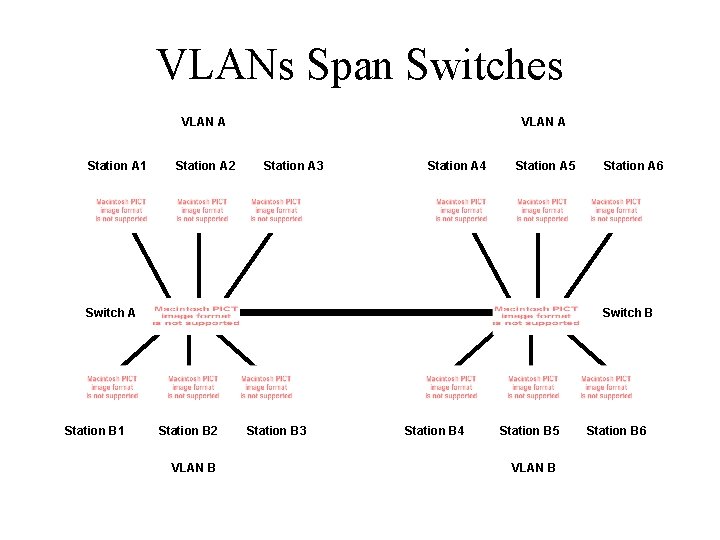
Virtual LANs (VLANs) • An emulation of a standard LAN that allows data transfer to take place without the traditional physical restraints placed on a network • A set of devices that belong to an administrative group • Designers use VLANs to constrain broadcast traffic
VLANs versus Real LANs Switch A Station A 1 Station A 2 Network A Switch B Station A 3 Station B 1 Station B 2 Network B Station B 3
A Switch with VLANs VLAN A Station A 1 Station B 1 Station A 2 Station B 2 VLAN B Station A 3 Station B 3
VLANs Span Switches VLAN A Station A 1 Station A 2 VLAN A Station A 3 Station A 4 Station A 5 Switch A Station B 1 Station A 6 Switch B Station B 2 VLAN B Station B 3 Station B 4 Station B 5 VLAN B Station B 6
WLANs and VLANs • A wireless LAN (WLAN) is often implemented as a VLAN • Facilitates roaming • Users remain in the same VLAN and IP subnet as they roam, so there’s no need to change addressing information • Also makes it easier to set up filters (access control lists) to protect the wired network from wireless users
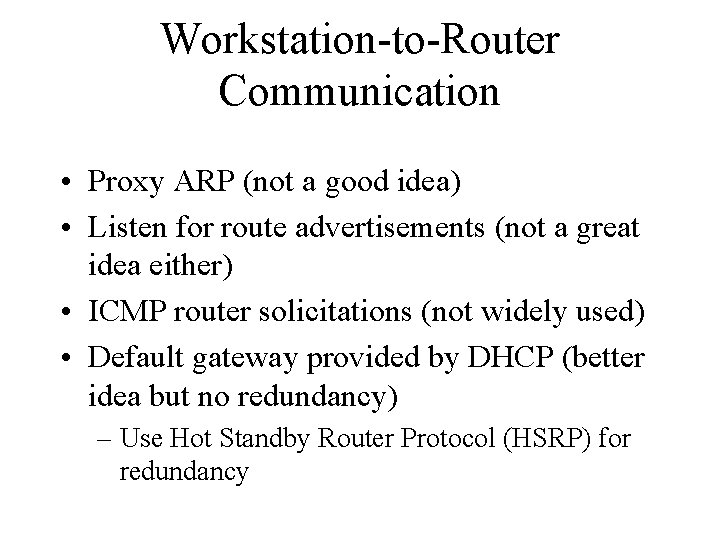
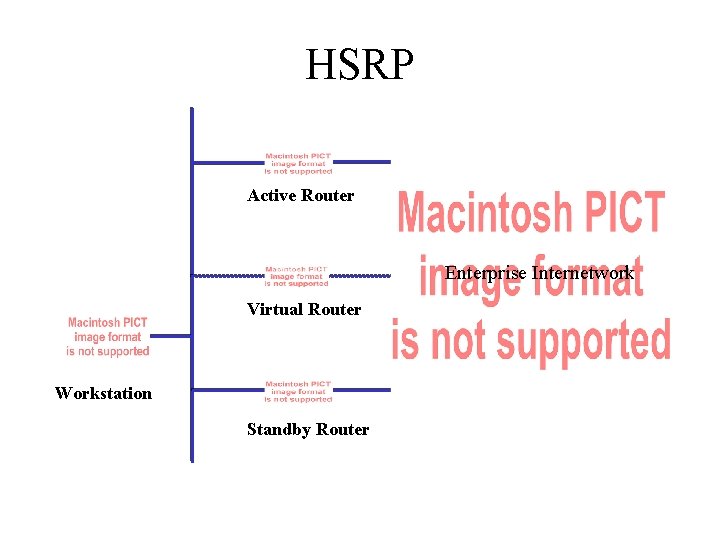
Workstation-to-Router Communication • Proxy ARP (not a good idea) • Listen for route advertisements (not a great idea either) • ICMP router solicitations (not widely used) • Default gateway provided by DHCP (better idea but no redundancy) – Use Hot Standby Router Protocol (HSRP) for redundancy
HSRP Active Router Enterprise Internetwork Virtual Router Workstation Standby Router
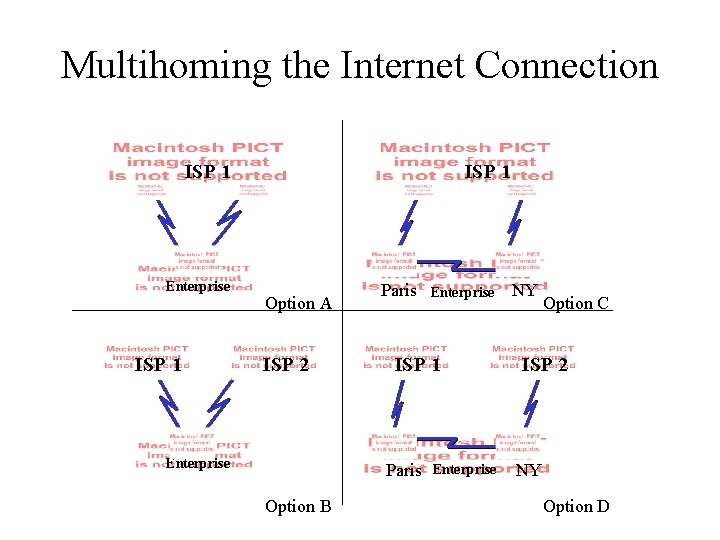
Multihoming the Internet Connection ISP 1 Enterprise ISP 1 Option A ISP 2 Enterprise Paris ISP 1 Paris Option B Enterprise NY Option C ISP 2 NY Option D
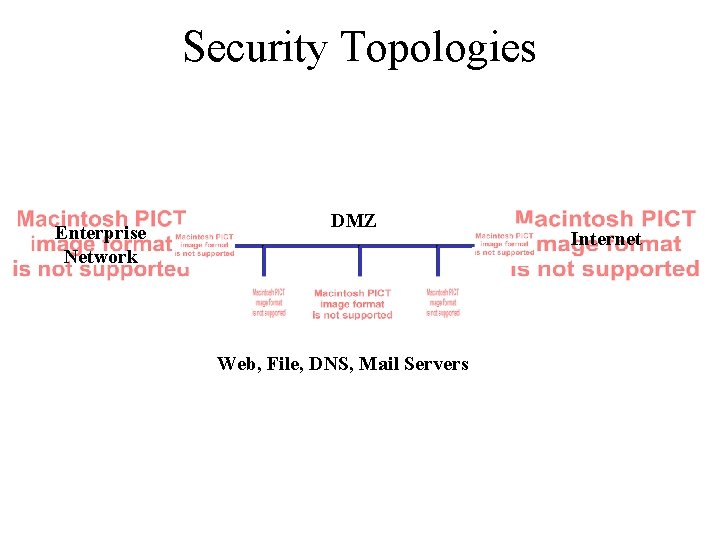
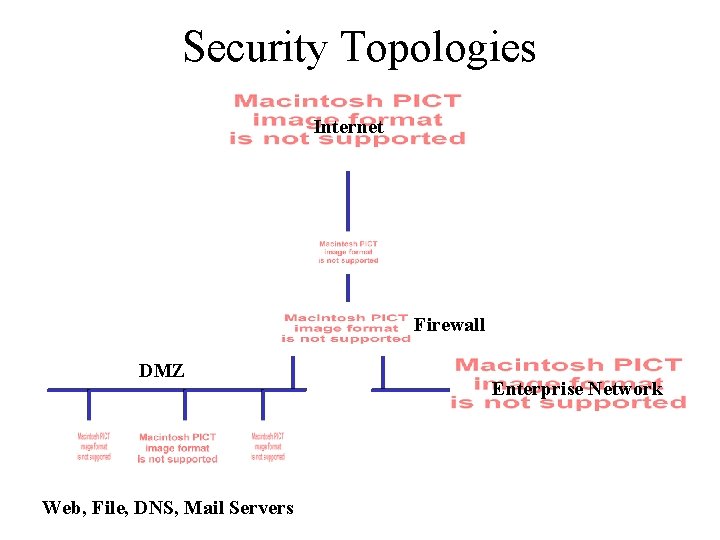
Security Topologies Enterprise Network DMZ Web, File, DNS, Mail Servers Internet
Security Topologies Internet Firewall DMZ Web, File, DNS, Mail Servers Enterprise Network
Summary • Use a systematic, top-down approach • Plan the logical design before the physical design • Topology design should feature hierarchy, redundancy, modularity, and security
Review Questions • Why are hierarchy and modularity important for network designs? • What are three layers of Cisco’s hierarchical network design? • What are the major components of Cisco’s enterprise composite network model? • What are the advantages and disadvantages of the various options for multihoming an Internet connection?