
TOP STRATEGIES FOR COMPILING A STELLAR ASSESSMENT REPORT


- Slides: 27
TOP STRATEGIES FOR COMPILING A STELLAR ASSESSMENT REPORT stel·lar /ˈstelər/ Adjective Informal exceptionally good; outstanding. synonyms: marvelous, outstanding, superb, first -rate, out of this world, heavenly, dazzling "a stellar performance" Presented by Cory A. Potter Executive Director of Assessment A BETHUNE-COOKMAN UNIVERSITY OFFICE OF ASSESSMENT WORKSHOP
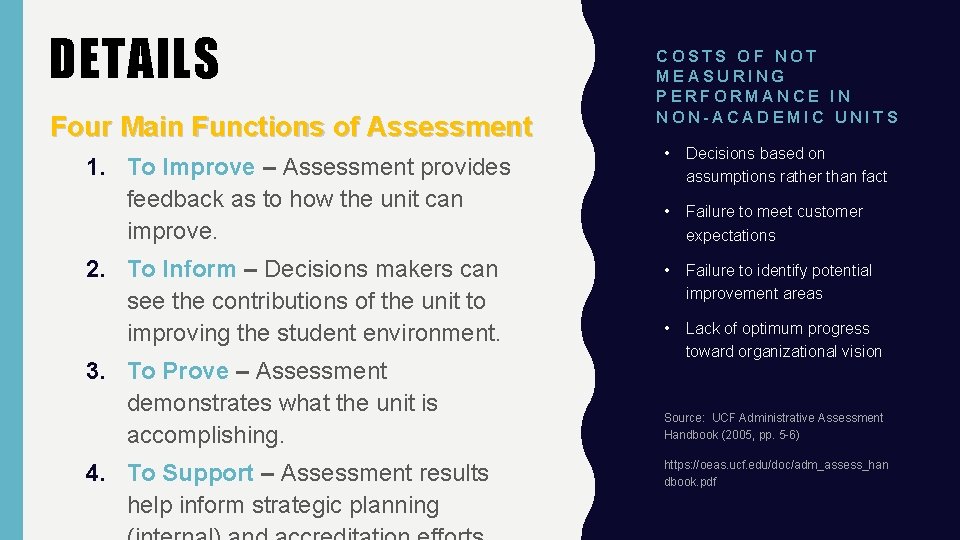
DETAILS Four Main Functions of Assessment 1. To Improve – Assessment provides feedback as to how the unit can improve. 2. To Inform – Decisions makers can see the contributions of the unit to improving the student environment. 3. To Prove – Assessment demonstrates what the unit is accomplishing. 4. To Support – Assessment results help inform strategic planning COSTS OF NOT MEASURING PERFORMANCE IN NON-ACADEMIC UNITS • Decisions based on assumptions rather than fact • Failure to meet customer expectations • Failure to identify potential improvement areas • Lack of optimum progress toward organizational vision Source: UCF Administrative Assessment Handbook (2005, pp. 5 -6) https: //oeas. ucf. edu/doc/adm_assess_han dbook. pdf
DETAILS The 2015 -16 Annual Planning, Budgeting and Assessment Report is due to the Office of Assessment on or before Friday, October 7 th, 2016. COSTS OF NOT MEASURING PERFORMANCE IN NON-ACADEMIC UNITS • Decisions based on assumptions rather than fact • Failure to meet customer expectations • Failure to identify potential improvement areas • Lack of optimum progress toward organizational vision Source: UCF Administrative Assessment Handbook (2005, pp. 5 -6) https: //oeas. ucf. edu/doc/adm_assess_han dbook. pdf
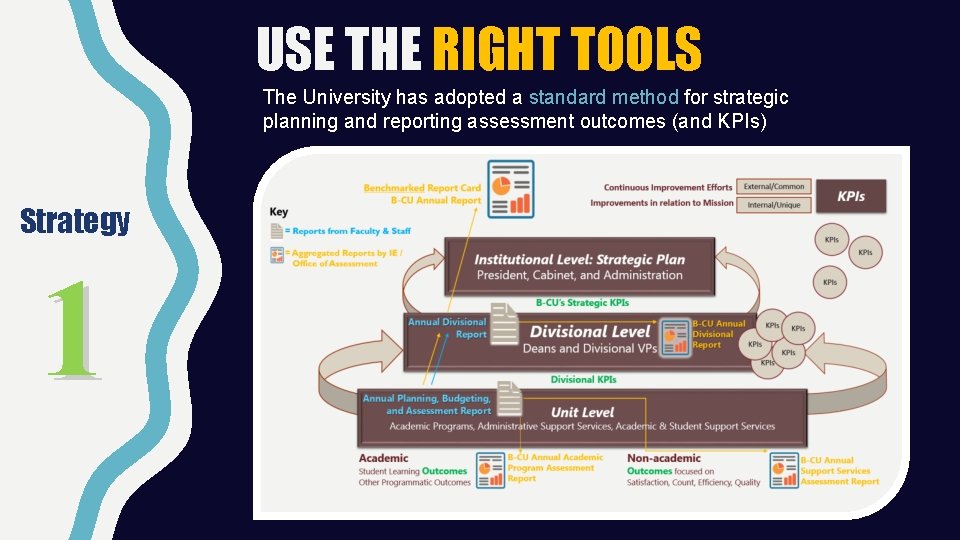
USE THE RIGHT TOOLS The University has adopted a standard method for strategic planning and reporting assessment outcomes (and KPIs). Strategy 1 The template and guidelines are updated and enhanced annually as we continuously improve. If you follow the process, then your Annual Planning, Budgeting, and Assessment Report will tell your story of planning for success, achievement, and making improvements using datainformed decision making. With successive reports, your unit will create a clear history of your continuous quality improvements.
USE THE RIGHT TOOLS The University has adopted a standard method for strategic planning and reporting assessment outcomes (and KPIs) Strategy 1
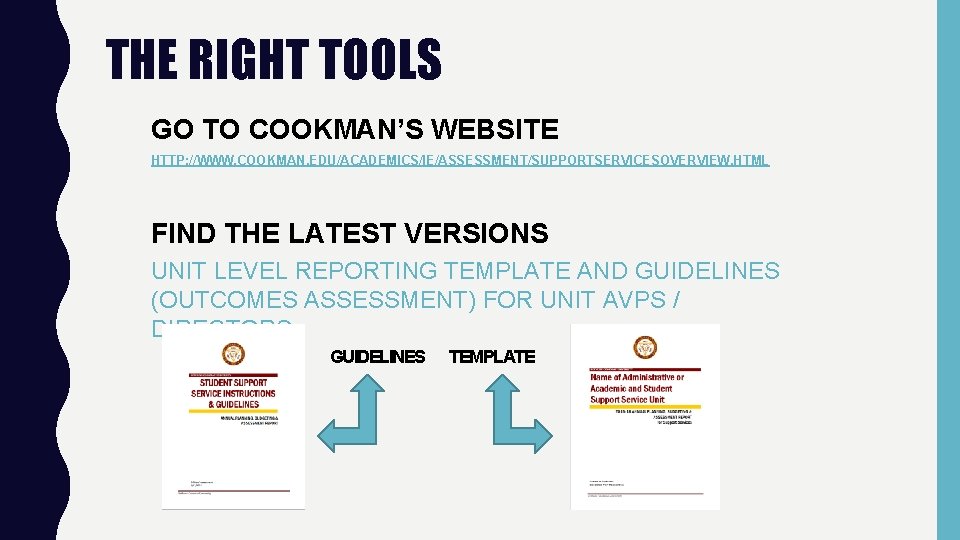
THE RIGHT TOOLS GO TO COOKMAN’S WEBSITE HTTP: //WWW. COOKMAN. EDU/ACADEMICS/IE/ASSESSMENT/SUPPORTSERVICESOVERVIEW. HTML FIND THE LATEST VERSIONS UNIT LEVEL REPORTING TEMPLATE AND GUIDELINES (OUTCOMES ASSESSMENT) FOR UNIT AVPS / DIRECTORS GUIDELINES TEMPLATE
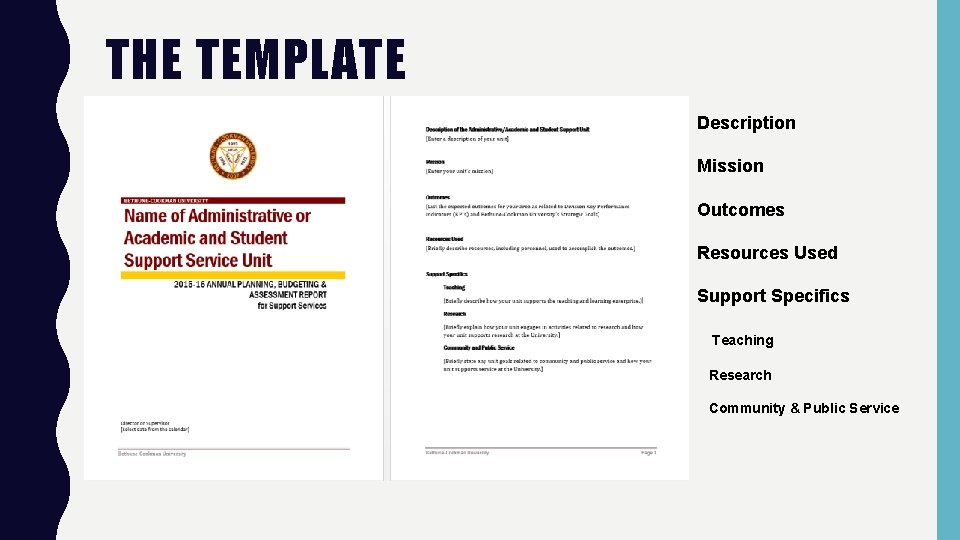
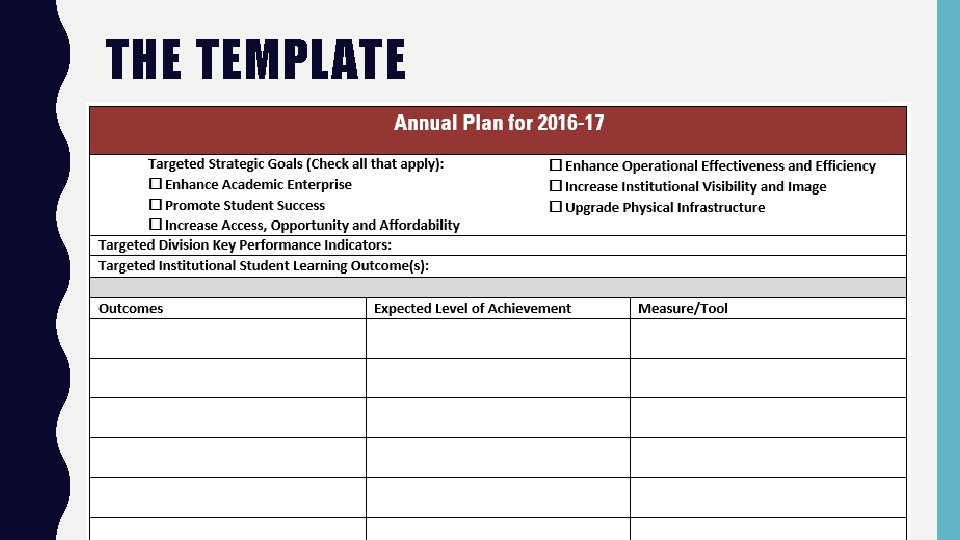
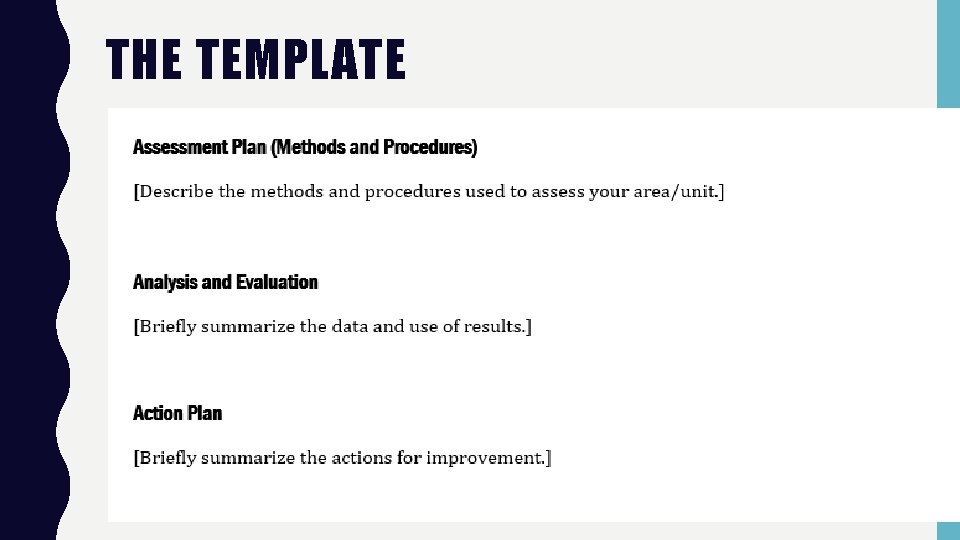
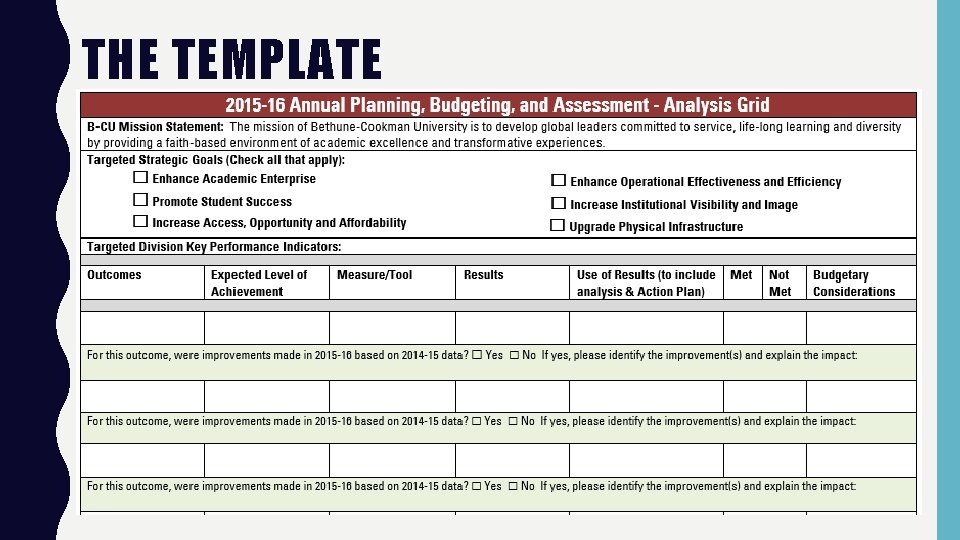
THE TEMPLATE Description Mission Outcomes Resources Used Support Specifics Teaching Research Community & Public Service
THE TEMPLATE
THE TEMPLATE
THE TEMPLATE
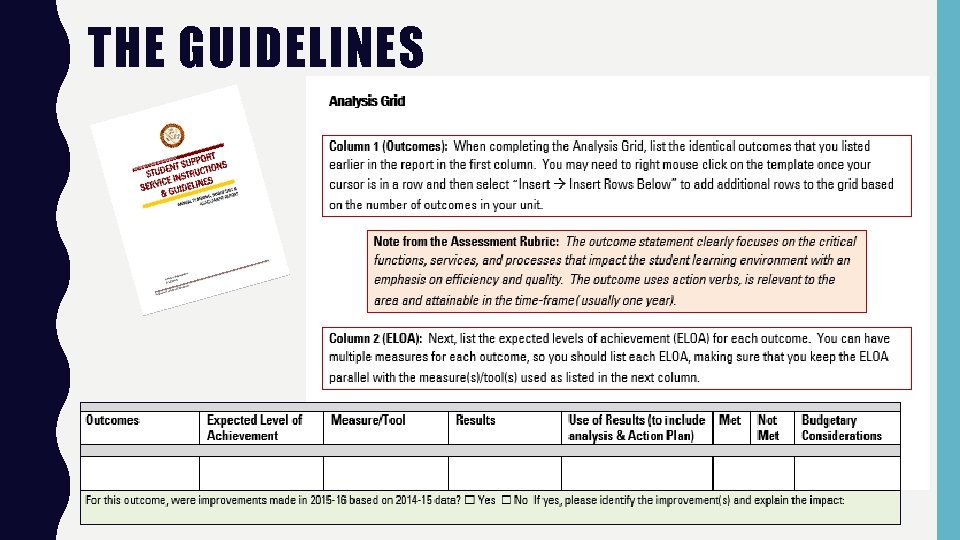
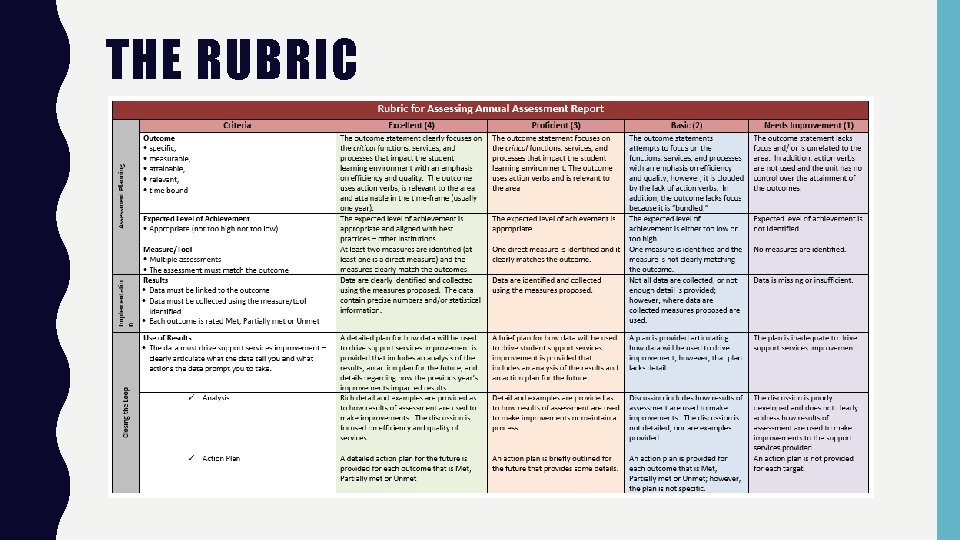
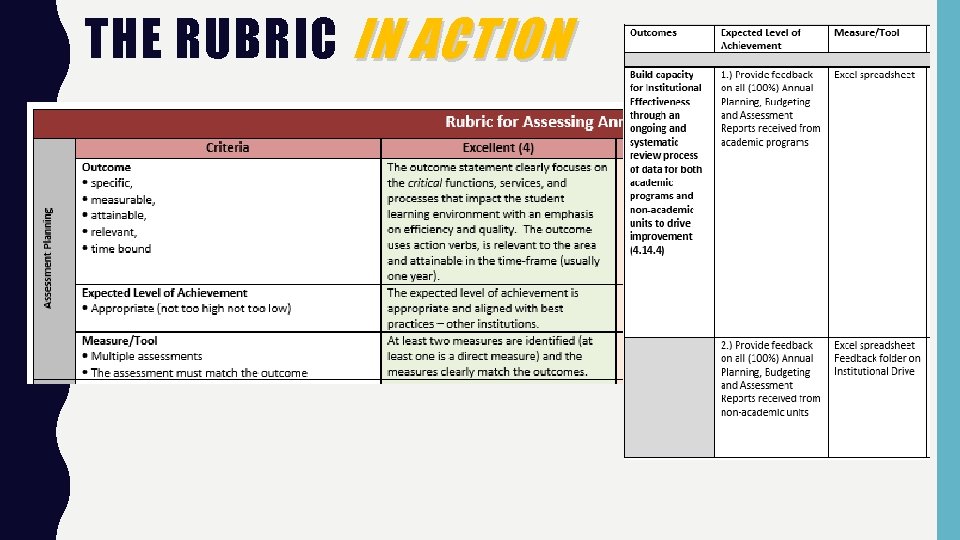
USE THE RIGHT TOOLS Strategy 2 The guidelines will help you if you get stuck in completing any portion of the Annual Planning, Budgeting and Assessment Report. The reporting template contains a rubric that has been enhanced for 2015 -16 with more explanations and a fourth level. Excellent / Proficient / Basic / Needs Improvement Set up one-on-one consultations with the Executive Director of Assessment 386 -481 -2334 ph / potterc@cookman. edu
THE GUIDELINES
DATA & DATA-DRIVEN DECISIONS
DATA & DATA-DRIVEN DECISIONS
THE RUBRIC
THE RUBRIC IN ACTION
COMPLETE ALL PORTIONS The Annual Planning, Budgeting and Assessment Report template should be completed in its entirety. Strategy 3 Some choose to leave blanks where they do not have data, but in the future others who read the reports will see blanks as incomplete or unfinished reporting. It is acceptable to report “Data not available, ” “Data not collected” or “N/A” in portions where you have no data. No data is data. It allows us to infer and ask questions about our processes and procedures.
CONSEQUENTIAL RELEVANCE • The utility of results are worth the time and effort spent on assessing • Assessment data can help to answer all kinds of questions and inform a variety of different decisions. – What did / didn’t the assessment measure? – What can / can’t the data tell you? – What kind of inferences can be made from the data?
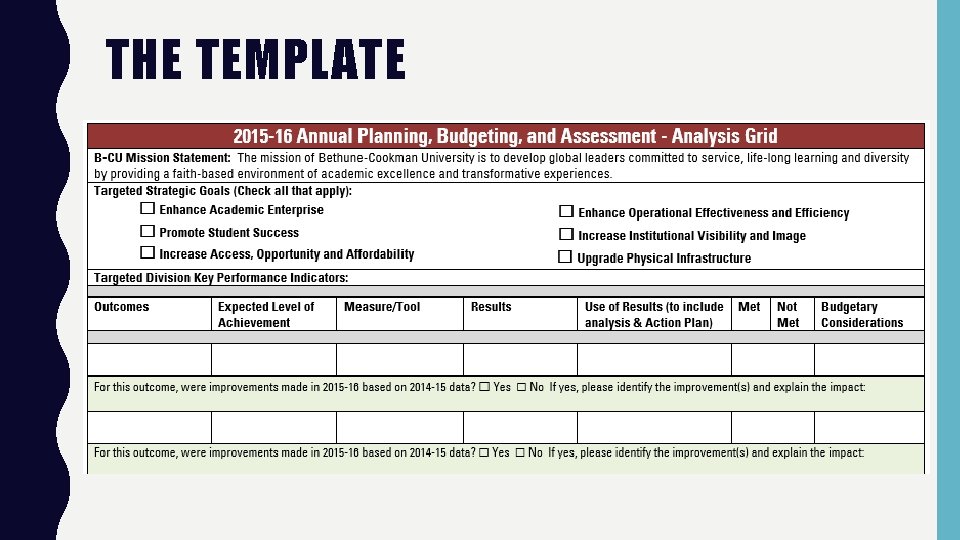
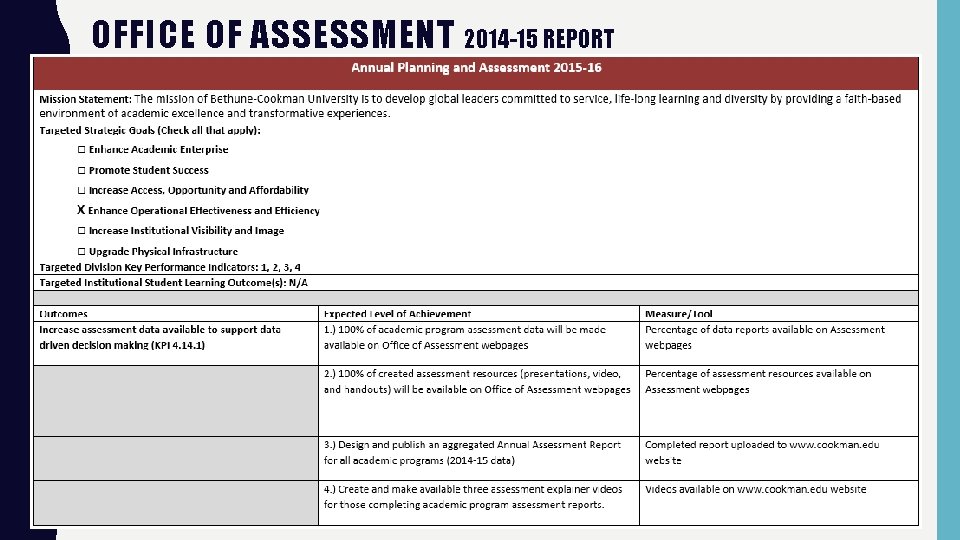
PULL FROM LAST YEAR’S REPORT Strategy 4 Unless changes were made, copy forward the following: Name of Unit, Description, Mission, & Support Specifics The Annual Planning and Assessment Grid from the 2014 -15 Annual Planning, Budgeting and Assessment Report should be transferred (copied) up to the first three columns on the Analysis Grid for 2015 -16. If you reported that you planned on assessing something in the previous year’s report but did not, you should still enter it into the Analysis Grid for 2015 -16 and use the “Use of Results” Column to share
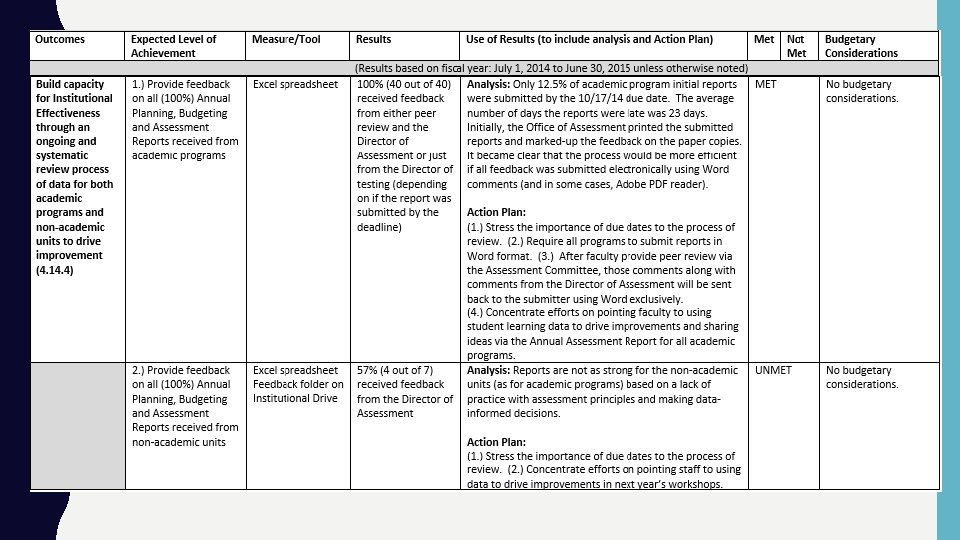
OFFICE OF ASSESSMENT 2014 -15 REPORT
THE TEMPLATE
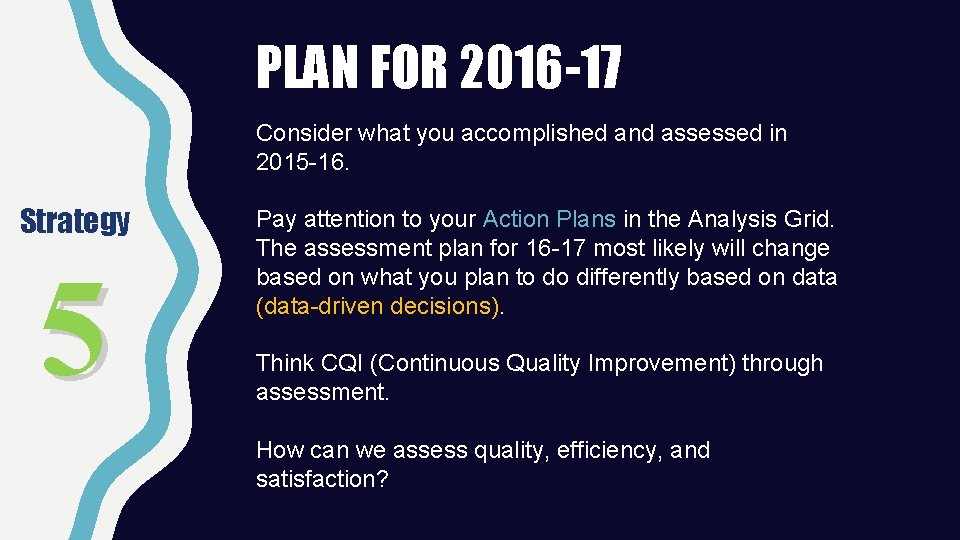
PLAN FOR 2016 -17 Consider what you accomplished and assessed in 2015 -16. Strategy 5 Pay attention to your Action Plans in the Analysis Grid. The assessment plan for 16 -17 most likely will change based on what you plan to do differently based on data (data-driven decisions). Think CQI (Continuous Quality Improvement) through assessment. How can we assess quality, efficiency, and satisfaction?
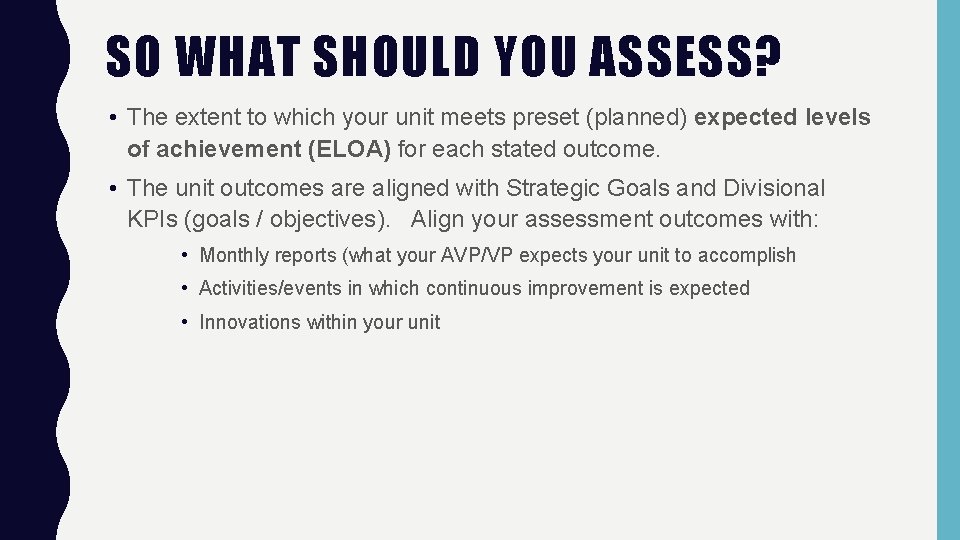
SO WHAT SHOULD YOU ASSESS? • The extent to which your unit meets preset (planned) expected levels of achievement (ELOA) for each stated outcome. • The unit outcomes are aligned with Strategic Goals and Divisional KPIs (goals / objectives). Align your assessment outcomes with: • Monthly reports (what your AVP/VP expects your unit to accomplish • Activities/events in which continuous improvement is expected • Innovations within your unit
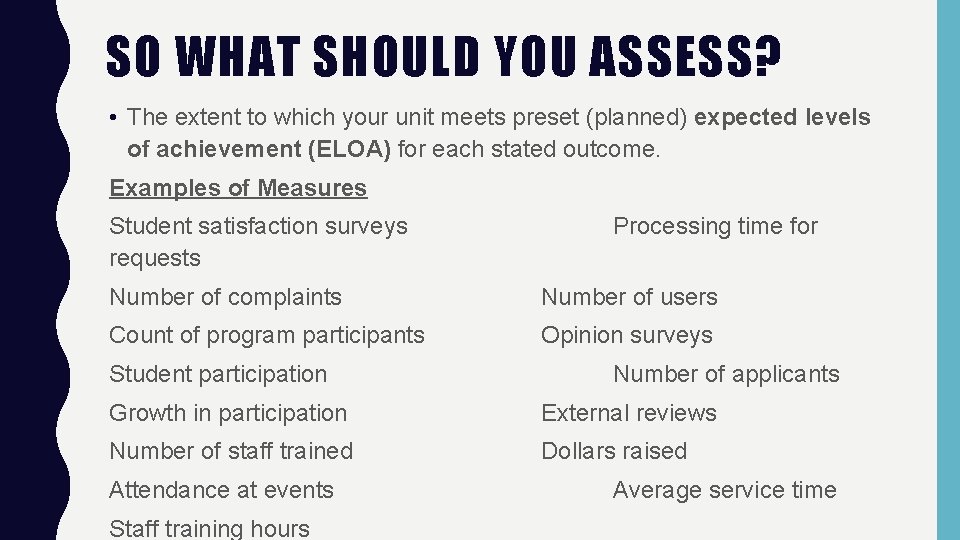
SO WHAT SHOULD YOU ASSESS? • The extent to which your unit meets preset (planned) expected levels of achievement (ELOA) for each stated outcome. Examples of Measures Student satisfaction surveys requests Processing time for Number of complaints Number of users Count of program participants Opinion surveys Student participation Number of applicants Growth in participation External reviews Number of staff trained Dollars raised Attendance at events Staff training hours Average service time
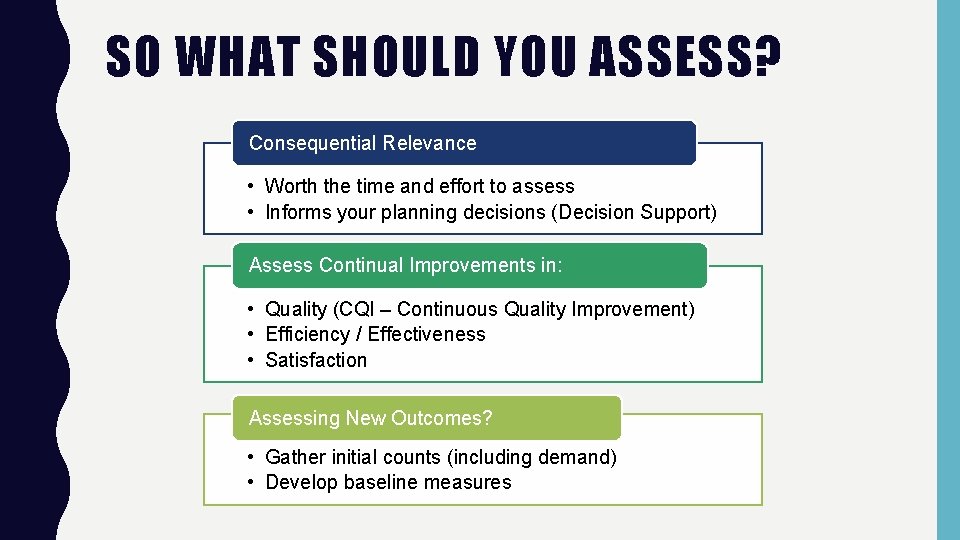
SO WHAT SHOULD YOU ASSESS? Consequential Relevance • Worth the time and effort to assess • Informs your planning decisions (Decision Support) Assess Continual Improvements in: • Quality (CQI – Continuous Quality Improvement) • Efficiency / Effectiveness • Satisfaction Assessing New Outcomes? • Gather initial counts (including demand) • Develop baseline measures
ANY S