
Top 11 facts on Coastal landforms 11 Can

- Slides: 13
Top 11 facts on …. Coastal landforms!
11. Can you process it? • You will need to refer to several geomorphic processes to fully explain how coastal (and other) landforms are made • Weathering; 4 types • Mass movement; slumping most common • Erosion; 4 types • Transportation; 4 types & LSD for coasts • Deposition; link to energy
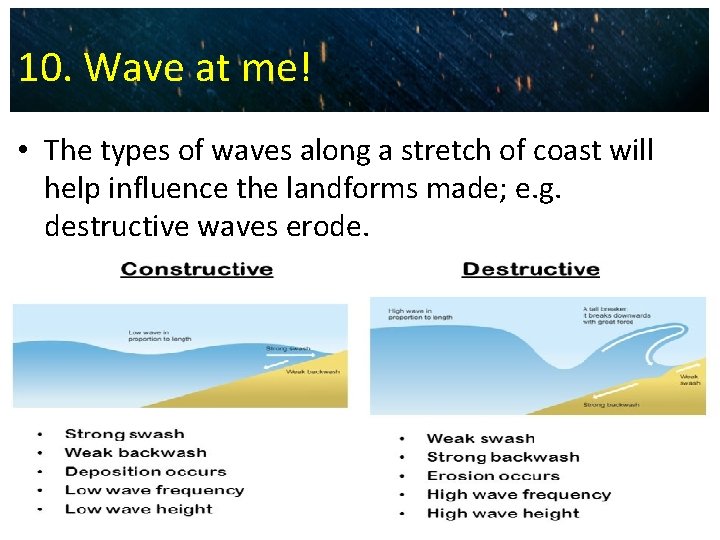
10. Wave at me! • The types of waves along a stretch of coast will help influence the landforms made; e. g. destructive waves erode.
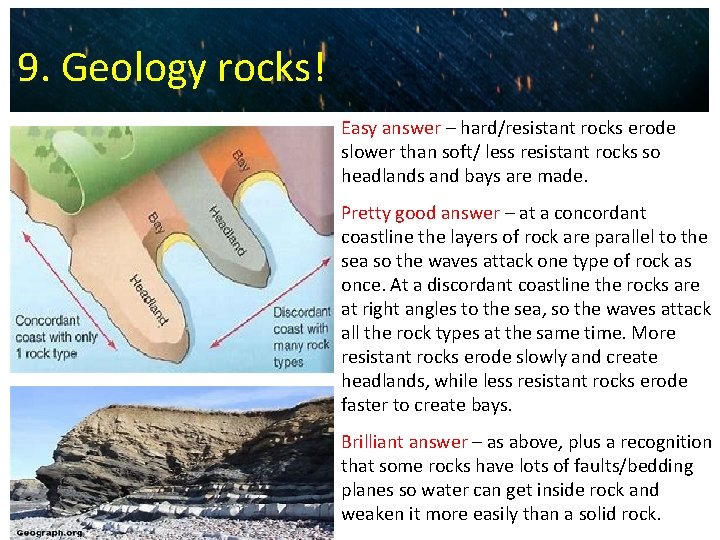
9. Geology rocks! Easy answer – hard/resistant rocks erode slower than soft/ less resistant rocks so headlands and bays are made. Pretty good answer – at a concordant coastline the layers of rock are parallel to the sea so the waves attack one type of rock as once. At a discordant coastline the rocks are at right angles to the sea, so the waves attack all the rock types at the same time. More resistant rocks erode slowly and create headlands, while less resistant rocks erode faster to create bays. Brilliant answer – as above, plus a recognition that some rocks have lots of faults/bedding planes so water can get inside rock and weaken it more easily than a solid rock.
8. Get into groups • Make sure you know which landform is made by which process (mainly), and if it sounds wrong when you are writing then stop and think about it! Erosion Deposition
8. Get into groups • Make sure you know which landform is made by which process (mainly), and if it sounds wrong when you are writing then stop and think about it! Erosion Wave cut notch & platform Cave Arch Stack Stump Cliff Deposition Beach Spit Bar Tombolo
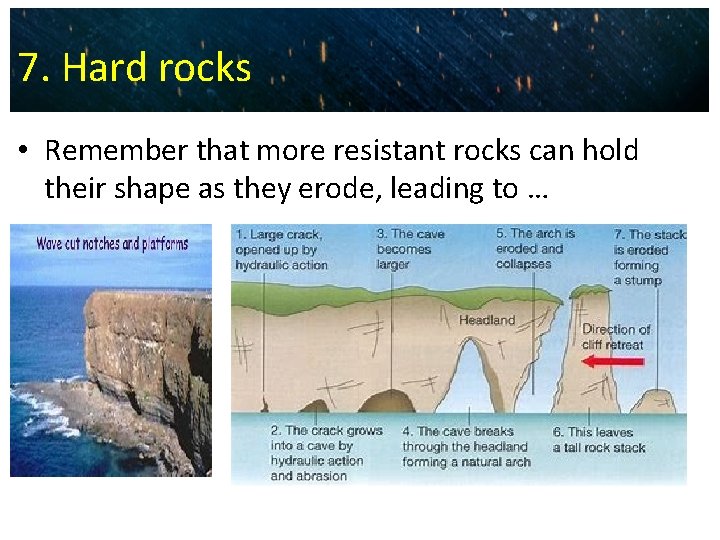
7. Hard rocks • Remember that more resistant rocks can hold their shape as they erode, leading to …
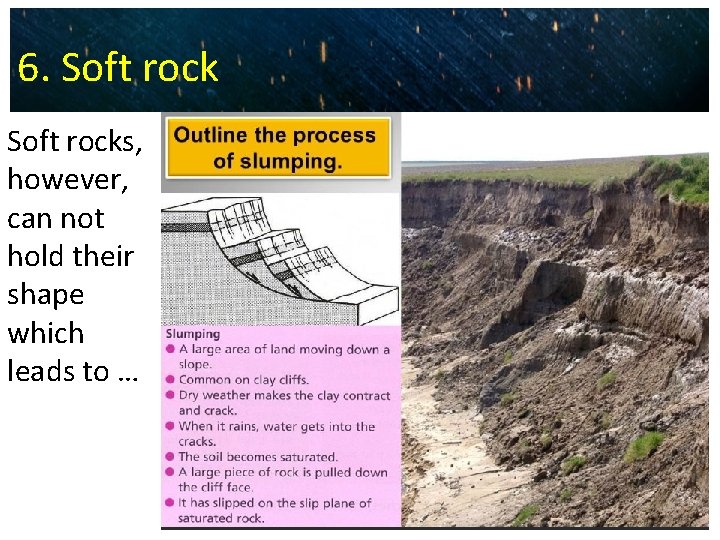
6. Soft rocks, however, can not hold their shape which leads to …
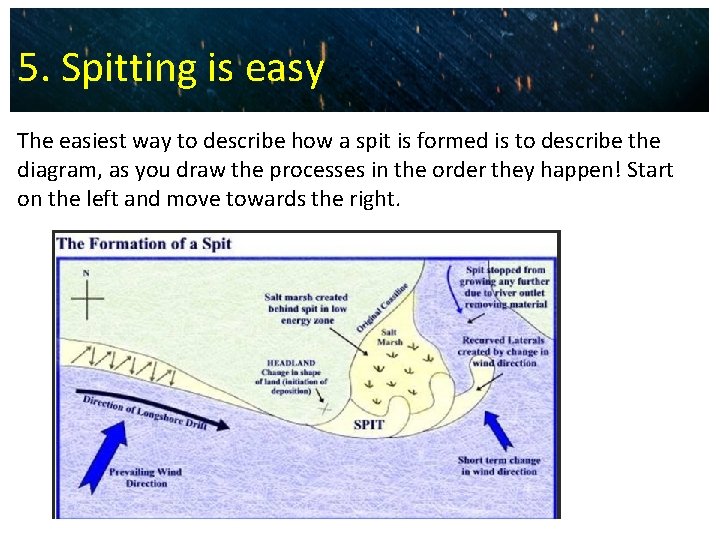
5. Spitting is easy The easiest way to describe how a spit is formed is to describe the diagram, as you draw the processes in the order they happen! Start on the left and move towards the right.
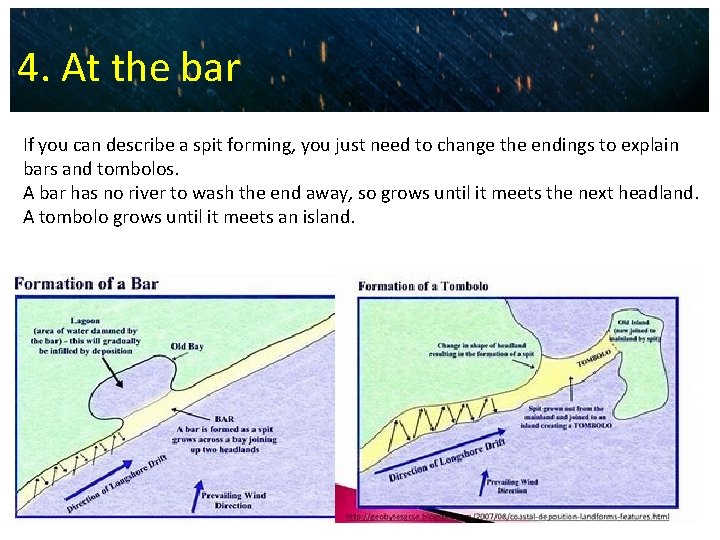
4. At the bar If you can describe a spit forming, you just need to change the endings to explain bars and tombolos. A bar has no river to wash the end away, so grows until it meets the next headland. A tombolo grows until it meets an island.
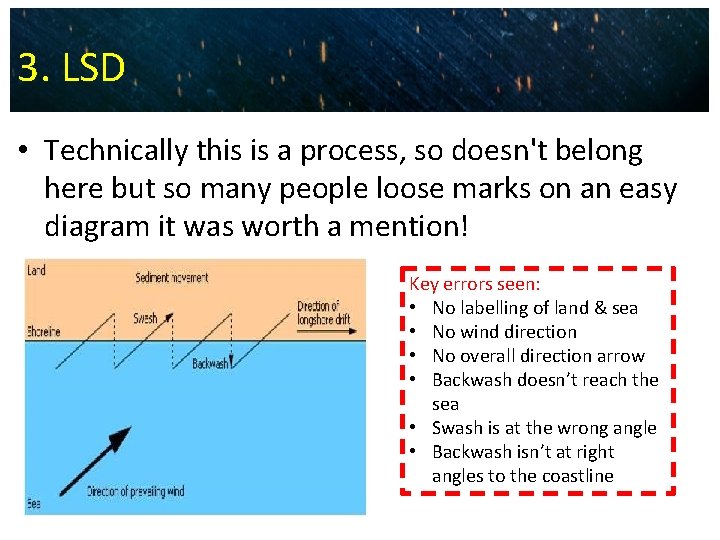
3. LSD • Technically this is a process, so doesn't belong here but so many people loose marks on an easy diagram it was worth a mention! Key errors seen: • No labelling of land & sea • No wind direction • No overall direction arrow • Backwash doesn’t reach the sea • Swash is at the wrong angle • Backwash isn’t at right angles to the coastline
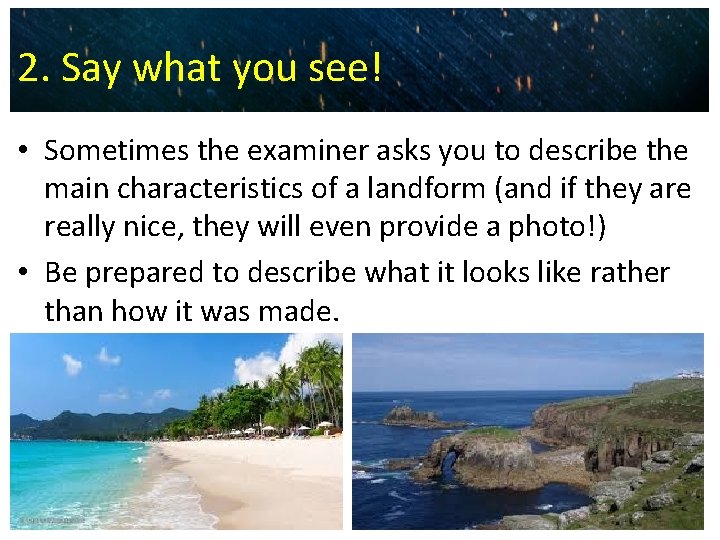
2. Say what you see! • Sometimes the examiner asks you to describe the main characteristics of a landform (and if they are really nice, they will even provide a photo!) • Be prepared to describe what it looks like rather than how it was made.
1. Art attack • Make sure you have practiced your drawing skills as you may be asked to: Ø Include a diagram to explain how a landform was made Ø Make a sketch of a photograph and annotate/label it Ø Draw the area as it will look in the future and explain why the landforms have changed