
Top 10 FAIR Data Software Things Lets get
- Slides: 21
Top 10 FAIR Data & Software Things Let’s get practical!
Juliane Schneider Juliane_Schneider@hms. harvard. edu Team Lead, www. eagle-i. net Twitter: @Juliane. S ORCID: 0000 -0002 -7664 -3331
Organizers
Global sprint - what and why? What is the purpose of the Sprint? To create a wide range of Top 10 FAIR Data Things by research disciplines and/or themes. What is a Top 10 FAIR Data Things resource? "Things" is a neat concept for creating packaged content on any topic. Each “Thing” is a self-directed learning activity for anybody who wants to know more about FAIR research data. The Top 10 FAIR Data Things resources we create during the Sprint can be used by the research community to understand FAIR in different discipline and theme contexts as well as providing some initial steps to consider.
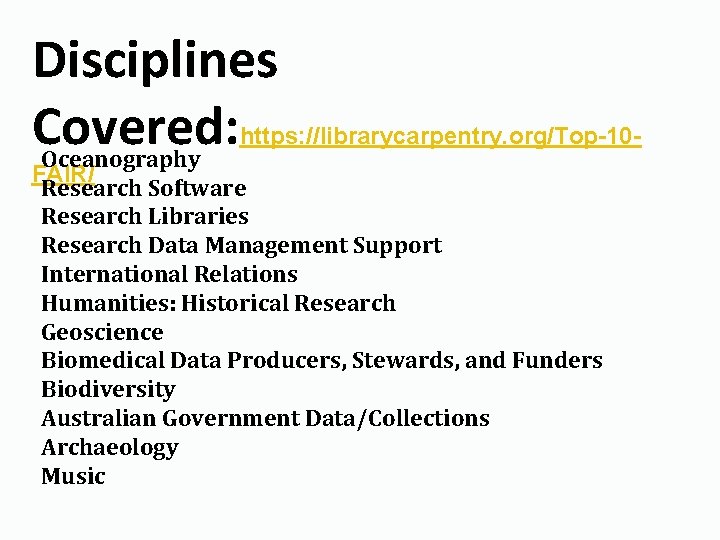
Disciplines Covered: https: //librarycarpentry. org/Top-10 Oceanography FAIR/ Research Software Research Libraries Research Data Management Support International Relations Humanities: Historical Research Geoscience Biomedical Data Producers, Stewards, and Funders Biodiversity Australian Government Data/Collections Archaeology Music
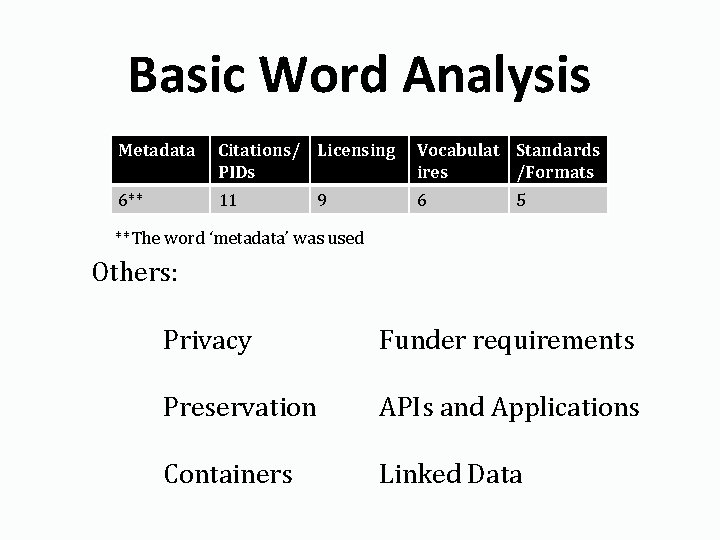
Basic Word Analysis Metadata Citations/ Licensing PIDs Vocabulat Standards ires /Formats 6** 11 6 9 5 **The word ‘metadata’ was used Others: Privacy Funder requirements Preservation APIs and Applications Containers Linked Data
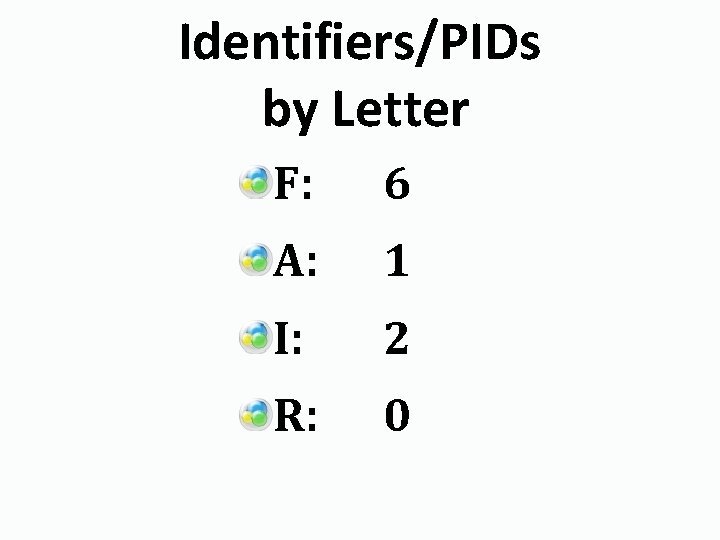
Identifiers/PIDs by Letter F: 6 A: 1 I: 2 R: 0
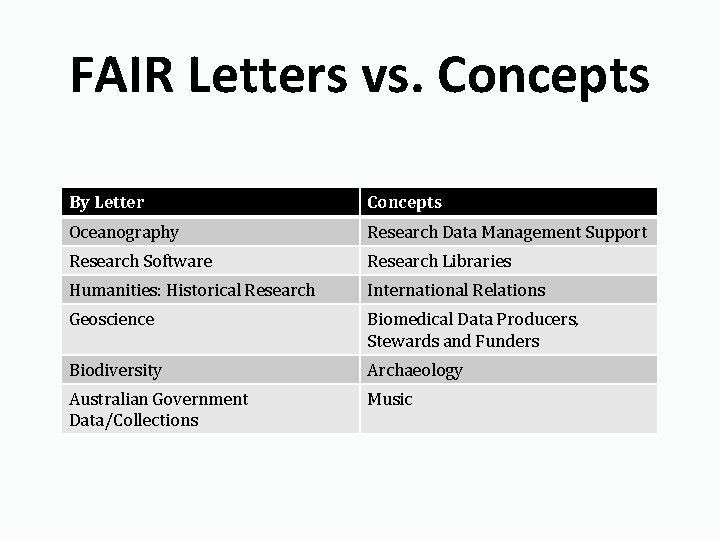
FAIR Letters vs. Concepts By Letter Concepts Oceanography Research Data Management Support Research Software Research Libraries Humanities: Historical Research International Relations Geoscience Biomedical Data Producers, Stewards and Funders Biodiversity Archaeology Australian Government Data/Collections Music
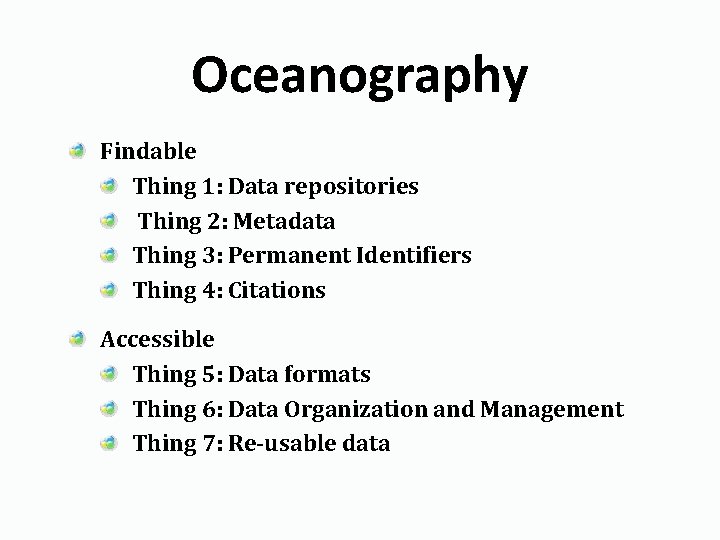
Oceanography Findable Thing 1: Data repositories Thing 2: Metadata Thing 3: Permanent Identifiers Thing 4: Citations Accessible Thing 5: Data formats Thing 6: Data Organization and Management Thing 7: Re-usable data
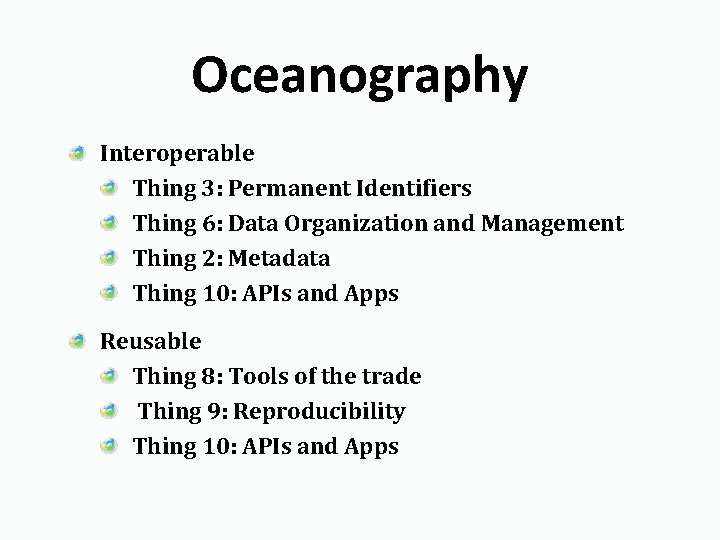
Oceanography Interoperable Thing 3: Permanent Identifiers Thing 6: Data Organization and Management Thing 2: Metadata Thing 10: APIs and Apps Reusable Thing 8: Tools of the trade Thing 9: Reproducibility Thing 10: APIs and Apps
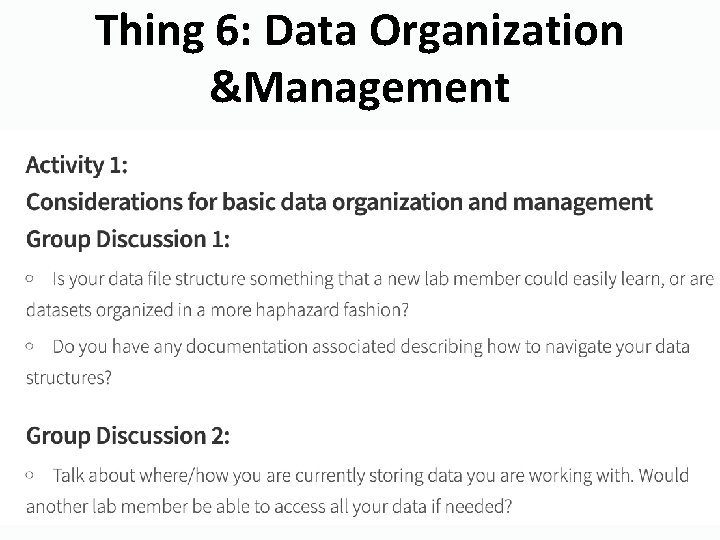
Thing 6: Data Organization &Management
Thing 6: Data Organization &Management
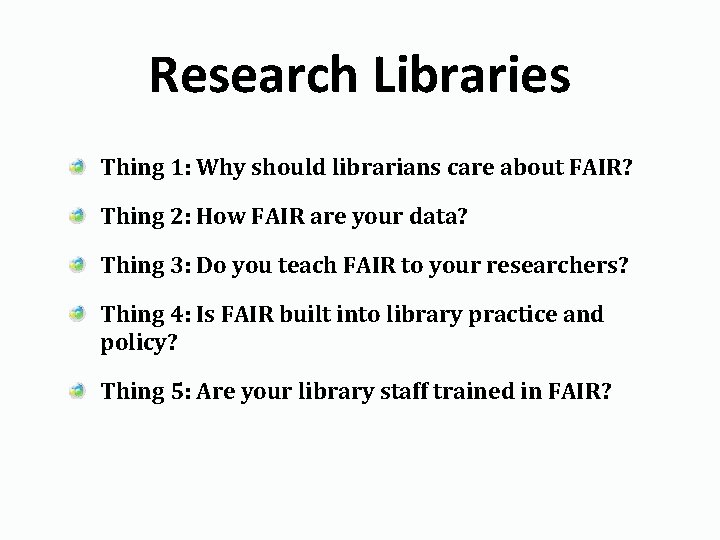
Research Libraries Thing 1: Why should librarians care about FAIR? Thing 2: How FAIR are your data? Thing 3: Do you teach FAIR to your researchers? Thing 4: Is FAIR built into library practice and policy? Thing 5: Are your library staff trained in FAIR?
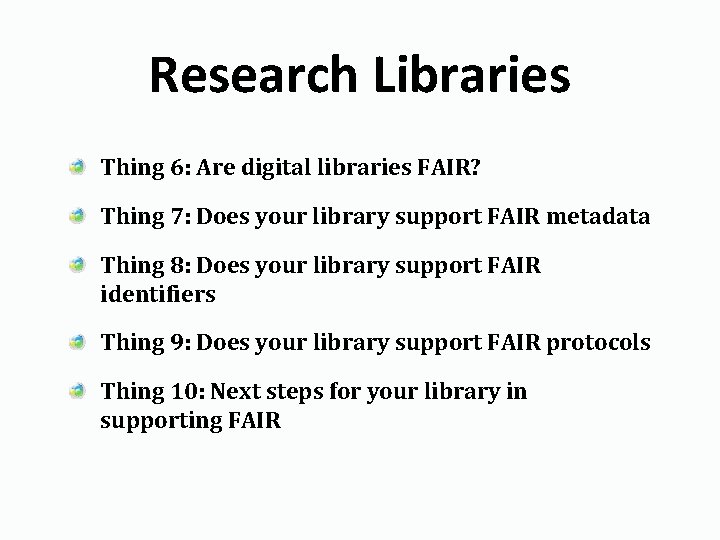
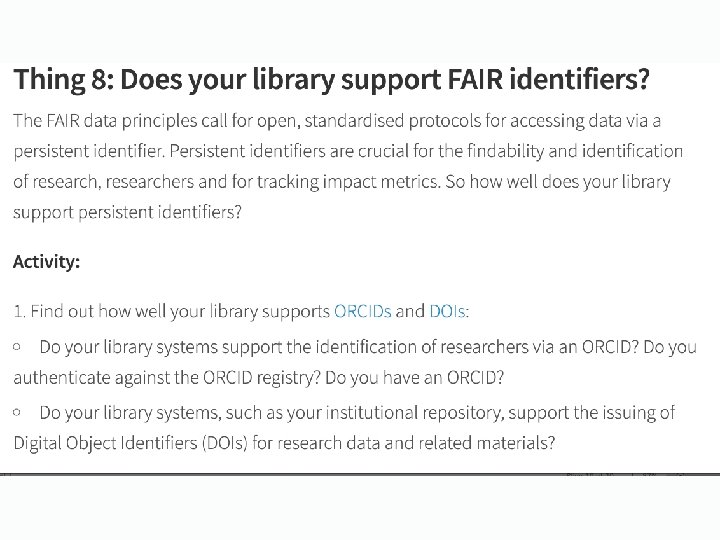
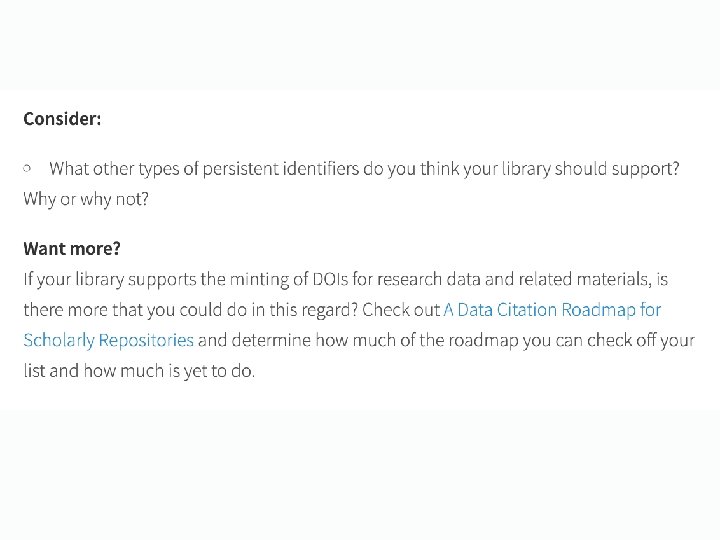
Research Libraries Thing 6: Are digital libraries FAIR? Thing 7: Does your library support FAIR metadata Thing 8: Does your library support FAIR identifiers Thing 9: Does your library support FAIR protocols Thing 10: Next steps for your library in supporting FAIR
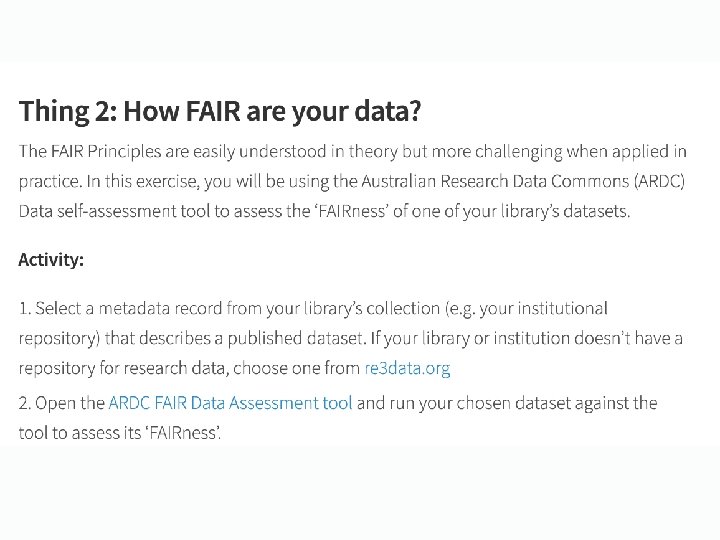
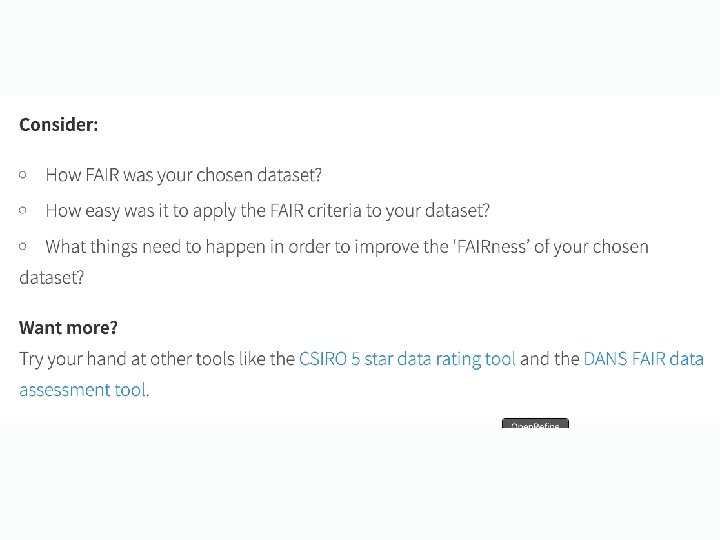
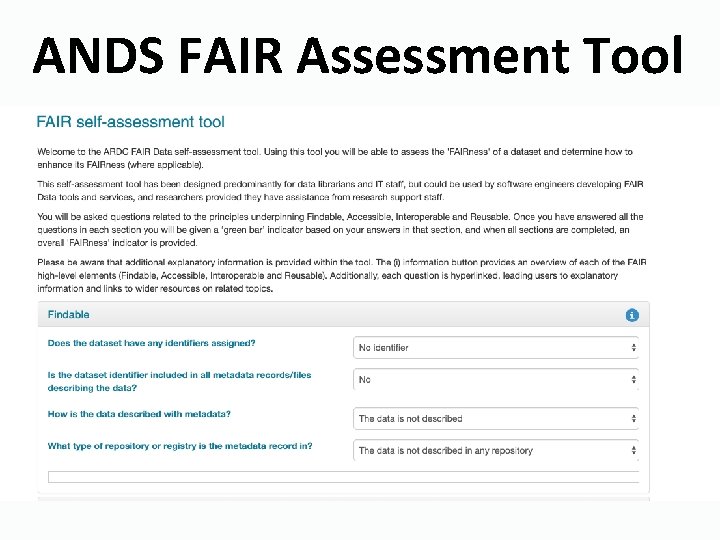
ANDS FAIR Assessment Tool
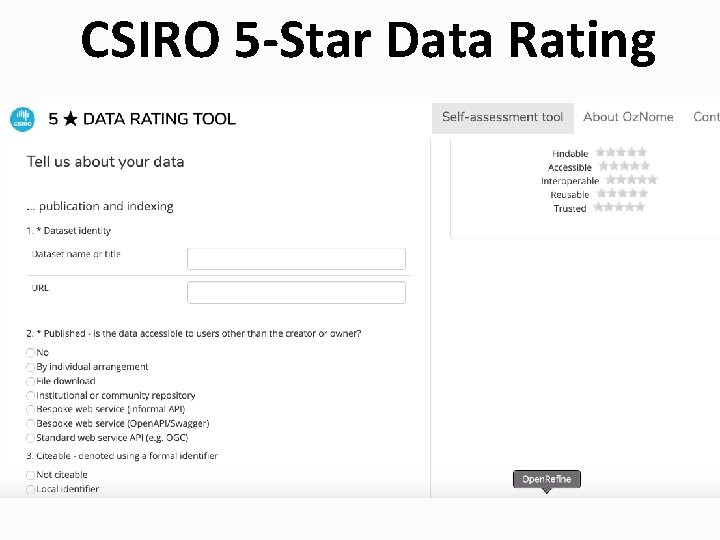
CSIRO 5 -Star Data Rating
Pre-FAIR Considerations Which communities do your research data belong to? What are the standards for that community? Are there overlaps? Are there geographical considerations? (HIPAA privacy rules in the United States)