
TOOTH MORPHOLOGY PERMANENT DENTITION PERMANENT MOLARS 12 molars

- Slides: 21
TOOTH MORPHOLOGY PERMANENT DENTITION
PERMANENT MOLARS • • 12 molars 1 st at 6 years old non-succedaneus Formed from 5 lobes (II, III can be from 4)
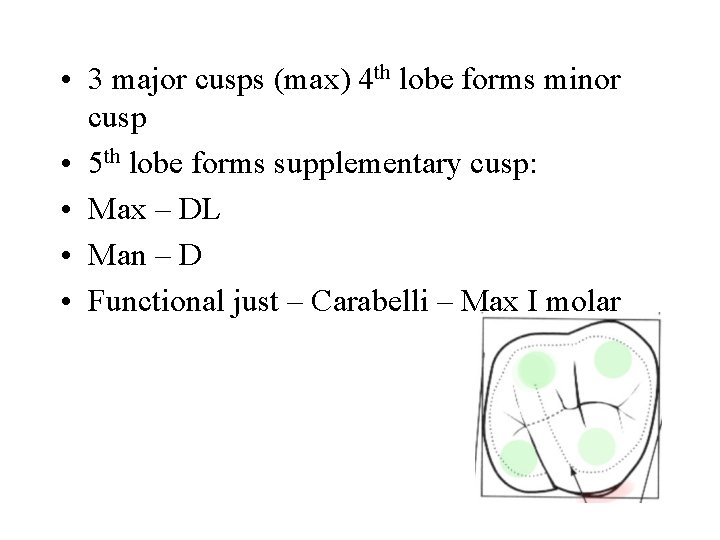
• 3 major cusps (max) 4 th lobe forms minor cusp • 5 th lobe forms supplementary cusp: • Max – DL • Man – D • Functional just – Carabelli – Max I molar
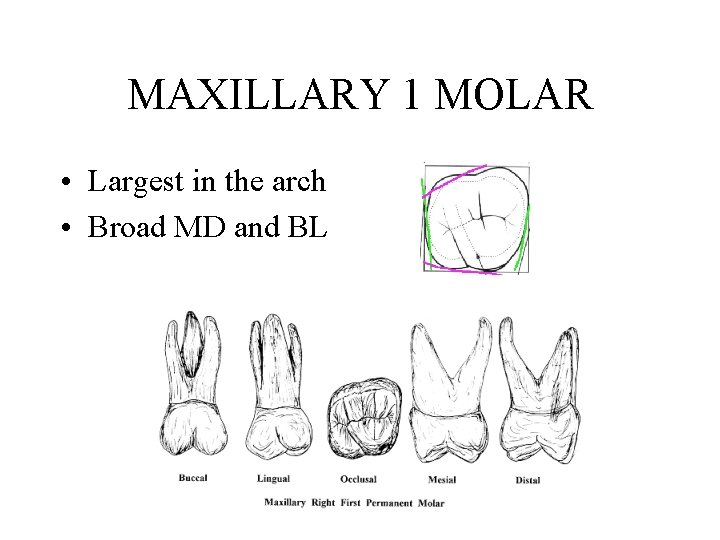
MAXILLARY 1 MOLAR • Largest in the arch • Broad MD and BL
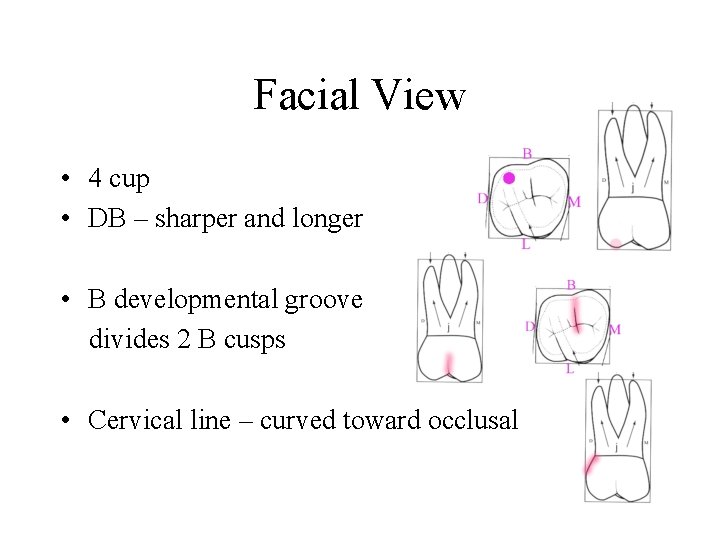
Facial View • 4 cup • DB – sharper and longer • B developmental groove divides 2 B cusps • Cervical line – curved toward occlusal
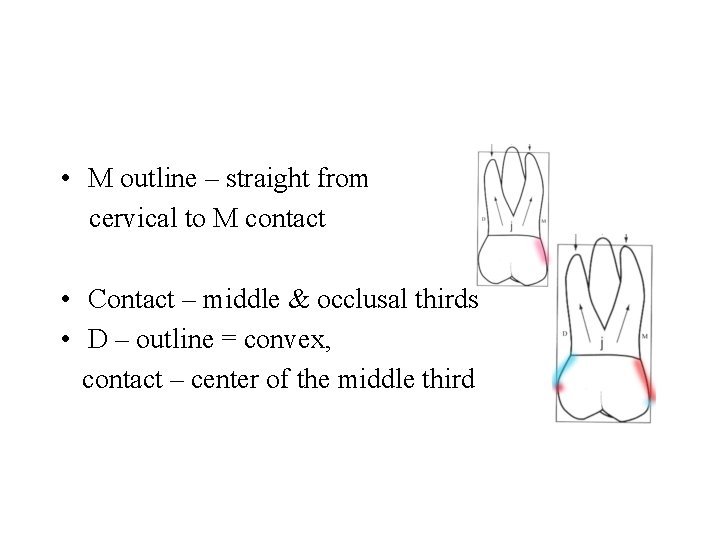
• M outline – straight from cervical to M contact • Contact – middle & occlusal thirds • D – outline = convex, contact – center of the middle third
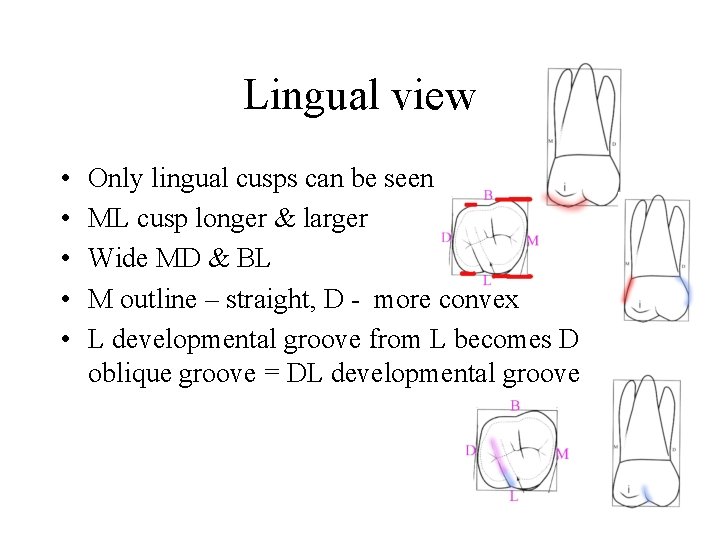
Lingual view • • • Only lingual cusps can be seen ML cusp longer & larger Wide MD & BL M outline – straight, D - more convex L developmental groove from L becomes D oblique groove = DL developmental groove
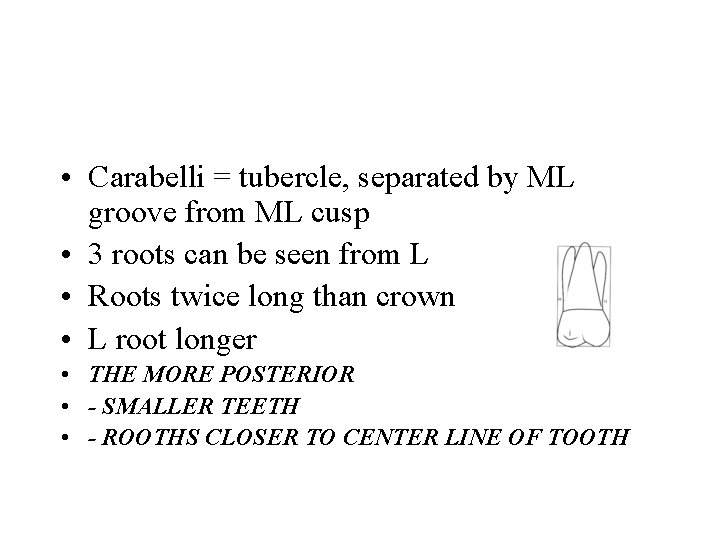
• Carabelli = tubercle, separated by ML groove from ML cusp • 3 roots can be seen from L • Roots twice long than crown • L root longer • THE MORE POSTERIOR • - SMALLER TEETH • - ROOTHS CLOSER TO CENTER LINE OF TOOTH
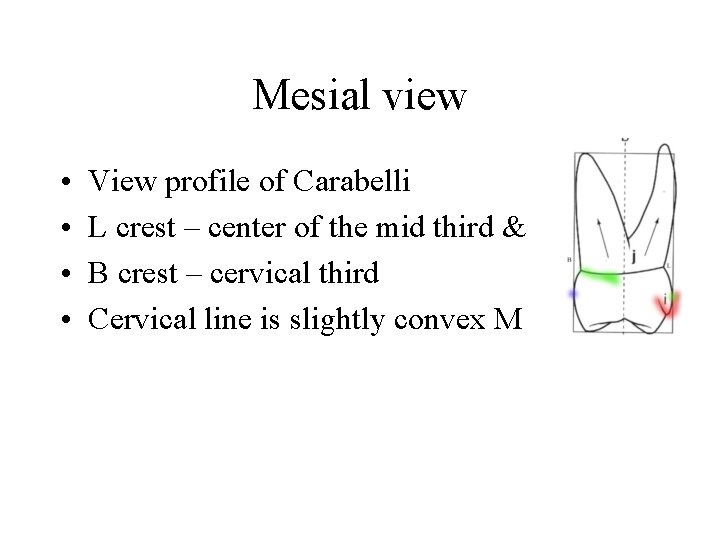
Mesial view • • View profile of Carabelli L crest – center of the mid third & B crest – cervical third Cervical line is slightly convex M
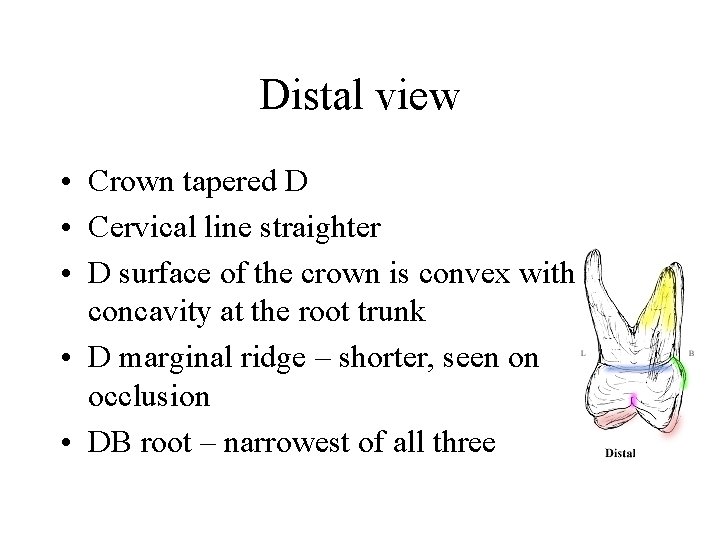
Distal view • Crown tapered D • Cervical line straighter • D surface of the crown is convex with concavity at the root trunk • D marginal ridge – shorter, seen on occlusion • DB root – narrowest of all three
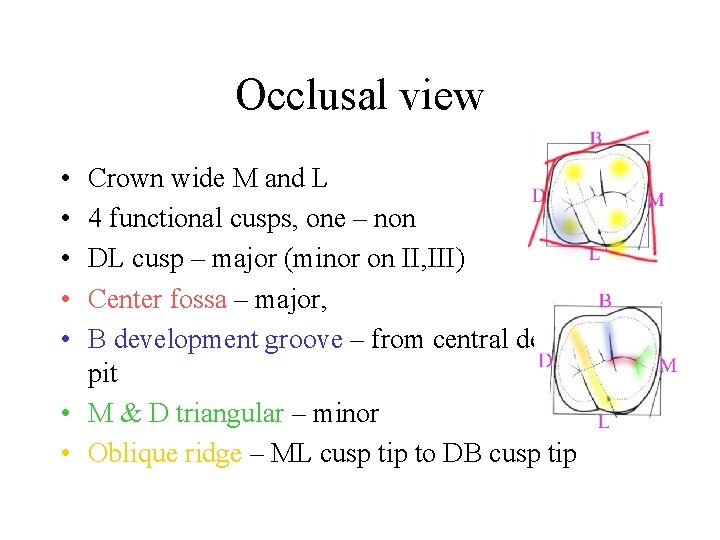
Occlusal view • • • Crown wide M and L 4 functional cusps, one – non DL cusp – major (minor on II, III) Center fossa – major, B development groove – from central development pit • M & D triangular – minor • Oblique ridge – ML cusp tip to DB cusp tip
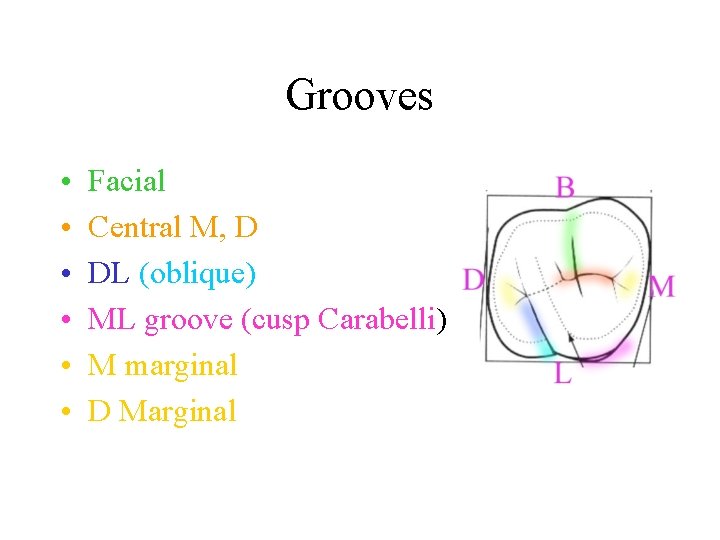
Grooves • • • Facial Central M, D DL (oblique) ML groove (cusp Carabelli) M marginal D Marginal
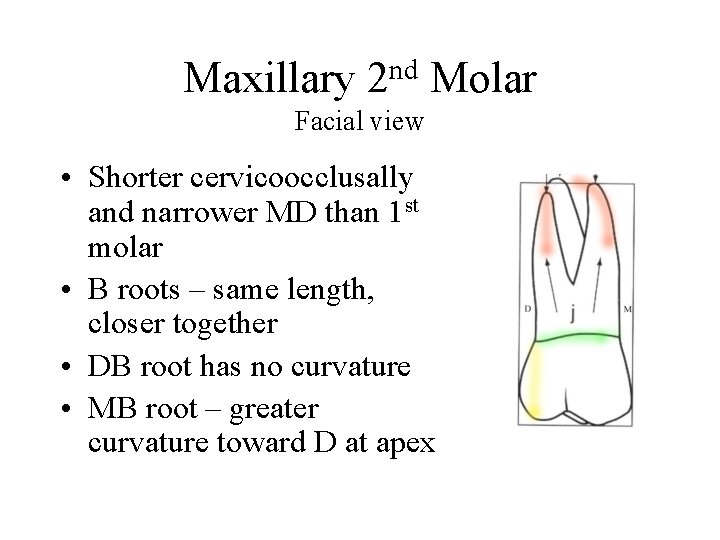
Maxillary nd 2 Molar Facial view • Shorter cervicoocclusally and narrower MD than 1 st molar • B roots – same length, closer together • DB root has no curvature • MB root – greater curvature toward D at apex
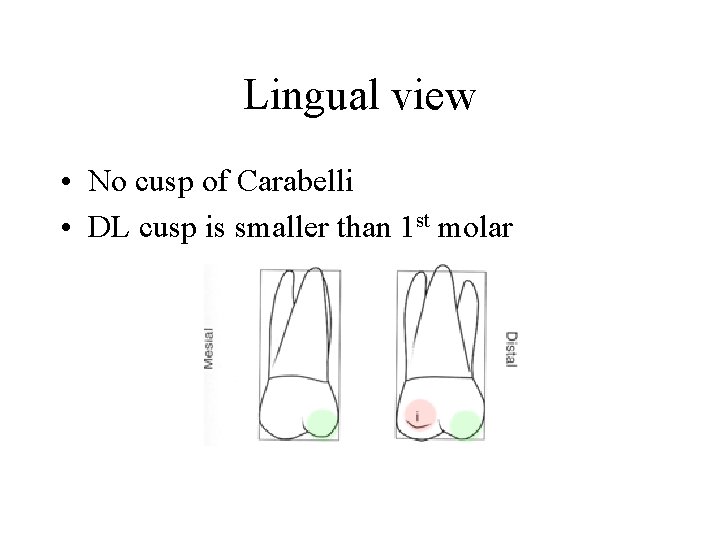
Lingual view • No cusp of Carabelli • DL cusp is smaller than 1 st molar
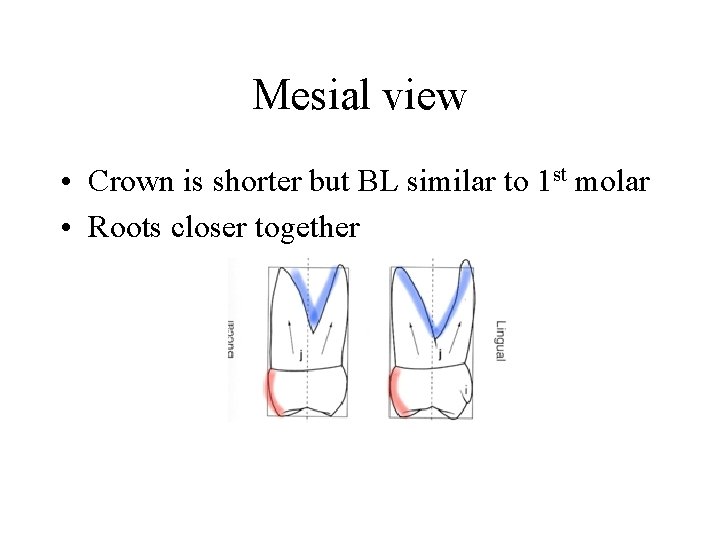
Mesial view • Crown is shorter but BL similar to 1 st molar • Roots closer together
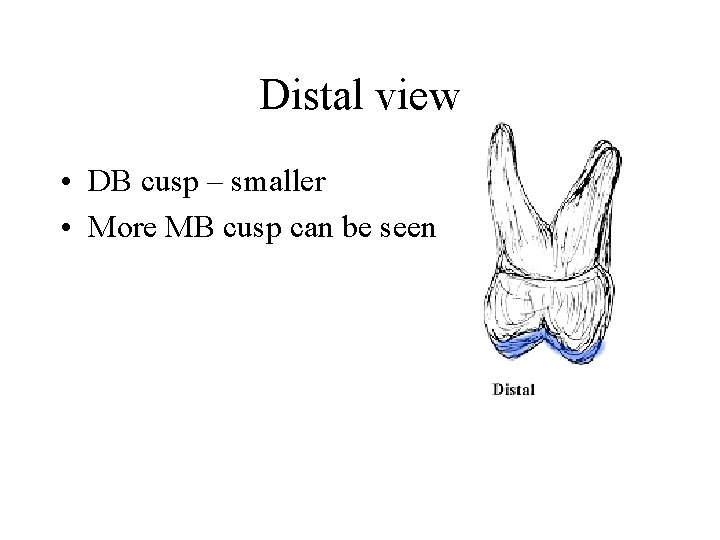
Distal view • DB cusp – smaller • More MB cusp can be seen
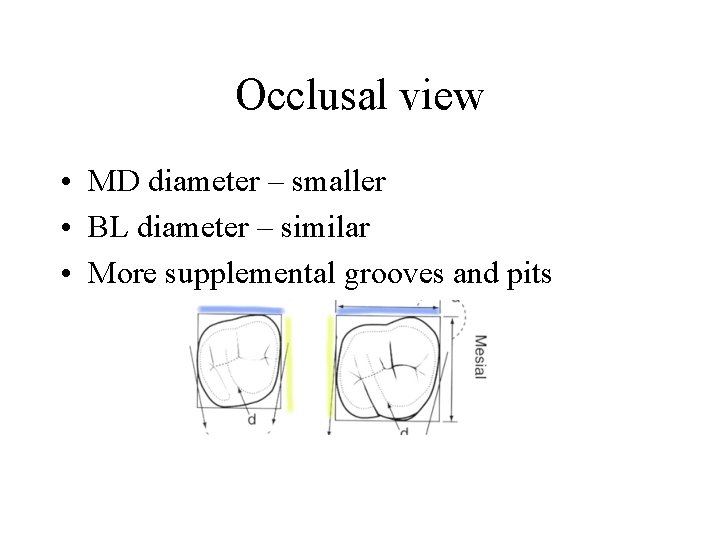
Occlusal view • MD diameter – smaller • BL diameter – similar • More supplemental grooves and pits
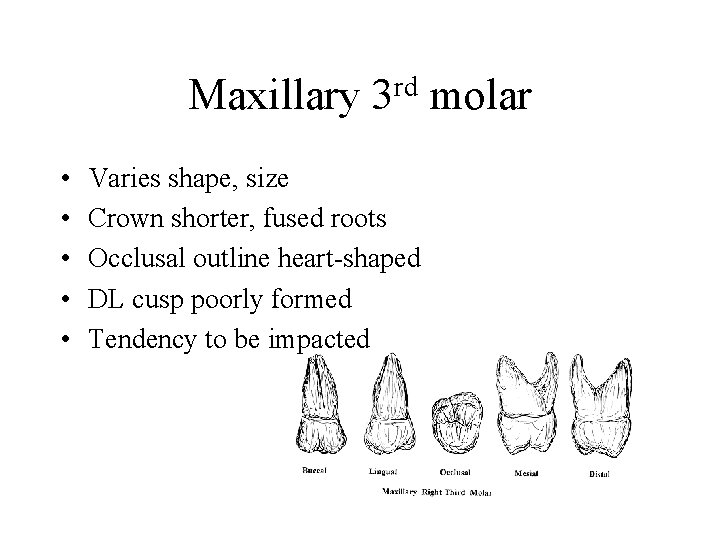
Maxillary • • • rd 3 Varies shape, size Crown shorter, fused roots Occlusal outline heart-shaped DL cusp poorly formed Tendency to be impacted molar
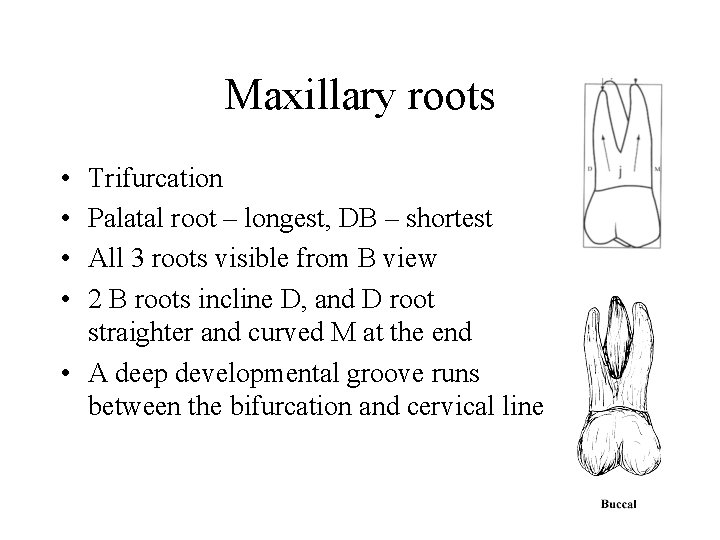
Maxillary roots • • Trifurcation Palatal root – longest, DB – shortest All 3 roots visible from B view 2 B roots incline D, and D root straighter and curved M at the end • A deep developmental groove runs between the bifurcation and cervical line
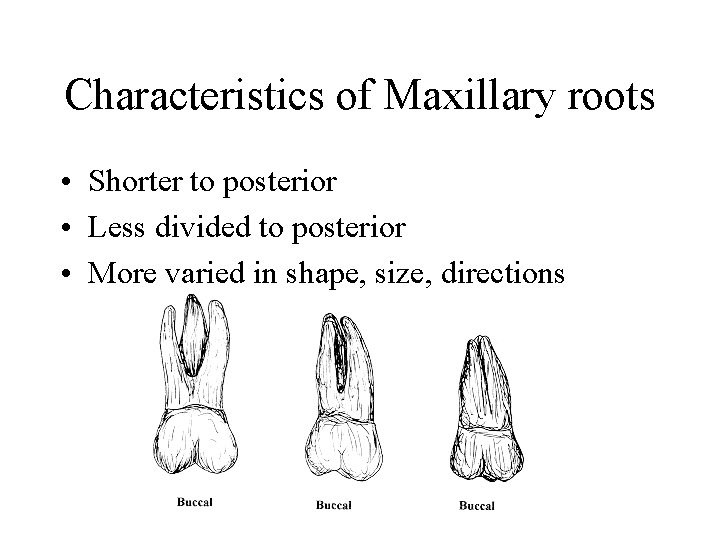
Characteristics of Maxillary roots • Shorter to posterior • Less divided to posterior • More varied in shape, size, directions
Pulp cavity of Maxillary molar • Pulp chamber, 3 main canals • 1 st molar can have 4 canals (2 in the MB root) • Some 3 rd molars can have 4 root canals • One pulp for each cusp (4 in all)