
Tools of the Historian A historian is A




- Slides: 22
Tools of the Historian
A historian is A person who studies and writes about the people and events of the past.
Historians find out how people lived, what happened to them, and what happened around them.
Historians rely on Calendars or dating systems created by the people of the past to measure time. Most of these calendars were created based on important events.
The Western Calendar Is the calendar that is used today. The Western Calendar was created around 1500 by the Roman Catholic Church. At that time it was called the Gregorian Calendar because the Pope was named Gregory. begins on the year in which Jesus was thought to be born or the year 1.
In the Western Calendar The years before the birth of Jesus are known as B. C. or “before Christ. ” The years after the birth of Jesus are called A. D. or “Anno Domini. ” This phrase comes from the Latin language and means “in the year of our lord. ” Sometimes calendars and documents are dated with BCE (Before the Common Era) and CE (Common Era).
To date events Before the birth of Christ or B. C. , historians count backward from the year 1. After the birth of Christ or A. D. , historians count forward starting at the year 1. THERE IS NO YEAR 0!!!
Historians organize history By dividing it into blocks of time known as periods or eras. Into periods like decades, centuries, or time periods that are given
Historians make sense Of the flow of dates and events by putting these things in chronological order By putting these events on a timeline or a diagram
Making Sense of BC/AD Time
Timeline Example: Place the following dates on your timeline in chronological order. Always start with the oldest date on the left and move to the newest date on the right. Remember: The largest BC date is the oldest and the largest AD date is the newest. Dates 467 BC 4000 BC 44 592 BC 34 BC 136 4 500 BC 2009 4000 BC 592 BC 500 BC 467 BC 34 BC 4 44 136 2009
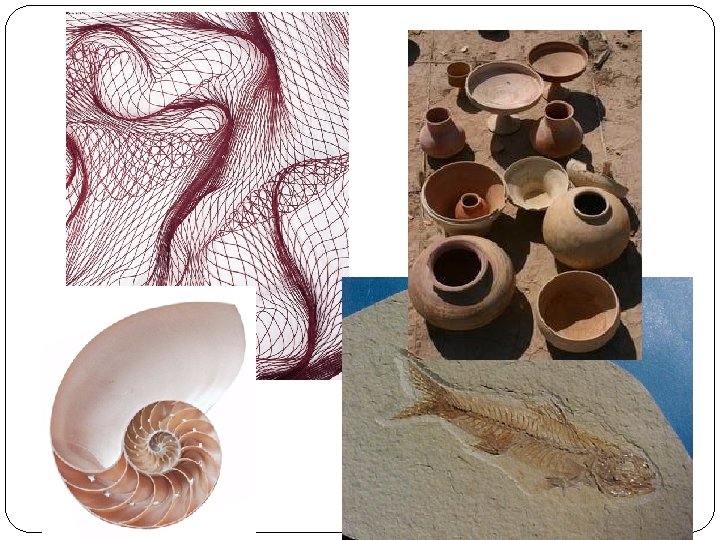
How Historians Work 1) Find evidence 2) Read primary or secondary sources 3) Piece information together and draw conclusions or interpret what they have found Now you will be the historian. You will see pictures. Write down what you see and answer questions with your partner.
History and Geography • Geography shaped the course of events in world history and historians look at the five themes of geography when they interpret history • Five Themes: location, place, human/environment interaction, movement, and region
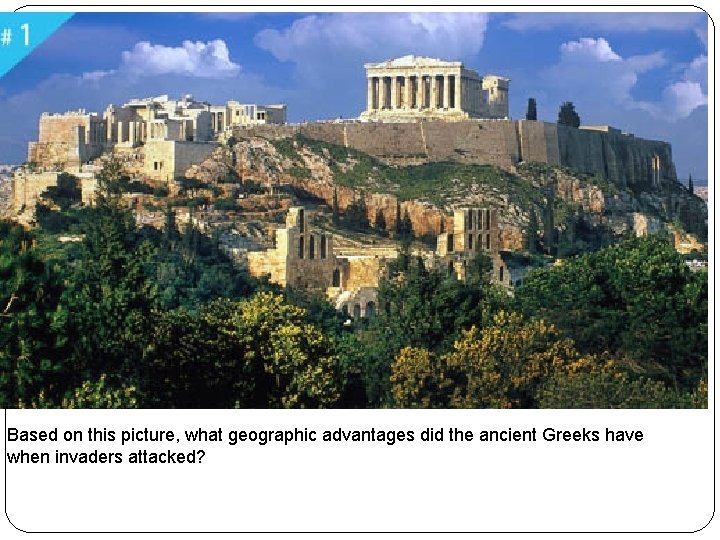
Based on this picture, what geographic advantages did the ancient Greeks have when invaders attacked?
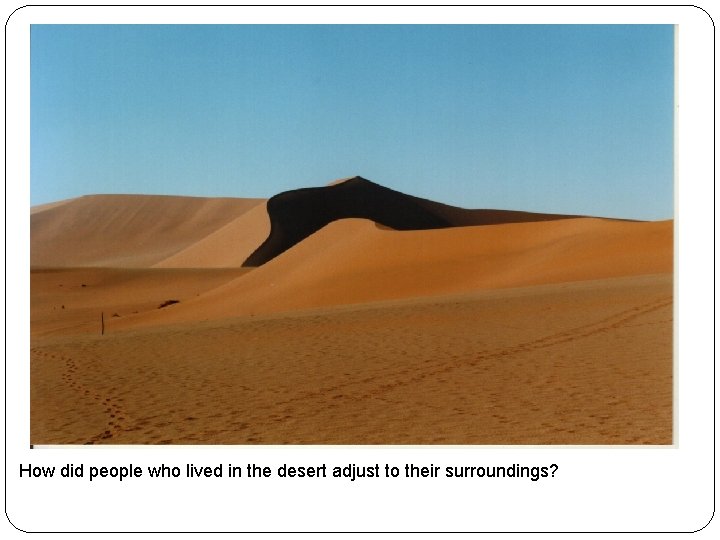
How did people who lived in the desert adjust to their surroundings?
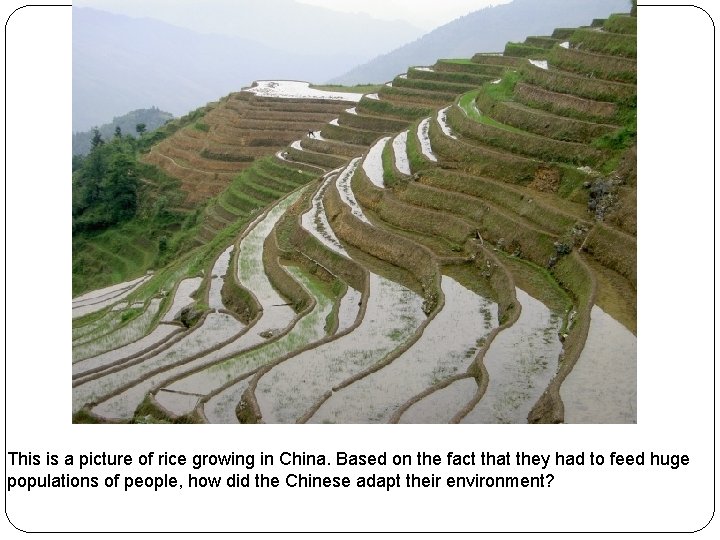
This is a picture of rice growing in China. Based on the fact that they had to feed huge populations of people, how did the Chinese adapt their environment?
History Themes: • Power and Authority: Who has the power? How do they get it? • Economics: How does a region trade? Do they have money or barter? • Revolution: Drastic changes that occur in society • Cultural Interaction: How does one culture/region interact or come into contact with another region? • Science and Technology: What tools does a group of people use to help themselves? • Interaction with the Environment: How do they change to be able to deal with their living conditions? • Religious and Ethical System: What do the people believe in? What kind of religion do they have? What do they believe is right and wrong?