
Tools of the Biologist The Compound Light Microscope
+ Tools of the Biologist
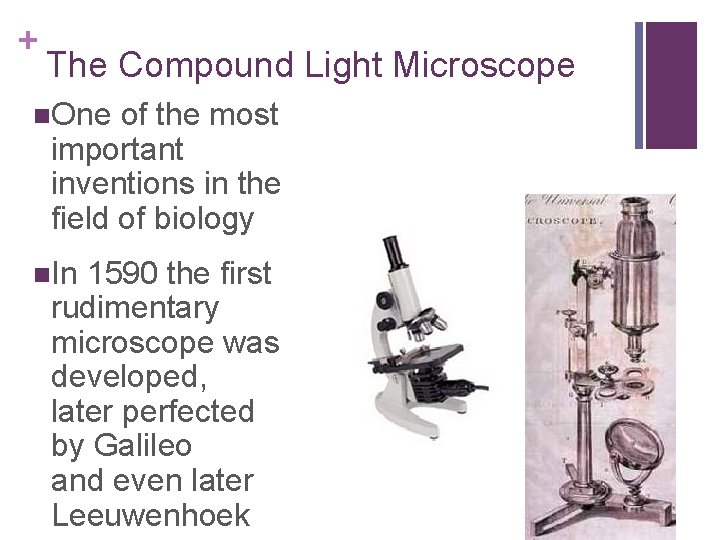
+ The Compound Light Microscope n. One of the most important inventions in the field of biology n. In 1590 the first rudimentary microscope was developed, later perfected by Galileo and even later Leeuwenhoek
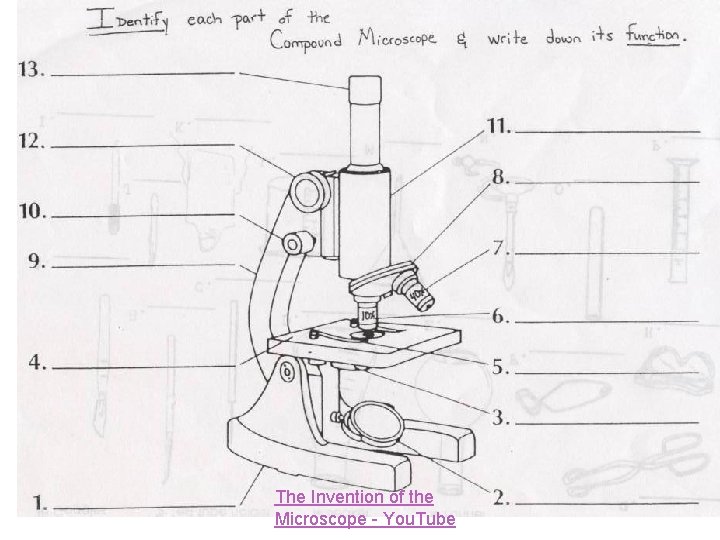
+ The Invention of the Microscope - You. Tube
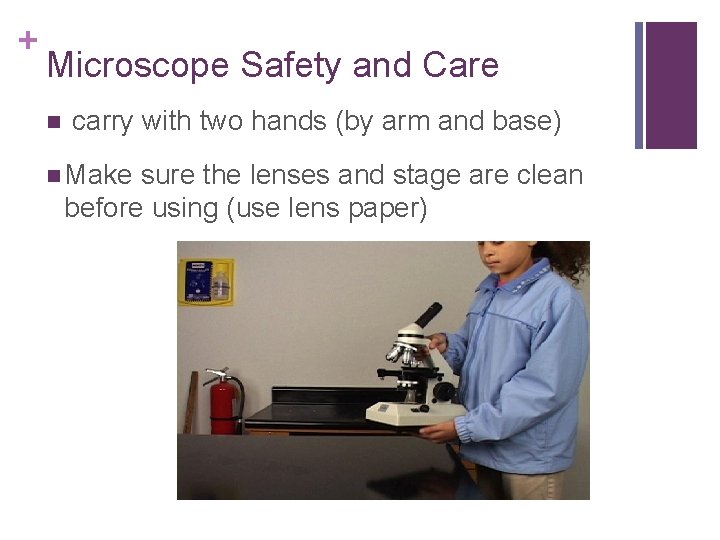
+ Microscope Safety and Care n carry with two hands (by arm and base) n Make sure the lenses and stage are clean before using (use lens paper)
+ Viewing a Slide n Always begin on the lowest available power (scanning) n Center specimen in the field of view (up is down, right is left) n Focus with coarse adjustment knob n Switch to low power and repeat #2 and #3 n When using high power, focus only using the FINE adjustment to prevent losing sight of your specimen or damaging the slide!
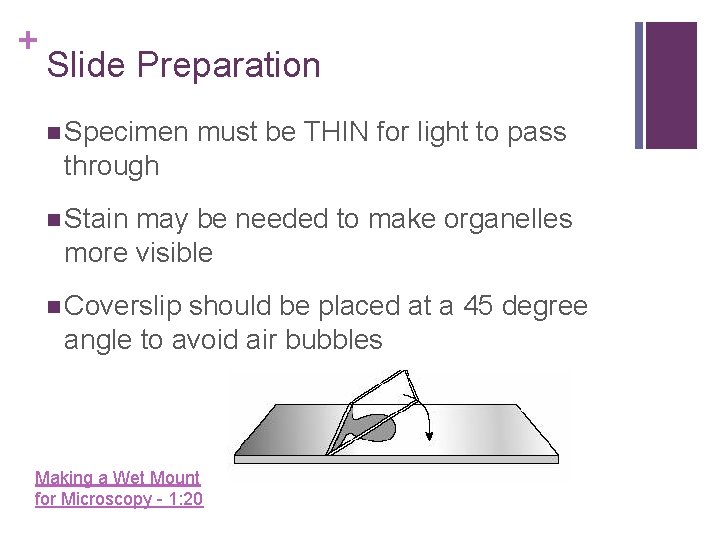
+ Slide Preparation n Specimen must be THIN for light to pass through n Stain may be needed to make organelles more visible n Coverslip should be placed at a 45 degree angle to avoid air bubbles Making a Wet Mount for Microscopy - 1: 20
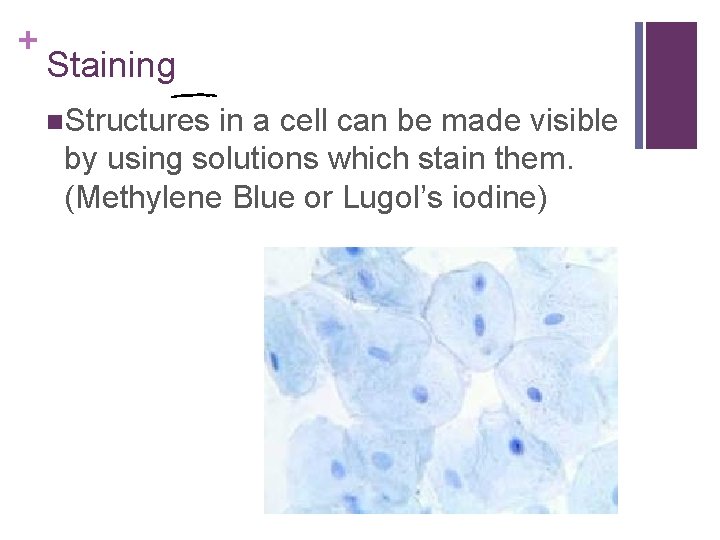
+ Staining n. Structures in a cell can be made visible by using solutions which stain them. (Methylene Blue or Lugol’s iodine)
+ AIM- What are some other tools of the biologist? HW- ditto *First test next FRIDAY nhttp: //www. playbuzz. com/tarasc 10 /can-you-guess-what-thesemicroscopic-images-really-are
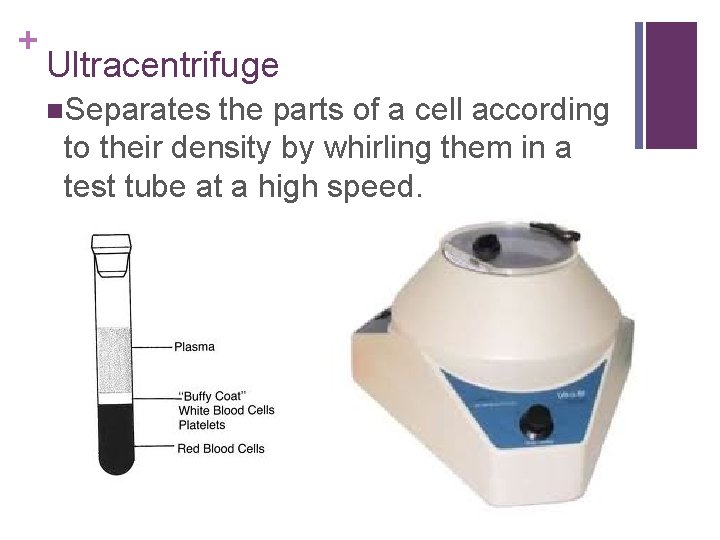
+ Ultracentrifuge n. Separates the parts of a cell according to their density by whirling them in a test tube at a high speed.
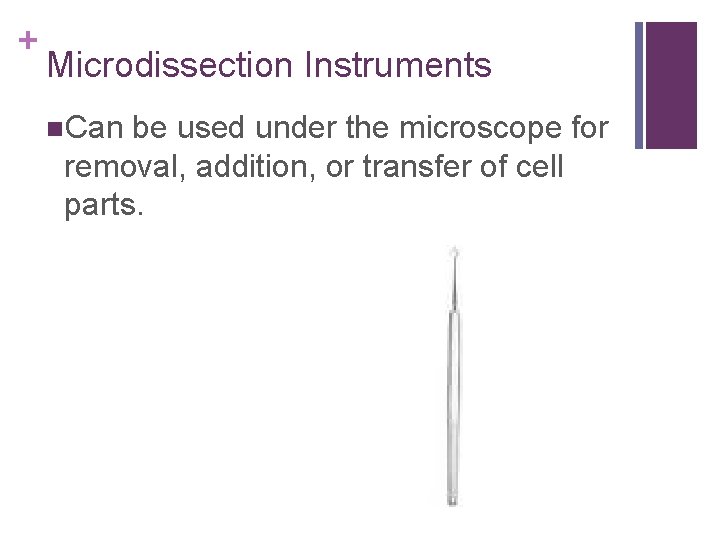
+ Microdissection Instruments n. Can be used under the microscope for removal, addition, or transfer of cell parts.
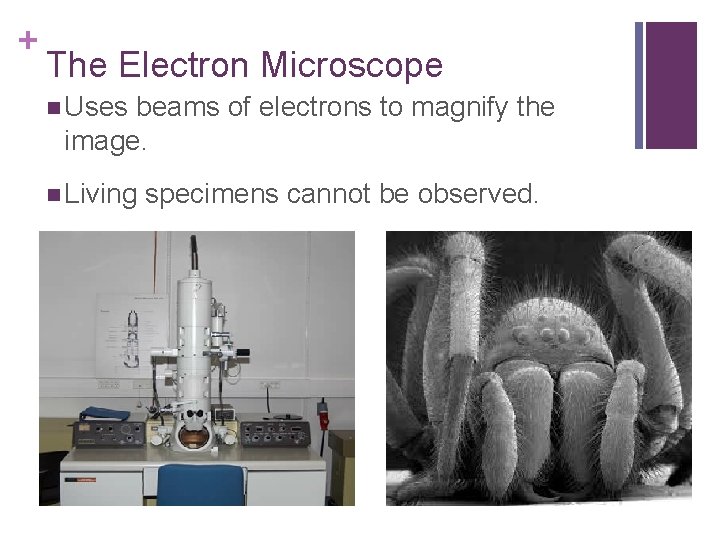
+ The Electron Microscope n Uses beams of electrons to magnify the image. n Living specimens cannot be observed.
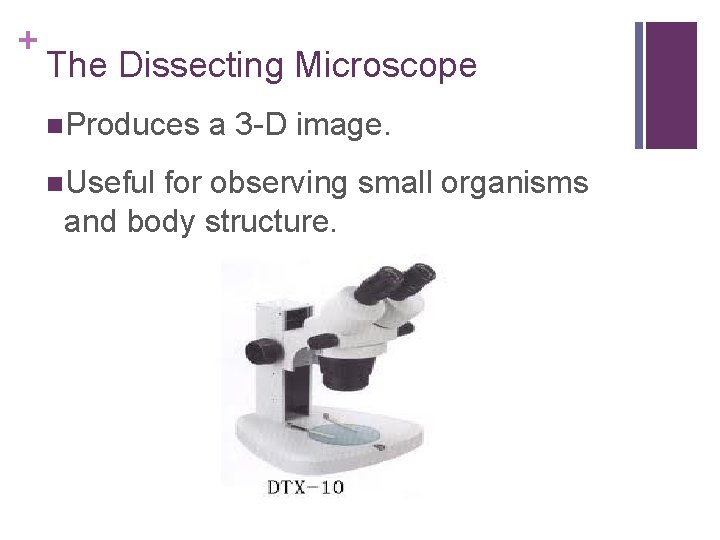
+ The Dissecting Microscope n. Produces n. Useful a 3 -D image. for observing small organisms and body structure.
+ n. Of the following, which instrument is most commonly used to observe the external features of a grasshopper's abdomen? 1) ultracentrifuge 2) microdissection instrument 3) dissecting microscope 4) electron microscope
+ n A student observed a Paramecium under the low power objective of a microscope (100 x) and then under high power (400 x). The image of the Paramecium under low power, compared to the image of the same Paramecium under high power, would be 1) smaller and in a darker field of view 2) smaller and in a brighter field of view 3) larger and in a darker field of view 4) larger and in a brighter field of view
- Slides: 16