
Tools of Science Scientific Method Used for experimentation
- Slides: 10
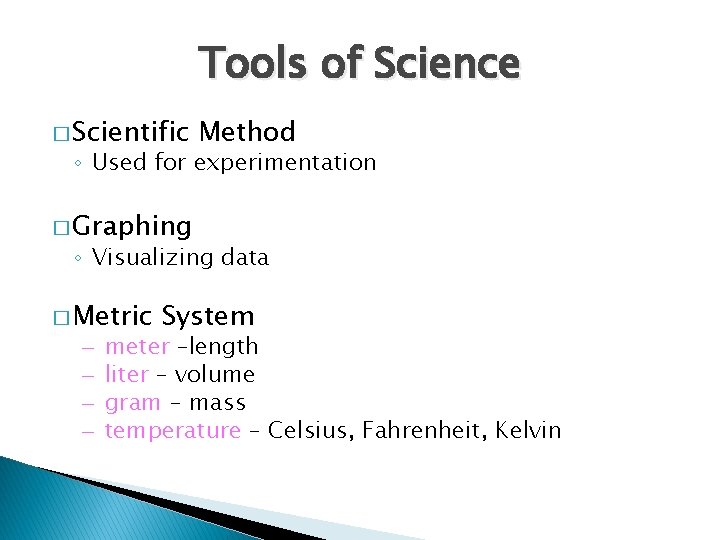
Tools of Science � Scientific Method ◦ Used for experimentation � Graphing ◦ Visualizing data � Metric – – System meter –length liter – volume gram – mass temperature – Celsius, Fahrenheit, Kelvin
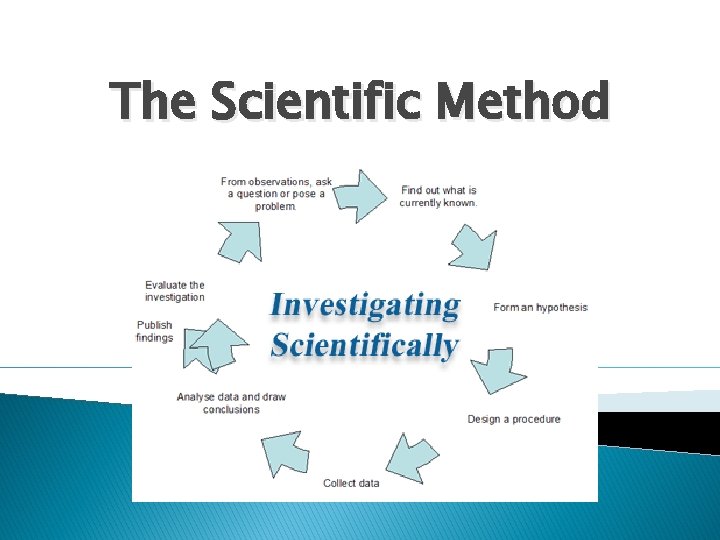
The Scientific Method
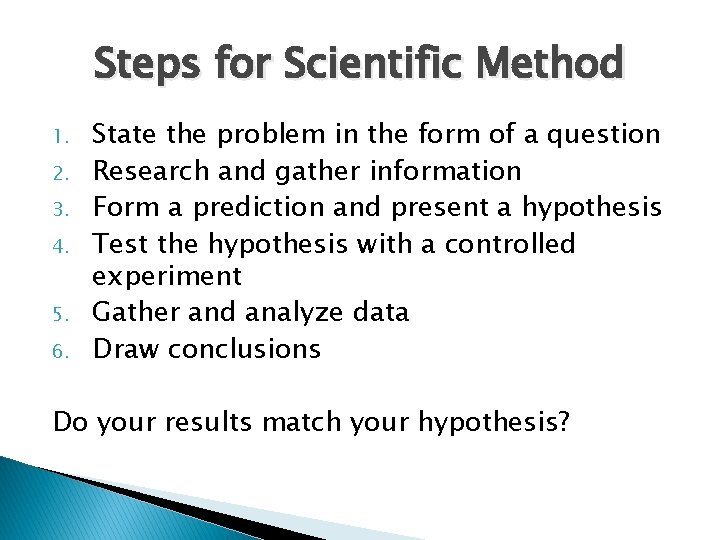
Steps for Scientific Method 1. 2. 3. 4. 5. 6. State the problem in the form of a question Research and gather information Form a prediction and present a hypothesis Test the hypothesis with a controlled experiment Gather and analyze data Draw conclusions Do your results match your hypothesis?
Why Scientific Method? � To reach logically-valid conclusions ◦ Two schools of reasoning �Deductive vs. Inductive � Deductive reasoning involves applying generalized theories to specific situations ◦ Example: “All grandfathers are old men (generally the case, with few exceptions). Harold is old (observation). Therefore, Harold is a grandfather (inference). ”
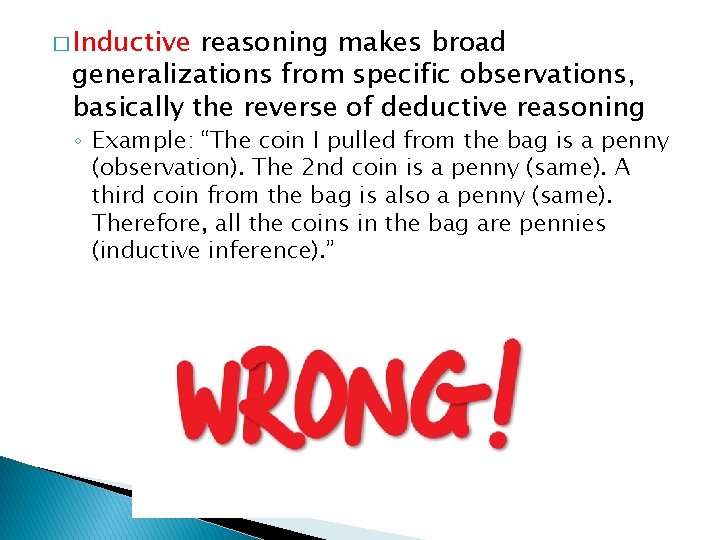
� Inductive reasoning makes broad generalizations from specific observations, basically the reverse of deductive reasoning ◦ Example: “The coin I pulled from the bag is a penny (observation). The 2 nd coin is a penny (same). A third coin from the bag is also a penny (same). Therefore, all the coins in the bag are pennies (inductive inference). ”
The Experiment � Two groups ◦ Control – all conditions are kept the same ◦ Experimental – all conditions kept the same except for the variable being tested �Only one can be tested at a time � The condition that is changed is the independent variable � The condition that results from changing the independent variable is the dependent variable
Examples � Mario studied how far room temperature water would spurt out of a plastic milk carton when 5 mm. holes were punched at different heights from the bottom of the container. �A math teacher wanted to know if listening to music while studying would increase test scores.
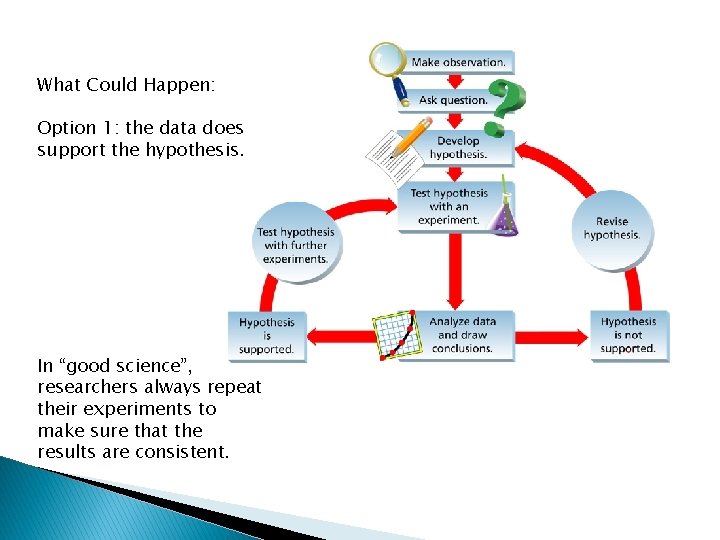
What Could Happen: Option 1: the data does support the hypothesis. In “good science”, researchers always repeat their experiments to make sure that the results are consistent.
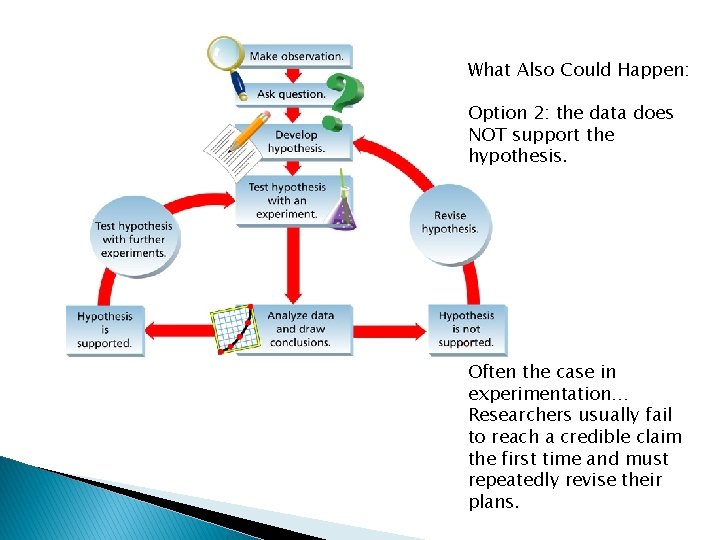
What Also Could Happen: Option 2: the data does NOT support the hypothesis. Often the case in experimentation… Researchers usually fail to reach a credible claim the first time and must repeatedly revise their plans.
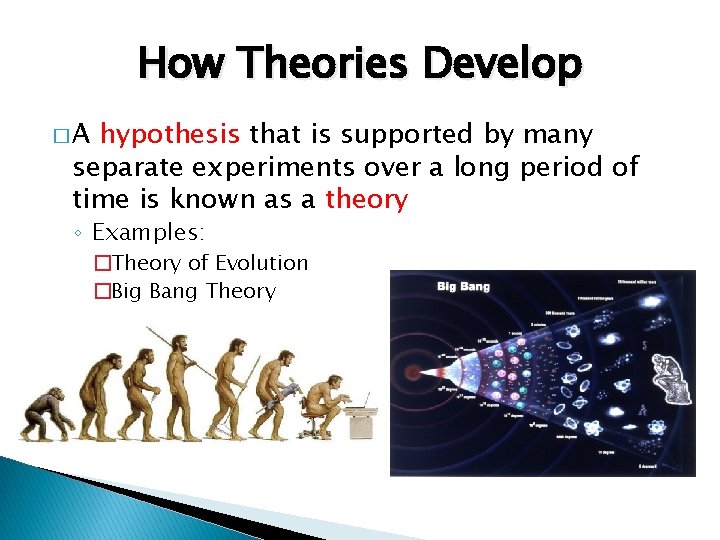
How Theories Develop �A hypothesis that is supported by many separate experiments over a long period of time is known as a theory ◦ Examples: �Theory of Evolution �Big Bang Theory