
Tools for Microbiology MICROSCOPE Units of Measurement Table
Tools for Microbiology MICROSCOPE
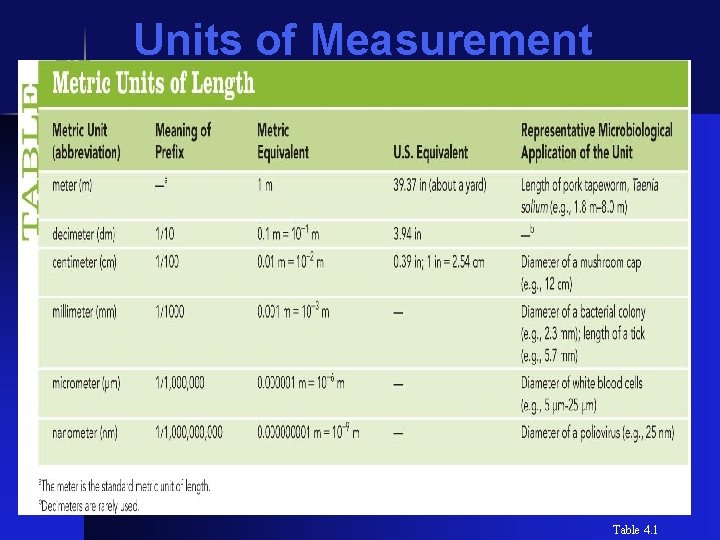
Units of Measurement Table 4. 1
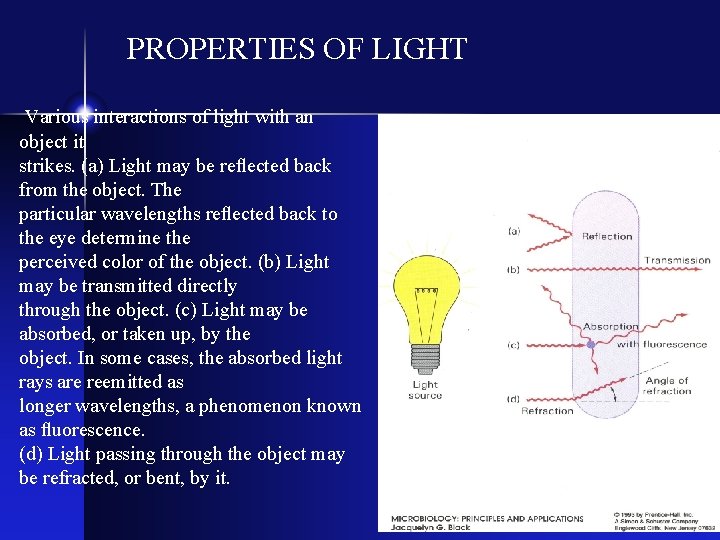
PROPERTIES OF LIGHT Various interactions of light with an object it strikes. (a) Light may be reflected back from the object. The particular wavelengths reflected back to the eye determine the perceived color of the object. (b) Light may be transmitted directly through the object. (c) Light may be absorbed, or taken up, by the object. In some cases, the absorbed light rays are reemitted as longer wavelengths, a phenomenon known as fluorescence. (d) Light passing through the object may be refracted, or bent, by it.
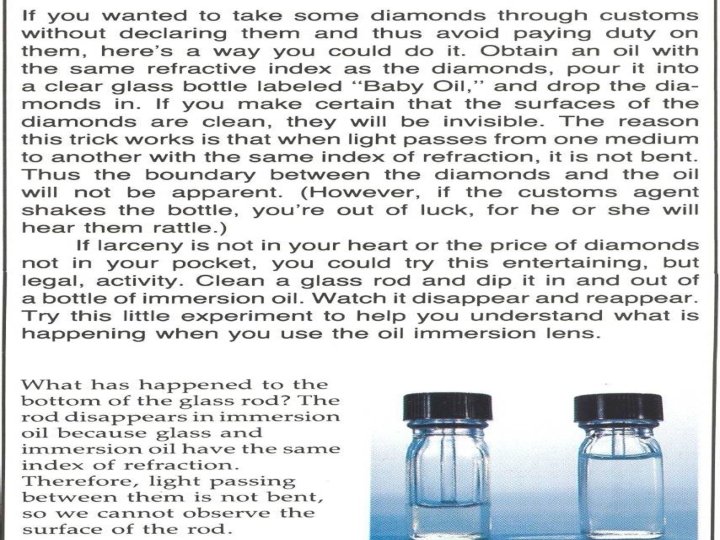
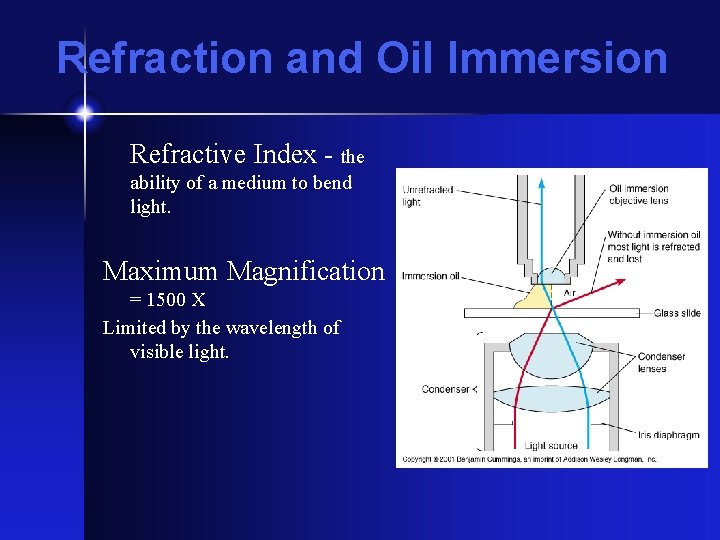
Refraction and Oil Immersion Refractive Index - the ability of a medium to bend light. Maximum Magnification = 1500 X Limited by the wavelength of visible light.
General Principles of Microscopy • • Wavelength of radiation Magnification Resolution Contrast
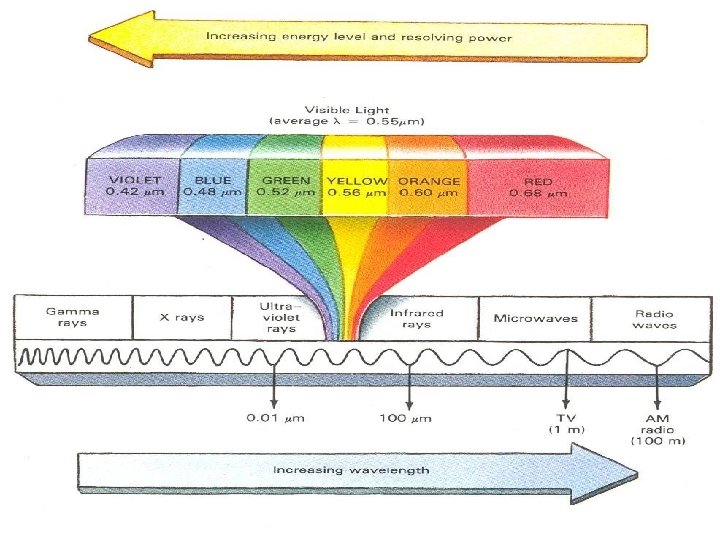
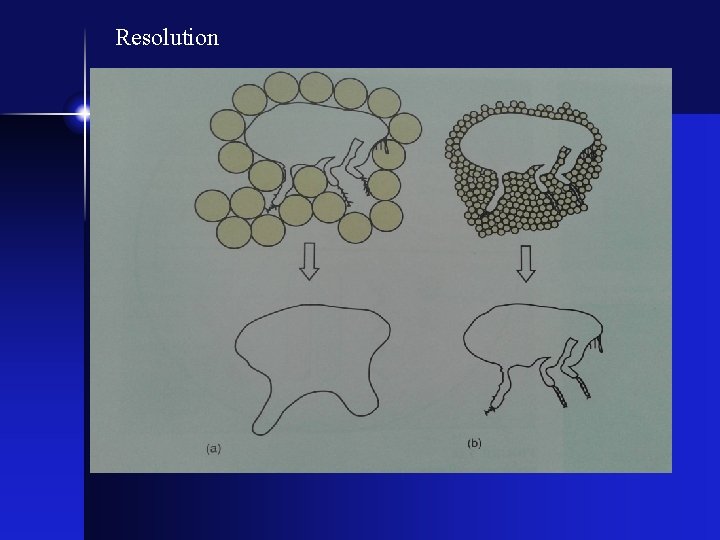
Resolution
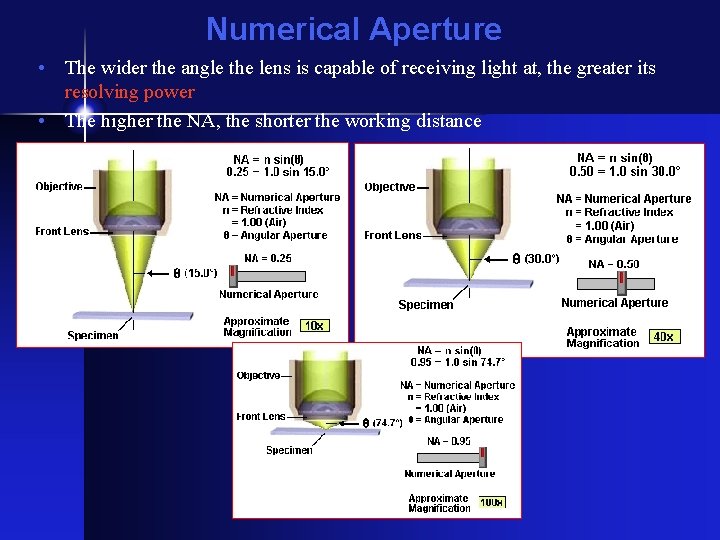
Numerical Aperture • The wider the angle the lens is capable of receiving light at, the greater its resolving power • The higher the NA, the shorter the working distance
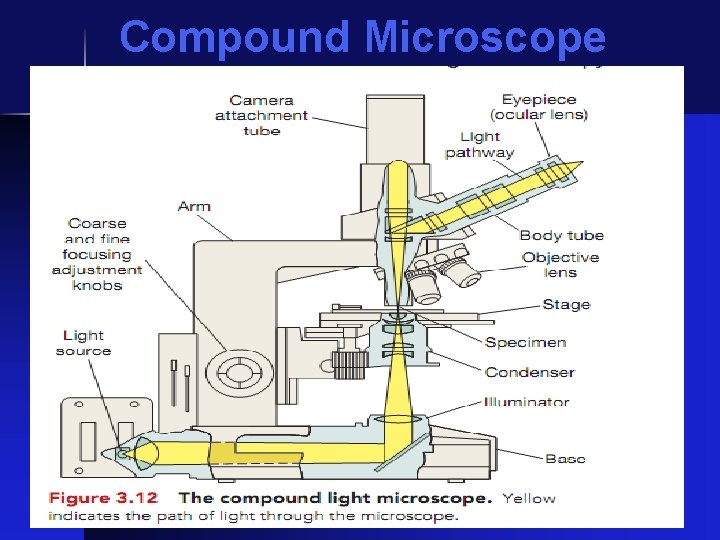
Compound Microscope
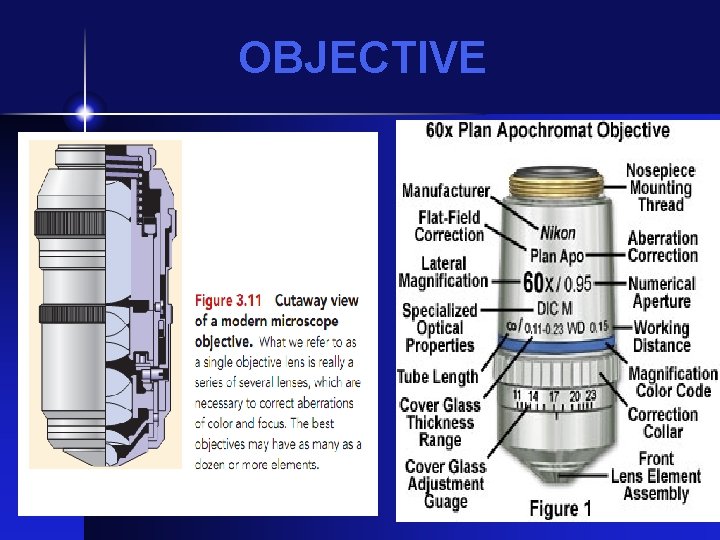
OBJECTIVE
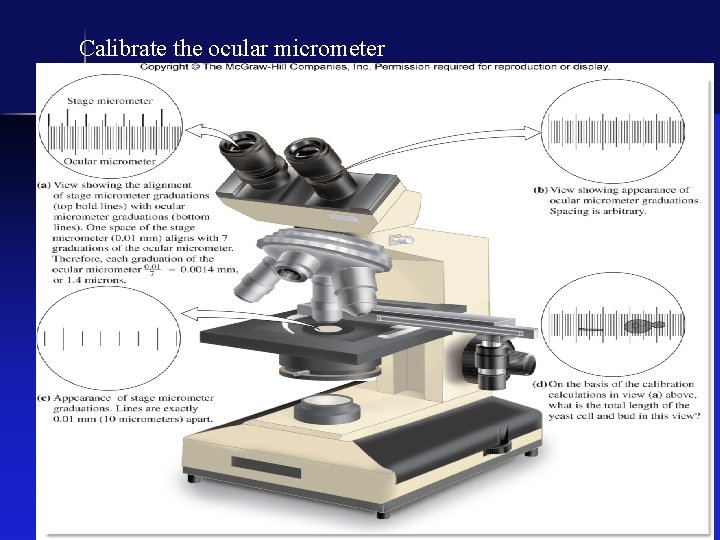
Calibrate the ocular micrometer
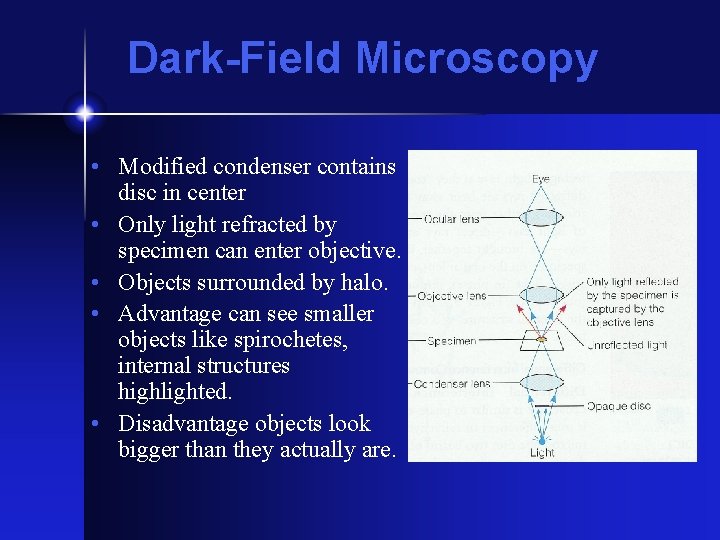
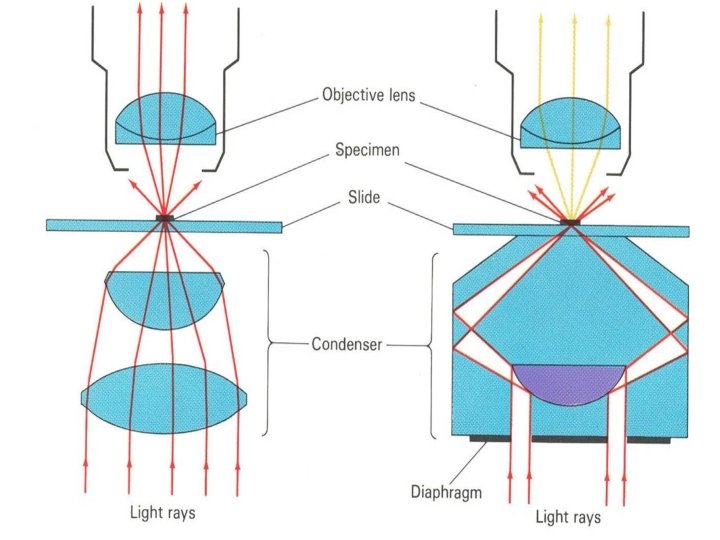
Dark-Field Microscopy • Modified condenser contains disc in center • Only light refracted by specimen can enter objective. • Objects surrounded by halo. • Advantage can see smaller objects like spirochetes, internal structures highlighted. • Disadvantage objects look bigger than they actually are.
- Slides: 15