
TOOLBOX TALKS O 1 Routing and scheduling Fleet
TOOLBOX TALKS O 1 – Routing and scheduling
Fleet Operator Recognition Scheme (FORS) FORS is important to our company because it helps us: Demonstrate the quality of our operation Improve our road safety record To win / maintain work Remain legally compliant Become more efficient Reduce our environmental impacts Requirement: Fleet operators shall ensure that the most safe, efficient and appropriate vehicles are used and that any vehicle routes to sites or premises are carefully selected and adhered to unless directed otherwise by a relevant authority
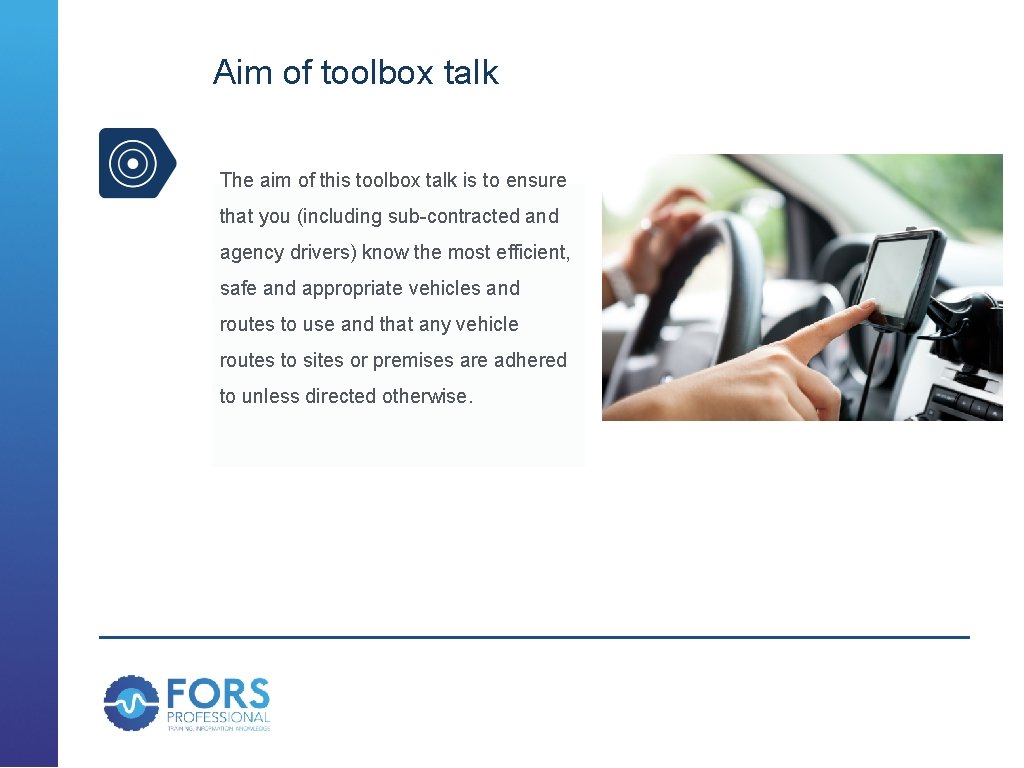
Aim of toolbox talk The aim of this toolbox talk is to ensure that you (including sub-contracted and agency drivers) know the most efficient, safe and appropriate vehicles and routes to use and that any vehicle routes to sites or premises are adhered to unless directed otherwise.
How this toolbox talk will help you This talk will help you to understand: Why the company plans routes The rationale for the types of roads and routes you select when planning your journey, eg whether it is the shortest distance or means staying on main roads That the shortest route is not necessarily the quickest route The time needed to complete the journey and that it can be realistically completed in that time How to identify hazards along a particular route and how to deal with them The consequences of route deviation
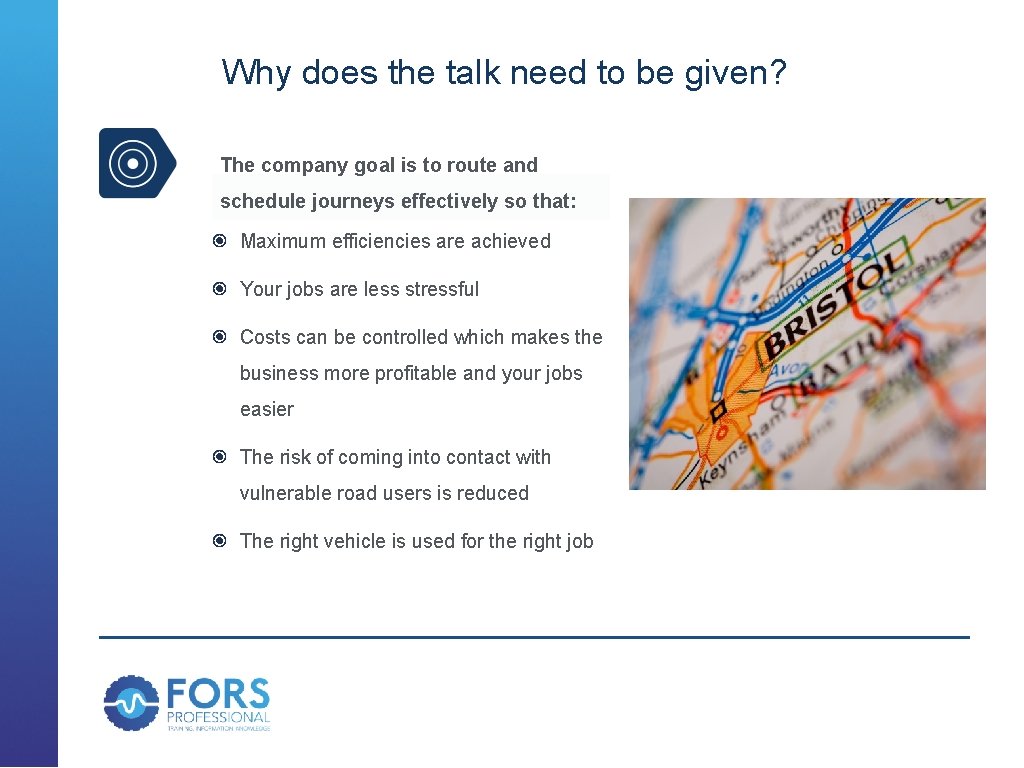
Why does the talk need to be given? The company goal is to route and schedule journeys effectively so that: Maximum efficiencies are achieved Your jobs are less stressful Costs can be controlled which makes the business more profitable and your jobs easier The risk of coming into contact with vulnerable road users is reduced The right vehicle is used for the right job

Why it is important to plan routes Routing and scheduling should be done so that operations run as smoothly and efficiently as possible. This can mean: You don’t get lost Inappropriate routes are avoided Routes are efficiently aligned to deliveries and collections The probability of collisions is lowered Fuel savings are achieved Environmental impacts are reduced
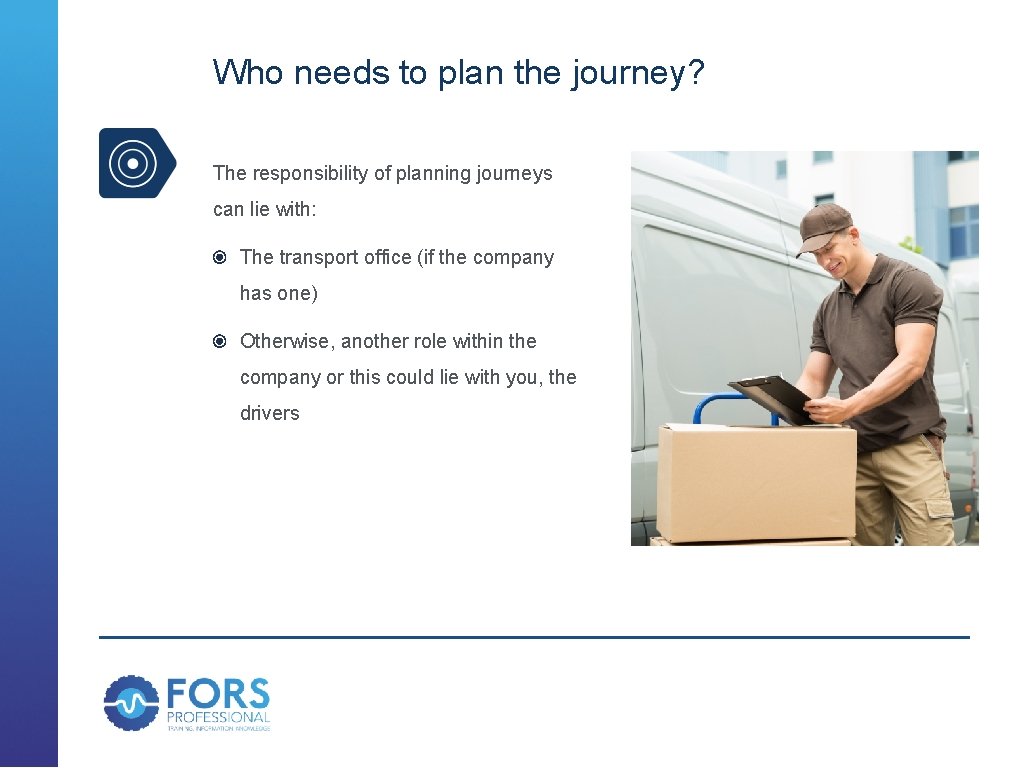
Who needs to plan the journey? The responsibility of planning journeys can lie with: The transport office (if the company has one) Otherwise, another role within the company or this could lie with you, the drivers

How should routing and scheduling be done? The journey should be planned before it is started. If you haven’t planned the journey yourself make sure you’re briefed on the route and take into account: Road restrictions, e. g. time, constraints on vehicle size, ‘banned’ routes etc. Preferred route options and alternatives in the event of an unforeseen event An evaluation of existing routes to check they are still the most efficient Journey length in order to reduce the risk of fatigue The need for rest breaks and access to toilets, washing facilities and refreshments Fees and tolls

How should routing and scheduling be done? Other things to take into account: Safer routes which are more appropriate for the type of vehicle doing the journey Avoiding periods of peak traffic flow (where possible) Any delivery time windows Routes which you should avoid Arranging the drops so that deliveries and collections are in the right order and efficient
Understanding the toolbox talk 1. Who needs to do the routing and scheduling? 2. When should routing and scheduling take place? 3. Why should you plan journeys? 4. What does effective routing and scheduling achieve? 5. What procedure should you follow if you need to deviate from a route? 6. What are the consequences of deviating from a route unnecessarily?

Routing and scheduling summary: We need to make sure: Journeys are planned so that operations run as smoothly and efficiently as possible Drivers know the most efficient, safe and appropriate vehicles and routes to use Vehicle routes to sites or premises are adhered to unless directed otherwise Its understood that effective planning can help to reduce stress and control costs You appreciate that good journey planning will help ensure customer satisfaction
Any questions?
- Slides: 12