
Toolbox Talk General Safety GEN 01 Responsibility and
Toolbox Talk: General Safety GEN 01: Responsibility and Liability
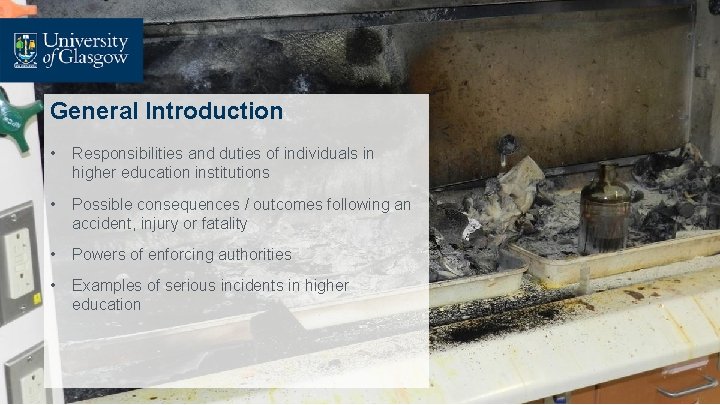
General Introduction • Responsibilities and duties of individuals in higher education institutions • Possible consequences / outcomes following an accident, injury or fatality • Powers of enforcing authorities • Examples of serious incidents in higher education

UCLA Fatality, December 2008 Sheri Sangji, 23 • Staff research associate working with Professor Patrick Harran • Severely burned following an accident involving t-Butyllithium • Safety glasses but no lab coat worn, synthetic clothing caught fire • Died 18 days later in hospital Consequences • Criminal prosecution (failure to provide suitable training / PPE) • Prosecution of Prof Harran deferred for 5 years (community service) • Charges against UCLA dropped following spend of $20 M on improved procedures / scholarship • Fellowship from American Association for Advancement of Science dropped • Negative publicity for university and individuals

Consequences of an accident? Moral / Personal • Risk of distress, illness, injury or death to individuals Financial • Lost time, replacement of equipment / personnel • Fines imposed by courts • Cost of civil claims Legal • Risk of enforcement action • Possibility of prosecution Social • Damage to reputation (both personal and that of the University)
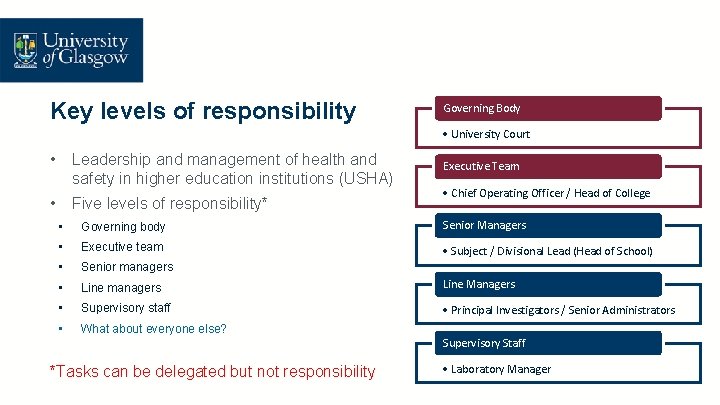
Key levels of responsibility Governing Body • University Court • Leadership and management of health and safety in higher education institutions (USHA) • Five levels of responsibility* Executive Team • Chief Operating Officer / Head of College • Governing body Senior Managers • Executive team • Subject / Divisional Lead (Head of School) • Senior managers • Line managers Line Managers • Supervisory staff • Principal Investigators / Senior Administrators • What about everyone else? *Tasks can be delegated but not responsibility Supervisory Staff • Laboratory Manager
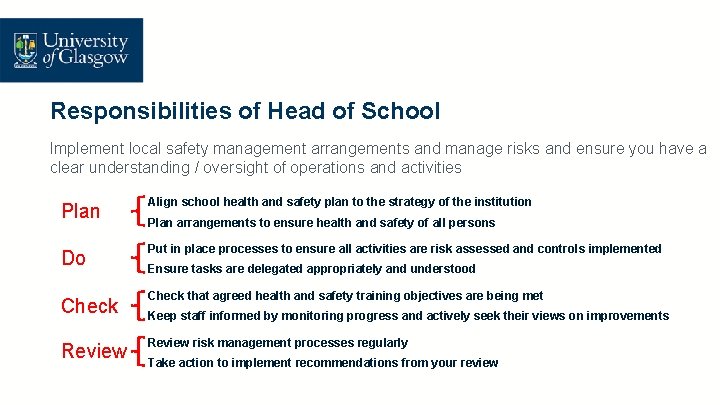
Responsibilities of Head of School Implement local safety management arrangements and manage risks and ensure you have a clear understanding / oversight of operations and activities Plan Align school health and safety plan to the strategy of the institution Do Put in place processes to ensure all activities are risk assessed and controls implemented Check Review Plan arrangements to ensure health and safety of all persons Ensure tasks are delegated appropriately and understood Check that agreed health and safety training objectives are being met Keep staff informed by monitoring progress and actively seek their views on improvements Review risk management processes regularly Take action to implement recommendations from your review
Responsibilities of Principal Investigators As a line manager you are expected to implement your local health and safety management arrangements, monitor and check their effectiveness Plan Set reasonable objectives to cover your area of responsibility (e. g. allocation of RA) Do Ensure risk assessments are undertaken and recorded and that staff / students follow them Check Review Develop / use existing communication processes to keep your team informed Take appropriate action when health and safety is likely to be compromised Check statutory examinations are carried out within prescribed timescales Monitor completion of actions arising from audits / inspections Embed learning points from accidents and incidents Respond to external influences e. g. regulatory body visits / changes in legislation

Responsibilities of Laboratory Supervisor As a staff member with supervisory responsibility you are expected to monitor and check that local arrangements / rules are being followed. Plan Ensure you understand local safety policy and procedures Do Ensure staff and students are aware of (and follow) safe systems (raise issues of non-compliance) Check Review Think about how procedures based on risk assessments can be effectively communicated Develop clear and concise procedures and include key safety information in them Ensure risk assessments have been carried out, are up to date, recorded and understood Ensure actions from local (school level) audits and inspections have been completed Provide feedback on H&S performance via line management Review accidents / incidents and embed learning points in procedures
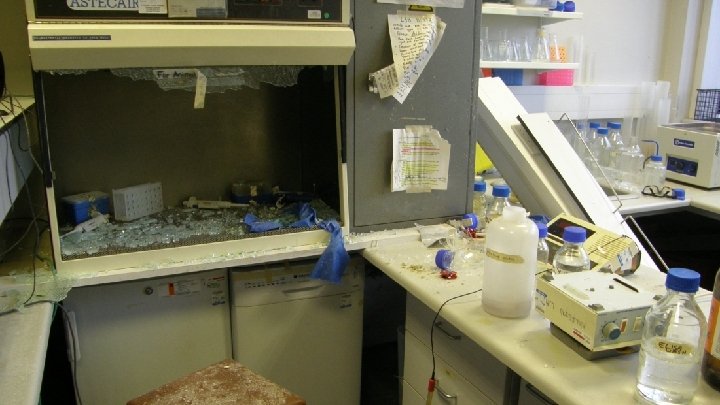

Powers of an HSE Inspector • Enter any premises at any reasonable time • Examine, investigate and require premises / equipment to be left undisturbed • Take, measurements, photographs, recordings and samples • Dismantle or test and dangerous article or substance • Conduct interviews under caution and require a signed statement • Inspect and take copies of documents • Give written advice* • Issue improvement notices and prohibition notices* • Initiate prosecutions in the criminal courts* *Under the Fee for Intervention Scheme where a material breach of health and safety law has occurred the HSE has a duty to recover their costs (at £ 129 per hour).
When will the HSE prosecute? HSE Prosecution Guidelines • When a workplace death is caused by a breach of the law • If there has been reckless disregard of health and safety requirements • The offenders standard of H&S management is far below what is required Considerations • Management chain and role played by individual managers • Action should be taken where an offence is committed with consent, complicity or neglect • If a manager / supervisor has done everything possible to comply with the law and taken all reasonable steps to ensure safety it is unlikely they will be prosecuted
Penalties (Criminal and Civil) Criminal Penalties • Unlimited fine (largest fine issued to date in the UK was £ 15 M, Transco)* • Up to 2 years imprisonment for individuals • Criminal prosecutions potentially open the door to civil claims • Publicity order for corporate homicide Civil Penalties • Claims for compensation (financial) • Injunction *Fines imposed by criminal courts are not covered by Employers Liability Insurance
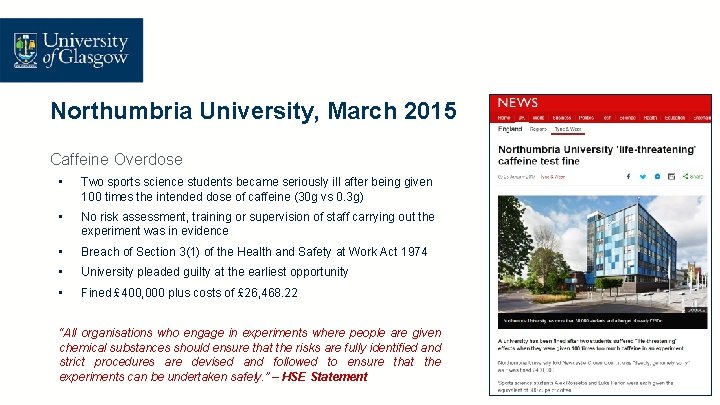
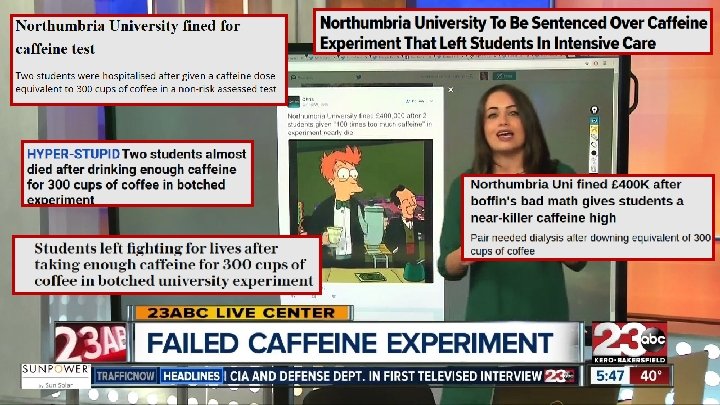
Northumbria University, March 2015 Caffeine Overdose • Two sports science students became seriously ill after being given 100 times the intended dose of caffeine (30 g vs 0. 3 g) • No risk assessment, training or supervision of staff carrying out the experiment was in evidence • Breach of Section 3(1) of the Health and Safety at Work Act 1974 • University pleaded guilty at the earliest opportunity • Fined £ 400, 000 plus costs of £ 26, 468. 22 “All organisations who engage in experiments where people are given chemical substances should ensure that the risks are fully identified and strict procedures are devised and followed to ensure that the experiments can be undertaken safely. ” – HSE Statement
Summary Health and safety is everyone’s responsibility but those in managerial and supervisory roles carry additional responsibilities • • • The more senior the person, the higher their level of responsibility • The level of responsibility also relates to the level of control exercised • Each manager / supervisor is responsible for those people and activities they are expected to control • Tasks / activities can be delegated but not accountability • Tasks should only be delegated to those who are competent to complete them • Training and development to ensure suitable and sufficient levels of knowledge is critical • Demonstrating due diligence is a key responsibility of management • The HSE can (and do) prosecute both individuals and organisations Leadership and management of health and safety in higher education institutions SEPS Website (Safety management for heads of management units)

For Further Information Contact: Dr. Phil Rodger (Chemical Safety Adviser) E: Philip. Rodger@glasgow. ac. uk T: 0141 3302799
- Slides: 16